All “hot” sauce possess a certain amount of heat, but it can be hard to know exactly how much fire you’re going to get before tasting. The below chart from Sriracha2Go, which ranks sauces by Scovilles, can give you a glimmer of what you’re getting into.
On Monday night, Alabama Senate candidate and Christian crusader Roy Moore—also known as “Ray,” according to Donald Trump—pulled out his gun at a campaign rally saying, “I believe in the Second Amendment.”
Former Fox News anchor Bill O’Reilly said Monday that the massacre in Las Vegas hours earlier — the deadliest shooting in modern U.S. history — was “the price of freedom.”
An unusual Chicago home designed by Frank Lloyd Wright can be had for under $200,000
It’s an official Chicago Landmark and one of the most unusual Frank Lloyd Wright designs in the Midwest, but it’s still searching for a buyer. Known as the Foster House and Stable, the house can be considered a rare Frank Lloyd Wright for a number of reasons. While Wright designed dozens of homes in the suburbs—with the majority built in Oak Park—Wright worked on far fewer residences in Chicago proper. And of the homes within Chicago city limits, one on the South Side is a popular house museum while another located on the far North Side is a bed and breakfast.
The Foster House and Stable is not only one of just a few Wright homes in Chicago proper, but it’s the only Frank Lloyd Wright home in Chicago that is currently on the market. But there’s more to the story behind this West Pullman house.
Originally constructed in 1900, the house designed for Stephen Foster, a real estate attorney who worked with developers around the West Pullman neighborhood. Fans of Wright may not immediately associate the architect with the house as it is certainly not characteristic of the Prairie School movement which Wright made famous during his career. Instead, this one features a Japanese-influenced flair and steeply pitched rooflines.
However, Wright’s love of Japanese art and architecture is well documented, and this home is a rare case where Wright utilized that influence to do something completely different from the earthy Prairie style homes he was designing around the same time throughout the suburbs.
The Foster House and Stable entered the market this April, listing for just $239,900. However, it has since taken a few price reductions, with the most recent being yesterday. The asking price has now dipped under the $200,000 threshold with the owners seeking $195,000. While it’s not uncommon for houses designed by Frank Lloyd Wright to spend a considerable time on the market, the story on this one is certainly unique. This one is going to require equally unique owners to preserve and restore this Chicago Landmark.
TAMPA, FL—Moving aside the plastic tubs full of Christmas ornaments and cardboard boxes of old books stored in his attic, professional wrestler John Cena took out his brown argyle singlet from a cedar chest in preparation for AutumnSlam, sources confirmed Tuesday. “I always love when October comes around because I get to snuggle up in my warm, cozy singlet and utterly annihilate a couple close challengers,” said Cena while removing his favorite V-cut wrestling uniform from the moth ball-filled chest before pressing his nose against it and fondly recalling the unforgettable kick-outs and stepover toehold facelocks from AutumnSlams past. “Really, what’s better than going up to New England as the leaves start to change and jumping off the ropes with a fist drop to your opponent’s head? Man, I’m getting excited just thinking about the warm apple cider mist Triple H always spits out after entering the ring.” At press time, sources confirmed Cena was quietly humming while stringing the new laces for his wool-lined, duck-toed wrestling boots.
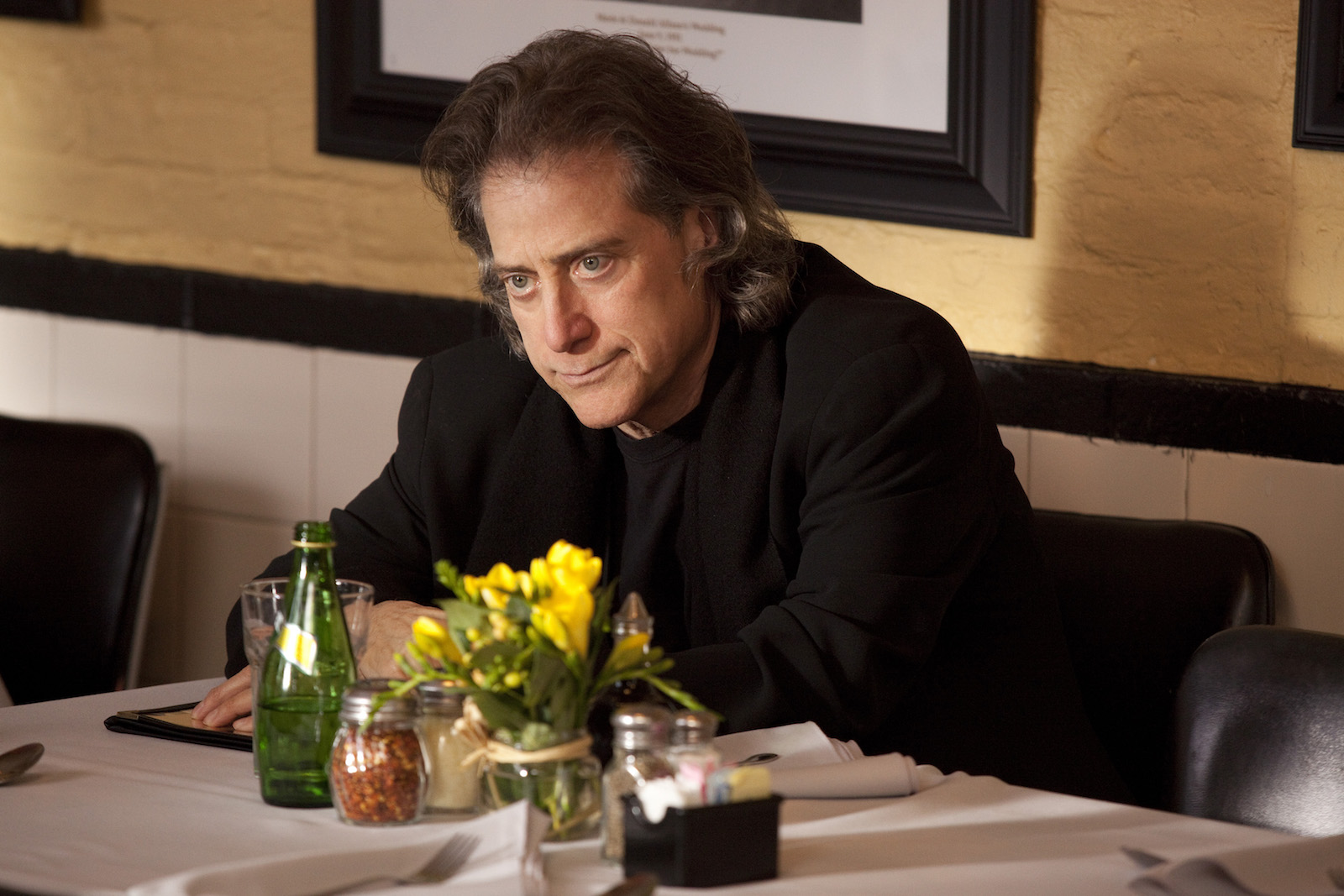
"House of happiness," says a dry, monotonous voice that resembles a depressed employee answering his work phone. On the other end of the line, in LA, is Richard Lewis, the 70-year-old stand-up comedian, and actor who, since 2000, has been appearing alongside Larry David in Curb Your Enthusiasm as David's long-suffering best friend, a role he also plays in real life.
Ahead of the new season of Curb, which starts October 1, I attempted to catch up with Lewis to talk about the show and his real-life relationship with David. Instead, he steamrolled the entire conversation into one long, rambling, neurotic, hilarious, and insult-filled stream of consciousness.
When he paused for breath or temporarily stopped criticizing me, I managed to squeeze in a few questions.
VICE: Hi, Richard. How are you? OK? Richard Lewis: Well, I'm never OK, but I'm all ears, man, and I'll try not to ramble too much because I can ruin your journalistic brilliance.
OK, thank you... You don't have to thank me: I'm 70, I'm just glad I'm on top of the ground. Honest to God. I've done everything I ever dreamed of, and I'm glad that I'm talking to you. If I have a stroke during the call, it'll be good PR for you. So, shoot—hopefully I'm not going to ramble too much about everything I've been through and all the actresses and Carnegie Halls and Larry Davids... I'll let you ask me, and then when you fail miserably, I'll fill it in.
Great. So, 17 years from when it started, and nine seasons in—did you ever envision Curb Your Enthusiasm lasting this long? I never gave much thought to anything since I was 22 years old, when I got into the arts, so when Larry David came to my house in 2000, I didn't even think about it—I just thought about showing up on the set. I will say this: This is the best season ever. He would never do another season if he didn't think he could top what he did last time.
You guys go way back, right? We were born in the same hospital ward three days apart. We have very funny stories about how we met as kids but then never knew each other until we were comics and all that jazz. He was an amazing stand-up, but he couldn't tolerate audiences, which is sort of a problem. He would storm off the stage, and I would go, "Larry, The Tonight Show is here, don't you want to perform?" and he'd be like, "No, I don't like that couple in the third row." I'd say to him, "Larry, all they did was order a scotch, man, give them a break," but he would storm off. Legendarily, he got on the stage once, and without even saying a word, just went, "Nah," and then walked off without doing a bit of his routine. Larry is a great writer, though, and that's important—premises come before punch lines. He's the Norman Lear of this generation. I'm just glad we were born in the same hospital room, even though he tried to beat me up with his mother's umbilical cord—he tried to whip me. I said, "I'm not into S&M."
I'm a recovered drug addict. I'm 24 years sober, and when I first got clean, I was so freaked out, I couldn't stand the business. I said to Larry, "Do me a favor, give me a million dollars in a bag and leave so I can just rest." He then came back the next day and said that his family was against him giving me a million dollars. He claims that I never said I would pay him back, which really pisses me off because there's no way I'm taking a million dollars from someone and at least not trying to pay them back.
Anyway, you haven't asked me a question, I'm rambling. You want to hang up, and now you have a story to tell at dinner about how fucked up I am? I feel like I'm doing VICE a service by displaying my dysfunctions and my disorders. Feel free to ask me a question, by the way; honestly, I'm embarrassed that I'm doing your work for you, and I don't know why. I've been a comic for 49 years, and I've struggled—I've played bowling alleys—and yet you call me and do nothing but sit there, smoke a joint, and let me embarrass myself. What gives you the fucking right? I'm done, I'm done with you, just ask me something.
Richard Lewis on 'Curb Your Enthusiasm'. Photo: HBO
OK. How do... And I don't feel like talking about President Trump. I'll be the first man to get a period if I discuss that.
Let's talk about... Can we start over again? Hi, thanks for calling. It's a pleasure to talk to you.
It's a pleasure to talk to you too, Richard. Yeah, good acting.
Tell me about your relationship with Larry, and how Curb Your Enthusiasm has changed it or impacted it over the years. It's probably made it worse because I have a terrifying need to share my innermost secrets with anyone—like complete strangers and lovely busboys at diners. I'll say, "Give me a burger, and, by the way, I have a rash on my behind." Larry doesn't talk about his feelings, at least to me. We have shared very personal feelings, but only once, about what we're mean to each other about, how much we trust each other, and what we feel about each other's craft. But once we do that, if I ever repeat that, he'd be disgusted with me, because he feels like once is plenty—but I'm an addict so I can't do it enough. It's like doing another line of blow; I have to keep telling him.
I go deep suddenly because I didn't really have an opportunity growing up to share my feelings, and that's why I became a comedian—I wanted to talk to strangers. I was way more comfortable in front of strangers than I was in front of relatives. So when they would laugh at my dysfunctions or my anxiety, I felt less alone, and I still do it for the same reason. If I feel healed, I'm done. I have a good life, I'm sober, I'm touring, I'm in one of the greatest sitcoms of all time, and I have a good woman—but that said, if things get too rosy, I'm fucked. I don't know what I'd do. I certainly wouldn't be a dental hygienist—they should get the Medal of Honor just to look at people's gums. I can't even look at my wife's gums, let alone a stranger's gums. It's one thing giving it to a soldier or a veteran but the next person on that list is someone who looks at bleeding gums. What courage.
Once again, I have made it easy for you not to ask me one question. How much did you prepare for this? Were you in a sauna getting a blowjob while you were preparing for this interview? You know what this interview is called? A career ender. I don't give a fuck, I don't give a shit, I have killed myself since 1970 to do this and I just don't care anymore. As long as I'm good to people, I just don't care what I say to people, on stage or anywhere else.
That must be liberat... I mean. I want to be entertaining. If you think I'm neurotic now, I'm like a hurricane of hell when I'm on the show. Believe me, this season it's like Ali and Frazier between Larry and I. I think I beat the shit out of him a couple of times... [mimics sports commentator voice] down goes David, down goes David. Then, after the scene, he'll be like, "Oh, I got you!" and I'll be like, "No, I kicked your fucking ass!" My only goal is to kick his ass on stage with arguments. He's smarter than me and has a far better vocabulary; he is highly intellectual, and when he catches me making a mistake on camera the smile wraps around his face like a noose for me. I can remember one scene when I misspoke "Bin Laden" and I called him "Ben Laden." When I said "Ben Laden" I just saw that smile start to wrap around his face, and the cameras were rolling, so it was like, I'm fucked, I'm an idiot, I'm going to look like an imbecile, an illiterate jerk-off. Ben Laden?! Luckily I came up with ad-lib, saying, "No, I meant Ben Laden—he's a shirt maker in Manhattan." I was lucky, but you don't always bounce back that fast. He had me on the ropes. Ben Laden?! What the fuck was I thinking?
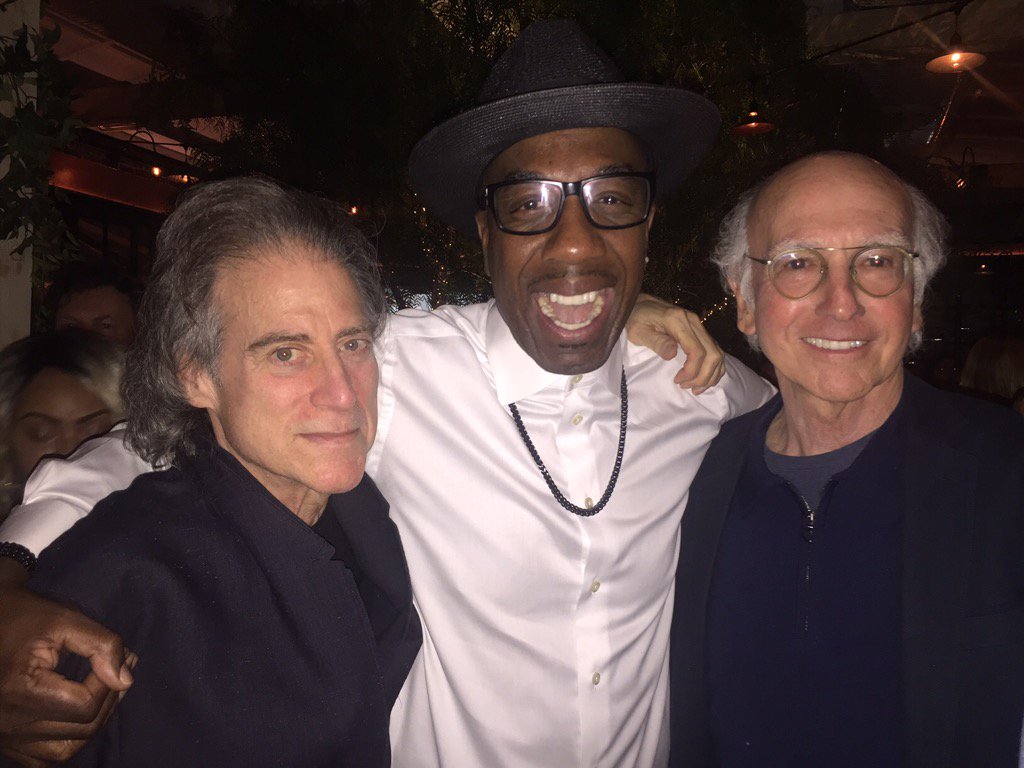
So you both get a big kick out of arguing with each other and trying to out-do one another on the show? Oh god, we do it in real life. I just saw him last night at a book launch and we were arguing again. But it's not hatred—we love each other, but I annoy him. I have to be truthful. I annoy him far more than he annoys me. I learn a lot from him. When people say, "Oh when's Curb coming back?" I'm just like them; I'm a big of a fan as anyone else. There's nothing like it. It's not just his storytelling, but it's the casting. JB Smoove [who plays Leon], when I first saw him, I called him up and said, "I don't know where you came from"—and this is not because he's African-American—I remember, at college, lying down, smoking some opium with headphones on, listening to the first Jimi Hendrix album and I asked myself, "Where did this guy come from? Where did he land from?" That's how I felt about the comedic acting of JB Smoove. I'd be hard-pressed to think of anyone who has ever been any funnier in a sitcom. Larry agrees, too. The casting really is excellent, present company excluded...
[Laughs] See, look how you're mocking me. I don't want to lump myself in with these people, but quite frankly, actually, I think I should lump myself in. I think it's fair enough to say that the scenes I do with Larry are lumpy enough to be lumped in with these other people. I think there should be a contest; I'll take a contest with Ted Danson any day of the week.... I don't know what I'm talking about; I think I'm having a nervous breakdown because of you, honest to God.
How have you found... Do you have anything that is even remotely a question? Seriously. Are you in a hospital? Are you behind bars? Do you have anything else? Are you done? This is it—we'll have spoken for 40 minutes and it'll be one sentence: "Lewis is thrilled to be in new series of Curb," and I'll come after you. I know your family, I'll come after everybody. I can't tell you how many biographies I've done where they've come and sat and filmed me for 20 hours, and then all that's used is, "Yeah, Buster Keaton is my favorite." If you do have a burning few questions then just email me.
OK. Thanks, Richard. I appreciate it. I think you should be more than appreciative; I think you should get me a present or something. Who else would do this? You think Ringo would do this? Ringo wouldn't do this, even with all his peace and love. If you said, "Ringo, can I call you back after dinner?" He'd lose it, all the peace and love would be sucked out of his body. If I don't hear from you, I'll see this piece and I'll come after you; I'll take a flight. I have a lot of rock 'n' roll friends. I'm friends with the Stones and Procol Harum and all these classic rock guys. They know where to find you, believe me, I'll mention your name and VICE and I'll be on your doorstep. Look, I've got to go, you've got me very nervous [hangs up].
As one of Hollywood’s most dynamic, least predictable actors, it’s never wise to count Nicolas Cage out. Just when you think his career has finally hit an inescapable nadir, he’ll surprise you, offering up a touchingly human performance, a shocking swerve into comedy, or—as the case may be—a delicious Japanese corn…
We got to see his exhibit in Chicago last weekend, during its final weekend in the MCA. It was mind-blowing. What a neat dude.
GARAGE is a print and digital universe spanning the worlds of art, fashion, design, and culture. Our launch on VICE.com is coming soon, but until then, we're publishing original stories, essays, videos, and more to give you a taste of what's to come.
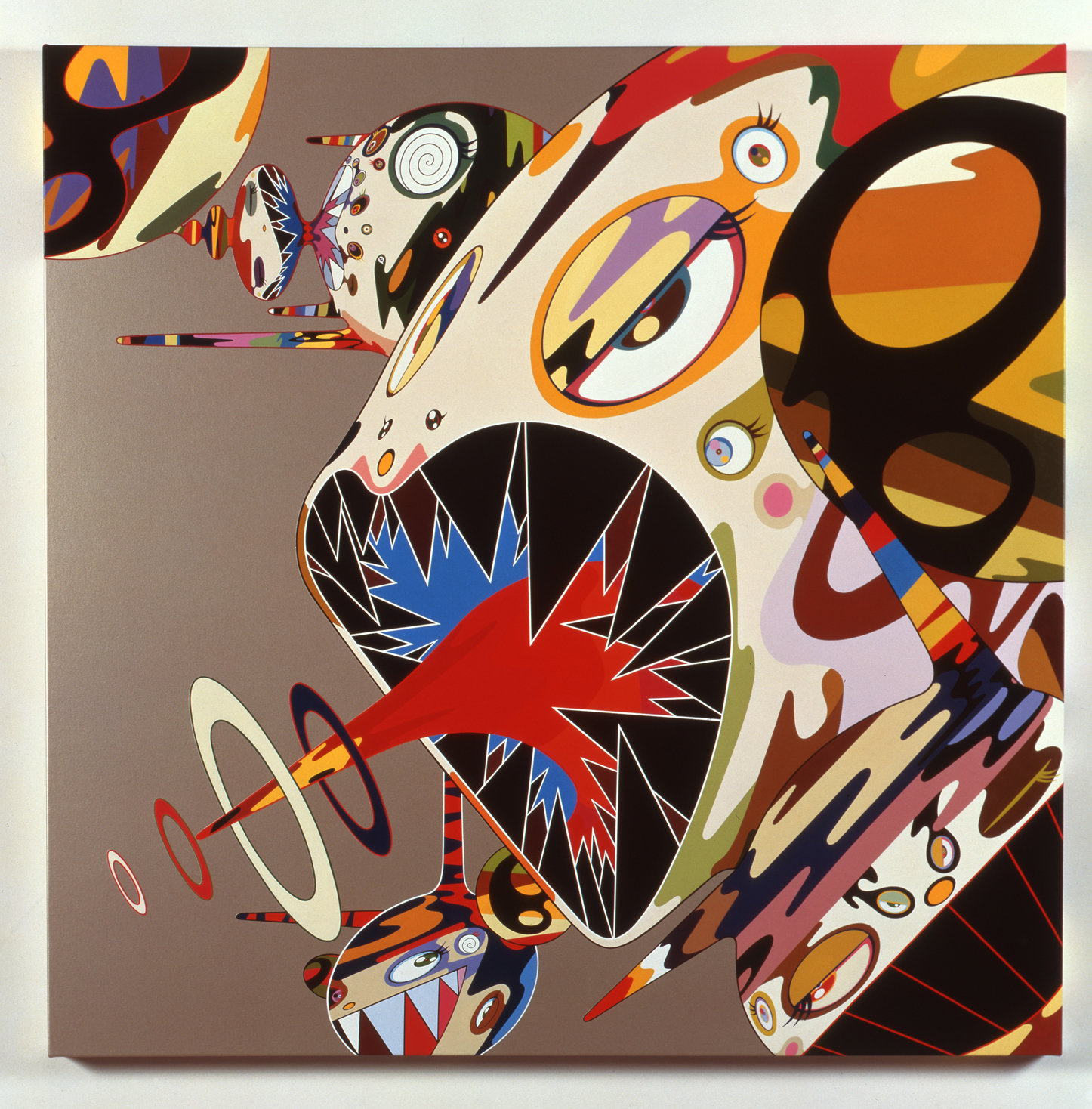
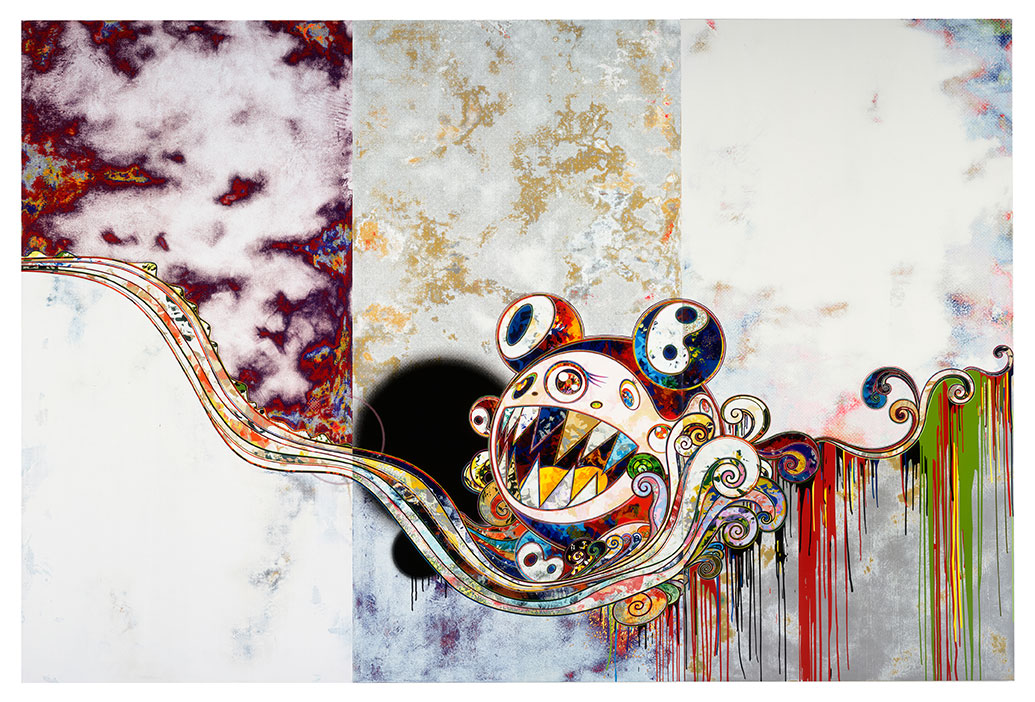
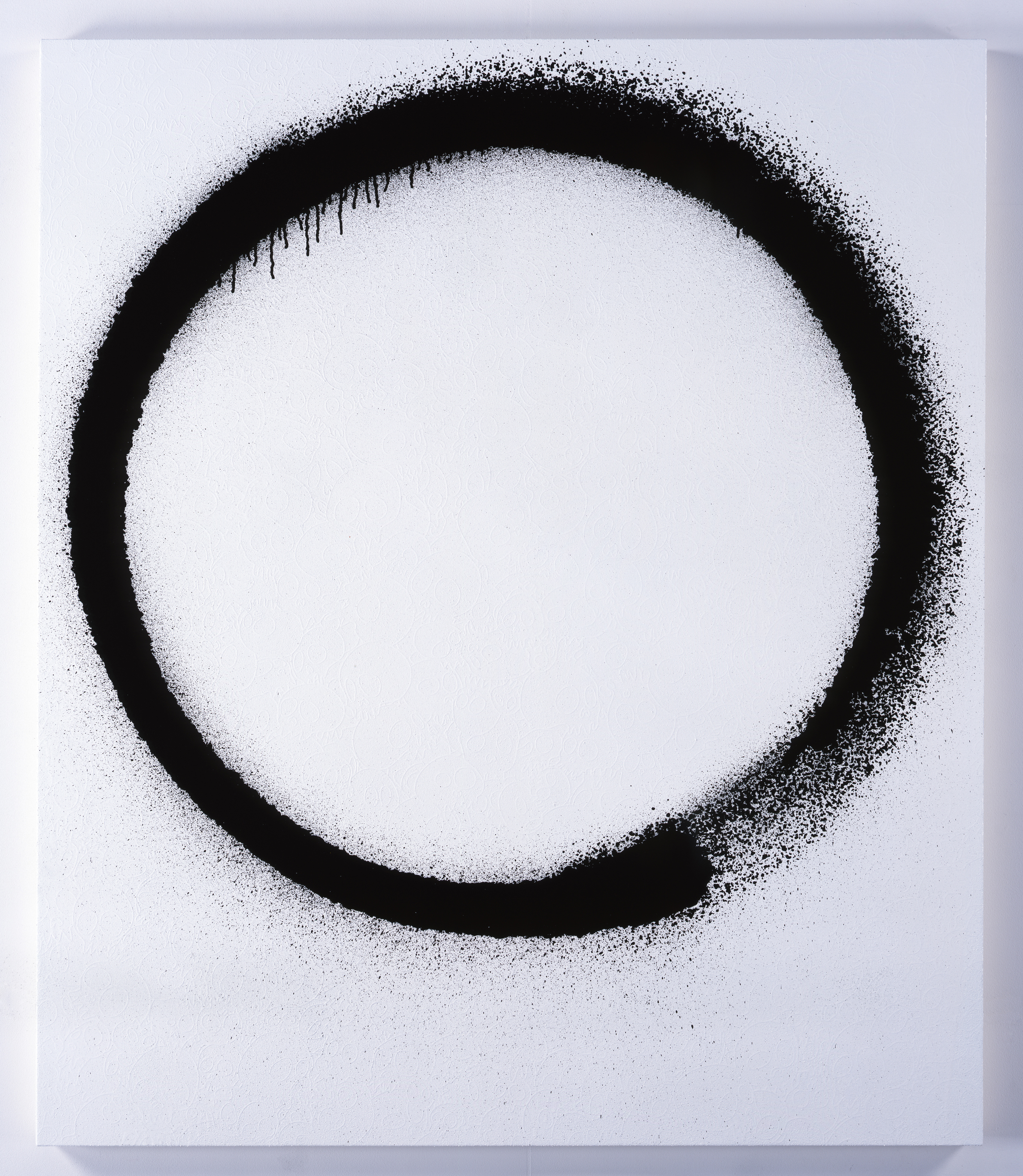
Japanese artist Takashi Murakami is famous for large-scale, high-production-value sculptures and paintings that explore themes of postwar Japanese culture in a graphic language derived in part from anime. In 2000, Murakami coined the term superflat to describe this influential aesthetic, which is characterized by the combination of elements from traditional eastern and western visual cultures—all subject to extreme visual distortion—with signature icons of his own devising that include smiling flowers, skulls, mushrooms, his dog Pom, a character named Mr. Dob—and his own image.
Over the past year, Murakami has taken simultaneously retrospective and productive approaches; in three separate museum exhibitions, he has reintroduced work from the 1990s, showing it alongside bold new works that expand on his established themes. Much of this older work focuses on Murakami's ongoing examination of the dangers of nuclear power. The juxtaposition of these works, and their shared commentary, is at the heart of a new exhibition at the GARAGE Museum of Contemporary Art in Moscow, the first major survey of Murakami's work in Russia.
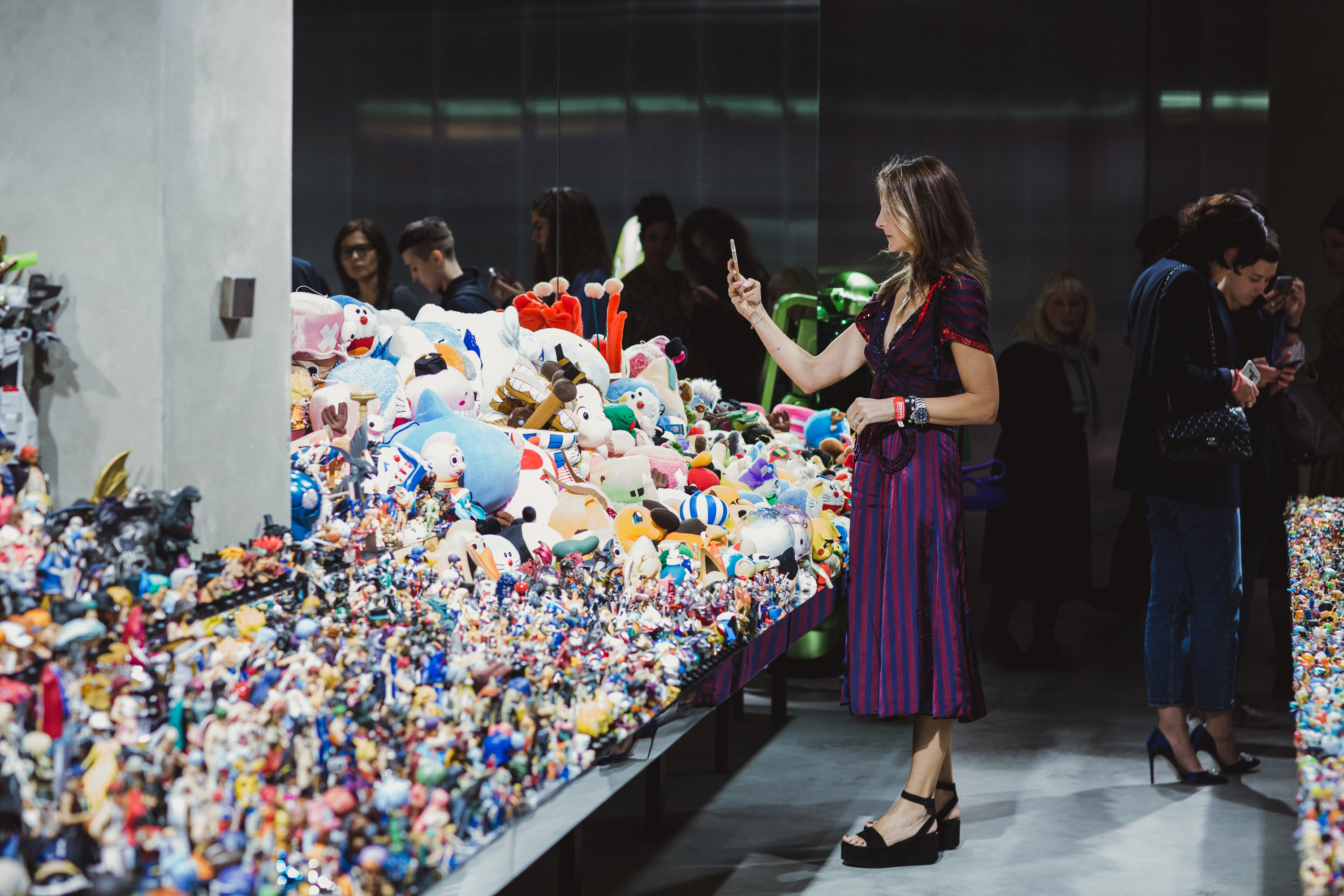
View of Takashi Muarakami: Under the Radiation Falls, GARAGE Museum of Contemporary Art, Moscow
Titled Under the Radiation Falls, the GARAGE exhibition, curated by Katya Inozemtseva, is organized into five sections. The first focuses on Murakami's education as a painter and the development of his technique, which began with traditional Japanese nihonga painting. It also places his work from the '80s—which he ultimately saw as limited and limiting—in dialogue with the traditional Japanese painting of such artists as Katsushika Hokusai and Kawanabe Kyosai. The second moves away from the artist's training to explore the transformation of Japanese visual culture following the Hiroshima and Nagasaki bombings. And a fourth section replicates Murakami's Tokyo studio inside the museum (he slept there during the show's installation). Remaining parts limn the connection between Murakami's work, kawaii culture, and traditional Japanese decoration. There's a live-action film, Jellyfish Eyes, and displays of toys and other objects from Tokyo's Nakano Broadway shopping center, where Murakami also has galleries and a café.
Yet it's the work at the entrance of the museum that best epitomizes Murakami's current trajectory, which increasingly incorporates graffiti, collaboration, and confessional, first-person writing. A double-sided curtain emblazoned with chaotic lettering and bright red flames, produced in collaboration with Japanese graffiti artists MADSAKI, snipe1, and others, represents present and future work, and is accompanied by seven other new works made especially for Under the Radiation Falls.
GARAGE: Since your early paintings— Nuclear Power Picture from 1988, for example—you've consistently made art that comments on the dangers of nuclear power. Other works that come to mind are Time Bokan from 1993, your Jellyfish Eyes film, and your new Octopus Eats Its Own Leg paintings. What's behind the persistence of these ideas in your work? Takashi Murakami: Those of my generation in Japan, who lived through a society and culture scarred by defeat in the Pacific War, were repeatedly exposed to documentaries on TV featuring footage of the atomic bomb explosions in Hiroshima and Nagasaki. There were also many children's superhero TV shows that dealt with the aftermath of the explosions. Such images have become engraved in our minds, haunting my generation with fear.
The explosion in Chernobyl happened when I was 24 or 25, and I recall a writer named Hirose Takashi saying that the "ashes of death" would rain down on Japan as well. I was influenced by the activism of the time, the fear of nuclear energy that had seeped into our minds, as well as by the information we gained after Chernobyl about the dangers of nuclear radiation following a meltdown. This fear was triggered once again by the Fukushima incident in 2012. Once something like this has actually happened, all you can do is feel resigned; ennui takes over. When you eat peaches or rice, you always have in the back of your mind that they're contaminated by radiation, but you end up eating them anyway, complete with their weird aftertaste. This feeling of vague unease has become an important motivation for me.
Is this what's behind the GARAGE Museum exhibition title, Under the Radiation Falls? My Miyoshi studio in Japan is located in the northern part of Saitama, which puts it in quite close proximity to Fukushima. As such, we can feel the effects of radiation. When it rains, we need to protect ourselves— though these days we get rained on and don't even care. We're resigned to it.
Katya Inozemtseva, the curator of the exhibition at GARAGE, noted that images of nuclear radiation and the bomb resonate closely with my works. This had a major impact on the selection of works for the show. Ultimately, that was what made me pick the title.
Would you consider 1992's Sea Breeze installation, which mimics the flashes of light from an atomic explosion, to be the centerpiece of Under the Radiation Falls? Which other works do you feel are critical to the show? Sea Breeze moves me the most. The works I made at the start of my career rely on the themes of war, atomic power, and outer space. In these early pieces, I wanted to talk about dreams—like the dreams of humans who wanted to go to outer space—as well as the political situations behind them.
In this exhibition, I'm pleased that visitors are able to see older pieces of mine in juxtaposition with some of the newer ones. The other central works in the exhibition are situated in front of the main entrance: the Flame of Desire sculpture, my self-portrait, and a big, double-sided curtain piece made in collaboration with graffiti artists MADSAKI, snipe1, and others. I thought it would be a good flow for viewers to walk in, and immediately see the trend of my recent works, and then gradually revisit older works.
Why did you decide to have three different museum exhibitions this year, in Oslo, Chicago, and now in Moscow? What was important to you to specifically share at each venue? Simply because the museums asked me! I kept saying yes, and they ended up happening back-to-back.
I'm 55 now, so I've been looking back at my past more frequently. Also, there seems to be a shared interest among the curators of these shows in exploring the genesis of the flowers in my work. Right now, the theme of my work is formal chaos. I've been able to produce large-scale works and squeeze them into these exhibitions unsolicited by the curators.
In all three of these museum exhibitions, you've displayed films and sketches showing how your studio functions. Why is it important to you to be transparent about the scale of your production? To be honest, I never really thought that being transparent about my studio was all that important, but at GARAGE, Katya, the curator, wanted to recreate my studio for the show, and I went with it. Once it was completed, the recreated space actually looked a lot like my real studio, and I feel at ease in it. While I'm only in Moscow for a few days, I've been able to work in this space as if it was my real studio.
I've also shown my studio at work in various promotional videos I've made. If you look at my Instagram, people have made comments accusing me of taking advantage of my young production staff, but I feel that many young people do not really comprehend the hard work and labor involved in the production of artwork. I make these promotional videos to show the aspiring artists of this generation that art production is solidly entwined with a lot of hard labor.
Your exhibition in Chicago, The Octopus Eats Its Own Leg, references the cannibalistic way an octopus may consume its own limb in order to survive a viral attack—though it eventually grows back. You've referenced the growing pains of your career in various candid Instagram posts. Is there a parallel between the octupus's painful act of self-preservation and your own recent "regeneration" of your practice? Those comments came from my belief that the work of an artist only really flourishes after their death. It's hard for me to gauge the real impact of making these exhibitions while I'm alive. If my works were to maintain currency after my death, I believe that that would be my defining period. To this end, I feel that I have to push myself. However, social media has made everything seem instantaneously simple and "flat." People don't readily sympathize with the excruciating pain that can lie beneath an artist's practice. Now that I'm older, I can admit that I, as a human being, suffer, struggle, and sometimes wish to give up and die. Maybe I'm conveying these messages to instill in people's minds the mood of my generation, or just to state that I was an artist who used to say and feel such things.
You also mention, in confessional text on your new paintings, that you set impossible deadlines for yourself and the studio. My production style dictates that I can't make a work if I'm not given a theme or a deadline. Usually when galleries and museums ask me to make something, the themes they suggest already exist in my previous work. When there are tight deadlines, I see my process as a "wringing out" non-existent wisdom. The higher the various hurdles are, the harder I have to wring, and the more hurdles I have to clear.
There is a saying, "to catch clouds" that applies to my initial brainstorming process. My mind is like a cluster of doodles; there are about three key words, and two or three visuals in the form of poorly done drawings. In the subsequent process of making those ideas more concrete, I realize that some of my initial ideas weren't what I was looking for.
What have you enjoyed about collaborating with graffiti artists like MADSAKI, snipe1, and UFO907 on your paintings, sculpture, and the entrance curtain at GARAGE? You defend the authenticity of these Japanese graffiti artists on Instagram and describe your fascination with their style as "drawn by a Westerner who loves Japanese anime." Right now I'm invested in things that do not have much to do with me directly. One is the history of Japanese ceramics and the attempt to structure a future for that field. The other is establishing a firm position for Japanese graffiti artists. Their works are often imitations of American graffiti, like American anime fans drawing in the style of Japanese anime. I think that Japanese graffiti artists should really explore what compels them to make work. MADSAKI agreed with me and began making works that involved digging deep into his inner self. He introduced me to some of his close friends, and as I got know them, I gave them the same message. My hope has been to work with these artists so that we, together as Japanese artists, might achieve forms of creative expression grounded solidly in our own situation.
How are the Jellyfish Eyes films progressing? Why did you want to show the first film and the character sculptures/props that go with it at GARAGE? My current goal is to make part two of the film series within the next couple of years, using more CGI than part one. When making the first Jellyfish Eyes film, the producer told me that the film could be made with about $300,000, which I thought was a doable sum, so I went with it. In the end, it took three years and cost $8 million.
When you look at Avengers or other DC/Marvel movies, we don't really think much about the CGI, but it's an incredibly difficult process. I now have about 60 employees in my company who work exclusively on CGI.
View of Takashi Muarakami: Under the Radiation Falls, GARAGE Museum of Contemporary Art, Moscow, 2017
Can you talk about the debut of your 6HP anime TV series and why it was important to you to develop a new kind of narrative for that particular form? You describe it as "an anime that has everything in it," both "combat anime" and "magical anime," and made "without any consideration whatsoever to the entertainment market." Though I am currently working as a fine artist, I originally wanted to become an animator but I wasn't talented enough, so making this series took a long time. As we finished the screenplay for 15 episodes, and the storyboards for 11 episodes, I started to see what I had wanted to make in the first place; I wanted to deconstruct and reconstruct a long history of animation made by various other directors in my own way. So I decided to mix elements from animations that I'd watched growing up, from the 1960s, '70s, '80s, and even early '90s.
As for not heeding the market, current feature-length Japanese animations, for example, omit shadows in favor of increased attention to movement. This is a method developed by Mamoru Hosoda and Shaft Inc. in order to enhance the characters' motion without burdening the animators with extra drawing work. I love '80s animations, so I can't resist the use of ubiquitous shadows. In general though, I'm aiming to make an art film that just happens to take the form of a TV anime.
Why is there now a painting of the famous Salt Bae chef installed in your bar, Bar Zingaro, on Tokyo's Naraka Broadway? I'm fascinated by people who create buzz on social media. Salt Bae is a Turkish chef with a weird but oddly captivating sense of humor that somewhat resembles the slapstick, one-liner style of Japanese comedians. I find his act with steak hilarious! I think he has about 10,000,000 Instagram followers, and I relate to him deeply as I also strive to create that kind of buzz. He seems to have a rule that he doesn't talk at all in his Instagram videos. He always wears sunglasses and dresses up as a character from the Godfather series. His recent thing is going to New York, Miami, and elsewhere to film people mimicking his salt-throwing pose, then posting them on social media, again without uttering a word himself. So out of respect for his method, I decided to paint him. He finally noticed the portrait through an introduction by Pharrell. Salt Bae "liked" my post of the painting for the first time, eight months after I posted it. I was very happy.
You recently debuted Devil Ko 2, an evolution of your famous sculpture Miss Ko 2, at Wonder Festival. Just as there are generational trends in animation, there are also generational trends in figurines and dolls. As I'm not a hardcore otaku, it's sometimes difficult for me to fully discern the differences. The Miss Ko 2 that I made 20 years ago and the ones I'm making now are completely different; the gap in quality is tremendous. The original Miss Ko 2 was a product of my project to tackle and reconstruct otaku sexuality. This sexuality has since become very complicated and increasingly difficult to pinpoint.
What are you planning for this year's ComplexCon in November, after debuting multiple projects (with Beats by Dre and Skrillex) and merchandise last year? Something I was very surprised by when I attended last year's ComplexCon was the fact that so many people knew who I was. I'd never experienced this kind of welcome before, even when walking around galleries and museums. So for this year's ComplexCon, I'm making some works that cater to this expanded demographic. I'll also be introducing work by contemporary Japanese artists that I like such as MADSAKI and Otani Workshop.
Why do you wear sometimes a costume to exhibition openings and events? The weakest point in my promotional activities abroad is my inability to speak English. But if I dress up in costume, it grabs attention and media coverage anyway. For this exhibition at GARAGE, I had a special outfit made just for the gala party.
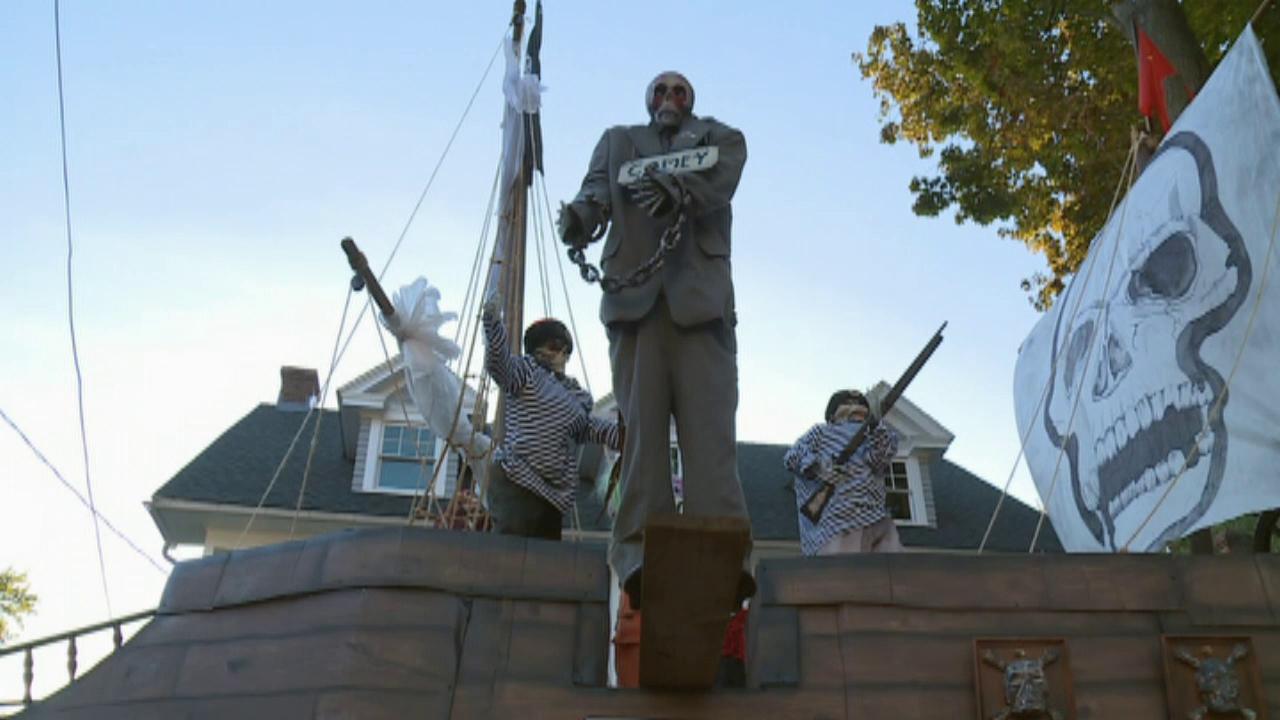
Halloween is just a few weeks away, and one Connecticut homeowner has chosen to turn the display in his front yard into a political message knocking President Trump.
Its a lot harder to be a journalist when you work for agencies that actually practice journalism and not yelling nonsense at other white people
Just a few days after stirring up a bit of controversy with a fairly homophobic joke in the middle of a big Will And Grace segment that convinced Debra Messing to announce that she regretted appearing on the show, Megyn Kelly has once again done a dumb thing that makes her look bad. It all went down yesterday, while…
For reasons unknown, George Foreman has challenged Steven Seagal to an open-rules fight which he wants to be broadcast on Pay Per View. It makes no sense, it pits a 68-year-old boxing legend against a 65-year-old “Aikido master” who once pooped his pants after “Judo” Gene LeBell choked him out. It can also easily be the most anticipated combat sports event since Conor McGregor fought Floyd Mayweather and I hope it happens.
Foreman has laid out the ruleset in which he will use boxing and Seagal can use “whatever.” It’s a recipe for success.
Foreman hasn’t explicitly come out and said why he’s challenging Seagal to the battle, but it could do with Seagal moving to Russia and buddying up with Putin amongst others. Seagal has also raised eyebrows after “training” Anderson Silva and other UFC greats and is considered a fraud in martial arts circles, where many claim his standing as an Aikido master as dubious.
Foreman hasn’t fought professionally in 20 years, and may decide to duck the fight considering Aikido employs a plethora of wrist locks which will be moot if Foreman is heavily-taped and wearing boxing gloves. That’s probably the only reason, though. If it weren’t for that, Seagal could end Foreman twice before hitting the ground, probably.
LAS VEGAS—In the hours following a violent rampage in Las Vegas in which a lone attacker killed more than 50 individuals and seriously injured 400 others, citizens living in the only country where this kind of mass killing routinely occurs reportedly concluded Monday that there was no way to prevent the massacre from taking place. “This was a terrible tragedy, but sometimes these things just happen and there’s nothing anyone can do to stop them,” said Iowa resident Kyle Rimmels, echoing sentiments expressed by tens of millions of individuals who reside in a nation where over half of the world’s deadliest mass shootings have occurred in the past 50 years and whose citizens are 20 times more likely to die of gun violence than those of other developed nations. “It’s a shame, but what can we do? There really wasn’t anything that was going to keep these individuals from snapping and killing a lot of people if that’s what they really wanted.” At press time, residents of the only economically advanced nation in the world where roughly two mass shootings have occurred every month for the past eight years were referring to themselves and their situation as “helpless.”
The two-bedroom duplex features high ceilings, exposed brickwork, and arched windows
Located in the Palmer Square area of Chicago’s Logan Square neighborhood, this duplex condo in an old church building is back with a new, lower price. The two-bedroom, two-bathroom home is one of just ten units that comprise the ‘Sanctuary On The Square’ project that recently converted the 1908 brick structure to residential. It was previously occupied by the Greater Garfield Park Missionary Baptist Church.
In addition to great loft-like features such as high ceilings, exposed brickwork, steel beams, and arched windows, the residence also sports contemporary kitchen and bathroom fixtures. The unit includes access to a private backyard featuring a grassy lawn as well as a paved patio.
Essentially brand new, the home first listed in June for $519,900 before taking a cut to $509,900 in August and finally arriving at $499,900. While a single garage space is also included in the price, HOA dues will cost you an extra $370 per month.
The facts are still coming in from Las Vegas (as of now, 58 dead and over 500 injured, unknown how many injuries from gunshots or trampling in the panic), but it’s certainly not too soon for people across the nation to share their important, and often bizarre, thoughts on the matter. Let’s round up all the scream shitting.
Kentucky Governor Matt Bevin wants you to stop being a political opportunist, unless you’re taking the opportunity to Praise The Gun:
Or maybe it’s possible to regulate the tools that make it possible to do a great deal of evil all at once? Oh, we are silly, laws don’t work and everyone knows it, so let’s repeal speed limits and laws against drunk driving too.
Friend of Wonkette Charles Johnson, of Little Green Footballs, found a completely cromulent tweet out there:
The ISIS claim is based on an actual AP story, which emphasizes that the self-proclaimed Islamic State has claimed without evidence to be connected to the murders. The AP story adds,
The extremist group has a history of exaggerated or false claims, including earlier this year, when it claimed an attack on a casino in the Philippines that turned out to have been a botched robbery carried out by a heavily indebted gambling addict.
CNN Terror analyst Paul Cruickshank has a series of tweets on why any ISIS connection seems unlikely, but why ruin a good panic? Besides, as the troll who wants this all over rightwing media explains, he’s just doing exactly what Barack Obama always did:
Please don’t make too much of the fact that the man in the photo doesn’t look anything like the actual shooter — it was on the internet so it’s true!
Terrorism Expert Charlie Daniels seemed incapable of taking his own advice:
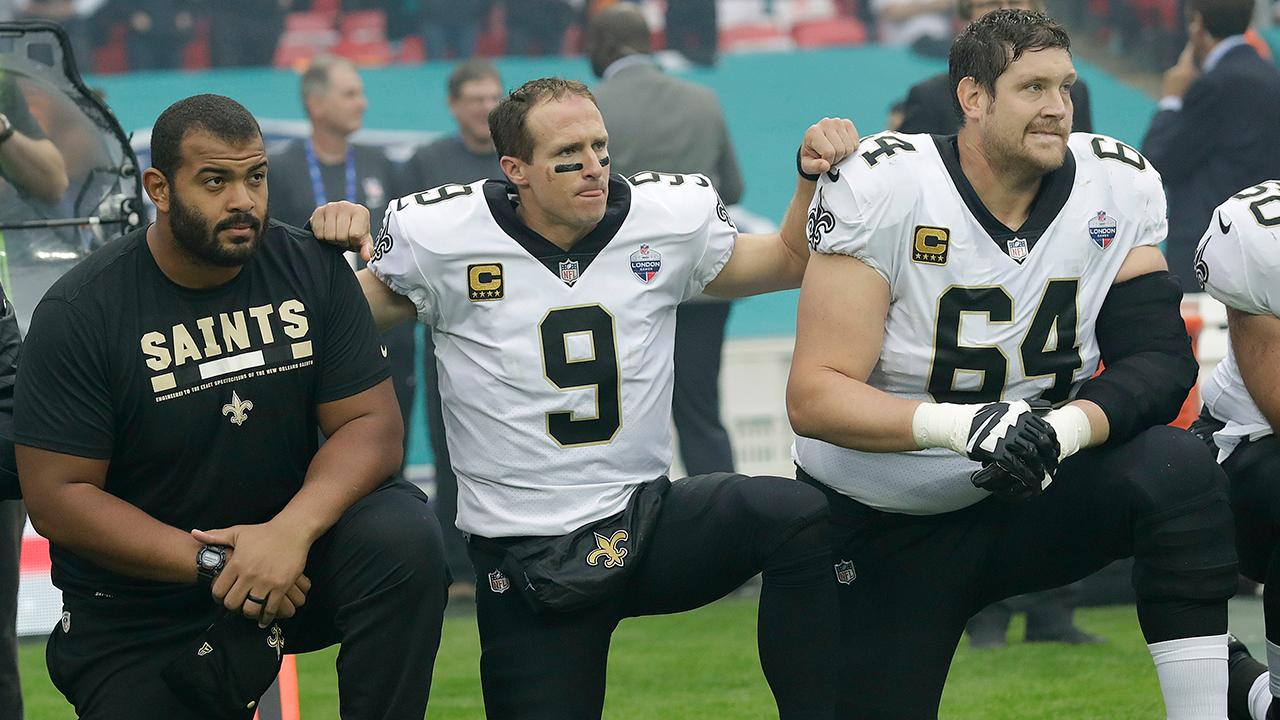
It’s also reassuring to know that an unidentified witness who called Fox News had the presence of mind to say that, unlike America-hating football players who would have taken a knee, we still have hero cops who ran toward the gunfire:
Witness on first responders: "In a world where everyone is kneeling, I saw hundreds of people standing up and running towards the danger." pic.twitter.com/GzSAG7sQc0
Now that, friends, is some REAL politicizing of an event. Talking about gun control is such an obvious reaction, but contrasting a mass shooting to unpatriotic sportsball players protesting police shootings of black people? THAT’S some brilliance.
Why didn’t those football players go and stop the shooting? They are so selfish! Ortiz replied to a press inquiry about what the hell he was getting at by explaining in a text message to the Miami New Times:
While NFL players express a false perception of police officers by inciting hate and division by disrespecting the U.S. flag, the reality is law enforcement risks their lives every day for America.
Or maybe some police officers are racially biased and react with violence first, while most are heroic and put public safety first? Maybe some of the biased ones have even been heroic at other times, because entire classes of human beings are more complex than “all evil” or “all saintly”?
But talk about the easy availability of machines that put holes in people? TOO SOON!
There is Round One of your Las Vegas Shitmouths scream shitting stupid shit. We’re sure there’ll be more.
Neil Gaiman adaptations are all over TV and streaming platforms now—on the heels of the first season of American Gods, the author wrote the short anthology series Likely Stories, which is based on some of his lesser known stories, for Shutter. Amazon also seized on the horror-fantasy momentum, ordering an adaptation…
It seems like for as long as fans have been waiting to see Denis Villeneuve's Blade Runner sequel, some of its stars have been talking about an infamous knuckle sandwich that went down on set—a fake punch Harrison Ford threw at co-star Ryan Gosling that accidentally made contact.
"We were just doing a fight scene and, you know, it just happened. What was funny was, when it was over, they brought ice for my face, and Harrison pushed me out of the way and stuck his fist in the ice," Gosling told GQ in December. "As soon as it happened, the director came up to me and said, 'Look at it this way—you just got hit by Indiana Jones.'"
Ford later retold the story this week on the Tonight Show, telling Jimmy Fallon, "I threw 80 punches. Seventy-nine of them missed him, which is the way you're supposed to do it in a movie."
As Ford says, the cameras were rolling when he clocked Gosling, so presumably a full video of the sucker-punch exists somewhere on the Warner Bros. servers. While that video may never come to light, Gosling and Ford revealed a still of the moment on the Graham Norton Show, to screams of delight from the audience. Here it is, in all its glory:
"That's the face of, 'Oh shit, I'm in deep doodoo,'" Ford told Norton.
It's hard to tell which guy is more shocked by the clobbering, served up in what appears to be a dope nightclub worthy of futuristic Los Angeles. Apparently, Ford apologized by bringing a bottle of expensive whiskey to Gosling's trailer, pouring him a single glass, and then walking away, bottle in tow.
Here is some proof that women needn’t necessarily pack themselves with mothballs after the age of 35: Dame Helen Mirren and Jane Fonda, 72 and 79 respectively, totally murdered Paris Fashion Week walking for L’Oréal Paris on Sunday.
In a short film from 2011, you can see the shapes, curves, and outlines left by a ballet dancer as her arms, legs, and body move through the dance studio. This isn’t quite dancing about architecture, but maybe dancing about geometry?
Just ahead of National Coffee Day, IHOP introduces new, limited-time Latte Lover's Pancakes menu, which draws inspiration from the morning beverages as well as common flavors for it.
The menu features four varieties:
- New Espresso Mocha Cream - Chocolate pancakes layered with mocha cream and topped with chocolate-covered espresso beans.
Julia Louis-Dreyfus has just announced that she’s been diagnosed with breast cancer, sharing a brief message on Twitter that requests everyone works to help “make universal health care a reality.”
Oh he did something good AFTER THOUSANDS OF PEOPLE PRESSURED HIM
The Trump administration declared Thursday that its relief efforts in Puerto Rico are succeeding, but people on the island said help was scarce and disorganized while food supplies dwindled in some remote towns eight days after Hurricane Maria devastated the U.S. territory of 3.4 million people.
Even at 96 Iris Apfel shows little interest in slowing down. Over the past six decades, the self-described "geriatric starlet" has built a career in textiles, interior design (including White House restorations) and, more recently, turned her hand to fashion, with jewelry and a ready-to-wear clothing line.
Olive Garden's all-you-can-eat "Never Ending Pasta Bowl" deal makes its annual return in time to kick off fall 2017.
For the length of the limited-time promotion, you can get unlimited servings of select pasta combinations along with unlimited soup or salad and breadsticks starting at $9.99 (may vary).
The build-your-own pasta bowls include the following options:
"Numbers stations" are the mysterious coded radio broadcasts that have been transmitting, in some cases, for decades across the world. The transmissions themselves have an eerie air, featuring at times clunky automated voices, at others quaintly dated human voices rambling streams of numbers that, at first, seem like ghostly gibberish. While they're the focus of myriad conspiracies and explanations, the most widely held theory about these stations is that they are a means by which intelligence agencies can communicate with assets around the world, who can receive these coded messages securely, using nothing more elaborate than a household radio.
While on the one hand, they seem to be unnerving echoes of the Cold War, these messages are also indicators of the proximity of intelligence work to our everyday lives. Lewis Bush's forthcoming book, Shadows of the State seeks to visualize, locate, and expose many of these stations. Long-documented by monitors and enthusiasts, with recordings collated by the likes of the Conet Project, Bush's new project takes the wealth of research available a number of steps further, using open source information, publicly available satellite imagery, and inexpensive software to give these faceless stations visual identities.
I sat down with Bush in a south London pub to talk conspiracy, cryptography, and obsession. And also to dwell on the merits of turning the tools of power to bear on their creators.
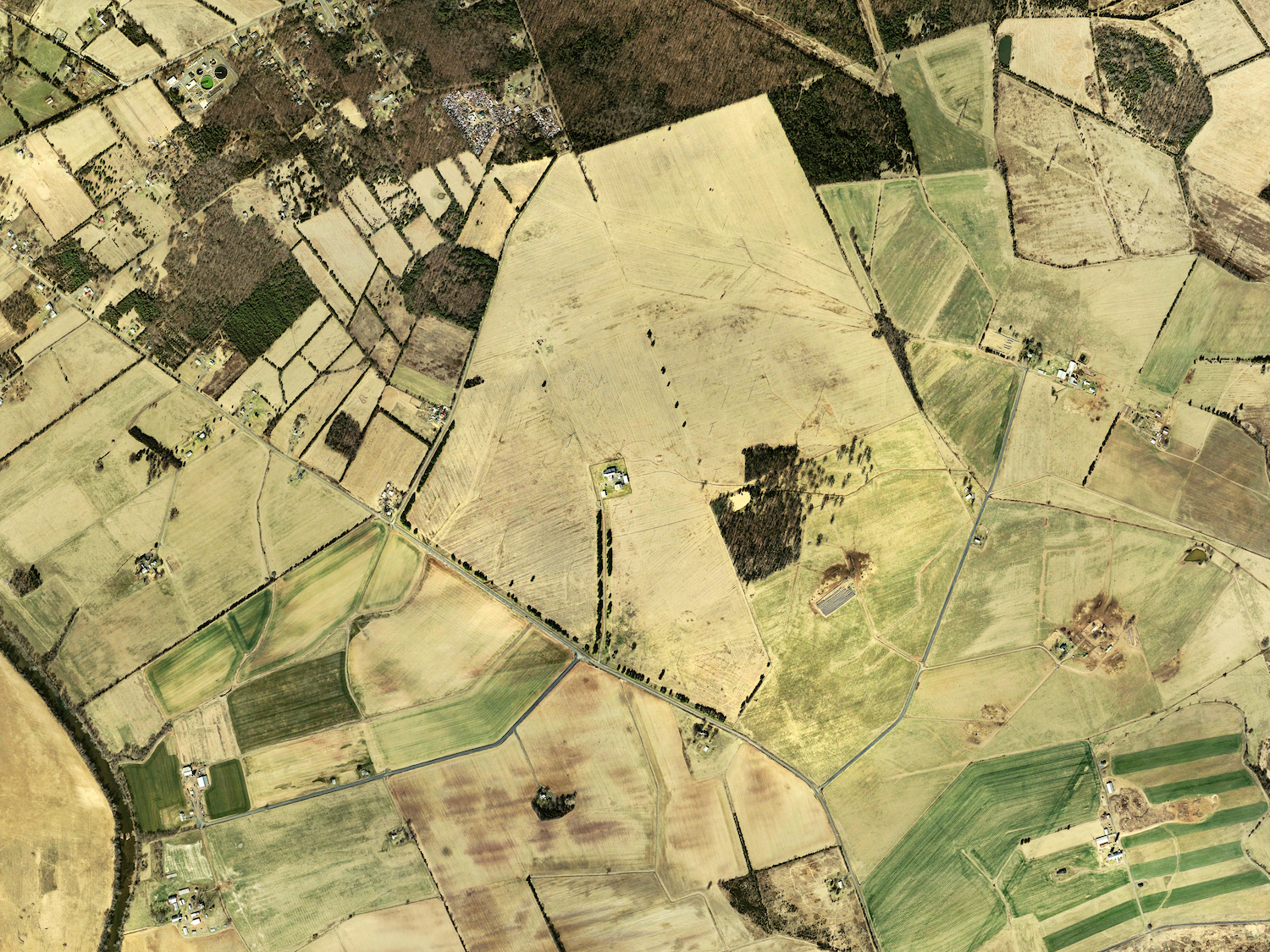
Warrenton Station C, US. Station C is a high frequency transmitter facility employed by a number of US government agencies. In the mid-1980s, numbers monitors traced a numbers station known as Cynthia, thought to be operated by the Central Intelligence Agency, to the site.
VICE: You must have come up with a nice concise definition of what a numbers station is after working on this book? Lewis Bush: I guess the question of what constitutes a numbers station can be a bit divisive. But basically, numbers stations are unidentified broadcasts that consist usually of a live announcer or mechanical voice reading out strings of seemingly random numbers. At times these are accompanied by music or weird sound effects. That's the gist.
What do you mean by "unidentified"? Shortwave radio is very tightly regulated—stations are assigned frequencies and they are meant to stick to them, so you don't get the BBC broadcasting over an ambulance channel, say. Numbers stations operate a bit like pirate stations, in that they don't generally stick to assigned frequencies; they're all over the place, and generally are not included in formal telecommunications listings, though there are exceptions.
And it's the fact that these stations have been seemingly allowed—in some cases for a very long time—to operate like this that fuels the theory that these stations are government-run and part of intelligence operations and communications? In part. While they behave like pirate stations in the way I just mentioned, what usually typifies pirate stations is that they are quite haphazard, quite basic. Certainly, in south London, a pirate station is usually a bloke up a tower block with a transmitter playing bad music at 3 AM. At least, that's my childhood memory.
But numbers stations are very professionally operated. They broadcast sometimes in the same formats for decades. They are clearly not being run, in those particular cases, by one person. They usually broadcast from high-powered transmitters too. So in all other respects, they are not like pirate stations; they are more like the sort of thing that would be run by a well-funded organization.
You could say that's still quite circumstantial, but on top of that, the main thing that's been argued to link them to intelligence gathering is a handful of cases during the Cold War—and since—where spies have been caught, in some cases red-handed, transcribing coded messages and decoding them from these stations. The Czech government has actually admitted to formerly operating a numbers station, but most are, as you say, unclaimed by any government.
WATCH: Spaced Out – Saving the Last Great Telescope
Thereare also more, shall we say, exotic theories about what these stations could be used for, correct? Yes. There's a station called The Buzzer, which for a while was thought to be a numbers station. For the record, I don't think the following is in any way true, or that The Buzzer is an actual numbers station, but The Buzzer has broadcast a continuous pulse for about 40 years, and there are some slightly conspiratorial theories suggesting that it's linked to a Soviet doomsday program called Perimeter, which was meant to launch an automated nuclear attack if the USSR was attacked. Some people theorize that when The Buzzer goes off the air it will be the end of the world.
Can you explain a little more about how people have interpreted these strings of numbers being broadcast? Usually, the strings of numbers broadcast from these stations appear random, but actually, on inspection, follow a format. If you listen to the same station, again and again, you start to see a pattern. That's what the numbers monitors and enthusiasts are very good at doing it. Usually, when that pattern starts to emerge it fits the profile of the kind of cipher called a one-time pad—a very secure, but very basic, way to code a message. If they are used properly they are virtually unbreakable.
I remember coming across the Conet Project—a set of recordings of numbers stations—and being really chilled by the recordings. Maybe I read too much le Carré, but to me these ethereal messages were very scary. Was that part of what hooked you and got the project started? I got into them through a different documentary project I was finishing up. I was doing what we all do at that stage of a project, procrastinating on Wikipedia, and I went down a Wikipedia-hole and somehow ended up on a page about numbers stations. I listened to a few, and then found the Conet Project too. And, as you say, there's something chilling about the recordings. Listening to them, I felt I was listening to a voice from the past—literally, in some cases. On certain stations, the technology—the transmitters used—hasn't changed in 30 or 40 years. Some stations are running on hardware produced in countries that don't exist anymore.
Beyond that, I also think it's very interesting that intelligence gathering—a world we read so much about, especially in the wake of the Snowden revelations, something we think is so distant from our lives—is actually all around us, pretty much every minute. Right now, in this pub, there are probably signals we could harvest if we knew how.
RAF Akrotiri, Cyprus. A signals annex within the base is thought to have been one of the transmitter sites for the Lincolnshire Poacher, one of the best-known numbers stations. Numbers stations monitors tracked transmissions to the site by process of elimination and with local radio observations.
How was it approaching this subject as a photographer specifically? I think that documentary photography's weakness has been a tendency to fixate on things that are obviously visual. There are huge amounts of human life and experience that are never touched on because they are not obviously visual. It was certainly quite a challenge—to make a photo project about something that was invisible.
That side of your project reminded me of Edmund Clark and Crofton Black's Negative Publicity, and to an extent Trevor Paglen's work on top secret instalations. The idea of rendering visible things that the state tries to keep out of sight. And to an extent using the information or tools provided by the state to do so. I think in terms of Ed and Crofton's work there are definite parallels—that interest in the stuff that goes on in these seemingly banal settings. The idea that the business down the street could be involved in extraordinary rendition, or equally, that cluster of aerials you pass every day could be transmitting coded broadcasts. There was a point early in the project where I wasn't sure about how active I should be in collecting the material—was I going to go out and file FOIAs for example? In the end, I settled on the idea of only using information that was readily available and in the public domain.
How much of this project would you say is your interest in numbers stations, and how much is a broader interest in using this technology that's available to scrutinize state activity? That idea—of taking a technology, a coercive technology—and turning it back on the people who built it is very interesting. Certainly imaging satellites, for example, are very much the direct descendants of spy satellites. In some cases, commercial satellites are still used by intelligence agencies.
Talk me through the actual process and structure of the book. For example, take the Lincolnshire Poacher numbers station. I should clarify that I can never say with total certainty that any of these sites are 100 percent confirmed. That said, in a way that station is a good example in terms of how easy it can be. The Lincolnshire Poacher was allegedly an MI6 numbers station that transmitted first from Buckinghamshire, and later from an RAF base in Cyprus. Quite a lot of people had gone looking for it before because it's one of the best-known of these stations; the voice on it sounds like a Radio 4 continuity announcer. So there was already a lot of corroborative information pointing to Cyprus for that one, including some fairly reliable examples of people claiming to have stood outside the airbase and actually picking up high-powered transmissions. So selecting that site wasn't too hard.
There were other stations that were far tougher, where there were no smoking guns and only fractious information available. A nice example is a site in Cuba that's actually still probably being used for covert broadcasts. With that one there was some direction finding done—similar to standard triangulation—but also people noticed that the numbers station broadcast was getting interference from Radio Habana Cuba, which tends to suggest the two signals are coming from the same site. There was also some information to be found in declassified CIA documents. On a fun side note, people also realized the computer being used on that station was using Windows XP, because a few times they accidentally broadcast the XP shut-down noise, not that XP ties it to Cuba. That's an example of a less well-known station which had a variety of pointers to its location.
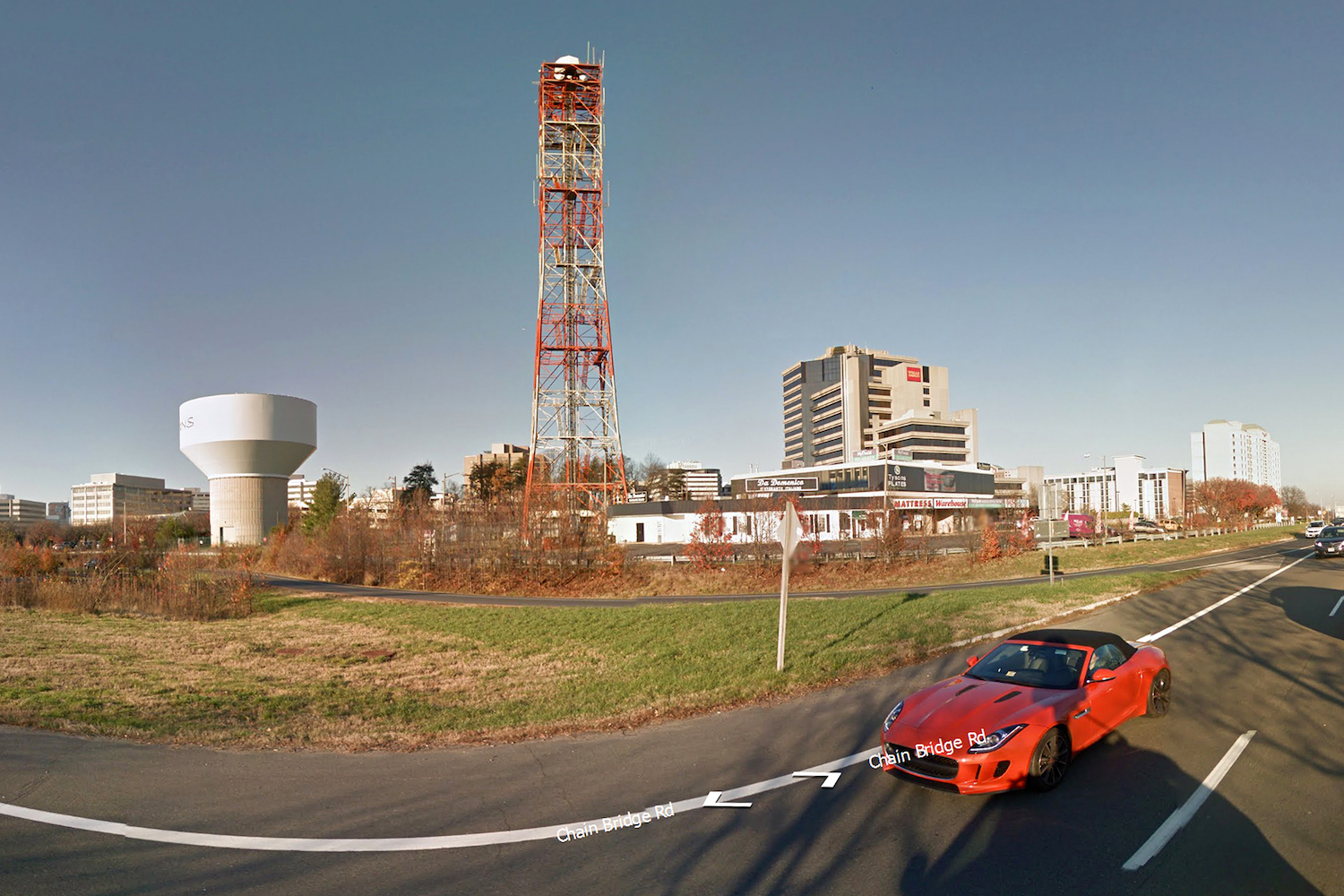
Tyson's Corner Communications Tower, United States of America. Built in 1952 as part of a program to harden US government systems against nuclear attack, some more fanciful numbers monitors suggested the tower was a transmitter for numbers broadcasts. While there is little evidence to support this, declassified documents suggest the tower acts as a relay between Warrenton Station C, CIA headquarters, and other sites.
Once you got as close as you felt you were likely to, to a probable transmission location, what was the next step? Sometimes it's easy to find a site on satellite images. Sometimes it's a large, well-known shortwave transmitting site and you can find the coordinates in five minutes. Then again, sometimes the best information I can get is "this transmitter is roughly five miles from X village in a roughly north easterly direction." In those cases, it can be anything from an hour to maybe days of looking at satellite photos for telltale signs of transmitter sites. A couple of days ago, Twitter helped me find an Iraqi jammer that I had spent maybe half a day looking for without luck.
There are a stock number of transmitter configurations, which create certain patterns that after a while you start to recognize. I got very interested in satellite image interpretation and read a few books on it. It's a whole separate set of skills.
Of course, a transmitter, from above, in a satellite photo, could well be only one pixel big. So you have to start looking for the shadows of aerials, for example, or for other things. Some of the stations included in the book ceased transmitting years ago, ones run by the Stasi for example. In those cases, you are looking for the traces of the transmitter sites. You are looking for marks in the ground, or variations in vegetation growth and grass color, maybe. It brought me into learning about aerial archaeology too.
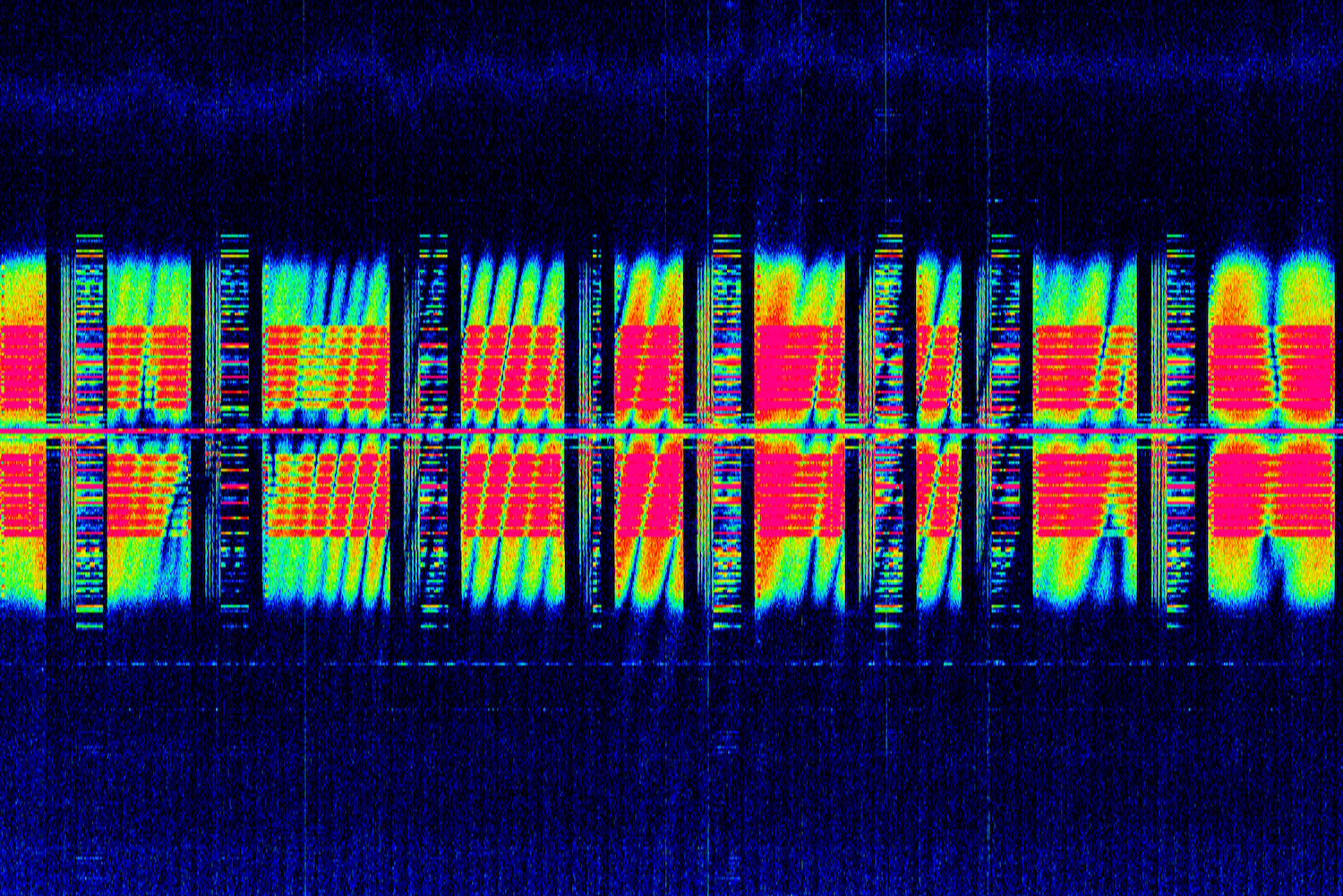
The third stage of your "exposure" of these stations and sites is the spectrograms. Can you talk me through those? A spectrogram is a way of making visible a sound wave or a radio broadcast. It's a way of visualizing frequencies. In some cases in the book, the older transmissions that are not broadcasting any more, I reverse-engineered the spectrograms from recordings, but the way I prefer to do it is to tune into a station live. When you listen using software-defined radio you have various options for visualizations— it generates the spectrogram for you. I would screen grab those, then composite the grabs into these very long strings of signals. It's a digital visualization of an analogue transmission.
How much did working on this bring you into that world, into the subculture of numbers enthusiasts? I totally can't take credit in the sense that a lot of the work in the book and the sources I used, were compiled by those enthusiasts and monitors. This wouldn't have been possible without those communities that, in some cases, have been listening to these stations for decades. Total props to them, basically. I did talk to quite a few of these enthusiasts because at one point I had the idea of them being part of the project—I think that was a bit of me clinging onto the old school photography idea: that I should take some of the photos in my book. But while I did talk to some monitors, my not being a real shortwave radio listener meant that I didn't have much to contribute to them or their groups. So I didn't really get involved. But looking in from the outside, I didn't really want to—it seemed quite a fractious world, with different groups holding different views. I was concerned that if I got too involved I might have to almost take sides, which I didn't want to do.
Did you find working on this project made you more or less concerned by government activity? Were you reassured by the fact that you could do this work, and use the publicly available information to do so, or did the whole thing reinforce your views about government accountability and secrecy? It was a mixture. The project certainly led me into reading about some pretty dark activities undertaken by intelligence agencies of all nationalities and ideologies. I think what concerns me even more than these specific activities, though, is the general sense of this world as one which is almost totally lacking in accountability. Whether you look at a Cold War dictatorship or a contemporary democracy, there is a real sense that some of these agencies operate like a state within the state, above democratic oversight, and really beyond the control of politicians.
The response of lots of people to that will be, "Well yeah, obviously these things need to be secret," and they'll defend that and the power these agencies hold by pointing out the role they play in protecting us, protecting democracy and so on. But it seems a pretty scary line of reasoning to me that the only way to defend democracy is by having something inherently undemocratic at its core. And that, I think, is what the book is ultimately about.
To pre-order or contribute to the Kickstarter for Shadows of the State click here.
Sure, sure, algae light fixtures are nothing new. But Mechiorri’s Exhale Chandelier does more than look cool as a cucumber. It harnesses the power of photosynthesis to remove CO2 from the air and produce oxygen. And it looks good while doing it.
The chandelier is made of 70 algae-filled glass leaves connected by nutrient-transporting tubes to a central hub concealing an LED light source. Ambient sunlight and the LED are able to sustain photosynthesis and keep the algae alive, which has the handy side effect of cleaning the air.





/cdn.vox-cdn.com/uploads/chorus_asset/file/9383953/12147_harvard_2.jpg)
/cdn.vox-cdn.com/uploads/chorus_asset/file/9383957/12147_harvard_3.jpg)
/cdn.vox-cdn.com/uploads/chorus_asset/file/9383961/12147_harvard_4.jpg)
/cdn.vox-cdn.com/uploads/chorus_asset/file/9383965/12147_harvard_5.jpg)
/cdn.vox-cdn.com/uploads/chorus_asset/file/9383969/12147_harvard_6.jpg)
/cdn.vox-cdn.com/uploads/chorus_asset/file/9383971/12147_harvard_7.jpg)
/cdn.vox-cdn.com/uploads/chorus_asset/file/9383973/12147_harvard_8.jpg)
/cdn.vox-cdn.com/uploads/chorus_asset/file/9383975/12147_harvard_9.jpg)
/cdn.vox-cdn.com/uploads/chorus_asset/file/9383977/12147_harvard_10.jpg)
/cdn.vox-cdn.com/uploads/chorus_asset/file/9383979/12147_harvard_11.jpg)







/cdn.vox-cdn.com/uploads/chorus_asset/file/9374097/genMid.09764707_4_0.jpg)
/cdn.vox-cdn.com/uploads/chorus_asset/file/9374099/genMid.09764707_3_0.jpg)
/cdn.vox-cdn.com/uploads/chorus_asset/file/9374105/genMid.09764707_9_0.jpg)
/cdn.vox-cdn.com/uploads/chorus_asset/file/9374107/genMid.09764707_7_0.jpg)
/cdn.vox-cdn.com/uploads/chorus_asset/file/9374109/genMid.09764707_11_0.jpg)
/cdn.vox-cdn.com/uploads/chorus_asset/file/9374113/genMid.09764707_13_0.jpg)
/cdn.vox-cdn.com/uploads/chorus_asset/file/9374115/genMid.09764707_14_0.jpg)
/cdn.vox-cdn.com/uploads/chorus_asset/file/9374117/genMid.09764707_17_0.jpg)





 Cocktail geeks, take note. [


/cdn.vox-cdn.com/uploads/chorus_asset/file/9336311/Algae_Chandelier_Julian_Melchiorri_Exhale_VandA_5.jpg)
/cdn.vox-cdn.com/uploads/chorus_asset/file/9336313/Algae_Chandelier_Julian_Melchiorri_Exhale_VandA_4.jpg)