1) Do what you want. Whatever it is. 2) If you really want it, be prepared to pay for it yourself. 3) Eat. Eat breakfast, eat at the wedding, eat the cake, eat before you go to bed. Just eat something. 4) Its one day, but its a really, really fun and awesome day. Get pics. Let people take pics. Take so many pictures. 5) It was one of the best days of my life, and I never want to do it again.
Redditors share wedding horror stories and hard-learned lessons in the Ask Reddit thread, “What’s the one thing you regret doing for your wedding day?” I had a perfect wedding, and my only regret is getting really tightly tailored suit pants. So get yourself some slacks with room to grow, and learn these wedding…
Today is a beautiful and swampy Monday and the air smells of hot trash, wet concrete, and the acrid and slightly sweet aroma of some fresh scams coming hot out the oven!! Here they are, ranked from second best to best.
Can we stop being mad at plastic straws for a minute? Some folks are saying plastic straws are stupid and useless while others make the point that I’m disabled and I need these to drink. What if the fate of the ocean doesn’t hinge on plastic straws at all? Because one of the largest sources of garbage plastic in the…
This guy looks so bloated from all of the bullshit he's been eating
Secretary of State Mike Pompeo said President Donald Trump “understands” that the Russians interfered in U.S. elections in 2016 -- and fired back at criticism that the president appeared weak at this week's summit with Russian President Vladimir Putin.
Sleep may be the most important everyday phenomenon that we understand the least well. It’s like the oceans; it’s everywhere, but we’ve only explored the surfaces. But scientists are still working to establish better knowledge of what sleep does, how it works, and why every animal does it (and needs to do it). National Geographic has a very pretty and pretty thorough summary of the latest theories of sleep scientists on what we do when we fall asleep.
The waking brain is optimized for collecting external stimuli, the sleeping brain for consolidating the information that’s been collected. At night, that is, we switch from recording to editing, a change that can be measured on the molecular scale. We’re not just rotely filing our thoughts—the sleeping brain actively curates which memories to keep and which to toss.
It doesn’t necessarily choose wisely. Sleep reinforces our memory so powerfully—not just in stage 2, where we spend about half our sleeping time, but throughout the looping voyage of the night—that it might be best, for example, if exhausted soldiers returning from harrowing missions did not go directly to bed. To forestall post-traumatic stress disorder, the soldiers should remain awake for six to eight hours, according to neuroscientist Gina Poe at the University of California, Los Angeles. Research by her and others suggests that sleeping soon after a major event, before some of the ordeal is mentally resolved, is more likely to turn the experience into long-term memories.
It’s basically a maintenance cycle. At deeper levels of sleep, we’re literally cleaning away waste products of waking life in the brain.
Good sleep likely also reduces one’s risk of developing dementia. A study done in mice by Maiken Nedergaard at the University of Rochester, in New York, suggests that while we’re awake, our neurons are packed tightly together, but when we’re asleep, some brain cells deflate by 60 percent, widening the spaces between them. These intercellular spaces are dumping grounds for the cells’ metabolic waste—notably a substance called beta-amyloid, which disrupts communication between neurons and is closely linked to Alzheimer’s. Only during sleep can spinal fluid slosh like detergent through these broader hallways of our brain, washing beta-amyloid away.
Dreams, too, reflect this heightened activity of the brain, but it’s unclear whether dreams themselves are a kind of harmless aftereffect or whether they perform a key function at reinforcing memory.
Lately, I’ve been fascinated by my own dreams, not least because reality has so often been disappointing. One recurring theme has been universities: libraries, offices, classrooms, campuses, over and over again. This isn’t terribly surprising: I spent a shade less than half my life, and most of my adult life, either going to school or working at one. But it’s difficult to make sense of. Do I miss the security/adventure of those times? Am I consolidating those memories to make room for new ones? Is an oracular entity trying to convince me to go back to school? I’m not sure. But understanding that SOMEthing is going on is a kind of balm that’s useful to me in ways I can’t totally articulate.
WOW. He was out with his girlfriend and kids. Caught all on tape. That waitress is a badass.
We're not gonna take it NO! We ain't gonna take it We're not gonna take it ANYMORE
You know what? It has been a LONG week, and I think we all need and deserve something cheerful for our Saturday open thread! Right? Right.
Last month, 31-year-old Ryan Cherwinski was patronizing Georgia coffee shop Vinnie Van Go Go's when he passed by 21-year-old server Emelia Holden. Naturally, he figured it would be a great idea to aggressively grab her ass. You know, since he was there and all. Might as well, right? After all, Donald Trump did promise that "they just let you do it."
Alas, as it turns out, it was not a very good idea, as the 115 lb server immediately grabbed him by the collar and slammed him into a chair. Whoops!
Luckily for all of us, the restaurant's security cameras caught the whole thing and have now been released!
Following the incident, Cherwinski was arrested at the coffee shop, hauled out in handcuffs in front of his girlfriend and children -- because yes, this was indeed a thing he decided to do, while out with his girlfriend and children -- and charged with sexual battery.
We just bought some more deck furniture for a SONG. I f'in love Wayfair.
Wayfair’s back at it with another huge sale. You can save up to 70% off a laundry list of home decor items like wall art, area rugs, sheets & comforters, sofas, mattresses, dining room furniture, and more.
Microfilm is pretty amazing. I used it heavily when doing research papers in school.
I recently acquired a decommissioned microfilm reader. My university bought the reader for $16,000 in 1998, but its value has depreciated to $0 in their official bookkeeping records. Machines like it played a central role in both research and secret-agent tasks of the last century. But this one had become an embarrassment.
The bureaucrats wouldn’t let me store the reader in a laboratory that also houses a multimillion-dollar information-display system. They made me promise to “make sure no VIPs ever see it there.” After lots of paperwork and negotiation, I finally had to transport the machine myself. Unlike a computer—even an old one—it was heavy and ungainly. It would not fit into a car, and it could not be carried by two people for more than a few feet. Even moving the thing was an embarrassment. No one wanted it, but no one wanted me to have it around either.
And yet the microfilm machine is still widely used. It has centuries of lasting power ahead of it, and new models are still being manufactured. It’s a shame that no intrigue will greet their arrival, because these machines continue to prove essential for preserving and accessing archival materials.
The first micrographic experiments, in 1839, reduced a daguerreotype image down by a factor of 160. By 1853, the format was already being assessed for newspaper archives. The processes continued to be refined during the 19th century. Even so, microfilm was still considered a novelty when it was displayed at the Centennial Exposition in Philadelphia of 1876.
The contemporary microfilm reader has multiple origins. Bradley A. Fiske filed a patent for a “reading machine” on March 28, 1922, a pocket-sized handheld device that could be held up to one eye to magnify columns of tiny print on a spooling paper tape. But the apparatus that gained traction was G. L. McCarthy’s 35mm scanning camera, which Eastman Kodak introduced as the Rekordak in 1935, specifically to preserve newspapers. By 1938, universities began using it to microfilm dissertations and other research papers. During World War II, microphotography became a tool for espionage, and for carrying military mail, and soon there was a recognition that massive archives of information and cross-referencing gave agencies an advantage. Libraries adopted microfilm by 1940, after realizing that they could not physically house an increasing volume of publications, including newspapers, periodicals, and government documents. As the war concluded in Europe, a coordinated effort by the U.S. Library of Congress and the U.S. State Department also put many international newspapers on microfilm as a way to better understand quickly changing geopolitical situations. Collecting and cataloging massive amounts of information, in microscopic form, from all over the world in one centralized location led to the idea of a centralized intelligence agency in 1947.
It wasn’t just spooks and archivists, either. Excited by the changing future of reading, in 1931, Gertrude Stein, William Carlos Williams, F. W. Marinetti, and 40 other avant-garde writers ran an experiment for Bob Brown’s microfilm-like reading machine. The specially processed texts, called “readies,” produced something between an art stunt and a pragmatic solution to libraries needing more shelf space and better delivery systems. Over the past decade, I have redesigned the readies for 21st-century reading devices such as smartphones, tablets, and computers.
By 1943, 400,000 pages had been transferred to microfilm by the U.S. National Archives alone, and the originals were destroyed. Millions more were reproduced and destroyed worldwide in an effort to protect the content from the ravages of war. In the 1960s, the U.S. government offered microfilm documents, especially newspapers and periodicals, for sale to libraries and researchers; by the end of the decade, copies of nearly 100,000 rolls (with about 700 pages on each roll) were available.
Their longevity was another matter. As early as May 17, 1964, as reported in TheNew York Times, microfilm appeared to degrade, with “microfilm rashes” consisting of “small spots tinged with red, orange or yellow” appearing on the surface. An anonymous executive in the microfilm market was quoted as saying they had “found no trace of measles in our film but saw it in the film of others and they reported the same thing about us.” The acetate in the film stock was decaying after decades of use and improper storage, and the decay also created a vinegar smell—librarians and researchers sometimes joked about salad being made in the periodical rooms. The problem was solved by the early 1990s, when Kodak introduced polyester-based microfilm, which promised to resist decay for at least 500 years.
Microfilm got a competitor when National Cash Register (NCR), a company now known for introducing magnetic-strip and electronic data-storage devices in the late 1950s and early ’60s, marketed Carl O. Carlson’s microfiche reader in 1961. This storage system placed more than 100 pages on one four-by-six-inch sheet of film in a grid pattern. Because microfiche was introduced much later than microfilm, it played a reduced role in newspaper preservation and government archives; it was more widely used in emerging computer data-storage systems. Eventually, electronic archives replaced microfiche almost entirely, while its cousin microfilm remained separate.
Microfilm’s decline intensified with the development of optical-character-recognition (OCR) technology. Initially used to search microfilm in the 1930s, Emanuel Goldberg designed a system that could read characters on film and translate them into telegraph code. At MIT, a team led by Vannevar Bush designed a microfilm rapid selector capable of finding information rapidly on microfilm. Ray Kurzweil further improved OCR, and by the end of the 1970s, he had created a computer program, later bought by Xerox, that was adopted by LexisNexis, which sells software for electronically storing and searching legal documents.
By the 1980s and ’90s, OCR was fast replacing microfilm as the go-to search and retrieval mechanism for business and legal documents, but parallel to that decline, microfilm emerged in a recurring role in mystery and horror movies, as seen in Ryan Creed’s YouTube compilation video of “Hot Chicks Looking at Microfilm in Horror Movies.” Microfilm had become part of a campy joke about discovering dark, salacious secrets.
Microfilm machines trained people’s eyes to read differently: A blur of rapidly advancing images replaced flipping through pages, a precursor to the transition from reading books to surfing the web. Once we adjusted to the nonlinear reading devices, we wanted to jump around instead of advance through page after page. When Adobe introduced the portable document format (PDF) in the late 1990s, allowing facsimile-like scans to be available in electronic and, later, in searchable OCR forms, microfilm fell further out of favor as a storage and retrieval system.
Today’s digital searches allow a reader to jump directly to a desired page and story, eliminating one downside of microfilm. But there’s a trade-off: Digital documents usually omit the context. The surrounding pages in the morning paper or the rest of the issue of a magazine or journal vanish when a single, specific article can be retrieved directly. That context includes more than a happenstance encounter with an abutting news story. It also includes advertisements, the position and size of one story in relation to others, and even the overall design of the page at the time of its publication. A digital search might retrieve what you are looking for (it also might not!), but it can obscure the historical context of that material.
Digital searches also turn search activity into data that someone else can surveil, compare, quantify, and visualize. The user’s own thinking becomes the object of search and retrieval, not just the documents that user hopes to find. None of this happens when using a microfilm machine. A library can record what materials a user requests or checks out, but the microfilm reader itself cannot track what someone looks at when using the machine. It is not networked to all other searches. No entity, corporate or governmental, uses algorithms to analyze microfilm readers’ habits and predilections. The microfilm reader does not read you, your emotions, or your political or consumerist desires.
Recently, as revelations about the extent of data collection and analysis online have come out, people have become more aware of the spy-like function of online services. Literal espionage has also become more visible, as cyberattacks impact corporations, infrastructure, and even elections. But nobody considers microfilm a viable alternative. Despite its spy-craft credentials, people aren’t even fascinated with microfilm as an object of retro nostalgia. It doesn’t have the hipster cachet of a typewriter or letterpress typesetting or a record player, for example; no one is making earrings from the keys or knobs of microfilm machines.
There’s a reason for that: Those keys and knobs are still in use. Microfilm machines haven’t been mined for their decontextualized parts, and they are not yet truly obsolete. The devices are still in widespread use, and their mechanical simplicity could help them last longer than any of the current electronic technologies. As the web comic xkcdonce observed, microfilm has better lasting power than websites, which often vanish, or CD-ROMs, for which most computers don’t have readers anymore.
The xkcd comic gets a laugh because it seems absurd to suggest microfilm as the most reliable way to store archives, even though it will remain reliable for 500 years. Its lasting power keeps it a mainstay in research libraries and archives. But as recent cutting-edge technologies approach ever more rapid obsolescence, past (and passed-over) technologies such as the microfilm machine won’t go away. They’ll remain, steadily doing the same work they have done for the past century for another five more at least—provided the libraries they are stored in stay open, and the humans that would read and interpret their contents survive.
Barack Obama has officially joined the countless women in 2018 who are annoyed by men. On Wednesday, while speaking to leaders of the Obama Foundation in Johannesburg, South Africa, President Obama got real about the recent behavior of powerful men, admitting he's straight-up annoyed. Extreme same. SEE ALSO: America's moms, Michelle Obama and Tina Lawson, dancing at Beyoncé concert will cleanse your soul "Women in particular, by the way, I want you to get more involved," Obama said in footage shared by CNN. "Because men have been getting on my nerves lately. Every day I read the newspaper, and I just think — brothers, what’s wrong with you guys? What's wrong with us? I mean we're violent; we're bullying — you know, just not handling our business." "I think empowering more women on the continent— that right away is going to lead to some better policies," he continued. Obama voicing his disappointment in men, especially those making front-page headlines, comes after a particularly mortifying week for President Donald Trump. On Monday, Trump publicly supported Russian Prime Minister Vladimir Putin at a joint press conference in Helsinki, Finland, and refused to acknowledge Russia's meddling in the 2016 election. He defended his own comments for a day, and then, after fielding an overwhelming amount of backlash, claimed that he misspoke, Obama also delivered a speech on Tuesday in honor of the 100th anniversary of Nelson Mandela's birth, in which he said that we're living in remarkably "strange and uncertain" times. In that lecture, the former president further touched upon the "head-spinning and disturbing headlines" in the world today, and made several other jokes at the expense of powerful men. As a woman, I'd just like to say with the utmost sincerity: Thanks, Obama. [H/T: The Daily Beast] WATCH: Is it a bird? Is it a plane? No. It's an inflatable Trump baby flying around London
President Donald Trump's former personal lawyer secretly recorded Trump discussing a potential payment for a former Playboy model's account of having an affair with him, people familiar with an investigation into the attorney said on Friday.
The recording by attorney Michael Cohen adds to questions...
Taco Bell's Potaco is a recently-introduced vegetarian menu item over in India and features a crispy-fried potato taco shell seasoned with Mexican seasoning folded around a filling of spicy ranch sauce, lettuce, Fiesta salsa, and shredded cheese.
While you can't get it here in the States, I was able to try it on a recent visit to Taco Bell headquarters in Irvine, CA.
The Potaco shell is basically a thin hash brown with an impressively crunchy crust. It tastes like a regular hash brown but with a potent dose of heat to it.
Other than the shell, the filling should be very familiar to anyone who's eaten a crunchy Taco Supreme as it's much the same but with spicy ranch instead of sour cream. The spicy ranch joined by the Potato shell is meant to deliver enough heat to satisfy the Indian consumer, which probably makes it spicier than is comfortable for the average US consumer.
I really enjoyed the Potaco shell for its exceptionally satisfying crunch. It's far superior to the regular hash browns that Taco Bell offers here in the US for breakfast. Here's hoping they try offering it here as I could see if working very well as part of a breakfast taco. I'm also curious to see how it would taste with the chain's signature seasoned beef.
But Chance does not exactly sound saintly as he announces the Chicagoist buy and touts his other mitzvahs on “I MightNeed Security,” the first of four new songs he released Wednesday night. Rather, the track revolves around a loop of Jamie Foxx singing, sweetly, “Fuuuuck you. Fuck you.” The rapper’s first line goes, “I ain’t no activist/ I’m the protagonist.” Which is to say, he’s not a mere vessel for causes. He’s a person, and people are flawed.
Chance has, all along, convincingly and effectively played the good guy. Sonically, his creaky voice, childlike affectations, and bright bulbous beats scan as “positive” and “sunny.” As a public figure, he’s been held up—often recklessly—by people outside of hip-hop as an example of what other rappers should fashion themselves into. As a lyricist, he has insisted that you can have a really great time while living New Testament teachings, but many of his most powerful passages have come from him staring into the wayshe’s lapsed. All of which is to say there’s a savior narrative developing around him.
But he knows that narrative’s dangers. “I Might Need Security” has him embracing messianic labels (choice cut: “young chosen one”) only sourly, and he decides not to bask in accolades but to scrap with villains. He calls for Chicago Mayor Rahm Emanuel, who’s employed Chance’s father in his administration, to resign for being soft on “murderer” cops. He says he bought Chicagoist “to run you racist bitches out of business.” Impious rappers, annoying white people, critics of his parenting: all on “a hit-list so long I don’t know how to finish.” The song bumps satisfyingly, and Chance’s delivery is deceptively casual: You, too, can adopt an air of pissed piety just by pressing “play.”
Indeed, there’s something reassuring about hearing Chance this brittle and punchy. Maybe that’s because the illusion of his universal acclaim has cracked this year. When he tweeted mild support of Kanye West at the exactly wrong moment for someone theoretically opposed to Donald Trump’s policies, it led to a “thanks” from the president and an apology from Chance. And when he bit back at Twitter snark about his marriage proposal, many saw it as the latest sign of him having thin skin. But “I Might Need Security” owns that accusation of petulance as a fuel to push ahead in a larger project. He’s Christian, but he can’t always turn the other cheek.
The rest of his new four-song release uses a range of approaches to square sanctity with entertainment, bolstering his brand as relatable rather than insufferable. Worldly concerns mostly fade away with the featherweight grooves of “Wala Cam,” a celebration of the Chicago juke scene that has Chance sending up materialist rap clichés: “Watch don’t got no face / Jet don’t got no plates / God don’t got no cape.” His signature church organs emerge on the closer “65th & Ingleside,” a moving narrative of his come-up that has him practically shouting in gratitude for the woman who recently became his fiancée.
The more remarkable document of the batch, though, might be “Work Out,” which breathes and wafts over standup bass, ’90s TV PSA melodies, and not-one-iota-ironicwind chimes. The first verse has Chance acting rude, insulting an ex and mistrusting women (“I don't want my next album sounding all Usher-y,” he raps, which is great). But then the mood turns: He says he wants all the best for his exes, and for the rest of the song he uses a lilting flow to apologize to those he’s insulted and praise God. It’s folly and forgiveness wrapped up and hummable, and it suggests that accomplishing change doesn’t have to be as drastic as buying a news organization—though he’s of course doing that, too.
The public-facing component of The Cheesemonger Invitational is a dairy bacchanalia where ticket-buying attendees can consume their weight in unlimited cheese. But behind the scenes at the bright, industrial space on the Brooklyn waterfront, the pros have come to compete.
Psst, women reading this: have you ever suspected that you, and other women co-workers, end up doing a lot of thankless, annoying tasks around the office because no one else will? Well, you do, and you should stop.
Oh no, a political party that didn't acquiesce to the whims of a billionaire? HOW DARE THEY
George Soros, the billionaire philanthropist, Democratic political donor, and GOP boogeyman, called Barack Obama his “greatest disappointment” in a recent interview for the New York Times Magazine and accused the former president of “clos[ing] the door” on him after winning the election.
A former Democratic Senator and Vice President candidate Joe Lieberman came out swinging against New York Democratic Socialist Alexandria Ocasio-Cortez and urged voters to vote for defeated top Democrat Joe Crowley who will appear on the ballot of the Working Families Party.
A pug whose mugshot went viral is back with her family after New Jersey police tracked down her owners and collected the required -- and delicious -- bail.
In an astonishing news conference on Monday, President Trump, standing next to Vladimir Putin, rejected the overwhelming consensus among U.S. intelligence agencies that Russia interfered in the 2016 presidential election.
“They said, ‘I think it is Russia.’ I have President Putin. He just said it is not Russia,” Trump said in Helsinki after a two-hour private meeting with the Russian leader. “I will say this: I do not see any reason why it would be.”
Trump’s apparent willingness to take Putin’s word on the alleged interference coincides with a decline in U.S. relations with its closest allies around the world. Trump has criticized Canada, Mexico, and Europe on trade, NATO on defense, the U.K. government on its Brexit plan, and Germany and Sweden on immigration and crime. European capitals, especially, will have watched Monday’s meeting and subsequent news conference closely. Trump’s meeting last week with NATO allies was marked for its rancor. He called the EU a “foe” on trade, and criticized British Prime Minister Theresa May for her “soft” approach toward Brexit and suggested it may cost her a free-trade deal with the U.S. (He since walked back those remarks.)
Monday’s meeting with Putin was marked by far friendlier words. At one point, Putin gave Trump a soccer ball, which the American president playfully tossed to his wife in the audience.
“It seems to me that this is the summit that Putin was waiting for his entire life,” Alina Polyakova, an expert on Russia at the Brookings Institution in Washington, said in a conference call with reporters.
She added: “I think he completely set the agenda at the summit. It was telling that the U.S. president did not mention Ukraine or Crimea once. The U.S. president also didn’t mention U.S. sanctions and basically let the Russian president set the agenda on Syria and other items as well.”
Trump also deflected direct questions about Russia’s role in the 2016 elections, and declined to denounce Russia for interference when asked. Instead, he seemed to praise Putin. “I have great confidence in my intelligence people, but I will tell you that President Putin was extremely strong and powerful in his denial,” Trump said. When the Russian president was asked if he supported Trump during the election, he replied: “Yes, I did. Yes, I did. Because he talked about bringing the U.S.-Russia relationship back to normal.” He rejected the idea of any interference in the election process, however.
Trump boasted about the margin of his election victory over Hillary Clinton, the Democratic presidential nominee whom polls favored to win; reiterating his claim that the investigation by Special Counsel Robert Mueller into Russia’s actions and possible collusion between Trump’s presidential campaign and Russia was a “witch hunt” directed at him; and asking why the FBI “never took the [hacked] server” belonging to the Democratic National Committee.
“I really believe that this will probably go on for a while, but I do not think it can go on without finding out what happened to the server,” he said, adding: “Where are those servers? They are missing. What happened to Hillary Clinton’s emails, 30,000 emails .... just gone. In Russia they would not be gone so easily. It is a disgrace we cannot get Hillary Clinton’s 33,000 emails.”
The news conference capped a week of drama that led up to Monday’s summit meeting in Helsinki, the Finnish capital, between Trump and Putin. The meeting occurred just days after the U.S. Justice Department announced indictments against 12 Russian intelligence officers who are alleged to have hacked emails and computers of senior Democratic party officials in an attempt to interfere with the 2016 presidential election. The indictments, which are part of Mueller’s investigation into Russian hacking of the election, led to calls mainly from Democratic lawmakers for Trump to cancel his summit meeting with Putin.
But the U.S. president pressed ahead, reiterating his goal of improved relations with Russia. “Getting along with Russia is a good thing not a bad thing,” he said Monday ahead of his one-on-one meeting with Putin, who was seated beside him. That meeting was scheduled to last 45 minutes, but went on for more than two hours. Putin arrived more than 30 minutes late.
Trump is by no means the only U.S. president who has sought closer relations with Russia. He is following in the footsteps of both Presidents Obama and George W. Bush, whose push for friendlier ties ultimately failed. But Trump, even as a presidential candidate, wanted closer relations with Russia—and a summit meeting with Putin. On Monday, he got it.
“Just meeting with Putin by the U.S. president is not an issue. All U.S. presidents have met with the Russian president,” Polyakova said. “The problem here is that this administration has done this in reverse: Usually there’s a long period of process, of prep work and negotiations. ... The meeting between the leaders happens last to affirm the negotiating process.”
Unlike U.S. allies, especially those in Europe, Russia is not an economic equal, and, consequently, an economic competitor, to the United States, but it remains a nuclear superpower.
“So I could see—I’m not saying I’m subscribing to this view—from Trump’s perspective, that this is an important relationship that has gone a little bit off the rails ... and that he needs to fix it,” Polyakova said. “And, of course, every single U.S. president has come into office thinking he could fix it because of his charisma and persona, and it was his the last guy who got it wrong, and in that way Trump is not that different from Obama, or even Bush.”
Trump said Monday he and Putin discussed a “wide range of critical issues,” including Russia’s alleged interference, but bemoaned the poor state of U.S.-Russia relations, which he had blamed earlier in the day on “U.S. foolishness and stupidity and now, the Rigged Witch Hunt!” Russia’s Foreign Ministry concurred with that assessment on Twitter, replying: “We agree.”
When asked at the news conference if he believed that Russia played any role in the state of U.S.-Russia relations, Trump replied: “I hold both countries responsible. I think the United States has been foolish. I think we have all been foolish... I think we are all to blame.”
“Our relationship has never been worse than it is now,” Trump said at the news conference. “However, that changed as of about four hours ago. I really believe that.”
Ultimately, though, Trump’s desire for a far friendlier relationship with Putin may run into political reality. While his own words toward Russia and Putin have been warm, his senior-most aides, especially Mike Pompeo, his secretary of state, and John Bolton, his national-security adviser, have been skeptical of Russia’s intentions. Then, there is Congress, where there is broad bipartisan support for continued sanctions on Russia for its actions in Ukraine and also, though less bipartisan, its alleged election interference. More significant, however, is just how differently the U.S. and Russia view the world. While they both share common ground on fighting terrorism, the U.S. and Russia have sharp differences on a broad range of other issues. Trump might want closer relations with Putin, but it is as yet unclear why. Monday’s meeting did little to answer that question.
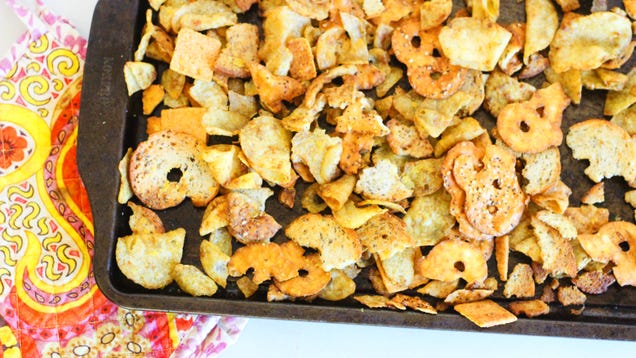
If you are a lover of the crunchy and the salty, you have probably, at one point or another, found yourself with various, mostly consumed bags and boxes of chips, crackers, and other snack products. Rather than eat them individually, sad handful by sad handful, you should combine them all to make a snack mix.
The Big Bang Theory was accidentally left off the list of Emmy nominations yesterday, according to The Hollywood Reporter. The long-running series was the seventh show awarded a nomination for best direction of a comedy series.
Put your hand up if you’ve ever accidentally yanked the entire roll of aluminum foil out of the box when you were trying to swipe a small slice?
My brother, if your hand is up right now, you are not alone.
See, I’m a bit clumsy in the kitchen, too. My oven burners are covered in burnt sauce stains, my sink drains are full of slithery, rainbow-colored bits of last night’s dinner, and my Tupperware cupboard looks like the Tasmanian Devil’s mudroom.
And add to these issues my apparent love of yanking entire sheets of aluminum foil clear out of the box. Honestly, I just give a little tug and out pops the entire roll, hitting the floor and rolling away while laughing its trademark crackly metallic laugh.
Yeah, just tell me that’s not a pathetic scene: cut to freeze-frame of tired-looking man in bedhead and sweatpants holding the edge of aluminum foil in one hand and an empty box in the other, then slowly pan down to a floor covered in a thick, shiny snake of metal crinkled across the floor.
Folks, the only thing that looks worse is the fat, crumpled rolled-back-up roll half-stuffed in the box after you tried to put it back together again.
Yes, we’ve all been there.
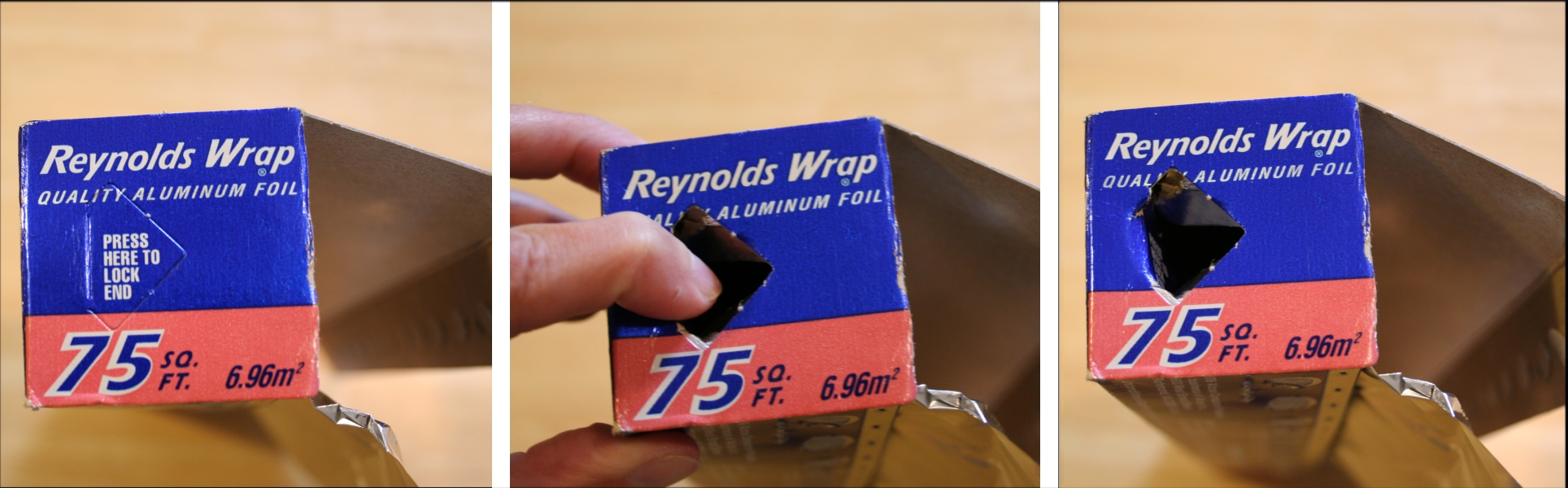
But guess what? High tens around the room, because there is hope for People Like Us. Shockingly, I have recently discovered those little tabs on the side of the aluminum foil box that hold the roll in place! Believe it, food preservation fans, because they truly exist.
Yes, the little tabs on the side of the aluminum foil box can be indented so they anchor the roll in the box. Honestly, it’s a jaw-dropping discovery — like finding out your new apartment gets free Wireless or realizing there’s a little arrow in your car that tells you where to find your gas hole.
Now, whenever it was, whenever it is, whenever it will be: how good does it feel when you first discover those little tabs yourself? Give it up for a pretty good buzz.
So join me today as we give thanks to that modern miracle of the kitchen cupboard: those little tabs on the side of the aluminum foil box.
Alexandria Ocasio-Cortez, the 28-year-old Democratic congressional primary winner who simultaneously rouses feelings of inspiration and deep inadequacy within my young, icy heart, will not be the sole Democrat on the November ballot in her district. Instead, 20-year incumbent Joseph Crowley, whom she beat in an…
After a warranted online backlash for Scarlett Johansson’s casting as a trans man in an upcoming movie, the actress has announced she will no longer be participating in the film.
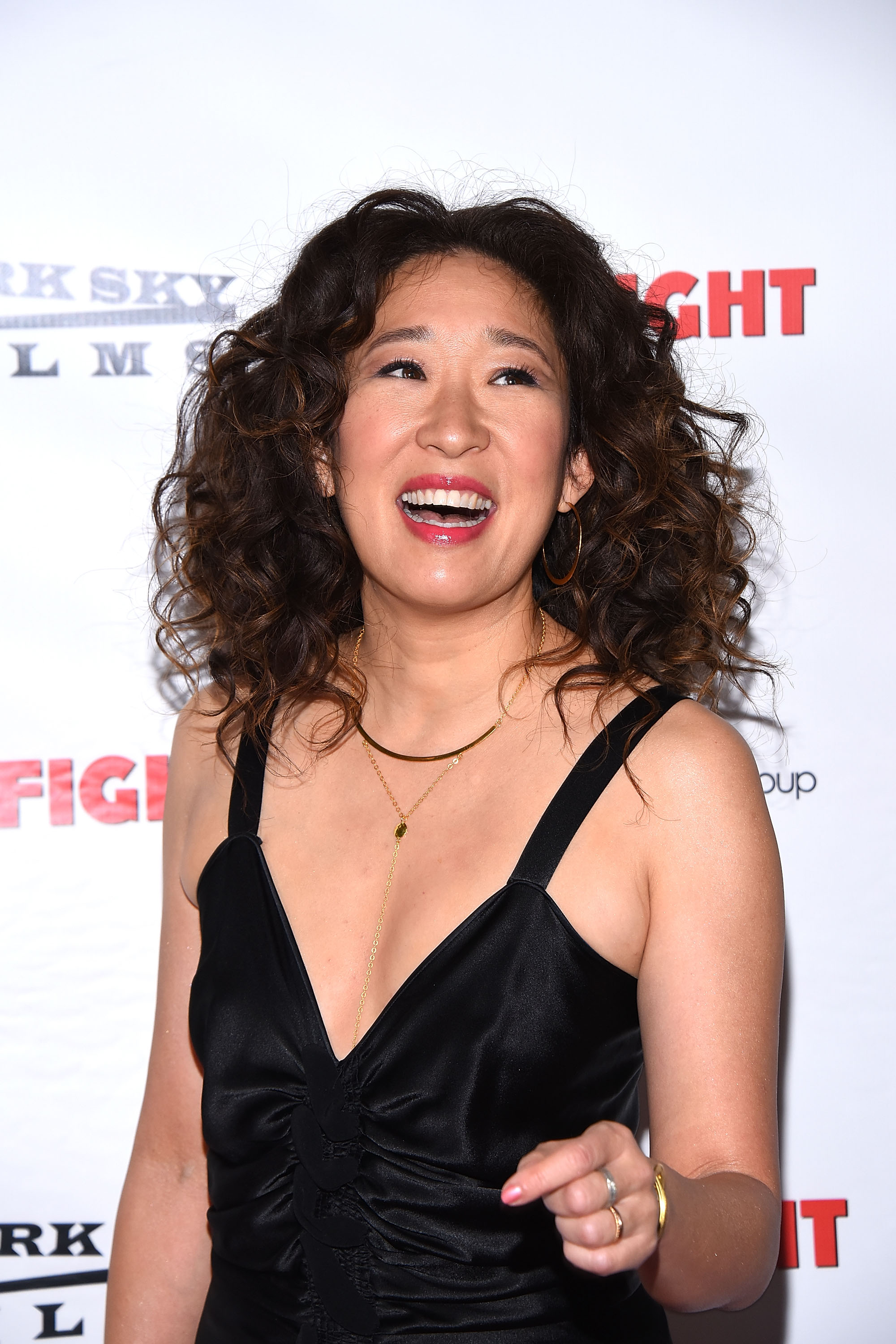
She hasn’t won (yet), but fans like me are celebrating this victory with the gusto of a win, and who can blame us? Oh’s recognition through this Emmy nomination is huge for a community of viewers who never get to see people like themselves on screen, and for Asian actresses long relegated to sensible car commercials, brothels, and roles as pushy moms or tech whizzes.
Oh previously received five Emmy nominations for supporting actress for her portrayal of Cristina Yang on Grey’s Anatomy, her most famous role. That was the kind of Asian American role that viewers deserved: Yang was an ultra-qualified MD/PhD , but she was also a satisfyingly complex character. Grey’s Anatomy creator Shonda Rhimes and Oh chose to show the emotional cost of ambition, rather than vilify Yang for her pursuit of it. Yang was a character rarely seen on primetime television: an Asian woman who was shrewd without being a shrew.
Most notably, Yang was one of the first characters on primetime television to decide to have an abortion and go through with it. This is especially remarkable given television’s legacy of portraying the opposite—having a woman consider abortion only to either be convinced not to by her partner, or suffering permanent psychological damage and regret after going through the procedure.
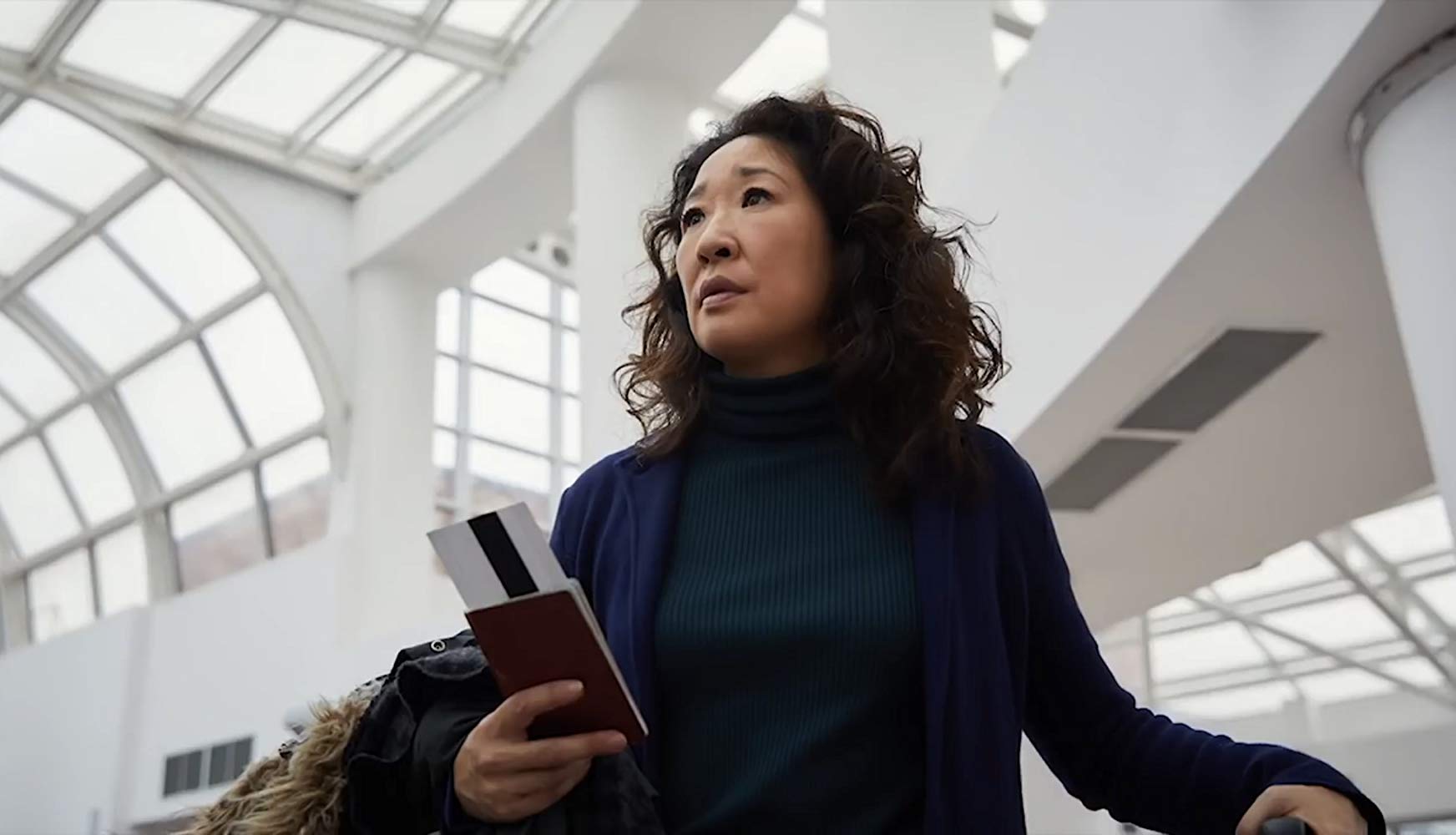
In Killing Eve, Oh plays Eve Polastri, an MI5 desk jockey turned detective. The show is phenomenal and gives Oh the opportunity to shine once more, grounding Polastri with a performance that is both sharp and deeply human. But there was a four-year gap between Anatomy and Eve, which seems strange when you think about how quickly other core cast members got snatched up by otherpopular shows and films. Oh, for her part, has “worked really, really hard to move [herself] out” of thinking about the kinds of opportunities that have and have not arisen for her. She told Vulture that she acknowledges the entertainment industry’s racism, but tries not to let it hinder her artistic development. Her anecdote about auditioning for the role of Eve in Killing Eve speaks to racism’s deeper emotional toll:
One thing I will share with you—when I got the script for 'Killing Eve,' I remember I was walking around in Brooklyn and I was on my phone with my agent, Nancy. I was quickly scrolling down the script, and I can’t really tell you what I was looking for. So I’m like, “So Nancy, I don’t understand, what’s the part?” And Nancy goes “Sweetheart, it’s Eve, it’s Eve.” In that moment, I did not assume the offer was for Eve. I think about that moment a lot. Of just going, how deep have I internalized this? [So] many years of being seen [a certain way], it deeply, deeply, deeply affects us. It’s like, how does racism define your work?
It isn’t simply the Emmy committee’s fault that it has taken this long—this year is the 70th Primetime Emmy Awards—for an Asian woman to be nominated for the top drama award. In a landscape devoid of major acting opportunities for Asians and Asian Americans, the lack of nominations and wins really isn’t surprising. To win an award, you need to have a good role, and those roles are in short supply for Asians. Only two Asian actors have won Emmys—Archie Panjabi in 2010 as supporting actress for The Good Wife and Riz Ahmed in 2017 as lead actor in HBO’s The Night Of.
Many have taken to Twitter to point out the absurdity of a “first” of this magnitude in 2018.
Oh has deserved this type of recognition for years, and after years of neglect it is a bittersweet joy to recognize that space is finally being made for Asian women on screen. Thanks to shows like Killing Eve, the Emmy nomination committee finally has more to chew on.
I've seen firsthand how discrimination can work. My mother is close in age to Oh and spent years as a professional actress working her way through commercial spots and fighting her way through extremely limited television and film opportunities for women of Asian descent. She was most frequently cast in “stripper type roles,” thanks to her dancing background, or as an IT worker. She was one of the background dancers in Memoirs of a Geisha, a film that came under fire for casting actors and actresses from all regions of Asia to depict Japanese people. Chinese actress Ziyi Zhang in particular was criticized in China for starring in a movie about Japan.
It was very peculiar to watch that backlash unfold. The critique was absolutely correct—it is upsetting to cast Chinese women in Japanese roles, especially given Japan's history of war crimes against China. But in practice, the call to encourage casting directors to act ethically would mean Asian and Asian American women would have fewer opportunities in a very white American entertainment industry. If Geisha had been cast exclusively with Japanese actors, other Asian actors would have had to wait for their next opportunity, and those don't come around very often.
A predominantly Asian-cast blockbuster like Memoirs of a Geisha only happens once every ten years—Memoirs of a Geisha came out in 2005 and Crazy Rich Asians comes out this year. Think very hard about whether there has been anything in the middle. The notion that Asian women would get work outside of the stereotype was a wild fantasy, especially at a time when the industry routinely whitewashesAsian roles. We are only now entering the era of television shows and films where Asian women are part of the central cast—like Awkafina in Ocean’s 8 or Jameela Jamil of The Good Place—as opposed to being relegated to supporting roles or parts that are explicitly about being Asian.
My mother left the industry because we moved away from Los Angeles, but she hasn’t made any move to pick it back up again. After years of acting classes, a stint with the Groundlings, and time in a local comedy troupe—where her most popular character was the Japanese Yoko Ono (my mom is Taiwanese), who she was asked to play at nearly every public show—she became sick of being the “token Asian in the room.” She has described to me, countless times, the exhaustion of knowing her agents sent her to a casting call to keep the project from appearing racist, and knowing that any roles that weren’t specifically written for An Asian Woman would go to one of the white women in the nearly completely white room. And they almost always did.
Image via BBC America
Oh has had to deal with this disparity throughout her career. She is acutely aware of the viewers who have been rooting for her and her fellow actors and actresses who have put up with this racism for years. "I know that I’m part of my community. I really hold that, maybe not so much as a forefront of what moves me through my work, but I know it,” Oh told Vulture after her nomination. “I am exceptionally honored that I am able to hold this moment, not only for myself, but what it may mean for our community.”
This is the ultimate joy of Oh’s Emmy nomination—the fact that space that was made for her, and the potential for the space it may grant our community. Oh told the New York Times:
I’m happy to get that ball rolling, because what I hope happens is that next year and the next year and the next year, we will have presence. And the presence will grow not only to Asian-Americans, you know, from yellow to brown, but to all our other sisters and brothers. Our First Nations sisters and brothers. Our sisters and brothers of different sizes and different shapes. If I can be a part of that change, like [expletive], yeah, let’s celebrate it.
I’m excited that Oh’s nomination has been so widely celebrated. Most of my female Asian friends—regardless of their specific ethnic heritage—have sent me texts or taken to Facebook to make a rare post about their excitement. On the eve of the announcement, my mom even messaged me, “I would die to play a real role, a detective one like Sandra Oh.” More than anything, I hope she gets that chance. With this momentum, and with a heavy dose of luck, more Asian women might have the opportunity.
Correction: This piece previously stated that the author's mom played "Yoko Ono" with the The Groundlings. She did this with a separate comedy troupe following training with The Groundlings.













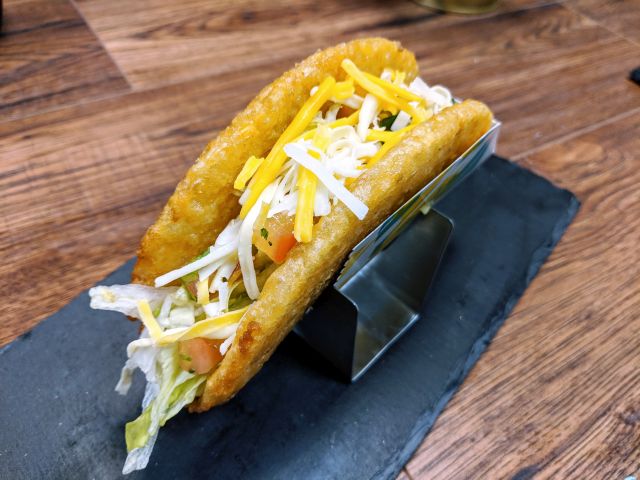 Taco Bell's Potaco is a recently-introduced vegetarian menu item over in India and features a crispy-fried potato taco shell seasoned with Mexican seasoning folded around a filling of spicy ranch sauce, lettuce, Fiesta salsa, and shredded cheese.
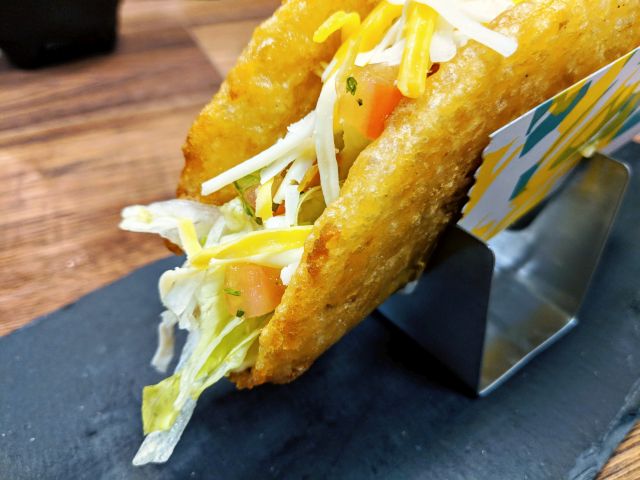 The Potaco shell is basically a thin hash brown with an impressively crunchy crust. It tastes like a regular hash brown but with a potent dose of heat to it.
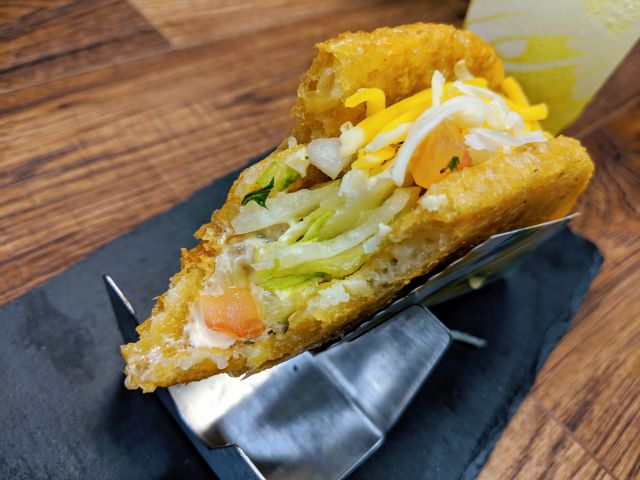 I really enjoyed the Potaco shell for its exceptionally satisfying crunch. It's far superior to the regular hash browns that Taco Bell offers here in the US for breakfast. Here's hoping they try offering it here as I could see if working very well as part of a breakfast taco. I'm also curious to see how it would taste with the chain's signature seasoned beef.










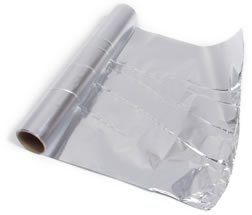 Put your hand up if you’ve ever accidentally yanked the entire roll of aluminum foil out of the box when you were trying to swipe a small slice?
 And add to these issues my apparent love of yanking entire sheets of aluminum foil clear out of the box. Honestly, I just give a little tug and out pops the entire roll, hitting the floor and rolling away while laughing its trademark crackly metallic laugh.
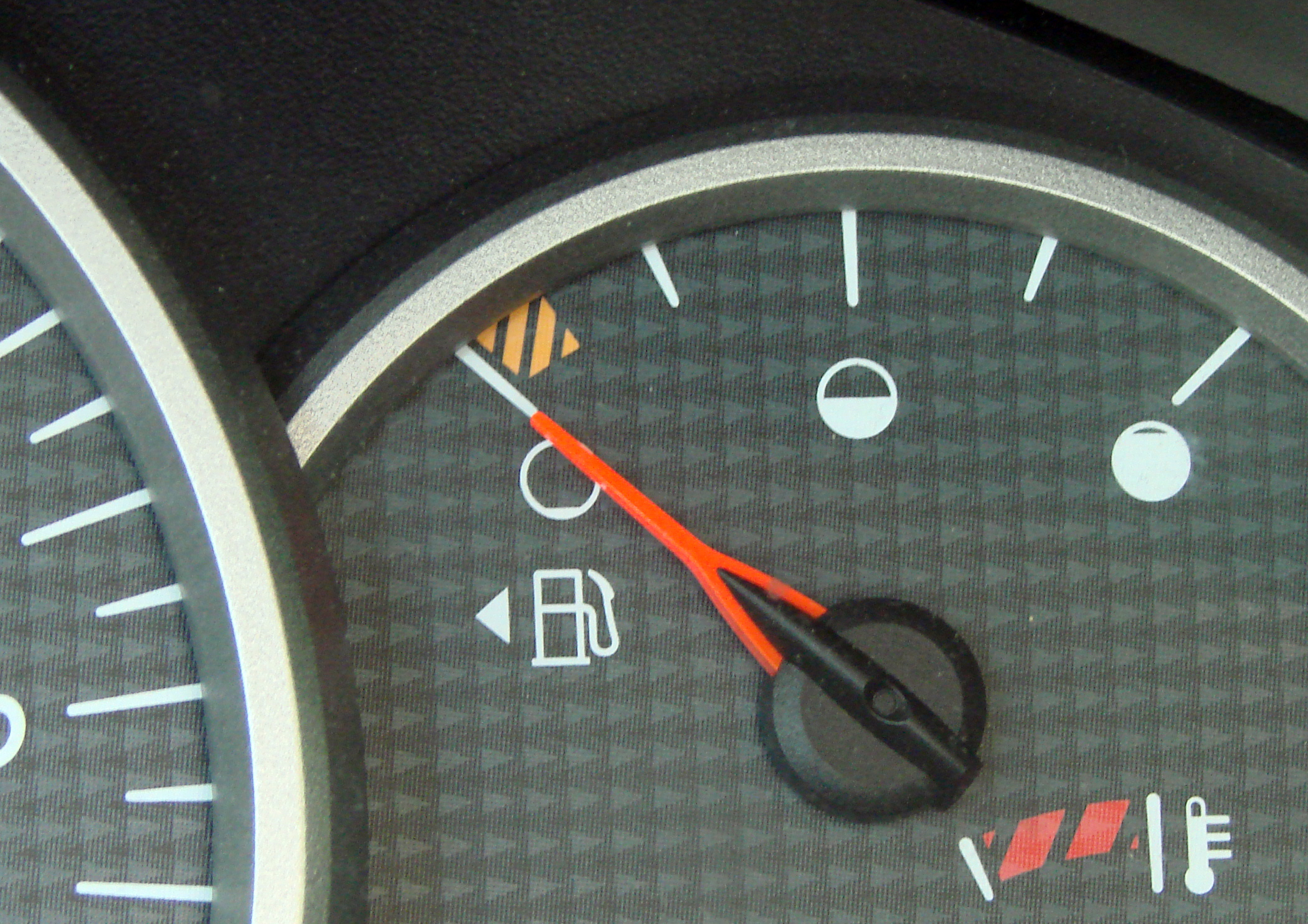 Yes, the little tabs on the side of the aluminum foil box can be indented so they anchor the roll in the box. Honestly, it’s a jaw-dropping discovery — like finding out your new apartment gets free Wireless or realizing there’s a little arrow in your car that tells you where to find your gas hole.