Shared posts

12 Feb 03:51

A Visit to Abu Kassem Za’atar Farm

by David

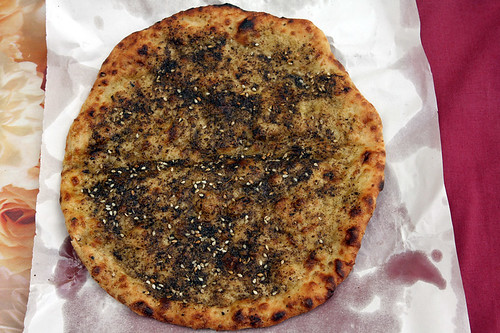
za'atar pita

One thing you learn quickly if you travel to, or somehow explore otherwise, the various cuisines of the Middle East, is that every country, and seemingly…every single person, has their own idea of what za’atar is. And they’re very (very) attached to it. So much so that a chef in a restaurant in Jerusalem rolled up his sleeve to show me a tattoo of what he told me was hyssop, a name for an herb that’s used in some places to make Za’atar, one of the world’s great seasonings.

fresh za'atar

Za’atar consists of herbs, sesame, and sumac, varying them by proportions depending on culture and country. But I can say that Abu Kassem of Za’atar Zawtar makes the best za’atar I’ve ever tasted, anywhere.

fresh za'atar plant

Continue Reading A Visit to Abu Kassem Za’atar Farm...

24 Sep 08:35

Home Sweet Home

by Cassidy Stamp
Lindsaycdavison

@andrew -- friends of friends moving to singapore! this is their apartment....

This post is brought to you by popular demand. 

So we found an apartment! Flat? Not sure what we will call it yet. We secretly enjoy calling each other 'my flatmate' because we think it sounds cool. {Singapore was a Bristish colony until the 1960's so there is heavy British influence} 'Michael quit trying to make flat happen.' 

Long story short - we are thrilled. We ended up finding a place in the River Valley / Robertson Quay area. After consulting anyone and everyone we knew or kind of knew (websites, co-workers, friends of friends, siblings of friends, random Pinterest posts) everything and everyone pointed to the Robertson Quay. It's popular with expats, has great restaurants and nightlife, shopping - everything! We are very excited that we (aka Michael :)) spent the extra time and effort to find the perfect place.

This post will be the first in the 'getting our lives together series.' This is will be the before shot - our rental furniture stage will be the during - and whenever our shipping container decides to show up at some point between 4-8 weeks after we leave NY, that will be the after. Presto!

[Disclaimer: Michael took the pics. Obvi if I were there they would be a little less blurry and at much better angles and staging, but you get the idea. Sigh. Why don't guys understand the importance of picture taking?! Just kidding - love you Michael. But seriously...]


WELCOME! Walking in the front door. 

Main room + mini fratio + the new view. We are on the 12th floor of 13.  

Looking to your left: common bath at the end of the hall. Master bedroom and study to the right. Kitchen + guest bedroom to the left. 

Kitchen (not enclosed

Through the kitchen, outside, washer/dryer + semi sketchy toilet and bomb shelter/maids quarters(?) 

End of hallway to bath + bedrooms. 

Guest bedroom. The best view in the house!

Office/ 3rd bedroom/ mini man cave. 

Master bed + master bath INSIDE the bedroom. Say whaaaat?!?

Master bed. 

One of the pools. Michael says we're going to start swimming laps everyday. (He DID hold a 10&U backstroke record until just this summer after all). 

Confession: this post was pure propaganda. Now who's coming to visit us??

23 Sep 11:48

A Stylish Apartment in Manhattan

by Nadia

Sometimes you desperatly look for a new home and realize that there's only one place where you really feel at home ...

Parfois vous rechercher un nouveau foyer et vous réalisez qu'il n'y a qu'un seul endroit où vous vous sentez vraiment chez vous...

Preciously Me blog: Ashley Stark's Home
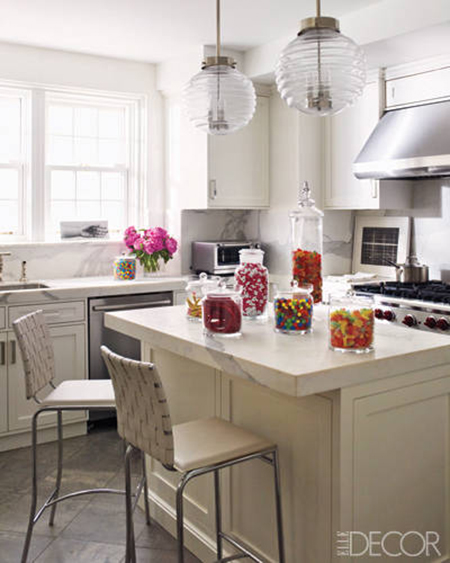
This is what happened to Ashley Stark. After years of looking for the perfect apartment, she finally found her new home in the same building where she grew up. However, she didn't want to replicate her childhood's home décor, she wanted an interior that reflected her own style. And here is the outcome, a beautiful interior with many designers pieces. My favorite room, the living room for the velvet sofa, the wall color and this beautiful coffee table.

C'est ce qui est arrivé à Ashley Stark. Après des années à la recherche de l'appartement parfait, elle a finalement trouvé son nouveau chez elle dans l'immeuble dans lequel elle a grandit. Cependant, elle ne voulais pas reproduire la décoration de la maison de son enfance, elle a voulu un intérieur qui lui ressemble. Et voici le résultat, une superbe décoration avec de nombreuses pièces de designers. Ma pièce préférée, le salon pour le canapé en velours, la couleur des murs et cette belle table basse.

Preciously Me blog: Ashley Stark's Home
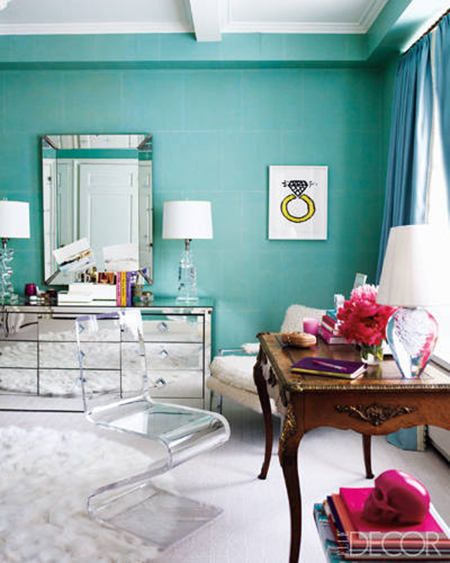
This last room is also stunning! It's feminine and I like this mix of old and new items. And what about you, what is your favorite room?

Cette dernière pièce est également magnifique ! J'aime ce côté féminin et ce mélange d'éléments anciens et nouveaux. Et vous, quelle est votre pièce préférée ?
Nadia


Images source Elle Decor

23 Sep 11:47

theatlantic: theatlanticcities: A library in Russia recently...

by bestrooftalkever-george


theatlantic:

theatlanticcities:

A library in Russia recently hired a cat as an “assistant librarian.” He is paid in food and wears a bow tie to work. Everything about this is wonderful.

It really is.

I think this is a perfect metaphor to show the divide on international relations between Russia and the United States. 

This cat is Syria. 

17 Sep 21:28

Urban Outfitters Applies For Liquor License In Planned Williamsburg Location

by nickdivers
12 Sep 16:29

Phrase du Jour

by Nadia

"Fall seven times, stand up eight"

"Tombe sept fois, relève-toi huit fois"

I think this short quote says it all. Never give up no matter what happens and always remember to stand up. This is the most important thing because it is standing up that you can go forward. Even if sometimes the fall can hurt, even if it can take time, always stand up!

Je pense que tout est dit dans cette courte citation. Ne jamais abandonner quoiqu'il arrive et toujours savoir se relever. C'est la chose la plus importante car c'est en se relevant que l'on peut aller de l'avant. Alors même si parfois la chute peut faire mal, même si vous avez besoin de temps pour ça, relevez-vous toujours !

Nadia


Image source We ♥ It

06 Sep 15:31

Tourism Numbers Fudged?

by Laurel Zuckerman
Lindsaycdavison

I also think it's because it's expensive to shop in france and FAR cheaper in spain...

France top tourism destination!  France breaks travel record with 83 million visitors! France number “UN”!

Not according to Jean-Pierre Nadir, CEO of the travel site Easyvoyage.

In an interview with Laurent Calixte for Challenges magazine, Nadir sets the record straight.

Out of the famous 83 million visitors to France, “14 % are ‘in transit”” and “15 million are ‘Voyageurs Disney” just here to see Disneyland Paris who “spend a half-day in the capital to see the Effeil Tower then leave for elsewhere in Europe.” (Fun fact: anyone passing through customs in a French airport gets counted as a tourist – including in transit passengers who never leave the airport!)

And as for tourist spending, says Nadir, “there’s reason to cry”.

France’s supposed 83 million visitors bring in only 50 billion euros.

Sounds good? Not compared to Spain. With “only” 60 million visitors, Spain does 60 billion in sales. That’s 20% more per capita. Despite France’s clear advantage with business travelers, a high end market Spain’s not even in.

Why aren’t tourists spending more in France?

Because, suggests Nadir, France is not trying.

“In the last ten years Spain has doubled the number of four and five star hotels – which cost on average 14% less than France’s”! And despite receiving less visitors, Spain has more hotel rooms: 680,000 in Spain compared to 580,000 in France.

Even Germany, Nadir notes, does better. (“1.240 euros per visitor with 30 million visitors, compared to 647 euros for France”).

>more

06 Sep 12:45

September Events in Paris: Philly Cheesesteaks, Vintage Fashion, Technoparade & More

by Erin Dahl
Lindsaycdavison

@andrew...FREDDIES!

HiP Paris Blog, Techno Parade, Le Festival d’Ile de France, September Events

Technoparade & Festival d’Ile de France

September 7 – October 13: The Festival d’Ile de France kicks off its month-long set of 30 concerts this week. Held in French heritage sites, the concerts represent a wide variety of genres, from classical to contemporary.

HiP Paris Blog, philippe leroyer, September Events

Technoparade in Paris (philippe leroyer)

September 14: It’s baaack. Paris’s Technoparade returns on September 14th for its 15th anniversary and promises its best celebration of electronic music yet. Find your favorite DJ’s float and follow it throughout the streets, and to get yourself in the mood beforehand, check out this year’s Technoparade Playlist on 22tracks.

HiP Paris Blog, Photoquai 2013 © musée du quai Branly, photo Roberto Tondopó, September Events

Photoquai, photo by Roberto Tondopó

September 17 – November 17: Each fall the Musee du Quai Branly presents Photoquai, an exhibition showcasing photography from around our world. This year’s 4th biennial places its focus on the person, rather than a geography or point in time. The featured photos’ humanistic qualities truly bring the exhibition to life, and make it that much more touching.

HiP Paris Blog, Les Collections Vintage, September Events

Les Collections Vintage

HiP Paris Blog, ollografik, Cea., September Events

Techno parade in Paris & Georges Braques (ollografik & Cea.)

September 18 – January 6: This month marks the opening of the Georges Braques Retrospective at Grand Palais, the French Cubist artist’s first in nearly 40 years. The exhibition includes pieces from Braques’ wide range of work, beginning with his early foray into Fauvism and continuing with his shift to Cubism. It’s a unique opportunity to experience the artist’s trajectory, one iconic piece at a time.

HiP Paris Blog, Les Collections Vintage, September Events

Les Collections Vintage

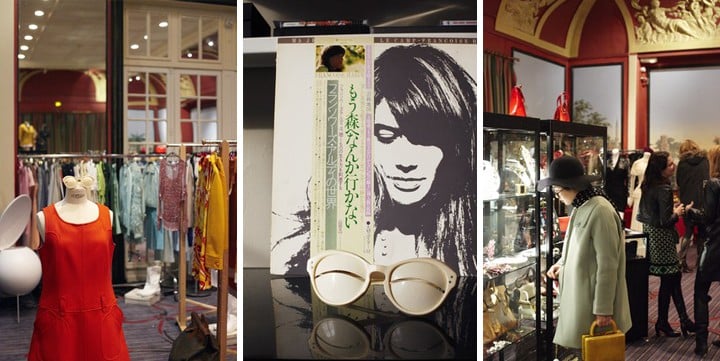
September 25 – 27: Les Collections Vintage opens at Hotel du Louvre this month, in sync with Paris Fashion Week. The collection focuses on styles from the 1920s-1990s and includes pieces by some of the most recognizable names in Fashion history: Lanvin, Chanel, and YSL to name just a few. While modern collections are gracing runways across the city, this is the perfect nod to those that came before.

HiP Paris Blog, Photoquai 2013 © musée du quai Branly, photo Alejandro Cartagena, September Events

Photoquai, photo by Alejandro Cartagena

Tucked away in the idyllic Parc des Buttes Chaumont, Spritz & Fellini is the perfect combination of food, drink, and film. When the sun goes down each Thursday and Sunday until September 26, sip on an Aperol-Prosecco cocktail and enjoy small plates while taking in Frederico Fellini’s Il bidone…a close-to-perfect evening!

HiP Paris Blog, Photoquai 2013 © musée du quai Branly, photo Nyaba Léon Ouedraogo, September Events

Photoquai, photo by Nyaba Léon Ouedraogo

HiP Paris Blog, Bamako Photo In Paris, September Events

Bamako Photo In

September 27 – November 30: Opening September 27th and running until the end of November, Bamako Photo In / Paris is a celebration of the photography of Mali held at the Pavillon Carré de Baudouin in the 20th. The exhibition was created in response to Mali photographers being banned from showing their work in their home capital this year, with the goal of bringing awareness to the artistic repression occurring in tumultuous countries such as Mali. When governments try to hide the reality of what occurs within their borders, exposing it to the world in exhibitions like this one is just one small step that can be taken to support these artists; this is a really special exhibition that I will be honored to experience and support.

HiP Paris Blog, Freddie’s Deli Facebook, September Events

Freddie’s Deli

From the team behind the hugely popular Le Camion qui Fume foodtruck comes Freddie’s Deli, a brick-and-mortar shop serving up the truck’s famous burgers, as well as other American favorites like a Philly Cheesesteak (“the Freddie”). And fear not, Freddie’s is sticking to classic recipes: coleslaw, Brooklyn lager, and oreo cheesecake. As a New Yorker, I feel totally obligated to test this place out, though don’t get me wrong…it won’t take much convincing.

HiP Paris Blog, philippe leroyer, September Events

Technoparade (philippe leroyer)

Written by Erin Dahl for the HiP Paris Blog. Looking for a fabulous vacation rental in Paris, London, Provence, or Tuscany? Check out Haven in Paris.

06 Sep 07:48

HYPERLOOP IS REAL. robotindisguise/dpaf/[video]

by nickdivers


HYPERLOOP IS REAL.

robotindisguise/dpaf/[video]

05 Sep 19:32

Miley Cyrus’ tweaking has the sexual appeal equal to shaking a very ripe banana

by nickdivers

Miley Cyrus’ tweaking has the sexual appeal equal to shaking a very ripe banana

05 Sep 10:55

Want to Help People? Just Give Them Money

by Jacquelline Fuller

"We give money directly to the poor — no strings attached."

I was skeptical of the idea being pitched to my team. Two decades in philanthropy, including eight years at The Gates Foundation and six at Google Giving, had shown me the power of development done well. Living in India, I saw firsthand how an HIV prevention program could literally save millions of lives. Based on this experience, I believed — like many others — that doing for the poor is a better investment than giving money to them directly. Data from a startup nonprofit called GiveDirectly changed my opinion.

Last fall, my team huddled in a room to review our pipeline for the Global Impact Awards, Google's program to support entrepreneurial nonprofits using technology to change the world. Like other venture philanthropists in Silicon Valley, we hunt for projects that are tech-enabled, data-driven, and have an element of informed risk.

Prior to that meeting, we had already identified a few awardees. We had decided to support World Wildlife Fund's pilot use of unmanned aerial vehicles to stop wildlife poaching and Equal Opportunity Schools' use of data analytics to identify and move high-performing yet underrepresented students into advanced math and science classes.

But our team was divided on GiveDirectly. We were looking for scalable, disruptive ideas but weren't convinced this particular leap would be successful. We invited founders Paul Niehaus and Michael Faye to bring their best data and pitch us live.

Paul and Michael started GiveDirectly in 2008 while pursuing advanced degrees in economics at Harvard. Their graduate research had uncovered multiple reports demonstrating the effectiveness of cash transfers as a model to alleviate poverty. They wanted to donate, but couldn't find a single nonprofit using this approach, so they created their own.

Today, GiveDirectly remains the first and only nonprofit devoted to unconditional cash transfers directly to the impoverished. Their lean model uses mobile-based banking technology from M-Pesa to transfer 90% of the money raised into the hands of the poor. Just 10% is spent on transfer fees and the cost of locating and enrolling recipients.

Since launching in Kenya, GiveDirectly continues to evaluate its approach with randomized control trials. They use a lottery system similar to medical trials and compare developmental outcomes of households who have received funding against those who haven't. Their rigorous data shows that no-strings-attached cash transfers improve health and downstream financial gains. They also use this data to refine their model, and make it available on their website.

Recipients, who are often living on less than 65 cents a day, invest in everything from food for starving children to long-term assets, including land, livestock and housing. The data fights conventional wisdom: Money spent on alcohol and cigarettes either decreases, stays constant or increases in the same proportion as total other expenses (approximately 2% to 3%).

Paul and Michael shared all of this data with us last fall and left us convinced. In December 2012, we provided GiveDirectly with $2.4 million to scale to multiple countries and test the model's effectiveness across geographies.

Investments in common goods such as roads, schools and wells are critical in helping people out of poverty. But GiveDirectly has a new concept: What if cash transfers are used as a standard benchmark against which to measure all development aid? What if every nonprofit that focused on poverty alleviation had to prove they could do more for the poor with a dollar than the poor could do for themselves?

In this world, cash transfers could play a role like index funds play for private investors: They could be a sizeable share of your philanthropic portfolio and a benchmark used to evaluate more expensive, "actively managed" investments. We'd learn more about which programs need additional funding and which are falling below the "direct to the poor" mark.

GiveDirectly is one of many nonprofits using data and technology to set new standards. Charity: water (another Global Impact Awardee) is working to install remote sensors on water wells that monitor whether they are still pumping days, months or even years after being built. Data from sensors will help improve maintenance efforts on the ground and provide a transparent report to partners, peer organizations, and donors. This information will give us a better understanding of the most effective ways to make clean water continuously available to the 800 million who currently lack access.

As funders, we need to support nonprofits like these that use data-driven approaches, especially randomized control trials where possible, and we must challenge conventional wisdom on what works.


Please join the conversation and check back for regular updates. Follow the Scaling Social Impact insight center on Twitter @ScalingSocial and give us feedback.

Scaling Social Impact
Insights from HBR and The Bridgespan Group

05 Sep 07:54

Confronted with Attractive Female Opponents, Male Chess Players Take Greater Risks

by Andrew O’Connell

For every 1-standard-deviation increase in a female opponent's attractiveness, male participants in large international chess competitions have an 8% greater propensity to play risky openings, but these moves aren't beneficial for their game performance, says a team led by Anna Dreber of Stockholm School of Economics in Sweden. Female players, by contrast, don't appear to be affected by the attractiveness of their male partners. Although there's no payoff on the chess board, "it could turn out that playing a risky strategy against an attractive female player is beneficial for a male player outside of the chess game," the researchers note.

04 Sep 17:12

And stay out.

by nickdivers


And stay out.

03 Sep 13:22

Coming Up: European Heritage Days

by Colleens Paris
Lindsaycdavison

@andrew

French politician Jack Lang decided in 1984 to open the doors of French public buildings to the public. 50 countries in Europe now do the same, annually the third week in September.

After that first Journée Portes ouvertes dans les monuments historiques (Historical Monuments Open House) on the third Sunday in September. The Sunday visits became so successful, that in 1992 the event became a day-two French affair taking place the third weekend in September. The name changed to Journées du Patrimoine. Europe adopted the name Journées européennes du patrimoine in 2000.

For the French, this is an opportunity to visit their national monuments that are closed to the public or have limited access the rest of the year.

The visits include national monuments, churches, theaters, castles, private residences, banks, parliament buildings, government buildings, justice buildings, city halls, chambers of commerce.

Connect on Facebook for more information or visit the European Heritage Days (EHD) Web site.

>more

02 Sep 20:42

mykicks: That Craigslist post was flagged for removal but I...

by bestrooftalkever-george


mykicks:

That Craigslist post was flagged for removal but I have screencapped it in all its glory.

I will have to sneak u in and out of the house.

30 Aug 14:07

You know you’re mad at a game when you google “candy...

by nickdivers
Lindsaycdavison

and this is why I deleted it. I still have dreams about it. ugh


You know you’re mad at a game when you google “candy crush sucks”

Seriously, is this even worth it?

30 Aug 10:10

Remember when Miley Cyrus quit twitter with a rap she made in...

by nickdivers
Lindsaycdavison

she is such a train wreck.

although her reasoning is quite sound. "i stopped living for the moment, and living for people."


Remember when Miley Cyrus quit twitter with a rap she made in Garageband?

Cuz I do. A lot.

29 Aug 13:05

Should I Accept that LinkedIn Invitation?

by Alexandra Samuel
Lindsaycdavison

"favor test." would i ask them for a favor of introduciton? otherwise, pass. like.

That's a question I am almost guaranteed to hear during any social media workshop, or indeed, in one-on-one conversations about social networking. Even committed LinkedIn users are often uncertain of which connection requests to accept, or which invitations to extend: Someone who regularly shares your blog posts on Twitter? That guy on your condo board? Your cousin's girlfriend with the commemorative-gold-coin business?

The problem of who to connect with on LinkedIn puzzles people precisely because the network itself is neither fish nor fowl. Is it a social network like Facebook, where your connections are (at least notionally) "friends"? A public platform like Twitter, where people can see and judge you on the number of your followers? Or just a really awesome address book?

It's actually all of these things.

To use LinkedIn to its fullest potential, you need to tap its power as an introduction machine: an address book in which all the entries can see and connect with another, to create a mini-network with you and the things you share at the hub.

But that introduction machine only works if you are selective about which connections you initiate and accept.

I learned the value of selectivity the hard way. In the early days of LinkedIn, I connected with anyone who asked, just as I had on other social networks. But once I started trying to use it to get introduced to people I wanted to meet, I discovered that my promiscuity in making connections meant that most of my search results consisted of people I couldn't actually get introduced to. Yes, each search turned up tons of potential connections — people who were connected to people I was connected with. But most of the time, that point of connection was someone I didn't know well enough to ask for an introduction. I wasted hours digging through pages of search results just to find the two or three connections I could really leverage. You need a filter to help you connect to not just anyone you know, but only those people who will be able to help — or whom you can help yourself.

Thus was born the "favor test," the answer to the who-should-I-connect-to-on-LinkedIn question.

The favor test is simple: Would you do a favor for this person, or ask a favor of them? If so, make the connection. If not, take a pass.

A favor isn't constrained to an introduction; other kinds of requests come into play on LinkedIn: Would you support my charity? Will you attend my conference? Can you review my book?

When you're thinking about whether to accept someone's invitation to connect, imagine being faced with a request like this. (Note that there's a difference between saying yes to a conference because it's an interesting event, and saying yes because you want to help out the person who asked.) It's the people you'd go out of your way to help or whom you trust to go out of their way to help you, however modestly, who pass the favor test.

If you're consistent in applying the favor test, you can build a LinkedIn network that is useful and efficient in supporting any professional goal.

But you don't want to be one of those people: the kind of person who evaluates people based on a number. The whole point of the favor test is to think about the two-way quality of your relationships. LinkedIn has its most dramatic impact when a favor goes from a hypothetical test to a tangible action — when you make those introductions, or when you meet that key individual at a company you've always dreamt of working for. Once you see your LinkedIn network not only as a way to realize your own goals but also as an asset you can share with the people you believe in, you'll find it gives you much more than a few more sales leads, or a higher rank in the stack of resumes on a recruiter's desk.

--
For more on the favor test, and other ways to make the most of LinkedIn, check out Alexandra Samuel's new e-book Work Smarter with LinkedIn , just out from Harvard Business Review Press.

28 Aug 10:14

San Sebastian Food

by Lost In Cheeseland
Lindsaycdavison

@asd...for when we go back :))))

San Sebastian Food tour

As much as I love the thrill of exploring a new place on my own - ambling the streets and stumbling upon historic treasures is usually how trips go - I've also come to enjoy the added context and local insight that a tour guide can provide. With only a passing knowledge of San Sebastian prior to our trip and barraged by gushing praise from friends and acquaintances who know the city well, I knew we needed to dig beneath the surface.  I investigated walking tours and quickly found myself entrenched in the diverse offering at the award-winning San Sebastian Food.

While we were intrigued by their Iberian ham-carving master class, the Pintxo-focused tour and the Spanish wine course, we wanted a foundation. We opted for a 2 hour stroll with a fantastic guide who regaled us with stories of Basque history (did you know that the city has been devastated by fire at least 6 times in its history?), architectural and landscape inspiration (France!) and tales of local culinary prowess (the city boasts 16 Michelin stars, the most per square meter in the world). We learned that 40% of Basque people speak the language and nearly all of them eat regional cuisine. Agustin, our guide, emphasized that San Sebastian really wasn't a place to seek out ethnic food. And he's right - when you have some of the world's best food at your fingertips - and at very generous prices - there's no reason to look elsewhere.

Pintxos from Bar Zeruko
Pintxo at Casa Gandarias

Toward the end of the tour, our stomachs were growling wildly - all that talk about the city's edible specialties (and how best to consume them - more on that below) had assailed our senses and spurred our appetites. Fortunately, the tour concluded with tastings at a few of San Sebastian Food's favorite Pintxo bars. Finally, we could avail ourselves of some of that legendary Basque tapas.

Tips/Things to Remember:  
- Ann Mah's recommendation was spot-on: start with one pintxo, see if you like it and if the quality is up to par, then order more or move along to the next bar. Pintxos are also great around happy hour before a more substantial meal.

- Ask the barman for his personal favorites: each Pintxo bar has a specialty but you might not realize it from glancing at the menu. The staff in these places are super friendly and happy to advise.

- Payment operates under the honor system so once you're ready to leave remind the barman what you ordered and then continue on.

- The entire experience is very lively but informal - most people stand and chat, then dispose of their napkins on the floor. While this is customary and supposedly a sign of quality, our tour guide said he never did it. "It just doesn't feel... right. Would you do that at home? Probably not so why here?" He's probably one of the few locals who refrains.

- Order wine with your pintxo but don't be surprised if the glass is underfilled - its purpose is to wash down the food.

San Sebastian Pintxos
Beer and Pintxos
Our indulging continued over the next several days. With a purposeful tread, we walked up and down the narrow streets of the old town, peering into Pintxo bar windows and feeling transfixed by the heaping piles of food. We returned to a couple of the places we visited with the guide and tested a few others. You really can't go wrong with our top 4:

Calle 31 de Agosto, 31 

Certainly an institution in the city's old quarter, this modern Pintxo bar attracts a smartly dressed crowd with an insatiable appetite. Don't miss: the Wagyu burgerand garlic rabbit.


Calle 31 de Agosto, 23
Diners spill out onto the street at this universal favorite where pretty much everything is simple and delicious. We went twice. Don't miss: the sirloin on toast with green pepper and sea salt. (see photo above)

Borda Berri
Calle Fermin Calbeton, 12
Following Meg Zimbeck's recommendation, we came specifically for two dishes: braised veal cheeks and mushroom orzo risotto. Both were deliriously good and dirt cheap. If we didn't have other bars to try, we could have spent the evening here. 


Calle Pescaderia 10

Expect creative riffs on the classic pintxo at this ultra-modern spot. Everything from the colors to the flavor combinations are unique and draw in crowds from the street. Not everyone is a fan of their style, including the old guard who remain staunchly faithful to tradition, but we had a fantastic selection of small plates. Don't miss: La Hoguera de Bacalao, a charcoal smoked cod served on individual grills. You're meant to finish cooking the cod using wooden tweezers, place it atop the herb-cream chip on the side, and down it with one bite. Then, you wash it down with a lettuce chaser served in a test tube. It was delicious!

(See more examples here.) 

NON-PINTXO FAVORITES:
Breakfast at Oiartzun (Bakery), San Sebastian

Kokotxa: one of San Sebastian's eminently affordable one-Michelin table in the heart of the old town. The prix fixe option is a fantastic value but you can also order à la carte. Service is impeccable and the wine selection so good you'll leave with a list full of bottles to pick up before you skip out of town. 
(reservations required)

Oiartzun: this bakery-cum-gelateria should be your morning boost and post-dinner treat. The bakery sits on a corner, across the street from the back end of the city hall, and has a spread of pastries that easily rivals any corner shop in Paris.  For dessert, pop over to their gelateria next door which sports a more modern design (see HERE) and a much younger staff. To properly test their selection, we went for scoops three nights in a row. Don't miss: amaretto and any of the sorbets. 

Galparsoro: before we discovered Oiartzun and the local bakery down the road from the apartment we rented, we were at a loss for breakfast. Ingrid Williams, journalist and Twitter pal, sent me to this no-frills bakery with the city's best-rated bread with a special mission: get a loaf of brioche and dig in. We inhaled that as well as a few other pastries I confidently recommend. Go early or prepare to wait in a line that snakes around the block. 

LINKS: 
Ann Mah's Pintxo experience in San Sebastian and Bilbao
Blank Palate: American expat in San Sebastian talks food and life from Basque country with keen local insights
Nikki Bayley's Pintxo Pub Crawl guide
A helpful map of some of the best Pintxo bars
More of my San Sebastian photos HERE

Lost In Cheeseland Food and Restaurant posts
28 Aug 10:06

Daft Punk Didn't "Get Lucky" When It Created This Summer's Biggest Hit

by Gretchen Gavett
Lindsaycdavison

interesting about the 'get lucky' marketing campaign.

Get Nostalgic
When the new Daft Punk record came out recently, I was tickled by its seventies-inspired beats and catchy hooks. My delight was tempered, however, when a segment of a popular morning show declared one of the tunes, "Get Lucky," to be the official song of the summer. Wait a second: How did this French duo, which hasn't had anything close to a hit since 2000, end up with a No. 1 on the digital charts of 55 countries (and being touted between segments about celebrity style and tips for grilling chicken)? According to Eric Spitznagel, there are a few key factors. The first is the construction of the song itself, which was meticulously crafted with the help of veteran musicians over a span of five years. Another was a small-scale marketing campaign that focused on what Daft Punk's 38-year-old Thomas Bangalter calls "a seduction." "You cannot make people excited by giving them everything," he says. "It's a process of tempting, of teasing, of creating desire." This slow rollout involved billboards showing nothing but an image of the band members in their iconic helmets and TV commercials that contained instrumentals with no mention of the song or release date. The song also played to nostalgia – the music was made with real instruments (not computers), and the marketing strategy embraced old-school methods (billboards and TV) that eventually became fodder for online conversation. There's much more nuance in the Businessweek article, but suffice it to say that Daft Punk did pretty much everything right. And, yeah, I'm still listening. (For more summer hits from as far back as 1962, enjoy this list from NPR.)

Twitter Isn't a Cash Register

Email Is Crushing Twitter, Facebook for Selling Stuff Online Wired

Almost every company is on Facebook and Twitter. But that doesn't mean every company should try to sell products directly from those social platforms. New research from Custora finds that email — yes, creaky old email — beats both for making sales. The marketing-data firm discovered that online retailers’ rate of acquiring customers via email has quadrupled over the past four years to 7%. Facebook's percentage didn't even come close, and Twitter essentially flatlined. Of course, none of these ways to attract customers approaches the effectiveness of search: Custora found that Google and the like create 50% more valuable customers than average (i.e., people likely to buy stuff). Email customers clock in at 11% more valuable, Facebook customers are of average value, and Twitter customers are 23% less valuable than the mean. The problem may be that no one has come up with a good social-sales strategy yet; or maybe Twitter's role isn't product promotions at all.

Like the 1916 Giants

Big Business Continues Its Winning Streak in Health Reform Wongblog

Perhaps the Obama administration didn't think it was asking too much: Under its health care overhaul, each business employing more than 50 people would have to provide workers with health insurance. The fine for not doing so would land in the $2,000 to $3,000 range — pennies compared with the $16,000 it costs, on average, to insure one person on an employer-sponsored plan. And yet on Tuesday, the administration pushed this part of the reform package back for at least a year, with a continued fight from businesses and trade groups expected. Wonkblog's Ezra Klein, for one, hopes they succeed. He argues that the type of mandate in the plan isn't a very good one, as it doesn't incentivize companies to hire full-time workers. In fact, he doesn't think employers should be in the health-insurance game to begin with. But because, in the near term at least, we're stuck with companies being at the center of how Americans get care, Klein calls on Congress to really figure out how to do the employer mandate right. In the meantime, we wait.

Can Seaweed Rescue Us All?

A Green Alternative that Might Just Save the Planet The Guardian

It grows far more quickly, and turns sunlight into energy five times faster, than land plants. Farming it on a large scale for energy use won’t raise food prices. Its cultivation doesn’t require fresh water. And farmed at scale, it could provide hatcheries for fish and trap climate-warming carbon on the seabed. It’s kelp, and, reports The Guardian, it’s an industry on the threshold of taking off, since a Californian firm last year produced genetically modified bacteria that can produce about 1 kilogram of ethanol from 3 kilograms of dried seaweed. In Vietnam, shrimp farmers are raising their incomes by switching to seaweed cultivation. Europe is spending tens of millions of euros on nine pilot projects. Governments and companies in China, Chile, the U.S., and India are investing in projects of their own. Biofuel development can be bootstrapped by high-margin alternate uses, since seaweed is also used to produce cosmetics, plastics, and vitamin supplements—the huge Chinese industry was founded on providing iodine to the country’s growing population. The biggest barrier, says The Guardian, is that seaweed cultivation is labor intensive. Why is that a problem, exactly? —Andrea Ovans

Party Car

China's Luxury Car Could Make Foreign Automakers See Red China Economic Review

To make real money in China, you don’t want to sell to just the country’s emerging middle class. You want to sell to the Communist Party elite, whose members have a penchant for spending money. Back in the day, Chinese state-owned automaker FAW Group excelled in this market. Its sedans were often seen carrying leaders such as Mao Zedong and Deng Xiaoping. It was later eclipsed by foreign luxury brands, but it’s making a comeback: As part of his anti-corruption campaign, China’s new president, Xi Jinping, says government officials shouldn’t be seen driving high-end foreign vehicles. This at just the moment when FAW is launching a new version of its Hongqi, or Red Flag, luxury car. The biggest loser may be Audi, which had become a favorite of party officials. Trivia fact: If the 80-million-member Communist Party were a country, it would be the world’s 17th largest. —Andy O'Connell

BONUS BITS:

Who Wants to Celebrate July 4th Anyway?

What's a Royal Baby Worth? To the British Economy, $376 Million (Christian Science Monitor)
Weird Wimbledon Threatens to Upset Ratings and Ads (Marketplace)
Jane Austen Could be Face of £10 Note (The Telegraph)

28 Aug 09:34

These 1950s Paris Street Style Fashions Are Still Covetable

Lindsaycdavison

some nice jackets in here ivy!

Me likie. Or as the French would say, “Moi likée.”

Check out this 1950s reel of Parisian fashions. It's a super glam window onto mid-century Paris. Um, can I please wear a cinched waistcoat to the flower market, too?

Some favorite looks...

Some favorite looks...


View Entire List ›

28 Aug 08:48

twerkin' and hashtaggin' with miley

by KIMMIE JONES
Lindsaycdavison

have you seen her video?

and i had no idea what the song was, that it said molly, and that molly as ecstasy. OLD. I AM OLD.

[Disclaimer: Prior to last night, I had a post all ready to roll about my Armenian food obsession, but then this dumpster fire of a performance reigned down on America...and I knew I had to veer off topic.]

Although I seem to keep on top of popular culture with my daily viewings of Inside Edition and the mysterious Us Weekly issues that appear on my doorstep each Friday, I'm an old woman and I don't listen to top 40 radio so I am dreadfully out of touch. All I knew of Miley Cyrus post- Party in the USA era is that she got a Brigitte Nielson 'do and was all about not keeping her tongue in her mouth.

This was the case until about a month ago when my buddy Rae implored me to drop everything I was doing and go watch her video for "We Can't Stop." [Tangent: Of course, videos are not something you see on TV anymore, because well, Hello! MTV has like season 27 of Teen Mom to air ad infinitum...so I youtubed it. If you haven't seen it, watch it below now. Take a Miley break and prepare for ballyhoo. My favorite part is the guy trying to sexily eat toast in a giant pile of bread, because I think that is the first time that has adequately captured on film.]


[Tangent: The song was kinda meh, but I kept singing the one part "la da di da di- Dancing with Miley." This was the redeemable part of the song that made it palatable to me, until today when I realized I was totally mishearing that lyric and she wasn't saying "Miley"...she was saying "Molly." Who the hell is Molly? Oh, wait it's slang for ecstacy? I am dreadfully unhip and apparently need to just go apply for my AARP card. I kinda wish no one had told me so I could imagine Miley was just twirling with her American Girl doll. Below is my badly photoshopped re-enactment.]

   
OK, fast forward to last night, I am watching the VMAs [Tangent: After Breaking Bad of course. I have priorities!] and I see the new "edgy Miley"  take the stage in what looks like a lost member of the Showbiz Pizza band, The Rockafire Explosion, and I knew a shit show was about to occur. [Tangent: I am all for the Avant gard...but good lord, I get it Miss Cyrus, you aren't Hannah Montana anymore. You're edgy. You're not a little girl anymore. Got it.]


 It was all that I could've hoped and more. [Tangent: If you haven't see the 100000 replays of it, you can check it on here on Mashable.com] So much thrusting and twerking and  molesting poor sweet Robin Thicke in his best Beatlejuice couture before some rapper I have never heard of comes out in Dwayne Wayne glasses to rescue me from Miley in her rubber bikini.  I think the tipping point to crazy town was when she made a penis out of her foam finger and just air humped with her tongue permanently hanging out of her mouth, naturally. [Tangent: I felt so violated.]


The rest of the evening after this was a blur. A song I had never heard won song of the summer. Joey Fatone took some time off from being the announcer on Family Feud to go cut a rug with J Timberlake and company...but still I felt there was so much damage done from Miley that I couldn't fully concentrate. As it was setting in that I was old and out of touch [Tangent: Probably worsened when I was saying aloud "Why do none of these girls have pants on?!?], I took to the social media landscape to see what others thought.  It is truly pop cultural moments like these that remind me why I love the internet. Within an hour of Miley's performance, social media was exploding. These are some of my favorite instagram screencaps from the hastag #VMA2013


So basically long story short, if Miley Cyrus is the mouthpiece for her generation....I am OK being 30.
28 Aug 08:36

Photo

by nickdivers


27 Aug 14:34

tastefullyoffensive: [@juliussharpe]

by nickdivers
27 Aug 09:51

Robin Thicke Wants To Give It 2 U! Watch His New Music Video With 2 Chainz & Kendrick Lamar HERE!

by Perez Hilton
Lindsaycdavison

the answer is no, he can't.

No Robin Thicke music video is complete without a whole lotta ladies!

Unfortunately, this time the seksi R&B singer isn't surrounding himself with completely naked hotties. He's surrounding himself with NEARLY naked hotties!

OK. We'll take what we can get. LOLz!!!

2 Chainz and Kendrick Lamar are teaming up with Robin on the football field for the music video to his latest single Give It 2 U.

The boys performed this song LIVE at the VMAs on Sunday with a scantily clad Miley Cyrus! And in their new video, they get their groove on with scantily clad honeys in football jerseys and dance uniforms all while riding around on parade floats!

Our favorite one featured in the video is the ASS FLOAT! Obvi!

Twerking - check!

Shirtless Robin - double check!!

And we think this is a pretty damn fine tune too!

Ch-ch-check out Robin Thicke featuring 2 Chainz and Kendrick Lamar in Give It 2 U! (above)

Can Robin Thicke make lightning strike twice with another #1 hit song???

27 Aug 09:48

Britney Spears And David Lucado Devour Each Other Some BBQ!

by Perez Hilton
Lindsaycdavison

Tony Roma's Really???? is it 1998? (their ribs are good, however.)

Ps i'm so annoyed at how long it takes to share something and to write a note.

Someone's REALLY excited to chow down!

A beaming Britney Spears joined BF David Lucado for a finger-lickin' good lunch yesterday at Tony Roma's in El Lay.

We don't even have to wonder why Brit was grinning ear-to-ear...

Not only did gurlfriend get to dig into a heaping slab of ribs, but we're sure she also got to enjoy her man for dessert.

Mmmmmm!

So much better than prepping for the VMAs! HA!

[Image via AKM-GSI.]

27 Aug 08:40

Video game history

by Miklos Sarvary
Lindsaycdavison

@andrewerose

Here is a great infographics from The Economist on the history of video game consoles. It shows the growth of the industry but also its interesting dynamics as its cadence is clearly defined by ‘console generations’. Moreover, it is clear from the chart that each generation is strongly dominated by one company, generally a different one for each generation of consoles.

The regular change of the ‘leader’ is an interesting phenomenon and it is not always the case for high-tech, R&D driven industries. A great counter-example is the microprocessor industry, which shows a similar growth pattern and also exhibits clear generations: remember the XT, AT, 286, 386, 486, Pentium sequence? However, the leader has always been the same, at least until recently: Intel. What is the difference between these markets? This is the puzzle that we tried to solve in a paper with Elie Ofek of Harvard Business School a few years ago. We argue that the answer lies in the nature of the advantage that ‘being a leader’ buys for the firm. When advantage means ‘higher return on R&D spending’ then a dominant firm tends to invest more and, as a result, likely remain the leader.

However, if the advantage simply means a ‘loyal set of locked-in customers’, then the leader has an incentive to lay back, which generally makes it lose its dominant position. The Economist article correctly points out that the nice pattern on the infographics might be changing. The reason is that gaming increasingly moves to the Internet and is increasingly dominated by social gaming. Does this mean that hardcore action games, based on consoles will disappear? Probably not. But growth may slow down and this might also change the industry dynamics.


26 Aug 21:23

Women Don't Need to Lead Better Than Men. They Need to Lead Differently.

by Debora Spar

In the summer of 2008, I experienced a massive hormonal shift, moving from the largely-male, testosterone-charged environment of Harvard Business School, where I had spent the first 18 years of my career, to the nearly all-female realm of Barnard College, the all-women's liberal arts college where I now serve as president. Suddenly, after a life spent mostly around men, I was thrust into a totally new environment — an alien, intriguing place where women outnumber men in every classroom and meeting.

Nearly from the start, I started to notice subtle differences that marked an organization run by women from those run by men. The quiet assumption, for example, that everyone would, or at least should, agree. A drive to achieve consensus and prevent outright conflict. It wasn't necessarily better. Or worse. But it was markedly different.

Later, as the financial crisis reverberated across the world and on to my small campus, I was struck by another gender difference. Nearly all of the perpetrators of the greatest economic mess in eight decades were, well, men. What would have happened if more women had been around conference tables and in board rooms, weighing in on crucial financial decisions? Might things have unfolded differently? Could more women in positions of influence have better insulated the global economy from its near implosion?

Across the public and private sectors, women are still underrepresented at the highest levels of power. Women today account for only 15.2% of the board members of Fortune 500 corporations, 16% of partners at the largest law firms, and 19% of surgeons. (I explored much of this research for my upcoming book.) Indeed, there seems to be some sort of odd demographic guillotine hovering between 15% and 20%; some force of nature or discrimination that plows women down once they threaten to multiply beyond a token few.

Even before the C-suite level, women's careers stall out for complicated, heavily ingrained reasons. Women often face difficult decisions about their personal and professional aspirations, decisions that can hold them back at key career junctures and which fall more lightly, if at all, upon their male counterparts. Without even realizing it, many once-equally aggressive women start backing away from their potential: they defer to their more assertive male counterparts to keep the peace, they modestly deflect praise when it is due, they fail to advocate for the raise or promotion they deserve.

To be sure, a handful of extraordinary women have broken through in recent years to the very top tiers of power. Sheryl Sandberg of Facebook and Marissa Mayer of Yahoo, for example, are among a small but meaningful population of women who have broken through the male-dominated ranks of their profession, forcefully changing the game for the next generation of women. There are PepsiCo's Indra Nooyi, Kraft's Ann Fudge, and the indomitable Martha Stewart.

Yet, impressive as these women are, it is not entirely clear why they remain so relatively rare. One possibility, explored in a fascinating study by John Coates and Joe Herbert of Cambridge University, is that women simply don't have the testosterone for it. The researchers deduced that on the trading floor, higher profits literally correlate with higher levels of the male hormone. Another study, examined in laboratory experiments conducted by Muriel Niederle and Lise Verterlund at the University of Pittsburgh, found that women are far less inclined than men to bet their pay on performance, even if they have evidence to suggest that they are superior performers.

For decades, corporations and other large institutions have sponsored expensive training programs to promote more women into their ranks. They have launched much-needed maternity policies and flexible work arrangements. Most of these initiatives, however, have been pursued to make life easier for the women involved — or, more cynically, to remove the threat of lawsuits or adverse publicity for the firms. But they have not successfully leveled the playing field or created the kind of true diversity that any great organization needs to thrive. To get there, companies need to bring men fully into the quest for diversity, and women need to bring men into their often too-private conversations.

We need women in leadership positions not only because they can manage as well as men but because they manage differently than men. We need them because they tend — over time and in the aggregate — to make different kinds of decisions and bring different ideas to the table. We need women who will approach risk from a different perspective, who take an altered view of time and conflict, and who understand diversity as something more than an abstract theory. We need women who operate as managers, not just as employees or critics; who are as competitive for themselves as they are for their children. And we need more men to recognize that having women around the table isn't just a nice thing to do. It makes for a better table.

26 Aug 21:14

Steve Ballmer's Big Lesson for the Rest of Us

by Julia Kirby

The business media lit up over the weekend with the news that Steve Ballmer, the college friend who worked alongside Bill Gates to build Microsoft and was heir to the CEO job, will step down within a year. Ballmer, whose skills were in many ways complementary to Gates', took the helm of an already massive organization as it entered an era of relentless disruptive innovation by competitors. He managed to hold the stock price on a pretty even keel, but no better than that.

It's worth taking a step back to look at what all the chatter is about.

The debate has focused almost entirely on the leadership of innovation. Read just a few of the articles — some of the buzzier ones have been a condemnation by The New Yorker's Nicholas Thompson, an incisive critique by Derek Thompson of The Atlantic, and a counterargument by Timothy Lee in The Washington Post. There's a pattern in them. They argue over whether Bing was a respectable competitive response to Google or not; they give Xbox its due, while tending to cordon it off as a special case; they accuse Microsoft of being oblivious to the threat posed by Web and mobile apps, or point to evidence that it was responding. Ballmer is being damned or defended wholly on the string of innovative (or not) products released on his watch.

So the big lesson other CEOs should take away from this public trial is a cautionary one: this is how you, too, will be judged. We have known for a long time that innovation is the name of the game now. Peter Drucker made the point in HBR's pages 18 years ago, writing that "Core competencies are different for every organization .... But every organization needs one core competence: innovation."

We've known even longer that our legacy organizations are not geared to excel at innovation. This was the point of James March's classic 1991 paper Exploration and Exploitation in Organizational Learning. He pointed out that companies had much more to gain in the short-term, and therefore were tooled to compete, by exploiting opportunities already found than by exploring the business landscape for new ones. It's a point that Clay Christensen put his own twist on with The Innovator's Dilemma: Even when leaders know intellectually that groundbreaking innovation is imperative, they find themselves investing in incremental refinements to please their most sophisticated customers, and leave themselves wide open to disruption by upstarts. Geoffrey Moore once compared big companies trying to innovate to right-handed people writing with their left hands. All the apparatus may be in place, but if the organization isn't in the habit of doing it constantly, it will always be an awkward affair.

Despite two decades of seeing the problem, very few CEOs have thought seriously about how their organizations should be reinvented if innovation matters more than anything else. Well, guess what: it does.

Two other observations can be made about the public autopsy of Ballmer's career: It may constitute another small way that Steve Jobs left a dent in the universe. And it might be more about us in the end than about Ballmer — or any CEO.

I can't remember people obsessing about a CEO's legacy this much before Steve Jobs' decline forced the issue in his case. But I suspect this will not be the last departing CEO we will put under a glaring spotlight. And I predict, too, that the attention won't only follow titanic departures in the tech sector. We're figuring out that innovation is the be-all and end-all in every kind of business, and that the quality of leadership is a big factor in determining where it happens. At the same time, we have all gained access to immediate national conversations on the matters that interest us.

And the fact is that the matter does interest us. In the United States, there is a terrible anxiety about losing the innovative edge that has been our source of competitive advantage and can be our only salvation. Tyler Cowen's The Great Stagnation is a prime example; his reading of history convinces him that the U.S. has reached a "technological plateau" and reenergizing economic growth will be extremely hard to do. Peter Thiel, who innovated as a co-founder of PayPal, is similarly worried - and also worrying about the worry. "It would be hard to imagine the President of the United States declaring war on Alzheimers," he told a business crowd on Nantucket last year, "because our pessimism about technology has started to seep into the system."

This obsession over national competitiveness isn't only an American one. Smart people worldwide fret that the era of discovery is over and, economically speaking, we're now in for a rough ride. It makes me wonder if what we're really talking about, when we talk about Ballmer, is the fear of our own failure to innovate.

26 Aug 08:17

Can Anyone Fix France?

by Laurie
Lindsaycdavison

the NY times article is a good (and depressing read) and I think it's very accurate. I'm sad for France, because idealistically I agree with them, but realistically it doesn't work.

This New York Times article by Steven Erlanger is the best, and perhaps most depressing, precis of what is happening in France right now.

In 30 years of shuttling between France and the US, I have never observed a more morose population. And that is among my friends who have good jobs. I agree with Erlanger’s position:

In May 1968, students at the University of Paris in Nanterre began what they thought was a revolution. French students in neckties and bobby socks threw cobblestones at the police and demanded that the sclerotic postwar system must change.

Today, at Nanterre, students worried about finding jobs and losing state benefits are demanding that nothing change at all.

It’s understandable that the French are afraid of change, even though they know it is ultimately necessary. They watch as nations around them strip security from the middle class. They are aware that the gap between rich and poor is lower in France than in many other Western nations.

I’m curious as to your thoughts on how France can reverse this decline. One example: A friend worked as a clerk at Picard, the frozen-food store. All of his colleagues has master’s degrees but could not find work that used their skills and knowledge. Another: A French native of Montpellier left his family business to work in the US because government regulations and taxes rendered it impossible to earn a living from it. Though I know people in the US who have taken advantage of unemployment benefits, I have never seen abuse as widespread as I see in France.

And so on. Yet France has so much in its reserves to offer the rest of the world. What’s your take?