Shared posts

18 Mar 16:46

Dark Souls II: I Am Ready to “Go Beyond Death”

by Mordicai Knode

Dark Souls II

I got Dark Souls as a present last December, and it almost immediately became my favorite game of the recent console generation. A massive third person dungeon crawl, it appealed to the core of what I find enjoyable in video games; the risk to reward ratio is just perfect, by which I mean it is a game that is as brutally hard as an old Nintendo Entertainment System game, and like an NES game, the joy of getting good at it really sticks with you. I played it till I’d unlocked every single trophy.

The sequel, Dark Souls II, just came out. Part of the genius of theses games are their cooperative mechanics and the fact that their ambient style of storytelling drives speculation and theorizing. And that there is so much of the game that is obfuscated—random treasure drops, illusory walls, hidden areas—that figuring out its secrets is a shared, community activity.

I’m going to be reviewing the game, in the guise of a playthrough report, for the next few weeks.

[Read More]

Before I started, I was thinking I’d probably play a Knight or an Explorer. I’m otherwise unspoilt; I figured looking at the starting classes was an acceptable kind of “cheating” while I whetted my appetite for death and destruction, waiting for the game to drop. When I got to the character select screen, however, I saw my bald lady swathed in black robes and something deep stirred in me. I always like playing the magic-user, or even better, the mage who can hack it in armor and with a decent sword, so I decided to go with my heart. Heck, I’ll probably pick up decent gear and be going full tilt before you know it, right? Nope. Here is the lesson: I like shields. Call me old fashioned, but I’m a sword and board kind of guy at heart. Don’t get me wrong; I can parry and roll—I’m no turtle—but my instinct, my first response, is to throw a shield up to block a hit. Not having one is a problem.

When I do get a shield and a sword, I’m not strong enough to use either. Silly me, I just keep going, figuring I’ll sort it out later. The first time I played Dark Souls—like many before me—I missed the “right” way to go, and spent far too long being murdered by skeletons and ghosts thinking “dang, this game is really hard.” When I figured out the right path—the stairs, in retrospect, seem obvious—I felt like the game had really put one over on me. Dark Souls II doesn’t disappoint on that front, or rather, I don’t disappoint: I managed to walk right past the person who gives you the refillable healing flask. Which means I also went past the person who lets you level up, too; I was stuck as a starting Sorcerer. It doesn’t help that I went right up to the Victor’s Stone, first thing. Learn from my mistakes, kids; being a Champion is for the hardcore. It spawns like, twice as many enemies, and doesn’t let you summon help. I didn’t figure that out for...quite some time.

Combine that with the fact that I’m a mage in robes with just a dagger and magic missile and I’m getting a very old school feel here. The Souls series has always shone when it is harkening to an older, hard-bitten Gygaxian age of dungeoncrawls, in the sense of megadungeons ready for clever players to exploit to their own ends, of traps that will make you yell at the screen, of one-hit kills, curses, mimics and glorious, glistening treasure. Dark Souls II is giving me that feeling of fragility that a Dungeons and Dragons wizard would have; me and my d4 hit points trying to squeak through the minions before blitzing the boss with spells. That end of the equation was missing in the first game, and I’m pleased—though frustrated!—to run into it here.

It is killing me, though—literally killing me, as a trophy for dying the first time pops up. I got cocky and tried to take on two of those Cyclopses—Cyclopodes?—that look like a cross between a snow troll and rhino. “Huh,” I think, “so I guess Dark Souls II figured it could cash in on some Skyrim cross appeal by making everything a little more Viking?” I summed up the look and feel of the first game as “imagine taking the worlds of ICO then filling it up with Silent Hill monsters.” The analogy holds: like Shadow of the Colossus was less vertical than ICO, Dark Souls II is more horizontal than its predecessor. And, with the addition of a creepy but charming merchant, maybe less Silent Hill and more Resident Evil 4. I was worried that it would hamper the inter-connectivity of the world—the link between the Firelink Shrine, the Undead Parish, the Undead Burg, Lower Undead Burg, that whole complex, being one of my favorite things about Dark Souls—but once I made it through No Man’s Wharf and realized it connected to the Lost Bastille... well, it satisfied something in me. I still think the horizontal layout will provide fewer opportunities for the Tetris-like genius of Dark Souls, but I hope to be proven wrong.

I’ve been playing for a while now, starting to get the hang of it. I really like the way my build is shaping up. I’m wearing the Wandering Merchant Hat because why wouldn’t you? The bonus to item discovery is worth it; unique powers usually are more useful than armor bonuses, especially since I’m willing to wear heavy Knight Armor on my torso—I was so excited to find it, though the Hollow Soldier Armor looked cool so I was happy to wear it for a while—and decent accessories: Falconer Boots and Brigand Gauntlets. But it’s my rings that really sum up my philosophy for the game: the Ring of Blades helps melee, and the Clear Bluestone Ring speeds up casting time. I’m a scrapper who wants to soften up targets with spells, or overwhelm them with heavy magic; the rest of the time I want to be in there with my blade, in the middle ground. The other two slots—four ring slots, how luxurious, how delightful—are me in total concord with the Shieldless Lothian: the poise boosting and busting combo of the Ring of Giants and the Stone Ring. Wolf Ring, represent.

I’m not happy with the bottleneck on titanite shards—the weapon and armor upgrade material macguffin—first thing in the game. It punishes experimentation, and doesn’t let you swap to new weapons when you get them: I want to use the Heide Knight Sword, which seems like a cross between the Black Knight weapons with my favorite weapon from Dark Souls, the Balder Knight Side Sword, but my longsword is +5 and just better, mathematically.

The weekend was spent dying to the Royal Rat Authority. I’ve killed Dragonslayers—hello old friend—and Dragonriders, the last of the giants and a floating knight—the Pursuer was really intimidating without resorting to Dark Souls “just make it bigger!” logic—and a couple of four-armed katana wielding maniacs, but the giant rats are just too much. The ruin sentinels guarding the Lost Bastille gave me some trouble, as did the Lost Sinner—gah, I can’t lock on!—but it was nothing that some summoned phantoms couldn’t help me with. I have only been invaded once, to someone who couldn’t roll under a soul arrow to save their life. Literally. My philosophy in Dark Souls with Invaders was, if you come in and bow, I won’t heal, I’ll have a “fair” duel, but if you don’t... well, enjoy homing crystal soul mass and backstabs. I don’t know what my ethos will be in DSII, but if you blitz me when I’m in the middle of being swarmed by a mob of zombies, I’m going to cheap shot you.

The Souls series will certainly take every chance to rig the game against you; I have no shame about taking advantage of it whenever I have an opportunity to. And really, because Dark Souls II feels more balanced, I am even more inclined to exploit it. I just found a way around the Royal Rat Authority—getting poisoned by the rat swarm in the boss room is the problem I’m having—into what looks like a titanite mine. Giant spiders and evil wizards block my way, traps and miners gone crazy from dark magic swarm the place, but that’s my destination. With any luck, I’ll find a blacksmith or an ember, and lots of upgrade materials.

I was prepared to die. Now? I am ready to go beyond death.

You can follow Mordicai on Twitter and Tumblr.

16 Mar 20:49

Hi Ho, Silver! (10; 3:7)

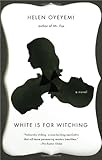
White is for Witching by Helen Oyeyemi.
O goodness gracious!
Underneath her skin, she is
a great ball of fire!

You know, this is the second time that a blurb on the back of the book has really been right on in our book club. That is, first off, this was Liz's pick for Eleven-Books Club. Someone on the back of The Dispossessed was like "such an economy of writing, everything is meaningful!" & they were right. This time, it was The Austin Chronicle, who said White is for Witching was the heir to Shirley Jackson. (It is also the second book in our book club to have pica as a crucial plot point, the other being Mermaid in Chelsea Creek. I get it; I used to be a little obsessed with pica, too; I still have story ideas floating around in my head about it, too.) I've only read We Have Always Lived in the Castle, but that is why I recommended it so heartily to handstil. Seems up her alley, & it was up mine to but by means of another angle of approach: magic. This has some supernatural teeth. Like Among Others, it kind of messed me up in parts. I'm a warlock, I want to get in there, scrapping. Listen, if you have a haunted house, you should call me. Or if you get cursed, or if Caribbean vampires are after you, or whatever. When I hear soucouyant I know how to deal with it-- thanks, Kit Marlowe & Co.-- & I know it is a skin-changer like the loup-garou. The Goodlady makes me think of Carlo Ginzberg & Bensozia & I start getting my game face on & then I remember that it is just a book. "Just" a book, because if you think books aren't spells, you are...wrong.

It took me a long time to "get" what this book was about-- it wasn't until page 137 that my theory was confirmed-- & heck, it took me a long time to figure out what ethnicity the protagonists were. So with that in mind, I suppose spoilers follow? I'm going to stay vague & generally talk more about broader themes & the occasional discreet element-- as I normally do-- but Oyeyemi has a flourish for the post-modern. Which is to say, this isn't a book full of exposition, so talking plainly about things is inherently an act of hindsight. Does that make sense? Like Dark Souls-- yes, I can turn any conversation into a conversation about Dark Souls, apparently-- the story is told in the margins, so to speak. In hints & clues & scattered statements that all together build a picture, but are presented puzzle piece by puzzle piece. The author is a black British woman-- I realize that the ethnic identity of being a Afro-Caribbean Brit is complicated, like hey! The pilot in Code Name Verity, but I don't know a lot about it, so if I stumble in terminology or say something stupid, let me know-- & West Indian mythology & Haiti are referenced in the opening pages, but the Silvers are white people. "White is for witching" is...a statement about how this is a book about a racist haunted house. It is also put me in mind of Saruman of Many Colours: "White!" he sneered. "It serves as a beginning. White cloth may be dyed. The white page can be overwritten; and the white light can be broken."

Oyeyemi's book is about race, but it is never about race, except when the haunted house is speaking. It is about immigration, or the casual use of strange slurs out of context-- like "golliwog" to refer to a brand of cigarette-- or adoption, or class, or any of the other dogwhistle terms you can hear on the news. Only here, rather than being cryptoracist "code," those are more often terms for the blank stupidity of people who act as cogs in the greater machinery of racism. The house-- which seems, from the wreckage of Miranda's dream sequences, to have been blown up in the Blitz & to be a ghost of itself even?-- is the unspoken racism, & ironic racism, unexamined biases & privilege are weapons in the specter's arsenal. You know, & haunted elevators or poison apples or nightmares & hallucinations, possession, mesmerism, whatever evil Alice in Wonderland stuff it can scrape together & use to terrify. & it works, enough for me to feel it as I read the book, to want to yell at Eliot for failing to be the dark knight (the witch's champion!) he knows he's supposed to be. There is other magic afoot in the world-- the tower of guns, voodoo & dark gods in feathers in Haiti could be just a dream, but I don't think so-- & their housekeeper Sade sets her magic against the house but really all she can do is delay, aid, assist.

What happens at the end of the book? Well, finishing, I wrapped back around & read the first few pages & I still don't have a cogent thesis. I'm going to start rambling-- more than usual, I mean-- here, as I try to sort out my thoughts. It isn't all out there in the open, though I am willing to believe all the answers are here, hidden in plain sight, in nooks & crannies, under lock & key. Reminds me of Gene Wolfe, that way. First, can Miranda defeat the Goodlady, the haunted house? I don't think she can, not on her own. Eliot...I don't think Eliot is useless but like Sade, I think he can only offer so much, & from the apple pie at the end I wonder if he isn't entirely compromised. No, it is up to Ore I think, Ore who uses necromancy to blind the ghosts to pass among them, she cracks open the skin of the soucouyant, who could be the vampire slayer but chooses...mercy? Or is weak? Or whose story isn't finished, yet. Ore, who is from Kent, like me, & studied "arch & anth" like me. Ore, who holds the hand of the one she loves & trusts that she won't let her crash when she has her eyes closed, as I trusted my love Jennifer, who led me into a pole when we first started dating... Miranda is in the house. Is she dead? Who do you believe?

The meeting itself was pretty heavily attended! Liz was first, followed by Rasheem, fatbutts, carmyarmyofme, littlewashu, May, fordmadoxfraud-- in the flesh!--, Terra-- via the Matrix-- & last but not least, Beatrice. You can tell by the proportion of Livejournal users that it was a group of hoopy froods who really know where their towels are. We had a pretty rousing discussion about the book-- generally very well liked, though the consensus was that it was mostly a meandering tale rather than a tightly crafted one-- Carmen's review called it "ping-pong-y"-- backed up fairly conclusively by author statements. I compared her to Gene Wolfe-- because I think second readings will be rewarded, as Kerry said in her review-- but David pointed out that it was more impressionistic, which led me to conclude it is Lynchian; like Twin Peaks it holds tight to its internal logic, but that "logic" is dream logic. Other people thought that it was less a "racist haunted house" & just hated outsiders, but I still disagree. Wanted to put down their thoughts for posterity though! We also had a book exchange! Lilly got my pick, We3-- which I chose because, well, I'm into cheap shots-- & I got Carmen's pick, As God Commands.


02 Mar 03:53

Oubliette Session Nine: The Cult of Yama-of-Many-Faces.


(Idol of Yama-of-Many-Faces; art by PO-WEN.)

Finally-- first time this year, actually-- I got my Oubliette campaign going again! Well, Silissa took some credit for the delay, with her pottery class! Fair enough. First to arrive was fatbutts & Luke, the Kitsune nobles, Amina o-Kistune the diabolical bushi & Haru o-Kitsune the scheming kage. Luke & I have been talking about his Occult paradigm, & so he bought the "ley lines" specialty for it to make things official. Eric & Silissa & non-player baby Indigo were next up; Ren Jokoizumi the taikomochi survivor & Moe no-Cho the zaibatsu herbalist, who brought her Perception skill up to OOO. Nicole was last-- she was at a book club but was able to make it after all-- so Keku no-Kin showed up as well. Actually, it took me too long to round them all up in the same place; maybe next time in the same situation I'll just have the curtain come up with all of them already reunited rather than trying to railroad the group into a reunion. We recapped last session & then got into it.


(Osamu of the cult of Yama; Hansel & Gretel concept art by Ulrich Zeidler.)

We started with Haru using his new specialty to bust out a dowsing rod & examine the Pyramid of the Royal Physician. Besides seeing that it seemed that the Pyramid was siphoning cosmic energy from the sky & channeling it into the desert to create the oasis, it also seemed that of the four greater dragonlines leading out of the Pyramid, only two were still extant: one passing through the Arboretum & the other passing through the skull-faced pagoda that the players had steered clear of until now. Now, they head there, where Ren took Mollie's old-character, now-NPC, when she fell into a coma. They walk through the giant wooden skull whose teeth serve as a door to the first floor of the shrine, & are greeted by Osamu, an ancient crone of a woman. She tells them this is the shrine of the death cult, worshipping Yama in his guise as Yama-of-Many-Faces, but that their order is fading, dwindled to only Osamu, her equally aged companion Nana, & the young orphan Morikun. Amina is interested in joining the order-- the worship of the death kami Yama would fit along side her reverence for Mao, the oni god & judge of the dead-- as are a few others, but they put a pin in it for now. Into the pyramid, under a massive stone deadfall trap, warning them to be wary of other traps. As old as they are, the women can't tell them what lies within; no one from their order has entered in generations...another reason they want to re-vitalize their order.


(Scarab larvae & the face in the larvae; photo by me.)

Dungeon time! This is me as a Dungeon Master: either I want to have a session where the conflict is all character driven & social interaction, or I want to lock you all in an old school tomb. Just how I do. The party needs torches, but Ren is ready; his character is adept at scavenging, always stashing or pocketing useful items, & generally a useful packrat. Entering there is a passageway slanting up, & a passageway slanting down. The players decide up is the way to go, along the hieroglyphs & faded paint of the wall, along the...shiny metal bar running along both sides of the wall. I think you know where this is going...Zzzzap! After some shenanigans, they pry the bar out of the wall, breaking the "circuit" so to speak, though Keku noticed it flickers with black lightning back behind them, in the tunnel going down. Everyone is fairly beaten up, from pterodactyls & lightning traps & sand golems. They find a secret door, leading into a wide chamber, decorated with images of keys & feathers, with a dais at the end. As they enter, grubs & scarabs pour down the wall sconces, starting to fill the chamber. The party uses fire to pin them in-- they noticed the chutes leading in & assumed stuff would come down them-- so despite some back & forth, they make it to the other end, even as the maggoty creatures form a column & a face. On the raised altar, there is a golden scarab necklace, which Keku grabs & they run out of the chamber even as another deadfall starts coming down, sealing the room behind them. At least, I'm pretty sure the door slammed shut on them; it was pretty dang late & I had drank more sake than I meant to!


(The Scarab Amulet of the Royal Physician; Pectoral with the Throne Name of Tutankhamun.)
06 Feb 23:34

3, 2, 11.


I went to go see King Lear at BAM with onatopofthings & Jennifer last night. Same theater with the super steep stairs where we saw Patrick Stewart in Macbeath. It was my first time ever seeing Lear, & I'm one of those people who hold to the self-evident truth that Shakespeare, read, isn't a patch on the real thing, performed. So Lear. The titular character was played by Frank Langella. The other actors are unknowns to me-- which is meaningless, they may be very famous in circles I'm ignorant of-- but of them the guy who played the bastard Edmund, Max Bennett, & the guy who played the Fool, Harry Melling, both stood out. So Lear makes me feel very Game of Thrones-y, you know? I can't help but agree that an absolute dictator who has gone mad has to be removed from power. Heck, I would have jumped to murder-- uh, euthanasia-- way sooner. Hey, this is the other side of the coin that people are always telling princesses. You are a royal, not a person, your life is the realms, not your own, you will marry who is best politically, you will die when you become a danger to the kingdom. Oh, I don't know, I get why it is sad & all that, I guess I just mean to say that I don't condemn any of them. Except maybe Edgar; that guy is both dumb & weird, in a way that cracks me up. "I'll fall for every trick but then trick my dad with a prank about suicide!" Uh, okay?


I don't like cop shows & I don't like dramas. I don't like "serious television" unless it has a dose of the surreal. True Romance-- edit-- I mean, True Detective--doesn't have that sense of the surreal, but I've seen people trying to compare it to Twin Peaks & I get why. I can't quite explain it, but I get it. To me, it is most like the first, strange half of Fire Walk With Me, with Special Agent Chet Desmond, played by Chris Isaak. The levels of poverty are similar, trailer parks & prostitution; the people you meet are strange & become embroiled in torrid relationships. If that's the case then Matthew Mcconaughey is playing like the inverted Dale Cooper. He's always got the most nihilistic & paranoid thing to say, but he's also got the like, obnoxiousness of a 15 year old who just decided to get mouthy about atheism. Anyhow, so I like this show; it is brutal & "dark" or whatever they say, so yeah, if you don't want that on your plate right now, steer clear, but I think this show is going to become the ubiquitous water cooler show in a week or two so you should start catching up now is my point.


Goodbye Matt Smith. Okay, I liked this episode, so before I get to that can I just say what really got under my skin? With the whole crack in the world, with the whole trying to go away & not being able to, the whole growing old & raggedy...didn't this feel like this should have been Amy Pond's finale? I don't mean this as a dig at Clara or Coleman! I just mean the writing of the episode really made it seem to me like it should have been Amy at the end, since Amy was the one with him on the adventures with the Silence & the Angels & the Crack. I don't want to be the cliche that can't let go of the Doctor or the Companion I started watching. In fact, I'm ready to give Capaldi a chance, despite the fact that he's a white guy. Boring. I just...well, I do miss the Ponds, but also, I just felt like it was...their story, there at the end. It could have been a perfect excuse to explain what that point in time the Angels sent them to was a fixed point in time, because the Doctor went back that later to take them on further adventures, or something. Now I'm just rambling. Matt Smith was 900 years old & 9 years old. It was a great melancholy, man. I saw you getting old & Baker-y. I bet that was a set-up for your encore in the 75th anniversary special as the weird Curator. Sure like a long con.
25 Dec 19:39

Trekmas Eve.


23 Dec 22:45

Advanced Readings in D&D: J.R.R. Tolkien

by Tim Callahan

JRR Tolkien Lord of the Rings FellowshipIn “Advanced Readings in D&D,” Tor.com writers Tim Callahan and Mordicai Knode take a look at Gary Gygax’s favorite authors and reread one per week, in an effort to explore the origins of Dungeons and Dragons and see which of these sometimes-famous, sometimes-obscure authors are worth rereading today. Sometimes the posts will be conversations, while other times they will be solo reflections, but one thing is guaranteed: Appendix N will be written about, along with dungeons, and maybe dragons, and probably wizards, and sometimes robots, and, if you’re up for it, even more.

Finishing up Appendix N, we come to the heavyweight on the list, the one they call “The Professor,” the one, the only, J! R! R! Tolkiennnnnnnnn! Yes, we saved J.R.R. Tolkien for last, so get ready for all the hobbits halflings hobbits you can shake a stick at.

[Read More]

Tim Callahan: We had to bring this reading project to a close with the most epic of all fantasy epics, the most influential of all Appendix N novels, the big hulking oliphant in the room, Professor J. R. R. Tolkien’s The Lord of the Rings. Perhaps you’ve heard of it?

But in talking about The Lord of the Rings—and I do certainly want to talk about this book, because I love the heck out of it, and I didn’t realize how much I loved it until I reread it recently—we also have to talk about the other oliphant in the room: that Gary Gygax didn’t much like Tolkien’s stuff.

Maybe “didn’t much like” is too strong of a description when you’re talking about a book that Gygax himself specifically listed as an influence on Dungeons and Dragons, but it’s certainly true that Gygax consistently tried to distance himself from the Tolkien influence and, more importantly, from the perception of the Tolkien influence.

Those “hobbits” and “ents” and “balrogs” in the original D&D little brown books certainly implied a close connection between Middle-earth and the fantasy world of D&D adventure, but here’s what Gygax said about the whole thing a few years before he died: “I’m not a big Tolkien fan, though. I did love the movies, but I yawned through the books. I found them very droll and very dull. I still don’t give hoot about Hobbits.”

He credits the Tolkien connection with helping to popularize the game Gygax helped to invent, but as the rest of Appendix N indicates, he was into things beyond the walls of Minas Tirith. Not all D&D players are. The Tolkien influence permeates the game, thanks to all the players who came along and brought their Legolas-leaning elves and their Gimli-geared dwarves into the party. And we can’t forget all the Dungeon Masters who sent their characters on a quest through dark lands and corrupting influences so they could destroy an artifact of power before it fell into the hands of the ultimate evil.

But, really, is that so bad? Isn’t D&D a lot like the Tolkien books, and isn’t The Lord of the Rings like a D&D super-adventure, even if Gygax had sweatier, grungier, pulpier, weirder things in mind?

Mordicai Knode: All due respect to the esteemed Mister Gygax, but I don’t believe any of that for a moment. I think, and this is very much just my personal speculation, that his public antipathy for Lord of the Rings stuff is just sour grapes from being burned by litigation from the Tolkien Estate. I mean, the game has freaking halflings in it. Which tells a vastly different version than not giving a “hoot about Hobbits.” Now, I guess you could say it was Arneson or various players who asked or insisted to have Tolkien elements included in their campaigns or as characters, sure, I’d buy that too. After all, in the interview we did with Wizards of the Coast, you more or less argued that point, that Gygax’s more Lankhmarian Greyhawk ended up overshadowed by players, fans and other writers who focused on the more Lord of the Rings aspects of the game. But for real, treants, halflings, orcs, balors...heck elves and dwarves, rangers, sentient magic artifacts—though filtered through Elric, spoofing the Ring—all of this stuff isn’t just on accident.

A thing I’ve always meant to do is to get four people together, have them make two characters—a primary and a backup who will be on the adventure, troupe-style—and then just give one of them randomly the One Ring. Not like, a super powerful MacGuffin, I just mean I want to run a straight up alternate universe Lord of the Rings saga. Or I’m tempted to start it off pre-Hobbit, see if people deal with Smaug or The Necromancer or what. Evolve a parallel story, where events in Mordor play out differently, where things morph and change based on what the players choose to do.

I should be upfront: when I was a kid I was obsessed with Tolkien. I don’t mean “obsessed” the way people normally talk about their favorite books; I mean, I went into a deep hole. I read the Lord of the Rings for the first time in elementary school, really young, and then I just took off. I was the kid with a corkboard covered in all of the pages I tore out of the Appendices; runes and cirth, photocopied pictures of Galadriel from the Middle-earth Role Playing game, maps, Sindarian glossaries; the sort of stuff I only dimly remember enough to try to get people to play along with The Elvish Meme. I just read everything, all of the books, all of the Lost Tales, Morgoth’s Ring, Tolkien’s correspondences, just the monomaniacal mind of a tween, devoted completely to Lord of the Rings...though really, The Silmarillion was always my specific jam.

TC: I never went even close to that deep, but out of all the Appendix N books, the Tolkien stuff is definitely the formative influence for me. As I mentioned in that WoTC interview, The Hobbit was in my elementary school curriculum, and I read The Lord of the Rings back in 4th grade with a kind of passion I never had for any other books. I loved Middle-earth. But...I never finished the series. I dabbled in The Silmarillion, but even with The Lord of the Rings, I got to the second half of The Two Towers and just lost interest. Then I tried rereading them again in college and the same thing happened. It wasn’t until I saw the Peter Jackson movies that I actually found out what happened at the end of the story. Even the animated Ralph Bakshi movie gave up halfway through!

But I read the whole thing all the way through this past year—aren’t you so proud of me?—and here’s what struck me: The Lord of the Rings is far better written than almost everything else in Appendix N. It’s not just a seminal influence on the fantasy genre because it’s famous. It’s a seminal influence because it’s pretty damned great.

It’s impossible to deny that Tolkien is great at world-building—is anyone better?—but that’s not the only thing that makes The Lord of the Rings so remarkable. He also manages a delicate tonal balance between human-scale (or hobbit-scale) events and landscape-crushing battles. The story starts out as a provincial almost-comedy with ominous overtones and by the end it is the story of an entire multi-faceted culture and the great struggles between good and evil, but not in an abstract way, in a concrete, individual way. It’s vast and specific and none of the other authors in Appendix N pull it off like Tolkien does.

MK: There is a reason that the Professor is the standard in the world of fantasy; he stands up to the hype. He’s got conlang skills that blow pretty much everyone else out of the water, even those who come later, and he builds from the ground up. Languages, history, mythology, geography; his worldbuilding isn’t just slapping a name with too many consonants and an apostrophe on a single “big concept” kingdom, it starts small and that granularity lends...well, incredible verisimilitude. I was happy to see Weta Workshop use the same philosophy; in one of the extended edition interviews someone was all “oh, we have lots of details that never really get shown, swords with runes that the camera never focuses on, costume design details that go past too fast to see, but we figure that they all build up to lend depth to the world.” Well, yeah, yes they do. I’m glad this has become the standard; I don’t think Game of Thrones would be as big of a hit if it didn’t also have an author who lavishes care on the minutia of his stories as well as costume and prop design people who then put a corresponding level of attention to the details.

That isn’t all there is in Tolkien though; it isn’t politics or detail that make the story, it is that there is a heart to them, an ethos. Without being preachy, without resorting to his friend Clive Staples Lewis’ heavy-handed allegory—I like Narnia but I don’t think anyone could call The Lion, the Witch and the Wardrobe “subtle”—he manages to discuss some very big topics. I wrote about the role of Tom Bombadil as Tolkien’s ideal exemplar before, even using D&D terminology. At the end of the day, Tolkien has questions about freedom and tyranny, about sacrifice and responsibility, about justice and liberty. Questions, not easy answers; we see in the text a sacred monarch taking up the throne, with Aragorn and the Ring as a sort of inverted Fisher King and the Grail, but the choices characters make aren’t easy, and they come at a price. Yeah, maybe living amongst nature, unfettered and pacifist, would be lovely...but it can’t stand against tyranny, and so what can men do against such reckless hate? Consent versus compulsion, that is at the root of it, and at what cost?

All of which are questions you can and should be asking in your game. Sure, D&D is as much a game about hacking and slashing your way through monsters as it is anyone else, but I don’t think that precludes it from having ethical depths. Heck, it is a game that actually asks you to put your characters code of ethics on your character sheet, in the form of alignment. You have a chance to put yourself in someone else’s shoes, to ask big philosophical questions of the story and play out hypotheticals...I think questioning deeper issues is a natural extension of the game. So yeah, I’m going to keep bringing up issues of diversity in depictions of characters and talking about the legacy of colonialism in portrayals of orcs and other “demihumans,” because I think that is germane to the hobby and the genre. Tolkien may be imperfect, but the story of Gimli and Legolas is one of acceptance, and even the Easterlings are painted with questions: how did Sauron enslave them, what threats forced them to march to war for him? Not every game is the right one to spring defenseless orc cubs on the players, after the PCs finish breaking into the orc’s home and killing them for defending it, but sometimes, yeah, bringing it up and asking big questions is the right thing to do.

TC: Absolutely! Absolutely to everything you just said, and while the D&D game mechanics favor treasure hunting and loot-gathering over anything else, the moral component is essential, even if players ignore it. But ignoring it is a moral choice, and there are consequences for that too.

I don’t know that we need to spend so many words explaining why The Lord of the Rings is important and amazing, but like many great and popular works it has its share of critics and part of my own embrace of Appendix N isn’t just that I was curious what the other recommended reading was like, but because I wanted to shake off the stale Tolkienisms that have become so embedded within and around the game. When we started talking about this Gygaxian reread in the spring of 2012, I wasn’t even aware of Joseph Goodman’s Appendix N-inspired Dungeon Crawl Classics game or Jeff Talanian’s Astonishing Swordsmen and Sorcerers of Hyperborea, which eschews the Tolkien influence to create a D&D variant that is all Robert E. Howard sweat and stabbing and vile magic in a setting that’s a blend of Lovecraft and Ashton Smith. But as I’ve read the Appendix N authors, I’ve also been digging into these not-quite-D&D games and loving the weirdness that they have embraced.

So I guess what I’m saying is that I love Tolkien. I think The Lord of the Rings is the best book on the Appendix N list. I think Middle-earth is a fascinating setting.

But I have no desire to run any games in that setting. I’m not interested setting up wars between orcs and men, or role-playing an Elven high council, or sending an innocent group of halflings on a heroic journey. For me, that’s the fantasy game equivalent of doing the dishes or mowing the lawn. A chore that’s become mundane.

I’d say, and I’ve never quite thought about this before, but now I’m thinking it might be true, that my default setting for any fantasy role-playing game I run—no matter what system I use or what I call the continent—is specifically post-apocalyptic Tolkien. Ten thousand years ago, the events of The Lord of the Rings, or something very much like it, may have happened. But those records have been lost to time. Only some of the remnants and artifacts and below-ground structures remain, even if they are unrecognizable. New societies have risen and fallen since then, and the world is a strange and dangerous place. Go seek adventure—and treasure—if you must. Survival not guaranteed.

But Tolkien is the bedrock of all that. Even if the details have been buried deep and the decorations washed away.

MK: I’m not sure I totally agree; I think elf queens are the best. I know I use a lot of hyperbole, but I want to be clear that I’m not exaggerating when I say Galadriel is my favorite fictional character. You’re right though that I don’t think people should really be running straight out of the gate Tolkien pastiches. It works best with a twist; what about the weird fungus elves or the moon dwarves? What about the orc senate, the only democratic body in a world of monarchs and tyrants? Or the halfling tradition of “Mister Underhill,” the anonymous persona adopted by any hobbit who needs to get vengeance for mistreatment by the big folk? Tolkien built Middle-earth, he knit the bones of it together, and it looms high over the genre. The least we can do by way of gratitude is to stand on the shoulder of giants, and build something of our own.

...or run a Middle-earth campaign. I’m not the boss of you, do what you want. Actually, it sounds kind of fun. I played Middle-earth Role Playing constantly in junior high—graduating to Rolemaster when my Noldor magician past level ten—and I have fond memories of setting up near the Grey Havens and dealing with the vampire lord Sauron set to try to take over that corner of the world. What kind of campaign are you going to run? I want to tell the story of the orc bard who writes the ballad of the death of Fingolfin!


Tim Callahan usually writes about comics and Mordicai Knode usually writes about games. They both play a lot of Dungeons & Dragons.

21 Dec 03:29

The Krampus is Coming to Town

by Mordicai Knode

Krampus the Yule Lord  Brom

He sees you when you’re sleeping. The Krampus that is. You all know who the Krampus is, right? That diabolical figure covered in black fur, with horns like a goat, cloven hooves and a long red tongue? You better watch out. The Krampus is the legendary Christmas counterpart to Saint Nicholas, who punishes the naughty children while Nick gives the good ones gifts. Sure, he didn’t really make the trip across the pond, but over in Europe he was and still is a popular part of the holiday season. You better not cry, you better not pout. The spooky figure dragging rusty chains who snatches up bad children, swatting the naughty with birch switches, stuffing the worst in his sack to carry off.

[Read more]

Brom Krampus the Yule LordHe’s the central figure of the Krampuslaufen, when people dress up like devils, get drunk on schnapps, and run through town. This is the myth that artist-turned-author Brom decided to revitalize with the nice holiday story, Krampus: The Yule Lord. Weaving the folklore in with ethnography and more than a few very clever pieces of Norse mythology, he delivers a story that will make you a fan and celebrant of Krampusnacht and Yule. Gonna find out who’s naughty or nice.

I’ve liked Brom for a while now…in fact, I think I can tell you the year I became a fan of Brom: 1994. I had probably seen his work before then, but when I picked up the newest Shadowrun module, Harlequin’s Back, I knew I had to find out more about the cover artist. That moment there crystalized a broader awareness of how roleplaying books and roleplaying illustration exist in a symbiosis, a gestalt, and made me take active note of people like Tony DiTerlizzi and Larry MacDougall and to just start paying attention to who was putting those pictures next to the statistics and game mechanics.

Brom Harlequin

The relationship between the pagan Yule traditions—at least, Brom’s version of them, which he talks about in more depth in the book’s appendix—and the Christian heritage of Santa Claus is at the root of the book, which deal with the appropriation of winter solstice rituals into Christianity on a fictionalized, supernatural level. Krampus begins chained, hidden away, a heathen creature forgotten, betrayed by Santa Claus, shoved under the rug in order to focus on a sanitized version of the former fertility festival. Locked up, the Krampus has plenty of time to focus on one thing: Revenge!

Krampus the Yule Lord  Brom

How the Norse mythology gets dragged into the book is actually really the brilliant bit. I suppose it is a bit of a spoiler, but again, since I just read Song of the Vikings, I sort of need to talk about it; you could skip this paragraph and the next, if you are concerned about remaining in the dark, but I don’t think it will ruin your enjoyment of the story if you don’t. Because the Germanic traditions of Yule are connected to Norse mythology, Brom draws two elegant lines, connecting both Krampus and Santa to the gods of Asgard. Krampus is the son of Hel, daughter of Loki, queen of the underworld. He is the Horned Lord, the revitalizer of the Earth when the dark of winter lays upon the land.

Brom Krampus the Yule Lord Baldr Santa

Now, the twist behind Santa Claus is the more contentious and cunning origin if you ask me. You know the story of Baldr the Brave, Baldr the Beautiful, Baldr the Best, beloved son of Odin and Frigg. Everything loved Baldr…except Loki. Because Baldr was so adored, everything in the world swore to his mother Frigg that it would never harm Baldr, except Frigg didn’t bother to get little old harmless mistletoe to agree. Add in Loki, the blind god Hoder, and as you’d expect, that sprig of mistletoe kills off Baldr. Chekhov’s Herb, if you will. Well, that ain’t all she wrote for Baldr; after Ragnarok, when everyone dies? He comes back to life…and that, my friends, is the secret origin of Santa Claus.

Brom Krampus the Yule Lord Wipi

The biggest problem I have with Krampus is the same problem I have with a few other of Brom’s novels: the human element. I realize that the no-account young man who over the course of a novel learns an important lesson about standing up for himself is a major theme of literature. Heck, I realize that the Refusal of the Call is standard fare for the Campbellian Hero’s Journey, one of the mythic underpinnings of narrative. I just…don’t like the protagonist for the bulk of the book. Jesse’s just too sniveling, too full of self-loathing and self-doubt. I agree with the villains when they talk down to him; he deserves it! I don’t find the character likable, not for a long stretch of the book. Luckily, once the Krampus comes onto the page, he just chews up the scenery: Jesse’s pathetic but the Krampus is delightful.

Brom Krampus the Yule Lord Perchta

What this book achieved, in the end, is something important, I think: it made me want to put out shoes for the Krampus to fill with gold coins. It made me want to get gelt, those chocolate gold coins, to put in other people’s shoes. The Krampus made me want to drink Schnaps—the German stuff, not the sugary American stuff—put on horns and run around in the snow. Ultimately, it made me want to participate in the holiday tradition of the Krampus, to put him side by side with Santa Claus and Rudolph and George Bailey and John McClane and the Doctor Who Christmas Special.

Brom Krampus the Yule Lord Nipi

he knows if you’ve been bad or good…so be good for goodness sake!


This article originally ran on December 4, 2012


Mordicai Knode would also like to mention that this isn’t the first time The Horned Lord and Santa Claus have met: he highly recommends that you read Frank L. Baum’s The Life and Adventures of Santa Claus, and see the Rankin and Bass adaptation of it, too. You can follow Mordicai on Twitter and Tumblr.

18 Dec 21:58

Advanced Readings in D&D: Leigh Brackett

by Mordicai Knode

The Black Amazon of Mars Leigh Brackett

In “Advanced Readings in D&D,” Tor.com writers Tim Callahan and Mordicai Knode take a look at Gary Gygax’s favorite authors and reread one per week, in an effort to explore the origins of Dungeons and Dragons and see which of these sometimes-famous, sometimes-obscure authors are worth rereading today. Sometimes the posts will be conversations, while other times they will be solo reflections, but one thing is guaranteed: Appendix N will be written about, along with dungeons, and maybe dragons, and probably wizards, and sometimes robots, and, if you’re up for it, even more.

Leigh Brackett is up this week; in particular, a couple of stories from her “Leigh Brackett’s Solar System” planetary romances!

[Read More]

I’ll be honest; the first time I picked up Leigh Brackett, it was because Nicola Griffith (author of Hild, among many other treasures) wrote the introduction to Sword of Rhiannon, the book previously titled The Sea Kings of Mars. If Nicola says it is good, I listen, and you should too. The other reason I was interested in taking Brackett for a spin was a little indie film. You’ve probably never heard of it; it was the sequel to another little independent movie. The Empire Strikes Back? I don’t know if you’ve heard of it, but it has got laser swords, wizards, spaceships, robots, smugglers, a whole host of stuff you might enjoy.

Empire is what, I suspect, brings a lot of modern readers to Leigh Brackett, and you know, that is actually fairly on point, from what I can tell; her fiction has magic swords, wizards, spaceships, bounty hunters…enough that you can pretty easily draw a line from here to there. If that isn’t your cup of tea, her hardboiled mystery repertoire includes gems like The Big Sleep, so whichever your preference, she’s got you covered.

A brief word of caution, or complaint; take your pick. I bought a copy of The Black Amazon of Mars online, because I wanted a physical copy of it. I have no qualms with e-books—quite, quite the contrary—but I generally prefer a physical format when I can get it, just as a matter of personal taste. I bought a copy and I consider myself burned. Rather than a used book, or a re-print, I got what I can only assume is the output of evil robots; I’ve heard the rumors of bots scanning Project Gutenberg and then copying and pasting the free unformatted text from there into print on demand service, and I think that is what I got. Ugly and badly typeset, printed in 8.5 x 11 paper...I’m a sucker. Note to self, next time you buy something like this, look a little more closely at the dimensions and specs! I’ve had this happen to me before—also on a Martian tale, though that was Barsoomian—so I know I really have no one to blame but myself.

The first time I read Brackett was a few years ago, and while at the time I found her agreeable though nothing special, reading her again has caused me to revisit my opinion. Maybe it is because I stumbled upon her hero, Eric John Stark, also called N’Chaka. I know I have a tendency to describe things by way of anachronistic mash-up, but this time it really fits. Stark is Space Tarzan, and in The Black Amazon of Mars, he’s Space Tarzan on Robert E. Howard’s Barsoom. It really is quite the love letter to Edgar Rice Burroughs and Robert E. Howard, but it isn’t just a pastiche; Brackett brings her own worldbuilding to bear on it. In fact, I’d say her “Solar System” is quite the campaign setting; stories might have different plots or histories or characters, but the planets and the key flora and fauna remain the same. I admire that, personally; I think the best thing about a well-developed setting is the verisimilitude that a cogent world brings, and that frees you to tell modular stories, tales in a world I accept as real but that don’t necessarily need to be linked by a single saga. Iain M. Bank’s Culture novels are sort of the same way. Another trick Brackett uses to good effect is to take the details of the world for granted; to describe not by exposition but by singular detail. I don’t know what they ride on Mars, but I know they are hissing reptiles with a cockscomb, because I pay attention to context clues.

Speaking of context clues, here’s a neat thing: Eric John Stark is a dark-skinned hero, a native of sun-burnt Mercury. Oh sure, illustrators of the time tended to assume he was a blonde white guy, but there it is, right in the text. Nice to have a little diversity on the list! Not only that, but Leigh Brackett’s novels are ones of culture clash, of imperialist and the colonized, and her protagonists tend to side with the latter. I’ve talked a lot about the unexamined legacy of colonialism on fantasy fiction, but that just makes me all the more voracious for examined colonialism. Not that I really picked the best ones to showcase it: Sword of Rhiannon is a story about an archeologist, thrust back in time by MacGuffiny shenanigans, captured by a slaver-queen like an unredeemable Bêlit, while The Black Amazon of Mars is about a civilized man with a savage past out in the wilderness of Mars—where it is still feudal—who gets caught up with a femme Conan. He is...a bit of a scoundrel, you might say. I get the impression Brackett likes scoundrels. It also feature hideous ice monsters very reminiscent of George R.R. Martin’s Others, his White Walkers. I think it is probably a coincidence, but who can say...especially when the protagonist’s name is Stark?

Both stories feature strange presences, haunting figures from the past, which is a trick I personally like to use in my game: the flashback, the possession. Focus on one player, give the other ones note cards with a couple of quick NPCs with easy goals to strive for, and play out a quick vignette. I don’t know, maybe that is just me? But when Stark puts the jewel to his head and is filled with an alien mind, I got the impression that the author knew just what I mean. There are plenty of other flourishes that likely enchanted Gary Gygax. Brackett is very liberal with the obscure vocabulary; I don’t even mean “relatively” obscure, I mean she goes all out. She stumped me a couple of times, and I bet she’d stump you, too. Then there are the few pseudo-scientific pieces of techno-magic—a cold sphere and a heat sphere that are half based on microwaves and half based on, I don’t know, oppositional elementalism—that have a very “dungeon logic” feel. There is a vast ice dungeon, accessible via a ruined tower...doesn’t that sound Dungeons and Dragons?


Mordicai Knode is all about the ruins of Mars and polar ice caps. He’s all about it. Tim is all about the jungles of Venus. At least, Mordicai assumes so, since he didn’t see him out on the red sand, black canals or white ice.

14 Dec 01:34

Tor.com Reviewers’ Choice: The Best Books of 2013

by Tor.com

Other than robot unicorns, mugs of tea (earl grey, hot), and pictures of Tom Hiddleston, the sight most prevalent in our little rocket here at Tor.com are heaps of heaps of books! We get books any way we can here, and though we’re primarily a science fiction and fantasy website, we read across a myriad of genres.

Between our rereads and regular columns including Under the Radar, Fiction Affliction, Short Fiction Spotlight, Sleeps with Monsters, and Genre in the Mainstream, we’re reading books and reviewing books around the clock! So with 2013 coming to a close, we invited our regular contributors to choose their three favorite books from the last year, and we’re sharing their responses and recommendations below.

Please enjoy this eclectic overview of some of our favorite books from 2013, and be sure to let us know about your own favorites in the comments!

[Read More]


Jenn Northington

It’s never easy to pick the best books out of a whole year’s worth of reading, but these three standouts from 2013 have had me chasing people around the aisles of the bookstore.

There are a lot of things to love about Karen Russell’s recent short story collection, Vampires in the Lemon Grove, but my favorite is the verbal secret handshake that occurs when two people who have read it compare notes. “And the one with the mirror?! Oh my god.”

I haven’t been able to stop talking about Ken Kalfus’s Equilateral, which is the most bonkers historical fiction about the hunt for extraterrestrial life I have ever had the pleasure to read. I mean, what 19th century astronomer wouldn’t build a giant equilateral triangle in the Sahara Desert in order to contact the Martians, am I right?

And as I keep insisting to anyone who will listen, Dara Horn is the China Mieville of literary fiction and her newest book, A Guide for the Perplexed, proves it. It’s a philosophical treatise, cyberthriller, family story, kidnapping, and quest for the Information Age’s Holy Grail—universal archiving—all in one.


Amal El-Mohtar

The three stand-out knock-me-down-and-build-me-up books I read this year were Sofia Samatar’s A Stranger in Olondria, Elizabeth Wein’s Code Name Verity, and Nicola Griffith’s Hild. They’re all very different from each other—one is a secondary world fantasy, one is historical YA set during the second World War, and one is about the life and times of the woman who would become St Hilda—but they share a core of women telling their own stories, magnificent (and wildly divergent) prose, and striking characters supported by a wealth of loving research. They also make for an interesting triptych of relationships between oral and written histories.

A Stranger in Olondria awed me mostly with its rich descriptive style, such that I remember it chiefly as an experience of light, scent, and taste; Code Name Verity’s brilliant structure and pacing left me an inconsolably shattered husk of a human being convinced that nothing could be good and beautiful ever again if it were not this book; and Hild’s thousand felicities I still can’t stop exclaiming about, so it’s a good thing I reviewed it more fully for NPR.

I can’t recommend these books enough.


Niall Alexander

In the course of curating the British Genre Fiction Focus and its forward-facing sister, the Hitlist, I’ve had the perfect pretext to pay particular attention to the best British books released this year. This, then, strikes me as an outstanding opportunity to highlight a few of the finest.

The first to wholly floor me was but one of 2013’s two terrific Patrick Ness novels. An intensely affecting love story bolstered by a remarkable cast of characters, “I laughed at The Crane Wife, and I cried... but before it was over, I also felt like I’d lived another life, and died a little inside.”

Though The Crane Wife has its tragedies, The Machine by James Smythe is a far bleaker beast. It’s a brilliant book about woman who decides to reprogram her haunted husband using an obscene machine which purports to restore the essence of a person’s self. “Precise and provocative, The Machine is a powerful parable about memory and regret which grips from the get-go.”

Last but not least, The Year of the Ladybird is “slight but delightful ghost story” by Graham Joyce set in a budget British holiday resort during the infamous summer of ’76. It’s the author’s best book in years, and what sets it apart is “Joyce’s ability to engineer—not behind the scenes but in plain sight—a feeling that something magical is happening, something extraordinary, even when there’s little more to the story than immediately meets the eye.” This is British genre fiction at its best.


Karin L. Kross

Unnatural Creatures, edited by Neil Gaiman and Maria Dahvana Headley, was a completely delightful anthology, one that I’m certain to dip back into often in the future (particularly when I feel like I need to break my heart again on Peter S. Beagle’s “Come Lady Death”).

Max Gladstone’s Craft sequence continues to be terrific in the latest installment Two Serpents Rise; I love his refreshingly diverse casts of characters, and the combination of corporate/legal thriller and fantasy in these books is totally irresistible.

And I also really enjoyed Joyce Carol Oates’s The Accursed, which improbably and dazzlingly weaves minutely researched historical fiction, Gothic horror, and tales of demon bridegrooms into a family epic that is also about the American original sin of racial oppression.

Honorable mention: J.M. Sidorova’s The Age of Ice—a sweeping drama of Russian history through a unique fantasy lens.


Rob Bedford

2013 brought many great books to readers and the tough task is whittling it down to three books. That said, the top slot is easy for me, Joe Hill’s NOS4A2 was my favorite book of the year. NOS4A2 is a dark fantasy/epic horror novel about survival, love, sacrifice, and modern-day vampires. In short, it is a novel by a writer at the height of his talents. Protagonist Vic is a young girl, a lost soul, who becomes entangled in the life of Charles Talent Manx, who lures children to Christmasland, aided by Bing, AKA the Gasmask Man. Manx has much in common with vampires; despite not having the requisite fangs he most definitely saps the life of children, but Christmasland has nothing in common with Jolly Old Saint Nick’s North Pole abode. Hill balances the intimacy of superb characters against the epic backdrop in which he’s set his story.

Determining the next two books for this top three is tough, but I’ll lean towards The Tyrant’s Law by Daniel Abraham. This third book in his Dagger and the Coin sequence is a superb addition to what, for me, is the best ongoing Epic Fantasy series being written. This installment follows the same rotating POV structure as the previous two novels, and continues the tale of a world readjusting to a major change while beset by the slow reemergence of powers and creatures long-thought to be dead or mythical. Abraham writes some of the best characters and some of the most empowered women in the genre.

Finally, a writer who made my top 3 in 2012 makes the cut again in 2013—Robert Jackson Bennett. American Elsewhere was a fantastic novel that is a blend of Mystery, Science Fiction, Dark Fantasy, and Lovecraftian / Cthulhu Mythos that brings those elements together in an unsettling fusion of a powerful whole that is like the best amalgamation of a Neil Gaiman and Stephen King novel. A woman’s father dies and she learns of his house she inherited in the so-remote-it-is-barely-on-any-maps town of Wink, New Mexico. When she arrives in Night Vale … rather Wink, she learns why this little town is not on any map and why it is so secretive.

Honorable mentions go to Rachel Bach’s Fortune’s Pawn, Myke Cole’s Fortress Frontier. James K. Decker’s The Burn Zone, V.E. Schwab’s Vicious, and Chuck Wendig’s The Blue Blazes.


Liz Bourke

It’s been something of a bumper year for excellent books—at least for me. The really unexpected standout was Ann Leckie’s Ancillary Justice, an utterly amazing debut about which plenty of ink has already been spilled. I really hope we see more science fiction with this much ambition for its cultures, societies, characters, and storytelling in the future: it’d be great if Leckie could start a trend.

But I’m torn to pick my favourites of the rest of this year’s crop without drifting off into a list. There’s Nicola Griffith’s brilliant Hild, of course, and Elizabeth Bear’s excellent Shattered Pillars, and Roz Kaveney’s quirkily wonderful Reflections, and Aliette de Bodard’s On A Red Station, Drifting, and Marie Brennan’s A Natural History of Dragons, and Stephanie Saulter’s Gemsigns—see, a list. I told you. And I’m leaving out others, just as close to my heart. Books! Don’t make me choose between them...


Stefan Raets

The best books I read in 2013 were published in 2012 (Range of Ghosts by Elizabeth Bear) and 2011 (City of Bohane by Kevin Barry) respectively, but my Top 3 books that were actually published in 2013 are:

Six-Gun Snow White by Catherynne M. Valente: This stunning novella recasts Snow White as a biracial girl in a memorable Wild West setting, creating an intricately layered, moving and unforgettable story.

Hild by Nicola Griffith. Historical fiction, set in Seventh Century England, about the early life of the young, unique woman who would become St. Hilda of Whitby. Don’t usually read historical fiction? Read it anyway. Hell, read it if you don’t usually read books.

Ancillary Justice by Ann Leckie. This stunning space opera introduces Breq, the woman who used to be a spaceship and who is now on a mission to kill the immortal, multi-bodied leader of the Radchaai Empire she used to serve. Easily the SF debut of the year, Ancillary Justice challenges expectations on more than a few levels.

Sneaking in one more: my favorite short story collection of 2013 was Conservation of Shadows by Yoon Ha Lee.


Ron Hogan

Back in the summer, I read Nelly Reifler’s Elect H. Mouse State Judge for Tor.com’s “Genre in the Mainstream,” and it’s still one of my favorite books this year in that hazy zone where “literary fiction” and “SF/fantasy” overlap. As I said then, the short novel “unfolds perhaps not so much like a dream, but like a perverse playdate with the contents of a 1970s toy box dumped onto the floor,” with Ken and Barbie transformed into hypersexualized private investigators and the Sunshine Family dolls recast as a sinister cult—but it’s the psychological underpinnings Reifler brings to the story that make it truly unsettling.

I was also unnerved by Nathaniel Rich’s Odds Against Tomorrow, which I wrote about for the Dallas Morning News. You can imagine what reading a novel about a mega-hurricane slamming into New York City just a few months after living through Sandy was like. But the real heart of Rich’s story is Mitchell Zukor, a worst-case scenario planner for a darkly satirical consulting firm. As his boss explains it: “We make recommendations to our clients about how to reduce their exposure to catastrophe... If our recommendations are insufficient, we’re not liable. And our clients, as long as they pay for our services, are not liable either.” Fans of Fred Pohl and C.M. Kornbluth’s The Space Merchants would feel right at home in Rich’s world.


Brit Mandelo

For me, 2013 stood out for its collections—in particular, the two-volume Ursula K. Le Guin retrospective The Unreal and the Real and Christopher Barzak’s Before and Afterlives. The Le Guin retrospective has been a long time coming, and the arrangement of the volumes into “realist” and “speculative” is also intriguing and perhaps more slippery than it at first appears. Barzak’s first collection of short fiction showcases a range of clever, touching, and personal pieces—it’s handsome and pleasant to read.

Otherwise, I’d also like to mention one novel and one nonfiction book of note: Blood Oranges by Kathleen Tierney (Caitlin R. Kiernan) and Scatter, Adapt, Remember: How Humans Will Survive a Mass Extinction by Annalee Newitz. Blood Oranges is a satirical romp, insanely fun and sharp-tongued, where Kiernan has a go at the tropes of “urban fantasy” and comes through with a delightful pastiche. In a different vein, Scatter, Adapt, Remember takes a potentially dark and pessimistic topic—mass extinctions—and takes it in an educationally uplifting direction, exploring the past to survive the future. It’s readable as hell, too—one of the most approachable and entertaining nonfiction books I’ve read in a while.


Mordicai Knode

For me, it a was a year of mummies, vampires and…brave warrior mice!

Mouse Guard: the Black Axe, written & illustrated by David Petersen, is my number one pick for 2013; a Mouse Guard prequel about the struggle of one mouse to become the aged mythic hero of the latter series. A book I was forced to describe as melting my face off it was so good.

Then there is Gene Wolfe’s The Land Across, which in Wolfe’s usual deceptive fashion is about several radically divergent concepts; authority, travel writing and…Dracula? One of Wolfe’s more “urban fantasy” novels; like Peace or The Sorcerer’s House.

It wouldn’t be a good end of the year round-up for me if it didn’t have a roleplaying book on it, and my favorite this year was Mummy: the Curse for the World of Darkness. What do you want from a mummy book? Swarms of chittering scarabs? Sentient sandstorms? Evolution from a shambling horror to a sleek sorcerer? Okay, I’m just listing stuff that happened in the movie The Mummy but that is ultimately my point: I wanted cool mummy stuff & I got cool mummy stuff.


Alex Brown

Best book of 2013? You realize you’re asking me to choose between The Ocean at the End of the Lane by Neil Gaiman, NOS4A2 by Joe Hill, and Something More Than Night by Ian Tregillis. A choice like that is impossible. It’s like asking which sucks more: awesome, mind-blowing, or fan-frakking-tastic. These are the 3 authors that break me apart over and over again. I have travelled great distances to see them read and faked sick at work to stay in bed to read them. I own multiple copies of everything they’ve ever written (even the infamous Duran Duran bio), yet rarely have copies on my bookshelves because they’re always on loan to friends and family. Their stories are heartbreaking, tragic, comic, disturbing, disconcerting, and lovely all at the same time, and populated by characters that are the antithesis of a trope. But it’s the way they write that gets me the most. There’s an undercurrent of a melody to their literature, a lyrical poetry, a way of reworking English into something wholly new that I relish. Pick any of these 3 books as your Next Great Read and you won’t be disappointed.


Justin LandonJustin Landon

2013 is kind of a wacky year for me, in that picking the year’s best titles is simple. Robert Jackson Bennett’s fourth novel, American Elsewhere, is one of those quintessential commentaries on Americana that’s so pervasive in contemporary lit, but he bedazzles that narrative style with a creeping primordial Lovecraftian horror. What Lavie Tidhar did in The Violent Century is somewhat similar, capturing a literary structure and style and pairing it with a subject matter more at home in the pulps—World War II superheroes. It’s a beautiful novel that’s as much a romance as it is a thriller. And finally, Ancillary Justice by Ann Leckie is the right novel at the right time for genre readers. It’s an accessible and exciting space opera that also challenges all kinds of reader preconceptions about gender and the expectations we assign to that designation in our culture. If someone was only going to read three science fiction and fantasy novels this year, these three are the right answer. Get shopping!

10 Dec 03:08

Advanced Readings in D&D: Andrew Offutt

by Mordicai Knode

Swords Against Darkness 3 Anthology Andrew OffutIn “Advanced Readings in D&D,” Tor.com writers Tim Callahan and Mordicai Knode take a look at Gary Gygax’s favorite authors and reread one per week, in an effort to explore the origins of Dungeons and Dragons and see which of these sometimes-famous, sometimes-obscure authors are worth rereading today. Sometimes the posts will be conversations, while other times they will be solo reflections, but one thing is guaranteed: Appendix N will be written about, along with dungeons, and maybe dragons, and probably wizards, and sometimes robots, and, if you’re up for it, even more.

This week is a strange case, as it is the work of an editor, not a writer, that caught Mister Gygax’s eye: Andrew Offutt, and his Swords Against Darkness III anthology, to be specific!

[Read More]

Sneaky, slippery little Swords Against Darkness III! First, I “checked it off” in my head because I’d already talked about Fritz Leiber’s Fafhrd and the Gray Mouser books, and those have the same nomenclature—swords against this, swords against that—so I thought I’d already taken care of it. Second, because of all the cheap used copies of these books that I’d gotten, this was the priciest; I guess there still is pulp fiction out there that is relatively rare. I shouldn’t be surprised; I think everybody probably has some pie-in-the-sky rare books they’ve got booklust for. I’m lucky, actually: I saved up and got a copy of the Harmonia Macrocosmica and I got a copy of the French facsimile edition of the Voynich Manuscript as a gift after none-too-subtle hinting; I’m hoping this year that my blatant hint dropping will net me one of the new editions of the Codex Seraphinianus!

Here is the thing about Swords Against Darkness III: it is really Dungeons and Dragons-y. Parts of it are cringe inducing; I recently watched Deathstalker on Netflix, and the two share a certain “seriously what is with all this sexualized violence?” incredulity and embarrassment for the viewer. That sort of leather loin cloths and oiled biceps are on display here. Wayne Hook’s “Servitude” has a deformed strong arm berserker, John DeCles has his unstoppable gritty warrior in “Rite of Kings,” “A Kingdom Won” by Geo. W. Proctor has the dashing Nalcon…but by 1978, those tropes were getting tired, and I suspect Offutt knew it, because they aren’t the whole story. “Servitude” is about a curse, “Rite of Kings” is a sterling indictment of slavishly following the Monomyth, or of “the ends justify the means,” depending on your reading, and Nalcon…well, okay, he’s a bit of a cliché but the story surrounding him is one of those big gonzo weird stories; defiant misotheists, gill-people, resurrection, Atlantis, all that jazz.

Nor is this all an old boy’s club, though the assumption of there being an old boy’s club is pretty on-the-face of it. Offutt sounds exhausted by it, with lines like:

“Others continue telling me how nice she is to look upon. That’s nice; so am I and so is Ann-Margaret and so is David Soul. It is Tanith Lee’s talent, though, and its product that most interests me.”

Yeah, scorn the male gaze! Rock on. So obviously, Tanith Lee is in here, with an excellent tale of wizard apprentices and ethical choices. Hey, come to think of it—spoiler alert—the “good” wizard wins because the teachers cheat…just like Harry Potter! Okay, okay, I’m just doing a little friendly trolling. Kathleen Resch has a…vampire poem? A short story anthology with a poem tossed in always classes up the joint, I think.

You know what this is chock full of? Curses. Swords Against Darkness III’s biggest contribution to Dungeons and Dragons? Curses. Come on, you know Gary Gygax loved curses; irrational ones, curses where they don’t make sense, just random “gotcha” whammies. I mean, he liked the rational ones too, but while an insane and evil lich littering its tomb with traps and curses before going on an indefinite astral jaunt is sensible (via the logic of the undead, that is), the vast majority of cursed stuff in D&D gets there by random chance, by losing out on the luck of the draw. Gauntlets of Ogre Power? Sorry, cursed. Magic skull wants to grant you wishes? How do you think that works out? Monkey paw stuff like that leaves its damn dirty ape fingerprints all over the hobby.

What else these stories have are relationships. I don’t mean romance, I mean…well, I mentioned Leiber but I’ll bring him up again because the friendship element of their stories is at the core—I think—of the party dynamic in Dungeons and Dragons. We see that same thing in a few of the stories here; David Madison’s Diana and Marcus in “Tower of Darkness” are real gems, right off the bat. A big bruiser—Diana—in a peacock cape and a small dark playboy—Marcus—in too much mascara. Together…they fight vampires! Or Richard Tierney’s “The Sword of Spartacus” which is a great example of when the party gets railroaded by a weird wizard on the DM’s behalf.

Oh and the oddities! Escaping from giant bloodsucking paper moths in “The Pit of Wings”; trying out Alexander the Great’s solution to the Gordian Knot on a lunar cult in “Rite of Kings”; Darrell Schweitzer’s “The Hag” and its sort of Baba Yaga, witches’ esbat swagger; there is solid stuff in here. Heck, “The Mating Web” by Robert E. Vardeman is a fun aside: a story where the brave hunk of warrior turns out to be the sidekick, of sorts, to a giant spider. Sidekick, confidant, marriage counselor—six of one, half dozen of the other.

It ends with Poul Anderson’s essay “On Thud and Blunder.” I bet this article blew Gary—can I call him just Gary? After reading his book selections I feel like I’ve gotten to know him better, gotten to a first name basis?—Gygax’s mind. These days, you’d expect to read an essay like this…in the middle of the Dungeon Master’s Guide. It is Poul Anderson, Golden Age giant, telling people that if they want their fantasy story to make sense, you have to put in sensible worldbuilding elements. Oh, there are bits on how the genre is “overpast” (in 1978, mind you) for more non-Western milieus, on Yelü Chucai, the Confucian adviser who urged Genghis Khan to conquest, on class and production and disease and arson and the physics of weapons.

What he comes back to is the premise. A plausible world is the cornerstone of verisimilitude. You can “buckle your swashes” as Anderson puts it, but the sensible construction of the world is what puts the exceptional into stark relief. It is right on advice, but I think now days we take it as read…in big part because, and I’m speculating, Gygax liked this so much that he spread the word, that is became one of the roots of Dungeons and Dragons.


Mordicai Knode likes cursed items, but they need to be put in places where they make sense is all. Tim Callahan likes traps but...Tim? Tim? Dagnabbit, lost; I bet he found another trap.

07 Dec 21:30

Hey Ice Queen! Why'd You Steal Our Garbage?


Hey! Last night Ken, of Berling's Beard, ran a D&D Next game last night! Set in Icewind Dale, I think the events are part of the bit of metaplot Wizards of the Coast is trying out, "The Sundering." Alicia summarized it as "north of The Wall" so I decided to go into full tundra & Ice Age mode. I played an orc druid named Zugzoz Mammoth-Haunt, of the Sabertooth Clan, of the Circle of the Mammoth Totem. His druidic holy site is a mammoth graveyard, & he rides a giant stag-moose named Black-Antler. Alicia played Kato, a half-orc barbarian, but city raised, a slicker trying to get in touch with her "roots". Emma played Fillip-- called mostly "fiddle-whip"-- a human monk trained at the Penguin Clan monastary, an orc school of brawling located in an iceberg temple. Me, Alicia, Ken, Emma; a little "Stories of Our Youth" reunion. I know fatbutts was jealous, 'cause she said so on Instagram. Walei played Samir, an elf wizard from the semi-mythical Falcon Clan, & Stacy played Dewberry, a gnome druid also of the Mammoth Circle, but born of the Ice-Fox Clan. I brought miniatures; one for Zugzoz, one for Zugzoz mounted, & one for the two "combat" forms he's likely to take, snow leopard or dire wolf. We didn't play with minis at all, but on the plus side I had a physical prop to let Walei, who is blind, feel. I've never gamed with someone who was blind before, but it wasn't a big deal; mostly everyone is already excited to cheer or groan over a die roll, so saying the result out loud is really natural. Hm; maybe there should be an app for random number generation with a robot voice?


This playtest iteration of DnD Next is nice. I think the druid's shapeshifting is probably better in Fourth Edition or earlier iterations, though. I don't think that it makes sense to have a different statistical block for every form; a "predator form" or "flying form" would be fine, I think. Then again, using the whole Monster Manual as additional class content is smart, & the "if you drop HP you reform as a druid" is a good mechanic. As before, Advantage is the key invention of this edition, much like feats were for Third Edition. Which, by the way, making feats optional & equivalent to statistical bonuses? A good conceptual balance. The Proficiency bonus-- based on your level, a bonus with tools or weapons-- is very nicely done, as well. Oh & the rules for Criticals...hey first off, I rolled a 20! My luck with dice is spotty; I'm not bad with a d00 but then, you are supposed to roll low, aren't you? Hit dice, I like those too; actually, the "short rest" concept over-all worked; if you aren't going to give up & call things "scenes," the short rest at least helps break it up similarly. We started at second level; it looks to me like the design of the classes is that first level is relatively simple & second level is about that same level of complexity, over again, before the classes more or less stabilize. Overall, I could use maybe one more round of simplification in the rules, but that is me.

I'm impressed with Ken's ability to keep track of pacing. Keeping the group moving & contracting the story are hard skills, especially for late-night one shots, but we got it done. Our characters were called for a moot, led by fair-haired man named Falnor to a meeting at a river of tears, where the witch & druidic hierophant Omtos charged us to defeat the Chosen of Auril, God of Winter, so that Faerûn doesn't end up like Westeros, all "winter is coming." No, maybe not, because Fillip pummeled the heck out of winter while...but I'm jumping ahead. Omtos gave us some gourds, too; I got a potion of clairaudience. First we trekked cross-country, finding our way blocked by juvenile yetis. The druids shifted forms, the wizard made illusions of flames, the monk broke grapples & flurried blows, the barbarian raged. They we kayaked across the icy sea-- leaving Black-Antler behind-- to a black crystal spire, & a frozen queen, just like that Disney movie. I was ready with the healing word & a javelin--I'd already used my wildshape to turn into a bat to sneak in-- & everyone just laid into her until at last she was dead!
03 Dec 14:15

Advanced Readings in D&D: Margaret St. Clair

by Tim Callahan

The Shadow People Margaret St ClairIn “Advanced Readings in D&D,” Tor.com writers Tim Callahan and Mordicai Knode take a look at Gary Gygax’s favorite authors and reread one per week, in an effort to explore the origins of Dungeons & Dragons and see which of these sometimes-famous, sometimes-obscure authors are worth rereading today. Sometimes the posts will be conversations, while other times they will be solo reflections, but one thing is guaranteed: Appendix N will be written about, along with dungeons, and maybe dragons, and probably wizards, and sometimes robots, and, if you’re up for it, even more.

Margaret St. Clair is up this week, for her novel The Shadow People. An underworld story about skulking elves and blood magic, of bell bottoms and psychic powers.

[Read More]

Tim Callahan: It’s like underground comix meets Timothy Leary meets AD&D module D1: Descent into the Depths of the Earth. It’s this slender little mostly-forgotten novel called The Shadow People! And I don’t know if it’s any good by any objective standard, but I found it unsettling enough that I can’t even think back on the novel without feeling a bit queasy.

Maybe it’s the decaying paper with the sickly-green-tinted edges, but this Margaret St. Clair novel makes me uncomfortable. It’s like a lingering nightmare that does many of the things I didn’t at all like with the Roger Zelazny Amber book—like the tonal shifts and the juxtaposition of high-fantasy elements with pop culture and pop psychology and general weirdness—but all that stuff seems to work much better here. I think that’s because The Shadow People doesn’t position itself as some kind of important symbolic fantasy epic. It’s a seedy little fantasy. It’s kind of brutal.

Mordicai Knode: Yeah, this starts off like the rantings of a paranoid schizophrenic. “The Shadow People are always watching! They track our thoughts!” So yeah, the first thing I thought of was Richard Sharpe Shaver, the source of Dungeons and Dragons’ derro, which were of the stripe of “weird fiction” where the author claimed it all to have happened, just so. The Shaver Mystery gave us the creepy maniacal half-dwarves, but it may also have reflected very real mental health struggles the author was having. So yeah, if your novel starts out the kind of creepy that makes me wonder “is everything okay?” then yes, you’ve got my attention.

Here is the really creepy thing. I was just walking through my neighborhood, looking at basement apartments and un-used basements, thinking about the slow process of how a city is buried and forgotten, waiting for new layers to be put down, daydreaming about getting a basement, unfurnished, cheap, and renovating it into a residence. I am not the All-American Handyman, so that is a weird fantasy. And then I cracked the book. Lo and behold, it is a spooky story about scary basement spaces? You know, given my fondness for House of Leaves and Silent Hill, that sort of thing is...right on point.

Margaret St. Clair starts out swinging, too; the protagonist and his ridiculous mustache might as well be a hipster from Brooklyn instead of a hippie from Berkeley—the “not quite hip” youth thing is pretty timeless. The argument between him and his significant other, escalating into a fight for no good reason? Yep, that reads true; the last fight I had with me wife was over being lost and looking for the subway. All the pseudoscience, pop psychology, pop parapsychology—all that stuff is great, that’s why I like Grant Morrison so much! I’m in, I’m digging it.

The thing is...this seems more like something that would inspire the World of Darkness more than Dungeons and Dragons. Our world, but the secret underworld just out of sight? Cryptic clues from otherwise normal people? The most Dungeons and Dragons angle so far has been the discussion of grey, black, green (and maybe white) Shadow People. From goblin, hobgoblin, bugbear or hill giant, frost giant, fire giant, that is built into DnD. Which can I just mention here— I really dislike that logic applied to dragons. I don’t need white dragons to be weaker than red. I like what fourth edition did; differentiate them by role, not challenge rating.

TC: Oh yeah, the color thing is important in this St. Clair novel, just like in most versions of D&D, but more in terms of just creating a sense of weirdness. Of psychedelia. This is definitely a book that reads like a paranoid fever dream, and it relates to that whole old-school gaming concept of the dungeon as “mythic underworld.” In this case, it’s not just the underground that’s full of crazy things that don’t make sense—it spills over into the “real world,” but in such an extreme way that it calls into question everything we think we know.

In The Shadow People, we aren’t just dealing with an unreliable narrator, we’re dealing with an unreliable reality.

That’s a classic D&D sensibility if I ever saw one.

Though, in this case, it’s wrapped in the literary equivalent of Volkswagen busses and tie-dye slacks.

MK: I do sort of think it would be a nice read for a DM who is thinking “you know, elves in forests and dwarves in mountains are played out.” Oh, really? Let me tell you about the ergot-insane elves of the underworld, who act out Carlo Ginzburg’s ideas of European shamanism. Plus there is a messed up dwarf, you’ll love it! Also, Orwellian dystopia. Calling them elves really gets me because you know what else they remind me of? The elves of Mirkwood, in The Hobbit. Where are those skulking cave dwellers? Hard to imagine Legolas as one.

I also find the dystopia really charming because...well, it is such a specific dystopia. Much like how certain UK dystopias speak to local national politics, The Shadow People is anchored historically, to the hippie movement. I went to Kent State when I was in college, home of a famous tragedy where the National Guard shot four students, and it is very much part of the school’s history; reading this made me think of that, very strongly. Almost like a muscle memory.

TC: Wow, yeah, I can see how that would resonate as you read this book. St. Clair does reveal a particular brand of paranoia here, but it’s one in which authority figures and neighborly folks betray dark secrets and outright murderous intent. But underneath it all, it’s also this Arthurian fantasia. You know what it reminds me of? I mean, it’s not a real thing, but it’s like a cruel Terry Gilliam interpretation of Matt Wagner’s Mage with elves and dwarves as portrayed by the CHUDs from that Descent movie.

It’s kind of sickening, though, not in its gruesome events, but in the overwhelming instability of its entire world. It’s definitely the most frightening book I’ve read out of the whole of Appendix N, and I like that about it. But I also don’t really like thinking back about the book. There’s not a lot that I would actually use to inspire my D&D games, beyond trying to remind myself that the underground should be weird and actually scary.

But I mostly just want to put the book in a drawer somewhere. A nice white drawer, clean and sanitized, because The Shadow People feels like it should be put in quarantine. Or go through some kind of Stanley Kubrick decontamination chamber. I appreciate the heck out of a book that can make me feel that way, but I still feel gross flipping back through its pages and looking for highlights. There are no highlights, just well-crafted moments of anxiety and despair!

I mean, there’s kind of a happy ending. Sort of. Or the pretense of one. But it’s not actually happy at all. Maybe this book is closer to what D&D would be like if it was run by a game master raised in a Call of Cthulhu laboratory.

MK: “Matt Wagner’s Mage with elves and dwarves as portrayed by the CHUDs from that Descent movie.” Wow, you are really picking up my verbal tick of combining two off the wall things by way of comparison...and you are really good at it! Yeah, this is like that; sort of like a game of Changeling: the Dreaming only you know, instead of stained glass grandeur, the Otherworld is cramped and clammy, full of LSD and CHUDs. See why I was saying it seems more like the World of Darkness and less like Dungeons and Dragons?


Tim Callahan usually writes about comics and Mordicai Knode usually writes about games. They both play a lot of Dungeons & Dragons.

02 Dec 15:44

Tolkien, Alignment, Non-Violence, and Why Hobbits are Required for Middle-earth to Survive

by Mordicai Knode

Tolkien, Alignment, Non-Violence, and Why Hobbits are Required for Middle-earth to Survive

At this point, using the Dungeons & Dragons alignment system to categorize popular culture is old hat; it has made its fair share of funny memes and passed into common parlance. There are a lot of things wrong with the alignment system, but I think it remains a useful descriptive tool. In fact, I think using it as a rubric for understanding the ethics at play in J.R.R. Tolkien’s work—from The Hobbit to The Lord of the Rings and back again—can actually tease meaningful statements out of the text. In fact, I’d go so far as to say that it explains the whole point of the most contentious of all characters: Tom Bombadil.

[Read more]

Let’s start with hobbits. I don’t think it is particularly controversial of me to posit that the hobbit’s idyllic life in the Shire is Tolkien’s attempt to render a pragmatic utopia. Just a bunch of little folks eating six or seven meals a day, relaxing with hobbies like gardening or mapmaking, living in cozy homes and drinking with their friends. All the small pleasures in life, stretched to fill a world. I’d say The Shire, overall, could be viewed as Neutral Good. Moral people, without a need to really codify or organize things too much, but not wanting them decentralized too much, either.

Tom Bombadil, then, is I think the enlightened, perfected version of this ideology. He is more than “Comfortable Good,” as the hobbits are; he’s Chaotic Good. Tom Bombadil is free—ahem, excuse me, I’d even say he’s capital-F Free. Tom Bombadil is a sort of bodhisattva; he expresses extremes, but those extremes are tempered by goodness. As the professor said himself (as taken from The Chesterton Review):

“The story is cast in terms of a good side, and a bad side, beauty against ruthless ugliness, tyranny against kingship, moderated freedom with consent against compulsion that has long lost any object except power, and so on; but both sides want a measure of control, but if you have, as it were taken a ‘vow of poverty’ renounced control, and take your delight in things themselves without reference to yourself, watching, observing, and to some extent knowing, then the question of the rights and wrongs of power and control might become utterly meaningless to you, and the means of power quite valueless.”

This is only half of the picture, however. The rest of Tolkien’s quote here is quite germane when we look at Noah Berlatsky’s piece in The Atlantic, “Peter Jackson’s Violent Betrayal of Tolkien” precisely because I think that Tolkien would agree with that undercutting. To wit, Tolkien’s quote continues:

“It is a natural pacifist view, which always arises in the mind when there is a war. But the view of Rivendell seems to be that it is an excellent thing to have represented, but there are in fact things with which it cannot cope; and upon which its existence nonetheless depends. Ultimately only the victory of the West will allow Bombadil to continue, or even to survive. Nothing would be left to him in the world of Sauron.”

This I think is the root of the issue, and why the alignment system works as a thesis for Tolkien literary criticism. Gondor represents a necessary evil—little e—in the form of the Law. On the subject of Good versus Evil, Tolkien assumes a moral reading from his audience. On the subject of Chaos versus Law, however, there need to be arguments made.

A quick look at Evil. We have some very clear statements on Evil in Tolkien’s work, but I’ll summarize how I view them. You might disagree with the particulars, but I think the gist of it will ring true. The Balrog is Chaotic Evil. Sure, it’s surrounded by goblins and trolls, but those are an ecosystem dragged behind in its wake. The Balrog doesn’t care about the war for the Ring, it just cares about doing random acts of cruelty, like an inverted platitude. Smaug and Shelob are Neutral Evil. They are wicked through and through, but their motives are strictly selfish. Smaug wants to lay on a pile of ill-gotten gold; Shelob wants to torture and eat you. Their motives are Evil, but ultimately personal.

Sauron—and yes, Morgoth—represent Law. Tyranny. As we see in The Hobbit, orc raids and wild packs of wargs are a problem that elves, humans and dwarves can handle…until a greater Evil starts organizing them. That is when things become truly problematic. Lawful Evil is the great juggernaut, organized and foul to the core, and all the little Neutral and Chaotic fiefdoms of the world can only either serve them or be destroyed.

Which is the “why” of Gondor, and of Rohan. Gondor is Lawful Neutral under Denethor; a strong kingdom, united to oppose Mordor…and that is necessary. Without Minas Tirith, Middle-earth would fall. No wizard could stop it, nor could even Galadriel, greatest elf left in the East, and all the elves of Lothlorien and Rivendell. For all that, Gondor is imperfect…until Good blossoms there again, with the—excuse the pun—return of the king. Aragorn is the fulfillment of Faramir’s promise; Gondor is meant to be Lawful Good, and when it becomes so, thing immediately improve.

Rohan is the question of Law, and how Good and Evil differ. Under Sauron, against Lawful Evil, you can only submit or be destroyed. Lawful Good, on the other hand, allows a flourishing of options. The Rohirrim—whether you think they are Neutral or some other alignment—are an argument for alliance, and a statement that Lawful Good allows pluralism, diversity. “IDIC,” as the Vulcans would put it. Tolkien’s Lawful Good kingdom is what allows Tom Bombadil and the Shire to exist. It is the required compromise.

Even then, we see threading through The Hobbit and The Lord of the Rings the story of those hobbits. Bilbo’s mercy for Gollum is explicitly connected to the fate of the Ring. I would argue that mercy is not the same as pacifism—Bilbo spares Gollum, he doesn’t unilaterally foreswear violence, but rather sees another path and takes it. That act—along with the all-but-martyrdom of Frodo—ultimately decides the question of Good and Evil in the Third Age.


This article was originally posted on December 27, 2012


Mordicai Knode thinks about ethics a lot, to both real and fantastic questions. He is also much more a fan of Tolkien’s literary explorations of ethics than C.S. Lewis’, with the notable exception of the first two Space Trilogy books. You can find Mordicai on Twitter and Tumblr.

27 Nov 21:56

On The Legend of Korra: “Darkness Falls” but There is “Light in the Dark”

by Mordicai Knode

The Legend of Korra

Oh, straight up: spoilers.

This is a “big moments” finale, but a lot of little elements pepper these two episodes as well. Grey DeLisle is all up and down it as the scorpion-spider-angler spirit and with her silliest voice as the memorable spirit mushroom. She’s not the only old school voice: we’ve got a little of both Irohs, and Jason Isaacs shows up as Zhao the Moon Slayer! The new guys are on point as well. And is it just me or is Bolin like the Chaotic Good version of the normally Chaotic Neutral Archer? I actually didn’t mind his romance wrap up; I thought it provided closure and made the “dynamic” between Bolin and Eska work, at the end. Similarly, I’m not mad at Mako or Korra for the triangle—amnesia, end of the world, emotional cowardice, I believe all their drama. Asami gets the short end of the stick though; dear Book Three: be all about Asami Sato, okay? Pema and the airbending kids are cute, cheering for giant monster battles and telling Saint Jinora to be careful. Then there are...bigger discussions.

[Read More]

I am one for three now on my big predictions. I thought Koh would be behind Amon, and I was wrong. I said Korra would open the Spirit Portals and make everything Ghibli Time, I was right! I am pretty happy to see that; with the increasing industrialization of the world, the addition of commonplace spirits adds a weird twist of the otherworldly, a new wrinkle into the complexity of the story. It seriously is a new spiritual age; this is the Dawning of the Age of Aquarius and all that. The stars were right, the planets literally aligned, and the Avatar reunited the physical and the spiritual world after a great spiritual battle fought in the real world. My last prediction? It isn’t true—yet—but I think it will be. By the time Korra’s tale ends, I predict she will merge with Vaatu. I think Korra will put Raava and Vaatu back together in another season finale (or even the series finale).

The Legend of Korra

I can’t help but wonder if the story of Korra and Amon was originally sketched out—even in the most vague terms, as a casual what if?—to be longer than one Book? What if the reason Unalaq is a waterbender—another waterbender after the last two bad guys being waterbenders—is because it was supposed to be Amon? It would have been Amon versus Tarrlok as brother against brother; it would have been Amon taking the Spirit Portals, and it would have been Amon merging with Vaatu. With the rather definitive ending of Book One, of course that was scrapped, and it became “Korra’s dad and his brother! Yeah!” Which is fine; tell a new story. I just can’t help but wonder if there is an older skeleton of an idea underneath it. You know, underneath the Resident Evil tentacle-head monster that Unalaq becomes.

The Legend of Korra

Then I think of other good Anti-Avatars. Amon would be a great Dark Avatar; I’d actually be okay with a whole imaginary third season of Amon as the Anti-Avatar, spreading his message of revolution, of uprising and civil war, against Korra as the Avatar, with the four nations rallying and trying to restore balance to the world. Or in a wild dream, Azula as the Anti-Avatar, older, but like Grey DeLisle’s Ice Queen in Rule 63 Adventure Time—a cackling witch. Hey, there was that firebending old lady in the crystal caves we all had theories about; just sayin’. I’m dreaming too big, I know. I’d like to have see Amon wavering back and forth between moral greys, telling an ethically complex story. I am happy with what we get, though, because the change to come at the end of the episode is a big enough risk, a story that doesn’t need more distractions. There is enough going on that you don’t need to make things crazier; it is plenty crazy.

The Legend of Korra

I’d like to see Korra get her past lives back. Or, if not her, then the next Avatar, at least. I understand the need for it. Getting out from under the shadow of the old show, finding your own paths, making the big plays... Ah! you cry. But I thought we didn’t need any more weird twists, they’d just be distractions from the real story! You just said that!—but the reincarnation cycle is a fascinating and integral part of the Avatar mythos. And a little fan service never hurt nobody. Send Jinora and Ikki on a spirit quest, have them search in the spirit world for Aang and Roku and Kyoshi! That would be a great arc—reincarnation matters to the story, I think. It is a good tool, and I understand putting it away, but put it in the drawer, don’t just throw it out. Or then—hey, maybe you do seem to close that door, maybe the next Avatar has to go on a spirit quest to get in touch with Korra... oh, I’m all a-flutter. So many notions!

The Legend of Korra

What do we learn? Well, at least, what can we speculate. Unalaq uses “vines” and dark spirit energy and waterbending as the Dark Avatar, so it looks like the use of all four elements is in fact unique to the Avatar, thanks to Wan. I didn’t see Korra bend at all after Raava was pulled out of her, until she waterbends to “spiritbend” the merged Unalaq and Raava. After the big “Bohr atomic model” four element bending—the series short hand for “going all out”—the absence seems emphasized. But then, the climax was about Korra, not Avatar Korra. We see that the Avatar—at least—can go to a cosmic place and merge with their primal divine spirit self, because we see Korra do it just as Aang did. Aang became a Miyazaki Godzilla, Unalaq became a Devil Ultraman, and Korra became…well, without Raava or Vaatu to add otherworldly elements, Korra became a giant blue Korra. We’ve got Spider-Lin, WolverLin, Iroh Man and now Super Korra, flying through the Southern Lights. Sitting beneath the Tree of Time like Odin on Yggdrasil, or Buddha under the Bodhi Tree.

The Legend of Korra

Speaking of blue people, I was really concerned for Jinora going Obi-Wan blue ghost or pulling a Princess Yue, especially when she zapped out of being…then I remembered that she wasn’t physically there, she was astral projecting. What did Jinora do? I hope we get to see later, like we caught up with “Appa’s Lost Days.” I am hoping that there will be consequences. Did she bargain with Koh? With Wan Shi Tong? Korra and Jinora aren’t the only ones on a spiritual quest, either; Tenzin gets over himself. That is the ultimate quest, along with Korra’s quest to grow up—which Tenzin can now help her do. Tenzin and Korra’s relationship is the core of Book One and really the backbone of Book Two, as well. Can’t wait to see what it is like in Book Three.


Mordicai Knode is ready for Book Three: Change now, thank you. His Twitter and Tumblr are ready too.

26 Nov 12:32

Advanced Readings in D&D: Philip José Farmer

by Mordicai Knode

Philip Jose Farmer The Maker of Universes World of TiersIn “Advanced Readings in D&D,” Tor.com writers Tim Callahan and Mordicai Knode take a look at Gary Gygax’s favorite authors and reread one per week, in an effort to explore the origins of Dungeons & Dragons and see which of these sometimes-famous, sometimes-obscure authors are worth rereading today. Sometimes the posts will be conversations, while other times they will be solo reflections, but one thing is guaranteed: Appendix N will be written about, along with dungeons, and maybe dragons, and probably wizards, and sometimes robots, and, if you’re up for it, even more.

This week it’s Philip José Farmer and his World of Tiers, an epic that bridges high fantasy, the pulps and whimsical science-fiction.

[Read More]

There are different styles of worldbuilding in fantasy. We’re just exiting a big vogue of building worlds through science, of an assumed heliocentric default, a world where gravity and mass and the concept of physics hold tight, where oftentimes “magic” is superscience in the style of Arthur C. Clarke’s maxim, like Andre Norton’s Forerunner or the dragons and Thread of Pern. There are worlds with a scientific default and magic as an exception, like Poul Anderson’s Three Hearts and Three Lions. There are worlds where magic and technology are in tension, worlds where they are blended—Eberron comes to mind—but there are other models as well. Spelljammer had many crystal spheres, and while most were heliocentric, trusty old Greyhawk was geocentric. An older, more fanciful novel…but don’t think that fanciful means fairy dust and kittens.

Philip José Farmer is of that older school. His World of Tiers and Riverworld are books of grandiose worldbuilding: quite literally manufactured. Which I suppose is a bit of a dodge; the World of Tiers is of the “any sufficiently advanced technology…” camp, come to think of it, as well as being on the “big gonzo physics” team. Ancient protoculture of humans so advanced they are basically gods, yadda, yadda. Unlike the usual “god-like technowizards,” the Makers of the World of the Tiers are really into being meddlesome. There is none of this “oh we’ll set up a colony on the moon” or “take me to your leader nonsense.” There are, however, plenty of abductions.

What they do is of course build giant impossible mega-structures, kidnap a bunch of people, perform a range of experiments or alterations on them—making them immortal or into centaurs or putting their brain in an ape (hey, like in Barsoom!)—and then letting them build a civilization…you know, where you are set up as a god, of course. Ah yeah, that is the life…until one of the other big fancy monarchs of space and time comes along and messes it up before stealing it from you. Or you do the same to someone else, because your species is in decline, and while you might know how to use all this future stuff, you don’t know how it works or how to make more…starting to sound familiar?

Now, I’ve got a personal softspot for this kind of thing. I ran in a great campaign in college that was sort of half-Planescape, half-Spelljammer; the different “worlds” were accessible through certain spells, but were separated by an Ethereal Sea, so travel could be done through strange vessels just as well. Each of the worlds or planes was as much one of these strange places with unique laws of physics as anything; a world where everything is always falling, bottomless and plunging, called The Fall, a world set on the inside of a hollow sphere, where it is always Night, hence the name…and a place called the Broken Ladder that very much resembled the World of Tiers.

What Philip José Farmer does that really charms me is…he cheats. So, the premise of The Maker of Universes is pretty simple. Well, relatively simple for a big ideas book like this. The main character starts out in a False Eden and has to climb up the pillars of the world, from plate to plate, from one flat world to the next, trying to get to the peak where the tyrant god-king lives. Because it is all fabricated and created according to whim…well, the “rules” of plausibility are altered. Not just physics, either; history and anthropology, too. Take for instance, Amerind.

See, what is the Amerind tier but a bunch of “pulp Western” clichés. In another book, that might have caused some consternation; after all, fanciful appropriation of real world cultures is not my idea of a good time. Here though, Farmer side-steps those issues by…well, making the people of Amerind, and of every other tier be synthetic “cultures.” The Maker of the World of Tiers wanted a pseudo-Greek land full of lab experiments, he wanted a pulp Wild West nation-world, he wanted a “best of feudalism” tier and a “Robert E. Howard’s fallen Atlantis” tier. The Maker is the kind of DM who runs pre-made settings but doesn’t want to have to pick just one.

Besides which, there are the occasional flourish that, between you and me, are ripe for a clever DM to steal borrow. Maybe my favorite—and probably old hat to some—are the idea of Great Plains centaurs. A host of Nez Perce-inspired Appaloosas in Maztica, driving the PCs in toward the ancient ziggurat they must explore; put that in along side Aztec-y were-jaguars, have the expanding empire of Law be influenced by the Iroquois Confederacy…see, just that one little notion and I’m already dreaming up whole campaigns. The Jewish knights of the Yidshe is another quick grab; Solomonic nobles with a sort of Knight’s Templar vibe, but you know, Jewish. Putting them at odds with the German knights has a certain flair to it…

This isn’t a Player’s novel; this is a DM’s novel. I’ve noticed a difference in this re-read; stories like Howard’s Conan or the Lankhmar books are character driven in a way that creates archetypes, that sketches out behaviors and well, class roles. You want to know the default setting for “Barbarian” is? Conan is a pretty good starting place. Other books are more like primers for Dungeon Masters, stories like The Moon Pool and yes, even L. Sprague de Camp and Fletcher Pratt; books that show off settings, or showcase how to come up with “big ideas” on the fly. The World of Tiers is the latter; it is a good teaching aid on how to get past the assumptions of a spherical, physical model, and how you can slide in ideas—like “I sort of want to run this adventure in Boot Hill…”—while making it work.


Mordicai Knode’s home Oubliette campaign is a post-historic hodge-podge of sources underlined by armchair anthropology, so that is his bias. Tim Callahan wasn’t here for this but maybe, like Kickaha, he’s secretly in disguise somewhere?

20 Nov 12:23

Odo Was Right!

The Dispossessed by Ursula Le Guin.

The ansible broke
the best of the post-humans:
The Jupiter Brain.

The Dispossessed is an anarchist screed condemning property & the corruption of pure academics, as well as science-fiction novel about a dual planetary system. It becomes clear pretty quickly that each planet thinks of the other as "the moon." Urras is a rich, green world filled with fractured nations; notably a big patriarchal capitalist one, a big centralized socialist one, & an underdeveloped one where they can fight proxy wars. Anarres is a harsh, desert world...filled with an anarchist collective that has been doing just fine for 150 years, thank you. The Revolution ended when the people of Urras just said "take it, take the stupid moon, just go!" Throughout the novel, the Odonian Brotherhood (it isn't actually called a brotherhood; they made up a new, less sexist language) falters, but the terrible dystopian future it presents is...not terrible & in fact just threatened with banal small injustices that are commonplace in our world. A teacher who doesn't pay enough attention to a promising student. A fellow physicist who might put his name on your work as a co-author or might use people's ignorance to place himself in a false position of authority. Kids being mean. They are symptoms but the hardships on Anarres are mostly environmental.

This is my favorite book of Eleven-Books Club, beating out The Yiddish Policemen's Union & Code Name Verity, the previous frontrunners, by a full order of magnitude. This is in fact my favorite book of the year, I'm pretty sure. It was fordmadoxfraud's pick; I give him a hard time because he usually picks books that I find a slog-- Christie Malry's Own Double-Entry was a hit with the others, but I didn't care for it, & while Novel with Cocaine has it's proponents, I'm not one-- but that is because of the slice of personality he was using; this was his second choice, because the other book he wanted was out of print & unavailable used, but that worked out to my advantage like you wouldn't believe. I have a whole thing for monastic utopias, like Anathem & The Glass Bead Game. This is exactly my jam. It is even boring/interesting in the way I like.

The protagonist, Shevek, is a physicist, working on the Unified Field Theory, or the Grand Unified Theory or...I don't know enough physics to know what, but something like that. (Also, he's furry, they are all furry, if you aren't paying attention you might miss it-- they are human, just you know, humans with a degree of evolutionary drift, in this case, furry.) Anyhow, incredibly minor spoiler, his work is the reason behind the invention of the ansible. Here is a thing about me; I effin' adore the ansible. Faster than light travel, especially instantaneous travel, that doesn't have a lot of appeal to me; I like the weird distortions of time that high speeds creates. I don't want to get around it by deus ex machina (carmyarmyofme disagrees, she likes warp & such, but she's also on a Trek bender). Faster than light communication is a different matter & instantaneous communication, well, that is the whole kettle of fish, isn't it? The profiteers of Urras "get" that; Shevek thinks he "gets" it but it isn't until he's left Anarres for Urras & is hip deep in capitalism that he really does "get" it. It isn't about science, it is about weapons & domination, of course. Isn't it always? Well, no; that is the answer in The Dispossessed. It isn't always. It doesn't have to be.

You know what I really liked? The love story. Mostly because it was the most romantic. The characters meet, & are like "we must be together, for the good of the community," & like "it is a categorical imperative that we be as one," & like "I believe in absolute freedom, I believe that I am free to be with you forever." That kind of dirty talk will get you everywhere with me. You know what else I liked? The acknowledgement of the existence of children? I'm pretty baby crazy lately, but the kids in this book were super cute. Oh man, little baby anarchists! The part with little kid Shevek & friends playing "Prison" was fordmadoxfraud's favorite part, I think...or at least, that was when he was all in. Me, I took notes on the problem of non-violence. I didn't find a satisfactory answer in the text. Actually, I take that back, that is bad phrasing. The Odonians are not non-violent; more I guess I mean the problem of "us" & "them" & the problem of asymmetrical force. I don't know if I can get into it here, but I think about "might makes right" a lot. (I think that statement should be followed by "the many are stronger than the few," but then, I'm an old school fascist in the sense of Roman plebian imperialism, of the fasces of Latin. Syndicates & unions & collective power from the bottom up.)

So anyhow, I really liked this book; told alternatingly between Shevek growing up & living on Anarres & his time on Urras. The book club liked it a lot too! fordmadoxfraud said he picked it because Ursula Le Guin was one of those authors he kept procrastinating on, until Libby pointed out the gender biases in SF "best of" lists. Me, I was steering clear of Le Guin because I assumed once I read her, I'd have to read all of her. That seems to be true; I want to read all her science-fiction books pronto, at least. I will hold off on letting Earthsea consume my life. I should have taken better notes. I mentioned Sapir–Whorf & got blank looks but Liz constructively translated it into english, into neurolinguistic programming & such. Oh I should talk about that very briefly; let me give some kind of club role call. First up, fatbutts was first. She bought toilet paper & showed up early. Beatrice was next! She's normally last but she course corrected & got here on the early side this time. Jennifer was in Vegas, so she was out, but fordmadoxfraud & Terra telecommuted in from California & China, respectively. carmyarmyofme was next, & the Liz, & I think that is it? Still, pretty well attended, given that littlewashu & May were out, too. I am terrible with this sort of thing, plus I took a dose of nyQuil before things started, so I think those details are more or less right. Anyhow, we-- mostly me & Liz but others had their say-- had a row over the statement "Sabul stole from Shevek" & after calling each other profiteers & egoists, we settled on "Sabul stole." Afterward we played Cards Against Humanity & Ahmed joined us. The big winner was Lilly with "For my next trick, I will pull _______ out of _______," to which she answered "Just the tip" & "Skeletor."

19 Nov 02:49

The Legend of Korra Double-Feature: “Night of a Thousand Stars” and “Harmonic Convergence”

by Mordicai Knode

I’ve thought about it and first things first let me lay out the answer: I’m only going to talk about “Night of a Thousand Stars” and “Harmonic Convergence” in this post. Yes, the other episodes were posted online, but I want everybody to be able to follow along, even though I personally am an online viewer. Are the other readers of this blog? Speak up! How do you get your Korra?

That aside, there is plenty to talk about in these two episodes! And lots to like. This is a big arc, but if you ask me it doesn’t let you down, even as the stakes get higher and higher. Maybe you disagree; but for me, there is nothing in the two episodes we got fair and square this week that I didn’t like. We’ll have plenty of time to talk about the last two episodes later.

[Read More]

Bolin time! All season long they’ve been building up to this. Or maybe “building down” is the word, as Bolin has been a buffoon, has been trusting the wrong people and been used as a pawn…but today is the day that changes. Get it together, Bolin. It is nice to see the stadium, but once it becomes a stage for Bolin’s showdown, you know he’s got, quite literally, the home court advantage. Nuktuk shows us Pabu’s “Juji,” a snow raccoon with laser eyes, but the real eye catcher is Bolin’s fight sequence, which is athletic and inventive, and has The Announcer freaking out in the stands.

Meanwhile, outside of the technology-packed streets of Republic City—there really is a powerful sense of “place” in The Legend of Korra—Tonraq and his crack team of snowboarding rebels are on the assault. They’ve got the strength to defeat the Northern troops, but not the dark spirits. The inevitable Tonraq versus Unalaq ends badly for Tonraq; sometimes the need for justice isn’t enough; sometimes the tyrant wins. Later on, in “Harmonic Convergence,” we see the same holds true for Team Avatar, when what appears to be a fairly successful plan of assault is spoiled by the dark spirits.

Then again, sometimes the scoundrel loses; Varrick winds up behind bars, and no thanks to the varricake-eating cops—totally different than doughnuts—Mako is freed. Just in time for the love triangle to get started up all over again. You know, Bolin said something that made my sympathize with Asami a little bit more—she thinks Mako is just like her dad, another person she was wrong to trust—but this whole “end of the world, amnesia, abandonment, break-up, friends with benefits” situation Mako is trapped in isn’t as easy to get out of as you’d think. There aren’t clear transgressions here, so unlike last season, the tangle is more compelling. (But still not that compelling…)

Bumi time! The comedic side characters get a chance to make good in these episodes. Bumi playing a flute is a not-that-subtle but not-that-clumsy Chekhov’s Gun, and it plays out nicely. All of his “with three mice, some figs and a candle…” stories seem a little bit more plausible after he rampages through the bunker in a haunted mecha. What a world we live in where we’re watching stories about possessed mecha! With Naga and Pabu at the climax, it is a fun scene that yeah, like Sokka, shows you can still be light-hearted and make meaningful advances in the story. Tell a few jokes but set up the next scene along the way while getting stuff done.

So yes, Anti-Avatar is the plan. That’s what we learn. Big, bad, not morally grey at all Unalaq. It is a big, goofy, awkward plan. I sort of think that is what The Legend of Korra is. Avatar: The Last Airbender was like magic day at summer camp, that one piece of childhood unadulterated by the troubles of the outside world. The Legend of Korra is the gawky teenager, the adolescent figuring out who kisses who, and learning to grow up already and start doing what needs to be done. Korra seems ready to do it. Tenzin seems ready to do it. Team Avatar seems ready to do it.

...and Vaatu breaks loose. Everyone has been driven here by anger, no one is feeling their zen. We’ve seen how the Spirit World reacts to emotions—from the Avatar especially—so it isn’t a surprise to me. The Tree of Time is like the tree from Dagobah; what’s in there is what you take with you. Of course, this is the Avatar universe. You knew it had to get as bad as it could get. You knew they had to fail and build a new, better plan…and fail again. Right now, honestly? My biggest concern is that Jinora might become the new moon, so to speak. You know, sacrifice herself for the good of the cosmos? I sure as heck hope not, though.


Mordicai Knode also got a big kick out of seeing the planet; that is the sort of thing he is into. Find out what else he’s into on Tumblr and Twitter.

18 Nov 21:54

Advanced Readings in D&D: Lord Dunsany

by Mordicai Knode

Lord Dunsany The King of Elfland's DaughterIn “Advanced Readings in D&D,” Tor.com writers Tim Callahan and Mordicai Knode take a look at Gary Gygax’s favorite authors and reread one per week, in an effort to explore the origins of Dungeons & Dragons and see which of these sometimes-famous, sometimes-obscure authors are worth rereading today. Sometimes the posts will be conversations, while other times they will be solo reflections, but one thing is guaranteed: Appendix N will be written about, along with dungeons, and maybe dragons, and probably wizards, and sometimes robots, and, if you’re up for it, even more.

Lord Dunsany is up this week, and while you may have come for the fairytales or the precursor to Lovecraft, we think you’ll enjoy the creepy playwright and mythmaker even more.

[Read More]

Mordicai Knode: Edward Plunkett, 18th Baron of Dunsany. Can we talk about this guy for a second? I mean, before we even get into his fantasy and fairytale writing, before we go into his work as Lord Dunsany, I want to just mention a few facts about this guy. Like, he lived in the oldest inhabited castle in Ireland? Or that he was a national pistol shooting champion? He wrote chess puzzles for the newspaper, played José Raúl Capablanca to a draw, and invented a system of chess where one side plays normally and the other side has 32 pawns?

I haven’t read all of Dunsany’s work, but the impression I’ve got from him is that he’s sort of a bridge between Lewis Carroll and H.P. Lovecraft? Anyhow, from the bit I’ve read of him, that is what I pick up. The Gods of Pegana’s introduction has a bit in it that goes like this: “There are in Pegana Mung and Sish and Kib, and the maker of all small gods, who is MANA-YOOD-SUSHAI. Moreover, we have a faith in Roon and Slid.” If you threw the words “jabberwocky” or “shoggoth” in there, it wouldn’t look out of place. Heck, MANA-YOOD-SHUSHAI even has a drummer, Skarl, like Azathoth has creepy flute players.

Tim Callahan: Hmmm...I don’t know about the Lewis Carroll connection—are you thinking that because of the wordplay? But, yeah, the precursor to Lovecraft, definitely. There’s a looming dread. And things seem like they won’t end well, even if there’s a pastoral idealism in play that Lovecraft blatantly rejected when it was his turn to play around with these kinds of terrible worlds.

What I find coolest about him is his ties to W. B. Yeats, aka the greatest poet ever, and the unabashed attempts to craft a new mythology. I mean, Yeats dipped into the mythological, and some of his best poems smash the Irish faerie stories into the Modernism of historical Ireland, but Dunsany is just like, “nope, I’m gonna build something new. I’m starting from scratch. I’m going mythic from the start.” (Note: Dunsany probably never said anything of the sort, but he could have. In my bad Dunsany fanfic. Which is a buddy dramedy featuring Dunsany and Yeats on a road trip to Tipperary.)

I know this is “Advanced Readings in D&D,” but in another series of rereads for Tor, I tackled some Neil Gaiman comics, and that’s what my mind goes back to. Lord Dunsany may have some proto-Lovecraft elements, but Neil Gaiman is Dunsany Jr. It’s an inescapable influence for Gaiman, even at the prose level. I don’t think Lovecraft was as effective a prose stylist as Dunsany. Not even close, really. Lovecraft has too much pseudo-Poe in him. Dunsany can pull off the heightened language, something that reads like a beautiful, strange translation of an ancient text. He’s pretty good at that sort of thing.

But if we want to bring it back to Gary Gygax and Dungeons and Dragons—and we really should—check this out: in The Gods of Pegana, Dunsany writes a section called “Of the Game of the Gods” and the “game” involves playing with men and beasts. As in, playing with them from the skies above, like pieces on a gameboard, like that scene from Clash of the Titans that everyone cool remembers. Dunsany doesn’t describe any dice-rolling, but he’s describing a fundamental component of Dungeons and Dragons itself: pitting little tiny men against little tiny (but proportionally bigger) monsters! That’s built right into his mythology. Like a pro.

MK: Yeah, Carroll because of the word play; not just playing with words but the hows of playing with words. I don’t know how to explain it other than to say it sounds like they are drawing from the same glossolalia word-bank.

For me, the best Dunsany stuff is the stuff that starts with...well, the birth of the gods? You say it is built into the mythology, but that is practically his mainstay—building mythologies. “Oh, this is a story about a bunch of gods I just made up, and the personification of Time as a murderer and wolf at the door. So basically, go on and grapple with mortality for a second before I get on with it.”

It reminds me of the first few parts of the Silmarillion, I guess. Or even more than the Silmarillion, the more apocryphal stuff like the Book of Lost Tales. Chapters, or sections, that are discrete stories, but that build on the history of the story that came before it, and on the mythology of the story that came before that. Or, alternatively, it is like Lord Dunsany read the “Begats” of the Bible and was like “well, this wouldn’t be so boring if you threw in some crazier names. Actually, yeah, that is what I’m going to go with: something Biblical. But not the Book of the Christians and the Jews—a stranger, pagan Bible …and the Bible is pretty strange already.

It is also very, very imperialistic. I don’t even mean that it has the same sort of post-colonial tensions that a lot of the pulps we’ve read have—the sort of things that leads to creating inhuman Others out of orcs in order to act as a stand-in for indigenous peoples. I mean, old school Rule Britannia, pith helmets and khaki shorts, monocles and what have you. Stories where giving the natives quinine is like, a plot point. I would say it reminds me of Richard Burton but that is a bit on the nose, given that—let’s keep talking about Lord Dunsany’s crazy life— Lord Dunsany was in fact related to Richard Burton. Because of course he is.

TC: I did not know that. But I believe it because it sounds true.

How about specific stories, beyond the here’s-the-creation-myths-and-a-new-pantheon? The collection I have features “The Sword of Welleran” and “The Fortress Unvanquishable, Save for Sacnoth.” Or maybe it doesn’t feature those stories, but I just like those titles and so I am drawn to them. But there are some significant differences between the stories. The former is kind of a part-young-Arthur kind of sword-from-the-stone hero thing, but undermined by the fact that the young hero isn’t portrayed super-heroically and it ends with the salvation of a city, but it’s presented with melancholy, as if it’s a bit sad that the host of vile spirits have withdrawn. Like there’s less wonder in the world, because the hero has “won.”

The Sacnoth story has some of that, but it reminds me more of some Viking saga mashed up with Jack Vancian prose stylings. It’s more brutal, and weirder than the Welleran tale. It seems more ambitious, and features a sentence near the end that reads “...And the abysses closed up suddenly as the mouth of a man who, having told a tale, will for ever speak no more.”

But it doesn’t end on that note. Instead, it ends with a short epilogue where Loethric the hero returns to town with the evil wizard head as a trophy and then a coda that points to other interpretations or variations on the story, and “...other again say that there hath been no town of Aluthurion, and that Leothric never lived.” Dunsany doesn’t just dare the reader to suspend disbelief. He dares the reader to believe, even as he points out that this is just fiction.

Gutsy? Crazy? Defiant? Genius? You decide!

MK: You know what I’m into? Plays of Gods and Men. Do people ever do productions of that? I always wanted to see one. Oh, on a tangent—a few months ago I reviewed Shadows of the New Sun, a collection of short stories in homage of Gene Wolfe, and I was thinking that what I would have tried to write was a the actual text of Doctor Talos’ metatextual Eschatology and Genesis from The Book of the New Sun. Except, that is sort of what Plays of Gods and Men is actually like? Or it is like, an H.P. Lovecraft story, except the first half of it is like a Robert E. Howard story? Actually, that is it, on the nose; the epic history of wonder and dark magic in a forgotten prehistoric kingdom sets the stage for the unknown horrors that a bunch of gobsmacked Europeans get themselves into by meddling with things humankind was not meant to know. And it is gorgeous; just look at how it starts:

Time: About the time of the decadence in Babylon.

Scene: The jungle city of Thek in the reign of King Karnos.

Tharmia: You know that my lineage is almost divine.

Arolind: My father’s sword was so terrible that he had to hide it with a cloak.

Tharmia: He probably did that because there were no jewels in the scabbard.

Arolind: There were emeralds in it that outstared the sea.

I don’t know, that just hits the spot, right there. That could almost be John Carter and Dejah Thoris, Beren and Lúthien, Conan and Bêlit. Then, however, it changes shape midway through, and ends up ending—the climax of the horror, but I don’t think it counts as spoilers—with this:

[Dead silence only broken by Sniggers’ sobs. Then stony steps are heard.]

[Enter a hideous Idol. It is blind and gropes its way. It gropes its way to the ruby and picks it up and screws it into a socket in the forehead.]

[Sniggers still weeps softly; the rest stare in horror. The Idol steps out, not groping. Its steps move off then stops.]

So...that is pretty scary, even out of context, huh? and it is just the apotheosis of the spook story; the real scare is in the tail end after it, and in all the suspense leading up to it. Like an old serial, or Indiana Jones, if he hadn’t had sense to avert his gaze when they opened the Ark. And it’s a play! The whole thing works as a play; it isn’t just written in the style of a script, it could actually pretty easily be put on; the stage directions make sense, and have an economy of space in them that...well, look like they would work.

TC: Woah. I have never seen any of that, but now I’m skimming through Plays of Gods and Men and it is next-level Dunsany. In between responses as we started talking about Dunsany, I had checked out The King of Elfland’s Daughter, but I lost interest about 20 pages in. This fierce theatrical stuff is much more interesting. It’s like Sophocles meets Yeats. I’m on board with it, completely. I want to play games in that world.

MK: Yeah I have to say, Elfland is a little too airy to be taken lightly. I mean, it isn’t on accident that the word I want to use to describe it is...Spenserian. Which I definitely don’t mean as a slam! Just that you’ve got to be in the right mood, or have your brain stuck in the right paradigm, to really dig into that sort of thing. It is like listening to Shakespeare—a pet peeve of mine is making kids read Shakespeare before they see Shakespeare, which is just all kinds of backwards— where you know, it takes a second for your brain to get into the cadence and the language, but once it gets in gear, blammo! Major payoff. To me, it reads like the Elfland sort of stuff is the stuff Dunsany tries hard when he writes, while the more muscular stuff like Plays of Gods and Men is the sort of stuff that just pours forth when the muse hits him. Each are valid facets. Oh and another pet peeve of mine is when people talk about “muscular prose,” so, apologies.


Tim Callahan usually writes about comics and Mordicai Knode usually writes about games. They both play a lot of Dungeons & Dragons.

18 Nov 21:35

Best Cosplay Photography Ever: 'Star Wars' Shooter Bill Hicks

by Betty Felon

With the growing popularity of cosplay in the world of pop culture (as well as our own Best Cosplay Ever feature), the cosplay community has grown rich with costumers who specialize in creative and intensive skills, from sewing to prop work to makeup artistry, to help bring their beloved fictional characters to life. However, one cannot deny the integral role that cosplay photography plays in the cosplay community, both in properly documenting costume work and utilizing their own artistic talents in completing the transformation of bringing a fictional character to life. Going forward, this feature will occasionally spotlight a specific cosplay photographer who's skills could put Peter Parker to shame.

Today's featured cosplay photographer is Bill Hicks, who specializes in stunning cinematic Star Wars cosplay portraiture.

Continue reading…

15 Nov 22:01

Pathfinder: Bestiary 4 Delivers on the Promise of its Cover

by Mordicai Knode

Listen, this is a book with Cthulhu, Grendel and a bunch of nosferatus on the cover; you tell me whether or not you think this book is going to be awesome.

Okay, okay, since I can’t really just write a one-sentence-with-a-semi-colon as a review, I guess I will tell you: Pathfinder Bestiary 4 is in fact as awesome as you would guess that a book with a Lovecraftian horror, an Old English poetry reference and nod to German Expressionist films on the cover would be. I’ve seen what Pathfinder can do with its Bestiaries a few times before, and this keeps of the tradition of delivering diverse concepts, interesting mechanics, and enough art and fluff to give even the system neutral reader enough bang for their buck just shopping for inspiration.

[Read More]

Pipefox Pathfinder

One of the things I appreciate about these Bestiaries is there is a always a nice chunk of giving us what we want. Pandering to the cheap seats. The chances are high that a tabletop gamer is also a fan of Godzilla and company, so go ahead and stick a section on Kaiju in there. They make no bones about it; they call ‘em Kaiju and there is a big reptilian one that they call the King of the Kaiju…but it isn’t just a straight knock-off of Godzilla. Rodan Agyra is a two-headed pterodactyl that is lives at the eye of a Hurricane and sure, Mogaru has a fiery breath weapon, but he’s also susceptible to music, giving him a bit of a Pied Piper or Mothra twist.

The twists are what make the Kaiju fun, but in another display of delivering what the reader wants, Bestiary 4 has more than a smattering of Lovecraftian monsters, and or them, it is a matter of translation, of convincing us that yes, this really is the star-thing described by H.P Lovecraft or one of his inheritors. Take the Mi-Go, one of my favorites, whose Evisceration (Ex) power gives them a in-play mechanic to evoke their brain stealing. Or the Nightguants Faceless (Ex) and Tickle (Ex) turned from descriptive traits into descriptive mechanics.

Cthulhu is the big icon in the book, listed under Great Old One, Cthulhu. He weighs in at CR 30, with powers like the nightmare telepathy of Dreams of Madness (Su), Non-Euclidian (Ex) and an Immortality (Ex) power that mimics the gross oil-slick popped balloon Cthulhu from the end of the eponymous story. Oh and of course, you know, Teantacles (Ex).

When Wizards of the Coast gave us Cthulhu’s stats in the d20 Call of Cthulhu there was the anecdote floating around that Monte Cooke’s group use a group of 20th level Iconics—Lidda, Krusk, Ember, etc—to fight him. If one died, they just brought in a fresh 20th level character. In the end, Cthulhu ate thirteen of them before someone managed to imprison him with magic, trapped in hibernation underground. I want to get a bunch of 20th level Pathfinder Iconics—Imrijka, Seelah, Lirianne, etc—and do the same thing with old squiddy here, see what happens.

pathfinder nosoi

One thing I enjoy about all creature collections is when they pull from a diverse body of mythology and pop culture; heck, this has been true from the very earliest days of Dungeons and Dragons. Bestiary 4 keeps up the tradition. I remember a friend of mine from Barbados explaining the Soucouyant to me, the vampire witch that takes off her skin and bursts into flame, so it’s nice to see her show up under Hag, Blood. Xenopterids…isn’t that what the monster movie Jeepers Creepers was about? Mieville’s cactus people show up, and so do horse-monsters from Philippine legends. Qallupilluk come from Inuit folklore but their child-snatching ways now seem…well, aboleth-y. Sure the terror bunny that is Almiraj might cause you to shout “run away!” but its pedigree goes past Python and into Islamic poetry. Sugar skull Psychopomps based on La Calavera Catrina, Japanese ghost stories, cenobite Kytons; Bestiary 4 pulls from all over.

Pathfinder ArcheoptrexThen there is just the miscellaneous odds and ends. A wizard with an Archaeopteryx? That is exactly what I’m into! Space dragons, gremlins—I don’t “get” gremlins—a mythic monster called Drakainia that is like a cross between Zuggtmoy and the xenomorph hive queen, a gearghost that doubles as a way to explain why all the traps in the dungeon are set and kept up, it goes on and on. Speaking of mythic monsters, there are a few here; “mythic” being Pathfinder’s new “epic at any level” expansion, but it seems to me that if you wanted to ignore that angle entirely, it would be easy to take them out. The Rube Goldberg machine that is cascading monster mechanics would still work.

I mentioned system neutral readers; heck, I’m one myself, as I currently use the World of Darkness. I always find books of beasts to be of great use, even if I’m not actually using the system in question at the moment. Interesting art and monster background alone can provide you with enough of a hook to build anything from a room to an adventure to an entire campaign. Not to mention there are true “wtf” monsters like the Vouivre, which is a…dragon with a mermaid for a tail…or the Galvo, which is a…roughly humanoid swarm of electric eels?

Tooth Fairy PathfinderBeyond that though, I always scan down to the Special Abilities part of each entry; the ad hoc nature of Special Abilities means they are usually a bit of a mini-game, just the sort of kick an encounter needs. The evil tree Jinmenju will enchant you into eating its poisonous fruit, and has an unsettling drone; the tooth fairy does attribute damage—Charisma by tearing out your teeth, Dexterity by pulling out your fingernails—and it explodes into glittering tear gas when you kill it. You don’t need to play Pathfinder to use those rules or some loose adaptation of them in your campaign.


Pathfinder Bestiary 4 is available now from Paizo


You can find Mordicai Knode on Tumblr and Twitter.

13 Nov 16:02

Gene Wolfe's The Land Across: "Lonely Planet Meets the Necronomicon"

by Cory Doctorow

Last month, I blogged an excerpt from The Land Across, a new novel from science fiction grand master Gene Wolfe. Now, Tor.com has a tantalizing review by Mordicai Knode (tl;dr: "Lonely Planet Meets the Necronomicon") that makes me want to rush out and read it RIGHT NOW.

Gene Wolfe asks you “who do you believe?” as you read The Land Across, and that question includes the narrator, our protagonist. People buzzed about Gone Girl but cyclical novels, recursive meta-fiction, unreliable narrators? Those are some of the well-worn tools in his torturer’s kit. I mean his doctor’s bag, I’m sorry, slip of the tongue. While you muse on that, muse on The Third Policeman—oh, I’m sorry, I mean the third policeman, no caps or italics. How silly of me. Gene Wolfe is musing, as well, on freedom and benevolence, on democracy and dictatorship. I’ve talked about Tolkien’s and that same subject previously, but here rather than hinging on the strange figure of Tom Bombadil, the exemplar of freedom, Wolfe focuses on an equally mysterious paternal—literally and figuratively—authority figure.

This is my first read through. I’m going to re-read it though, boy howdy, and how! Translate all the seemingly innocuous words, try to connect all the characters, to see past the trees to find the forest. To make a treasure map. I don’t doubt on further delves that I won’t discover new things. I took copious notes along the way, this read: the root tongues of names, taking careful note of the painting of the satyr’s and the nymphs, to the wolves in the wood. Then I realized how little any of that mattered to anyone who wasn’t also in the middle of reading the books. Like a series of coded chalk marks left in a labyrinth. To me, the reader, invaluable, but to anyone else not lost in the maze, meaningless…

Gene Wolfe’s The Land Across is Lonely Planet Meets the Necronomicon


12 Nov 17:15

Gene Wolfe’s The Land Across is Lonely Planet Meets the Necronomicon

by Mordicai Knode

The Land Across Gene WolfeI’m on to you, Gene Wolfe. You and your tricksie word games. I’ve gotten wise to your sideways translations, your σπάρτα into σπαρτον making Spartans into Rope-Makers, I’ve puzzled out the name of the protagonist of The Fifth Head of Cerberus and when Jonas talks about his pet merrychip, I know you are talking about the extinct proto-horse Merychippus. When I saw there was a new Wolfe book with the title The Land Across, the wheels and cogs in the old noggin started spinning and grinding. I’m no great linguist or scholar of languages but what jumps out at me is “across”—trans—and from there and the context clues of the description—“Eastern European” particularly—even before I cracked the page I had a hypothesis.

The Land Across is Gene Wolfe’s Transylvania novel.

[Read More]

Popular geek culture tends to focus on Gene Wolfe’s big science-fantasy epics. Well, heck, epic, singular, since the Book of the New Sun and the Book of the Long Sun and the Book of the Short Sun all weave together into one Solar Cycle, though Latro and The Wizard Knight get some attention, as well. If this was a body building competition, that would be one pose, one way to showcase Mister Wolfe’s talents. Another slice of the pie are books more similar to Peace; apparently quiet books with dark depths. The Book of the New Sun is about an apprentice torturer with a sci-fi sword making his way in a post-historical “Urth.” The opposite of Macbeth’s famous line; it is full of sound and fury, but signifies a great deal.

Books like The Land Across or Peace (or An Evil Guest or There Are Doors or…) are like Lake Baikal. No, Crater Lake, that is even better, because in the middle of Crater Lake is Wizard Island. They are books that are apparently placid but deceptively deep. You can read Peace straight through, and enjoy it, without even realizing what Peace is about. The Land Across has that sort of…well, two-faced isn’t the right word. It isn’t so much deceptive as it is double-sided. It is a story about a travel writer who gets caught up in the Orwellian bureaucracy of a failed state in Eastern Europe. It is just also a struggle between supernatural forces that go from surreal to horrifying to horror film.

Gene Wolfe asks you “who do you believe?” as you read The Land Across, and that question includes the narrator, our protagonist. People buzzed about Gone Girl but cyclical novels, recursive meta-fiction, unreliable narrators? Those are some of the well-worn tools in his torturer’s kit. I mean his doctor’s bag, I’m sorry, slip of the tongue. While you muse on that, muse on The Third Policeman—oh, I’m sorry, I mean the third policeman, no caps or italics. How silly of me. Gene Wolfe is musing, as well, on freedom and benevolence, on democracy and dictatorship. I’ve talked about Tolkien’s thoughts on that same subject previously, but here rather than hinging on the strange figure of Tom Bombadil, the exemplar of freedom, Wolfe focuses on an equally mysterious paternal—literally and figuratively—authority figure.

This is my first read through. I’m going to re-read it though, boy howdy, and how! Translate all the seemingly innocuous words, try to connect all the characters, to see past the trees to find the forest. To make a treasure map. I don’t doubt on further delves that I won’t discover new things. I took copious notes along the way, this read: the root tongues of names, taking careful note of the painting of the satyr’s and the nymphs, to the wolves in the wood. Then I realized how little any of that mattered to anyone who wasn’t also in the middle of reading the books. Like a series of coded chalk marks left in a labyrinth. To me, the reader, invaluable, but to anyone else not lost in the maze, meaningless…

But I don’t want to give the illusion that The Land Across is impregnable. This is a story about a post-Cold War spy agency, with creepy mannequins, haunted houses, cults, a cold-case murder-mystery, wizards, love triangles and Dracula. Heck, the Hand of Glory shows up! In much the same way as The Sorcerer’s House used some of the clichés of a cozy mystery and An Evil Guest was hardboiled with a dash of Lovecraft, The Land Across is part fish out of water thriller, with the fun that entails. With a heaping spoonful of spiritual horror when you dig farther into it. The book is complex, it reveals itself in layers, but like an Oreo each layer has its own merits that collude to make the whole greater than the sum of its parts.

Tor.com published an excerpt of the book; go on, give it a look! What do you have to lose? (Besides your sense of a secure universe, that is.)


The Land Across is available November 26th from Tor Books


Mordicai Knode thought long and hard to try to come up with a way to make that Oreo analogy actually be about Pringles but he couldn’t come up with anything, and hasn’t he already done that bit of trivia to death? Tell him what you think on Tumblr or Twitter.

12 Nov 00:23

Advanced Readings in D&D: A. Merritt

by Mordicai Knode

Moon Pool A MerrittIn “Advanced Readings in D&D,” Tor.com writers Tim Callahan and Mordicai Knode take a look at Gary Gygax’s favorite authors and reread one per week, in an effort to explore the origins of Dungeons & Dragons and see which of these sometimes-famous, sometimes-obscure authors are worth rereading today. Sometimes the posts will be conversations, while other times they will be solo reflections, but one thing is guaranteed: Appendix N will be written about, along with dungeons, and maybe dragons, and probably wizards, and sometimes robots, and, if you’re up for it, even more.

Up this week is A. Merritt’s The Moon Pool, full of ray guns, frogmen and lost civilizations!

[Read More]

Tim Callahan: I don’t know which edition of A. Merritt’s The Moon Pool you ended up buying, but the version I have is a sad attempt to cash in on the popularity of ABC’s Lost. How can I tell? Because the front and back cover mention Lost no less than SEVEN times. I’m paraphrasing with this not-quite-real-cover-copy, but this ugly edition of The Moon Pool is sold as “If you like Lost, you’ll like this lost classic about a lost civilization that inspired the TV show Lost!”

But here’s the problem, besides the cash-grab grotesquerie of the cover: The Moon Pool is nothing like Lost. It has about as much to do with Lost as The Jetsons has to do with Star Wars. And The Moon Pool has more imagination in any one chapter than Lost had in any ultra-long and tedious season.

This conversation about A. Merritt and The Moon Pool has already gotten away from me and revealed my longstanding animosity toward a supremely disappointing show that I watched every single episode of. The Moon Pool deserves better.

Mordicai Knode: I got an old used copy but I can see why some enterprising editor would try to rebrand it. It does have a mysterious island! And Lost was a big cultural phenomenon for a minute there...but yeah, no. It is like comparing Mega Shark Versus Crocosaurus to Alien or The Thing. Sure, they all have monsters, but... (Also, I think Lost and Mega Shark Versus Crocosaurus have their place, but like you said, that place is not “compared to a masterwork.”)

Can I just say what a sucker I am for “found documents” stories? I know it is an easy trick, but it works on me every time—just toss in a little frame story wherein someone says “oh, the mad professor was never found, but this is his diary!” But The Moon Pool starts out with a double framestory, with the mad scientist confessing his story to his confederate plus a letter from the President of the International Association of Science testifying to its veracity, saying that it has been novelized for the layman. Laying it on thick but like I said, that hits the sweet spot for me, I’m all about it.

One more thing, before we actually start talking about the book. I have had night terrors and sleep paralysis before, and I couldn’t help but think of that when Merritt was talking about everyone’s sudden narcolepsy at the door of the Moon Cave. The hypnagogic terror struck home in a way that made me wonder about the author’s own sleep history. In the same vein, we were talking about H.P. Lovecraft before; his creations the nightgaunts are faceless flying monsters that...tickle your toes. It sounds, on the face of it, absurd—but to me it sounds horrifying, and makes me convinced that old Howard Phillip suffered the same malady.

TC: The frightening unreality of dream—and the line between dream and imagination and wakefulness and reality—that’s the stuff that’s clearly in play with The Moon Pool. I’d be surprised if Merritt didn’t pull from his own personal experiences with terrors of the sort you’re talking about, particularly early in the book when the unreality of the island and the portal into the bizarre world seems so eerie and unsettling.

It’s one of the aspects of the novel I like best: the trope of the passage to another realm filled with strange creatures and a mystical civilization is so banal in fantasy fiction and role-playing game adventures that it’s often presented like just going to a strange bus stop or something. But Merritt really pushes the weirdness of the experience, and when he wrote this book, it wasn’t as much of a cliche as it is now. But even now, if it happened in real life next time you were on vacation to a tropical island, it would be absolutely horrific. We wouldn’t even be able to process what we were seeing if we really had this kind of contact with green dwarfs and nameless tentacle creatures and underground princesses.

Speaking of all that stuff, were you able to make sense out of the mythology in The Moon Pool. Can you map out the relationship between the Dweller and the Three and the Shining One? Because I will admit that I lost track of the hierarchy of supernatural beings by the time I got to the last third of the novel. I felt like I needed to go back and diagram it out, but maybe I just missed the key to the pantheon somewhere along the way.

MK: Oh yeah, the novel can be a little gloriously unclear. It is sort of your basic John Carter of Mars tale of white guys in an alien land, but filtered through some Dunsany-like prose, just florid as get-out. It made me really long for the academic footnotes. Anyhow, here is how I think it played out. On the proto-Earth—or well in the center of it, anyhow—the Tuatha de Danaan-esque Taithu evolve. Bird-lizard-angel-people. Three of them are like the cream of the crop, and they create the Shining One, because they see life evolving on the surface and they want a toy of their own to play with. The Shining One is a tool that surpasses its makers—basically their artificial intelligence that eclipses them. During all of this, maybe during the age of dinosaurs, some frog-apes find their way into the cavern, and they are allowed to live there, until they evolve into the sentient frog-people of the Akka. The rest of the Taithu sort of disappear—maybe actually to actual Ireland—while the tensions between the Silent Ones and the Shining One mount. Eventually, they make contact with the surface of the Earth, where humans finally exist. There is a caste system—most people have dark hair, but blonde people are moon cultists and red haired people are sun cultists. They are brought into the hollow of the Earth and their breeding patterns create the three sub-races of humans.

Wow that is...listen, that sounds like a lot of exposition but it isn’t needed, because like Tim says, the book really capitalizes on the feeling of the alien. This isn’t some dungeon of ten by ten stone hallways. This is a whole weird social system, internally consistent but not consistently revealed. You know what it really reminds me of? The classic adventure, The Lost City (Module B4). Weird costumes, masks, drugs, the whole thing, all topped off with a strange monster ruling it all. I had a ton of fun playing that adventure.

TC: I am still playing that adventure. I ran The Lost City as a solo adventure for my son when he first started playing, and when a bunch of kids wanted me to run an adventure for them after school this year, I kicked off an expanded version of The Lost City for them—more underground city crawl and warring factions and the psychedelic weirdness of the Cult of Zargon than the meandering around the temple passageways. I love that module the most, mainly because it gives the players a great starting point and offers a lot of possibilities for adding depth and substance and...well, you could run an entire campaign beneath that buried temple.

Your explication of the Moon Pool mythology makes sense to me, given what I was able to piece together as I read the book, but i definitely didn’t get that much out of the way Merritt crafted the mythology in the prose. But I suppose that’s kind of the point—that the mechanics of the unknown aren’t as important as the way the characters interact with the unknown—and there’s something wonderful about how far Merritt goes with his underground cosmology even though none of it really matters in a story sense. But it adds a crazy wall of texture to provide more than just background for the adventure. It provides an entire unsettling context.

Really, though, the whole thing is totally a dungeon crawl with odd NPCs and surprises and even a love story of the type you might find in a classic D&D adventure where one of the characters falls for the daughter of the alien king.

Moon Pool feels like an ur-text for Dungeons and Dragons, more than most of the books in Appendix N. It’s even full of bad accents!

MK: Okay, so we both liked this book, but lets put on the brakes for a minute—this book is part of the same misogynistic and racist context as a lot of the other books we’ve read. The big difference is that it is fun, but that shouldn’t keep us from being critical about it. So let’s knock that out a little bit. First: the Madonna/Whore dichotomy could not be clearer. I mean, wow. While the two women of the story—apart from a few sex slaves, which, ew—make a lot of noises about being dangerous, with their ray guns and poisonous flowers, in the clutch of things they are, you know, overcome by raw masculine energy or some such rot. Not to mention the usual swath of civilized white people, savage brown people, and magical super white people. Not a fan of that, either. Still, I think you can be critical of something you like; in fact I would say it is crucial to be critical of things you like!

TC: Moon Pool is just as misogynist and racist as almost all the other sci-fi romances of the first half of the 20th century, sure. And that’s the problem. That I can just wave my hand and say, “well, it’s just like everything else” and kind of ignore those problems because they are endemic to the genre at that time in history. But, at the same time, I don’t know that we can do much more than point it out and say, “that’s wrong.” Well, I suppose we could do more, but I don’t think this is the forum for it. Part of me thinks that we should just provide a blanket statement that addresses the fact that most of these books in Appendix N are problematic in their portrayals of race and gender and act as white male power fantasies more often than not, but by offering such a statement, the implication is that, “yeah, yeah, we know this stuff’s corrupt at a moral level, at its depictions of actual humans, but we’re going to mostly ignore that because, hey, rayguns and underground cities and monsters!”

In other words, I’m conflicted, but I’m easily distracted by rayguns and underground cities and monsters.


Tim Callahan usually writes about comics and Mordicai Knode usually writes about games. They both play a lot of Dungeons & Dragons.

11 Nov 18:33

The Legend of Korra’s “A New Spiritual Age” Introduces New Friends and Welcomes Some Old Ones

by Mordicai Knode

The Legend of Korra A New Spiritual Age

I started talking about “The Sting” by plunging ahead with spoilers, but I can’t bring myself to do that here. Even picking the right visual to go at the top of this post is something that needs to have some thought put into it. If you’ve seen the episode, I’m sure you know what I mean…or rather, who I mean. I didn’t watch this episode live, and someone else’s excitement spoiled me, so I want to dance around it until we get under the cut.

While I dance though, I’m making a “eee ee eee!” noise of nervous glee. Korra and Jinora go off into the Spirit World, The Legend of Korra continues to get “more Miyazaki,” and some old friends, like Wan Shi Tong, show up. As well as some others. So, are you ready to step into the fairytales of the Four Nations?

[Read More]

SPOILERS!

Okay, whew, now that we’ve safely thrown up all the warnings and disclaimers, oh my gosh Uncle Iroh. Eee ee eee! I wasn’t expecting that! Greg Baldwin did a great job picking up where Mako left off in Avatar: the Last Airbender—RIP Mako—so it is nice to hear him again, and even nicer to see everyone’s favorite avuncular war hero. (If you are confused by that sentence, you should be aware that Mako, the firebending occasional romantic interest from Korra is named after the voice actor who portrayed Uncle Iroh in Airbender, who passed way in 2006.) So we get Uncle Iroh and as usual, he’s created a little Zen Garden of Eden around himself, in the midst of the proverbial typhoon, complete with Raava’s tea kettle. Iroh went full Kenobi; abandoning the flesh to ascend into the Spirit World. I wonder if he get to see Lu Ten? I’d really like it if we could outro on the Spirit World watching Iroh play Pai Sho with his son.

The Legend of Korra A New Spiritual Age

Iroh’s not the only blast from the past: oh my gosh Baby Korra! Listen, “I’m the Avatar, you gotta deal with it!” remains probably the greatest line of the series; possibly both series. Since we’re talking about voice actors, did you know the voice of young Korra is Cora Baker, Dee Bradley Baker’s (Appa, Momo, et al) daughter? Nepotism has its downsides and all that, but I have a big soft spot for these kinds of team-ups despite myself—see also Olivia and Martin Olson, the daughter/dad team-up of Marceline and Hunson Abadeer from Adventure Time. The best part about young Korra, though, is textual. It means the moral of the journey is what we’ve been saying all season: grow up.

The Legend of Korra A New Spiritual Age

Alright, before I go any further: in “Beginnings” we saw the solar system of the Avatar universe, which answers some major cosmological questions, like “is this a spherical world in orbit around a sun?” Don’t look at me like that, it is a world where hermetic elements are real, and where people have the ability to supernaturally manipulate them, I’m not taking anything for granted. This week, we have Jinora educating Wan Shi Tong about the radio—that’s my homegirl Jinora, teaching the spirits some science—and she establishes the existence of the electromagnetic spectrum. Maybe I’m over thinking it, but I wonder how that ties into, you know, atomic theory. Is the world of Avatar really just a scientific world, with the spirit-born powers of bending deriving from a dualistic other plane? Am I over-thinking this? Quite probably.

The Legend of Korra A New Spiritual Age

So the dragon-bird—it is difficult not to think of it as a phoenix—is that a thing now? What I mean is, well; the Avatar typically, or at least sometimes, has an animal spirit guide. Appa and Fang are the two we’ve seen; I’ve sort of been expecting Naga to fill the same role, but what if Naga is more like Momo, more like a pet, with this dragon-bird…ah, I don’t know. My first thought was that it was going to be Wan Shi Tong’s chick; remember the frightening aspect he took to chase the Gaang? Which, really Jinora? You thought Wan Shi Tong would be on your side, even though your grandfather made him so angry he retreated from the mortal world? I guess Aang or Tenzin must have left that part out of the story. Anyhow, because The Internet is The Internet, people are already ‘shipping Unalaq and Wan Shi Tong. There should be a rule about that...

The Legend of Korra A New Spiritual Age

Taking the dragon-bird up Mount Doom is a good piece of storytelling; Korra has been hot headed and lashing out, she’s been in a dark place, but she’s not twisted by her anger, she’s venting it. Showing her innocent side, and showing her focus in standing up for herself while remaining calm, staying centered, turning the Ghostbusters oni-dogs into foo dogs, all that jazz. While we are talking about spirits…it seems to me like there is a difference between monsters, like Koh or some of the other creepy crawlies we see this episode, and “dark spirits,” with that liquid black light coloration and transparency. Seems more like “Vaatu spirits,” though given the big umbrella that Vaatu and Raava seem to represent, that might be splitting hairs.

The Legend of Korra A New Spiritual Age

There are plenty of little bits to be gleeful about in this episode. The weird Pinocchio or Jonah scene, the giant dragonfly-bunny, the dark dragonfly bunny, Katara and Aang’s kids—I’ve said before how much I like seeing Aang and Korra share a lot of the same body language, and that holds true for Tenzin, Kya, and Bumi too—Jinora nerding out at the library, prairie dog spirits…I optimistically think the show has gotten its feet under it. No more “wait and see,” because now we’re at “see.” As for the plot, I don’t really have a lot to say. Nobody thought it would be that easy, and as predicted, the lack of bending gave Korra a major disadvantage. Sure, she could go through a Spirit Portal, and maybe she will, but I think Korra’s going to “win” this one by getting the Spirits on her side. For the record? I still think Vaatu will be freed, and that Korra will merge with him, as well as Raava.


Mordicai Knode is home sick today, so he’ll probably be on Twitter and Tumblr a lot to try to alleviate the cabin fever. No need to worry though, just a nasty cold.

04 Nov 22:02

Advanced Readings in D&D: H.P. Lovecraft

by Mordicai Knode

HP Lovecraft

In “Advanced Readings in D&D,” Tor.com writers Tim Callahan and Mordicai Knode take a look at Gygax’s favorite authors and reread one per week, in an effort to explore the origins of Dungeons & Dragons and see which of these sometimes-famous, sometimes-obscure authors are worth rereading today. Sometimes the posts will be conversations, while other times they will be solo reflections, but one thing is guaranteed: Appendix N will be written about, along with dungeons, and maybe dragons, and probably wizards, and sometimes robots, and, if you’re up for it, even more.

Up this week is the spooky uncle of fantasy literature, H.P. Lovecraft!

[Read More]

Mordicai Knode: The Grand Old Master of the Order of Frighteners. High Priest of the Creeping Madness. Providence. Howard Phillip Lovecraft. I doubt anyone really needs us to sing the praises of Lovecraft (though I expect we’re going to, anyhow—and for that matter, I already have). I’m expecting that we’ll have plenty of criticism about the gentlemen in question; not just literary criticism (or basic writing critique: how many times do you really need “eldritch” and “squamous” in this story, Howard?) but actual you know, criticism. Still, the guy basically invented contemporary horror— besides splatter and slasher, I suppose— and you can’t really talk about him without a sort of gleeful enthusiasm. Or at least, I can’t.

Uncaring alien godthings and cults of fishpeople get all the attention, but the stories that stick with me are the ones that get a little more surreal. Don’t get me wrong: At the Mountains of Madness, Call of Cthulhu, The Dunwich Horror, The Shadow Over Innsmouth... there are a reason that these stories are at the forefront, as the juxtaposition of modern man with truly unknowable forces is a ripe category...the ensuing cosmic creepfest and insanity in response to a nihilistic and uncaring universe might be seen as Lovecraft’s thesis.

That said, for me it is the odder tales, like The Dream-Quest of Unknown Kadath, that kick it up a notch. Hordes of cats, friendly conversations with cannibal ghouls, trips to the moon, evil ticklers, and terrifying plateaus that only exist in dreams? Yes please! I’m going to go on a limb and say that I see a little Randolph Carter in some of my favorite protagonists. Dale Cooper from Twin Peaks, I’m looking at you, and while I’m hard pressed to say Dream of the Endless is like Carter, I wouldn’t hesitate to say with certainty that you can take a road from his palace in the Dreaming directly to the Plateau of Leng.

Tim Callahan: All right, this is going to be fun, because I have no idea what you’re talking about. Here’s the thing: I never read a single H. P. Lovecraft story before 2012.

How could that be? What is wrong with me?

Here’s how it happened.

I was aware of Lovecraft as a teenager, and I remember reading about him, and knowing that he wrote these weird horror stories that, in my mind, were like Edgar Allan Poe on drugs or something. I realize how ridiculous that sentence looks, trust me.

And by the time I would have actually wanted to read his stuff, I was a “serious” student of literature and I had heard that Lovecraft was a pretty terrible writer, prone to verbosity and sloppy plotting and, well, all kinds of atrocities of the sexism and racism variety. So that put me off Lovecraft and I just wasn’t much interested. I probably associated Lovecraft mostly with guys I knew who played Call of Cthulhu and seemed both smug and panicked at the same time, a far from attractive combination. But Lovecraftian references continued to pop up in the books and comics and movies I loved, and between our initial discussions about starting this Appendix N project and knowing that my ongoing Great Alan Moore Reread would culminate with Moore’s unabashed Lovecraft tribute series Neonomicon, I picked up a hefty tome of collected Lovecraft tales last year and read a few of the more famous ones in an admittedly cursory way. I read them like they were a school assignment rather than something I really cared about, so I need to go back and give them some more attention.

And I haven’t dipped into his lesser-known stuff at all. So here we go. I’m going to give you the power to shape my Lovecraft experiences and sharpen my focus on these stories. I’m off to read The Dream-Quest of Unknown Kadath right now, and I’ll see you on the other side of the Plateau of Leng, whatever the heck that means.

Okay, thanks to the magic of internet time, I just finished reading it.

Wow. That’s like 90 pages of psychedelia, isn’t it? I see what you mean about the odd and the surreal. There’s one point where, in the midst of dense imagery of swirling towers and strange beasts and a difficult-to-grasp sense of ever-shifting reality where Randolph Carter is described not as riding a horse, but riding a zebra. Because zebras are freaky! It’s like Salvador Dali and Luis Bunuel had kids and they turned out to be the two brothers who write and draw Axe Cop...in your nightmares.

MK: Man, I don’t think “...like Edgar Allan Poe on drugs” looks like a weird sentence, I think it looks like a great sentence. And not entirely inaccurate, either, as is “... both smug and panicked at the same time.” Except, you know, both of those things in the best way, rather than the worse way. I avoided “serious literature” and the bulk of Western Canon, since I wasn’t an English major at any point in my life, so my reading history is equally devoid of classics that are undoubtedly wonderful, as well, so no judgment here. While Lovecraft is, how do you put it, “prone to verbosity and sloppy plotting” he also has an intuitive knack for suspense and...existentialism? Which is an odd skill to have, existentialism, so kudos to Lovecraft for putting it to good use.

As for the racism and sexism, which is something we keep coming back to in this series...well, yes. You know what, I don’t like Michel Houellebecq as a novelist at all— quite the opposite in fact— but he wrote an essay called H. P. Lovecraft: Against the World, Against Life that really gets into the fat and gristle of the matter, looking at a disenfranchised Lovecraft living in Red Hook, and how his prejudices flourished. At how his sort of usual upper class racism really turned into something awful; Houellebecq argues that it happened as a sublimation for his frustration and general impotence, and I find it pretty convincing.

Not that it excuses anything, by any means; mostly I just want to encourage everyone to read H. P. Lovecraft: Against the World, Against Life, as it provides a good background context for Lovecraft’s oeuvre and posits that Lovecraft’s writing is fundamentally a rejection of money and sex. An acknowledgement of Materialism as a philosophy and a horrible reaction against it. For that matter, I think it provides an argument for why I don’t like Houellebecq, who embraces and glorifies the petty, disgusting corners of the world. The same misanthropy, but from two entirely different angles. I only read the first few issues of Neonomicon (after adoring The Courtyard) and I sort of got the impression that it was a little more in Houellebecq’s vein.

Okay, so what is next, Tim? Colour Out of Space? The Music of Erich Zann? Oh! The Shadow Out of Time?

TC: That Houellebecq essay! I remembered reading that, but then I looked it up and realized that I read the October 2004 issue of The Believer with the excerpt of the essay, as part of McSweeney’s promotion of their soon-to-be-coming full-length translation of Against the World, Against Life. I’ve never read the complete, super-long essay, then, but just the excerpt, and now it looks like the book is out of print and pricey.

I unearthed my copy of that desperately old Believer issue, with the giant, smiling head of John Kerry on the cover, back from the days when the 2004 election was looming and it looked—at least to Heidi Julavits and her crew—that the senator from Massachusetts had a chance to overtake George W. Bush and win the presidency. Perhaps it’s no coincidence that Houellebecq quotes Lovecraft’s Arthur Jermyn in his essay in that very issue: “Life is a hideous thing, and from the background behind what we know of it peer daemoniacal hints of truth which makes it sometimes a thousandfold more hideous.”

Even in the brief excerpt, Houellebecq nails the essence of Lovecraft, and rereading it makes me wonder why I didn’t read Lovecraft stories in 2004. Surely the essay would have encouraged me to explore Lovecraft’s work. I don’t remember why I didn’t, but I’m guessing that reading the essay allowed me to think, “oh, Lovecraft, got it. Don’t need to actually read the guy. I get it. As much as can be...um...gotten.”

I was wrong, of course, which is always the case when you substitute reading about something for the actual experience itself. (And, hey, that doesn’t mean we don’t want everyone to stop reading our Gygaxian reread series, but we’d love it if you read our conversations and the actual books too!)

Because it doesn’t matter if you understand that Lovecraft deals in the unknowable and an overwhelming sense of despair and dread. What matters is that when you read his stories, you feel it. Reading Lovecraft fills you—well it fills me, at least—with that sense of uncertainty and dread and anxiety. I don’t know about “smug and panicked,” but I certainly understand the panic.

And what’s perhaps creepiest of all, as I sit here and pretend to be a Lovecraft expert after only reading a few stories (including The Shadow out of Time), is that Lovecraft seems less like a storyteller and more like a historian or an archeologist of the cosmically terrible. He’s in touch with forces beyond our reckoning and he’s conveying that truth to us. That’s the game he’s playing as a writer, but he’s damn good at it.

MK: It sounds like you “get” Lovecraft plenty if you can feel that anxious nihilism in your gut. Like a butterfly made of strange colors and fungi, trying to flutter its way out of your body. That is the spirit!


Tim Callahan usually writes about comics and Mordicai Knode usually writes about games. They both play a lot of Dungeons & Dragons.

04 Nov 21:39

The Legend of Korra’s “The Guide” is All About Jinora And That is Great.

by Mordicai Knode

Legend of Korra The Return

Team Jinora rejoice! I mean, listen. From the very first season I was a big fan of Jinora, and how can you not be? I mean, odds are if you are reading this site you too are a fan of fantasy books with dragons in them, just like Jinora. When the previews for Book Two started airing, we started seeing her in the spirit world and well…yes please! It has taken us all season to get here, but finally we get to see Jinora in her element, winning the day, with crime and politics, family reconciliation and strife, and make-outs fraught with emotional peril along the way. All that and a creepy version of The Little Prince’s baobab tree, too.

[Read More]

Well, even more than before I think this season is going to end with Korra fusing with Vaatu as Wan did with Raava, bringing the two spirits back together. We see that an active Vaatu is actually pulling the strings this season—why and how he came to work with Unalaq and whether Varrick is a conspirator or an opportunist aside for now—as well as Korra using the spirit song technique to calm and transform spirits. As before, I want to remind everyone that Wan’s statue at the Southern Air Temple had the markings of both Vaatu and Raava on it. I think we can expect to see Unalaq’s technique in the finale, against Vaatu, but with Korra seeing farther than anyone and realizing that Vaatu and Raava need to be brought back together, rather than that Vaatu should be re-imprisoned or destroyed.

Legend of Korra The Return

Really, Korra has already been a tremendously enlightened Avatar. Maybe she’s not psychologically there yet, and she’s certainly not done growing up, but check the score board. She brought knowledge of the first Avatar back—and told the scholarly minded, so they could place it in the record. Tenzin has studied his whole life to make contact with the spirit world, and remember what a mess Aang made of his first encounter there? Korra does have a dark side—a dark, frustrating, stubborn and foolish side—as well as a brighter side—a talented, brave, charismatic, stubborn and foolish side—which make her a good candidate for a “think outside the box” solution…just like Aang found.

Legend of Korra The Return

On Unalaq being a bad guy…it really is starting to look that way unambiguously. Working for Vaatu, even that could be explained away—“I thought the world needed to be restored to balance!” or whatever—but the bad dad stuff, that is pretty kiss of death. I mean, I still hold out hope for a big family reunion? But maybe it will be the reverse of the Fire Nation’s kids; maybe Eska and Densa will turn against their father and their reconciliation with their uncle Tonraq will be the kernel of the reunification. It is hard to say, but it looks like we’re coming up on the end game.

Or you know—he could become the Anti-Avatar. I just doubt it.

Legend of Korra The Return

Tenzin’s got a watershed moment, fueled by disappointment. Is it just me or did it seem like he wasn’t just being jealous or stubborn but was also in part afraid for Jinora? I thought it was going to be revealed in dialogue but it wasn’t, but that was my initial reading of the situation; not just that Tenzin was frustrated with his own inability to astral project, but also that sending his ten-year-old daughter into the dangerous and unknown spirit world is…well, scary.

I think there is still a big role for Tenzin to play—that he’ll end up visiting the spirit world after all, to rescue Korra and Jinora, or that he’ll be needed to protect their bodies in the physical world, or pull a Xander and the yellow crayon, what have you—besides the guy who saved the day by making a thorough itinerary. Jinora is in the exclusive club that only Uncle Iroh is in— people who can see spirits unaided—but Tenzin is sort of the Sokka of The Legend of Korra so be prepared for him to save the day. I’m not sure how but we should just ask Kya, who seeks to have it all figured out. Or Romance Detective Bolin. “Hm, these two seem weirdly lovey-dovey…” Nice work, Bolin!

Legend of Korra The Return

Actually come to think of it; I just realized what a disadvantage Korra will have when she confronts Unalaq. After all, she won’t be able to bend. Unalaq is physically in the spirit world, and we do have it definitively established that being there in person lets you control the elements—it’s why Wan was able to bend. Korra is going in the old fashioned way; maybe we see her in previews confronting Wan Shi Tong because she’s trying to recruit a spirit army?

Legend of Korra The Return

So in this book we’ve seen Water Tribe spirit techniques, like the calming song; we’ve seen Fire Nation crystal spirit caves (speaking as an aside, that un-named Fire Sage lady and the theory she’s Azula...well, Azula has experience with crystal caves, doesn’t she?), we’ve seen Air Nomad spirit projection meditations, all of which means that the question of “advanced airbending” remains unresolved; it seems every nation of benders has a spiritual tradition. Not that we need to have it resolved or need to have it resolved now; I’m just inclined to always be curious. Where did Guru Pathik come from? This is the Air Temple Aang met him at, but culturally and linguistically he’s distinct from the Air Nomads…so what is his story? I thought we might meet more Air Acolytes, styled Air Gurus, perhaps, but the mystery remains…


Mordicai Knode knows the voice actor for Varrick isn’t the same as Belethor’s from Skyrim but he can’t quit getting them confused. Mordicai’s Tumblr just turned two, or find him on Twitter!

29 Oct 12:57

Left 4 Dead tank cosplay

by Cory Doctorow


From the Geeks Are Sexy gallery of photos from London's MCM Comic Expo: a clever fellow in his Left 4 Dead Tank costume, snapped by Nick Acott. The full set of Acott's photos is really worth a go: there were some extraordinary cosplayers at MCM this year!

MCM London Comic Con Cosplay in Pictures [Gallery] (via Super Punch)


28 Oct 19:58

Advanced Readings in D&D: Fletcher Pratt

by Mordicai Knode

In “Advanced Readings in D&D,” Tor.com writers Tim Callahan and Mordicai Knode take a look at Gary Gygax’s favorite authors and reread one per week, in an effort to explore the origins of Dungeons & Dragons and see which of these sometimes-famous, sometimes-obscure authors are worth rereading today. Sometimes the posts will be conversations, while other times they will be solo reflections, but one thing is guaranteed: Appendix N will be written about, along with dungeons, and maybe dragons, and probably wizards, and sometimes robots, and, if you’re up for it, even more.

This week, Fletcher Pratt’s Blue Star is on the menu, as Mordicai and Tim look into a story about witches and worldbuilding.

[Read More]

Tim Callahan: Fletcher Pratt’s Blue Star begins with three guys named Penfield, Hodge, and McCall theorizing about a society developed upon magic—witchcraft, more specifically—instead of science. And then the whole book is a high-falutin’ romance set against a complex political system in which magic is forbidden.

It’s a love story with a well-developed setting and a confident depiction of a fantasy world that’s bound by many of the social and political and religious rules as our own. It’s a courtly melodrama in an alternate realm.

It reads like an Alexandre Dumas novel with all the action scenes removed and replaced by more descriptions of the window dressings. I struggled to make it through this tedious, tedious, tedious book. (It’s by one of the co-authors of The Carnellian Cube but I didn’t hold that against him, even though I probably should have. We’ve been Pratted again!)

Mordicai Knode: I really liked it! But then I like boring, tedious worldbuilding. That is my jam, my whole scene; it is a running joke. I’m the guy who was like “you know, Anathem could have really used another 1000 pages about the soap opera and melodrama inside of a secular monastery.” That said, once you have a detour to another country just to see the sights before returning home, it does get a little...gratuitous. So I see your point.

The thing that really got me is...well, part a conversation people have about A Song of Ice and Fire. Which is to say: is the misogyny in the story authorial, or is it an implicit critique of patriarchy? The Blue Star contains a lot of oppression and assault. In fact, I would say that the relationship between the two protagonists is created by...well, for lack of a better term, date rape. Sexual coercion is perhaps the most dominant theme in Lalette Asterhax’s story.

For me, I find the whole idea of witchcraft and the blue gem to be a really great central conceit. I don’t think the book indulges in it enough; I want more witchcraft, I want more telepathy! The point of building a cool, cohesive world is that then you can use your supernatural elements without them ruining the suspension of disbelief, right? Sadly the book sort of falls out from that, and is instead a mix of a travelogue and a meditation on power and sex. Or not; I’m not sure if the politics of sex and violence in the book are mindful or more thoughtless sexism.

TC: I’m not going to be the guy who tries to delve into authorial intent and assume I can ferret out what some guy thought as he was writing some book over sixty years ago, so whatever I say here is based purely on the effect the novel has on its readers—or, more specifically on this one reader called me—but Blue Star seems like a book that’s supposed to be forward thinking and possibly even pseudo-feminist in its approach except Fletcher Pratt can’t get out of his own way. Based on this book and the terribleness of Carnellian Cube, I imagine Pratt to be the kind of guy that propounds about the flaws of society at a dinner party and then spends the rest of the evening making passive aggressive sexist jokes to everyone who walks by. Blue Star seems like a set up to explore something about politics and gender and gender politics but then where does the book go with those issues? It shows an oppressed matriarchy? That’s it?

And it doesn’t even do it in a way that’s interesting. As you say, there’s not enough witchcraft. Not enough telepathy.

For a book that replaces technology with magic, there’s just not enough magic. It’s dull. Like a lecture. From that guy who sexually harasses the waitress but then complains about the social constraints of the glass ceiling in the workplace. Oh, that Fletcher Pratt!

MK: That is an entirely believable depiction you’ve painted. Okay, well, let’s keep this debate going! Another thing that I think this book succeeds in—similarly to what we talked about with Carnellian Cube—is in worldbuilding, which for a Dungeon Master is pretty crucial. Carnellian Cube is sort of a “think quick about this toss-away clan of monsters” primer, you know? Take a big idea, throw it at the wall, see what sticks. The Blue Star is a textbook on how to create a campaign setting. Heck, the frame story of the three old white dudes makes it explicit. Sit down, think about what you are changing, and think about how it would play out. Except, like you say...he doesn’t let it play out. Pratt sets up the dominoes, and they are cool dominoes, right? Witchcraft and telepathy? The Great Wedding? Weird religions and conspiratorial skullduggery? Did I mention witchcraft?

Then he just...doesn’t do anything with them. Lalette—who, can I just say, has the best name? Lalette Asterhax? Awesome!—is too overwrought to use it and Rodvard is just a piece of garbage. Rarely have I hated a protagonist as much as Rodvard Bergelin. At least Cugel the Clever is a rogue, and pretty much fully wicked. But Rodvard...am I supposed to sympathize with this rapist? I mean, let’s call a spade a spade; he rapes her. She says no, she fights, and he forces himself on her. Her giving up isn’t consent. The back copy says he was ordered to “seduce the saucy witch-maiden” but that isn’t what “seduction” is. So yeah, no, he rapes her to take the power of the eponymous Blue Star, and then proceeds to use her and coerce her. And of course they end up together. Because barf.

That said, I still think the central premise is pretty neat.

TC: Just to clarify—is the central premise you’re referring to something like this: “A fantasy world in which magic has replaced technology, but the patriarchy has attempted to suppress and exploit it instead of allowing it to flourish?” Because that’s the essence of the premise upon which the world is built, as I understand it, and while that may be interesting, it’s just the foundation. What’s built upon it is endlessly tedious and unpleasant and really just repetitive.

It’s like Fletcher Pratt did a nice job with the masonry, but when he built the house, he put a bunch of rooms on top of one another that don’t have any flow and they are also overly ornate and have velvet pictures of animals and a golden bathroom with red curtains and a pool table with clear glass balls and...now I’m just describing a hideous house I once visited, but Blue Star is that hideous house in narrative form. Pratt is an interior designer who wants to be an architect, but he has bad taste lacks a sense of proportion.

As a world-builder, he’s pretty bad at the building part.

MK: Which I guess is why my mind drifts to George R. R. Martin, who has sexual brutality in his books, but doesn’t romanticize it. Though I guess you could look at Drogo and Dany and disagree with me, especially since everyone in the Song of Ice and Fire is supposed to be, like, thirteen. But I’m getting off track; you are right that he almost purposefully makes a lot of boring choices. Given the option of super sweet witchcraft or banal repression, he’ll take the latter, every time. It is a let-down; I want to see the witches in full effect! You know, that is exactly what I want, I want the Boudica, a pagan witch-queen. Not for nothing is Iggwilv my favorite Dungeons and Dragons personality!

I disagree with your analogy. I think the foundation and the masonry is well crafted, but the actual building itself is...just banal. Like he laid out the blueprints for a phenomenal palace, but ran out of funding halfway and ended up with a squat and ugly ranch-style house. Which maybe is why it tickles the Dungeon Master in me. I could take the rules of his universe—the interwoven relationship between sex, fidelity and magic on one hand, the politics of revolution, patriarchy and theocracy—and make up a pretty good story for a group of players. Spoiler alert, the story would probably have a “barbarian” sorceress Genghis Khan type.

TC: Yeah, I really let my analogy get away from itself. Banality is the word. And that’s what’s so frustrating—that it reads like Pratt imposes some kind of realistic aesthetic on a world that he’s built that could have so much splendor. It could have great tragedies and magnificent triumphs, but instead it’s just...nothing. Perhaps that’s part of his thinking behind Blue Star, that the oppression in the world keeps the sense of wonder suppressed. But that makes for a book like this, which is not one I’d ever want to recommend to anyone.


Tim Callahan usually writes about comics and Mordicai Knode usually writes about games. They both play a lot of Dungeons & Dragons.

28 Oct 01:38

Sleepy Hollow.


24 Oct 16:07

Mummy: the Curse Inverts the Formula of the World of Darkness

by Mordicai Knode

Mummy The Curse World of DarknessI’ve always really liked the World of Darkness games about mummies. Maybe it is a genre thing, a cross-over thing; despite all intentions, I sort of think the cartoony eco-warriors of Werewolf: the Apocalypse (and even the more shamanic Werewolf: the Foresaken) don’t really mix with the brooding ultra-gothic tone of Vampire: the Masquerade, (or Reqiuem) quite right.

Ancient mummies on the other hand just sort of plug right in, if you ask me. It might help that the mummies of the new Mummy: the Curse are just the kind I like: full up with plagues of locusts, necromancy, and the apotheosis of divine power. The game makes the journey from crypt to shambling horror to alienated immortal and back again the central pillar of the story, which as a core conceit translates the “feel” of playing a mummy really well.

[Read More]

So here is the deal with mummies: they call themselves The Arisen; they come from a nameless pre-Egyptian empire that they call Irem by convention; they are defined by whichever element of the multi-part Ancient Egyptian soul they are most bound to; they aren’t pharaohs and priests, but rather workers arranged into Guilds; they care about Relics. That last point is the way most mummies “wake up” into undeath; someone messes with the wrong stuff and suddenly you’ve got an actual “curse of the mummy” situation. Mummies can also be woken up by cults—they get cults!—and by the weird turn of the ages. Dynastic Egypt, the decline of Ancient Egypt, Roman Egypt, etc., and then again the wheel turns in 2012…

Mummy the Curse World of Darkness

The mechanics for Mummy are interesting; on the face of it, they are an inversion of most of the World of Darkness. Rather than start with a low “Power” attribute—Sekhem, functioning much like Blood Potency or Gnosis—and a high “Morality” trait—Memory, for the Arisen—they flip it: a mummy starts out a shriveled monster filled to the brim with the power of the Underworld, an almost mindless demigod of vengeance. Then, over time, they start to recover themselves, and to diminish. That paradox creates an engine to drive the themes of the game; well done. From there, an interplay between spiritual attributes—Pillars, based again on the multi-part Ancient Egyptian soul—provide the mechanical underpinnings for Affinities, simple powers you either have or you don’t, and the more potent Utterances. Utterances are the “big guns,” and have three tiers, each keyed to a different supernatural Pillar; they are how you get your big The Mummy sandstorm going, or how you raise your zombie hoard, or make Doctor Fate-style golden ankhs.

Mummy the Curse World of Darkness

My biggest complaint is that it continues the trend of new core books going away from a list of powers ranging from one to five dots, purchased for x5 or x7 experience. The classic set-up of Vampire’s Disciplines or Werewolf’s Gifts is useful to people like me who play fast and loose with the rules; if I want to give a bloodsucker some weird spirit Gifts or Promethean alchemical Transmutations, or if I want to scrap all that and give a character a grab-bag assortment, the standard system makes it easy. Changeling, Geist and now Mummy all introduce fundamentally new mechanics, new rule paradigms. The flipside to it is that you get to see and experiment with new systems, so while on a practical level it is a strike against, from an R&D perspective I’m all for it.

Mummy the Curse World of Darkness

Honestly, the first thing I want to do here is break the canon. The book says Irem was a Predynastic empire in Northern Africa, and that really “Egyptian” mummies are the “real” mummies. This is perfectly fine, gives the book a nice overall aesthetic…but personally? In my campaign I’d toss that out the window. Irem is a vast protoculture, a magical empire that would rival the modern world in globalization. So yeah, Incan mummies are relics of colonies across the Atlantic, the weird Tarim mummies are Indo-European converts…heck, if I was really feeling saucy, I’d put Irem at 50,000 years ago and say it is responsible for the Great Leap Forward in human evolution.

Mummy the Curse World of Darkness

On a more modest level, a Mummy: the Curse story did jump out of my imagination, as I read. The ka or essence-focused mummies are called the bull-headed, as in the animal-headed gods of Egypt, and that made me think of the minotaur. Greece—Crete—is just across the water, and the minotaur is the legacy of a curse, so it fits thematically. An exile from Irem, a blasphemer, who you can link to the advancements in Crete over mainland Greece, and to Linear A. Who of course has a really elaborate tomb; a labyrinth with traps and curses. Add in an Amkhata, the horrifying chimeras; and you’ve got the white bull of Poseidon. Blammo! Ready made adventure. Do the same thing with the bull-headed mythology of your choice—maybe you prefer Ba’al Moloch?— or the bird-winged, lion-bodied, snake-monster of your choice.


Mordicai Knode doesn’t mean cartoony in a bad way. He likes cartoons! It is question of genre and tone, that’s all. Oh and he’s on page 286 of the Mummy core book, since he backed the Kickstarter. You can find Mordicai on Twitter and Tumblr.