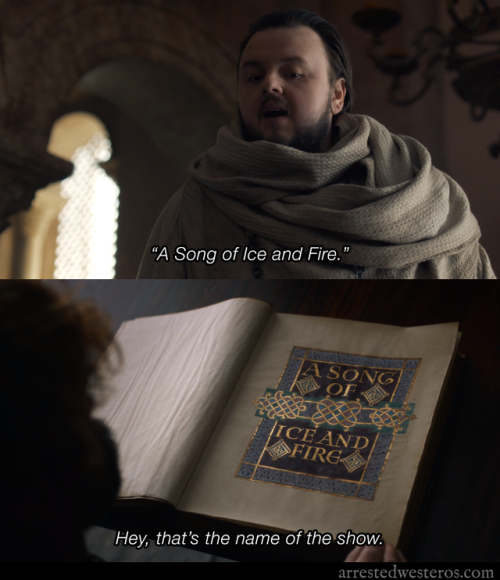
LMAOOOO
Steve Dyer(i saw it last night and i would like to give you all permission to skip the 3rd john wick IF you have seen the first 2)
An intriguing insight from Khoi Vinh in his short review of the third John Wick movie:
This is what usually happens: a film creates a compelling fantasy world and fans clamor for more. So sequels build that world out, they show more of its mechanics, its people, its history. But “John Wick: Chapter 3 — Parabellum” demonstrates one little acknowledged principle of escalated world building: the inevitable outcome is bureaucracy.
[…]
Things that were at first only suggested become explicit, mysteries are explained, and idiosyncrasies metastasize into red tape. Suddenly filmmakers find themselves in a position where building the world becomes its own motivation.
See also Why the Writing in Game of Thrones’ Season 8 Feels Off. (via @capndesign)
Tags: John Wick Khoi Vinh moviesSteve DyerThis woman in the third video is my hero
If you could somehow fold a piece of paper in half 103 times, the paper would be as thick as the observable universe.
Such is the power (*cough*) of exponential growth, but of course you’d never get anywhere close to that many folds. The theoretical limit for folding paper was long thought to be seven or eight folds. You can see why watching this hydraulic press attempt the 7th fold…the paper basically turns to dust.
But in 2002, high school student Britney Gallivan proved that you could fold a piece of paper 12 times. Here’s Gallivan explaining the math involved and where the limits come in when folding:
(thx, porter)
Tags: Britney Gallivan mathematics videoSteve DyerLisa has reminded me that I shared this GREAT ANALYSIS with the inferior platforms, but not with this one!
This is the level of analysis we deserve.
MAY 13, 2019
This week on Dear Television:
Aaron Bady, Sarah Mesle, and Phil Maciak consider “The Bells,” the new album from Swedish death metal band “Game of Thrones.” Does it shred? In any case, below you’ll find spoilers for the episode, “The Bells” (unrelated), from the TV show, Game of Thrones (also unrelated). If you don’t want to know any information about “The Bells,” don’t read these essays, and also don’t watch “The Bells.” Don’t ask any questions. Don’t open your browser. Cancel your HBOGo subscription. Delete your Twitter app. Go back to sleep. Dream dreams. Awaken to a new day. Forget everything you ever knew about Westeros. Go back to the beginning. Adopt a rescue dog. Eat healthier. Start over.
¤
Previous episode: Season 8, Episode 4, “The Last of the Starks”
¤
by Aaron Bady
Dear Television,
Daenerys is not the “mad queen.” She is certainly not in a great place at the moment, but not only does she have a history of murdering her enemies with a gruesome calmness — as she did last night — I want to propose that her current problem is not a lack of rationality. Her problem, if it is a problem, is that she thinks killing her enemies is fine, and she allows herself to decide who her enemies are, and she’s decided that people we like (and, also, generalized innocent people) are her enemies.
Benioff and Weiss have an explanation, and it’s that she suddenly breaks on the battlefield. “I don’t think she decided ahead of time that she was going to do what she did,” one of them says; “she makes the decision to make this personal” when she’s sitting on the dragon, on the wall, and “sees the Red Keep.” She goes mad, in other words, and murders millions of innocents on a sudden explosion of fury; like her father, the Mad King — whose leftover wildfire she ignites — she burns King’s Landing.
I’m going to proceed as if all the things that Benioff and Weiss say in the post-episode featurette are stupid and wrong, however. For one thing, she doesn’t make it personal. After all, if the sight of the Red Keep suddenly causes her to fly into a rage — “in that moment on the walls of King’s Landing, when she’s looking at that symbol of everything that was taken from her” — then why does she immediately start torching the city instead of the Red Keep? Why does she elect to decide to burn multitudes who never did much of anything to her, who she’s never known? Why, instead of only killing the bad queen and the bad queen’s officers — and hoping everyone else decides to love her — does she instead demonstrate that she is completely, totally, and unstoppably terrifying, someone so vengeful and destructive (and maybe even crazy) that you really don’t want to even think about coming close to considering getting anywhere near her bad side?
Oops, I answered my own question! I think Daenerys is not only rational, but absolutely right. We know how rational she is because she’s clearly spent those long days in seclusion analyzing her enemies’ new technology and developing a three-dimensional tactic to counter it: attack the ships in their sun-blind spot, from above, then fly straight up to thwart the crossbows on the harbor wall, and then attack the giant crossbows on the gate wall from behind. That’s a smart plan!
But every scene leading up to the battle shows us a Daenerys who is a step ahead of everyone else; in her seething vengeful fury, there is complete clarity: she knows what she’s going to do, she blames others for making it her only option, and she’s angry at everyone for what she’s about to do. But she’s about to do it because she knows what Cersei told us in the first season, that there are only two outcomes to this thing they are all doing: you either win or you die. If Daenerys wants the Iron Throne — and she does want it, it’s the only thing she wants and has always wanted, her entire character is built on wanting that one thing to the exclusion of all else — then she can’t let herself be a Ned Stark, having it both ways and dying in the middle ground. To win, she must follow Olenna Tyrell’s advice: ignore the clever men (“the lords of Westeros are sheep”) and be a dragon. So that’s what she does. And because she all but tells Jon Snow that this is what she’s going to do, the only interesting question is why we aren’t listening when she says it. Are we as dumb as him?
Benioff and Weiss also explain away her decisions by citing her lack of advisors and guidance. But what she has really lost are allies. Her allies have betrayed her, all of them but Grey Worm. They don’t quite admit that they have; they use sophistry to pretend they haven’t, or their high opinions of themselves, or they betray her offscreen when we don’t have to see them struggle with their decisions. But they’ve all betrayed her. She is completely right about that, and she sees it more clearly than anyone else in the show. Sansa is actively working to turn Jon against her, Arya tells Jon that it was right to make a deal with Daenerys and also to break it as soon as convenient, Tyrion has been talking treason with Varys and gives him the crucial intel he has (apparently) been sending by raven to all the other kingdoms, and Jon started it all by disobeying her. Along with the open revolt of the Starks, Tyrion’s loyalty to his brother remains a problem, as does his constant stream of terrible advice, and what’s perhaps worst is that — like Jon — he seems to think he can betray her without it really being a betrayal. Even the Onion Knight betrays Daenerys when Tyrion asks him to help smuggle Jaime into the city and why on earth would he do that?
What on earth are they all thinking?
Daenerys is the only person thinking clearly, and that goes for us as well. If the audience’s sympathies are with Jon, Sansa, Arya, and Tyrion, we will tend to empathize and make ourselves understand why they did what they do. And their betrayals of Daenerys do reflect who they are as people: Jon spent a lifetime suffering from what his father’s silence about his parentage did to him, and so he decides not to be silent about his parentage; Sansa has suffered greatly from the machinations of King’s Landing, and she does not wish to be vulnerable to it again; Arya likes to collect enemies, not allies; and Tyrion’s cynical cleverness — and wrath — has been inverted into a sentimental credulity and a disastrous need to have it both ways. These decisions make a kind of sense; they make the mistakes that fit their characters.
If our sympathies help us understand their motivations, however, that sympathy (and our pride at connecting the dots) can make it easy to overlook how dumb and inflexible they are all being. We see them make the same mistakes over and over again and refuse to learn from them; because we like them — and because we like piecing together their character arcs — we accept Jon being Jon, or Sansa being Sansa. But while Jon’s actions are in character for him — this isn’t the first time he’s tried to say no to being King, or ordered his people to accept an alliance they don’t want — why on earth would he think he could be successful this time? Has he learned nothing from his experiences? Sansa refuses to trust anyone else — as she has many times — but her situation has changed quite a bit. And wasn’t the last lesson she learned from Littlefinger that sometimes you do have to trust your family, not betray them? (Now that she’s installed in Winterfell, you’d think that the safe choice for her family would be not to break your word to your brother, immediately, just so you can piss off the dragon queen). Arya goes on a commando murder quest because that’s what she does, but she already had a moment — with Hot Pie, in episode 7.2 — where she decided to give up her murder quest and go home to Winterfell; why is she back on her old bullshit? And Tyrion, my God, Tyrion is supposed to be incredibly clever and literally everything he does fails; is he not clever enough to re-examine his decision-making process?
We like these characters, so we accept them staying the same and refusing to learn from their many fuck-ups. And there are so many because none of these characters have any flexibility. When their situations change, they keep doing the same things, making the same mistakes, and having the same results. Tyrion is the worst, and most self-deluding: every time he faces a difficult problem — divided loyalties or a choice of what to lose — he tries to use A Clever Plan to have it both ways. Over and over again, it fails. Over. And. Over. Again. Why isn’t he learning? It’s been a long time since we saw Tyrion with a book.
Rationality is the ability to learn: to extrapolate from past experiences, to analyze the present situation, and to anticipate possible future outcomes. None of these idiots are rational; they keep doing the same thing but expecting a different result (just as we do by watching) and we accept it because we recognize their characters doing the things their characters do, and because we like their characters, we’re happy to watch it on our screens. But the only rational person, here, is Daenerys. She has experienced rebellions, both for her and against her, and has learned from them; she correctly apprehends that time is not on her side (King’s Landing is not going to rebel against Cersei and her allies are all betraying her, which will only continue) and she correctly realizes that the only way to win — and not die — is to be a dragon. Without allies who will serve her out of love, she must do what dragons do: eat the sheep.
When Jon and Tyrion do really dumb things that blow up in their face — or when Sansa and Arya act in stunningly short-sighted ways — the show gets away with it because they are Our Heroes. We not only forgive them, we fail to see through them; we let them have it both ways. This particularly works for the men, who the show expects us to see as loyal to their queen, even as they are flagrantly disloyal to her. Because Jon Snow is the hero of the show — who will probably kill Daenerys next week — we don’t see him betraying her when he repeats his father’s mistake (of revealing the inconvenient genealogies of ruling monarchs). And when Tyrion literally engineers the escape of his brother so that he can engineer the escape of Cersei, the Queen’s main enemy, we somehow don’t see this as a betrayal. In both cases, this is just an honest and a clever man doing what’s necessary because their Queen won’t.
It just might possibly be that the gendering of the situation makes it a little bit easier to see them undermining her, in everyone’s best interest — even hers — without being marked by disloyalty, because patriarchy lets you “serve” a woman while also ruling her. Maybe the gendering of the situation makes it easier to see her as abruptly “turning” in a moment of rage and madness and grief and burning King’s Landing. Maybe because she’s young and pretty, and has always been surrounded by male advisors, we overlook how well she’s learned the lessons that Olenna and Cersei have taught, and how completely in line with those lessons her actions are.
But a deeper problem is that we don’t want to admit that Daenerys is right, because we don’t want to admit what monarchy is. There are no good kings and queens, something Varys should have known (Jon Snow would be a good king, maybe, and his reign would be extremely short). Kings and queens are selfish people who will kill you when they need you to die; while Tyrion should have been reading Machiavelli, Hobbes, and Carl Schmitt, Daenerys was out learning, in the field, what exactly the throne is. She is open about it. She is honest. She had wanted everyone to love her, and tried to make it happen. But as the people who loved her kept dying — and as her “allies” turned against her and her enemies grew stronger — she correctly identified the failure of this strategy, and changed tactics. Just like she attacked the ships from the sun — ambushing them instead of letting them ambush her — she has abandoned a failing tactic, based on her knowledge of the field of play, and adopted a winning one.
And she wins. She has an effectively unkillable dragon and her army is victorious; while Jon and Tyrion and Sansa and Arya were out there doing literally nothing, she ran the board. No one loves her, but is anyone going to fuck with her? Is anyone really going to fuck with her? After that?
I guess we’ll find out next week. But if there’s any realism left in this show, they won’t. She might be wrong to imagine that her reign will be any different than those before her; she shows every sign of being the latest iteration of every king or queen ever. That kind of narcissism is the most normal thing in the world, so of course she thinks she’ll be an exceptional monarch (and, lest we forget, “she’s a girl who walked into a fire with three stones and walked out with three dragons. How could she not believe in destiny?”)
The problem is that we, the audience, expect her to be different. We expect the will of the governed to matter, and we expect a throne to be replaced with something different and better, something like, I don’t know, just spit-balling here, a two-party representative republican democracy with a free press and a bill of rights and a separation of church and state. We are moderns, and we like these characters, so — with the same anachronistic illusions as bedevil so many period dramas (where white people never seem to be racist, for example, and women often manage to enjoy full social personhood) — we expect them to be moderns too. Tyrion and Varys and Jon want a different world — our world, we narcissistically assume — and so we imagine they are the good guys, and that they will win; we imagine that they are seeing clearly and working to bring about Hope and Change.
But none of these people live in a world of hope and change. They live in a world where dragons kill sheep, where you either win or you die, and where “politics” is the maneuvering amongst allies, rivals, and enemies, a game of thrones in which “the people” only suffer. What Daenerys (like Olenna and Cersei) believes, and commits to, makes this the only interesting episode of the season: that power is power.
Who are Daenerys’s enemies? The answer is incredibly easy, despite Tyrion’s soft-hearted words about hostages and enemies: anyone who opposes her is an enemy, anyone who does not bend the knee. She kills enemies, allies, and bystanders when they refuse to bend the knee; this has been true of her for a long time and has continued to be true. When Varys betrays her, he becomes her enemy and she kills him; when the people of King’s Landing fail to reject Cersei and bend the knee to Daenerys, they become her enemies and she kills them; when Sansa, Arya, Jon, and Tyrion betrayed her, they became her enemies and she will kill them, or try.
The problem, ultimately, is not that Daenerys is a mad queen; there is no such thing. It’s a redundant phrase. Power corrupts and absolute power — dragon power, destiny power, fantasy power — most of all. To be a king or queen is to win the game, and to win the game, everyone else has to lose, and die. That’s the game. And if the fantasy of “High Fantasy” is always that absolute rulers might rule well and kindly and with good intentions for their people, then Game of Thrones has abruptly woken up and remembered what a queen is.
I drink to eat the skull keeper,
Aaron
¤
by Sarah Mesle
Dear Television,
Few refrains have fallen from my lips more often in the last two years than “burn it all down.” I did not literally say of the social world, as Daenerys does of Cersei, “we will rip misogyny out, root and stem!” but that is a fair paraphrase of my recent inner monologue. And now, oh ho! Here is Game of Thrones to remind me a key lesson: that misogyny is even in the ideas of root and stem. Misogyny is even in the burning it all down! What a world!
Anyway, “The Bells”! I actually enjoyed watching it quite a lot, which is not to say I don’t understand the animosity it has provoked. For me it fell into a category that might be called, “misogynist but in an interesting way,” which is a not-terrible standard to hope for if you’re going for a media life that occasionally offers something beyond disappointment and terror. (By that logic: “extinction event but in an interesting way!” was also somewhat on offer here.)
I think that one way to explain all the strong mixed feelings about this episode is that the show sat in such an uneasy relation to the character arc it was portraying. “The Bells” offered a really spectacular display, but not in any way a very smart thematization, of some of the basic ways the world responds to women, particularly women in power. Another way of saying this is that I could not help but read “The Bells” as a giant half-gestated metaphor for birth, motherhood, and even abortion: Daenerys’s sovereignty in general becomes continguous with her womanhood, her motherhood. And the show is right to think that motherhood matters for women, and for women as leaders, and for women led by leaders, but it couldn’t figure out a way to tell the story without manifesting a fear as old as Ann Hutchinson: that we can’t elect (or crown) women without electing their monstrous, potentially murderous, womb experiences too.
One way we see this is in the tension between Daenerys and Tyrion and their complex circling around the ethics of war: Tyrion’s concerns about “thousands of children” who will die and Daenerys’s investment in “future generations” who might be freed. By my count Tyrion uses the word “innocent” five times in “The Bells,” which feels especially broken record-y because there’s so little dialogue in the episode overall. All season, Tyrion has been obsessed with Cersei’s unborn child — he believes her desire to protect it might justify any number of out-of-character humanitarian activities, despite the fact that Jaime knows that motherhood is in no way the benevolence engine Tyrion would like it to be (“All the worst things Cersei’s done, she’s done for her children,” Jaime warns). Now Tyrion is applying the “protect the unborn” principle more generally. Just as Cersei should protect her innocent child, and just as Jaime should join her in doing so (“You do care about one innocent, you know you do,” Tyrion admonishes), Tyrion will help the innocent himself: “Tens of thousands of innocent lives; one not particularly innocent dwarf,” he tells Jaime. “It sounds like a fair trade.”
I myself think that there are lots of reasons to avoid slaughtering a city of humans, but their “innocence” is not necessarily one of those reasons. One of the strange things about the episode is how forced Tyrion’s language of innocence feels in this show that’s worked so hard over so long to show us the range of ways that human lives might be worth living. None of the characters I like best in this show fall under the category of innocence: not Varys who dies, Arya who doesn’t, or the Hound or Jaime or Tyrion or even Cersei herself. (“I want our baby to live,” says Cersei, as she faces her fate in the crumbling infrastructure of the world she had made to protect it.) So what is this category doing here? What does it even mean?
It wouldn’t be right to say that children and “innocence” have come into play this season precisely because this season is a battle between two queens rather than two kings. Even I wouldn’t go that far. Innocence has been all over this series for a long time: see my post from two weeks ago for further thoughts about Game of Thrones’s “hurt girls” as longstanding symbol.
But even so, and especially after that episode, this season’s attention to the specter of innocence seems ratcheted up: not only is Tyrion constantly talking about innocence, but the camera zooming around the crumbling streets of King’s Landing repeatedly chooses women and children as emblems of the suffering that Dany causes, in particular the single mother and daughter whose story we follow through the episode until the girl is burned, Shireen-like, at episode’s end. And all the attention to the “innocents,” the mothers and children caught in the middle, helps draw attention to the maternal frame of this battle, waged between two grieving mothers: one queen who is still carrying her surviving child, and another queen who is riding hers.
I can’t help thinking that a key to this episode is the particular way it asks us to view Dany’s relationship to Drogon, her dragon and child: it asks us to compare Dany here to Ned. In the very first episode of Game of Thrones, Ned Stark raises his sword and brings it down on the neck of a man who “betrayed his oath,” a man who deserved to die (if we had not forgotten all about the Night King last episode, we might talk about how the execution was, ironically, the gesture that merged Game of Thrones’s political plot with its climate change plot, but whatever). Here is some politics for you: “The man who passes the sentence should swing the sword.” Ned explains this to his son Bran. Bran, who is not a raven at this point and thus not yet annoying, is also the figure for the viewer, who is being taught how to see things.
Executions frame the first season of Game of Thrones. Ned’s “carry out your own sentence” model of governmental responsibility strikes me as one Game of Thrones has always asked its viewers to admire, even as we’re meant to question whether his code of ethics is sustainable in a world dominated by little shits like Joffrey. The show told us (and Bran) to trust Ned because he was good at deciding who should be killed, and good at killing, especially compared to other people’s ways of deciding and killing. These are exactly the questions we’re returning to now at Game of Thrones’s end.
So here’s a question for you: to what extent does Daenerys Targaryen, in the first half of this week’s episode, follow Ned’s principle? When she kills Varys, who “betrayed” her (the crime isn’t the same, but the two episodes use the same word), is she doing what Ned says a man should do, and swinging her own sword?
The answer isn’t a clear no. But it isn’t a clear yes either. When Drogon rears his head out of the shadow behind Dany, his face aligned with hers, we see the relation between Dany’s mouth speaking the word “Dracarys!” and Drogon’s mouth making Dany’s word manifest. There is no doubt of her responsibility. But there’s also none of the neatness, none of the tidiness, that Ned’s masculine sword edict offers. Drogon isn’t Dany, her children are not her, responsibility does not work that way in this situation. Whereas Ned asks his children to watch him wield a weapon in defense of the social order that protects them, Dany’s child is her weapon and the reason she is wielding that weapon. Everything is all mixed up. This is not an unfair representation of motherhood!
Here I can’t help thinking about my favorite monstrous mother situation, the movie Aliens, which merits maybe a comparison here in that one way to describe what’s frustrating about the experience of watching Daenerys kill all of King’s Landing is that it’s not dissimilar from what it might be like to watch her transform from Ripley (sentimentalized motherhood) into the Alien queen (monstrous motherhood) over the course of an episode. But of course, the reason Aliens works so well is because it taps into our (“our”) sense that motherhood is always monstrous: something both you and not you grows inside you, and comes out in ways that you can’t control, to become something you can’t fully control. For all that Ned wanted sovereignty to be about tidy responsibility, it’s really not: it’s always multiple and gossipy and incestuous and angry.
Daenerys executes Varys for betraying her, even though she knows he is not the only one who did; she claims responsibility for sentencing Varys even though she later says that “Sansa killed him as much as I did.” The execution at the beginning of “The Bells,” which aims to condense political violence into discrete acts of responsibility, works in tandem with the mayhem at the end of the episode, when that violence spills out, promiscuously, everywhere. That it does so is not entirely about gender, or motherhood. But the way “The Bells” does so seems weirdly staged to make us focus on those aspects. The rhetoric and visual framing and narrative framing never lets us separate Dany’s murderous violence from her womanhood, and always wants to remind us that the people who suffer most from her violence are other women, while Tyrion and Jon watch in slow-mo.
My favorite thing I ever wrote about Game of Thrones was in response to Dany’s ill-fated trip to save Jon from Jon and Tyrion’s terrible “North of the Wall” zombie plan. I wrote:
Dany, meanwhile has been given power and more power, and now we see why: because her final role will be to rescue Game of Thrones from its own opening conceit. What made Game of Thrones itself was that it was willing to kill its heroes. But now its heroes do not have to die, because Dany and her dragons will rescue them. The love of a good sacrificial woman will save this show from its own genre.
I have been thinking about this claim from last season in light of this season’s episodes. Am I sorry to see Daenerys cast off any tie or allegiance beyond her own desire or rage? Would I rather have had a more falsely heroic version, where her violence has fewer costs? Not really. But I’m not sure why those were our choices. And the way “The Bells” messily connects motherhood, sovereignty, and personal expression with mass slaughter makes me worried about what comes next — what will happen in the middle distance, when Arya rides her white horse into Dany’s dragon-built world. I am hoping that when Arya and Dany meet there, they can find some way to talk about what, beyond a false myth of innocence, makes life worth saving, and worth living: what we might grow after it’s all burned down.
In hopes there’s a dinghy waiting for us,
Sarah
¤
by Phil Maciak
Dear Television,
Are David Benioff and D.B. Weiss bad writers? I don’t know! A lot of criticism has been spilled over the years and over the course of this divisive season so far about whether and how they are indeed bad at writing, the thing that is their job. Some of this is about narrative pacing. Some of it can be summarized through the revealing cultish distinction between pantsers and plotters. Some of it is about their skill as adapters, ventriloquists, and, now, kind of impressionists of the work of George R.R. Martin (who, according to those same critics, is a good writer). David Benioff wrote the screenplay to The 25th Hour, which is one of Spike Lee’s best films, and also the screenplay to Troy, which is not even one of Wolfgang Petersen’s best films, so, in terms of other evidence, I’d say it’s a draw. In any case, they have always — with necessary faux-humility — presented themselves less as creators than as mediums for this story, and it shows. But I’m not interested in talking about Benioff and Weiss as writers of Game of Thrones; I want to talk about them as critics of Game of Thrones.
Over the course of this series, we’ve had pretty regular access to what Benioff, Weiss, and their fraternity of writers and directors think about the work they’ve done. Now seems like a good moment to memorialize, not just who these men have been as creators, but who they have been as interpreters — forced or forthcoming — of their creation. To the naked eye, they have been pretty bad at it. A good place to see this is within the stony, dimly-lit confines of the “Inside the Episode” featurettes HBO has released weekly throughout the series. Benioff and Weiss have been rightfully mocked for their performance in these pieces. They speak as talking heads, narrating onscreen action, offering character insights with a searching tone of voice that suggests this is maybe the first time either of them have thought about what they’re saying. They begin nearly all of their speculations about character motivation with “I think,” which is patronizing to the viewer if we imagine Benioff and Weiss are indeed fully in control of the development of these characters, and just absolutely bonkers if it’s suggesting they really have to guess about the motivations of characters they themselves have written.
Weiss, for instance, speaking about Tyrion’s last goodbye with his friend Varys, says: “I think Tyrion is saying goodbye to his best friend in the world outside of his brother…And the amount of guilt that he feels over being the cause of his best friend’s imminent death it’s hard to get your head around.” You’ll note that the way I introduced this quotation was by saying that Weiss was speaking “about Tyrion’s last goodbye with his friend Varys.” This is roughly the same description Weiss offers. But he offers it as an insight: “I think Tyrion is saying goodbye to his best friend.” This is maybe a piddly observation, but it’s telling. Weiss is presenting a basic, surface-level description — a description of this scene that he has to imagine was shared by nearly every viewer who watched it — as the special insight of its writer. But let’s bracket that, let’s say that that isn’t the meat of Weiss’ revelation here. What does he follow it up with? “The amount of guilt he feels…it’s hard to get your head around.” What are these featurettes for if not to get our heads around things? And shouldn’t Weiss have his head around it already? We invest, as fans and critics and scholars, a great deal into the connections we form with these characters. That’s what TV is about — the artful management of empathy, the expression of story and meaning through form, the captivating or calling out of audiences. Should we be irked that even inside the episode these characters remain opaque to their creators? And how artful can these men be as managers if they’re so inartful as critics?
If we imagine these to be intimate moments, two creators taking a moment to watch the show as fans, then maybe we can be generous about the comments they make. But whether we watch the featurettes as genuine performances or not, what they show us is a pair of artists who seem willfully mystified by their own work.
Sometimes they’re more than mystified. In a recent post-episode featurette, Benioff narrates — as we watch Rhaegal getting downed by Euron’s scorpion — that Daenerys had “forgotten about the Iron Fleet.” As numerous even marginally attentive viewers pointed out the following day, Daenerys had been apprised of the current status of the Iron Fleet in the preceding scene. I realize that there’s an aspect of this that smacks of mockingly nitpicking continuity errors or fishing through the “Goofs” section on IMDB, but this is something else. We have a writer, speaking within a documentary frame, accompanied by an editing style we can easily associate with the form of the “video essay” — calling upon the evidentiary status of the medium of film! — telling us things we know to be false about the show he’s written. And we don’t know them to be false because we’re comparing Daenerys in the show to Daenerys in the book, and we don’t know them to be false because they grate against our affective attachment to the character, we know them to be false because the show told us they were false.
The best thing about a show like this is its ability to open out into the world, for us as fans, viewers, critics to think alongside and with the show. I don’t care whether or not Dany remembered that the Iron Fleet was behind that cliff. It’s one thing to write a flat character; it’s another thing to insist that your character is flat. It’s one thing to have a plot hole; it’s another thing to introduce one after the fact. The show Benioff and Weiss describe to us is different, in quality, in complexity, sometimes in actual fact, than the one we watch every week. I don’t need artists to perform exegeses on their art, and I don’t need them to acknowledge and validate every idiosyncratic take. I don’t need artists to say anything at all — as far as I’m concerned, these episodes belong to us the second they air. But if they’re going to talk to us about it, they ought to hold the door open, so to speak, rather than closed.
I hesitate to call this gaslighting, because a) I don’t think there’s sinister intent, and b) I don’t think they necessarily realize they’re doing it. But the concept feels at least a little fitting in part because a) historically, these slippages and denials and erasures have come up when the writers and directors are confronted with bone-headed decisions about female characters, and b) this sort of shit doesn’t have to be intentional to be corrosive. It’s, in ways that became clear this week when Weiss claimed Daenerys’ sizzling of King’s Landing was a game-time decision, the difference between a hysterical woman and a complex arch-villain.
Maybe it’s a little unfair to blame them for the blandness of their commentary in these featurettes. It’s clear that HBO is shooting for a level of depth and specificity more befitting a press junket than an undergraduate classroom. But, even that said, it’s hard not to imagine that these clips are talking down to a majority of the show’s audience, that they represent a point-of-view considerably less engaged and interpretively nuanced than much of the show’s own viewership. For all the trolling and bad faith argumentation and overreaction on Twitter, there are egg accounts that are willing to think more probingly about the motivations of these characters than Benioff and Weiss seem to be. But, again, the problem isn’t that the observations are banal, it’s that Benioff and Weiss are using the platform they have to discuss the show — a show whose audience is hungry to endlessly dissect and creatively engage with it — to lower the bar for discussion.
This wouldn’t be a big deal if it were limited to the featurettes, though. These commentaries are symptomatic of a larger problem that’s popped up occasionally in the past with the show and its producers. Earlier this season, for example, when viewers criticized the battle of Winterfell for being poorly lit, cinematographer Fabian Wagner responded, “I know it wasn’t too dark because I shot it.” He then proceeded to tell viewers that they needed to adjust their TV settings to account for the “cinematic” style with which he approached his task. In a broad sense, this is the cinematographer for a popular TV show telling the audience that it was their fault that they didn’t enjoy an episode; in a more granular sense, it’s the cinematographer for a popular TV show simply not caring enough to think about how his audience would consume his product.
To cite another famous instance, in 2016, Game of Thrones decided it was going to show Sansa’s rape from the point of view of Theon Greyjoy, a passive bystander. This isn’t a wild interpretation; it’s a pretty basic description. As Sansa is being assaulted, the camera cuts to a close-up shot of Theon watching in horror, and then the episode ends. That’s how editing works. But the writer Bryan Cogman disagrees:
Another argument — and I get why this criticism was leveled at us — is the idea that we took Sansa’s story away from her and made it all about Theon [by cutting to his face at the end]. I personally don’t believe that’s the case … Certainly Theon’s redemption journey is an element of the subplot. But if you really watch this scene it’s played from Sansa’s viewpoint, for the most part. The main reason we cut away at the end, frankly, is that this was Sophie’s first scene of this nature, and we didn’t want to show the attack. And so we cut to Theon to hear the attack. I understand why many people reacted to that, [thinking] we were making this scene about Theon and not Sansa. I’m sorry it was viewed that way. All I can say is it’s certainly not my intention when I wrote it or when we were producing it … We could have stayed on her face of the entirety of the attack, that would have been a perfectly valid choice. To me it was about being respectful to Sophie.
Here, rather than cutting interpretation short the way Benioff and Weiss do, Cogman puts forward a bad-faith interpretation as canon. He doesn’t “believe” that cutting to Theon’s face makes it about him. He turns a matter of film grammar into a matter of belief. There are plenty of fine interpretations on both sides! “I’m sorry,” he says, “it was viewed that way.” Again, while Benioff and Weiss underestimate viewers, Cogman invalidates them. As I wrote when this kerfluffle occurred, “People ‘viewed it that way,’ because that’s the way it was shown to them.” But viewers, especially when they perceive a problem, are overreaders, they are doing it wrong, they are not seeing what’s there — for a series that is so animated by fan reaction and investment, the public comments of the producers of Game of Thrones rarely seem to respect the way their audience actually watches Game of Thrones.
Benioff and Weiss only want to talk about this show as a medium for these characters. I get that — it is, in the likely best intentions of Benioff and Weiss, a gesture of respect and restraint to not interfere with the complex relationships viewers have formed with their characters. But it also absolves them — and Cogman and Wagner — of their role as artists, shapers, makers. If they are simply the passive agents by which the story tells itself, if no decision they make can fundamentally alter either the integrity of Martin’s source text or their own intentions, then they bear no responsibility for what the story says at the level of content or form. For Cogman, there’s no difference between what he meant to do with the episode and what the episode does. If viewers disagree, that’s on them. The “Inside the Episode” videos reinforce this dynamic by aping the format of YouTube video essays that promise to “explain” famous movies by pointing out relevant details as though they are secret codes. (Clickhole regularly parodies this as “This Will Change the Way You Watch ____.”) And, in so doing, they simultaneously oversimplify and mystify the interpretive act. Criticism is remedially redefined as the basic parsing of narrative information, and so actual critical engagement — with form, with ambiguity, with politics — gets pushed outside the discourse. We become cranks when we describe what we see. We are conspiracy theorists for having theories at all.
In 2013, Andy Greenwald asked David Benioff about the ideas and intentions behind the third season of Game of Thrones. “Themes are for eighth-grade book reports,” Benioff replied. I don’t know that I’ve ever heard a statement from a writer that’s more contemptuous of the act of interpretation, more committed to a particular — low — opinion of his viewer. Sure, making fun of “Inside the Episode” is low-hanging fruit, and it’s understandable that Cogman and Wagner might be salty when called out on their mistakes. But, as we reach the end of this show, and we come to a final verdict on these showrunners and their show, it’s worth keeping comments like Benioff’s in mind.
Not every artist has the sort of insight about their own work that we might expect from Henry James or Toni Morrison or Alfred Hitchcock — artists operating, not only out of inspiration, but out of a coherent, dynamic theory of art practice. But it’s one thing not to be particularly interesting on the topic of one’s own work, and another thing entirely to seem actively disengaged — publicly — in the process of processing that work. I’m fully willing to imagine that the conversations about this show, no matter how misguided we find the outcomes, could be intense and detailed and messy in the writers’ room. But when these men speak publicly, they produce a worryingly simplistic vision of the world they’ve helped create. Benioff and Weiss come across as incurious and defensive; their lieutenants come across as actively hostile to the viewer experience. The show they represent in their critical comments is flat. It’s a narrative that resists interpretation, that is only ever performing the most basic version of itself, that is a closed system. Inside the episode, this show does not gain dimensions; it loses them. It loses us.
I kinda forgot about the Iron Fleet,
Phil
Steve DyerWhy are these gifs 10x more legible than when I streamed it? I have a retina display with a babillion colors, but the blacks looked like they were paint by number. The onlines were saying that it's due to the compression that the stream uses, and it's fine if you watch on cable. Can I download this episode somewhere so it doesn't look like a geocities site?
Steve Dyer"Manhattan's density has decreased 30% since its peak in 1910" made my eyes aooga
Using geological surveys, geo-referenced road network data, and historic maps drawn the from the collections of the Library of Congress and New York Public Library, Miles Zhang made this time lapse video of the development of the street grid of NYC from 1609 (when Henry Hudson first explored the area for the Dutch) to the present day.
The resulting short film presents a series of “cartographic snapshots” of the built-up area at intervals of every 20-30 years in the city’s history. This process highlights the organic spurts of growth and movement that typify New York’s and most cities’ development through time. The result is an abstract representation of urbanism.
Zhang has written up his research methodology for the video as well as some observations and analysis of the data.
For almost the first half of Manhattan’s history, walking was the primary means of transport. This preference was manifested in the shorter distances between residential, industrial, shipping, and commercial areas — and more frequently their overlap. With street systems, the reliance on the foot is manifested in narrower streets widths not designed to accommodate greater width from carriages, trolleys, and later cars. In fact, the average width of secondary arterial streets increased from 30 feet for streets opened between 1624-1664, to 45 feet for streets opened 1664-1811, and then a uniform width of 60 feet for any cross street opened after 1811. Later widenings increased many of these smaller and pre-1811 streets to width between 100 and 130 feet. In other words, moving from the older networks in the south to newer networks in the north, the width of streets and size of blocks generally increases. These new widths might be influenced by growing population size from only 25,000 in the 1770s, to 64,000 by 1811, and 247,000 by 1834, thereby requiring wider streets for expanding population and higher buildings.
These gradual changes in planning reflected increasing reliance on carriages and horse-drawn trolleys instead of walking. Each mode of transport required a different minimum street width and was associated with different speeds.
(via @john_overholt)
Tags: cities maps Miles Zhang NYC time lapse videoSteve Dyeri need to go to this country
Ahead of the second summit in Hanoi, North Korean dictator Kim Jong Un requested as part of the agreement between the countries moving forward that the U.S. send “famous basketball players” to normalize relations between the two countries, according to two U.S. officials.
The request was made in writing, officials said, as part of the cultural exchange between the two countries, and at one point the North Koreans insisted that it be included in the joint statement on denuclearization. The North Koreans also made a request for the exchange of orchestras between the two countries.
Here is the full story. Via Ian Bremmer.
The post Thwarted markets in everything appeared first on Marginal REVOLUTION.
Steve DyerHave we revisited this since Liz joined Reader?
Steve Dyerdoj
Dog and blog rhyme. Here are other words that rhyme with them (just in case you are going to do some dog oriented poetry. I founds these on a rhyming site, but idk if these are all real words…. e.g. fseog
blawg
blog
blogg
bog
clague
clog
cog
craag
dague
dogge
drcog
flog
fog
fogg
frog
frogg
frogge
fseog
glogg
graag
grog
grogg
haag
haug
hog
hogg
hogge
jog
krog
lague
log
logge
logway
maag
mogg
og
ogg
pflp sog
phlog
plog
pog
pogge
prague
rog
rogge
schwag
scrog
skog
skrog
slog
smaug
smog
splog
sprog
strog
tague
waag
zaugg
zogg
acog
agog
aslaug
backlog
bayog
befog
bulldog
bullfrog
defog
den haag
eggnog
embrague
grass frog
green frog
groundhog
gulag
gundog
hedgehog
hertzog
hotdog
incog
kodagu
lapdog
leapfrog
madrague
musk hog
parag
peat bog
pirog
portague
prolog
prorogues
quahaug
quohog
road hog
sandhog
screw log
sheep frog
spring frog
tailed frog
tree frog
true frog
unclog
watchdog
wolf-dog
yule log
analog
analogue
angus og
barking frog
cascades frog
catalogue
chorus frog
cricket frog
demagogue
dialogue
epilogue
french bulldog
harpoon log
herring hog
hirulog
horny frog
leopard frog
metagogue
monologue
patent log
robber frog
synagogue
tagalog
travelogue
underdog
waterlog
yorkshire fog
card catalogue
course catalogue
english bulldog
goliath frog
parts catalogue
pickerel frog
razorback hog
seed catalogue
african clawed frog
eastern cricket frog
northern cricket frog
chameleon tree frog
tarahumara frog
south american bullfrog
Steve DyerCherv, per our nature walk conversation!
From the BBC and hosted by David Attenborough, “Climate Change: The Facts” is an hour-long program on the science of climate change and what we might be able to do about it.
Sir David’s new programme laid out the science behind climate change, the impact it is having right now and the steps that can be taken to fight it.
“In the 20 years since I first started talking about the impact of climate change on our world, conditions have changed far faster than I ever imagined,” Sir David stated in the film.
“It may sound frightening, but the scientific evidence is that if we have not taken dramatic action within the next decade, we could face irreversible damage to the natural world and the collapse of our societies.”
With each successive nature series, Attenborough has become more vocal about the effects of climate change on our planet and its plant and animal populations. In his new Netflix series Our Planet, climate change takes center stage.
Tags: David Attenborough global warming TV videoCompared to its predecessors, the series also frames the value of nature in a new way. Usually Attenborough’s programs establish a place or a species as a thing of remarkable beauty-this soulful orangutan, that industrious bird of paradise-before warning that it is somehow imperilled. The value of the creature is its existence. We may never see a polar bear, but we take pleasure from knowing that they’re out there. In “Our Planet,” the value of nature is presented as something much closer to home, and more practical. Attenborough reminds viewers again and again of the connections that link these far-flung ecosystems to our own species’s survival. Protect the sea otter because it’s lovely, if you like, but also because it keeps in check the sea urchins that otherwise mow down kelp forests, which act as crucial carbon sinks. “We are part of nature. We aren’t separate from nature,” Attenborough told me.
Steve Dyeris robby okay
AirPods for dogs. So that Noëlle can listen to her weird syncopated dubstep music while I listen to Van Morrison. Why do dogs have such weird taste in music anyway? Wireless headphones are a must for dogs, because of the zoomies.
Steve DyerThis was Anne putting on the Game of Weiners song on YouTube in front of 16 guests at the GoT premiere party (which you are all properly jealous of).
Stop the indignities!!!

Steve DyerDo we need an official Mueller thread? Is this good enough?
One of the revelations in the redacted Mueller Report was Donald Trump’s reaction when he heard from then Attorney General Jeff Sessions that a Special Counsel had been appointed to investigate him.
Said Trump, according to “Oh my God. This is terrible. This is the end of my presidency. I’m fucked.”
Trump’s reported reaction when he was told Mueller was appointed: “This is the end of my presidency. I’m fucked.” pic.twitter.com/J1AN9SGM7O
— Dan Diamond (@ddiamond) April 18, 2019
The post Trump’s Response When Told Mueller Was Investigating Him: ‘This is the End of My Presidency. I’m F*cked’ appeared first on Towleroad Gay News.
Steve DyerMy team has been very disingenuous on this topic but I say nothing because it helps my team.
Steve Dyervote in the comments for fake or real
A reader writes:
I am employed by a nonprofit that works with low-income students. I love my job and think my doing it has a positive impact on others. I like my boss and coworkers. We also have an employee who kind of works as an assistant who does data input and organizes our lecture schedules.
We are hiring a new person for that position and our manager sent us a shortlist of people she was considering. She asked us if we had any input/prior interaction with the candidates. The problem is, I do, and I don’t know how to broach it with her.
I don’t think I can work professionally with one of the candidates — let’s call her Cersei. We used to be friends and she was my roommate for a brief time, including when I was hired by this organization — so they know I know her.
However, a few months ago I walked in on Cersei and my father having sex. It turned out that they had been having a full-blown affair for as long as we’d been roommates. Apparently one of the reasons she’d moved in with me was to be closer to him.
I’ve completely cut Cersei out of my life (my father is obviously also complicit, but my mom is staying married to him, so). I don’t really trust myself to interact with her without going all Septa Unella SHAME on her — and now there’s a chance she’s going to be hired into a position I’d have to frequently work with her in.
My questions are these: the manager asked us to tell her if we had any input on the hiring decision. What do I say? Do I have the grounds to say anything? Because I actually think Cersei’s a decent fit for the position but there’s no way in hell I can work with her. If Cersei is hired, how can I work with her? Because I love this job and don’t want Cersei to be the reason I quit.
You can absolutely say something to your manager, and you don’t need to divulge the entire situation (unless you choose to).
If I were considering hiring someone, I’d sure as hell want to know that it was going to make one of my existing employees so uncomfortable that they’d need to quit — and I’d want to know that before I made any hiring decisions, not after.
Sometimes in this situation people feel like there’s something fundamentally unfair about “preventing” someone from getting a job for personal reasons like these. But managers consider interpersonal issues all the time in hiring. It’s not uncommon to take into consideration that there’s tension between a candidate and a current employee, or that they have a bad history, or that something about the relationship might introduce weirdness that your workplace would be better off without. Hell, even when there are no negative emotions in play, relationships can still be relevant — like you might choose not to hire someone onto a small team where their spouse already works, or even their sister-in-law or so forth. We are humans, and relationships matter at work — often deeply matter.
So if your manager is decent, she’ll want to know that you don’t feel you can work with Cersei. What’s more, she’s asking you for your input!
There are a few different ways you can say it, depending on how much you want to disclose.
One option is to say, “Cersei and I had a serious falling out, and I wouldn’t feel comfortable working with her. If you’re seriously considering hiring her, would you talk to me first?” That way, if she doesn’t end up a finalist, you don’t have to get into any details — but if she does, you’ll have flagged that there’s more you want to say before any decisions are made.
Another option is to say, “Cersei did something that really hurt me and members of my family and caused a lot of pain. I’ve had to end all contact with her, and she’s not someone I could comfortably work with.”
If an employee said that to me, that would be all I needed to hear — and doubly so with a fairly low-level position like this one where it’s unlikely that good candidates are scarce.
But if your manager seems to need to hear more, there’s nothing wrong with briefly filling her in, if you’re comfortable doing that. “She had an affair with my father, and apparently moved in with me as a tactic to be closer to him” is and should be damning.
If your manager is willing to hire Cersei after hearing what a major problem it would create for you and why … well, that’s a crappy manager, and I bet it’s not going to happen.
do I need to work with the woman my father had an affair with? was originally published by Alison Green on Ask a Manager.
Steve Dyeroompa
loompa
doompity doo
Steve Dyeranother poop question #2
It’s five answers to five questions. Here we go…
1. Can I ask my coworkers to stop praising the person who bullied me?
How reasonable is it to ask my teammates to stop praising another employee from a different department who was a bully? I am okay with speaking about this person in a working manner (“Petra suggested this on the budget issue, so let’s go with it.”), but there are two people on my own team (one is my manager) who will lavish praise on them (“Petra is a genius! She is so great at her job! This company is so much better with her around!”).
I spent a better portion of a year working with Petra, an internal client who behaved terribly to me and others assigned to her project. It was firmly bullying behavior that affected project outcomes, relationships within the project team, and my health. I’ve heard many stories of her doing interpersonal damage around the company, though I can’t deny she is strong in her realm of work.
My teammates and especially my manager know about my experiences, though it doesn’t seem like they have caught on to the extent. I feel somewhat disrespected when they speak so lavishly about Petra. They’ll add a quick acknowledgement after they’ve started because they suddenly remember whom they’re talking to: “I know you wouldn’t say this about her, but she is so amazing!” or “I know you had a bad experience, but I just love how smart she is.” That tells me they remember my experience, but choose to continue saying these things to me. It’s disheartening that her bad behavior is minimized and my experience is dismissed, especially by my manager. They can say it to others, I just don’t want to hear it myself.
Is it reasonable to say “Hey, given my history with Petra, and you may not realize the extent of the damage she did, but can I ask that we keep our talk about her to strictly business?” Or is it asking too much and I should just ignore it? I don’t expect this special consideration for any other of our clients, many of whom are difficult to work with but not bullying. Plus, I’m in the camp we shouldn’t keep jerks around just because they are good at their job.
Yeah, it’s probably asking too much. You can’t really tell people not to say positive things around you about a colleague who still works there; you’ll come across as overly precious or prima donna-ish.
At most, the next time she’s lavishly praised, you could say something like, “My experience with her was truly very different. I’d be glad to share it privately with you sometime if you think it would be useful to hear another perspective.”
But I think you’ve got to mark this down to them having legitimately positive experiences with Petra and not realizing the extent of how harmful your interactions with her were or writing it off to a personality conflict rather than something more serious. That might sound dismissive, but it’s so much more common for two people to just not get along than it is for someone to be truly monstrous that it’s understandable that people might assume that. And they might assume that even if they did hear more details, because people tend to assume there are two sides to every story, or that each person is bringing their own baggage to the situation — especially when they know and like both people involved. You don’t have to like that, but I think looking at it that way might make it feel less personal. (And to be clear, I don’t think it’s great that they’re lavishly praising her around you, but you can only control your side of it.)
2. Emergency bathroom use during interviews
About a year ago, I had a medical procedure done involving my intestines. As a result, I sometimes very suddenly have to use the restroom; waiting even a few minutes could spell disaster. I have been able to accommodate this fine in my current job, as my office is close to a restroom, but I am in the process of applying for new jobs and have had a few interviews, some lasting close to an hour.
So far it has not been an issue during the interviews — I’ve done my best to prevent it by making sure I arrive early enough that I can use the restroom either at the interview location or at a nearby gas station/coffee shop/whatever right before the interview. That said, I’m (reasonably, I think) worried that despite my best efforts, one of these days I’m going to be in the middle of an interview and experience that all-too-familiar rumbling that indicates impending doom.
On one hand, I feel like interviewers might be understanding of a bathroom emergency (we’re all human, after all), but I also feel like it could look bad for me to have to put an interview on hold for 5-10 minutes while I run to the toilet.
Anyone can have a sudden, unanticipated need for a bathroom, even without a medical condition! It might not be as urgent as your need is, but it can be urgent enough to require excusing oneself from a meeting. Because of that, you don’t need to worry too much about giving any context for it or warning your interviewer in advance. If the need strikes, you can simply say, “I’m so sorry — I need to very briefly excuse myself to use your restroom.”
That said, if you’ll feel more comfortable, you could say at the start, “I had a recent medical procedure that means I might need to pop out to the bathroom at some point while we’re talking — I’ll speak up if that happens.”
3. Our company won’t let managers suggest sick employees work from home
We have several employees who report to work ill. When I suggest letting ill people work from home, I am told our division head says no. Her exact words were “I’d like to work from home,” which makes no sense. Also, a manager states they spoke to an HR rep and the statement was along the lines of “You are not a doctor and cannot state factually that their illness is causing another worker to become ill and therefore cannot send an employee home.”
What results is other employees become ill, go to the doctor, use their PTO, their workload piles up, and when they return the germ carriers are still repeatedly deep coughing, sneezing, etc., causing relapses. Focusing on one’s work is proving difficult. Would working in our remote site be a legal alternative if one presents as a risk to another’s health and well-being?
Your division head is a bit of a jerk; just because she’d like to work from home but for some reason can’t doesn’t mean that it’s not a viable option for anyone, and she’s really behind the curve on this.
But more importantly, your HR rep is ridiculous. Letting sick people work from home isn’t about factually proving they’re definitely getting others sick; it’s about taking sensible precautions that any sixth grader could understand. Your HR rep sounds overly rigid and lacking in critical thinking skills — which is a really bad combination. Is your whole HR team like this, or is it just this one person? If the latter, try going over her head. (Although, frankly, managers shouldn’t need HR’s permission on this, and ideally could just leave HR out of it.)
To answer your question: Working from a remote site for whatever reason is perfectly legal. The law cares not one bit. The issue is an internal one with your company.
4. My partner’s last-minute work changes are wreaking havoc on my schedule
I work from a home office. My schedule has made it so that my SO can be as flexible as possible for his employer, given sufficient notice; his job involves travel and working from home at irregular intervals. I have a schedule that allows me the space and time to run my business and do elder care for his family and mine.
My SO’s employer (a large firm) has a reputation for being at least somewhat family-friendly, despite the nature of this job he does. My SO’s previous supervisor took family friendly policies seriously. My SO and I never once experienced a conflict under his leadership due to his behavior, and few things cropped up last moment.
The problem is his new supervisor, who has a management style best described as chaotic; everything is conflict-filled, urgent, and last moment and it’s causing interpersonal and scheduling difficulties between my SO and me. I did the best I could to work with this new management style and maintain my policy of never saying “no” to his professional obligations, no matter how they might impact my schedule. However, when I had to reschedule my own professional and personal obligations 10 times in the space of a month in order to support his career, I had a change of heart.
I’ve had as much as I will take of the near constant schedule changes, and my SO’s newly developed short temper, and I’m at a loss as to how to address this with him and his supervisor. How do I discuss this and bring matters about to a peaceful resolution?
You talk to him, and he talks to his manager. You shouldn’t be talking to the manager yourself, since it’s between him and your SO.
The subject line of your email to me was, “How much flexibility is too much to expect from an employee’s family?” But they’re not expecting anything from you; they deal with him, and they assume he will work out family issues himself (including speaking up if he’s being asked to do things he can’t do).
It sounds like you and he need to sit down and figure out how many last minute changes you’re willing and able to accommodate, and what kind of new boundaries you each need to draw (you with him, and him with his boss). Then he’ll need to have a conversation with his boss where he explains that because of elder care obligations, he can’t accommodate this much schedule chaos. Ideally he’d talk about how he and his former manager made it work, and see if the new manager is open to a similar set-up. But before that can happen, hash out how this will work between the two of you.
5. Client wants to make my freelance contract permanent — and I don’t want it
Recently, my long-term freelance contract came to an end. In order to make ends meet, I took up another freelance contract at a much lower rate, thinking I’ll look for something else in the interim. But it actually worked out well. The studio deals with a lot of confidential work that I’m not privy to, so I mostly help out on the overflow. My schedule is light, leaving me with time and energy to work on other contracts, as well as my long-running creative project.
They apparently liked my work, because now they’re offering a permanent position. I considered it initially, as I enjoy the work and the culture, but then I actually saw the offer. This role pays less than my freelance contract (though with benefits and leave), and I will be barred from working on outside projects. I know they don’t have much room in their budget for negotiation. As I’ll be involved in the confidential dealings, my workload will also increase significantly.
I’m definitely not going to accept this position, as it sounds like more stress at less pay. I just don’t know if there’s a way to let them down and go back to the way things were before. They presented it as a huge honor for a freelancer to be offered a permanent role, and I was also excited initially. They specifically asked me if I am dead-set on freelancing at the beginning and I said no, meaning I can’t use that excuse.
I realize I’ve been enjoying a very cushy position, but I do repeatedly hear how much my overflow work helps everyone stay on schedule with the important stuff. And of course, having this kind of steady income as a freelancer is a godsend. Can I still freelance with them without it being awkward? I feel like my friend-with-benefits suddenly wants to get married!
Absolutely, it’s really normal to consider an offer like this, decide it’s not for you, but stay on good terms and continue freelancing for the client. You can say something like, “I really appreciate you making this offer! I’ve run the numbers and it makes more financial sense for me to remain a freelancer, especially because of the bar on outside projects. But I really like working with you, and I’d love to just continue on with my freelance work for you if that still makes sense on your side.”
One thing to make sure you’re factoring in: It’s really normal for the position to pay less than you were earning as a freelancer, because as a freelancer you’re not getting benefits and you’re responsible for all your own payroll taxes. It sounds like there are other reasons this position wouldn’t be right for you, but I did want to flag that this piece of it is normal and expected.
my coworkers keep praising my work bully, emergency bathroom use during interviews, and more was originally published by Alison Green on Ask a Manager.
Steve Dyer#2 IS A POOP QUESTION
great numbering, allison
It’s five answers to five questions. Here we go…
1. How can I be less annoying when I have to follow up with people?
Do you have any suggestions for less annoying follow-up? I have a mainly back office position and don’t work with customers or external partners for the most part, but sometimes I have to request documents for compliance. It’s a pain and I hate doing it, but we have to do it.
Let’s say it’s a signed TPS coversheet. I don’t have the authority to change anything about the process, and management wants it this way. I have to hound our partners for these stupid TPS sheets and send them a million emails.
I have frequent back and forth with several key partners. I have a decent rapport with them, but I can’t help but feel like I’m a pest when I ask for what I need. Sometimes I only get one or two TPS sheets back when I need four, sometimes it’s the wrong name, and sometimes I receive them much later than the deadline.
How can I politely ask for what I need without being annoying? I’m a young millennial woman so that is driving a lot of my thoughts here.
You know it’s a requirement, they know it’s a requirement, and it’s okay to continue checking back until you have what you need. You should do it pleasantly and cheerfully, but don’t feel awkward about the fact that you have to do it in the first place! (If anything, you might tell yourself that they should feel a little awkward that they keep not sending you something you’re clearly asking for.)
Sometimes doing this pleasantly means using softening language like “I’m sorry to bug you about this” but most of the time it’s fine to just be straightforward, as long as your tone is warm — for example, “Hmmm, I’ve got two back from you but still need two more — can you send the X and Y sheets along too?” or “Today’s our deadline for having these in, so could you send them to me this morning?”
And when someone is chronically sending them in late, it’s fine to say, “We’ve to have these in by the fifth of every month for (reasons). Is there something I can do differently on my end to make sure you can meet that deadline?”
Also! If you’re sending a zillion emails without the results you need, the very first thing to try is switching contact methods — in this case, to calling instead. Some people are much more responsive to calls, and the ones who don’t love calls may start to realize it’s preferable to answer your emails.
But sometimes this is just the job, and decent people will understand you’re not hounding them just to annoy them.
2. My coworkers keep asking “who’s in here?” in the bathroom
My office restroom has the usual share of problems, but I’m finding that I keep running into one that causes me more grief than others. For context, I have a medical condition that requires frequent and sometimes lengthy trips to the restroom. Quite a few people around the office know about it, as I also need to take time off every couple months for treatment and I sometimes mention it in passing. I have already set up reasonable accommodations involving these restroom trips with HR, so no worries there.
The problem is that many of my fellow lady coworkers use the restroom as a sort of hangout spot. People will either stand by the sinks and chat, or even carry on conversations while all parties are in the restroom stalls. These conversations are about everything from personal life events, to complaints about others in the office, to private customer information. When one of the speakers realizes that they are not alone in the restroom, they either stop talking abruptly, comment on the extra person and laugh about it, or ask the dreaded question: “Who else is in here?”
I can’t stand this. My choices feel like they’re limited to 1) staying quiet and seeming creepy or 2) sheepishly identifying myself and dealing with the embarrassment. I’ll frequently hear jokes when I go to wash my hands that “I’m eavesdropping.” When I hear certain people enter the restroom, my heart sinks because I know that they’re going to continue their conversation and I’ll eventually be involved whether I like it or not.
If I ran the country, I’d make the question “Who’s in here?” illegal in all public restrooms. Since I can’t do that, what can I do? I don’t want to take away people’s freedom to chat, but I’m tired of feeling like an unwanted presence in my own company restroom. Is there any way to get a little bathroom etiquette going?
I think that when you’re in a bathroom stall, you’re entitled to the illusion of a sound barrier, and therefore you are not obligated to respond to queries directed your way from outside the stall. In other words, stay quiet if you want to! But I can understand why you might feel too weird doing that, you could try “Someone using a toilet!” or even “Ugh, let’s not roll-call who’s on the toilet.”
And once you come out and reveal yourself, feel free to say, “I prefer to believe there’s a sound barrier in bathroom stalls, where noise doesn’t travel in or out.”
3. Interview outfits when a suit isn’t flattering
I have fashion question. I’m hoping to have some interviews in the near future, in an industry where suits are pretty typical interview attire. However, I have a very large bust, to the point where I have to purchase all of my work clothes from specialty retailers. My typical work outfit is a conservative, tailored wrap dress, which works well for my figure. Quite frankly, suits look terrible on me. Button-up shirts and blazers never fit right. They are either so loose in the waist that I could fit an entire watermelon in there, or they have to be tailored in a way that really emphasizes my bust and makes me feel uncomfortable. It would also cost hundreds of dollars, as there are only a few (very expensive!) companies that sell button-up tops or blazers that I could actually fit over my chest.
Is there an alternate outfit I could get away with? Or do I need to lean into the suit?
It really depends on your field, and the norms for your field in your geographic area. There are a lot of fields now where it’s perfectly acceptable to wear something that’s formal but not a suit to interviews — a business-y dress, a dress with a non-suit blazer, pants and a blouse, etc. Those might be perfectly fine for you. (There are fewer formal non-suit interview options for men, but they exist too, usually revolving around no tie or no jacket.)
But there are still fields where you really do need to interview in a suit and will appear inappropriately informal if you don’t — for example, a lot of finance jobs and some law jobs. So you’ve really got to know your field on this one, unfortunately! If you’re unsure, I’d check with a handful of people you respect who work in your field in your geographic region, both at your level and somewhat above it, and see if there’s a consensus. (Avoid asking anyone who’s known to have iconoclastic views on this sort of thing though; you’re trying to find the mainstream perception.)
4. How to answer “where do you see yourself in five years?”
I have no idea what I want from my career. Never have done. I have no particular ambitions or positions I want to achieve. I’m perfectly happy to be in the same position without advancement so long as that position is fulfilling for me. But I have no idea how to explain that in job interviews without coming across as a lazy or mediocre worker.
I’ve been answering the “Where do you see yourself in five years?” question by explaining that while I don’t have a set career path in mind, I know what I want from my position and then explaining what those things are, e.g. I want to work for a company that constantly improves and innovates, I enjoy working on a team, I want to be challenged and fulfilled by my work, etc. But I am not sure whether this is actually a good route to take or whether it is off-putting.
Interviewers who ask that question or similar ones are trying to get a sense of how this job fits in with your longer-term plans and goals. If it helps, you can think of it as, “How does this job fit in with where you see your career going?” They want to understand that because they want to hire someone who will be satisfied by the job and what it will do for them — which could be “help me move toward higher-level position doing X” but could also be stable, meaningful work. It’s fine to say something like, “What I really want is to stay in this field, building my skills, feeling regularly challenged, and doing work that feels meaningful. I’m very open about what that path ultimately looks like, but I’m excited about this role because ___.”
5. Should my resume mention an old internship with the company I’m applying to?
I have been updating my resume as I start to look for a new place of employment (in the same career field). During my junior year in college I was a summer intern with Company A. I interviewed with them once I graduated, but they ended up not having the budget to hire me at that time so I accepted an offer from Company B. Fast forward seven years (all with Company B), and I’m now applying to a new job with Company A. I’m not sure if I should put the internship from so long ago on my resume or not.
I have built a good portfolio of work that I am passionate about over the last seven years, and I want to make sure I have room to highlight those accomplishments. In comparison to my current skill set, the work I did as an intern is less impressive. I did real applicable work there; it was just at a level that reflected the fact I was an intern and didn’t have a degree or much work experience.
Is it a good idea to put the internship on the resume so that I highlight I have already worked there? Should I just list the dates of employment but not list accomplishments for that time? Leave it off from the resume and bring it up if I can during an interview? Forget the internship entirely and focus on more recent accomplishments?
List the internship, because it’s relevant that you’ve worked there before; it could give you a leg up, or it might just seem odd if it comes up later and you hadn’t mentioned it. But don’t devote a ton of space to it — just a single line (or maybe two) with highlights of what you accomplished there is fine.
You should also mention in the cover letter that you interned there at the start of your career.
how can I follow up without being annoying, people ask “who’s in here?” when I’m in a bathroom stall, and more was originally published by Alison Green on Ask a Manager.
Steve DyerI will never get over how beautiful and new this movie was. It's like.... my number one????? I love it so full out with my whole heart
2018’s most visually inventive movie was Spider-Man: Into the Spider-Verse. In this video, Danny Dimian, Visual Effects Supervisor, and Josh Beveridge, Head of Character Animation, talk about how they and their team created the look of the movie.
Two of my favorite details of the movie were the halftone patterns and the offset printing artifacts used to “blur” the backgrounds and fast-moving elements in some scenes. Borrowing those elements from the comic books could have gone wrong, it could have been super cheesy, they could have overused them in a heavy-handed way. But they totally nailed it by finding ways to use these techniques in service to the story, not just aesthetically.
Oh and the machine learning stuff? Wow. I didn’t know that sort of thing was being used in film production yet. Is this a common thing?
Update: Simon Willison did a Twitter thread that points to dozens of people who worked on Spider-Verse explaining how different bits of the film got made. What an amazing resource…kudos to Sony Animation for allowing their artists to share their process in public like this.
Tags: animation film school movies Spider-Man videoSteve Dyergreat lede