09 Sep 05:22
Nanoscale, 2024, 16,15170-15175
DOI: 10.1039/D4NR01377H, Paper
Yong Wang, Shaopeng Wang, Yu Zhang, Zixuan Cheng, Dingyi Yang, Yongmei Wang, Tingting Wang, Liang Cheng, Yizhang Wu, Yue Hao
2D GaN nanosheets can grow on Ga/W liquid-phase substrates by CVD. 700 nm-thick GaN nanosheets have a piezoelectric constant of deff33 = 1.53 ± 0.21 pm V−1 and possess the capability to effectively modulate the Schottky barrier.
The content of this RSS Feed (c) The Royal Society of Chemistry
09 Sep 05:21
by Xuzhong Cong, Xiaoyin Gao, Haoying Sun, Xuehan Zhou, Yongchao Zhu, Xin Gao, Congwei Tan, Jingyue Wang, Leyan Nian, Yuefeng Nie, and Hailin Peng

Journal of the American Chemical Society
DOI: 10.1021/jacs.4c04984
09 Sep 04:58
by Sangho Lee, Min-Kyu Song, Xinyuan Zhang, Jun Min Suh, Jung-El Ryu, and Jeehwan Kim

Nano Letters
DOI: 10.1021/acs.nanolett.4c02663
09 Sep 04:58
by Cosme G. Ayani, Mihovil Bosnar, Fabian Calleja, Andrés Pinar Solé, Oleksandr Stetsovych, Iván M. Ibarburu, Clara Rebanal, Manuela Garnica, Rodolfo Miranda, Mikhail M. Otrokov, Martin Ondráček, Pavel Jelínek, Andrés Arnau, and Amadeo L. Vázquez de Parga

Nano Letters
DOI: 10.1021/acs.nanolett.4c02068
09 Sep 04:58
by Harneet Kaur, Bharathi Konkena, Mark McCrystall, Kevin Synnatschke, Cian Gabbett, Jose Munuera, Ross Smith, Yumei Jiang, Raman Bekarevich, Lewys Jones, Valeria Nicolosi, and Jonathan N Coleman

ACS Nano
DOI: 10.1021/acsnano.4c03501
09 Sep 04:57
by Liyuan Tan,
David J. Cappelleri

Magnetic modular microrobots that can change their end-effectors to achieve different functions are presented. The two modules, the magnetic base and the end-effector, are connected by a responsive mating component made from hydrogel materials, fabricated with two-photon polymerization. The modular microrobots successfully demonstrate with their ability to exchange end-effectors and perform micromanipulation applications.
Abstract
Microrobots show great potential in biomedical applications such as drug delivery and cell manipulations. However, current microrobots are mostly fabricated as a single entity and type and the tasks they can perform are limited. In this paper, modular microrobots, with an overall size of 120 µm × 200 µm, are proposed with responsive mating components, made from stimuli-responsive hydrogels, and application specific end-effectors for microassembly tasks. The modular microrobots are fabricated based on photolithography and two-photon polymerization together or separately. Two types of modular microrobots are created based on the location of the responsive mating component. The first type of modular microrobot has a mating component that can shrink upon stimulation, while the second type has a double bilayer structure that can realize an open and close motion. The exchange of end-effectors with an identical actuation base is demonstrated for both types of microrobots. Finally, different manipulation tasks are performed with different types of end-effectors.
09 Sep 04:56
by Dengji Guo,
Taisong Pan,
Fan Li,
Wei Wang,
Xiang Jia,
Taiqi Hu,
Zhijian Wang,
Min Gao,
Guang Yao,
Zhenlong Huang,
Zujun Peng,
Yuan Lin

3D-LSC enables the fabrication of large-scale, 3D, and stretchable circuits. Soft copper-clad laminates and multiple types of VIAs are employed to create large-scale planar interconnects and vertical interconnects. A temporary bonding strategy is proposed to mitigate misalignment with residual and thermal strains. 3D-LSC facilitates batch production of miniaturized multifunctional devices and the fabrication of large-scale stretchable devices.
Abstract
Stretchable electronics have demonstrated excellent potential in wearable healthcare and conformal integration. Achieving the scalable fabrication of stretchable devices with high functional density is the cornerstone to enable the practical applications of stretchable electronics. Here, a comprehensive methodology for realizing large-scale, 3D, and stretchable circuits (3D-LSC) is reported. The soft copper-clad laminate (S-CCL) based on the “cast and cure” process facilitates patterning the planar interconnects with the scale beyond 1 m. With the ability to form through, buried and blind VIAs in the multilayer stack of S-CCLs, high functional density can be achieved by further creating vertical interconnects in stacked S-CCLs. The application of temporary bonding substrate effectively minimizes the misalignments caused by residual strain and thermal strain. 3D-LSC enables the batch production of stretchable skin patches based on five-layer stretchable circuits, which can serve as a miniaturized system for physiological signals monitoring with wireless power delivery. The fabrications of conformal antenna and stretchable light-emitting diode display further illustrate the potential of 3D-LSC in realizing large-scale stretchable devices.
09 Sep 04:55
by Chao Wang,
Zhi Zhao,
Joonsu Han,
Arvin Ardebili Sharma,
Hua Wang,
Xiaojia Shelly Zhang

Wireless magneto-active soft robots are developed to achieve various modes of deformations under magnetic actuation and apply forces to tissues in a predictable manner. The design framework considers the hierarchical tissue-robot interaction and designs customized robots for tissues with varied mechanical properties. The soft robots, design principles, and fabrication approach provide a new avenue for developing next-generation mechanotherapy.
Abstract
Mechanotherapy has emerged as a promising treatment for tissue injury. However, existing robots for mechanotherapy are often designed on intuition, lack remote and wireless control, and have limited motion modes. Herein, through topology optimization and hybrid fabrication, wireless magneto-active soft robots are created that can achieve various modes of programmatic deformations under remote magnetic actuation and apply mechanical forces to tissues in a precise and predictable manner. These soft robots can quickly and wirelessly deform under magnetic actuation and are able to deliver compressing, stretching, shearing, and multimodal forces to the surrounding tissues. The design framework considers the hierarchical tissue-robot interaction and, therefore, can design customized soft robots for different types of tissues with varied mechanical properties. It is shown that these customized robots with different programmable motions can induce precise deformations of porcine muscle, liver, and heart tissues with excellent durability. The soft robots, the underlying design principles, and the fabrication approach provide a new avenue for developing next-generation mechanotherapy.
09 Sep 04:54
by Arka Karmakar, Abdullah Al-Mahboob, Natalia Zawadzka, Mateusz Raczyński, Weiguang Yang, Mehdi Arfaoui, Gayatri, Julia Kucharek, Jerzy T. Sadowski, Hyeon Suk Shin, Adam Babiński, Wojciech Pacuski, Tomasz Kazimierczuk, and Maciej R. Molas

Nano Letters
DOI: 10.1021/acs.nanolett.4c01764
09 Sep 04:53
by Lin Hu, Danshuo Liu, Fawei Zheng, Xuelin Yang, Yugui Yao, Bo Shen, and Bing Huang
Author(s): Lin Hu, Danshuo Liu, Fawei Zheng, Xuelin Yang, Yugui Yao, Bo Shen, and Bing Huang
The growth of a nitride epilayer on a van der Waals substrate follows a new growth mechanism, different from the previously known models of material growth.
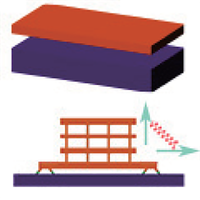
[Phys. Rev. Lett. 133, 046102] Published Wed Jul 24, 2024
09 Sep 04:53
by Ke Ren,
Hualei Yuan,
Zhongben Pan,
Zongsheng Li,
Han Pan,
Hongwei Chu,
Dechun Li

The article examines enhancing tin selenide (SnSe) for ultrafast photonics through copper (Cu) functionalization. Calculations and experiments confirm the enhanced near-infrared optical properties and nonlinear optical performance after Cu functionalization. Cu-functionalized SnSe-based saturable absorbers excel in erbium-doped fiber lasers, offering shorter pulse durations and stable harmonic mode-locking, underscoring its potential in advancing ultrafast photonics.
Abstract
This study enhances the ultrafast photonics application of tin selenide (SnSe) nanoflakes via copper (Cu) functionalization to overcome challenges such as low conductivity and weak near-infrared (NIR) absorption. Cu functionalization enhances concentration, induces strain, and reduces the bandgap through Sn substitution and Sn vacancy filling with Cu ions. Demonstrated by density functional theory calculations and experimental analyses, Cu-functionalized SnSe exhibits improved NIR optical absorption and superior third-order nonlinear optical properties. Z-scan measurements and femtosecond transient absorption spectroscopy reveal better performance of Cu-functionalized SnSe in terms of nonlinear optical properties and shorter carrier relaxation times compared to pristine SnSe. Furthermore, saturable absorbers based on both SnSe types, when integrated into an erbium-doped fiber laser, show that Cu functionalization leads to a decrease in pulse duration to 798 fs and an increase in 3 dB spectral bandwidth to 3.44 nm. Additionally, it enables stable harmonic mode-locking of bound-state solitons. This work suggests a new direction for improving wide bandgap 2D materials by highlighting the enhanced nonlinear optical properties and potential of Cu-functionalized SnSe in ultrafast photonics.
09 Sep 04:52
by Waqas Ahmad,
Aumber Abbas,
Umer Younis,
Jinying Zhang,
Shrouq H. Aleithan,
Zhiming Wang

This review provides a detailed summary of 2D violet phosphorus (VP) in terms of their latest synthesis techniques along with its photo-physical structural characterizations, stability, and degradation mechanism. In addition, diverse applications of VP in optoelectronics such as photodetectors, polarization detection, imaging systems, and neuromorphic devices among others are discussed.
Abstract
Recently, 2D violet phosphorus (VP), a new kind of allotrope of phosphorus has attained significant attention owing to its remarkable electronic, optical, and magnetic characteristics. Tunable, large direct bandgap, high charge carrier mobility, and large optical absorption make it a potential candidate for realizing photoelectronic applications. VP demonstrates unique electronic structure, chemical stability, strong light-matter interaction, and thermal stability that can be utilized for assembling intelligent photoelectronic devices. This review article provides comprehensive investigations of the latest synthesis techniques employed to develop the VP including its structural characterizations, stability, and degradation mechanisms. Furthermore, this review demonstrates the diverse applications of VP in optoelectronics, including photodetectors, polarization detection, imaging systems, neuromorphic optoelectronic devices, and many others. Finally, challenges and future research directions associated with the VP in terms of optoelectronics are discussed. Overall, as presented, the review offers an extensive study of VP, covering its synthesis, structural insights mechanisms, and applications in optoelectronics with the aim of stimulating further research and development in this growing field.
09 Sep 04:50
Nanoscale, 2024, 16,15746-15757
DOI: 10.1039/D4NR01441C, Paper
Caijia Sun, Haoshen Ye, Yijie Zhu, Leiming Chen, Dongmei Bai, Jianli Wang
In VN2H2/Al2O3 vdW multiferroic heterostructures, a strong and tunable interfacial magnetoelectric coupling is realized at room temperature, and a ferroelectric polarization can effectively regulate the electromagnetic and transport properties.
The content of this RSS Feed (c) The Royal Society of Chemistry
09 Sep 04:46
by Yumin Da,
Yongheng Zhou,
Shuai Zhang,
Yang Li,
Tongtong Jiang,
Wenting Zhu,
Paul K. Chu,
Xue‐Feng Yu,
Xiaolong Chen,
Jiahong Wang

Large single-crystal VP flakes are grown directly on the SiO2/Si substrate by a vapor transport technique. The VP flake-based photodetector shows a broad photoresponse range spanning the visible and near-infrared ranges as well as impressive sensitivity for weak light excitation.
Abstract
Violet phosphorus (VP) has attracted a lot of attention for its unique physicochemical properties and emerging potential in photoelectronic applications. Although VP has a van der Waals (vdW) structure similar to that of other 2D semiconductors, direct synthesis of VP on a substrate is still challenging. Moreover, optoelectronic devices composed of transfer-free VP flakes have not been demonstrated. Herein, a bismuth-assisted vapor phase transport technique is designed to grow uniform single-crystal VP flakes on the SiO2/Si substrate directly. The size of the crystalline VP flakes is an order of magnitude larger than that of previous liquid-exfoliated samples. The photodetector fabricated with the VP flakes shows a high responsivity of 12.5 A W−1 and response/recovery time of 3.82/3.03 ms upon exposure to 532 nm light. Furthermore, the photodetector shows a small dark current (<1 pA) that is beneficial to high-sensitivity photodetection. As a result, the detectivity is 1.38 × 10¹³ Jones that is comparable with that of the vdW p–n heterojunction detector. The results reveal the great potential of VP in optoelectronic devices as well as the CVT technique for the growth of single-crystal semiconductor thin films.
09 Sep 04:44
by Nanyang Wang, Kai Zhang, Kaiping Zhu, Xin Chen, Qianlu Sun, Dongxu Zhang, Ying Wang, Qian He, Wentao Zheng, Weigao Xu, and Yagang Yao

Nano Letters
DOI: 10.1021/acs.nanolett.4c01640
09 Sep 04:42
by Jinhong Min, Jae Hyung Kim, and Joohoon Kang

ACS Applied Nano Materials
DOI: 10.1021/acsanm.3c06263
09 Sep 04:41
by Wen-Qi Tang,
Yue Cheng,
Jian-Ping Zhu,
Ye-Qin Zhou,
Ming Xu,
Zhi-Yuan Gu

We propose manipulating MOF-MOF and MOF-solvent interactions to control the synthesis of wrinkled Zr-BTB-CX nanosheets. Using C1 to C8 acids as modulators, varying hydrophilicity and hydrophobicity alters wrinkle sizes. Increased hydrophobicity strengthens MOF-MOF interactions and weakens MOF-solvent interactions, producing larger wrinkles. Zr-BTB-C2, Zr-BTB-C3, and Zr-BTB-C4 show increased nanoscale wrinkles, with Zr-BTB-C4 having the largest pores, enhancing GC separation performance.
Abstract
The wrinkles are pervasive in ultrathin two-dimensional (2D) materials, but the regulation of wrinkles is rarely explored systematically. Here, we employed a series of carboxylic acids (from formic acid to octanoic acid) to control the wrinkles of Zr-BTB (BTB=1, 3, 5-(4-carboxylphenyl)-benzene) metal–organic framework (MOF) nanosheet. The wrinkles at the micrometer scale were observed with transmission electron microscopy. Furthermore, high-angle annular dark-field (HAADF) images showed lattice distortion in many nanoscale regions, which was precisely matched to the nano-wrinkles. With the changes of hydrophilicity/hydrophobicity, MOF-MOF and MOF-solvent interactions were possibly synergistically regulated and wrinkles with different sizes were obtained, which was supported by HAADF, molecular dynamics, and density functional theory calculation. Different wrinkle sizes resulted in different pore sizes between the Zr-BTB nanosheet interlayers, providing highly-oriented thin films and the successive optimization of kinetic diffusion pathways, proved by grazing-incidence wide-angle X-ray scattering and nitrogen adsorption. The most suitable wrinkle pore from Zr-BTB-C4 exhibited highly efficient chromatographic separation of the substituted benzene isomers. Our work provides a rational route for the modulation of nanoscale wrinkles and their stacked pores of MOF nanosheets and improves the separation abilities of MOFs.
09 Sep 04:41
by Mohammad Reza Mohammadzadeh,
Amirhossein Hasani,
Tanveer Hussain,
Hamidreza Ghanbari,
Mirette Fawzy,
Amin Abnavi,
Ribwar Ahmadi,
Fahmid Kabir,
Thushani De Silva,
R. K. N. D. Rajapakse,
Michael M. Adachi

Here, a 2D MoS2/Te heterojunction is reported that significantly improves volatile organic compound (VOC) detection compared to MoS2 and Te sensors on their own. The sensor response, which denotes the percentage change in the sensor's conductance upon VOC exposure, is further enhanced under photo-illumination and zero-bias conditions to values up to ≈7000% when exposed to butanone.
Abstract
Volatile organic compound (VOC) sensors have a broad range of applications including healthcare monitoring, product quality control, and air quality management. However, many such applications are demanding, requiring sensors with high sensitivity and selectivity. 2D materials are extensively used in many VOC sensing devices due to their large surface-to-volume ratio and fascinating electronic properties. These properties, along with their exceptional flexibility, low power consumption, room-temperature operation, chemical functionalization potential, and defect engineering capabilities, make 2D materials ideal for high-performance VOC sensing. Here, a 2D MoS2/Te heterojunction is reported that significantly improves the VOC detection compared to MoS2 and Te sensors on their own. Density functional theory (DFT) analysis shows that the MoS2/Te heterojunction significantly enhances the adsorption energy and therefore sensing sensitivity of the sensor. The sensor response, which denotes the percentage change in the sensor's conductance upon VOC exposure, is further enhanced under photo-illumination and zero-bias conditions to values up to ≈7000% when exposed to butanone. The MoS2/Te heterojunction is therefore a promising device architecture for portable and wearable sensing applications.
09 Sep 04:37
by Jun Zhou,
Haojie Huang,
Zihan Zhao,
Zhenglong Dou,
Li Zhou,
Tiantian Zhang,
Zhiheng Huang,
Yibiao Feng,
Dongxia Shi,
Nan Liu,
Jian Yang,
J.C. Nie,
Ququan Wang,
Jichen Dong,
Yunqi Liu,
Ruifen Dou,
Qikun Xue

A universal method, the gas-flow perturbation CVD approach to directly synthesis bilayer MoS2 homostructures with a clean interface and versatile twist angles ranging from 8° to 56° is developed. Enhanced moiré excitons in the twisted bilayer MoS2 with a commensurate angle of 22° are evidenced by using the low-temperature photoluminescence (PL) spectroscopy and density function theory (DFT) calculations.
Abstract
Moiré superlattices, composed of two layers of transition metal dichalcogenides with a relative twist angle, provide a novel platform for exploring the correlated electronic phases and excitonic physics. Here, a gas-flow perturbation chemical vapor deposition (CVD) approach is demonstrated to directly grow MoS2 bilayer with versatile twist angles. It is found that the formation of twisted bilayer MoS2 homostructures sensitively depends on the gas-flow perturbation modes, correspondingly featuring the nucleation sites of the second layer at the same (homo-site) as or at the different (hetero-site) from that of the first layer. The commensurate twist angle of ≈22° in homo-site nucleation strategy accounts for ≈16% among the broad range of twist angles due to its low formation energy, which is in consistence with the theoretical calculation. More importantly, moiré interlayer excitons with the enhanced photoluminescence (PL) intensity and the prolonged lifetime are evidenced in the twisted bilayer MoS2 with a commensurate angle of 22°, which is owing to the reason that the strong moiré potential facilitates the interlayer excitons to be trapped in the moiré superlattices. The work provides a feasible route to controllably built twisted MoS2 homostructures with strong moiré potential to investigate the correlated physics in twistronics systems.
05 Sep 06:30
Abstract
Two-dimensional (2D) transition metal dichalcogenides (TMDs) have garnered considerable attention for their promising applications in sensors and optoelectronic devices, owing to their exceptional optical, electronic, and optoelectronic properties. However, the inherent high symmetry of TMD lattices imposes limitations on their functional versatility. Here, we present a strategy to disrupt the C3 rotational symmetry of monolayer WSe2 by fabricating a heterostructure incorporating WSe2 and SiP flakes. Through comprehensive experimental investigations and first-principle calculations, we elucidate that in the WSe2/SiP heterostructure, excitons—both neutral and charged—emanating from WSe2 exhibit pronounced anisotropy, which remains robust against temperature variations. Notably, we observe an anisotropic ratio reaching up to 1.5, indicating a substantial degree of anisotropy. Furthermore, we demonstrate the tunability of exciton anisotropy through the application of a magnetic field, resulting in a significant reduction in the anisotropic ratio with increasing field strength, from 1.57 to 1.18. Remarkably, the change in heterojunction anisotropy ratio reaches 24.8% as the magnetic field increases. Our findings elucidate that the perturbation of the C3 rotational symmetry of the WSe2 monolayer arises from a non-uniform charge density distribution within the layer, exhibiting mirror symmetry. These results underscore the potential of heterostructure engineering in tailoring the properties of isotropic materials and provide a promising avenue for advancing the application of anisotropic devices across various fields.

05 Sep 06:16
by Youngki Yeo,
Jihun Kim,
Jeonghun Suh,
Jinhyuk Jang,
Kyungrok Kang,
Peggy Schoenherr,
Kwang‐Tak Kim,
Yong‐Jin Kim,
Kee Hoon Kim,
Clemens Ulrich,
Jan Seidel,
Si‐Young Choi,
Chan‐Ho Yang

Flexoelectric fields facilitate the creation of anti-Frenkel defects that consist of oxygen vacancies and interstitials. The defect concentration is governed by non-equilibrium processes such as thermal excitation, relaxation, and freezing, depending on thermal cycles. Anti-Frenkel defects as defect dipoles are strongly coupled with dielectric and piezoelectric properties.
Abstract
Lattice defects such as oxygen vacancies, interstitials, and their complexes are present in crystalline oxide materials. In particular, anti-Frenkel defects, which refer to charge-neutral anion vacancy-interstitial pairs, are strongly coupled with ferroelectric and dielectric properties as electric dipoles. However, in order to observe their macroscopic manifestation, delicate defect controls are required to the extent that electronic and ionic charges are almost completely suppressed. Here, the thermal cycle dependence of dielectric and piezoelectric properties is scrutinized in the strain-driven morphotropic phase boundaries of multiferroic La-substituted BiFeO3 thin films. Electrochemical impedance spectroscopy provides the Warburg feature that is considered evidence of the ionic origin. The observations are discussed based on anti-Frenkel defects that are created or annihilated reversibly by thermal cycles through high-temperature structural phase transition temperature or magnetic Néel temperature. The defect dipoles are spontaneously aligned by the flexoelectric effect in the phase boundaries inducing a metastable interfacial ferroelectric phase. The findings offer useful insight into defect dipoles.
05 Sep 06:10
by Gyula Halasi
npj 2D Materials and Applications, Published online: 25 July 2024; doi:10.1038/s41699-024-00487-4
Enhancing the dipole ring of hexagonal boron nitride nanomesh by surface alloying
05 Sep 05:50
by Victor Chang Lee
Nature Communications, Published online: 24 July 2024; doi:10.1038/s41467-024-50534-3
Many-body effects may be crucial for describing high harmonic generation in solids, but previous work did not fully account for many-body effects. Here the authors develop a non-perturbative, ab initio theory and apply it to monolayer MoS2, showing significant many-body effects in the perpendicular response.
03 Sep 08:44
by Jingyue Wang
Nature Nanotechnology, Published online: 22 July 2024; doi:10.1038/s41565-024-01732-z
In Bi2O2Se thin films, the local inversion-symmetry breaking in two sectors of the [Bi2O2]2+ layer yields opposite Rashba spin polarizations, which compensate each other and give rise to the hidden Rashba effect. Hence, the films exhibit only even-integer quantum Hall states, but there is no sign of odd-integer states.
03 Sep 08:44
by Rahul Pendurthi
Nature Nanotechnology, Published online: 23 July 2024; doi:10.1038/s41565-024-01705-2
Monolithic 3D integration of complementary WSe2 FETs has been achieved, featuring n-type FETs in tier 1 and p-type FETs in tier 2. Dense vias are realized using a pitch of less than 1 µm, facilitating 3D inverters as well as NAND and NOR logic functionalities.
03 Sep 08:44
by Jordan Pack
Nature Nanotechnology, Published online: 25 July 2024; doi:10.1038/s41565-024-01702-5
By utilizing the van der Waals electron acceptor α-RuCl3, this study establishes a p-type connection with WSe2, facilitating a high hole mobility of 80,000 cm2 V–1 s–1 for investigating quantum transport properties in a magnetic field of over 30 T.
03 Sep 08:39
Highlights
-
A systematic review of recent advances of microrobots applied in the musculoskeletal system with an emphasis on design strategies of microrobotic systems for tissue regeneration.
-
The fabrication, motion and control, and image-guided delivery of microrobots in the musculoskeletal system are reviewed based on the up-to-date works.
-
Prospects and challenges for future clinical translation of microrobots in the musculoskeletal system and regenerative medicine are discussed.
03 Sep 08:37
by Haoran Ji, Yi Liu, Chengcheng Ji, and Jian Wang

Accounts of Materials Research
DOI: 10.1021/accountsmr.4c00017
03 Sep 08:36
by Soumyabrata Roy, Antony Joseph, Xiang Zhang, Sohini Bhattacharyya, Anand B. Puthirath, Abhijit Biswas, Chandra Sekhar Tiwary, Robert Vajtai, and Pulickel M. Ajayan

Chemical Reviews
DOI: 10.1021/acs.chemrev.3c00937
03 Sep 08:29
by Gurudayal Behera, Kavaipatti Balasubramaniam, and Aftab Alam

The Journal of Physical Chemistry C
DOI: 10.1021/acs.jpcc.4c03387

