Assuming that actors $u$ and $v$ have $r$ common neighbours in a social network, we are interested in how likely is that $u$ and $v$ are adjacent. This question is addressed by studying the collection of conditional probabilities, denoted by ${\rm cl}(r)$, $r=0,1,2,\ldots$, that two randomly chosen actors of the social network are adjacent, given that they have $r$ common neighbours. The function $r\to {\rm cl}(r)$ describes clustering properties of the network and extends the global clustering coefficient. Our empirical study shows that the function $r\to {\rm cl}(r)$ exhibits a typical sigmoid pattern. In order to better understand this pattern, we establish the large-scale asymptotics of ${\rm cl}(\cdot )$ for two related random intersection graph models of affiliation networks admitting a non-vanishing global clustering coefficient.
Edmilson Roque
Shared posts
Clustering function: another view on clustering coefficient
Tweezers for chimeras in small networks
Author(s): Iryna Omelchenko, Oleh E. Omel’chenko, Anna Zakharova, Matthias Wolfrum, and Eckehard Schöll
We propose a control scheme which can stabilize and fix the position of chimera states in small networks. Chimeras consist of coexisting domains of spatially coherent and incoherent dynamics in systems of nonlocally coupled identical oscillators. Chimera states are generally difficult to observe in …[Phys. Rev. Lett.] Published Wed Feb 24, 2016
Congestion induced by the structure of multiplex networks
Author(s): Albert Solé-Ribalta, Sergio Gómez, and Alex Arenas
Multiplex networks are representations of multilayer interconnected complex networks where the nodes are the same at every layer. They turn out to be good abstractions of the intricate connectivity of multimodal transportation networks, among other types of complex systems. One of the most important…[Phys. Rev. Lett.] Published Mon Feb 22, 2016
Critical links and nonlocal rerouting in complex supply networks
Author(s): Dirk Witthaut, Martin Rohden, Xiaozhu Zhang, Sarah Hallerberg, and Marc Timme
Link failures repeatedly induce large-scale outages in power grids and other supply networks. Yet, it is still not well understood, which links are particularly prone to inducing such outages. Here we analyze how the nature and location of each link impact the network's capability to maintain stable…[Phys. Rev. Lett.] Published Tue Feb 23, 2016
Localized eigenvectors of the non-backtracking matrix
Avalanches and perturbation theory in the random-field Ising model
Acoustic Tests of Lorentz Symmetry Using Quartz Oscillators
Author(s): Anthony Lo, Philipp Haslinger, Eli Mizrachi, Loïc Anderegg, Holger Müller, Michael Hohensee, Maxim Goryachev, and Michael E. Tobar
Researchers study oscillating quartz crystals to search for physics not explained by the standard model, and they recover results that are 6 orders of magnitude more precise than any previous laboratory experiment.
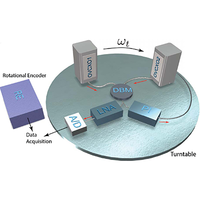
[Phys. Rev. X 6, 011018] Published Wed Feb 24, 2016
Controlling chimera states: The influence of excitable units
Author(s): Thomas Isele, Johanne Hizanidis, Astero Provata, and Philipp Hövel
We explore the influence of a block of excitable units on the existence and behavior of chimera states in a nonlocally coupled ring-network of FitzHugh-Nagumo elements. The FitzHugh-Nagumo system, a paradigmatic model in many fields from neuroscience to chemical pattern formation and nonlinear elect…
[Phys. Rev. E 93, 022217] Published Thu Feb 25, 2016
Cluster synchronization in multiplex networks
Modern Milgram experiment sheds light on power of authority
Modern Milgram experiment sheds light on power of authority
Nature 530, 7591 (2016). http://www.nature.com/doifinder/10.1038/nature.2016.19408
Author: Alison Abbott
People obeying commands feel less responsibility for their actions.
A complex network approach to cloud computing
Layer-switching cost and optimality in information spreading on multiplex networks. (arXiv:1307.2967v2 [physics.soc-ph] UPDATED)
We study a model of information spreading on multiplex networks, in which agents interact through multiple interaction channels (layers), say online vs.\ offline communication layers, subject to layer-switching cost for transmissions across different interaction layers. The model is characterized by the layer-wise path-dependent transmissibility over a contact, that is dynamically determined dependently on both incoming and outgoing transmission layers. We formulate an analytical framework to deal with such path-dependent transmissibility and demonstrate the nontrivial interplay between the multiplexity and spreading dynamics, including optimality. It is shown that the epidemic threshold and prevalence respond to the layer-switching cost non-monotonically and that the optimal conditions can change in abrupt non-analytic ways, depending also on the densities of network layers and the type of seed infections. Our results elucidate the essential role of multiplexity that its explicit consideration should be crucial for realistic modeling and prediction of spreading phenomena on multiplex social networks in an era of ever-diversifying social interaction layers.
Congestion induced by the structure of multiplex networks. (arXiv:1602.07474v1 [physics.soc-ph])
Multiplex networks are representations of multilayer interconnected complex networks where the nodes are the same at every layer. They turn out to be good abstractions of the intricate connectivity of multimodal transportation networks, among other types of complex systems. One of the most important critical phenomena arising in such networks is the emergence of congestion in transportation flows. Here we prove analytically that the structure of multiplex networks can induce congestion for flows that otherwise will be decongested if the individual layers were not interconnected. We provide explicit equations for the onset of congestion and approximations that allow to compute this onset from individual descriptors of the individual layers. The observed cooperative phenomenon reminds the Braess' paradox in which adding extra capacity to a network when the moving entities selfishly choose their route can in some cases reduce overall performance. Similarly, in the multiplex structure, the efficiency in transportation can unbalance the transportation loads resulting in unexpected congestion.
The Myopia of Crowds: A Study of Collective Evaluation on Stack Exchange. (arXiv:1602.07388v1 [cs.HC])
Crowds can often make better decisions than individuals or small groups of experts by leveraging their ability to aggregate diverse information. Question answering sites, such as Stack Exchange, rely on the "wisdom of crowds" effect to identify the best answers to questions asked by users. We analyze data from 250 communities on the Stack Exchange network to pinpoint factors affecting which answers are chosen as the best answers. Our results suggest that, rather than evaluate all available answers to a question, users rely on simple cognitive heuristics to choose an answer to vote for or accept. These cognitive heuristics are linked to an answer's salience, such as the order in which it is listed and how much screen space it occupies. While askers appear to depend more on heuristics, compared to voting users, when choosing an answer to accept as the most helpful one, voters use acceptance itself as a heuristic: they are more likely to choose the answer after it is accepted than before that very same answer was accepted. These heuristics become more important in explaining and predicting behavior as the number of available answers increases. Our findings suggest that crowd judgments may become less reliable as the number of answers grow.
The effect of social welfare system based on the complex network. (arXiv:1602.07338v1 [cs.SI])
With the passage of time, the development of communication technology and transportation broke the isolation among people. Relationship tends to be complicated, pluralism, dynamism. In the network where interpersonal relationship and evolved complex net based on game theory work serve respectively as foundation architecture and theoretical model, with the combination of game theory and regard public welfare as influencing factor, we artificially initialize that closed network system. Through continual loop operation of the program, we summarize the changing rule of the cooperative behavior in the interpersonal relationship, so that we can analyze the policies about welfare system about whole network and the relationship of frequency of betrayal in cooperative behavior. Most analytical data come from some simple investigations and some estimates based on internet and environment and the study put emphasis on simulating social network and analyze influence of social welfare system on Cooperative Behavio.
Energetics of synchronization in coupled oscillators rotating on circular trajectories. (arXiv:1602.07116v5 [nlin.AO] UPDATED)
We derive a concise and general expression of the energy dissipation rate for coupled oscillators rotating on circular trajectories by unifying the nonequilibrium aspects with the nonlinear dynamics via stochastic thermodynamics. In the framework of phase oscillator models, it is known that the even and odd parts of the coupling function express the effect on collective and relative dynamics, respectively. We reveal that the odd part always decreases the dissipation upon synchronization, while the even part yields a characteristic square-root change of the dissipation near the bifurcation point whose sign depends on the specific system parameters. We apply our theory to hydrodynamically coupled Stokes spheres rotating on circular trajectories that can be interpreted as a simple model of synchronization of coupled oscillators in a biophysical system. We show that the coupled Stokes spheres gain the ability to do more work on the surrounding fluid as the degree of phase synchronization increases.
Beyond the locally tree-like approximation for percolation on real networks. (arXiv:1602.07140v1 [physics.soc-ph] CROSS LISTED)
Theoretical attempts proposed so far to describe ordinary percolation processes on real-world networks rely on the locally tree-like ansatz. Such an approximation, however, holds only to a limited extent, as real graphs are often characterized by high frequencies of short loops. We present here a theoretical framework able to overcome such a limitation for the case of site percolation. Our method is based on a message passing algorithm that discounts redundant paths along triangles in the graph. We systematically test the approach on 98 real-world graphs and on synthetic networks. We find excellent accuracy in the prediction of the whole percolation diagram, with significant improvement with respect to the prediction obtained under the locally tree-like approximation. Residual discrepancies between theory and simulations do not depend on clustering and can be attributed to the presence of loops longer than three edges. We present also a method to account for clustering in bond percolation, but the improvement with respect to the method based on the tree-like approximation is much less apparent.
Congestion induced by the structure of multiplex networks. (arXiv:1602.07474v1 [physics.soc-ph])
Multiplex networks are representations of multilayer interconnected complex networks where the nodes are the same at every layer. They turn out to be good abstractions of the intricate connectivity of multimodal transportation networks, among other types of complex systems. One of the most important critical phenomena arising in such networks is the emergence of congestion in transportation flows. Here we prove analytically that the structure of multiplex networks can induce congestion for flows that otherwise will be decongested if the individual layers were not interconnected. We provide explicit equations for the onset of congestion and approximations that allow to compute this onset from individual descriptors of the individual layers. The observed cooperative phenomenon reminds the Braess' paradox in which adding extra capacity to a network when the moving entities selfishly choose their route can in some cases reduce overall performance. Similarly, in the multiplex structure, the efficiency in transportation can unbalance the transportation loads resulting in unexpected congestion.
Energetics of synchronization in coupled oscillators rotating on circular trajectories. (arXiv:1602.07116v5 [nlin.AO] UPDATED)
We derive a concise and general expression of the energy dissipation rate for coupled oscillators rotating on circular trajectories by unifying the nonequilibrium aspects with the nonlinear dynamics via stochastic thermodynamics. In the framework of phase oscillator models, it is known that the even and odd parts of the coupling function express the effect on collective and relative dynamics, respectively. We reveal that the odd part always decreases the dissipation upon synchronization, while the even part yields a characteristic square-root change of the dissipation near the bifurcation point whose sign depends on the specific system parameters. We apply our theory to hydrodynamically coupled Stokes spheres rotating on circular trajectories that can be interpreted as a simple model of synchronization of coupled oscillators in a biophysical system. We show that the coupled Stokes spheres gain the ability to do more work on the surrounding fluid as the degree of phase synchronization increases.
Beyond the locally tree-like approximation for percolation on real networks. (arXiv:1602.07140v1 [physics.soc-ph])
Theoretical attempts proposed so far to describe ordinary percolation processes on real-world networks rely on the locally tree-like ansatz. Such an approximation, however, holds only to a limited extent, as real graphs are often characterized by high frequencies of short loops. We present here a theoretical framework able to overcome such a limitation for the case of site percolation. Our method is based on a message passing algorithm that discounts redundant paths along triangles in the graph. We systematically test the approach on 98 real-world graphs and on synthetic networks. We find excellent accuracy in the prediction of the whole percolation diagram, with significant improvement with respect to the prediction obtained under the locally tree-like approximation. Residual discrepancies between theory and simulations do not depend on clustering and can be attributed to the presence of loops longer than three edges. We present also a method to account for clustering in bond percolation, but the improvement with respect to the method based on the tree-like approximation is much less apparent.
Beyond the locally tree-like approximation for percolation on real networks. (arXiv:1602.07140v1 [physics.soc-ph])
Theoretical attempts proposed so far to describe ordinary percolation processes on real-world networks rely on the locally tree-like ansatz. Such an approximation, however, holds only to a limited extent, as real graphs are often characterized by high frequencies of short loops. We present here a theoretical framework able to overcome such a limitation for the case of site percolation. Our method is based on a message passing algorithm that discounts redundant paths along triangles in the graph. We systematically test the approach on 98 real-world graphs and on synthetic networks. We find excellent accuracy in the prediction of the whole percolation diagram, with significant improvement with respect to the prediction obtained under the locally tree-like approximation. Residual discrepancies between theory and simulations do not depend on clustering and can be attributed to the presence of loops longer than three edges. We present also a method to account for clustering in bond percolation, but the improvement with respect to the method based on the tree-like approximation is much less apparent.
Energetics of synchronization in coupled oscillators rotating on circular trajectories. (arXiv:1602.07116v3 [nlin.AO] UPDATED)
We derive a concise and general expression of the energy dissipation rate for coupled oscillators rotating on circular trajectories by unifying the nonequilibrium aspects with the nonlinear dynamics via stochastic thermodynamics. In the framework of phase oscillator models, it is known that the even and odd parts of the coupling function express the effect on collective and relative dynamics, respectively. We reveal that the odd part always decreases the dissipation upon synchronization, while the even part yields a characteristic square-root change of the dissipation near the bifurcation point whose sign depends on the specific system parameters. We apply our theory to hydrodynamically coupled Stokes spheres rotating on circular trajectories that can be interpreted as a simple model of synchronization of coupled oscillators in a biophysical system. We show that the coupled Stokes spheres gain the ability to do more work on the surrounding fluid as the degree of phase synchronization increases.
Who Watches (and Shares) What on YouTube? And When? Using Twitter to Understand YouTube Viewership. (arXiv:1312.4511v2 [cs.SI] UPDATED)
We combine user-centric Twitter data with video-centric YouTube data to analyze who watches and shares what on YouTube. Combination of two data sets, with 87k Twitter users, 5.6mln YouTube videos and 15mln video sharing events, allows rich analysis going beyond what could be obtained with either of the two data sets individually. For Twitter, we generate user features relating to activity, interests and demographics. For YouTube, we obtain video features for topic, popularity and polarization. These two feature sets are combined through sharing events for YouTube URLs on Twitter. This combination is done both in a user-, a video- and a sharing-event-centric manner. For the user-centric analysis, we show how Twitter user features correlate both with YouTube features and with sharing-related features. As two examples, we show urban users are quicker to share than rural users and for some notions of "influence" influential users on Twitter share videos with a higher number of views. For the video-centric analysis, we find a superlinear relation between initial Twitter shares and the final amounts of views, showing the correlated behavior of Twitter. On user impact, we find the total amount of followers of users that shared the video in the first week does not affect its final popularity. However, aggregated user retweet rates serve as a better predictor for YouTube video popularity. For the sharing-centric analysis, we reveal existence of correlated behavior concerning the time between video creation and sharing within certain timescales, showing the time onset for a coherent response, and the time limit after which collective responses are extremely unlikely. We show that response times depend on video category, revealing that Twitter sharing of a video is highly dependent on its content. To the best of our knowledge this is the first large-scale study combining YouTube and Twitter data.
Growth and containment of a hierarchical criminal network
Author(s): Charles Z. Marshak, M. Puck Rombach, Andrea L. Bertozzi, and Maria R. D'Orsogna
We model the hierarchical evolution of an organized criminal network via antagonistic recruitment and pursuit processes. Within the recruitment phase, a criminal kingpin enlists new members into the network, who in turn seek out other affiliates. New recruits are linked to established criminals acco…
[Phys. Rev. E 93, 022308] Published Tue Feb 23, 2016
Entropy-based complexity measures for gait data of patients with Parkinson's disease
Shannon, Kullback-Leibler, and Klimontovich's renormalized entropies are applied as three different complexity measures on gait data of patients with Parkinson's disease (PD) and healthy control group. We show that the renormalized entropy of variability of total reaction force of gait is a very efficient tool to compare patients with respect to disease severity. Moreover, it is a good risk predictor such that the sensitivity, i.e., the percentage of patients with PD who are correctly identified as having PD, increases from 25% to 67% while the Hoehn-Yahr stage increases from 2.5 to 3.0 (this stage goes from 0 to 5 as the disease severity increases). The renormalized entropy method for stride time variability of gait is found to correctly identify patients with a sensitivity of 80%, while the Shannon entropy and the Kullback-Leibler relative entropy can do this with a sensitivity of only 26.7% and 13.3%, respectively.
Quantifying noisy attractors: from heteroclinic to excitable networks. (arXiv:1602.06135v1 [nlin.AO])
Attractors of dynamical systems may be networks in phase space that can be heteroclinic (where there are dynamical connections between simple invariant sets) or excitable (where a perturbation threshold needs to be crossed to a dynamical connection between "nodes"). Such network attractors can display a high degree of sensitivity to noise both in terms of the regions of phase space visited and in terms of the sequence of transitions around the network. The two types of network are intimately related---one can directly bifurcate to the other.
In this paper we attempt to quantify the effect of additive noise on such network attractors. Noise increases the average rate at which the networks are explored, and can result in "macroscopic" random motion around the network. We perform an asymptotic analysis of local behaviour of an escape model near heteroclinic/excitable nodes in the limit of noise $\eta\rightarrow 0^+$ as a model for the mean residence time $T$ near equilibria.
We also explore transition probabilities between nodes of the network in the presence of anisotropic noise. For low levels of noise, numerical results suggest that a (heteroclinic or excitable) network can approximately realise any set of transition probabilities and any sufficiently large mean residence times at the given nodes. We show that this can be well modelled in our example network by multiple independent escape processes, where the direction of first escape determines the transition. This suggests that it is feasible to design noisy network attractors with arbitrary Markov transition probabilities and residence times.
Optimal synchronization of directed complex networks. (arXiv:1602.06262v2 [nlin.AO] UPDATED)
We study optimal synchronization of networks of coupled phase oscillators. We extend previous theory for optimizing the synchronization properties of undirected networks to the important case of directed networks. We derive a generalized synchrony alignment function that encodes the interplay between network structure and the oscillators' natural frequencies and serves as an objective measure for the network's degree of synchronization. Using the generalized synchrony alignment function, we show that a network's synchronization properties can be systematically optimized. This framework also allows us to study the properties of synchrony-optimized networks, and in particular, investigate the role of directed network properties such as nodal in- and out-degrees. For instance, we find that in optimally rewired networks the heterogeneity of the in-degree distribution roughly matches the heterogeneity of the natural frequency distribution, but no such relationship emerges for out-degrees. We also observe that a network's synchronization properties are promoted by a strong correlation between the nodal in-degrees and the natural frequencies of oscillators, whereas the relationship between the nodal out-degrees and the natural frequencies has comparatively little effect. This result is supported by our theory, which indicates that synchronization is promoted by a strong alignment of the natural frequencies with the left singular vectors corresponding to the largest singular values of the Laplacian matrix.
Optimal transport in time-varying small-world networks
Author(s): Qu Chen, Jiang-Hai Qian, Liang Zhu, and Ding-Ding Han
The time-order of interactions, which is regulated by some intrinsic activity, surely plays a crucial role on the transport efficiency of transportation systems. Here we study the optimal transport structure by measure of the length of time-respecting paths. Our network is built from a 2-dimensional…[Phys. Rev. E] Published Mon Feb 22, 2016
Optimal synchronization of directed complex networks. (arXiv:1602.06262v2 [nlin.AO] UPDATED)
We study optimal synchronization of networks of coupled phase oscillators. We extend previous theory for optimizing the synchronization properties of undirected networks to the important case of directed networks. We derive a generalized synchrony alignment function that encodes the interplay between network structure and the oscillators' natural frequencies and serves as an objective measure for the network's degree of synchronization. Using the generalized synchrony alignment function, we show that a network's synchronization properties can be systematically optimized. This framework also allows us to study the properties of synchrony-optimized networks, and in particular, investigate the role of directed network properties such as nodal in- and out-degrees. For instance, we find that in optimally rewired networks the heterogeneity of the in-degree distribution roughly matches the heterogeneity of the natural frequency distribution, but no such relationship emerges for out-degrees. We also observe that a network's synchronization properties are promoted by a strong correlation between the nodal in-degrees and the natural frequencies of oscillators, whereas the relationship between the nodal out-degrees and the natural frequencies has comparatively little effect. This result is supported by our theory, which indicates that synchronization is promoted by a strong alignment of the natural frequencies with the left singular vectors corresponding to the largest singular values of the Laplacian matrix.
Quantifying noisy attractors: from heteroclinic to excitable networks. (arXiv:1602.06135v1 [nlin.AO])
Attractors of dynamical systems may be networks in phase space that can be heteroclinic (where there are dynamical connections between simple invariant sets) or excitable (where a perturbation threshold needs to be crossed to a dynamical connection between "nodes"). Such network attractors can display a high degree of sensitivity to noise both in terms of the regions of phase space visited and in terms of the sequence of transitions around the network. The two types of network are intimately related---one can directly bifurcate to the other.
In this paper we attempt to quantify the effect of additive noise on such network attractors. Noise increases the average rate at which the networks are explored, and can result in "macroscopic" random motion around the network. We perform an asymptotic analysis of local behaviour of an escape model near heteroclinic/excitable nodes in the limit of noise $\eta\rightarrow 0^+$ as a model for the mean residence time $T$ near equilibria.
We also explore transition probabilities between nodes of the network in the presence of anisotropic noise. For low levels of noise, numerical results suggest that a (heteroclinic or excitable) network can approximately realise any set of transition probabilities and any sufficiently large mean residence times at the given nodes. We show that this can be well modelled in our example network by multiple independent escape processes, where the direction of first escape determines the transition. This suggests that it is feasible to design noisy network attractors with arbitrary Markov transition probabilities and residence times.