The relation between the onset of chaos and critical phenomena, like Quantum Phase Transitions (QPT) and Excited-State Quantum Phase transitions (ESQPT), is analyzed for atom-field systems. While it has been speculated that the onset of hard chaos is associated with ESQPT based in the resonant case, the off-resonant cases show clearly that both phenomena, ESQPT and chaos, respond to different mechanisms. The results are supported in a detailed numerical study of the dynamics of the semiclassical Hamiltonian of the Dicke model. The appearance of chaos is quantified calculating the largest Lyapunov exponent for a wide sample of initial conditions in the whole available phase space for a given energy. The percentage of the available phase space with chaotic trajectories is evaluated as a function of energy and coupling between the qubit and bosonic part, allowing to obtain maps in the space of coupling and energy, where ergodic properties are observed in the model. Different sets of Hamiltonian parameters are considered, including resonant and off-resonant cases.
Edmilson Roque
Shared posts
Classical chaos in atom-field systems. (arXiv:1604.00725v2 [nlin.CD] UPDATED)
Reconstruction of chaotic neural network from observed firing rates. (arXiv:1604.00619v1 [nlin.CD])
Randomly coupled neural fields demonstrate chaotic variation of firing rates, if the coupling is strong enough, as has been shown by Sompolinsky et. al [Phys. Rev. Lett., v. 61, 259 (1988)]. We present a method for reconstruction of the coupling matrix from the observations of the chaotic firing rates. The approach is based on the particular property of the nonlinearity in the coupling, as the latter is determined by a sigmoidal gain function. We demonstrate that for a large enough data set, the method gives an accurate estimation of the coupling matrix and of other parameters of the system, including the gain function.
Dynamical leaps due to microscopic changes in multiplex networks. (arXiv:1604.00963v1 [physics.soc-ph])
Recent developments of the multiplex paradigm included efforts to understand the role played by the presence of several layers on the dynamics of processes running on these networks. The possible existence of new phenomena associated to the richer topology has been discussed and examples of these differences have been systematically searched. Here, we show that the interconnectivity of the layers may have an important impact on the speed of the dynamics run in the network and that microscopic changes such as the addition of one single inter-layer link can notably affect the arrival at a global stationary state. As a practical verification, these results obtained with spectral techniques are confirmed with a Kuramoto dynamics for which the synchronization consistently delays after the addition of single inter-layer links.
Detection of timescales in evolving complex systems. (arXiv:1604.00758v1 [physics.soc-ph])
Most complex systems are intrinsically dynamic in nature. The evolution of a dynamic complex system is typically represented as a sequence of snapshots, where each snapshot describes the configuration of the system at a particular instant of time. Then, one may directly follow how the snapshots evolve in time, or aggregate the snapshots within some time intervals to form representative "slices" of the evolution of the system configuration. This is often done with constant intervals, whose duration is based on arguments on the nature of the system and of its dynamics. A more refined approach would be to consider the rate of activity in the system to perform a separation of timescales. However, an even better alternative would be to define dynamic intervals that match the evolution of the system's configuration. To this end, we propose a method that aims at detecting evolutionary changes in the configuration of a complex system, and generates intervals accordingly. We show that evolutionary timescales can be identified by looking for peaks in the similarity between the sets of events on consecutive time intervals of data. Tests on simple toy models reveal that the technique is able to detect evolutionary timescales of time-varying data both when the evolution is smooth as well as when it changes sharply. This is further corroborated by analyses of several real datasets. Our method is scalable to extremely large datasets and is computationally efficient. This allows a quick, parameter-free detection of multiple timescales in the evolution of a complex system.
Quantifying the Diaspora of Knowledge in the Last Century. (arXiv:1604.00696v1 [cs.SI])
Academic research is driven by several factors causing different disciplines to act as "sources" or "sinks" of knowledge. However, how the flow of authors' research interests -- a proxy of human knowledge -- evolved across time is still poorly understood. Here, we build a comprehensive map of such flows across one century, revealing fundamental periods in the raise of interest in areas of human knowledge. We identify and quantify the most attractive topics over time, when a relatively significant number of researchers moved from their original area to another one, causing what we call a "diaspora of the knowledge" towards sinks of scientific interest, and we relate these points to crucial historical and political events. Noticeably, only a few areas -- like Medicine, Physics or Chemistry -- mainly act as sources of the diaspora, whereas areas like Material Science, Chemical Engineering, Neuroscience, Immunology and Microbiology or Environmental Science behave like sinks.
Reconstruction of chaotic neural network from observed firing rates. (arXiv:1604.00619v1 [nlin.CD])
Randomly coupled neural fields demonstrate chaotic variation of firing rates, if the coupling is strong enough, as has been shown by Sompolinsky et. al [Phys. Rev. Lett., v. 61, 259 (1988)]. We present a method for reconstruction of the coupling matrix from the observations of the chaotic firing rates. The approach is based on the particular property of the nonlinearity in the coupling, as the latter is determined by a sigmoidal gain function. We demonstrate that for a large enough data set, the method gives an accurate estimation of the coupling matrix and of other parameters of the system, including the gain function.
Quantifying the Diaspora of Knowledge in the Last Century. (arXiv:1604.00696v1 [cs.SI])
Academic research is driven by several factors causing different disciplines to act as "sources" or "sinks" of knowledge. However, how the flow of authors' research interests -- a proxy of human knowledge -- evolved across time is still poorly understood. Here, we build a comprehensive map of such flows across one century, revealing fundamental periods in the raise of interest in areas of human knowledge. We identify and quantify the most attractive topics over time, when a relatively significant number of researchers moved from their original area to another one, causing what we call a "diaspora of the knowledge" towards sinks of scientific interest, and we relate these points to crucial historical and political events. Noticeably, only a few areas -- like Medicine, Physics or Chemistry -- mainly act as sources of the diaspora, whereas areas like Material Science, Chemical Engineering, Neuroscience, Immunology and Microbiology or Environmental Science behave like sinks.
Cooperative epidemics on multiplex networks
Author(s): N. Azimi-Tafreshi
The spread of one disease, in some cases, can stimulate the spreading of another infectious disease. Here, we treat analytically a symmetric coinfection model for spreading of two diseases on a two-layer multiplex network. We allow layer overlapping, but we assume that each layer is random and local…
[Phys. Rev. E 93, 042303] Published Mon Apr 04, 2016
Network structure, metadata and the prediction of missing nodes and annotations. (arXiv:1604.00255v2 [physics.soc-ph] UPDATED)
The empirical validation of community detection methods is often based on available annotations on the nodes that serve as putative indicators of the large-scale network structure. Most often, the suitability of the annotations as topological descriptors itself is not assessed, and without this it is not possible to ultimately distinguish between actual shortcomings of the community detection algorithms on one hand, and the incompleteness, inaccuracy or structured nature of the data annotations themselves on the other. In this work we present a principled method to access both aspects simultaneously. We construct a joint generative model for the data and metadata, and a nonparametric Bayesian framework to infer its parameters from annotated datasets. We assess the quality of the metadata not according to its direct alignment with the network communities, but rather in its capacity to predict the placement of edges in the network. We also show how this feature can be used to predict the connections to missing nodes when only the metadata is available, as well as missing metadata. By investigating a wide range of datasets, we show that while there are seldom exact agreements between metadata tokens and the inferred data groups, the metadata is often informative of the network structure nevertheless, and can improve the prediction of missing nodes. This shows that the method uncovers meaningful patterns in both the data and metadata, without requiring or expecting a perfect agreement between the two.
Critical controllability in proteome-wide protein interaction network integrating transcriptome
Critical controllability in proteome-wide protein interaction network integrating transcriptome
Scientific Reports, Published online: 4 April 2016; doi:10.1038/srep23541
Dynamical invariance for random matrices. (arXiv:1603.09373v1 [math-ph] CROSS LISTED)
We consider a general Langevin dynamics for the one-dimensional N-particle Coulomb gas with confining potential $V$ at temperature $\beta$. These dynamics describe for $\beta=2$ the time evolution of the eigenvalues of $N\times N$ random Hermitian matrices. The equilibrium partition function -- equal to the normalization constant of the Laughlin wave function in fractional quantum Hall effect -- is known to satisfy an infinite number of constraints called Virasoro or loop constraints. We introduce here a dynamical generating function on the space of random trajectories which satisfies a large class of constraints of geometric origin. We focus in this article on a subclass induced by the invariance under the Schr\"odinger-Virasoro algebra.
Immunization and targeted destruction of networks using explosive percolation. (arXiv:1604.00073v1 [physics.soc-ph])
The explosive percolation (EP) paradigm is used to propose a new method (`explosive immunization') for immunization and targeted destruction of networks. The ability of each node to block the spread of an infection (or to prevent the existence of a large cluster) is estimated by a score. The algorithm proceeds by first identifying low score nodes that are not vaccinated / destroyed, similarly as links that do not lead to large clusters are first established in EP. As in EP, this is done by selecting the worst node from a finite set of randomly chosen `candidates'. Tests on several real-world and model networks suggest that the method is more efficient and faster than any existing immunization strategy. Due to the latter property it can deal with very large networks.
Power-law relations in random networks with communities. (arXiv:1603.09711v2 [physics.soc-ph] UPDATED)
Most random graph models are locally tree-like - do not contain short cycles - rendering them unfit for modeling networks with a community structure. We introduce the hierarchical configuration model (HCM), a generalization of the configuration model that includes community structures, while properties such as the size of the giant component, and the size of the giant percolating cluster under bond percolation can still be derived analytically. Viewing real-world networks as realizations of the HCM, we observe two previously unobserved power-law relations: between the number of edges inside a community and the community sizes, and between the number of edges going out of a community and the community sizes. We also relate the power-law exponent $\tau$ of the degree distribution with the power-law exponent of the community size distribution $\gamma$. In the special case of extremely dense communities (e.g., complete graphs), this relation takes the simple form $\tau=\gamma-1$.
The effects of network structure, competition and memory time on social spreading phenomena. (arXiv:1501.05956v3 [physics.soc-ph] UPDATED)
Online social media have greatly affected the way in which we communicate with each other. However, little is known about what are the fundamental mechanisms driving dynamical information flow in online social systems. Here, we introduce a generative model for online sharing behavior that is analytically tractable and which can reproduce several characteristics of empirical micro-blogging data on hashtag usage, such as (time-dependent) heavy-tailed distributions of meme popularity. The presented framework constitutes a null model for social spreading phenomena which, in contrast to purely empirical studies or simulation-based models, clearly distinguishes the roles of two distinct factors affecting meme popularity: the memory time of users and the connectivity structure of the social network.
Synchronization of coupled generators of quasiperiodic oscillations. (arXiv:1603.09659v1 [nlin.CD])
The dynamics of two coupled generators of quasiperiodic oscillations is studied. The opportunity of complete and phase synchronization of generators in the regime of quasiperiodic oscillations is obtained. The features of structure of parameter plane is researched using charts of dynamical regimes and charts of Lyapunov exponents, in which typical structures as resonance Arnold web were revealed. The possible quasiperiodic bifurctions in the system are discussed.
Bifurcation analysis of the statics and dynamics of a logistic model with two delays. (arXiv:1603.09615v1 [nlin.CD])
The mathematical - numerical analysis of a discrete dynamical model with two independent delays was performed. Such model may describe a continuous system with delays that have real rational number values. Applicable characteristic equations were derived for both a single and double cycle. The results of the analysis were illustrated by numerical examples in the form of boundary bifurcation curves and Feigenbaums diagrams.
Analytical study of chaos and applications. (arXiv:1603.09515v1 [nlin.CD])
We summarize various cases where chaotic orbits can be described analytically. First we consider the case of a magnetic bottle where we have non-resonant and resonant ordered and chaotic orbits. In the sequence we consider the hyperbolic Henon map, where chaos appears mainly around the origin, which is an unstable periodic orbit. In this case the chaotic orbits around the origin are represented by analytic series (Moser series). We find the domain of convergence of these Moser series and of similar series around other unstable periodic orbits. The asymptotic manifolds from the various unstable periodic orbits intersect at homoclinic and heteroclinic orbits that are given analytically. Then we consider some Hamiltonian systems and we find their homoclinic orbits by using a new method of analytic prolongation. An application of astronomical interest is the domain of convergence of the analytical series that determine the spiral structure of barred-spiral galaxies.
Bond Percolation on Multiplex Networks
Author(s): A. Hackett, D. Cellai, S. Gómez, A. Arenas, and J. P. Gleeson
Modern society is permeated by systems with many numbers of nodes and connections (e.g., rail networks, airports). A theoretical study of the multiplex network consisting of European Union air routes and the London rail transportation system demonstrates the fragility of such a network.
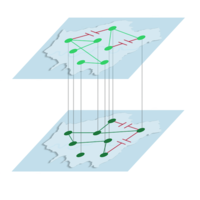
[Phys. Rev. X 6, 021002] Published Fri Apr 01, 2016
Correlation between dynamical and structural heterogeneities in colloidal hard-sphere suspensions
Nature Physics. doi:10.1038/nphys3709
Authors: Sebastian Golde, Thomas Palberg & Hans Joachim Schöpe
Reconstruction and topological characterization of the sigma factor regulatory network of Mycobacterium tuberculosis
Article
Sigma factors are regulatory proteins that reprogram the bacterial RNA polymerase in response to stress conditions to transcribe certain genes, including those for other sigma factors. Here, Chauhan et al . describe the complete sigma factor regulatory network of the pathogen Mycobacterium tuberculosis .
Nature Communications doi: 10.1038/ncomms11062
Authors: Rinki Chauhan, Janani Ravi, Pratik Datta, Tianlong Chen, Dirk Schnappinger, Kevin E. Bassler, Gábor Balázsi, Maria Laura Gennaro
GW150914: The Advanced LIGO Detectors in the Era of First Discoveries
Author(s): B. P. Abbott et al. (LIGO Scientific Collaboration and Virgo Collaboration)
The experimental requirements that had to be met by the Advanced LIGO detectors in order to detect the gravitational wave event GW150914, and how this was achieved are detailed.
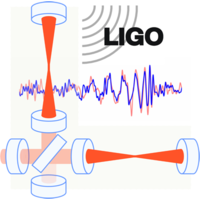
[Phys. Rev. Lett. 116, 131103] Published Thu Mar 31, 2016
Linear stability and the Braess paradox in coupled-oscillator networks and electric power grids
Author(s): Tommaso Coletta and Philippe Jacquod
We investigate the influence that adding a new coupling has on the linear stability of the synchronous state in coupled-oscillator networks. Using a simple model, we show that, depending on its location, the new coupling can lead to enhanced or reduced stability. We extend these results to electric …
[Phys. Rev. E 93, 032222] Published Thu Mar 31, 2016
Multilayer Stochastic Block Models Reveal the Multilayer Structure of Complex Networks
Author(s): Toni Vallès-Català, Francesco A. Massucci, Roger Guimerà, and Marta Sales-Pardo
Multiple interaction layers are a fact of life in real-world networks. Scientists model how well networks can be represented using superpositions of layers assembled using either AND or OR logic.

[Phys. Rev. X 6, 011036] Published Thu Mar 31, 2016
Phase transitions and hysteresis of cooperative contagion processes. (arXiv:1603.09082v1 [physics.soc-ph])
We investigate the effects of cooperation between two interacting infectious diseases that spread and stabilize in a host population. We propose a model in which individuals that are infected with one disease are more likely to acquire the second disease, both diseases following the susceptible-infected-susceptible reaction scheme. We analyze cooperative coinfection in stochastic network models as well as the idealized, well-mixed mean field system and show that cooperative mechanisms dramatically change the nature of phase transitions compared to single disease dynamics. We show that, generically, cooperative coinfection exhibits discontinuous transitions from the disease free to high prevalence state when a critical transmission rate is crossed. Furthermore, cooperative coinfection exhibits two distinct critical points, one for outbreaks the second one for eradication that can be substantially lower. This implies that cooperative coinfection exhibits hysteresis in its response to changing effective transmission rates or equivalently the basic reproduction number. We compute these critical parameters as a function of a cooperativity coefficient in the well-mixed mean field system. We finally investigate a spatially extended version of the model and show that cooperative interactions between diseases change the general wave propagation properties of conventional spreading phenomena of single diseases. The presented work may serve as a starting and reference point for a more comprehensive understanding of interacting diseases that spread in populations.
Heterogeneity of Global and Local Connectivity in Spatial Network Structures of World Migration. (arXiv:1603.09313v1 [physics.soc-ph])
We examine world migration as a social-spatial network of countries connected via movements of people. We assess how multilateral migratory relationships at global, regional, and local scales coexist ("glocalization"), divide ("polarization"), or form an interconnected global system ("globalization"). To do this, we decompose the world migration network (WMN) into communities---sets of countries with denser than expected migration connections---and characterize their pattern of local (i.e., intracommunity) and global (i.e., intercommunity) connectivity. We distinguish community signatures---"cave", "biregional", and "bridging"---with distinct migration patterns, spatial network structures, temporal dynamics, and underlying antecedents. Cave communities are tightly-knit, enduring structures that tend to channel local migration between contiguous countries; biregional communities are likely to merge migration between two distinct geographic regions (e.g., North Africa and Europe); and bridging communities have hub-and-spoke structures that tend to emerge dynamically from globe-spanning movements. We find that world migration is neither globally interconnected nor reproduces the geographic boundaries as drawn on a world map but involves a heterogeneous interplay of global and local tendencies in different network regions. We discuss the implications of our results for the understating of variability in today's transnational mobility patterns and migration opportunities across the globe.
In defense of negative temperature
Author(s): J. Poulter
This pedagogical comment highlights three misconceptions concerning the usefulness of the concept of negative temperature, being derived from the usual, often termed Boltzmann, definition of entropy. First, both the Boltzmann and Gibbs entropies must obey the same thermodynamic consistency relation.…
[Phys. Rev. E 93, 032149] Published Wed Mar 30, 2016
Outbreaks in susceptible-infected-removed epidemics with multiple seeds
Author(s): Takehisa Hasegawa and Koji Nemoto
We study a susceptible-infected-removed (SIR) model with multiple seeds on a regular random graph. Many researchers have studied the epidemic threshold of epidemic models above which a global outbreak can occur, starting from an infinitesimal fraction of seeds. However, there have been few studies o…
[Phys. Rev. E 93, 032324] Published Wed Mar 30, 2016
Critical Links and Nonlocal Rerouting in Complex Supply Networks
Author(s): Dirk Witthaut, Martin Rohden, Xiaozhu Zhang, Sarah Hallerberg, and Marc Timme
Link failures repeatedly induce large-scale outages in power grids and other supply networks. Yet, it is still not well understood which links are particularly prone to inducing such outages. Here we analyze how the nature and location of each link impact the network’s capability to maintain a stabl…
[Phys. Rev. Lett. 116, 138701] Published Wed Mar 30, 2016