27 Nov 14:01
Abstract
Systems such as fluid flows in channels and pipes or the complex Ginzburg–Landau system, defined over periodic domains, exhibit both continuous symmetries, translational and rotational, as well as discrete symmetries under spatial reflections or complex conjugation. The simplest, and very common symmetry of this type is the equivariance of the defining equations under the orthogonal group O(2). We formulate a novel symmetry reduction scheme for such systems by combining the method of slices with invariant polynomial methods, and show how it works by applying it to the Kuramoto–Sivashinsky system in one spatial dimension. As an example, we track a relative periodic orbit through a sequence of bifurcations to the onset of chaos. Within the symmetry-reduced state space we are able to compute and visualize the unstable manifolds of relative periodic orbits, their torus bifurcations, a transition to chaos via torus breakdown, and heteroclinic connections between various relative periodic orbits. It would be very hard to carry through such analysis in the full state space, without a symmetry reduction such as the one we present here.
27 Nov 14:01
Abstract
We prove the existence of a large complete subgraph w.h.p. in a preferential attachment random graph process with an edge-step. That is, we consider a dynamic stochastic process for constructing a graph in which at each step we independently decide, with probability
\(p\in (0,1)\)
, whether the graph receives a new vertex or a new edge between existing vertices. The connections are then made according to a preferential attachment rule. We prove that the random graph
\(G_{t}\)
produced by this so-called generalized linear preferential (GLP) model at time t contains a complete subgraph whose vertex set cardinality is given by
\(t^\alpha \)
, where
\(\alpha = (1-\varepsilon )\frac{1-p}{2-p}\)
, for any small
\(\varepsilon >0\)
asymptotically almost surely.
25 Nov 16:52
by Arianna Bottinelli, David T. J. Sumpter, and Jesse L. Silverberg
Author(s): Arianna Bottinelli, David T. J. Sumpter, and Jesse L. Silverberg
Collective motion of large human crowds often depends on their density. In extreme cases like heavy metal concerts and black Friday sales events, motion is dominated by physical interactions instead of conventional social norms. Here, we study an active matter model inspired by situations when large…
[Phys. Rev. Lett. 117, 228301] Published Wed Nov 23, 2016
25 Nov 12:39
Abstract
In this paper a rigorous proof of the mean field limit for a pedestrian flow model in two dimensions is given by using a probabilistic method. The model under investigation is an interacting particle system coupled to the eikonal equation on the microscopic scale. For stochastic initial data, it is proved that the solution of the N-particle pedestrian flow system with properly chosen cut-off converges in the probability sense to the solution of the characteristics of the non-cut-off Vlasov equation. Furthermore, the result on propagation of chaos is also deduced in terms of bounded Lipschitz distance.
24 Nov 11:02
by Tim Kittel, Jobst Heitzig, Kevin Webster, Juergen Kurths
When quantifying the time spent in the transient of a complex dynamical
system, the fundamental problem is that for a large class of systems the actual
time for reaching an attractor is infinite. Common methods for dealing with
this problem usually introduce three additional problems: non-invariance,
physical interpretation, and discontinuities, calling for carefully designed
methods for quantifying transients.
In this article, we discuss how the aforementioned problems emerge and
propose two novel metrics, Regularized Reaching Time ($T_{RR}$) and Area under
Distance Curve (AUDIC), to solve them, capturing two complementary aspects of
the transient dynamics.
$T_{RR}$ quantifies the additional time (positive or negative) that a
trajectory starting at a chosen initial condition needs to reach the attractor
after a reference trajectory has already arrived there. A positive or negative
value means that it arrives by this much earlier or later than the reference.
Because $T_{RR}$ is an analysis of return times after shocks, it is a
systematic approach to the concept of critical slowing down [1]; hence it is
naturally an early-warning signal [2] for bifurcations when central statistics
over distributions of initial conditions are used.
AUDIC is the distance of the trajectory to the attractor integrated over
time. Complementary to $T_{RR}$, it measures which trajectories are reluctant,
i.e. stay away from the attractor for long, or eager to approach it right away.
(... shortened for arxiv listing, full abstract in paper ...) New features in
these models can be uncovered, including the surprising regularity of the
Roessler system's basin of attraction even in the regime of a chaotic
attractor. Additionally, we demonstrate the critical slowing down
interpretation by presenting the metrics' sensitivity to prebifurcational
change and thus how they act as early-warning signals.
23 Nov 19:26
by Clemens Bechinger, Roberto Di Leonardo, Hartmut Löwen, Charles Reichhardt, Giorgio Volpe, and Giovanni Volpe
Author(s): Clemens Bechinger, Roberto Di Leonardo, Hartmut Löwen, Charles Reichhardt, Giorgio Volpe, and Giovanni Volpe
This article reviews both experimental and theoretical advances in the field of active matter which consists of natural and artificial objects capable of self-propulsion. Prime examples of active particles are Brownian particles, biological or manmade microscopic and nanoscopic objects, that can propel themselfes by taking up energy from their environment and converting it into directed motion. The review provides a guided tour through the basic principles and fabrication of active particles and discusses also many interesting future directions these manmade micromachines and nanomachines could take as autonomous agents for healthcare, sustainability, and security applications.
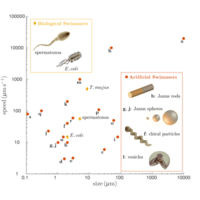
[Rev. Mod. Phys. 88, 045006] Published Wed Nov 23, 2016
23 Nov 18:21
by Claudio Angelo
Brazil’s scientists battle to escape 20-year funding freeze
Nature 539, 7630 (2016). http://www.nature.com/doifinder/10.1038/nature.2016.21014
Author: Claudio Angelo
Cap at current spending levels could spell ‘end of science in Brazil’, researchers say.

23 Nov 14:39
by M. E. J. Newman
Author(s): M. E. J. Newman
This paper examines two common methods of community detection in networks, namely modularity maximization and the maximum likelihood method. The author shows an equivalence between these two methods, and explores some of its consequences.
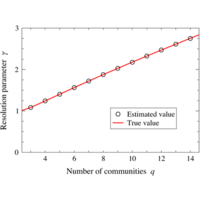
[Phys. Rev. E 94, 052315] Published Tue Nov 22, 2016
22 Nov 21:08
by Rafael S. Pinto
We study numerically the oscillation death state in the phase oscillator
model proposed byWinfree. We found that the phases in this state follow very
simple rules, actually, besides intrinsic properties of the oscillators, such
as natural frequency and pulse shape, they depend only on the inverse of the
degree. Other topological properties such as transitivity or associativity
seems to play no role on this state. Furthermore, we found that
degree-frequency correlation helps to inhibit oscillation death. Simple
analytical approximations corroborate the numerical results.
22 Nov 00:28
by Chaoqing Wang and Nicolas B. Garnier
We describe how the transition to synchronization in a system of globally coupled Stuart-Landau oscillators changes from continuous to discontinuous when the nature of the coupling is moved from diffusive to reactive. We explain this drastic qualitative change as resulting from the co-existence of a particular synchronized macrostate together with the trivial incoherent macrostate, in a range of parameter values for which the latter is linearly stable. In contrast to the paradigmatic Kuramoto model, this particular state observed at the synchronization transition contains a finite, non-vanishing number of synchronized oscillators, which results in a discontinuous transition. We consider successively two situations where either a fully synchronized state or a partially synchronized state exists at the transition. Thermodynamic limit and finite size effects are briefly discussed, as well as connections with recently observed discontinuous transitions.
22 Nov 00:28
by R. S. Ferreira, R. A. da Costa, S. N. Dorogovtsev, and J. F. F. Mendes
Author(s): R. S. Ferreira, R. A. da Costa, S. N. Dorogovtsev, and J. F. F. Mendes
We describe the phenomenon of localization in the epidemic SIS model on highly heterogeneous networks in which strongly connected nodes (hubs) play the role of centers of localization. We find that in this model the localized states below the epidemic threshold are metastable. The longevity and scal…
[Phys. Rev. E] Published Fri Nov 18, 2016
21 Nov 01:40
by Sandro M. Reia and José F. Fontanari
Author(s): Sandro M. Reia and José F. Fontanari
Axelrod's model with F=2 cultural features, where each feature can assume k states drawn from a Poisson distribution of parameter q, exhibits a continuous nonequilibrium phase transition in the square lattice. Here we use extensive Monte Carlo simulations and finite size scaling to study the critica…
[Phys. Rev. E] Published Wed Nov 16, 2016
19 Nov 16:48
by Zhen Wang, Chris T. Bauch, Samit Bhattacharyya, Alberto d'Onofrio, Piero Manfredi, Matjaz Perc, Nicola Perra, Marcel Salathé, Dawei Zhao
Historically, infectious diseases caused considerable damage to human
societies, and they continue to do so today. To help reduce their impact,
mathematical models of disease transmission have been studied to help
understand disease dynamics and inform prevention strategies. Vaccination - one
of the most important preventive measures of modern times - is of great
interest both theoretically and empirically. And in contrast to traditional
approaches, recent research increasingly explores the pivotal implications of
individual behavior and heterogeneous contact patterns in populations. Our
report reviews the developmental arc of theoretical epidemiology with emphasis
on vaccination, as it led from classical models assuming homogeneously mixing
(mean-field) populations and ignoring human behavior, to recent models that
account for behavioral feedback and/or population spatial/social structure.
Many of the methods used originated in statistical physics, such as lattice and
network models, and their associated analytical frameworks. Similarly, the
feedback loop between vaccinating behavior and disease propagation forms a
coupled nonlinear system with analogs in physics. We also review the new
paradigm of digital epidemiology, wherein sources of digital data such as
online social media are mined for high-resolution information on
epidemiologically relevant individual behavior. Armed with the tools and
concepts of statistical physics, and further assisted by new sources of digital
data, models that capture nonlinear interactions between behavior and disease
dynamics offer a novel way of modeling real-world phenomena, and can help
improve health outcomes. We conclude the review by discussing open problems in
the field and promising directions for future research.
19 Nov 16:47
by Soumen Majhi, Matjaz Perc, Dibakar Ghosh
Spatial coexistence of coherent and incoherent dynamics in network of coupled
oscillators is called a chimera state. We study such chimera states in a
network of neurons without any direct interactions but connected through
another medium of neurons, forming a multilayer structure. The upper layer is
thus made up of uncoupled neurons and the lower layer plays the role of a
medium through which the neurons in the upper layer share information among
each other. Hindmarsh-Rose neurons with square wave bursting dynamics are
considered as nodes in both layers. In addition, we also discuss the existence
of chimera states in presence of inter layer heterogeneity. The neurons in the
bottom layer are globally connected through electrical synapses, while across
the two layers chemical synapses are formed. According to our research, the
competing effects of these two types of synapses can lead to chimera states in
the upper layer of uncoupled neurons. Remarkably, we find a density-dependent
threshold for the emergence of chimera states in uncoupled neurons, similar to
the quorum sensing transition to a synchronized state. Finally, we examine the
impact of both homogeneous and heterogeneous inter-layer information
transmission delays on the observed chimera states over a wide parameter space.
18 Nov 18:55
by J. Barré and D. Métivier
Author(s): J. Barré and D. Métivier
We prove that any nonzero inertia, however small, is able to change the nature of the synchronization transition in Kuramoto-like models, either from continuous to discontinuous or from discontinuous to continuous. This result is obtained through an unstable manifold expansion in the spirit of Crawf…
[Phys. Rev. Lett. 117, 214102] Published Fri Nov 18, 2016
18 Nov 18:55
by Emanuele Cozzo and Yamir Moreno
Author(s): Emanuele Cozzo and Yamir Moreno
Multilayer networks have been the subject of intense research during the last few years, as they represent better the interdependent nature of many real world systems. Here, we address the question of describing the three different structural phases in which a multiplex network might exist. We show …
[Phys. Rev. E] Published Mon Nov 14, 2016
18 Nov 16:56
by Alexander Kuczala and Tatyana O. Sharpee
Author(s): Alexander Kuczala and Tatyana O. Sharpee
Using the diagrammatic method, we derive a set of self-consistent equations that describe eigenvalue distributions of large correlated asymmetric random matrices. The matrix elements can have different variances and be correlated with each other. The analytical results are confirmed by numerical sim…
[Phys. Rev. E 94, 050101(R)] Published Thu Nov 17, 2016
18 Nov 09:27
by Charo I. del Genio, Jesús Gómez-Gardeñes, Ivan Bonamassa, Stefano Boccaletti
The structure of many real-world systems is best captured by networks
consisting of several interaction layers. Understanding how a multi-layered
structure of connections affects the synchronization properties of dynamical
systems evolving on top of it is a highly relevant endeavour in mathematics and
physics, and has potential applications to several societally relevant topics,
such as power grids engineering and neural dynamics. We propose a general
framework to assess stability of the synchronized state in networks with
multiple interaction layers, deriving a necessary condition that generalizes
the Master Stability Function approach. We validate our method applying it to a
network of R\"ossler oscillators with a double layer of interactions, and show
that highly rich phenomenology emerges. This includes cases where the stability
of synchronization can be induced even if both layers would have individually
induced unstable synchrony, an effect genuinely due to the true multi-layer
structure of the interactions amongst the units in the network.
18 Nov 09:27
by Charo I. del Genio, Jesús Gómez-Gardeñes, Ivan Bonamassa, Stefano Boccaletti
The structure of many real-world systems is best captured by networks
consisting of several interaction layers. Understanding how a multi-layered
structure of connections affects the synchronization properties of dynamical
systems evolving on top of it is a highly relevant endeavour in mathematics and
physics, and has potential applications to several societally relevant topics,
such as power grids engineering and neural dynamics. We propose a general
framework to assess stability of the synchronized state in networks with
multiple interaction layers, deriving a necessary condition that generalizes
the Master Stability Function approach. We validate our method applying it to a
network of R\"ossler oscillators with a double layer of interactions, and show
that highly rich phenomenology emerges. This includes cases where the stability
of synchronization can be induced even if both layers would have individually
induced unstable synchrony, an effect genuinely due to the true multi-layer
structure of the interactions amongst the units in the network.
16 Nov 22:33
by Peter G. Fennell, Sergey Melnik, and James P. Gleeson
Author(s): Peter G. Fennell, Sergey Melnik, and James P. Gleeson
Continuous-time Markov process models of contagions are widely studied, not least because of their utility in predicting the evolution of real-world contagions and in formulating control measures. It is often the case, however, that discrete-time approaches are employed to analyze such models or to …
[Phys. Rev. E 94, 052125] Published Wed Nov 16, 2016
16 Nov 22:33
by L. Q. English, David Mertens, Saidou Abdoulkary, C. B. Fritz, K. Skowronski, and P. G. Kevrekidis
Author(s): L. Q. English, David Mertens, Saidou Abdoulkary, C. B. Fritz, K. Skowronski, and P. G. Kevrekidis
We derive the Kuramoto-Sakaguchi model from the basic circuit equations governing two coupled Wien-bridge oscillators. A Wien-bridge oscillator is a particular realization of a tunable autonomous oscillator that makes use of frequency filtering (via a RC band-pass filter) and positive feedback (via …
[Phys. Rev. E] Published Mon Nov 14, 2016
16 Nov 22:32
by Bertrand Ottino-Löffler and Steven H. Strogatz
Author(s): Bertrand Ottino-Löffler and Steven H. Strogatz
We present a case study of how topology can affect synchronization. Specifically, we consider arrays of phase oscillators coupled in a ring or a chain topology. Each ring is perfectly matched to a chain with the same initial conditions and the same random natural frequencies. The only difference is …
[Phys. Rev. E] Published Tue Nov 15, 2016
16 Nov 22:19
by J. M. V. Grzybowski, E. E. N. Macau and T. Yoneyama
This work concerns analytical results on the role of coupling strength in the phenomenon of onset of complete frequency locking in power-grids modelled as a network of second-order Kuramoto oscillators. Those results allow estimation of the coupling strength for the onset of complete frequency locking and to assess the features of network and oscillators that favor synchronization. The analytical results are evaluated using an order parameter defined as the normalized sum of absolute values of phase deviations of the oscillators over time. The investigation of the frequency synchronization within the subsets of the parameter space involved in the synchronization problem is also carried out. It is shown that the analytical results are in good agreement with those observed in the numerical simulations. In order to illustrate the methodology, a case study is presented, involving the Brazilian high-voltage transmission system under a load peak condition to study the effect of load on the syncronizability of the grid. The results show that both the load and the centralized generation might have concurred to the 2014 blackout.
16 Nov 16:57
by Roxana Rezvani Naraghi and Aristide Dogariu
Author(s): Roxana Rezvani Naraghi and Aristide Dogariu
It was a long time belief that, with increasing the scattering strength of multiple scattering media, the transport of light gradually slows down and, eventually, comes to a hold corresponding to a localized state. Here we present experimental evidence that different stages emerge in this evolution,…
[Phys. Rev. Lett.] Published Tue Nov 15, 2016
16 Nov 15:41
by Per Sebastian Skardal and Kirsti Wash
Author(s): Per Sebastian Skardal and Kirsti Wash
The hierarchical product of two graphs represents a natural way to build a larger graph out of two smaller graphs with less regular and therefore more heterogeneous structure than the Cartesian product. Here we study the eigenvalue spectrum of the adjacency matrix of the hierarchical product of two …
[Phys. Rev. E 94, 052311] Published Tue Nov 15, 2016
16 Nov 15:38
by Frank Ball, David Sirl
This paper is concerned with the analysis of vaccination strategies in a
stochastic SIR (susceptible $\to$ infected $\to$ removed) model for the spread
of an epidemic amongst a population of individuals with a random network of
social contacts that is also partitioned into households. Under various vaccine
action models, we consider both household-based vaccination schemes, in which
the way in which individuals are chosen for vaccination depends on the size of
the households in which they reside, and acquaintance vaccination, which
targets individuals of high degree in the social network. For both types of
vaccination scheme, assuming a large population with few initial infectives, we
derive a threshold parameter which determines whether or not a large outbreak
can occur and also the probability and fraction of the population infected by
such an outbreak. The performance of these schemes is studied numerically,
focusing on the influence of the household size distribution and the degree
distribution of the social network. We find that acquaintance vaccination can
significantly outperform the best household-based scheme if the degree
distribution of the social network is heavy-tailed. For household-based
schemes, when the vaccine coverage is insufficient to prevent a major outbreak
and the vaccine is imperfect, we find situations in which both the probability
and size of a major outbreak under the scheme which minimises the threshold
parameter are \emph{larger} than in the scheme which maximises the threshold
parameter.
16 Nov 15:38
by Joel C. Millera, Anja C. Slim
The existence of sexual partnerships that overlap in time (concurrent
relationships) is believed by some to be a significant contributing factor to
the spread of HIV, although this is controversial. We derive an analytic model
which allows us to investigate and compare disease spread in populations with
and without concurrency. We can identify regions of parameter space in which
its impact is negligible, and other regions in which it plays a major role. We
also see that the impact of concurrency on the initial growth phase can be much
larger than its impact on the equilibrium size. We see that the effect of
concurrency saturates, which leads to the perhaps surprising conclusion that
interventions targeting concurrency may be most effective in populations with
low to moderate levels of concurrency.
16 Nov 15:38
by Tjerk W. Stegink, Claudio De Persis, Arjan J. van der Schaft
This paper studies the problem of maximizing the social welfare while
stabilizing both the physical power network as well as the market dynamics. For
the physical power grid a third-order structure-preserving model is considered
involving both frequency and voltage dynamics. By applying the primal-dual
gradient method to the social welfare problem, a distributed dynamic pricing
algorithm in port-Hamiltonian form is obtained. After interconnection with the
physical system a closed-loop port-Hamiltonian system of differential-algebraic
equations is obtained, whose properties are exploited to prove local asymptotic
stability of the optimal points.
16 Nov 15:37
by Aradhana Singh, Sarika Jalan, Stefano Boccaletti
Communication delays and multiplexing are ubiquitous features of real-world
networked systems. We here introduce a simple model where these two features
are simultaneously present, and report the rich phe- nomenology which is
actually due to their interplay on cluster synchronization. A delay in one
layer has non trivial impacts on the collective dynamics of the other layers,
enhancing or suppressing synchronization. At the same time, multiplexing may
also enhance cluster synchronization of delayed layers. We elucidate several
non trivial (and anti-intuitive) scenarios, which are of interest and potential
application in various real-world systems, where introduction of a delay may
render synchronization of a layer robust against changes in the properties of
the other layers.
16 Nov 15:25
by Darka Labavić and Hildegard Meyer-Ortmanns
We consider ( N , r ) games of prey and predation with N species and r
