25 Jan 12:18
J. Mater. Chem. A, 2018, 6,414-422
DOI: 10.1039/C7TA09930D, Paper
Ming Liu, Jing Yang, Yuli Yin, Yong Zhang, Erjun Zhou, Fengyun Guo, Liancheng Zhao
Two novel acceptor-acceptor (A-A) type polymeric electron acceptors, PPDI-DTBT and PFPDI-DTBT, which contain perylene diimide (PDI) and fused PDI (FPDI) with electron deficient 4,7-dithienyl-2,1,3-benzothiadiazole (DTBT) units, respectively, are designed and synthesized to investigate their application in all-polymer solar cells (all-PSCs).
The content of this RSS Feed (c) The Royal Society of Chemistry
25 Jan 12:16
J. Mater. Chem. A, 2018, 6,45-51
DOI: 10.1039/C7TA08637G, Communication
Xuemei Fu, Hao Sun, Songlin Xie, Jing Zhang, Zhiyong Pan, Meng Liao, Limin Xu, Zhuoer Li, Bingjie Wang, Xuemei Sun, Huisheng Peng
Hydrophobic core/hydrophilic sheath fibers have been designed for fiber-shaped dye-sensitized solar cells showing a record power conversion efficiency of 10%.
The content of this RSS Feed (c) The Royal Society of Chemistry
25 Jan 12:16
J. Mater. Chem. A, 2018, 6,145-152
DOI: 10.1039/C7TA06810G, Paper
Jesper Edberg, Olle Inganas, Isak Engquist, Magnus Berggren
The performance of an all-organic paper supercapacitor based on nanocellulose and a conductive polymer was greatly enhanced by incorporating lignin.
The content of this RSS Feed (c) The Royal Society of Chemistry
25 Jan 12:10
J. Mater. Chem. A, 2018, 6,383-394
DOI: 10.1039/C7TA09972J, Paper
Caitlin McDowell, Kamatham Narayanaswamy, Bommaramoni Yadagiri, Thumuganti Gayathri, Martin Seifrid, Ram Datt, Sean[space]M. Ryno, Michael C. Heifner, Vinay Gupta, Chad Risko, Surya Prakash Singh, Guillermo C. Bazan
Switching bithiophene for thienothiophene reduces the number of rotational conformations, facilitating self-assembly with minimal effects on the electronic structure.
The content of this RSS Feed (c) The Royal Society of Chemistry
25 Jan 10:15
J. Mater. Chem. A, 2018, 6,2371-2378
DOI: 10.1039/C7TA10247J, Paper
Chuantao Gu, Deyu Liu, Junyi Wang, Qingfen Niu, Chunyang Gu, Bilal Shahid, Bing Yu, Hailin Cong, Renqiang Yang
An alkyl thiophene unit was employed for the first time as a side chain substituent on an asymmetric benzodithiophene (BDT) building block in the design of novel light-harvesting polymers.
The content of this RSS Feed (c) The Royal Society of Chemistry
25 Jan 10:14
J. Mater. Chem. A, 2018, 6,2664-2670
DOI: 10.1039/C7TA10461H, Paper
Bowei Gao, Huifeng Yao, Bomee Jang, Jie Zhu, Runnan Yu, Yong Cui, Fenghao Wang, Junxian Hou, Han Young Woo, Jianhui Hou
In this work, we highlight the crucial role of intermolecular [small pi]-[small pi] interactions in A-D-A-type acceptors for OSCs.
The content of this RSS Feed (c) The Royal Society of Chemistry
25 Jan 09:28
J. Mater. Chem. A, 2018, 6,2273-2278
DOI: 10.1039/C7TA10306A, Paper
Lin Hu, Yun Liu, Lin Mao, Sixing Xiong, Lulu Sun, Nan Zhao, Fei Qin, Youyu Jiang, Yinhua Zhou
Non-fullerene acceptor ITIC can react with PEI (or PEIE), which destroys the original intramolecular charge transfer in ITIC.
The content of this RSS Feed (c) The Royal Society of Chemistry
25 Jan 09:26
J. Mater. Chem. A, 2018, 6,5618-5626
DOI: 10.1039/C7TA10875C, Paper
Harrison Ka Hin Lee, Jiaying Wu, Jeremy Barbe, Sagar M. Jain, Sebastian Wood, Emily M. Speller, Zhe Li, Fernando A. Castro, James R. Durrant, Wing Chung Tsoi
Organic photovoltaic (OPV) cells using BTR:PC71BM show promising power conversion efficiency of >28% under 1000 lux generating 78.2 [small mu ]W cm-2, outperforming Si based PV cells and comparable to GaAs PV cells. This result suggests that OPV cells have excellent potential for indoor applications.
The content of this RSS Feed (c) The Royal Society of Chemistry
25 Jan 09:23
J. Mater. Chem. A, 2018, 6,3884-3894
DOI: 10.1039/C7TA09387J, Paper
C. Sartorio, V. Campisciano, C. Chiappara, S. Cataldo, M. Scopelliti, M. Gruttadauria, F. Giacalone, B. Pignataro
Fullerene-oligothiophene copolymers acting as donor/acceptor segregation modulators improve the device efficiency, giving the highest values for P3HT:PCBM plastic solar cells.
The content of this RSS Feed (c) The Royal Society of Chemistry
25 Jan 09:23
J. Mater. Chem. A, 2018, 6,1865-1865
DOI: 10.1039/C7TA90287E, Correction

Open Access
Nitin K. Chaudhari, Hanuel Jin, Byeongyoon Kim, Du San Baek, Sang Hoon Joo, Kwangyeol Lee
The content of this RSS Feed (c) The Royal Society of Chemistry
25 Jan 09:21
J. Mater. Chem. A, 2018, 6,3074-3083
DOI: 10.1039/C7TA10262C, Paper
Shutao Xu, Xiaojing Wang, Liuliu Feng, Zhicai He, Hongjian Peng, Vera Cimrova, Jun Yuan, Zhi-Guo Zhang, Yongfang Li, Yingping Zou
Quinoxaline (Qx) has an easily modifiable structure, which allows for fine-tuning its properties through optimizing the length of side chains and the kinds of aromatic rings in conjugated side chains.
The content of this RSS Feed (c) The Royal Society of Chemistry
23 Jan 15:45
by Gongyue Huang, Jun Zhang, Nergui Uranbileg, Weichao Chen, Huanxiang Jiang, Hua Tan, Weiguo Zhu, Renqiang Yang
Abstract
In this work, a new benzo[1,2-b:4,5-b′]dithiophene (BDT) building block containing alkylthio naphthyl as a side chain is designed and synthesized, and the resulting polymer, namely PBDTNS-BDD, shows a lower HOMO energy level than that of its alkoxyl naphthyl counterpart PBDTNO-BDD. An optimized photovoltaic device using PBDTNS-BDD as a donor exhibits power conversion efficiencies (PCE) of 8.70% and 9.28% with the fullerene derivative PC71BM and the fullerene-free small molecule ITIC as acceptors, respectively. Surprisingly, ternary blend devices based on PBDTNS-BDD and two acceptors, namely PC71BM and ITIC, shows a PCE of 11.21%, which is much higher than that of PBDTNO-BDD based ternary devices (7.85%) even under optimized conditions.

Ternary blend devices containing a new building block show much better power conversion efficiencies than their corresponding binary counterparts. These new building blocks contain alkylthio naphthyl as a side chain. Blending with two acceptors, PC71BM and ITIC, results in PBDTNS-BDD devices with a power conversion efficiency of 11.21%, which is much higher than that of the PBDTNO-BDD (7.85%) analogue under optimized conditions.
23 Jan 15:45
by Tim Becker, Sara Trost, Andreas Behrendt, Ivan Shutsko, Andreas Polywka, Patrick Görrn, Philip Reckers, Chittaranjan Das, Thomas Mayer, Dario Di Carlo Rasi, Koen H. Hendriks, Martijn M. Wienk, René A. J. Janssen, Thomas Riedl
Abstract
Multijunction solar cells are designed to improve the overlap with the solar spectrum and to minimize losses due to thermalization. Aside from the optimum choice of photoactive materials for the respective sub-cells, a proper interconnect is essential. This study demonstrates a novel all-oxide interconnect based on the interface of the high-work-function (WF) metal oxide MoOx and low-WF tin oxide (SnOx). In contrast to typical p-/n-type tunnel junctions, both the oxides are n-type semiconductors with a WF of 5.2 and 4.2 eV, respectively. It is demonstrated that the electronic line-up at the interface of MoOx and SnOx comprises a large intrinsic interface dipole (≈0.8 eV), which is key to afford ideal alignment of the conduction band of MoOx and SnOx, without the requirement of an additional metal or organic dipole layer. The presented MoOx/SnOx interconnect allows for the ideal (loss-free) addition of the open circuit voltages of the two sub-cells.

A novel all-oxide recombination interconnect for organic tandem solar cells is reported. A large interface dipole between the high-work-function (WF) metal oxide MoOx and low-WF tin oxide (SnOx) affords ideal alignment of the conduction band of the two n-type metal oxides. The actual recombination of electrons with holes occurs at the interface of organic/MoOx of the lower sub-cell.
23 Jan 15:42
by Rakwon Kang, Sujung Park, Yun Kyung Jung, Dong Chan Lim, Myung Joo Cha, Jung Hwa Seo, Shinuk Cho
Abstract
The tunnel junction (TJ) intermediate connection layer (ICL), which is the most critical component for high-efficient tandem solar cell, generally consists of hole conducting layer and polyethyleneimine (PEI) polyelectrolyte. However, because of the nonconducting feature of pristine PEI, photocurrent is open-restricted in ICL even with a little thick PEI layer. Here, high-efficiency homo-tandem solar cells are demonstrated with enhanced efficiency by introducing carbon quantum dot (CQD)-doped PEI on TJ–ICL. The CQD-doped PEI provides substantial dynamic advantages in the operation of both single-junction solar cells and homo-tandem solar cells. The inclusion of CQDs in the PEI layer leads to improved electron extraction property in single-junction solar cells and better series connection in tandem solar cells. The highest efficient solar cell with CQD-doped PEI layer in between indium tin oxide (ITO) and photoactive layer exhibits a maximum power conversion efficiency (PCE) of 9.49%, which represents a value nearly 10% higher than those of solar cells with pristine PEI layer. In the case of tandem solar cells, the highest performing tandem solar cell fabricated with C-dot-doped PEI layer in ICL yields a PCE of 12.13%; this value represents an ≈15% increase in the efficiency compared with tandem solar cells with a pristine PEI layer.

High-efficiency homo-tandem solar cells with enhanced power conversion efficiency (PCE) are demonstrated by introducing carbon quantum dot (CQD)-doped PEI on a tunnel junction intermediate connection layer. The inclusion of CQDs in the PEI layer leads to improved electron extraction properties and better series connection. The best tandem solar cell fabricated with the CQD-doped PEI layer yields a PCE of 12.13%.
23 Jan 15:41
by Runnan Yu, Huifeng Yao, Jianhui Hou
Abstract
The use of a ternary component is a facile and effective method to further improve the device performances of binary organic solar cells (OSCs) comprising one donor and one acceptor. Recently, the rapid progress of highly efficient nonfullerene acceptor materials has offered a new opportunity for studying ternary OSCs because of the flexibility of ternary components, and the photovoltaic performance of ternary OSCs has been promoted quickly. In this research news article, some strategies for materials selection of the ternary components are concisely summarized and the recent progress in ternary OCSs based on nonfullerene acceptors, and the challenges and perspectives of ternary OSCs are also presented.

Fullerene-free ternary organic solar cells integrating complementary absorptions are greatly inspired by the prosperous development of nonfullerene acceptors with their great performance and abundant varieties. This research news demonstrates the main functions of third components and some design guidelines for ternary composition and summarizes the recent advanced progress for high-performance ternary organic solar cells based on nonfullerene acceptors.
23 Jan 15:25
by Jong-Hoon Lee, Song Yi Jeong, Geunjin Kim, Byoungwook Park, Junghwan Kim, Seyoung Kee, Bongseong Kim, Kwanghee Lee
Abstract
The collection efficiency of photogenerated charges in polymer solar cells (PSCs) is strongly influenced by the built-in field (Ein) that develops across the photoactive materials. Here, by investigating the Ein-development regimes in PSCs by introducing two types of interlayers, electric dipole layers (EDLs) and charge transport layers (CTLs), the device architecture is optimized to result in a larger Ein. By incorporating a pair of EDLs on both sides of the photoactive layer, the Ein is modulated by shifting the vacuum energy at each metal–semiconductor interface, providing a larger Ein than that in conventional PSCs using typical CTLs, such as metal oxides and/or conducting polymers. These devices using paired EDLs exhibit an average PCE of 9.8%, which far surpasses the average PCE of ≈8.5% for paired CTLs.

Polymer solar cells with a new device architecture for reinforcing built-in electric field is demonstrated. A pair of strong electric dipole layers on both sides of the photoactive layer maximizes internal electric field in the operating state under short circuit condition, which permits an efficient “sweep out” of photo generated charges compared to those of typical charge transport layers.
19 Jan 08:49
by Shuixing Li, Lingling Zhan, Feng Liu, Jie Ren, Minmin Shi, Chang-Zhi Li, Thomas P. Russell, Hongzheng Chen
Abstract
Most nonfullerene acceptors developed so far for high-performance organic solar cells (OSCs) are designed in planar molecular geometry containing a fused-ring core. In this work, a new nonfullerene acceptor of DF-PCIC is synthesized with an unfused-ring core containing two cyclopentadithiophene (CPDT) moieties and one 2,5-difluorobenzene (DFB) group. A nearly planar geometry is realized through the F···H noncovalent interaction between CPDT and DFB for DF-PCIC. After proper optimizations, the OSCs with DF-PCIC as the acceptor and the polymer PBDB-T as the donor yield the best power conversion efficiency (PCE) of 10.14% with a high fill factor of 0.72. To the best of our knowledge, this efficiency is among the highest values for the OSCs with nonfullerene acceptors owning unfused-ring cores. Furthermore, no obvious morphological changes are observed for the thermally treated PBDB-T:DF-PCIC blended films, and the relevant devices can keep ≈70% of the original PCEs upon thermal treatment at 180 °C for 12 h. This tolerance of such a high temperature for so long time is rarely reported for fullerene-free OSCs, which might be due to the unique unfused-ring core of DF-PCIC. Therefore, the work provides new idea for the design of new nonfullerene acceptors applicable in commercial OSCs in the future.

A new nonfullerene acceptor (DF-PCIC) is designed and synthesized by utilizing noncovalent interactions. Organic solar cells (OSCs) with DF-PCIC as the acceptor exhibit the best efficiency of 10.14% with a high fill factor of 0.72. More importantly, excellent morphological stability is achieved for DF-PCIC-based devices, which is meaningful for the future practical applications of OSCs.
19 Jan 08:46
by Deyu Liu, Junyi Wang, Chunyang Gu, Yonghai Li, Xichang Bao, Renqiang Yang
Abstract
Two series of new polymers with medium and wide bandgaps to match fullerene (PC71BM) and fullerene-free 3,9-bis(2-methylene-(3-(1,1-dicyanomethylene)-indanone))-5,5,11,11-tetrakis(4-hexylphenyl)-dithieno[2,3-d:2′,3′-d′]-s-indaceno[1,2-b:5,6-b′]dithiophene (ITIC) acceptors are designed and synthesized, respectively. For constructing the key donor building blocks, the effective symmetry-breaking strategy is employed. Two common aromatic rings (thiophene and benzene) are chosen as one side substituted groups in the asymmetric benzodithiophene (BDT) monomers. In addition, another rigid benzene ring is inserted between aryl and thioether in the side chains, which results in larger twisting and destroying the aggregation and forming longer lever arms. As a result, highly ordered polymers (PBDTsTh-FBT and PBDTsPh-FBT) with strong aggregation properties can blend well with roughly spherical PC71BM, while amorphous polymers (PBDTsThPh-BDD and PBDTsPhPh-BDD) with long and rigid aryl rings show good miscibility with elongated ITIC, and finally, both devices exhibit excellent power conversion efficiencies over 10%. Thus, it clearly shows that the asymmetric BDT unit is an excellent donor building block to construct highly efficient photovoltaic polymers. Meanwhile, this work demonstrates that it is not necessary that high-performance fullerene-free polymer solar cells (PSCs) require highly ordered microstructures in the blending films, different from the fullerene-based PSCs.

Two series of new asymmetric benzodithiophene building block based polymers with medium and wide bandgaps to match fullerene and fullerene-free acceptors are designed and synthesized, respectively. The significant function of the benzene rings in controlling morphology is revealed, which would be a promising strategy to further design prospective light-harvesting polymers for high-performance polymer solar cells.
19 Jan 08:44
by Zhuping Fei, Flurin D. Eisner, Xuechen Jiao, Mohammed Azzouzi, Jason A. Röhr, Yang Han, Munazza Shahid, Anthony S. R. Chesman, Christopher D. Easton, Christopher R. McNeill, Thomas D. Anthopoulos, Jenny Nelson, Martin Heeney
Abstract
A new synthetic route, to prepare an alkylated indacenodithieno[3,2-b]thiophene-based nonfullerene acceptor (C8-ITIC), is reported. Compared to the reported ITIC with phenylalkyl side chains, the new acceptor C8-ITIC exhibits a reduction in the optical band gap, higher absorptivity, and an increased propensity to crystallize. Accordingly, blends with the donor polymer PBDB-T exhibit a power conversion efficiency (PCE) up to 12.4%. Further improvements in efficiency are found upon backbone fluorination of the donor polymer to afford the novel material PFBDB-T. The resulting blend with C8-ITIC shows an impressive PCE up to 13.2% as a result of the higher open-circuit voltage. Electroluminescence studies demonstrate that backbone fluorination reduces the energy loss of the blends, with PFBDB-T/C8-ITIC-based cells exhibiting a small energy loss of 0.6 eV combined with a high JSC of 19.6 mA cm−2.

The synthesis of a novel alkylated indacenodithioeno[3,2-b]thiophene (C8-IDTT) based nonfullerene acceptor (C8-ITIC), is reported. Compared to ITIC with phenylalkyl side chains, the acceptor exhibits a redshifted absorption with increased absorptivity. Solar cell power conversion efficiencies (PCEs) of up to 13.2 % are achieved, with the high PCE attributed to the broad absorption, high crystallinity of C8-ITIC and low voltage loss.
19 Jan 08:42
by Long Ye, Yuan Xiong, Qianqian Zhang, Sunsun Li, Cheng Wang, Zhang Jiang, Jianhui Hou, Wei You, Harald Ade
Abstract
The commercialization of nonfullerene organic solar cells (OSCs) critically relies on the response under typical operating conditions (for instance, temperature and humidity) and the ability of scale-up. Despite the rapid increase in power conversion efficiency (PCE) of spin-coated devices fabricated in a protective atmosphere, the efficiencies of printed nonfullerene OSC devices by blade coating are still lower than 6%. This slow progress significantly limits the practical printing of high-performance nonfullerene OSCs. Here, a new and relatively stable nonfullerene combination is introduced by pairing the nonfluorinated acceptor IT-M with the polymeric donor FTAZ. Over 12% efficiency can be achieved in spin-coated FTAZ:IT-M devices using a single halogen-free solvent. More importantly, chlorine-free, blade coating of FTAZ:IT-M in air is able to yield a PCE of nearly 11% despite a humidity of ≈50%. X-ray scattering results reveal that large π–π coherence length, high degree of face-on orientation with respect to the substrate, and small domain spacing of ≈20 nm are closely correlated with such high device performance. The material system and approach yield the highest reported performance for nonfullerene OSC devices by a coating technique approximating scalable fabrication methods and hold great promise for the development of low-cost, low-toxicity, and high-efficiency OSCs by high-throughput production.

A new nonfullerene combination composed of a high-performance polymer and a nonfluorinated small molecule is presented. It holds great potential for additive-free and halogen-free processing. Small and pure domains and face-on molecular packing collectively enable the first demonstration of ≈11% efficiency air-processed and stable nonfullerene solar cells by blade-coating techniques. Additionally, complete solvent–morphology–performance relations are established for further improvements.
19 Jan 08:42
by Pei Cheng, Rui Wang, Jingshuai Zhu, Wenchao Huang, Sheng-Yung Chang, Lei Meng, Pengyu Sun, Hao-Wen Cheng, Meng Qin, Chenhui Zhu, Xiaowei Zhan, Yang Yang
Abstract
Recently, a new type of active layer with a ternary system has been developed to further enhance the performance of binary system organic photovoltaics (OPV). In the ternary OPV, almost all active layers are formed by simple ternary blend in solution, which eventually leads to the disordered bulk heterojunction (BHJ) structure after a spin-coating process. There are two main restrictions in this disordered BHJ structure to obtain higher performance OPV. One is the isolated second donor or acceptor domains. The other is the invalid metal–semiconductor contact. Herein, the concept and design of donor/acceptor/acceptor ternary OPV with more controlled structure (C-ternary) is reported. The C-ternary OPV is fabricated by a sequential solution process, in which the second acceptor and donor/acceptor binary blend are sequentially spin-coated. After the device optimization, the power conversion efficiencies (PCEs) of all OPV with C-ternary are enhanced by 14–21% relative to those with the simple ternary blend; the best PCEs are 10.7 and 11.0% for fullerene-based and fullerene-free solar cells, respectively. Moreover, the averaged PCE value of 10.4% for fullerene-free solar cell measured in this study is in great agreement with the certified one of 10.32% obtained from Newport Corporation.

The concept and design of ternary organic photovoltaics with a more controlled structure via sequential solution process is reported. The power conversion efficiencies of all four organic photovoltaics (fullerene-based or fullerene-free) with this structure are enhanced by 14–21% relative to those with simple ternary blend.
18 Dec 14:44
J. Mater. Chem. A, 2018, 6,948-956
DOI: 10.1039/C7TA09736K, Paper
Tingting Zhu, Deyu Liu, Kaili Zhang, Yonghai Li, Zhe Liu, Xudong Gao, Xichang Bao, Mingliang Sun, Renqiang Yang
Asymmetric-modified benzodithiophene moiety is designed for D-A conjugated photovoltaic materials, and PCE exceeding 10% is achieved with ITIC as an acceptor.
The content of this RSS Feed (c) The Royal Society of Chemistry
18 Dec 14:44
J. Mater. Chem. A, 2018, 6,941-947
DOI: 10.1039/C7TA09154K, Paper
Yaping Zhu, Ning Li, Tian Lv, Yao Yao, Huanan Peng, Jun Shi, Shaokui Cao, Tao Chen
A highly flexible and stretchable all-solid-state supercapacitor that can bear a tensile strain as high as 480% is developed by using composite electrodes of aligned carbon nanotube and silver-doped poly(3,4-ethylenedioxythiophene)-poly(styrenesulfonate).
The content of this RSS Feed (c) The Royal Society of Chemistry
18 Dec 14:43
J. Mater. Chem. A, 2018, 6,957-962
DOI: 10.1039/C7TA07501D, Paper
Biao Xiao, Jingnan Song, Bing Guo, Minli Zhang, Wanbin Li, Ruixue Zhou, Jiyan Liu, Hong-Bo Wang, Maojie Zhang, Guoping Luo, Feng Liu, Thomas P. Russell
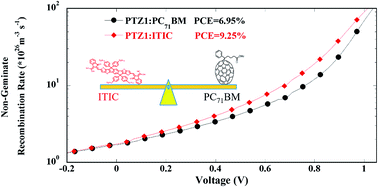
Charge recombination in high-efficiency non-fullerene cells (PCE = 9.25%) is much more serious than that of fullerene based cells (PCE = 6.95%).
The content of this RSS Feed (c) The Royal Society of Chemistry
18 Dec 14:40
J. Mater. Chem. A, 2018, 6,2942-2951
DOI: 10.1039/C7TA09837E, Paper
Pengjie Chao, Huan Wang, Daize Mo, Hong Meng, Wei Chen, Feng He
By taking the advantage of chlorination and fully conjugated side chains, 2D-PBTCl shows a PCE of up to 8.81% in non-fullerene solar cells, which corresponds to an approximately 28% improvement compared to that of PTB7-Th-based devices.
The content of this RSS Feed (c) The Royal Society of Chemistry
18 Dec 14:28
by Guitao Feng, Junyu Li, Fallon J. M. Colberts, Mengmeng Li, Jianqi Zhang, Fan Yang, Yingzhi Jin, Fengling Zhang, René A. J. Janssen, Cheng Li and Weiwei Li

Journal of the American Chemical Society
DOI: 10.1021/jacs.7b10499

18 Dec 14:19
by Kui Jiang, Guangye Zhang, Guofang Yang, Jianquan Zhang, Zhengke Li, Tingxuan Ma, Huawei Hu, Wei Ma, Harald Ade, He Yan
Abstract
Ternary organic solar cells (OSCs) have attracted much research attention, as they can maintain the simplicity of the single-junction device architecture while broadening the absorption range of OSCs. However, one main challenge that limits the development of ternary OSCs is the difficulty in controlling the morphology of ternary OSCs. In this paper, an effective approach to control the morphology is presented that leads to multiple cases of efficient nonfullerene ternary OSCs with efficiencies of up to 11.2%. This approach is based on a donor polymer with strong temperature dependent aggregation properties processed from hot solutions without any solvent additives and a pair of small molecular acceptors (SMAs) that have similar surface tensions and thus low propensity to form discrete phases. Such a ternary blend exhibits a simplified bulk-heterojunction morphology that is similar to the morphology of previously reported binary blends. As a result, an almost linear relationship between VOC and film composition is observed for all nonfullerene ternary devices. Meanwhile, by carefully designing a control system with a large interfacial tension, a different phase separation and VOC dependence is demonstrated. This morphology control approach can be applicable to more material systems and accelerates the development of the ternary OSC field.

Multiple cases of efficient nonfullerene ternary organic solar cells with efficiencies of up to 11.2% based on an effective morphology-control approach are presented. This approach is based on a donor polymer with strong temperature dependent aggregation and a pair of small molecular acceptors with similar surface tensions. Increased crystallinity of the acceptor phase is observed and discussed.
18 Dec 14:06
by Tao Wang, Ying Zhang, Qingchang Liu, Wen Cheng, Xinran Wang, Lijia Pan, Baoxing Xu, Hangxun Xu
Abstract
Mimicking human skin's functions to develop electronic skins has inspired tremendous efforts in design and synthesis of novel soft materials with simplified fabrication methods. However, it still remains a great challenge to develop electronically conductive materials that are both stretchable and self-healable. Here it is demonstrated that a ternary polymer composite comprised of polyaniline, polyacrylic acid, and phytic acid can exhibit high stretchability (≈500%) and excellent self-healing properties. The polymer composite with optimized composition shows an electrical conductivity of 0.12 S cm−1. On rupture, both electrical and mechanical properties can be restored with ≈99% efficiency in a 24 h period, which is enabled by the dynamic hydrogen bonding and electrostatic interactions. It is further shown that this composite is both strain and pressure sensitive, and therefore can be used for fabricating strain and pressure sensors to detect a variety of mechanical deformations with ultrahigh sensitivity. The sensitivity and sensing range are the highest among all of the reported self-healable piezoresistive pressure sensors and even surpass most flexible mechanical sensors. Notably, this composite is prepared via a solution casting process, which potentially allows for large-area, low-cost fabrication electronic skins.

Artificial skin: mimicking human skin's functions to develop skin-like electronics has inspired tremendous efforts in developing novel soft materials. It is shown that a ternary polymer composite comprised of polyaniline, polyacrylic acid, and phytic acid can exhibit high stretchability (≈500%) and excellent self-healing properties for electronic skin applications with ultrahigh sensitivity.
18 Dec 13:37
by Ru-Ze Liang, Maxime Babics, Akmaral Seitkhan, Kai Wang, Paul Bythell Geraghty, Sergei Lopatin, Federico Cruciani, Yuliar Firdaus, Marco Caporuscio, David J. Jones, Pierre M. Beaujuge
Abstract
Achieving efficient bulk-heterojunction (BHJ) solar cells from blends of solution-processable small-molecule (SM) donors and acceptors is proved particularly challenging due to the complexity in obtaining a favorable donor–acceptor morphology. In this report, the BHJ device performance pattern of a set of analogous, well-defined SM donors—DR3TBDTT (DR3), SMPV1, and BTR—used in conjunction with the SM acceptor IDTTBM is examined. Examinations show that the nonfullerene “All-SM” BHJ solar cells made with DR3 and IDTTBM can achieve power conversion efficiencies (PCEs) of up to ≈4.5% (avg. 4.0%) when the solution-processing additive 1,8-diiodooctane (DIO, 0.8% v/v) is used in the blend solutions. The figures of merit of optimized DR3:IDTTBM solar cells contrast with those of “as-cast” BHJ devices from which only modest PCEs <1% can be achieved. Combining electron energy loss spectrum analyses in scanning transmission electron microscopy mode, carrier transport measurements via “metal-insulator-semiconductor carrier extraction” methods, and systematic recombination examinations by light-dependence and transient photocurrent analyses, it is shown that DIO plays a determining role—establishing a favorable lengthscale for the phase-separated SM donor–acceptor network and, in turn, improving the balance in hole/electron mobilities and the carrier collection efficiencies overall.

A set of structurally analogous small-molecule (SM) donors with distinct side-chain manifolds shows significant differences in their performance patterns in bulk-heterojunction (BHJ) devices with the nonfullerene SM acceptor IDTTBM. Reducing the lengthscale of the phase-separated network between donor and acceptor effectively suppresses nongeminate recombination in the BHJ active layers and improves the carrier mobility balance.
18 Dec 13:29
by Wenzhan Xu, Yikun Guo, Xiaotao Zhang, Luyao Zheng, Tao Zhu, Dahui Zhao, Wenping Hu, Xiong Gong
Abstract
In this work, room-temperature-operated ultrasensitive solution-processed perovskite photodetectors (PDs) with near infrared (NIR) photoresponse are reported. In order to enable perovskite PDs possessing extended NIR photoresponse, novel n-type low bandgap conjugated polymer, poly[(N,N′-bis(2-octyldodecyl)-1,4,5,8-naphthalene diimide-2,6-diyl) (2,5-dioctyl-3,6-di(thiophen-2-yl)pyrrolo[3,4-c]pyrrole-1,4-dione-5,5′-diyl)] (NDI-DPP), which has strong absorption in the NIR region, is developed and then employed in perovskite PDs. By the formation of type II band alignment between NDI-DPP with single-wall carbon nanotubes (SWCNTs), the NIR absorption of NDI-DPP is exploited, which contributes to the NIR photoresponse for the perovskite PDs, where perovskite is incorporated with NDI-DPP and SWCNTs as well. In addition, SWCNTs incorporated with perovskite active layer can offer the percolation pathways for high charge-carrier mobility, which tremendously boosts the charge transfer in the photoactive layer, and consequently improves the photocurrent in the visible region. As a result, the perovskite PDs exhibit the responsivities of ≈400 and ≈150 mA W−1 and the detectivities of over 6 × 10¹² Jones (1 Jones = 1 cm Hz1/2 W−1) and over 2 × 10¹² Jones in the visible and NIR regions, respectively. This work reports the development of perovskite PDs with NIR photoresponse, which is terrifically beneficial for the practical applications of perovskite PDs.

Room temperature operated uncooled broadband ultrasensitive photodetectors with the responsivities of 400 and 150 mA W-1 and the detectivities of over 6 × 10¹² and 2 × 10¹² Jones in the visible and near infrared regions are realized by utilization of perovskite incorporated with novel n-type low-bandgap conjugated polymer and single-wall carbon nanotubes through type II band alignment.