Scott Lord
Shared posts
14 Apr 23:59
Scott Lord Mystery: Flash Gordon in The Purple Death From Outer Space
by noreply@blogger.com (Scott Lord on Silent Film, Scott Lord on Mystery Film)
Scott Lord, Scott Lord and 2 others like this
14 Apr 23:45
Sherlock Holmes, The Musgrave Ritual (Treville, ...
 Mystery film.
Scott Lord, Scott Lord and one other like this
14 Apr 23:45
Boris Karloff as Mr. Wong: Doomed To Die
Scott Lord, Scott Lord and one other like this
14 Apr 23:45
b''
Scott Lord: Greta Garbo The Divine Woman (1928, Victor Sjostrom) - YouTube
victorseastrom
shared this story
from  Scottlordsvenska's Favorite Links from Diigo. Scottlordsvenska's Favorite Links from Diigo.
|
b''
Scott Lord, Scott Lord and one other like this
14 Apr 23:45
Sherlock Holmes Trailers-Dressed To Kill
Scott Lord, Scott Lord and one other like this
14 Apr 23:45
Scott Lord on Silent Film Hollywood, Lost Silent Film, Swedish Silent Film, Danish Silent Film: Lost Film Found Magazines- Lon Chaney and the Silent Horror Film
Scott Lord, Scott Lord and one other like this
14 Apr 23:45
b'
 It seems like everything has been put back to where it was- a new minister introduced herself and I spoke with our newly installed Pastor, but there are certainly some familiar faces this week.'
Donna spends second week after CoVid as church librarian
victorseastrom
shared this story
from  Scott Lord. Scott Lord.
|
b'


Scott Lord, Scott Lord and one other like this
14 Apr 23:45
Urban Gad directed Asta Nielsen in her first film "The Abyss" (Afgrunden, 1910) in Denmark, a film often written about due to her popularity and to a scene contained in it in which she dances erotically. Uli Jung and Martin Lorperdinger, editors of Importing Asta Nielsen, the international filmstar in the making 1910-1914, see the rise of Asta Nielsen as meteoric with her first appearance on screen, "she became a well-known and popular actress in many countries on the continent in the 1910/11 season." The film is described by Casper Tybjerg as her "breakthrough film". Scholar Casper Tybjerg, University of Copenhagen/online instructor, notes that "The Abyss" was promoted as an art film, a drama in two acts.
It was also that year that Urban Gad and Asta Nielsen would travel to Germany to film for Duetsche BIoscop. Assta NIelsen appeared on screen under Urban Gad's direction with cinematographer Karl Fruend behind the camera that year in the films "Moth" (Nachtfaler) and "The Strange Bird"" (Der Frerde Volgel). Asta Nielsen would later star with Greta Garbo for G.W. Pabst in "The Joyless Street". Janet Bergstrom, in her paper Asta Nielsen's Early German Films, chronicles Asta Nielsen asking Urban Gad if he would write a film for her. "Afgrunden" not only secured an international audience for her but it heralded the film itself becoming an art form. Bergstrom notes Nielsen having written that she aspired to improve her acting ability by watching herself on the screen.
Although many films from the time period were adaptations of theatrical plays, "The Abyss" has no dialougue intertitles, but rather insert shots containing written letters. Both insert shots of printed material and dialougue intertitles are part of the diegesis of a silent film, whereas expository intertitles that either summarize the action or prepare the audience for it are not part of the film's diegesis, insert shots of letters bringing a more first person authorial camera that provides identification with the character.
Scott Lord Danish Silent Film
The Abyss (Urban Gad, Afgrunden, Denmark 1910)
victorseastrom
shared this story
from  Scott Lord shared items on The Old Reader (RSS). Scott Lord shared items on The Old Reader (RSS).
|
Urban Gad directed Asta Nielsen in her first film "The Abyss" (Afgrunden, 1910) in Denmark, a film often written about due to her popularity and to a scene contained in it in which she dances erotically. Uli Jung and Martin Lorperdinger, editors of Importing Asta Nielsen, the international filmstar in the making 1910-1914, see the rise of Asta Nielsen as meteoric with her first appearance on screen, "she became a well-known and popular actress in many countries on the continent in the 1910/11 season." The film is described by Casper Tybjerg as her "breakthrough film". Scholar Casper Tybjerg, University of Copenhagen/online instructor, notes that "The Abyss" was promoted as an art film, a drama in two acts.
It was also that year that Urban Gad and Asta Nielsen would travel to Germany to film for Duetsche BIoscop. Assta NIelsen appeared on screen under Urban Gad's direction with cinematographer Karl Fruend behind the camera that year in the films "Moth" (Nachtfaler) and "The Strange Bird"" (Der Frerde Volgel). Asta Nielsen would later star with Greta Garbo for G.W. Pabst in "The Joyless Street". Janet Bergstrom, in her paper Asta Nielsen's Early German Films, chronicles Asta Nielsen asking Urban Gad if he would write a film for her. "Afgrunden" not only secured an international audience for her but it heralded the film itself becoming an art form. Bergstrom notes Nielsen having written that she aspired to improve her acting ability by watching herself on the screen.
Although many films from the time period were adaptations of theatrical plays, "The Abyss" has no dialougue intertitles, but rather insert shots containing written letters. Both insert shots of printed material and dialougue intertitles are part of the diegesis of a silent film, whereas expository intertitles that either summarize the action or prepare the audience for it are not part of the film's diegesis, insert shots of letters bringing a more first person authorial camera that provides identification with the character.
Scott Lord Danish Silent Film
Scott Lord, Scott Lord likes this
14 Apr 23:44
SILENT FILM
SILENT FILM
SILENT FILM
SILENTS
Television Art: Lifebuoy soap plus sponsor tag (1971)
|
victorseastrom
shared this story
from Scott Lord shared items on The Old Reader (RSS).
|
SILENT FILM
SILENT FILM
SILENT FILM
SILENTS
Scott Lord, Scott Lord and one other like this
14 Apr 23:44
Scott Lord Mystery: SOS Coast Guard, Theatrical Trailer (1937)
by Scott Lord on Silent Film, Scott Lord on Mystery Film
Scott Lord, Scott Lord and one other like this
14 Apr 23:44
Vampyr (Carl Th. Dreyer, 1932)
by Scott Lord on Silent Film, Scott Lord on Mystery Film
Scott Lord, Scott Lord and one other like this
14 Apr 23:44
Sherlock Holmes Murder At The Baskervilles
by Scott Lord on Silent Film, Scott Lord on Mystery Film
Scott Lord, Scott Lord and 2 others like this
14 Apr 23:44

Tod Browning during 1925 directed Lon Chaney and Mae Busch in "The Unholy Three" (seven reels). The photoplay was written by Waldemar Young, adapted from the novel by Clarence Aaron Robbins.
Picture Play Magazine of 1925 featured an article entitled The Troubles of an Actress in which Dorothy Manners interviewed actress Mae Busch. "On Stage No. 1 of the Mtero-Goldwyn-Mayer emporium, 'The Unholy Three' unit was winding up the first day's production. The first scenes - that is the first scenes in the studio- are set against the background of a freak museum. Hence the bearded lady, the sword swallower and the midgets. 'The Unholy Three' is a wonderful box office title. It is also a crook opera of amazing plot."

 silent film
Tod Browning Lon Chaney and Tod Browning
Scott Lord Silent Film: Lon Chaney in The Unholy Three (Tod Browning, 1925)
by Scott Lord on Silent Film, Scott Lord on Mystery Film

Tod Browning during 1925 directed Lon Chaney and Mae Busch in "The Unholy Three" (seven reels). The photoplay was written by Waldemar Young, adapted from the novel by Clarence Aaron Robbins.
Picture Play Magazine of 1925 featured an article entitled The Troubles of an Actress in which Dorothy Manners interviewed actress Mae Busch. "On Stage No. 1 of the Mtero-Goldwyn-Mayer emporium, 'The Unholy Three' unit was winding up the first day's production. The first scenes - that is the first scenes in the studio- are set against the background of a freak museum. Hence the bearded lady, the sword swallower and the midgets. 'The Unholy Three' is a wonderful box office title. It is also a crook opera of amazing plot."


Tod Browning Lon Chaney and Tod Browning
Silent Film
Scott Lord, Scott Lord and 2 others like this
14 Apr 23:44
"I have always made pictures with a message and a moral. True, I have dressed up these in elaborate trappings, principally because I wanted people to see my pictures. Messages without an audience aren't worth very much." Photoplay Magazine during 1927 featured an interview with silent film director Cecil B. De Mille titled "How Christ Came to Pictures" in which he briefly explained his father had been a lay reader who preached in an Episcopal church in Pompton, New Jersey before quickly continuing to his earlier marriage comedy films made before 1920. De Mille ended the interview with "'The King of Kings' has the ring of sincerity. We did it with complete sincerity." Photoplay Magazine during Sil1927 reviwed "King of Kings" as being an authentic depiction of the events in the Holy Bible, "De Mille has followed the New Testament literally and with fidelity. He has taken no liberties. Frequently, in his groupings, he has followed famous Biblical paintings...Mr. Warner meets the accepted ideas of Christ and gives a very well sustained performance."
Harvard Buisness Reports, describing "The King of Kings" as a film about the life, death and resurrection of Jesus Christ, reported in 1930 that the film cost $ 2,000,000 to produce.

 silent film
Noah's Arc
Jesus
silent film
Noah's Arc
Jesus
Scott Lord Silent Film: King of Kings (De Mille,1927)
by Scott Lord on Silent Film, Scott Lord on Mystery Film
"I have always made pictures with a message and a moral. True, I have dressed up these in elaborate trappings, principally because I wanted people to see my pictures. Messages without an audience aren't worth very much." Photoplay Magazine during 1927 featured an interview with silent film director Cecil B. De Mille titled "How Christ Came to Pictures" in which he briefly explained his father had been a lay reader who preached in an Episcopal church in Pompton, New Jersey before quickly continuing to his earlier marriage comedy films made before 1920. De Mille ended the interview with "'The King of Kings' has the ring of sincerity. We did it with complete sincerity." Photoplay Magazine during Sil1927 reviwed "King of Kings" as being an authentic depiction of the events in the Holy Bible, "De Mille has followed the New Testament literally and with fidelity. He has taken no liberties. Frequently, in his groupings, he has followed famous Biblical paintings...Mr. Warner meets the accepted ideas of Christ and gives a very well sustained performance."
Harvard Buisness Reports, describing "The King of Kings" as a film about the life, death and resurrection of Jesus Christ, reported in 1930 that the film cost $ 2,000,000 to produce.


Scott Lord, Scott Lord and 3 others like this
14 Apr 23:40
Philo Vance in The Benson Murder Case (1929)
by Scott Lord on Silent Film, Scott Lord on Mystery Film
Scott Lord, Scott Lord and 2 others like this
14 Apr 23:24
Scott Lord Mystery Film - YouTube
Mystery
Tags: Mystery
Scott Lord, Scott Lord and 3 others like this
14 Apr 23:24
Scott Lord Mystery: Flash Gordon in The Purple Death From Outer Space
by Scott Lord on Silent Film, Scott Lord on Mystery Film
Scott Lord, Scott Lord and 3 others like this
14 Apr 23:24


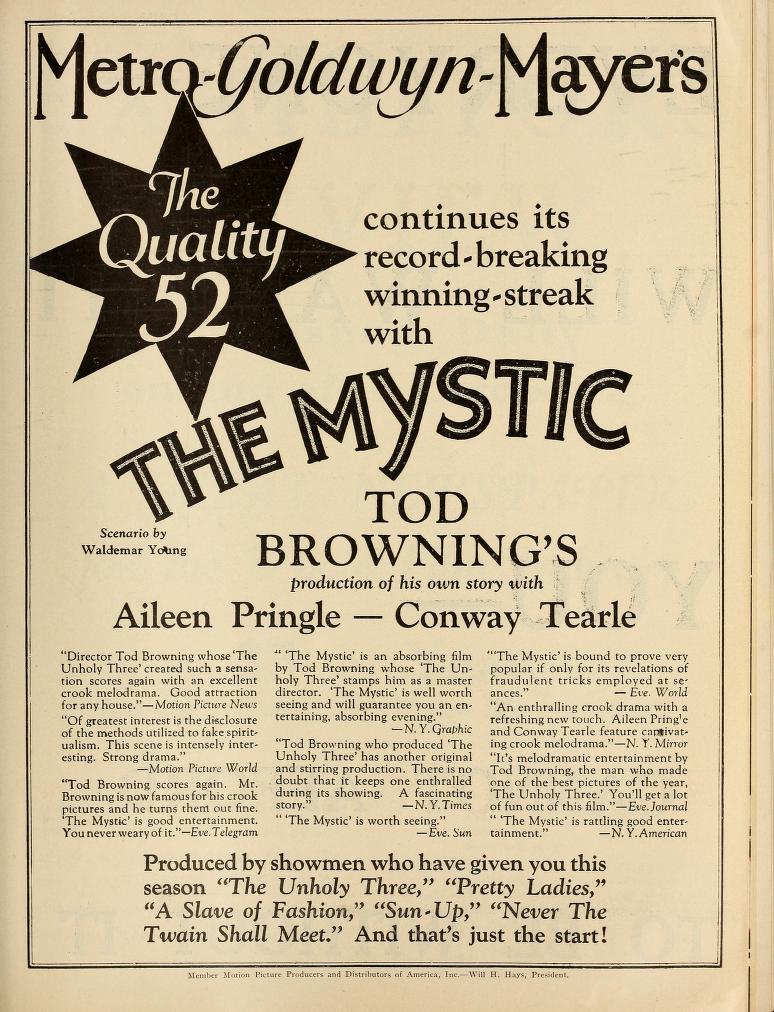
 Picture Play Magazine in a photo caption wrote that actress Aileen Pringle "abandoned some of her impressive dignity" to portray the "hoydenish" fake travelling mystic in Tod Browning's film, "The Mystic" (1926 seven reels).
Silent Film
Lon Chaney
Silent Horror Film Movie Posters
Picture Play Magazine in a photo caption wrote that actress Aileen Pringle "abandoned some of her impressive dignity" to portray the "hoydenish" fake travelling mystic in Tod Browning's film, "The Mystic" (1926 seven reels).
Silent Film
Lon Chaney
Silent Horror Film Movie Posters
Scott Lord Mystery: The Mystic (Tod Browning, 1926)
by Scott Lord on Silent Film, Scott Lord on Mystery Film


Silent Film
Scott Lord, Scott Lord Mystery Film and 3 others like this
14 Apr 23:24
Scott Lord Scandinavian Silent Film: Masterkatten i Stovlar (John Bruniu...
by Scott Lord on Silent Film, Scott Lord on Mystery Film
Author Forsyth Hardy, in his volume Scandinavian film explains that the film "Puss and Boots" was for Swedish Silent Film director John Brunius an early, debut attempt at filmaking and that he quickly established himself among his contemporary directors of the Golden Age of Swedish Silent Film by directing historical dramas.
The beautiful Mary Johnson stars with Gosta Ekman in the film, the director John Brunius also appearing in the film onscreen with son Palle Brunius. The cinematography was done by photographers Gustav A. Gustafson and Carl Gustav Florin.
"Puss and Boots" featured the first on screen appearance of actress Anna Carlsten.
To connect the directing of John Brunius to that of Victor Sjostrom and Mauritz Stiller and the Golden Age of Swedish Silent Film that emphasized man's relationship with a personified enviornment, one can look at a photocaption praising actress Mary Johnson in the periodical Photoplay Magazine during 1919, "Miss Johnson is an ingenue leading woman of a type that we make favorites of in America. Location work in Sweden hasn't become a bore, evidently, as both town and country people, impressed by the novelty of the thing are heartily inclined to make the companies their guests instead of momentary suspected tenants." Photoplay Magazine, in a second photocaption featuring Gista Ekman, announced that the film was as not yet having finished post-production but that it was scheduled to run in America. "The Skandia Film Commision, the employer of these young stars is doing some really big plays on the screen....The Skandia Film Corporation has just finished the construction of a great glass studio modelled after and lighted by American methods near Langagen, north of Stockholm." Honestly, as a modern American reader, one would casually think this was written after the merger creating Svensk Filmindustri had already taken place. Photoplay Magazine later, while formally announcing that Svensk Biografteatern and Skandia had combined, called actress Mary Johnson the "Mary Pickford of the Land of the Midnight Sun" and "Sweden's Sweetheart". The theme of the article, although Mary Johnson would soon be appearing in an adaptation of the works of Selma Lagerloff by director Mauritz Stiller, Swedish audiences seemed uncontrollable over the appearance of Charles Chaplin in "A Dog's Life".
Actress Mary Johnson during 1918 also appeared in the Swedish Silent Film "Storstadfaror", directed by Manne Gothson, who had appeared with her that year as an actor under the direction of George af Klercker. The film was photographed by Gustaf A. Gustafson. Appearing with Mary Johnson in the film were Agda Helin, Tekla Sjoblom and Lilly Crowin. Mary Johnson appeared in the titular role together with Carl Barklind that year in the film "The Lighthouse Keeper's Daughter" (Fyrvaktarens dotter), which featured an onscreen appearance of Johnson's daughter Maj.
Mary Johnson and Gosta Ekman were reunited for the film "En Lyckoriddare" (John Brunius, 1921).
Silent Film John Brunius John Bruniusr
The beautiful Mary Johnson stars with Gosta Ekman in the film, the director John Brunius also appearing in the film onscreen with son Palle Brunius. The cinematography was done by photographers Gustav A. Gustafson and Carl Gustav Florin.
"Puss and Boots" featured the first on screen appearance of actress Anna Carlsten.
To connect the directing of John Brunius to that of Victor Sjostrom and Mauritz Stiller and the Golden Age of Swedish Silent Film that emphasized man's relationship with a personified enviornment, one can look at a photocaption praising actress Mary Johnson in the periodical Photoplay Magazine during 1919, "Miss Johnson is an ingenue leading woman of a type that we make favorites of in America. Location work in Sweden hasn't become a bore, evidently, as both town and country people, impressed by the novelty of the thing are heartily inclined to make the companies their guests instead of momentary suspected tenants." Photoplay Magazine, in a second photocaption featuring Gista Ekman, announced that the film was as not yet having finished post-production but that it was scheduled to run in America. "The Skandia Film Commision, the employer of these young stars is doing some really big plays on the screen....The Skandia Film Corporation has just finished the construction of a great glass studio modelled after and lighted by American methods near Langagen, north of Stockholm." Honestly, as a modern American reader, one would casually think this was written after the merger creating Svensk Filmindustri had already taken place. Photoplay Magazine later, while formally announcing that Svensk Biografteatern and Skandia had combined, called actress Mary Johnson the "Mary Pickford of the Land of the Midnight Sun" and "Sweden's Sweetheart". The theme of the article, although Mary Johnson would soon be appearing in an adaptation of the works of Selma Lagerloff by director Mauritz Stiller, Swedish audiences seemed uncontrollable over the appearance of Charles Chaplin in "A Dog's Life".
Actress Mary Johnson during 1918 also appeared in the Swedish Silent Film "Storstadfaror", directed by Manne Gothson, who had appeared with her that year as an actor under the direction of George af Klercker. The film was photographed by Gustaf A. Gustafson. Appearing with Mary Johnson in the film were Agda Helin, Tekla Sjoblom and Lilly Crowin. Mary Johnson appeared in the titular role together with Carl Barklind that year in the film "The Lighthouse Keeper's Daughter" (Fyrvaktarens dotter), which featured an onscreen appearance of Johnson's daughter Maj.
Mary Johnson and Gosta Ekman were reunited for the film "En Lyckoriddare" (John Brunius, 1921).
Silent Film John Brunius John Bruniusr
Silent Film
Scott Lord, Scott Lord and 3 others like this
14 Apr 23:24
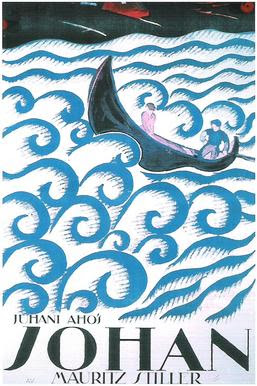
The Photoplay: Swedish Silent Movie Posters
by Scott Lord on Silent Film, Scott Lord on Mystery Film




Scott Lord, Scott Lord and 3 others like this
14 Apr 23:24
The Photoplay: Swedish Silent Movie Posters
by Scott Lord on Silent Film, Scott Lord on Mystery Film


Scott Lord, Scott Lord and 3 others like this
14 Apr 23:23
The Photoplay: Silent Movie Posters
by Scott Lord on Silent Film, Scott Lord on Mystery Film


Scott Lord, Scott Lord and 3 others like this
14 Apr 23:23
Silent Film, The Photoplay, Silent Movie Posters
by Scott Lord on Silent Film, Scott Lord on Mystery Film


Scott Lord, Scott Lord and 3 others like this
14 Apr 23:23
The Photoplay: Silent Film Lobby Card, Greta Garbo
by Scott Lord on Silent Film, Scott Lord on Mystery Film


Scott Lord, Scott Lord and 3 others like this
14 Apr 23:23
Scott Lord Silent Film: The Lookout Girl (Fitzgerald, 1928)
by Scott Lord on Silent Film, Scott Lord on Mystery Film
Motion Picture News of 1928 reported, "Before starting on a co-starring role in 'The Spieler' for Pathe-DeMille, Jacqueline Logan will barely have time enough to star in 'The Lookout Girl' for which she has been signed for Quality Pictures at the Tee-Art Studios." The "Lookout Girl" (seven reels) was directed by Dallas M. Fitzgerald from a photoplay by Adrian Johnson. Photoplay Magazine 1929 reviewed the film with, "The plot becomes complicated but clears up in some mysterious fashion and everything manages to be 'hotsy-totsy' with Jacqueline Logan safe in Ian Kieth's arms. Unworthy of your attention."
Actress Jacqueline Logan during 1928 also starred in the seven reel Silent Horror Film "The Leopard Lady", directed by Rupert Julian. The film is presumed to be lost, with no surviving copies existing.

 Silent Film
Lost Silent Film
Silent Film
Lost Silent Film
Actress Jacqueline Logan during 1928 also starred in the seven reel Silent Horror Film "The Leopard Lady", directed by Rupert Julian. The film is presumed to be lost, with no surviving copies existing.


Scott Lord, Scott Lord and 3 others like this
14 Apr 23:23
Gustaf Molander had in fact been at the Intima Teatern from 1911-13.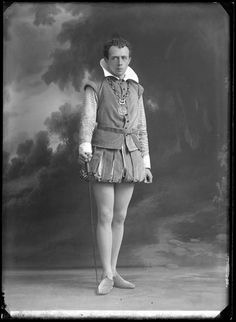
 Gustaf Molander


Actress Karen Molander appeared with the Intima Teatern between 1911-1920 while married to Swedish Silent Film screenwriter and director Gustaf Molander. She began filming under the direction of Victor Sjostrom during 1914.
Swedish Silent Film Stars Swedish Silent Film Stars
Swedish Silent Film Stars on the Theater Stage
by Scott Lord on Silent Film, Scott Lord on Mystery Film
Gustaf Molander
Gustaf Molander had in fact been at the Intima Teatern from 1911-13.


Karen Molander


Actress Karen Molander appeared with the Intima Teatern between 1911-1920 while married to Swedish Silent Film screenwriter and director Gustaf Molander. She began filming under the direction of Victor Sjostrom during 1914.
Swedish Silent Film Stars Swedish Silent Film Stars
Scott Lord, Scott Lord and 3 others like this
14 Apr 23:23

 In his volume Deer Stalker! Holmes and Watson on screen, Ron Haydock quotes the author of The Adventures of Sherlock Holmes, the creator of the armchair detective, Sir Arthur Conan Doyle, "Conan Doyle himself, having seen Norwood in the role, seemed as equally impressed with him as were Norwood's general movie audiences. 'He had that rare quality which can only be described as glamour, which compels you to watch an actor eagerly.' Conan Doyle said, 'He has the brooding eye which excites expectation and he has also a quite unrivalled power of disguises.'". Admittedly, Ellie Norwood prided himself on his ability to assume a disguise and cherished the role of Sherlock Holmes for that reason.
Haydock writes, "The series was well recieved wherever it played and such a success that over the next two years Stoll produced another 32 films about the best and wisest man Dr. Watson had ever known." The first of the 47 film was appropriately an adaptation of "The Dying Detective".
Sherlock Holmes in Elsinore, Danish Silent Film
Silent Film
The Adventures of Sherlock Holmes The Man With The Twisted Lip (Maurice Elvey, 1922)
by Scott Lord on Silent Film, Scott Lord on Mystery Film


Haydock writes, "The series was well recieved wherever it played and such a success that over the next two years Stoll produced another 32 films about the best and wisest man Dr. Watson had ever known." The first of the 47 film was appropriately an adaptation of "The Dying Detective".
Sherlock Holmes in Elsinore, Danish Silent Film
Silent Film
Scott Lord, Scott Lord and 3 others like this
14 Apr 23:23

 Edward Wagenkneckt, in his volume The Films of D.W. Griffith, points out that ten reel film "Sally of the Sawdust" (1925) ,photographed by Harry Fischback and Hal Sintzernich and starring W.C. FIelds and actress Carol Dempster , was made by D.W. Griffith at Paramount but , at Griffith's behest, released through United Artists. Wagerneckt notes that the film features several sight gags involving W.C. Fields that are worth watching.
That year D.W. Griffith directed both W.C. Fields and Carol Dempster in a second ten reel film entitled "That Royle Girl", which is presumed to be a Lost Silent Film, with no surviving copies existing. Iris Barry, in her volume D.W. Griffith, American Film Master, notes that W.C. Fields played only a minor comedy part in the film. Originally slated as "a small film" with sucenes involving a statue of Abraham Lincoln, a $ 100,000 cyclone was added to the film, putting it over budget.


 D.W. Griffith
D.W. Griffith
D.W. Griffith
D.W. Griffith
D.W. Griffith
Scott Lord Silent Film: Carol Dempster in Sally of the Sawdust (D.W. Griffith, 1925)
by Scott Lord on Silent Film, Scott Lord on Mystery Film


That year D.W. Griffith directed both W.C. Fields and Carol Dempster in a second ten reel film entitled "That Royle Girl", which is presumed to be a Lost Silent Film, with no surviving copies existing. Iris Barry, in her volume D.W. Griffith, American Film Master, notes that W.C. Fields played only a minor comedy part in the film. Originally slated as "a small film" with sucenes involving a statue of Abraham Lincoln, a $ 100,000 cyclone was added to the film, putting it over budget.


Scott Lord, Scott Lord Mystery Film and 3 others like this