Scott Lord
Shared posts
07 Jun 15:02
Scott Lord Mystery: The Vanishing Shadow (Louis Friedlander, 1934) Chapt...
by Scott Lord on Silent Film, Scott Lord on Mystery Film
Scott Lord likes this
07 Jun 14:50
Scott Lord Silent Film: Greta Garbo in The Temptress (Fred Niblo, 1926)
by noreply@blogger.com (Scott Lord on Silent Film, Scott Lord on Mystery Film)
The periodical Motion Picture News during 1926 the filming of "Temptress" with a review entitled "Greta Garbo in the Title Role of 'The Temptress'. It read,"Greta Garbo, Swedish actress, will have the title role in Cosmopolitan's production of 'The Temptress, which will be a Metro Goldwyn Mayer release directed by Mauritz Stiller. She is now working in 'Ibanez' The Torrent'." Greta Garbo had in fact signed to do the film on the condition that Stiller was to direct.
The periodical Motion Picture News during 1925 announced that Mauritz Stiller had been slated to direct "The Temptress" by imparting that he had been brought to the United States by Louis B. Mayer. "Stiller won wide reputation in Europe for his productions." Exhibitors Herald listed the filming of "The Torrent" as being in progress with Monta Bell directing Greta Garbo, Mauritz Stiller "to direct the Temptress".
Biographer Norman J. Zeirold, in his volume Garbo, describes Mauritz Stiller's idea behind filming Greta Garbo, "Only swift disaster lay shead. Stiller wanted to turn the standard story of a make-enslaving vamp into a richly embroidered spectacle. And he wanted to film it in his own manner. He ordered MGM's vast eschelons of production assistants off the film. He began shooting, not in sequence, but as the spirit moved him as he had done in Europe. Thalberg looked at the rushes and could make no sense of the jumbled images."
Author Forsyth Hardy, in his volume Scandinavian Film, curtly, only briefly mentions that Mauritz Stiller was removed as director of the film after a disagreement with Metro Goldwyn Mayer. Biographer William Stewart, in The True Life Story of Greta Garbo gives an account purporting that Mauritz Stiller "had not yet mastered the American method of making pictures. Handling crowds gave him trouble and his lack of English made every move difficult." Hollywood writer Bosley Crowther, in his biography of Louis B. Mayer entitled The Hollywood Rajah writes that Mauritz Stiller "proved to be too finicky and slow" and "difficult", a type of director that "were now being got out of the studio", but adds that before the filming of "The Temptress" was completed, Greta Garbo had met and fallen in love with Jack Gilbert. Although Garbo and Gilbert met during 1926, it seems that Crowther is approximating and according to Clarence Brown, her director, Garbo and Gilbert met on the set of the third film Greta Garbo had made in the United States.
Ruth Biery, who writes "I have seldom met anyone more timid than Garbo' became known to readers of fan magazines as the first biographer to introduce Greta Garbo with an interview from New Year's Eve 1927 that resulted in her appearing in three issues during 1928, Garbo the May Photoplay cover. Ruth Biery returned to the subject of Garbo and Stillerfour years later. "They cast her in 'The Temptress' because Mauritz Stiller insisted upon it. He was to direct it. He directed the production in a way that would work to the advantage of his protoge. Garbo was tall. Antonio Moreno, the actor, was not so tall. The directed insisted that he wear his hair pompador fashion to make him look taller. He put him into boots- undoubtedly to make Garbo's feet look smaller. Moreno resented his favoritism. There was a battle and Stiller lost. He was removed from the picture. This was Garbo' first experience with studio politics. Because of her, Stiller lost his job. Yet it was her friend Stiller who insisted on her being in the picture. She was bewildered, crushed." Biery continued, "She may have loved Stiller. I do not know. I do know she enshrined him. When she talked to me of Stiller her eyes filled with tears, her entire body trembled with emotion."
The first instance of Greta Garbo granting an interview to journalist Rilla Page Palmborg, author of The Private Life of Greta Garbo, was on the set of "The Temptress". " 'I was frantic when Mr. Stiller was taken from the picture,' she said. 'It is difficult for me to understand direction through an interpreter. Everything over here is strange and different. And this studio is so large it confuses me.' "
The True Life Story of Greta Garbo by William Stewart continues, "The second disaster to occur during the filming of 'The Temptress' was the death of Greta's sister."
In The Private Life of Greta Garbo, journalist Rilla Page Palmborg wrote, "Garbo made even a greater sensation in The Temptress than in The Torrent....But Greta declared she knew nothing of the technique of acting. That for the time being she 'was' the person in the picture. She did not know how she got certain effects. She did not know why she did things the way she did them."
Silent Film
Greta Garbo Victor Seastrom
The periodical Motion Picture News during 1925 announced that Mauritz Stiller had been slated to direct "The Temptress" by imparting that he had been brought to the United States by Louis B. Mayer. "Stiller won wide reputation in Europe for his productions." Exhibitors Herald listed the filming of "The Torrent" as being in progress with Monta Bell directing Greta Garbo, Mauritz Stiller "to direct the Temptress".
Biographer Norman J. Zeirold, in his volume Garbo, describes Mauritz Stiller's idea behind filming Greta Garbo, "Only swift disaster lay shead. Stiller wanted to turn the standard story of a make-enslaving vamp into a richly embroidered spectacle. And he wanted to film it in his own manner. He ordered MGM's vast eschelons of production assistants off the film. He began shooting, not in sequence, but as the spirit moved him as he had done in Europe. Thalberg looked at the rushes and could make no sense of the jumbled images."
Author Forsyth Hardy, in his volume Scandinavian Film, curtly, only briefly mentions that Mauritz Stiller was removed as director of the film after a disagreement with Metro Goldwyn Mayer. Biographer William Stewart, in The True Life Story of Greta Garbo gives an account purporting that Mauritz Stiller "had not yet mastered the American method of making pictures. Handling crowds gave him trouble and his lack of English made every move difficult." Hollywood writer Bosley Crowther, in his biography of Louis B. Mayer entitled The Hollywood Rajah writes that Mauritz Stiller "proved to be too finicky and slow" and "difficult", a type of director that "were now being got out of the studio", but adds that before the filming of "The Temptress" was completed, Greta Garbo had met and fallen in love with Jack Gilbert. Although Garbo and Gilbert met during 1926, it seems that Crowther is approximating and according to Clarence Brown, her director, Garbo and Gilbert met on the set of the third film Greta Garbo had made in the United States.
Ruth Biery, who writes "I have seldom met anyone more timid than Garbo' became known to readers of fan magazines as the first biographer to introduce Greta Garbo with an interview from New Year's Eve 1927 that resulted in her appearing in three issues during 1928, Garbo the May Photoplay cover. Ruth Biery returned to the subject of Garbo and Stillerfour years later. "They cast her in 'The Temptress' because Mauritz Stiller insisted upon it. He was to direct it. He directed the production in a way that would work to the advantage of his protoge. Garbo was tall. Antonio Moreno, the actor, was not so tall. The directed insisted that he wear his hair pompador fashion to make him look taller. He put him into boots- undoubtedly to make Garbo's feet look smaller. Moreno resented his favoritism. There was a battle and Stiller lost. He was removed from the picture. This was Garbo' first experience with studio politics. Because of her, Stiller lost his job. Yet it was her friend Stiller who insisted on her being in the picture. She was bewildered, crushed." Biery continued, "She may have loved Stiller. I do not know. I do know she enshrined him. When she talked to me of Stiller her eyes filled with tears, her entire body trembled with emotion."

The first instance of Greta Garbo granting an interview to journalist Rilla Page Palmborg, author of The Private Life of Greta Garbo, was on the set of "The Temptress". " 'I was frantic when Mr. Stiller was taken from the picture,' she said. 'It is difficult for me to understand direction through an interpreter. Everything over here is strange and different. And this studio is so large it confuses me.' "
The True Life Story of Greta Garbo by William Stewart continues, "The second disaster to occur during the filming of 'The Temptress' was the death of Greta's sister."
In The Private Life of Greta Garbo, journalist Rilla Page Palmborg wrote, "Garbo made even a greater sensation in The Temptress than in The Torrent....But Greta declared she knew nothing of the technique of acting. That for the time being she 'was' the person in the picture. She did not know how she got certain effects. She did not know why she did things the way she did them."
Silent Film
Greta Garbo Victor Seastrom
Scott Lord, Scott Lord Mystery Film likes this
07 Jun 14:50
Scott Lord Silent Film: Biblical Drama, Sign of the Cross (Frederick A T...
by noreply@blogger.com (Scott Lord on Silent Film, Scott Lord on Mystery Film)
Scott Lord, Scott Lord Mystery Film likes this
07 Jun 14:50
Swedish Sound Film Movie Posters
by noreply@blogger.com (Scott Lord on Silent Film, Scott Lord on Mystery Film)

Scott Lord Mystery Film, Scott Lord likes this
07 Jun 14:50
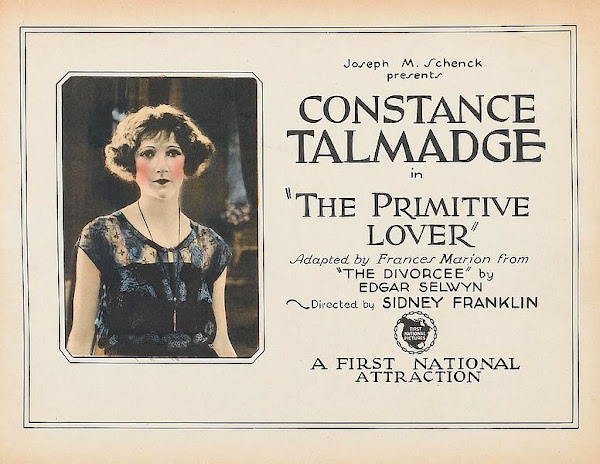
The Photoplay: Silent Film Lobby Cards
by noreply@blogger.com (Scott Lord on Silent Film, Scott Lord on Mystery Film)




Scott Lord Mystery Film, Scott Lord likes this
07 Jun 14:50
Swedish Silent Film: Karin Swanstrom
by noreply@blogger.com (Scott Lord on Silent Film, Scott Lord on Mystery Film)
Author Anne-Kristin Wallgren, on Nordic Academic Press, notes that the films of Swedish Silent film actress turned director Karin Swanstrom may have seemed atypical with the Swedish Silent Film of Sweden's Golden Age. In Welcome Home, Mr Swanson- Swedish Emigrants and Swedishness on Film, she writes, "Of the few Twenties films to mention America, only one has a happy ending, namely, Boman pa utsallningen (Boman at the Exhibition/Boman at the Fair, Karin Swanstrom, 1923, Ironically, Forsyth Hardy, in the volume Scandinavian Film notes, "Svensk Filmindustri, through its producers Karin Swanstrom and Sickan Claesson, was content to produce modestly conceived films for the home front. They were for the most part comedies with a strong theatrical flavor, or farces."
Hjalmar Bergman scripts to two photoplays for director Karin Swanstrom during 1925, "Kalle Utter", in which the director also appeared an actress in front of the camera, her costarring with actress Edit Rolf and the film "The Flying Dutchman" (Flygande Hollandaren) in which actress Edit Rolf appeared with Margareta Wendel. The film "Flygande Hollandaren" is presumed to be lost, with no surviving copies known to exist.
Greta Garbo
Silent Film
Swedish Silent Film
Hjalmar Bergman scripts to two photoplays for director Karin Swanstrom during 1925, "Kalle Utter", in which the director also appeared an actress in front of the camera, her costarring with actress Edit Rolf and the film "The Flying Dutchman" (Flygande Hollandaren) in which actress Edit Rolf appeared with Margareta Wendel. The film "Flygande Hollandaren" is presumed to be lost, with no surviving copies known to exist.
Greta Garbo
Silent Film
Swedish Silent Film
Scott Lord Mystery Film likes this
07 Jun 14:50

Journalist Katherine Albert during 1928 wrote,"You have seen Ruth Harriet Louise's name almost as often as you've seen Greta Garbo's. It is usually printed in small type under the photographs of Metro-Goldwyn-Mayer stars. Ruth is the twenty-one-year-old portait artist and the only woman photographer in the business."
Silent Greta Garbo


Silent Greta Garbo
 Greta Garbo


Not incidentally, to show the amount of exposure in the printed media that Greta Garbo the recluse did recieve, during 1931 an new fan magazine entitled Movie Mirror launched its first issue, Volume One, Number One. A photocaption read, "The first picture in a new magazine--it must be Greta Garbo. Greta Garbo
Greta Garbo

Greta Garbo
Greta Garbo
Greta Garbo
Greta Garbo
Greta Garbo
Greta Garbo
Greta Garbo photographed by Ruth Harriet Loiuse
by noreply@blogger.com (Scott Lord on Silent Film, Scott Lord on Mystery Film)

Journalist Katherine Albert during 1928 wrote,"You have seen Ruth Harriet Louise's name almost as often as you've seen Greta Garbo's. It is usually printed in small type under the photographs of Metro-Goldwyn-Mayer stars. Ruth is the twenty-one-year-old portait artist and the only woman photographer in the business."
Silent Greta Garbo


Silent Greta Garbo


Not incidentally, to show the amount of exposure in the printed media that Greta Garbo the recluse did recieve, during 1931 an new fan magazine entitled Movie Mirror launched its first issue, Volume One, Number One. A photocaption read, "The first picture in a new magazine--it must be Greta Garbo.

Greta Garbo

Greta Garbo
Greta Garbo
Greta Garbo
Greta Garbo
Greta Garbo
Greta Garbo
Silent Film
Scott Lord Mystery Film, Scott Lord likes this
07 Jun 14:50
Thomas C. Christenson, Who was kind enough to write to me from the Danish Film Institute last year, in his articles Restoration of Danish Silent Films: In Colour and Restoring a Danish Silent Film: Nedbrute Nerver writes about the restoration of what he deems to be “a comic mystery plot set in contemporary time in an unnamed Western country.” Nordisk Film Kompagni title books were used in the restoration to augment the original nitrate print.
Starring in "The Hill Park Mystery" was actress Olga d'Org, the photoplay having been written by Laurids Skands.
During 1924, Anders W. Sandberg showcased both Karina Bell and Karen Casperson in the film "House of Shadows" (Moraenen), photographed by Chresten Jourgensen, the photoplay written by Laurids Skandis.
A.W. Sandberg, notably at a time when Denmark was looking for foreign markets to which to export Film to quell an economic crisis caused by competion from Hollywood, gained recognition as a director by adapting the works of Charles Dickens, including “Our Mutual Friend” (1921), starring Karen Caspersen, ”Great Expectations” (1922), starring Olga d'Org, “David Copperfield” (1922) and “Little Dorritt” (1924), starring Karina Bell and Karen Winther. Peter Cowie, in his volume Scandinavian Cinema, writes that Anders Wilhelm Sanders had chosen Dickens because of his "fondness of emotional drama". Forsyth Hardy, in his volume Scandinavian Film writes, "These films had some success in Scandinavia where their wistful sentimentality had an appeal, but for audiences in Britain and America they failed to capture the essential flavor of Dickens' work."
Danish Silent Film
A.W. Sandberg
Nedbrudt nerven/The Hill Park Mystery (A. W. Sandberg, 1923)
by noreply@blogger.com (Scott Lord on Silent Film, Scott Lord on Mystery Film)
Thomas C. Christenson, Who was kind enough to write to me from the Danish Film Institute last year, in his articles Restoration of Danish Silent Films: In Colour and Restoring a Danish Silent Film: Nedbrute Nerver writes about the restoration of what he deems to be “a comic mystery plot set in contemporary time in an unnamed Western country.” Nordisk Film Kompagni title books were used in the restoration to augment the original nitrate print.
Starring in "The Hill Park Mystery" was actress Olga d'Org, the photoplay having been written by Laurids Skands.
During 1924, Anders W. Sandberg showcased both Karina Bell and Karen Casperson in the film "House of Shadows" (Moraenen), photographed by Chresten Jourgensen, the photoplay written by Laurids Skandis.
A.W. Sandberg, notably at a time when Denmark was looking for foreign markets to which to export Film to quell an economic crisis caused by competion from Hollywood, gained recognition as a director by adapting the works of Charles Dickens, including “Our Mutual Friend” (1921), starring Karen Caspersen, ”Great Expectations” (1922), starring Olga d'Org, “David Copperfield” (1922) and “Little Dorritt” (1924), starring Karina Bell and Karen Winther. Peter Cowie, in his volume Scandinavian Cinema, writes that Anders Wilhelm Sanders had chosen Dickens because of his "fondness of emotional drama". Forsyth Hardy, in his volume Scandinavian Film writes, "These films had some success in Scandinavia where their wistful sentimentality had an appeal, but for audiences in Britain and America they failed to capture the essential flavor of Dickens' work."
Danish Silent Film
A.W. Sandberg
Scott Lord Mystery Film, Scott Lord likes this
07 Jun 14:50
Scott Lord Silent Film: Tale of Two Cities (Frank Lloyd, 1917)
by noreply@blogger.com (Scott Lord on Silent Film, Scott Lord on Mystery Film)
Already a remake of a 1911 Tale of Two Cities directed by Charles Kent, the seven reel 1917 film adaptation directed by Frank Llyod for the Fox Film Corporation starred William Farnum in a dual role.
Scott Lord
Silent Film
Scott Lord
Silent Film
Scott Lord Mystery Film, Scott Lord likes this
07 Jun 14:50
Notably, Mary Pickford and James Kirkwood, who would later become her director, appear under the direction of D. W. Griffith in the one reeler "The Cardinal's Conspiracy", along with Mack Sennet as well as Griffith's wife Linda Ardvidson and actress Kate Bruce. The film was photographed by G.W. Bitzer for the Biograph Film Company.
The periodical Moving Picture World reviewed the film with an early description approaching genre theory. "The picture is of the costume kind. In other words, one, when looking at it, has gone to the pages of Stanely Weyman, Henry Harland or Morris Hewitt for his inspiration. We breathe the atmosphere of court life and are taken back, as it were, into a far more romantic period than the present." The periodical continued by regretting that they had viewed the film in "cold monochrome" rather than a more vibrant spectrum of pageant. Biograph Films had advertised the film in the previous issue of Moving Picture World, sharing the full page with Selig, Independent and Kalem studios. Paired with the film "Friend of the Family", Biograph proclaimed that in the film "The Cardinal's Conspiracy", "The subject is elaborately staged, comprising some of the most beautiful exterior scenes ever shown."In her autobiography When The Movies Were Young, Griffith's wife Linda Arvidson sees the film as the first important screen characterization for actor Frank Powell, adding him to the "remarkable trio" at Biograph of actors Frank Powell, James Kirkwood and Henry B. Walthall. Tom Gunning points to the film belonging to a period when a cinema of narrative integration in fact centered on characterization and accordingly developed film technique with that in mind. To accomadate that narrative integration and its movement to a versimilar acting rather than the florid, histrionic gestures of a filmed theater, Griffith would bring the camera into the story. Gunning writes, "Pickford surpasses any other Biograph actress in the mastery of the new versimilar style...Pickford generally employs a slower pace and her guestures appear intended to reveal psychological traits through behavior."
Silent Film Silent Film
Scott Lord Silent Film: The Cardinal’s Conspiracy (D.W. Griffith, 1909)
by noreply@blogger.com (Scott Lord on Silent Film, Scott Lord on Mystery Film)
Notably, Mary Pickford and James Kirkwood, who would later become her director, appear under the direction of D. W. Griffith in the one reeler "The Cardinal's Conspiracy", along with Mack Sennet as well as Griffith's wife Linda Ardvidson and actress Kate Bruce. The film was photographed by G.W. Bitzer for the Biograph Film Company.
The periodical Moving Picture World reviewed the film with an early description approaching genre theory. "The picture is of the costume kind. In other words, one, when looking at it, has gone to the pages of Stanely Weyman, Henry Harland or Morris Hewitt for his inspiration. We breathe the atmosphere of court life and are taken back, as it were, into a far more romantic period than the present." The periodical continued by regretting that they had viewed the film in "cold monochrome" rather than a more vibrant spectrum of pageant. Biograph Films had advertised the film in the previous issue of Moving Picture World, sharing the full page with Selig, Independent and Kalem studios. Paired with the film "Friend of the Family", Biograph proclaimed that in the film "The Cardinal's Conspiracy", "The subject is elaborately staged, comprising some of the most beautiful exterior scenes ever shown."In her autobiography When The Movies Were Young, Griffith's wife Linda Arvidson sees the film as the first important screen characterization for actor Frank Powell, adding him to the "remarkable trio" at Biograph of actors Frank Powell, James Kirkwood and Henry B. Walthall. Tom Gunning points to the film belonging to a period when a cinema of narrative integration in fact centered on characterization and accordingly developed film technique with that in mind. To accomadate that narrative integration and its movement to a versimilar acting rather than the florid, histrionic gestures of a filmed theater, Griffith would bring the camera into the story. Gunning writes, "Pickford surpasses any other Biograph actress in the mastery of the new versimilar style...Pickford generally employs a slower pace and her guestures appear intended to reveal psychological traits through behavior."
Silent Film Silent Film
Silent Film
Scott Lord Mystery Film, Scott Lord likes this
07 Jun 14:50
Scott Lord Silent Film: The Copper Beeches (Calliard, 1912)
by noreply@blogger.com (Scott Lord on Silent Film, Scott Lord on Mystery Film)
"THe Copper Beeches" in which actor Georges Trevilles starred as the detective Sherlock Holmes, was directed by Adrian Calliard during 1912.
At the time when David Stuart Davies published his volume Holmes of the movies, the screen career of Sherlock Holmes, "The Copper Beeches" was the earliest Sherlock Holmes adaptation of which there was a surviving copy, the series itself being the first authentic representation of the Holmes character. Davies gathered that the plots were faithful adaptations of Baker Street cannon owing to their titles and the fact that "alledgedly Conan Doyle was personally involved in their production". His filmography of lost silent films includes "The Speckled Band", "The Beryl Coronet' and "Silver Blaze" from 1912 and "The Mystery of Boscome Vale", "The Stolen Papers" and finally, The Musgrave Ritual of which there is an existing copy. Silent Film Silent Film Sherlock Holmes
At the time when David Stuart Davies published his volume Holmes of the movies, the screen career of Sherlock Holmes, "The Copper Beeches" was the earliest Sherlock Holmes adaptation of which there was a surviving copy, the series itself being the first authentic representation of the Holmes character. Davies gathered that the plots were faithful adaptations of Baker Street cannon owing to their titles and the fact that "alledgedly Conan Doyle was personally involved in their production". His filmography of lost silent films includes "The Speckled Band", "The Beryl Coronet' and "Silver Blaze" from 1912 and "The Mystery of Boscome Vale", "The Stolen Papers" and finally, The Musgrave Ritual of which there is an existing copy. Silent Film Silent Film Sherlock Holmes
Scott Lord Mystery Film, Scott Lord likes this
07 Jun 14:50
Scott Lord Silent Film: Musgrave Ritual (George Treville, 1912)
by noreply@blogger.com (Scott Lord on Silent Film, Scott Lord on Mystery Film)
Scott Lord Mystery Film, Scott Lord likes this
07 Jun 14:50
Scott Lord Silent Film: An Unseen Enemy (D.W. Griffith, Biograph 1912)
by noreply@blogger.com (Scott Lord on Silent Film, Scott Lord on Mystery Film)
The year 1912 was to mark the first film with Lillian and Dorothy Gish, “An Unseen Enemy” (one reel), directed by D.W. Griffith for the Biograph Film Company. Lillian and Dorothy Gish appeared in a dozen two reel films together during 1912 and several more during 1913. In The Man Who Invented Hollywood, the autobiography of D.W. Griffith, published in 1972, Griffith outlines his arriving at the Biograph Film Company and adding actors, including Mary Pickford,to his ensemble. Griffith recalls, "One day in the early summer of 1909, I was going through the dingy, old hall of the Biograph studio when suddenly the gloom seemed to disappear. The change was caused by the prescence of two young girls sitting side by side and on a hall bench...They were Lillian Gish and Dorothy Gish. Of the two, Lillian shone with an extremely fragile, ethereal beauty...As for Dorothy, she was lovely too, but in another manner- pert, saucy, the old mischief popping out of her." Actress Lilian Gish, in her autobiography, The Movies, Mr. Griffith and Me writes,"Mr. Griffith had rehearsed 'The Unseen Enemy' with other actresses, but after meeting us, he decided we would be suitable for the leads and changed the plot just enough to fit us."
The cinematographer to "An Unseen Enemy" was G.W. Bitzer.
Silent Film
Lillian and Dorothy Gish Biograph Film Company The Adventures of Dolly: D.W. Griffith for the Biograph Film Company
The cinematographer to "An Unseen Enemy" was G.W. Bitzer.
Silent Film
Lillian and Dorothy Gish Biograph Film Company The Adventures of Dolly: D.W. Griffith for the Biograph Film Company
Silent Film
Scott Lord Mystery Film, Scott Lord likes this
07 Jun 14:49
Scott Lord Silent Film: Battle of Elderbush Gulch (D.W. Griffith, 1913)
by noreply@blogger.com (Scott Lord on Silent Film, Scott Lord on Mystery Film)
In addition to using closeups to isolate the actor from their diegetic surroundings and the particular background to the action of the scene, which, while viewing the emotion of the character as seperate in turn embeds, or immerses the character into the diegesis, locking and intertwining them into the word within the frame, D. W. Griffith would establish the relationship between character and environment as well through the use of editing and by varying spatial relationships, notably in the silent film "The Battle of Elderbush Gulch" (two reels) through the use of the longshot and the use of interiors.
The two reel film stars actresses Lillian Gish and Mae Marsh and was photographed by G.W. Bitzer for the Biograph Film Company. Edward Wagenknecht, in his volume The Films of D.W. Griffith writes of a film including a subplot which divides itself, "The Battle of Elderbush Gulch is one of the most complex Biograph films. This is fascilitated by the fact that it is in two reels, although Griffith had previously attempted similarly constructed films with a main narrative supported by subsidiary threads in one reel ABS (eg. Home Folks)....The use of parallel action is put to use here with more effect and extraordinary dexterity than before in part due to the film's elaborate construction."
The cameraman to "The Battle of Elderbush" was G.W. Bitzer. Silent Film
Silent Film Biograph Film Company
The two reel film stars actresses Lillian Gish and Mae Marsh and was photographed by G.W. Bitzer for the Biograph Film Company. Edward Wagenknecht, in his volume The Films of D.W. Griffith writes of a film including a subplot which divides itself, "The Battle of Elderbush Gulch is one of the most complex Biograph films. This is fascilitated by the fact that it is in two reels, although Griffith had previously attempted similarly constructed films with a main narrative supported by subsidiary threads in one reel ABS (eg. Home Folks)....The use of parallel action is put to use here with more effect and extraordinary dexterity than before in part due to the film's elaborate construction."
The cameraman to "The Battle of Elderbush" was G.W. Bitzer. Silent Film
Silent Film Biograph Film Company
Silent Film
Scott Lord Mystery Film, Scott Lord likes this
07 Jun 14:49
Scott Lord Silent Film: Corner in Wheat (D.W. Griffith, Biograph, 1909)
by noreply@blogger.com (Scott Lord on Silent Film, Scott Lord on Mystery Film)
"The Miller's Daughter", "The Song of the Shirt"(1908) and "A Corner of Wheat", directed by D.W. Griffith for the Biograph Film Company are early films that depicted the individual within a social context. Kay Sloan, in her copyrighted paper "Silent Cinema as Social Criticism, Front Page Movies", writes, "The comedies, melodramas and occaisional westerns about labor conflict, tenement poverty or political corruption reveal through fantasy an America torn with ideological conflict." Pointing out that film companies looked to the contemporay "muckrackers" for story lines, she includes the films "The Suffragete's Revenge" and "The Reform Candidate" as being timely depictions of audience involved in reception, extending that audience to the readers of Upton Sinclair, but later attributes the decline of social drama to the development of the feature film after World War I. She adds to these the film "The Govenor's Boss" which took its storyline from Tammany Hall while modernizing its theme and message, a technique often attempted by D.W. Griffith. Studio advertisements for "A Corner in Wheat" hailed "The Story of Wheat in Symbolism", writing, "This is possibly the most stirring and artistic subject ever produced by Biograph. It starts with an animated portrayal of Millet's masterpiece 'The Sowers'." "A Corner of Wheat" had been adapted by D.W. Griffith and Frank Woods from the novel "The Pit" and the short story "A Deal in Wheat", both written in 1903 by the sometimes controversial author Frank Norris.
Lillian Gish, in her autobiography The Movies, Mr. Griffith and Me, writes, "He also tackled social problems. Mr. Griffith was deeply sympathetic to the sufferings of the poor, to the injustices inflicted upon them and before he marked his first anniversary as a director he had used social problems as the theme of two fine pictures, 'The Song of the Shirt' and 'A Corner in Wheat".
The steady, weekly competition from other studios during 1909 was typical for the release of the Biograph film "In a Corner of Wheat"; from Selig there was "Pine Ridge Fued", from Lubin there was "Romance of the Rocky Coast", from Essany there was "The Heart of a Cowboy", from Vitagraph there was "Two Christmas-Tides" and from Edison Films there was "Fishing Industry in Gloucester, Mass.". The following week Biograph released "A Trap for Santa Claus" while Vitagraph vied for its audience with "A Midsummer Night's Dream" and Selig with "A Modern Dr. Jeckyll". As the competition was weekly, the month before Kalem had released "Dora", a dramatization of the poem by Alfred, Lord Tennyson and Vitagraph had offered "Lancelot and Elaine". Silent Film D.W. Griffith Biograph Film Company
Lillian Gish, in her autobiography The Movies, Mr. Griffith and Me, writes, "He also tackled social problems. Mr. Griffith was deeply sympathetic to the sufferings of the poor, to the injustices inflicted upon them and before he marked his first anniversary as a director he had used social problems as the theme of two fine pictures, 'The Song of the Shirt' and 'A Corner in Wheat".
The steady, weekly competition from other studios during 1909 was typical for the release of the Biograph film "In a Corner of Wheat"; from Selig there was "Pine Ridge Fued", from Lubin there was "Romance of the Rocky Coast", from Essany there was "The Heart of a Cowboy", from Vitagraph there was "Two Christmas-Tides" and from Edison Films there was "Fishing Industry in Gloucester, Mass.". The following week Biograph released "A Trap for Santa Claus" while Vitagraph vied for its audience with "A Midsummer Night's Dream" and Selig with "A Modern Dr. Jeckyll". As the competition was weekly, the month before Kalem had released "Dora", a dramatization of the poem by Alfred, Lord Tennyson and Vitagraph had offered "Lancelot and Elaine". Silent Film D.W. Griffith Biograph Film Company
Scott Lord Mystery Film, Scott Lord likes this
07 Jun 14:49
Scott Lord Silent Film: The Country Doctor (D.W. Griffith, Biograph, 1909)
by noreply@blogger.com (Scott Lord on Silent Film, Scott Lord on Mystery Film)
One technique used to present narrative by D.W. Griffith, although the principle thematic action was two interior scenes connected by cutting on action, was to introduce the film with an exterior panning shot as the establishing shot. The film is concluded with a similar exterior shot which pans in the opposite direction to imply the story had reached an irrevocable conclusion.
Written and directed by D.W. Griffith for the Biograph Film Company the film stars Gladys Egan, Mary Pickford, Florence Lawrence and Kate Bruce. The film was lensed by G.W. Bitzer.
The periodical The Moving Picture World reviewed the film, "The heart dramas which have come from Biograph studio have been numerous but perhaps none has been stronger, nor has there been one which has made the profound impression which is made by this one. Ordinarily, the gloom which accompanies death seems needless in a picture play, not where a drama great moral truth as this one does, perhaps it should be accepted as indicating the right view of life rather than as amusement."
D.W.Griffith
D.W. Griffith Biograph Film Company
Written and directed by D.W. Griffith for the Biograph Film Company the film stars Gladys Egan, Mary Pickford, Florence Lawrence and Kate Bruce. The film was lensed by G.W. Bitzer.
The periodical The Moving Picture World reviewed the film, "The heart dramas which have come from Biograph studio have been numerous but perhaps none has been stronger, nor has there been one which has made the profound impression which is made by this one. Ordinarily, the gloom which accompanies death seems needless in a picture play, not where a drama great moral truth as this one does, perhaps it should be accepted as indicating the right view of life rather than as amusement."
D.W.Griffith
D.W. Griffith Biograph Film Company
Silent Film
Scott Lord Mystery Film, Scott Lord likes this
07 Jun 14:49
Scott Lord Silent Film: Mary Pickford in The Mender of Nets (Biograph Film Company, D.W. Griffith, 1912)
by noreply@blogger.com (Scott Lord on Silent Film, Scott Lord on Mystery Film)
During 1912 D.W. Griffith directed Mary Pickford, Mabel Normand and Maugeritte Marsh in "The Mender of Nets", photographed by . "The Mender of Nets" was the first film in which Mary Pickford had appeared at the studios of the Biograph Film Company. "The Mender of Nets" was photographed by G.W. Bitzer.
Although it seems the director of the lost silent film "Honor Thy Father" in which Mary Pickford starred for the Majestic Motion Picture Company during 1912 with Owen Moore, is unknown, Moore starred with Pickford in several of her films of the period that are now lost, with no surviving copies, the name of their directors also presently unknown. Before 1912 she had previously starred under the direction of Thomas Ince at Independent Motion Picture Company, where she appeared in twenty eight films that are now presumed lost, with no surviving copies existing, and at Majestic Studios, where four out if the five films that she appeared in are presumed to be presently lost. Among the one reel lost silent films that Mary Pickford made in 1910 were "Back to the Soil", "The Fishermaid" (Thomas Ince), "For Her Brother's Sake" and "For the Queen's Honor".
Biograph Film Company Silent Film
Although it seems the director of the lost silent film "Honor Thy Father" in which Mary Pickford starred for the Majestic Motion Picture Company during 1912 with Owen Moore, is unknown, Moore starred with Pickford in several of her films of the period that are now lost, with no surviving copies, the name of their directors also presently unknown. Before 1912 she had previously starred under the direction of Thomas Ince at Independent Motion Picture Company, where she appeared in twenty eight films that are now presumed lost, with no surviving copies existing, and at Majestic Studios, where four out if the five films that she appeared in are presumed to be presently lost. Among the one reel lost silent films that Mary Pickford made in 1910 were "Back to the Soil", "The Fishermaid" (Thomas Ince), "For Her Brother's Sake" and "For the Queen's Honor".
Biograph Film Company Silent Film
Silent Film
Scott Lord Mystery Film, Scott Lord likes this
07 Jun 14:49
Scott Lord Silent Film: Mary Pickford in The Unchanging Sea (Griffith, 1...
by noreply@blogger.com (Scott Lord on Silent Film, Scott Lord on Mystery Film)
D.W. Griffith directed his wife, Linda Arvidson, and actress Mary Pickford in "The Unchanging Sea" (one reel) for the Biograph Film Companyduring 1910. Actresses Kate Bruce and Gkadys Egan also appear on screen. The film was adapted from a poem by Charles Kingsley and photographed by G.W. Bitzer. G.W. Bitzer, in his autobiography Billy Bitzer, his own story, relates an account of the Biograph Film Company having arrived in Hollywood during 1910 and its subsequent use of Californian outdoor locations. "On the lot we constructed a large wooden platform and covered the area with white cotton sheets, so that we could adjust the amount of sunlight for the camera."
Silent Film
D.W. Griffith
Biograph Film Company
Silent Film
Scott Lord Mystery Film, Scott Lord likes this
07 Jun 14:49


Motion Picture News explained that Corrinne Griffith would begin filming "Into Her Kingdom", based on a nobel by Ruth Comfort Mitchell, upon the completion of the film "Mllo. Modiste" of which she was then currently on the set.
The photo caption beneath Einar Hanson's photograph Picture Play Magazine read, "Einar Hanson, who, made his debut in Corinne Griffith's Into her Kingdom is romantic adventurous, much more like a Latin than Scandinavian." In the article Two Gentlemen from Sweden, Myrtle Gebhardt relates about having dinner with him, her having at first hoped to interview Lars Hanson and Einar Hanson together in the same room. "For it appeared that Einar was working not for Metro, but for First National...Two evenings later I ringed spaghetti around my fork in a nook of an Italian cafe with Einar Hansen...Prepared for a big, blond man, whose bland face would be overspread with seriousness, I was startled by his breathtaking resemblance to Jack Gilbert. "Ya," he admitted, "Down the street I drive and all the girls call, 'Hello Yack' and I wave to them."
Motion Picture News announced the decision for the directorial assignment to the film with Director or Interpreter, "Svend Gade, the Danish director now making Into Her Kingdom is wondering whether he is engaged as a megaphone weirder or interpreter. In directing Miss Griffith, of course, he uses English; but Einar Hanson receives his instructions in Swedish" Meanwhile it also introduced Griffith's co-star, "Einar Hansen, 'The Swedish Barrymore' has arrived in Hollywood to appear opposite Corinne Griffith in her newest First National starring vehicle, Into Her Kingdom, by Ruth Comfort Mitchell." it had been announced by the magazine during early 1926 that, "Corinne Griffith is already planning to start work the first week of March on Into Her Kingdom though now she is only now finishing Mlle. Moditte, both of which are to be First National releases. It is uncertain whether a viewable copy of "Into Her Kingdom" exists, it has appeared as a lost film among films listed as not surviving made by First National, and it seems omitted on lists of lost silent films as either being missing or as being surviving, but at any rate locating a copy held by a museum which preserve films seems beyond public access.
During 1926, Einar Hanson also starred in the eight reel silent comedy "Her Big Night" (Brown).
There is also every indication that there is no existing copy of the lost silent film "The Lady in Ermine" (seven reels, James Flood) in which Einar Hanson starred with Corinne Griffith during 1927. The photoplay to the film was written by Benjamin Glazer . Two weeks before the film went into production, the periodical Motion Picture News announced that Einar Hanson and Frances X. Bushman has been assigned important roles in the film. The periodical Motion Picture World explained, "While the idea is rather sensational and treads perilously close to the risque in its inferences there are no objectionable scenes and the solution is clever and satisfactory." It neglected mentioning Einar Hansen but noted that Frances X. Bushman had been given a "thankless role". Not incidentally, a print of the film "Three Hours" in which James Flood directed actress Corrine Griffith during 1927 does exist.


Motion Picture Magazine in 1927 published an oval portrait of Einar Hansen with the caption, "In Fashions for Women, Einar is the first man to be directed by Paramount's first woman director. How's that for a record? Incidentally, Einar has become a popular leading man as quickly as anyone that ever invaded Hollywood." The caption to the somber portrait published in Picture Play magazine that year held a more sundry description, "Einar Hansen, the young man from Sweden who looks so like a Latin has fared well during his year in this country. he is now under contract to Paramount and has the lead opposite Esther Ralston in Fashions For Women." The film was the first directed by Dorothy Azner, who had worked uncredited with Fred Niblo on Blood and Sand. Gladys Unger, who a year later worked on the scenario to the film "The Divine Woman" (Victor Seastrom), wrote the screenplay to the film "Fashions for Women". The running length of the film consisted of seven reels. The periodical Exhibitor's Herald explained that it was the first starring vehicle for actress Esther Ralston and the first venture weilding the microphone" for director Dortohy Arzner.
Einar Hanson appeared with Anna Q. Nilsson in the lost silent film "The Masked Woman" (six reels) during 1927. The film is presently presumed to be lost with no known surving copies existing.

Of the film "Children of Divorce", Motion Picture News wrote, "It is a picture which is easy to guess the denoument...Frank Lloyd, the director, has overcome much of the plot shortcomings with his lighting and other technical efforts. he provided some charming settings and gotten every ounce of dramatic flavoring from the story." Joseph Von Sternberg's work on the film is uncredited.
Hanson had filmed in Europe before coming to the United States. In his native Denmark, he had appeared in the Danish silent film So "Bilberries" ("Misplaced Highbrows", "Takt, Ture Og Tosser", Lau Lauritzen, 1924) and "Mists of the Past" (Fra Plazza del Polo, Anders W. Sandberg, 1925), the latter having starred Karina Bell.
In Sweden, Einar Hanson starred with Inga Tiblad in "Malarpirater", written and directed by Gustaf Molander in 1924 and with Mona Martenson in "Skeppargatan 40", directed by Swedish Silent Film director Gustaf Edgren in 1925.
Before travelling to Turkey with Mauritz Stiller and Greta Garbo, Einar Hanson appeared under the direction of G.W. Pabst with Greta Garbo and Asta Nielsen in "The Joyless Street" (1925). Greta Garbo biographer Norman Zierold gives an account of Garbo having been offered a second film for Pabst of which Garbo had neglected to inform Stiller who learned of it from Einar Hanson. When Stiller accused Garbo of betraying him she broke off negotiations with Pabst. It had been Stiller who had arranged Greta Garbo's appearance in "The Joyless Street", demanding that Einar Hanson appear with her.
Greta Garbo
Greta Garbo
Greta Garbo
Danish Silent Film
Remade by Greta Garbo
Silent Film
Greta Garbo before Hollywood- Einar Hanson
by noreply@blogger.com (Scott Lord on Silent Film, Scott Lord on Mystery Film)


Motion Picture News explained that Corrinne Griffith would begin filming "Into Her Kingdom", based on a nobel by Ruth Comfort Mitchell, upon the completion of the film "Mllo. Modiste" of which she was then currently on the set.
The photo caption beneath Einar Hanson's photograph Picture Play Magazine read, "Einar Hanson, who, made his debut in Corinne Griffith's Into her Kingdom is romantic adventurous, much more like a Latin than Scandinavian." In the article Two Gentlemen from Sweden, Myrtle Gebhardt relates about having dinner with him, her having at first hoped to interview Lars Hanson and Einar Hanson together in the same room. "For it appeared that Einar was working not for Metro, but for First National...Two evenings later I ringed spaghetti around my fork in a nook of an Italian cafe with Einar Hansen...Prepared for a big, blond man, whose bland face would be overspread with seriousness, I was startled by his breathtaking resemblance to Jack Gilbert. "Ya," he admitted, "Down the street I drive and all the girls call, 'Hello Yack' and I wave to them."
Motion Picture News announced the decision for the directorial assignment to the film with Director or Interpreter, "Svend Gade, the Danish director now making Into Her Kingdom is wondering whether he is engaged as a megaphone weirder or interpreter. In directing Miss Griffith, of course, he uses English; but Einar Hanson receives his instructions in Swedish" Meanwhile it also introduced Griffith's co-star, "Einar Hansen, 'The Swedish Barrymore' has arrived in Hollywood to appear opposite Corinne Griffith in her newest First National starring vehicle, Into Her Kingdom, by Ruth Comfort Mitchell." it had been announced by the magazine during early 1926 that, "Corinne Griffith is already planning to start work the first week of March on Into Her Kingdom though now she is only now finishing Mlle. Moditte, both of which are to be First National releases. It is uncertain whether a viewable copy of "Into Her Kingdom" exists, it has appeared as a lost film among films listed as not surviving made by First National, and it seems omitted on lists of lost silent films as either being missing or as being surviving, but at any rate locating a copy held by a museum which preserve films seems beyond public access.
During 1926, Einar Hanson also starred in the eight reel silent comedy "Her Big Night" (Brown).
There is also every indication that there is no existing copy of the lost silent film "The Lady in Ermine" (seven reels, James Flood) in which Einar Hanson starred with Corinne Griffith during 1927. The photoplay to the film was written by Benjamin Glazer . Two weeks before the film went into production, the periodical Motion Picture News announced that Einar Hanson and Frances X. Bushman has been assigned important roles in the film. The periodical Motion Picture World explained, "While the idea is rather sensational and treads perilously close to the risque in its inferences there are no objectionable scenes and the solution is clever and satisfactory." It neglected mentioning Einar Hansen but noted that Frances X. Bushman had been given a "thankless role". Not incidentally, a print of the film "Three Hours" in which James Flood directed actress Corrine Griffith during 1927 does exist.


Motion Picture Magazine in 1927 published an oval portrait of Einar Hansen with the caption, "In Fashions for Women, Einar is the first man to be directed by Paramount's first woman director. How's that for a record? Incidentally, Einar has become a popular leading man as quickly as anyone that ever invaded Hollywood." The caption to the somber portrait published in Picture Play magazine that year held a more sundry description, "Einar Hansen, the young man from Sweden who looks so like a Latin has fared well during his year in this country. he is now under contract to Paramount and has the lead opposite Esther Ralston in Fashions For Women." The film was the first directed by Dorothy Azner, who had worked uncredited with Fred Niblo on Blood and Sand. Gladys Unger, who a year later worked on the scenario to the film "The Divine Woman" (Victor Seastrom), wrote the screenplay to the film "Fashions for Women". The running length of the film consisted of seven reels. The periodical Exhibitor's Herald explained that it was the first starring vehicle for actress Esther Ralston and the first venture weilding the microphone" for director Dortohy Arzner.
Einar Hanson appeared with Anna Q. Nilsson in the lost silent film "The Masked Woman" (six reels) during 1927. The film is presently presumed to be lost with no known surving copies existing.

Of the film "Children of Divorce", Motion Picture News wrote, "It is a picture which is easy to guess the denoument...Frank Lloyd, the director, has overcome much of the plot shortcomings with his lighting and other technical efforts. he provided some charming settings and gotten every ounce of dramatic flavoring from the story." Joseph Von Sternberg's work on the film is uncredited.
Essayist Tommy Gustafsson almost besmirches Einar Hanson by claiming him to have a Bohemian image, that while carrying with it a "soft masculinity", appeared "unsound" when part of his after hours social life, although the author doesn't specifically include Gosta Ekman, Mauritz Stiller or Greta Garbo leaving it only a generic impression. He noted that there was a posthumous "negative attitude" toward Hanson due to "considerable media exposure he received for 'Pirates of Lake Malaren' and 'The Blizzard' as well as great commotion surrounding the trial following his car accident the same year...This is an example of a new connecting link, a kind of intertexuality, that was created between the real people and the characters they played." Gustafsson stops there, only to infer, without making an obvious conclusion and before speculating that Stiller had brought Garbo and Sjostrom to the United States to avoid having been placed in any nocturnal subculture or artistic society of artists that may not have been entirely accepted in Sweden or Europe.
The six reel lost silent film "The Woman on Trial", directed by Mauritz Stiller was released in October of 1927, more than three months after the death of Einar Hanson. The film which starred actress Pola Negri is presumed lost, with no surviving copies.
The body of Einar Hanson was crushed between the steering wheel and a ten inch drainpipe along the highway. Photoplay Magazine reported, "Here is a tragedy- and a mystery. Einar Hansen was found fatally injured, pinned beneath his car on the ocean road. Earlier in the evening, he had given a dinner party for Greta Garbo, Swedish Silent Film director Mauritz Stiller and Dr. And Mrs. Gistav Borkman...Hanson was unmarried and he is survived by he parents in Stockholm."
The six reel lost silent film "The Woman on Trial", directed by Mauritz Stiller was released in October of 1927, more than three months after the death of Einar Hanson. The film which starred actress Pola Negri is presumed lost, with no surviving copies.
The body of Einar Hanson was crushed between the steering wheel and a ten inch drainpipe along the highway. Photoplay Magazine reported, "Here is a tragedy- and a mystery. Einar Hansen was found fatally injured, pinned beneath his car on the ocean road. Earlier in the evening, he had given a dinner party for Greta Garbo, Swedish Silent Film director Mauritz Stiller and Dr. And Mrs. Gistav Borkman...Hanson was unmarried and he is survived by he parents in Stockholm."
Hanson had filmed in Europe before coming to the United States. In his native Denmark, he had appeared in the Danish silent film So "Bilberries" ("Misplaced Highbrows", "Takt, Ture Og Tosser", Lau Lauritzen, 1924) and "Mists of the Past" (Fra Plazza del Polo, Anders W. Sandberg, 1925), the latter having starred Karina Bell.
In Sweden, Einar Hanson starred with Inga Tiblad in "Malarpirater", written and directed by Gustaf Molander in 1924 and with Mona Martenson in "Skeppargatan 40", directed by Swedish Silent Film director Gustaf Edgren in 1925.
Before travelling to Turkey with Mauritz Stiller and Greta Garbo, Einar Hanson appeared under the direction of G.W. Pabst with Greta Garbo and Asta Nielsen in "The Joyless Street" (1925). Greta Garbo biographer Norman Zierold gives an account of Garbo having been offered a second film for Pabst of which Garbo had neglected to inform Stiller who learned of it from Einar Hanson. When Stiller accused Garbo of betraying him she broke off negotiations with Pabst. It had been Stiller who had arranged Greta Garbo's appearance in "The Joyless Street", demanding that Einar Hanson appear with her.
Greta Garbo
Greta Garbo
Greta Garbo
Danish Silent Film
Remade by Greta Garbo
Silent Film
Scott Lord Mystery Film, Scott Lord likes this
07 Jun 14:49
Scott Lord Silent Film: Confidence (D.W. Griffith, 1909)
by noreply@blogger.com (Scott Lord on Silent Film, Scott Lord on Mystery Film)
D.W. Griffith wrote and directed the one reel film "Confidence" for the Biograph Film Company during 1909. Photographed by G.W. Bitzer and Authur Marvin, the film features Florence Lawrence along with D.W. Griffith's wife, Linda Arvidson, and Kate Bruce.
SILENT film D.W. Griffith Biograph Film Company
SILENT film D.W. Griffith Biograph Film Company
Silent Film
Scott Lord Mystery Film, Scott Lord likes this
07 Jun 14:49
Swedish Silent Film
by noreply@blogger.com (Scott Lord on Silent Film, Scott Lord on Mystery Film)
Scott Lord Mystery Film, Scott Lord likes this
07 Jun 14:48
: Vampyr (Carl Th. Dreyer, 1932)
by noreply@blogger.com (Scott Lord on Silent Film, Scott Lord on Mystery Film)
Scott Lord, Scott Lord Mystery Film likes this
07 Jun 14:48
Scott Lord Silent Film: Lon Chaney in He Who Gets Slapped (Victor Seastr...
by noreply@blogger.com (Scott Lord on Silent Film, Scott Lord on Mystery Film)
Scott Lord, Scott Lord Mystery Film likes this
07 Jun 14:48
Scott Lord Silent Film: The Ring and the Rajar (Shaw, 1914)
by noreply@blogger.com (Scott Lord on Silent Film, Scott Lord on Mystery Film)
Scott Lord Mystery Film, Scott Lord likes this
07 Jun 14:48
Bulldog Drummond for later
by noreply@blogger.com (Anonymous)


Scott Lord Mystery Film, Scott Lord likes this
06 Jun 07:29
Scott Lord Swedish Silent Film: Synd (Gustaf Molander, 1928)
by Scott Lord on Silent Film, Scott Lord on Mystery Film
Scott Lord, Scott Lord Mystery Film likes this
06 Jun 07:29
Scott Lord Silent Film: Gustaf Wasa (Brunius, 1928)
by Scott Lord on Silent Film, Scott Lord on Mystery Film
Scott Lord, Scott Lord Mystery Film likes this
06 Jun 07:29
Scott Lord Swedish Silent Film: Gyurkoricsarna (John Brunius, 1920)
by Scott Lord on Silent Film, Scott Lord on Mystery Film
Scott Lord, Scott Lord Mystery Film likes this
06 Jun 07:29
Scott Lord Silent Film: (Hårda viljor (Brunius, 1923)
by Scott Lord on Silent Film, Scott Lord on Mystery Film
Scott Lord, Scott Lord Mystery Film likes this