Scott Lord
Shared posts
18 Jul 03:45
Scott Lord Silent Film: Burstrup Holmes Murder Case (Alice Guy-Blanche, ...
by Scott Lord on Silent Film, Swedish Silent Film, Danish Silent Film,
Scott Lord, Scott Lord and 3 others like this
18 Jul 03:45
Scott Lord Silent Film: Knight of the Trail (Ince, 1915)
by Scott Lord on Silent Film, Swedish Silent Film, Danish Silent Film,
Frank Borzage stars with director William S. Hart and
actress Leona Hutten, in the two reeler "Knight of Trail". Borzage shortly thereafter went on to direct silent film for The Triangle Film Corporation and although copies of the 1918 film "The Gun Woman" still exist, the remaining seven films directed by Borazge during 1918, "Innocents Pogress", "The Shoes That Danced", "Society For Sale", "An Honest Man", "Who Is To Blame", "The Ghost Flower" and "The Atom" (five reels) are presumed to be lost films, with no surviving copies existing, as are the remaining two silent films Frank Borzage directed for the Triangle Film Corporation during 1919, "Tonton the Apache" and "Prudence on Broadway" (five reels).
Silent Film
Scott Lord, Scott Lord and 3 others like this
18 Jul 03:45


Motion Picture News explained that Corrinne Griffith would begin filming "Into Her Kingdom", based on a nobel by Ruth Comfort Mitchell, upon the completion of the film "Mllo. Modiste" of which she was then currently on the set.
The photo caption beneath Einar Hanson's photograph Picture Play Magazine read, "Einar Hanson, who, made his debut in Corinne Griffith's Into her Kingdom is romantic adventurous, much more like a Latin than Scandinavian." In the article Two Gentlemen from Sweden, Myrtle Gebhardt relates about having dinner with him, her having at first hoped to interview Lars Hanson and Einar Hanson together in the same room. "For it appeared that Einar was working not for Metro, but for First National...Two evenings later I ringed spaghetti around my fork in a nook of an Italian cafe with Einar Hansen...Prepared for a big, blond man, whose bland face would be overspread with seriousness, I was startled by his breathtaking resemblance to Jack Gilbert. "Ya," he admitted, "Down the street I drive and all the girls call, 'Hello Yack' and I wave to them."
Motion Picture News announced the decision for the directorial assignment to the film with Director or Interpreter, "Svend Gade, the Danish director now making Into Her Kingdom is wondering whether he is engaged as a megaphone weirder or interpreter. In directing Miss Griffith, of course, he uses English; but Einar Hanson receives his instructions in Swedish" Meanwhile it also introduced Griffith's co-star, "Einar Hansen, 'The Swedish Barrymore' has arrived in Hollywood to appear opposite Corinne Griffith in her newest First National starring vehicle, Into Her Kingdom, by Ruth Comfort Mitchell." it had been announced by the magazine during early 1926 that, "Corinne Griffith is already planning to start work the first week of March on Into Her Kingdom though now she is only now finishing Mlle. Moditte, both of which are to be First National releases. It is uncertain whether a viewable copy of "Into Her Kingdom" exists, it has appeared as a lost film among films listed as not surviving made by First National, and it seems omitted on lists of lost silent films as either being missing or as being surviving, but at any rate locating a copy held by a museum which preserve films seems beyond public access.
During 1926, Einar Hanson also starred in the eight reel silent comedy "Her Big Night" (Brown).
There is also every indication that there is no existing copy of the lost silent film "The Lady in Ermine" (seven reels, James Flood) in which Einar Hanson starred with Corinne Griffith during 1927. The photoplay to the film was written by Benjamin Glazer . Two weeks before the film went into production, the periodical Motion Picture News announced that Einar Hanson and Frances X. Bushman has been assigned important roles in the film. The periodical Motion Picture World explained, "While the idea is rather sensational and treads perilously close to the risque in its inferences there are no objectionable scenes and the solution is clever and satisfactory." It neglected mentioning Einar Hansen but noted that Frances X. Bushman had been given a "thankless role". Not incidentally, a print of the film "Three Hours" in which James Flood directed actress Corrine Griffith during 1927 does exist.


Motion Picture Magazine in 1927 published an oval portrait of Einar Hansen with the caption, "In Fashions for Women, Einar is the first man to be directed by Paramount's first woman director. How's that for a record? Incidentally, Einar has become a popular leading man as quickly as anyone that ever invaded Hollywood." The caption to the somber portrait published in Picture Play magazine that year held a more sundry description, "Einar Hansen, the young man from Sweden who looks so like a Latin has fared well during his year in this country. he is now under contract to Paramount and has the lead opposite Esther Ralston in Fashions For Women." The film was the first directed by Dorothy Azner, who had worked uncredited with Fred Niblo on Blood and Sand. Gladys Unger, who a year later worked on the scenario to the film "The Divine Woman" (Victor Seastrom), wrote the screenplay to the film "Fashions for Women". The running length of the film consisted of seven reels. The periodical Exhibitor's Herald explained that it was the first starring vehicle for actress Esther Ralston and the first venture weilding the microphone" for director Dortohy Arzner.
Einar Hanson appeared with Anna Q. Nilsson in the lost silent film "The Masked Woman" (six reels) during 1927. The film is presently presumed to be lost with no known surving copies existing.

Of the film "Children of Divorce", Motion Picture News wrote, "It is a picture which is easy to guess the denoument...Frank Lloyd, the director, has overcome much of the plot shortcomings with his lighting and other technical efforts. he provided some charming settings and gotten every ounce of dramatic flavoring from the story." Joseph Von Sternberg's work on the film is uncredited.
Hanson had filmed in Europe before coming to the United States. In his native Denmark, he had appeared in the Danish silent film So "Bilberries" ("Misplaced Highbrows", "Takt, Ture Og Tosser", Lau Lauritzen, 1924) and "Mists of the Past" (Fra Plazza del Polo, Anders W. Sandberg, 1925), the latter having starred Karina Bell.
In Sweden, Einar Hanson starred with Inga Tiblad in "Malarpirater", written and directed by Gustaf Molander in 1924 and with Mona Martenson in "Skeppargatan 40", directed by Swedish Silent Film director Gustaf Edgren in 1925.
Before travelling to Turkey with Mauritz Stiller and Greta Garbo, Einar Hanson appeared under the direction of G.W. Pabst with Greta Garbo and Asta Nielsen in "The Joyless Street" (1925). Greta Garbo biographer Norman Zierold gives an account of Garbo having been offered a second film for Pabst of which Garbo had neglected to inform Stiller who learned of it from Einar Hanson. When Stiller accused Garbo of betraying him she broke off negotiations with Pabst. It had been Stiller who had arranged Greta Garbo's appearance in "The Joyless Street", demanding that Einar Hanson appear with her.
Greta Garbo
Greta Garbo
Greta Garbo
Danish Silent Film
Remade by Greta Garbo
Silent Film
Greta Garbo before Hollywood- Einar Hanson
by Scott Lord on Silent Film, Swedish Silent Film, Danish Silent Film,


Motion Picture News explained that Corrinne Griffith would begin filming "Into Her Kingdom", based on a nobel by Ruth Comfort Mitchell, upon the completion of the film "Mllo. Modiste" of which she was then currently on the set.
The photo caption beneath Einar Hanson's photograph Picture Play Magazine read, "Einar Hanson, who, made his debut in Corinne Griffith's Into her Kingdom is romantic adventurous, much more like a Latin than Scandinavian." In the article Two Gentlemen from Sweden, Myrtle Gebhardt relates about having dinner with him, her having at first hoped to interview Lars Hanson and Einar Hanson together in the same room. "For it appeared that Einar was working not for Metro, but for First National...Two evenings later I ringed spaghetti around my fork in a nook of an Italian cafe with Einar Hansen...Prepared for a big, blond man, whose bland face would be overspread with seriousness, I was startled by his breathtaking resemblance to Jack Gilbert. "Ya," he admitted, "Down the street I drive and all the girls call, 'Hello Yack' and I wave to them."
Motion Picture News announced the decision for the directorial assignment to the film with Director or Interpreter, "Svend Gade, the Danish director now making Into Her Kingdom is wondering whether he is engaged as a megaphone weirder or interpreter. In directing Miss Griffith, of course, he uses English; but Einar Hanson receives his instructions in Swedish" Meanwhile it also introduced Griffith's co-star, "Einar Hansen, 'The Swedish Barrymore' has arrived in Hollywood to appear opposite Corinne Griffith in her newest First National starring vehicle, Into Her Kingdom, by Ruth Comfort Mitchell." it had been announced by the magazine during early 1926 that, "Corinne Griffith is already planning to start work the first week of March on Into Her Kingdom though now she is only now finishing Mlle. Moditte, both of which are to be First National releases. It is uncertain whether a viewable copy of "Into Her Kingdom" exists, it has appeared as a lost film among films listed as not surviving made by First National, and it seems omitted on lists of lost silent films as either being missing or as being surviving, but at any rate locating a copy held by a museum which preserve films seems beyond public access.
During 1926, Einar Hanson also starred in the eight reel silent comedy "Her Big Night" (Brown).
There is also every indication that there is no existing copy of the lost silent film "The Lady in Ermine" (seven reels, James Flood) in which Einar Hanson starred with Corinne Griffith during 1927. The photoplay to the film was written by Benjamin Glazer . Two weeks before the film went into production, the periodical Motion Picture News announced that Einar Hanson and Frances X. Bushman has been assigned important roles in the film. The periodical Motion Picture World explained, "While the idea is rather sensational and treads perilously close to the risque in its inferences there are no objectionable scenes and the solution is clever and satisfactory." It neglected mentioning Einar Hansen but noted that Frances X. Bushman had been given a "thankless role". Not incidentally, a print of the film "Three Hours" in which James Flood directed actress Corrine Griffith during 1927 does exist.


Motion Picture Magazine in 1927 published an oval portrait of Einar Hansen with the caption, "In Fashions for Women, Einar is the first man to be directed by Paramount's first woman director. How's that for a record? Incidentally, Einar has become a popular leading man as quickly as anyone that ever invaded Hollywood." The caption to the somber portrait published in Picture Play magazine that year held a more sundry description, "Einar Hansen, the young man from Sweden who looks so like a Latin has fared well during his year in this country. he is now under contract to Paramount and has the lead opposite Esther Ralston in Fashions For Women." The film was the first directed by Dorothy Azner, who had worked uncredited with Fred Niblo on Blood and Sand. Gladys Unger, who a year later worked on the scenario to the film "The Divine Woman" (Victor Seastrom), wrote the screenplay to the film "Fashions for Women". The running length of the film consisted of seven reels. The periodical Exhibitor's Herald explained that it was the first starring vehicle for actress Esther Ralston and the first venture weilding the microphone" for director Dortohy Arzner.
Einar Hanson appeared with Anna Q. Nilsson in the lost silent film "The Masked Woman" (six reels) during 1927. The film is presently presumed to be lost with no known surving copies existing.

Of the film "Children of Divorce", Motion Picture News wrote, "It is a picture which is easy to guess the denoument...Frank Lloyd, the director, has overcome much of the plot shortcomings with his lighting and other technical efforts. he provided some charming settings and gotten every ounce of dramatic flavoring from the story." Joseph Von Sternberg's work on the film is uncredited.
Essayist Tommy Gustafsson almost besmirches Einar Hanson by claiming him to have a Bohemian image, that while carrying with it a "soft masculinity", appeared "unsound" when part of his after hours social life, although the author doesn't specifically include Gosta Ekman, Mauritz Stiller or Greta Garbo leaving it only a generic impression. He noted that there was a posthumous "negative attitude" toward Hanson due to "considerable media exposure he received for 'Pirates of Lake Malaren' and 'The Blizzard' as well as great commotion surrounding the trial following his car accident the same year...This is an example of a new connecting link, a kind of intertexuality, that was created between the real people and the characters they played." Gustafsson stops there, only to infer, without making an obvious conclusion and before speculating that Stiller had brought Garbo and Sjostrom to the United States to avoid having been placed in any nocturnal subculture or artistic society of artists that may not have been entirely accepted in Sweden or Europe.
The six reel lost silent film "The Woman on Trial", directed by Mauritz Stiller was released in October of 1927, more than three months after the death of Einar Hanson. The film which starred actress Pola Negri is presumed lost, with no surviving copies.
The body of Einar Hanson was crushed between the steering wheel and a ten inch drainpipe along the highway. Photoplay Magazine reported, "Here is a tragedy- and a mystery. Einar Hansen was found fatally injured, pinned beneath his car on the ocean road. Earlier in the evening, he had given a dinner party for Greta Garbo, Swedish Silent Film director Mauritz Stiller and Dr. And Mrs. Gistav Borkman...Hanson was unmarried and he is survived by he parents in Stockholm."
The six reel lost silent film "The Woman on Trial", directed by Mauritz Stiller was released in October of 1927, more than three months after the death of Einar Hanson. The film which starred actress Pola Negri is presumed lost, with no surviving copies.
The body of Einar Hanson was crushed between the steering wheel and a ten inch drainpipe along the highway. Photoplay Magazine reported, "Here is a tragedy- and a mystery. Einar Hansen was found fatally injured, pinned beneath his car on the ocean road. Earlier in the evening, he had given a dinner party for Greta Garbo, Swedish Silent Film director Mauritz Stiller and Dr. And Mrs. Gistav Borkman...Hanson was unmarried and he is survived by he parents in Stockholm."
Hanson had filmed in Europe before coming to the United States. In his native Denmark, he had appeared in the Danish silent film So "Bilberries" ("Misplaced Highbrows", "Takt, Ture Og Tosser", Lau Lauritzen, 1924) and "Mists of the Past" (Fra Plazza del Polo, Anders W. Sandberg, 1925), the latter having starred Karina Bell.
In Sweden, Einar Hanson starred with Inga Tiblad in "Malarpirater", written and directed by Gustaf Molander in 1924 and with Mona Martenson in "Skeppargatan 40", directed by Swedish Silent Film director Gustaf Edgren in 1925.
Before travelling to Turkey with Mauritz Stiller and Greta Garbo, Einar Hanson appeared under the direction of G.W. Pabst with Greta Garbo and Asta Nielsen in "The Joyless Street" (1925). Greta Garbo biographer Norman Zierold gives an account of Garbo having been offered a second film for Pabst of which Garbo had neglected to inform Stiller who learned of it from Einar Hanson. When Stiller accused Garbo of betraying him she broke off negotiations with Pabst. It had been Stiller who had arranged Greta Garbo's appearance in "The Joyless Street", demanding that Einar Hanson appear with her.
Greta Garbo
Greta Garbo
Greta Garbo
Danish Silent Film
Remade by Greta Garbo
Silent Film
Scott Lord, Scott Lord and 3 others like this
18 Jul 03:44


I was asked during an online course of film to view the silent film Street Angel starring Janet Gaynor. The instructor of the course, Professor Scott Higgins of Wesleyean University has recently written two papers, Technicolor Confections and Color at the Center.
Authur Knight, in his volume The Liveliest Art chronicles Herbert Kalmus having in 1923/marketted a Technicolor film, "a two-color process in which the red-orange-yellow portion of the spectrum was photographed on one negative, the green-blue-purple portion on another. When prints from the two negatives were laminated together, they produced a pleasing, though still far from accurate color scale."
There is an astonishing relationship between lost film, films which there are no longer prints of due to the celluloid having deteriorated, and the history of technicolor films; even up untill the 1935 film "Beck Sharp" there were two-tone and three-tone inserts, including a 1923 adaptation of "Vanity Fair" directed by Hugo Ballin that is incidentally a lost film.
"So This Is Marriage?" (Hobart Henley, 1924) starring Conrad Nagel and Eleanor Boardman is a lost film that contained technicolor sequences.
One consideration in the use of Technicolor during the production of silent film was running length and how expensive, or perhaps lucrative, it would be to advance from two-reelers to seven reelers. The four reel film had been introduced over a decade earlier and with it the narrative film had become to be expected in movie theaters. While John Gilbert and Greta Garbo were being reviewed in magazines for their acting in the film "Love", so we're Olga Baclanova and David Mir for the film The Czarina's Secret. The Film Spectator reported,"The Czarist's Secret is another artistic gem of the series that Technicolor is making for Metro release. There are to be six, each presenting a great moment in history, and this is the fourth....Dramaticly it is a splendid picture and the technicolor process has made it gorgeous pictorially. technicolor has brought its process to a point of perfection that our big producers cannot ignore much longer. They cannot keep giving us only white and black creations with such a color process is available." Actress Olga Baclanova that same year co-starred with Pola Negri in the feature film "Three Sinners" (eight reels), directed by Roland V. Lee, the film considered lost with no surviving copies; actress Olga Baclanova later costarred with John Gilbert and Virginia Bruce in the impeccable early sound film "Downstairs".
Technicolor and artificial lighting were used in tandem the first time in 1924 by director George Fitzmaurice to bring Irene Rich, Alma Rubens, Betty Bronson and Constance Bennett to the screen for First National in the film "Cytherea" (eight reels). Admittedly, an early pioneer of Technicolor described the film as two component subtractive print that had only been used as "an insert", but that in that it had been the "photographing of an interior set on a darkened stage" the silent film director had been "delighted with the results".

Tiffany Productions used magazine advertisements during 1927 to boast of having filmed "30 Color Classics, single reels technicolor". There is an account that as many as thirteen of the films Tiffany Productions filmed that year are now lost films, with as many as twenty two films made during the following year that also remain lost, with no surviving copies.
"The King of Kings" (fourteen reels) directed by Cecil B. DeMille in 1927 used toned images, tinted images and Technicolor dye-transfer images. Actress Dorothy Cummings stars as Mary in the film.


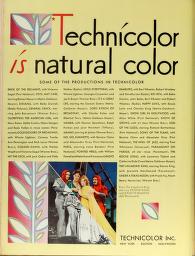


 "Cleopatra" (two reels) directed by Roy William Neil in 1928 used a subtractive 2 color process, which washed away gelatin to leave reliefs which could be dyed. Actress Dorothy Revier played the titular role in the film. 600 feet of the technicolor short "The Virgin Queen", starring actress Dorothy Dwan, directed by Roy William Neil during 1928 has been preserved and 800 feet of the technicolor short "Madame Du Barry, also directed by Roy William Neil during 1928 has been restored as an incomplete print. "The Lady of Victories" a technicolor short shot by Roy William Neil toward the end of 1927 starring actress Agnes Ayres also has been preserved as an incomplete print.
The periodical Film Daily during 1929 announced that London had developed a new color process for making color film, Cinecolor.
Bela Belaz, in his 1952 volume Theory of the Film, points out that color in the film "has artistic significance only if it expresses some specifically filmic experience". He reminds us that color films are still "moving pictures" and therefore "moving colors" that should avoid shots composed as static, pictorial, beauty in nature itself being an event, "a change in color, a transition from one spectacle to the next." He anticipates Ingmar Bergman's film Cries and Whispers by claiming that color can have a symbolic significance, and although dependent upon the dramaturgical structure, can play a dramaturgical part.
Greta Garbo
 Swedish Silent Film

Silent Film Hollywood, Color and Tint in Film
by Scott Lord on Silent Film, Swedish Silent Film, Danish Silent Film,


The Film Daily magazine during early 1928 made one of its many pertinent announcements entitled Janet Gaynor Goes Abroad, which read, "Janet Gaynor, who recently signed a five year contract with Fox, will leave for Europe upon the completion of 'The Four Devils', F.W. Murnau picture, to work in exteriors for 'Blossom Time' with Frank Borzage directing. 'The Four Devils' went into production Friday."
The Four Devils, directed by F.W. Murnau, is a lost silent film, with no available surviving copies. Picture Play magazine reported having had an interview with Janet Gaynor early that year. "The other week I came across Janet Gaynor on the Fox lot...'I have to get used to doing these stints and turns. That is if I don't twist myself into something that can't be undone.' This she explained her role in 'The Four Devils'. Nevertheless risking all when such dire mishaps, Janet continued to work on her contortions. When Hollywood learned that Janet Gaynor and Charles Farrell were chosen for the leads in 'Blossom Time' and that part of the picture might be filmed in Vienna, the Cinderella chorus sang once more." In the article, almost now seemingly out of place while below a picture of a bare shouldered actress turned so that her chin touched her shoulder demurely, was a caption which read, "Nancy Drexel was long obscure before she was given a leading role in 'The Four Devils", the age of the actress in the photo implying that her initial fame had only been fleeting.
I was asked during an online course of film to view the silent film Street Angel starring Janet Gaynor. The instructor of the course, Professor Scott Higgins of Wesleyean University has recently written two papers, Technicolor Confections and Color at the Center.
Authur Knight, in his volume The Liveliest Art chronicles Herbert Kalmus having in 1923/marketted a Technicolor film, "a two-color process in which the red-orange-yellow portion of the spectrum was photographed on one negative, the green-blue-purple portion on another. When prints from the two negatives were laminated together, they produced a pleasing, though still far from accurate color scale."
There is an astonishing relationship between lost film, films which there are no longer prints of due to the celluloid having deteriorated, and the history of technicolor films; even up untill the 1935 film "Beck Sharp" there were two-tone and three-tone inserts, including a 1923 adaptation of "Vanity Fair" directed by Hugo Ballin that is incidentally a lost film.
"So This Is Marriage?" (Hobart Henley, 1924) starring Conrad Nagel and Eleanor Boardman is a lost film that contained technicolor sequences.
One consideration in the use of Technicolor during the production of silent film was running length and how expensive, or perhaps lucrative, it would be to advance from two-reelers to seven reelers. The four reel film had been introduced over a decade earlier and with it the narrative film had become to be expected in movie theaters. While John Gilbert and Greta Garbo were being reviewed in magazines for their acting in the film "Love", so we're Olga Baclanova and David Mir for the film The Czarina's Secret. The Film Spectator reported,"The Czarist's Secret is another artistic gem of the series that Technicolor is making for Metro release. There are to be six, each presenting a great moment in history, and this is the fourth....Dramaticly it is a splendid picture and the technicolor process has made it gorgeous pictorially. technicolor has brought its process to a point of perfection that our big producers cannot ignore much longer. They cannot keep giving us only white and black creations with such a color process is available." Actress Olga Baclanova that same year co-starred with Pola Negri in the feature film "Three Sinners" (eight reels), directed by Roland V. Lee, the film considered lost with no surviving copies; actress Olga Baclanova later costarred with John Gilbert and Virginia Bruce in the impeccable early sound film "Downstairs".
Technicolor and artificial lighting were used in tandem the first time in 1924 by director George Fitzmaurice to bring Irene Rich, Alma Rubens, Betty Bronson and Constance Bennett to the screen for First National in the film "Cytherea" (eight reels). Admittedly, an early pioneer of Technicolor described the film as two component subtractive print that had only been used as "an insert", but that in that it had been the "photographing of an interior set on a darkened stage" the silent film director had been "delighted with the results".
Tiffany Productions used magazine advertisements during 1927 to boast of having filmed "30 Color Classics, single reels technicolor". There is an account that as many as thirteen of the films Tiffany Productions filmed that year are now lost films, with as many as twenty two films made during the following year that also remain lost, with no surviving copies.
"The King of Kings" (fourteen reels) directed by Cecil B. DeMille in 1927 used toned images, tinted images and Technicolor dye-transfer images. Actress Dorothy Cummings stars as Mary in the film.


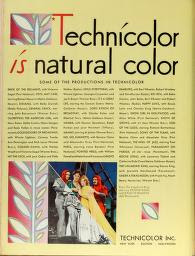


The periodical Film Daily during 1929 announced that London had developed a new color process for making color film, Cinecolor.
Bela Belaz, in his 1952 volume Theory of the Film, points out that color in the film "has artistic significance only if it expresses some specifically filmic experience". He reminds us that color films are still "moving pictures" and therefore "moving colors" that should avoid shots composed as static, pictorial, beauty in nature itself being an event, "a change in color, a transition from one spectacle to the next." He anticipates Ingmar Bergman's film Cries and Whispers by claiming that color can have a symbolic significance, and although dependent upon the dramaturgical structure, can play a dramaturgical part.
Greta Garbo


Scott Lord, Scott Lord and 3 others like this
09 Jul 04:32
Silent Film Revision page- please disregard and navigate onward
by Scott Lord on Silent Film, Swedish Silent Film, Danish Silent Film,
Not only were silent films remade in Hollywood, Anna Christie, Anna Karenina and Camille all films that had originally been silent before having been remade with Greta Garbo, but the "grammar of film" or syntax of film technique, how scenes are constructed through shot structure evolved, or was perhaps developed from earlier silent film.
Vitagraph during 1919 had advertised its onscreen images as being "As brimful of Appeal, of Allurement, of Unexpectedness, of Radiance and Feminine Witchery as- Girls Themselves" as it brought actress Corinne Griffith to the screen in The Girl Problem, under the direction of Kenneth Webb.
From the advertising of 1927 for the film White Gold, actress Jetta Goudal seemed a sensation. The direction of William K Howard was reviewed as "distinctive". The Film Daily wrote, "His method of creating atmosphere appropriate to the action, while not relatively new, is most effective. The monotonous creaking of a rocker, the dreary routine of the sickening desert heat, all these and more,creating detail, makes his efforts outstanding." The photoplay was scripted by Garret Fort with scenario writer Marion Orth.
Photographer Oliver Marsh during 1927 would be behind the camera lens to film Norma Talmadge in "The Dove" (nine reels), director Roland West adapting the play written by Willard Mack for the screen. That year Norma Talmadge left her autograph, and footprint, in cement in front of the pagoda of Graumann's Chinese Theater, in Los Angelas, along with those who would include her sister Constance, Mary Pickford and Douglas Fairbanks, and Norma Shearer.
Vitagraph during 1919 had advertised its onscreen images as being "As brimful of Appeal, of Allurement, of Unexpectedness, of Radiance and Feminine Witchery as- Girls Themselves" as it brought actress Corinne Griffith to the screen in The Girl Problem, under the direction of Kenneth Webb.
It has been suggested that characters were to become unique to each studio, an early for. Of branding, in that way the star system having precedence to genre, which would be established gradually. At a time when the screen was readying its sales for a post-war audience, director Sidney Franklin, sometimes credited as Sidney A. Franklin, was showcasing Norma Talmadge in morality scripts, or marital melodramas, typical of the period, although during 1919 he would waver on genre formula and try for star power, directing Talmadge in the the six reel adventure "Heart of Wetona". The Norma Talmadge Film Corporation had in fact begun during 1917 with the five reel film "The Panthea" directed by Alan Dwan and featuring Eric Von Strohiem as an actor starring with Talmadge.
-------- 1919 was a year readying for a new decade with D.W. Griffith at Artcraft directing The Girl Who Stayed Home, (six reels) photographed by Bitzer and starring Robert Harron, Carol Dempster, Richard Barthelmess and Calir Seymore and it was a year with Thomas Ince heading the production of Dorothy Dalton in Extravagence. . D.W. Griffith appears to have sought the combination of moralizing and character interest again by unspooling, unraveling the 1919 drama "Scarlet Days" starring both Carol Dempster and Clarine Seymore while perhaps targeting audience reception and identification by also directing Lillian Gish in the film "True Heart Susie" (six reels) with Robert Harron and Kate Bruce. And yet Paramount was advetising Elsie Ferguson in Counterfeit and Ethel Clayton in More Deadly Than the Male.
D.W. Griffith during 1920 cast Lillian Gish in "The Greatest Question" (six reels), photographed by G.W. Bitzer, as well as "The Idol Dancer" (six reels) with Clarine Seymore and Kate Bruce and "The Love Flower" (seven reels), starring Carol Dempster. During 1921, Carol Dempster again starred under the direction of D.W. Griffith in the silent film "Dream Street".
------------- During 1921actress Alice Lake, with the film Uncharted Seas (Wesley Ruggles) knudged in between the battle for covergirl transpiring between Viola Dana and May Allison, both for Metro Pictures Corporation. Priscilla Dean stayed on the periphery of the dogfight with her film Reputation for Universal Jewel Deluxe.
-------- 1919 was a year readying for a new decade with D.W. Griffith at Artcraft directing The Girl Who Stayed Home, (six reels) photographed by Bitzer and starring Robert Harron, Carol Dempster, Richard Barthelmess and Calir Seymore and it was a year with Thomas Ince heading the production of Dorothy Dalton in Extravagence. . D.W. Griffith appears to have sought the combination of moralizing and character interest again by unspooling, unraveling the 1919 drama "Scarlet Days" starring both Carol Dempster and Clarine Seymore while perhaps targeting audience reception and identification by also directing Lillian Gish in the film "True Heart Susie" (six reels) with Robert Harron and Kate Bruce. And yet Paramount was advetising Elsie Ferguson in Counterfeit and Ethel Clayton in More Deadly Than the Male.
D.W. Griffith during 1920 cast Lillian Gish in "The Greatest Question" (six reels), photographed by G.W. Bitzer, as well as "The Idol Dancer" (six reels) with Clarine Seymore and Kate Bruce and "The Love Flower" (seven reels), starring Carol Dempster. During 1921, Carol Dempster again starred under the direction of D.W. Griffith in the silent film "Dream Street".
------------- During 1921actress Alice Lake, with the film Uncharted Seas (Wesley Ruggles) knudged in between the battle for covergirl transpiring between Viola Dana and May Allison, both for Metro Pictures Corporation. Priscilla Dean stayed on the periphery of the dogfight with her film Reputation for Universal Jewel Deluxe.
Cecil B. DeMille during 1921 expanded the genre of romantic melodrama directing Conrad Nagel with Dorothy Dalton and Mildred Harris in the film "Fool's Paradise". DeMille during 1921 directed Agnes Ayers and Kathleen Williams in "Forbidden Fruit", adapted from a story written by Jeanie Macphearson, the story a remake of an earlier film, "The Golden Chance", DeMille had directed in 1915 with actress Cleo Ridgely. Motion Pocture News during 1922 wrote,"Cecil B. DeMille's name immediately conjures up a very definite and distinguished type of screen entertainment: lavish, intimate, satiric, daring, broad in scope and fine in detail, artistic in execution yet with strong box office appeal and exploitation angles...The name of DeMille soon becomes identified rather closely with society drama, but in "Forbidden Fruit" he showed that his genius was by no means confined to one strata of society."
First National in 1923 published its Great Selection First National First Season brochure of the films it had released during 1922 with a preface explaining that with the aesthetic value of its film was the box office value and it supported the practicality of the exhibitor entering into membership while the studio in fact owned the theater. in their Franchise Plan. "Every First National Picture will have a cast of famous actors. Keep your eyes open and let your patrons know they are with you. It will mean an added box-office attraction." One of the "biggest box-office certainties of the year" was Madge Bellamy in Lorna Doone. It also showcased Norma Talmadge in The Eternal Flame and Costance Talmadge in East is West, it also including Katherine MacDonald in Three Class Productions, Heroes and Husbands, The Woman Conquers and White Shoulders. Hope Hampton was featured in The Light in the Dark. First National annouced, "Louis B. Mayer out to put John Stahl productions on top." Among these were The Dangerous Age, One Clear Call, The Woman He Married and Rose o the Sea (Fred Niblo). "First National Franchise holders can look foward to a series of superb attractions from the studios of Louis B. Mayer, one of the Circuit's earliest producers. J.G. Hawks, "former editor and supervisor of production for Goldwyn" was assigned to Mayer, as was actress Anita Stewart.
----------------"The Beautiful and the Damned", adapted from the novel written by Scott Fitzgerald by screenwriter Olga Pritzlau, it having been only one of her numerous screen credits beginning from 1914. The film starred Charles Burton with actresses Marie Prevost and Louise Fazorda.
From the advertising of 1927 for the film White Gold, actress Jetta Goudal seemed a sensation. The direction of William K Howard was reviewed as "distinctive". The Film Daily wrote, "His method of creating atmosphere appropriate to the action, while not relatively new, is most effective. The monotonous creaking of a rocker, the dreary routine of the sickening desert heat, all these and more,creating detail, makes his efforts outstanding." The photoplay was scripted by Garret Fort with scenario writer Marion Orth.
Photographer Oliver Marsh during 1927 would be behind the camera lens to film Norma Talmadge in "The Dove" (nine reels), director Roland West adapting the play written by Willard Mack for the screen. That year Norma Talmadge left her autograph, and footprint, in cement in front of the pagoda of Graumann's Chinese Theater, in Los Angelas, along with those who would include her sister Constance, Mary Pickford and Douglas Fairbanks, and Norma Shearer.
Scott Lord, Scott Lord and 3 others like this
09 Jul 04:32
Scott Lord:Mysterious Mr Wong- Monogram Studios
by Scott Lord
Scott Lord, Scott Lord and 2 others like this
09 Jul 04:32
Silent Film: The Hunchback of Notre Dame (Worsley, 1923)
by Scott Lord on Silent Film, Swedish Silent Film, Danish Silent Film,
Silent Film
Scott Lord
Scott Lord, Scott Lord Mystery Film and 3 others like this
23 Jun 04:55
The Cat and the Canary (Paul Leni, 1927)
by Scott Lord on Silent Film, Swedish Silent Film, Danish Silent Film,
Scott Lord, Scott Lord and 3 others like this
23 Jun 04:11
Scott Lord Silent Film: Castle Films Travelogue
by Scott Lord on Silent Film, Swedish Silent Film, Danish Silent Film,
Scott Lord, Scott Lord and 3 others like this
23 Jun 04:11
Boston Museum of Science
by Scott Lord on Silent Film, Swedish Silent Film, Danish Silent Film,
Scott Lord, Scott Lord and 2 others like this
23 Jun 04:11
Charles River
by Scott Lord on Silent Film, Swedish Silent Film, Danish Silent Film,
Scott Lord, Scott Lord and 2 others like this
23 Jun 04:11
Charles River Yacht Club, date for cheeseburgers
by Scott Lord on Silent Film, Swedish Silent Film, Danish Silent Film,
Scott Lord, Scott Lord and 2 others like this
23 Jun 04:10
Sherlock Holmes Murder At The Baskervilles
by Anonymous
Scott Lord, Scott Lord and 2 others like this
23 Jun 04:10
Scott Lord Mystery: George Zucco in The Flying Serpent (Sam Newfield, 1946)
by Scott Lord on Silent Film, Swedish Silent Film, Danish Silent Film,
Scott Lord, Scott Lord and 2 others like this
23 Jun 04:10
Mr Wong Detective starring Boris Karloff
by Anonymous
Scott Lord, Scott Lord and 2 others like this
23 Jun 04:10
Boris Karloff in The Mystery of Mr Wong
by Anonymous
Scott Lord, Scott Lord and 2 others like this
23 Jun 04:10
The Black Widow
by Scott Lord on Silent Film, Swedish Silent Film, Danish Silent Film,
Scott Lord, Scott Lord and 2 others like this
23 Jun 04:10
Lady to Love (Victor Seastrom)
by Scott Lord on Silent Film, Swedish Silent Film, Danish Silent Film,
Greta Garbo: Lady to Love (Victor Seastrom): Vilma Banky under the direction of Victor Sjsotrom . Victor Sjostrom subsequently filmed the sound film
Scott Lord, Scott Lord and 2 others like this
23 Jun 04:10
Sexton Blake solves The Echo Murders (John Harlow, 1...
by Scott Lord on Silent Film
Scott Lord, Scott Lord and 2 others like this
23 Jun 04:10
Mystery: Blake of Scotland Yard (Hill, 1937)
by Scott Lord on Silent Film
Scott Lord, Scott Lord and 2 others like this
23 Jun 04:08
Warner Oland-Charlie Chans Secret
by Anonymous
Scott Lord, Scott Lord and 2 others like this
23 Jun 04:08
Scott Lord Mystery: Midnight Limited (Bretherton, 1940)
by Scott Lord on Silent Film
Scott Lord, Scott Lord and 2 others like this
23 Jun 04:08
Warner Oland in The Drums of Jeopardy
by Anonymous
Scott Lord, Scott Lord and 2 others like this
23 Jun 04:07
Monogram Studios, Boris Karloff as Mr. Wong
by Unknown
Scott Lord, Scott Lord and 2 others like this
23 Jun 04:07
Mr Wong Detective starring Boris Karloff
by Anonymous
Scott Lord, Scott Lord and 2 others like this
22 Jun 21:05
Universal Sherlock Holmes Trailers
by noreply@blogger.com (Scott Lord on Silent Film, Swedish Silent Film, Danish Silent Film,)
Scott Lord, Scott Lord and 3 others like this
22 Jun 20:21
Scott Lord Silent Film: Lon Chaney in Mr. Wu (William Nigh, 1927)
by Scott Lord on Silent Film
Scott Lord, Scott Lord Mystery Film likes this
22 Jun 20:21
Scott Lord Silent Film: The Night Before Christmas (Edison, 1908)
by Scott Lord on Silent Film
Scott Lord, Scott Lord Mystery Film likes this