Scott Lord
Scott Lord
Shared posts
26 Jul 03:01
 I usually don't update this blog and usually do update my other blog on film, but this morning the guide that welcomes people to either the Freedom Trail or to the Park Street Church began a conversation about our lack of books on William Lloyd Garrison. There was one that we had. The photo above is our library card catalog that has internet- as an assistant church librarian I could pull up the sermons that William Lloyd Garrison delivered in this room twenty years after the church was erected (in the same way that if you were at Harvard College you would have poems that Oliver Wendall Holmes had delivered there.) Our welcomer referred to the stautue from the previous entry, and you can notice that there was not yet any snow, as "The Image" and judging from her age I really think she meant "the blessed image of the late Dr. and Mrs King". She couldn't just say statue even though there is a statue of J.F.K (the blessed, but more than that the still legally elected) at the Boston State House, but that is something polite, and nice. There was a class today- Tammy (Harvard Divinity) gave me permission to "jump in" in the middle of it or be added to it next week. It is titled Lenten Discipleship Initiative.
-----:-----::-----:::-----::-----:
I usually don't update this blog and usually do update my other blog on film, but this morning the guide that welcomes people to either the Freedom Trail or to the Park Street Church began a conversation about our lack of books on William Lloyd Garrison. There was one that we had. The photo above is our library card catalog that has internet- as an assistant church librarian I could pull up the sermons that William Lloyd Garrison delivered in this room twenty years after the church was erected (in the same way that if you were at Harvard College you would have poems that Oliver Wendall Holmes had delivered there.) Our welcomer referred to the stautue from the previous entry, and you can notice that there was not yet any snow, as "The Image" and judging from her age I really think she meant "the blessed image of the late Dr. and Mrs King". She couldn't just say statue even though there is a statue of J.F.K (the blessed, but more than that the still legally elected) at the Boston State House, but that is something polite, and nice. There was a class today- Tammy (Harvard Divinity) gave me permission to "jump in" in the middle of it or be added to it next week. It is titled Lenten Discipleship Initiative.
-----:-----::-----:::-----::-----:
Below is my original blog entry on "The Image" and I myself quake in many ways:
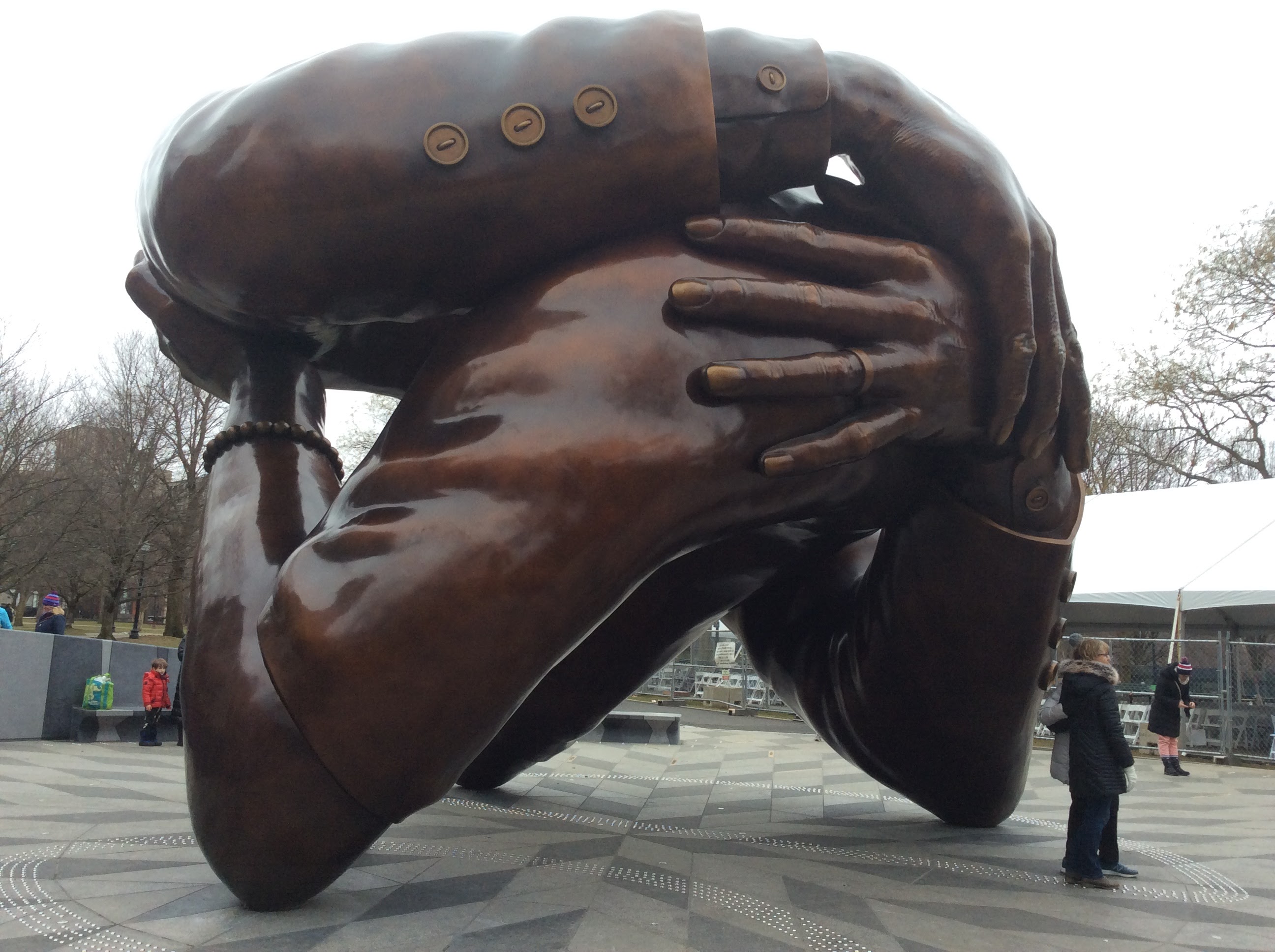
Although the Boston Freedom Trail is meant to be a tour of the Revolutionary War and the grave of Crispus Attucks, a stevadore killed in the Boston Massacre, is directly outside the Church window where I am right now, the new statue of Martin Luther King holding his wife, Coretta Scott King has been unveiled on Boston Common. Another piece of history, ourchurch ran a film on this week marking the one hundreath year of radio broadcasting of the church service, there having been a shop that sold radios across the street on Tremont Street. The service is in progreess upstairs and on WEZE while I am in my wife's library. Donna, please accept these photos as symbolic of our spending our Sundays together.


 photos: Scott Lord
 photo: Scott Lord
Postscript:The Girl on the Flying Trapeze
I spend every Sunday on the Freedom Trail, which our church is on, and I listen to the ministers conduct tours in case I'm needed when in the library or if I think I should point out the Granary Burial Ground. This morning we had a new addition, a sculpture where the usually have a Christmas Star. The other Christmas lights are still in Boston Common. As it is Freedom Trail art, I thought I would add it here, but it takes a couple of photos to conquer the height distance and perspective.
It is an installation- a sculture of a girl on a swing put into an envirornment where art meets reality.
photo: Scott Lord
Postscript:The Girl on the Flying Trapeze
I spend every Sunday on the Freedom Trail, which our church is on, and I listen to the ministers conduct tours in case I'm needed when in the library or if I think I should point out the Granary Burial Ground. This morning we had a new addition, a sculpture where the usually have a Christmas Star. The other Christmas lights are still in Boston Common. As it is Freedom Trail art, I thought I would add it here, but it takes a couple of photos to conquer the height distance and perspective.
It is an installation- a sculture of a girl on a swing put into an envirornment where art meets reality.


 Girl on a Swing photos: Scott Lord
Postscript: Embrace: Dr. Martin Luther and Coretta Scott King Statue added to Boston Freedom Trail

Below is my original blog entry on "The Image" and I myself quake in many ways:
Although the Boston Freedom Trail is meant to be a tour of the Revolutionary War and the grave of Crispus Attucks, a stevadore killed in the Boston Massacre, is directly outside the Church window where I am right now, the new statue of Martin Luther King holding his wife, Coretta Scott King has been unveiled on Boston Common. Another piece of history, ourchurch ran a film on this week marking the one hundreath year of radio broadcasting of the church service, there having been a shop that sold radios across the street on Tremont Street. The service is in progreess upstairs and on WEZE while I am in my wife's library. Donna, please accept these photos as symbolic of our spending our Sundays together.




Scott Lord, Scott Lord and 3 others like this
26 Jul 03:00


Donna in library Valentine's Day
by noreply@blogger.com (Scott Lord on Silent Film, Swedish Silent Film, Danish Silent Film,)


Scott Lord, Scott Lord and 3 others like this
26 Jul 03:00
Scott Lord Mystery: Held for Ransom (Clarence Bricker, 1938)
by noreply@blogger.com (Scott Lord on Silent Film, Swedish Silent Film, Danish Silent Film,)
Scott Lord, Scott Lord and 3 others like this
22 Jul 04:52
 From a poster made during 1971, this may in fact be The Old North Church, the tallest building in America before 1809 when the Park Street Church was built, it then becoming the tallest. I belive both have clocks. I asked a member from M.I.T and he thought it was Park Street Church and it afforded me the chance to tell him that the Internet Archive hists all Dewey Decinal categories of out of print books by using keyword search, not just "Christianity", but also "Thermodynamics".
She refers to it as her "antique desk".
These are my photos from this morning when Donna was behind her desk.
From a poster made during 1971, this may in fact be The Old North Church, the tallest building in America before 1809 when the Park Street Church was built, it then becoming the tallest. I belive both have clocks. I asked a member from M.I.T and he thought it was Park Street Church and it afforded me the chance to tell him that the Internet Archive hists all Dewey Decinal categories of out of print books by using keyword search, not just "Christianity", but also "Thermodynamics".
She refers to it as her "antique desk".
These are my photos from this morning when Donna was behind her desk.


 photos: Scott Lord, I apologize for the lack of a telephoto lens.
Donna is at her library desk as the church organ plays upstairs- this is a poster of the church from 1971
by noreply@blogger.com (Scott Lord on Silent Film, Swedish Silent Film, Danish Silent Film,)


Scott Lord, Scott Lord and 3 others like this
22 Jul 04:52
Scott Lord Mystery: Murder in Times Square (Lew Landers, 1943)
by noreply@blogger.com (Scott Lord on Silent Film, Swedish Silent Film, Danish Silent Film,)
Scott Lord, Scott Lord and 3 others like this
22 Jul 03:32
From a poster made during 1971, this may in fact be The Old North Church, the tallest building in America before 1809 when the Park Street Church was built, it then becoming the tallest. I belive both have clocks. I asked a member from M.I.T and he thought it was Park Street Church and it afforded me the chance to tell him that the Internet Archive hists all Dewey Decinal categories of out of print books by using keyword search, not just "Christianity", but also "Thermodynamics".
She refers to it as her "antique desk".
These are my photos from this morning when Donna was behind her desk.
photos: Scott Lord, I apologize for the lack of a telephoto lens.
Donna is at her library desk as the church organ plays upstairs- this is a poster of the church from 1971
Scott Lord, Scott Lord and 2 others like this
19 Jul 00:46
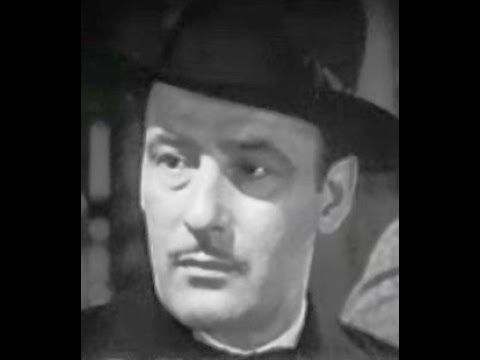
Scott Lord Mystery Film: Tom Conway as Sherlock Holmes in The Singular Affair of the Coptic Compass
by victorseaful
scottlordpoet
shared this story
from  Scott Lord shared items on The Old Reader (RSS). Scott Lord shared items on The Old Reader (RSS).
|
scottlordpoet
shared this story
from  victorseaful's YouTube Videos. victorseaful's YouTube Videos.
|
Tom Conway as Sherlock Holmes
Scott Lord, Scott Lord and 3 others like this
18 Jul 03:56
Universal Sherlock Holmes Trailers
by Scott Lord on Silent Film, Swedish Silent Film, Danish Silent Film,
Scott Lord, Scott Lord and 3 others like this
18 Jul 03:55

 Directed by D.W.Griffith and photographed by G.W. Bitzer for the Famous Players Lasky Corporation "The Girl Who Stayed at Home" (seven reels) showcased actress Carol Dempster. In their volume The films of D.W. Griffith, Edward Wagenkneckt and Anthony Slide describe the theater transpiring on screen, the theatrical element, by contrasting the loves scenes of each of the two couples; compared to the Seymour-Harron affair, the "Carol Dempster-Richard Barthelmess love affair is strangely tepid; it lacks the joyful emotion of true feeling."
D.W. Griffith and S.E.V. Taylor had adapted the photoplay from an original story Taylor had written. D. W. Griffith
D.W. Griffith
Scott Lord Silent Film: Carol Dempster in The Girl Who Stayed Home (D.W. Griffith, 1919)
by Scott Lord on Silent Film, Swedish Silent Film, Danish Silent Film,
D.W. Griffith and S.E.V. Taylor had adapted the photoplay from an original story Taylor had written. D. W. Griffith
D.W. Griffith
Silent Film
Scott Lord, Scott Lord and 4 others like this
18 Jul 03:55
silent film silent film
The House That Shadows Built: The History of Cinema (Paramount Pictures...
by noreply@blogger.com (Scott Lord on Silent Film, Swedish Silent Film, Danish Silent Film,)
scottlordpoet
shared this story
from  Scott Lord on Silent Film Hollywood, Lost Silent Film, Swedish Silent Film, Danish Silent Film. Scott Lord on Silent Film Hollywood, Lost Silent Film, Swedish Silent Film, Danish Silent Film.
|
silent film silent film
Scott Lord, Scott Lord and 3 others like this
18 Jul 03:55
Scott Lord
 Swedish's Favorite Links from Diigo.
Scott Lord, Scott Lord and 3 others like this
18 Jul 03:55
Scott Lord Mystery: Tom Conway as Sherlock Holmes in Murder in the Locked Room (1947)
by victorseaful

Scott Lord, Scott Lord and 3 others like this
18 Jul 03:55

Fred Niblo directed the six reel film "The Woman in the Suitcase" during 1920 for Thomas H. Ince Productions. The photoplay was written by C. Gardner Sullivan. Actress Enid Bennett stars in the film.
That year Fred Niblo also directed Enid Bennett in the film "Silk Hosiery" (six reels), costarring actress Joan Standing and in the film "Her Husband's Friend"(five reels) co-starring Mae Busch. Silent Film Fred Niblo
Scott Lord Silent Film: The Woman In the Suitcase (Fred Niblo, 1920)
by Scott Lord Silent Film

Fred Niblo directed the six reel film "The Woman in the Suitcase" during 1920 for Thomas H. Ince Productions. The photoplay was written by C. Gardner Sullivan. Actress Enid Bennett stars in the film.
That year Fred Niblo also directed Enid Bennett in the film "Silk Hosiery" (six reels), costarring actress Joan Standing and in the film "Her Husband's Friend"(five reels) co-starring Mae Busch. Silent Film Fred Niblo
Scott Lord, Scott Lord and 3 others like this
18 Jul 03:55
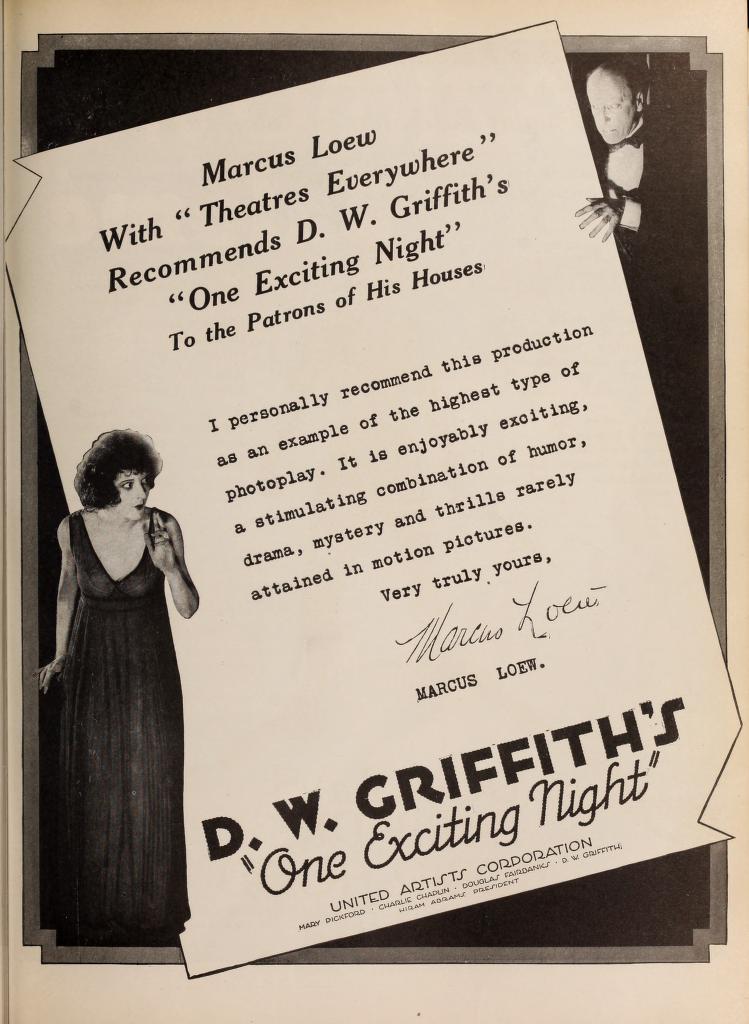
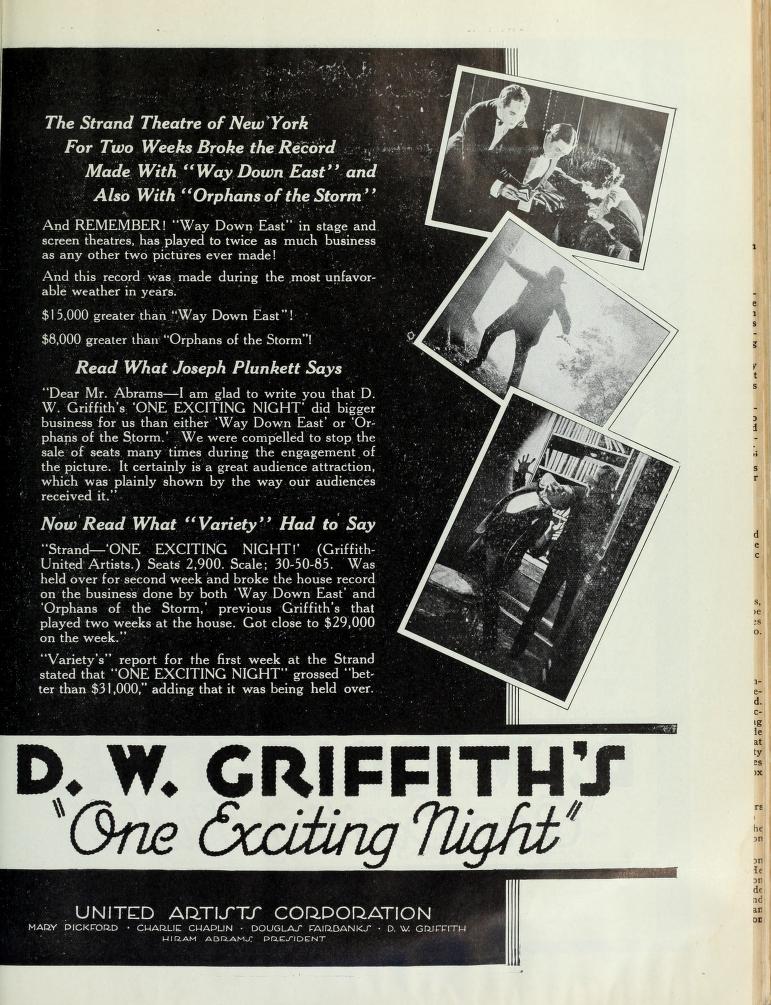
The photographer to the film “One Exciting Night” was Hendrik Sartov.
After having directed Carol Dempster in “One Exciting Night” (Eleven reels), D.W. Griffith, by then having become a producer for United Artists, followed in 1922 by directing Dempster in the film “The White Rose” (twelve reels) with actress Mae Marsh.


Silent Film
Silent Film
Silent Film
Silent Film
Scott Lord Silent Film: One Exciting Night (D. W. Griffith, 1922)
by Scott Lord Silent Film
The photographer to the film “One Exciting Night” was Hendrik Sartov.
After having directed Carol Dempster in “One Exciting Night” (Eleven reels), D.W. Griffith, by then having become a producer for United Artists, followed in 1922 by directing Dempster in the film “The White Rose” (twelve reels) with actress Mae Marsh.




Silent Film
Silent Film
Silent Film
Silent Film
Scott Lord, Scott Lord and 3 others like this
18 Jul 03:54
Silent Film Biblical Drama
Silent Film Biblical Drama
Tags: silent film
Scott Lord, Scott Lord and 3 others like this
18 Jul 03:54
The Photoplay: Silent Film Movie Posters; Douglas Fairbanks
by noreply@blogger.com (Scott Lord on Silent Film, Scott Lord on Mystery Film)

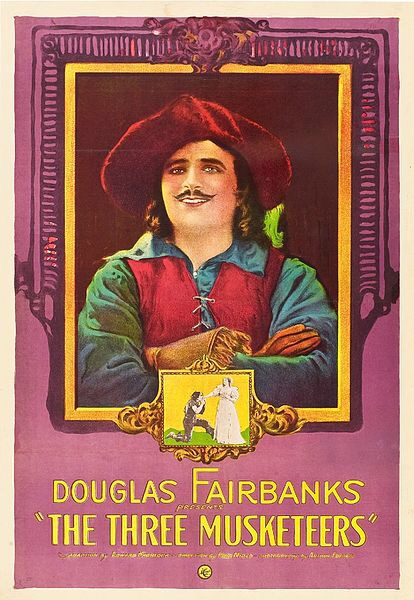


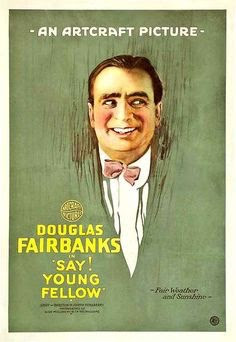

Scott Lord, Scott Lord and 3 others like this
18 Jul 03:54
 Lon Chaney
 Lon Chaney
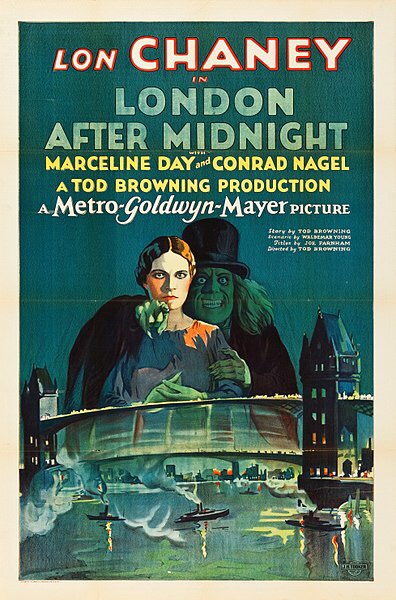 Lon Chaney
 Lon Chaney
 Lon Chaney
 Lon Chaney
 Lon Chaney
 Lon Chaney

Tod Browning Silent Film
 Lon Chaney

Lon Chaney

Lon Chaney
Lon Chaney Lobby Cards Lon Chaney
 Lon Chaney
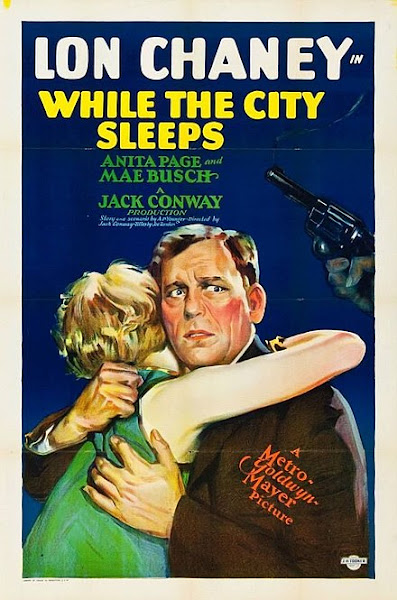 Lon Chaney
Lon Chaney Lon Chaney
 Lon Chaney
 Silent Film


Lon Chaney
 Lon Chaney and Tod Browning
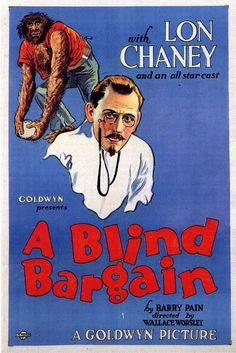
The Photoplay: Silent FIlm Movie Posters; Lon Chaney
by noreply@blogger.com (Scott Lord on Silent Film, Scott Lord on Mystery Film)
Lon Chaney



Tod Browning Silent Film


Lon Chaney

Lon Chaney
Lon Chaney Lobby Cards


Lon Chaney


Tod Browning


Lon Chaney

Silent Film
Scott Lord, Scott Lord and 3 others like this
18 Jul 03:54


Buster Keaton and Eddie Cline began the decade by directing two reel comedies, including The High Sign", "The Boat", "The Playhouse" and "Hard Luck" during 1921. silent film
The Haunted House (Buster Keaton, Edward Cline, 1921)
by noreply@blogger.com (Scott Lord on Silent Film, Scott Lord on Mystery Film)


Buster Keaton and Eddie Cline began the decade by directing two reel comedies, including The High Sign", "The Boat", "The Playhouse" and "Hard Luck" during 1921. silent film
Scott Lord, Scott Lord and 3 others like this
18 Jul 03:53

 Directed during 1922 by Frank Borzage, "The Pride of Palomar" (eight reels) features actress Marjorie Draw with Warner Oland in the supporting cast.
Silent Film
Silent Film
Silent Film
Directed during 1922 by Frank Borzage, "The Pride of Palomar" (eight reels) features actress Marjorie Draw with Warner Oland in the supporting cast.
Silent Film
Silent Film
Silent Film
Scott Lord Silent Film: The Pride of Palomar (Frank Borzage, 1922)
by noreply@blogger.com (Scott Lord on Silent Film, Scott Lord on Mystery Film)


Scott Lord, Scott Lord and 3 others like this
18 Jul 03:53
Silent Film Revision page- please disregard and navigate onward
by noreply@blogger.com (Scott Lord on Silent Film, Scott Lord on Mystery Film)
Not only were silent films remade in Hollywood, Anna Christie, Anna Karenina and Camille all films that had originally been silent before having been remade with Greta Garbo, but the "grammar of film" or syntax of film technique, how scenes are constructed through shot structure evolved, or was perhaps developed from earlier silent film.
Vitagraph during 1919 had advertised its onscreen images as being "As brimful of Appeal, of Allurement, of Unexpectedness, of Radiance and Feminine Witchery as- Girls Themselves" as it brought actress Corinne Griffith to the screen in The Girl Problem, under the direction of Kenneth Webb.
From the advertising of 1927 for the film White Gold, actress Jetta Goudal seemed a sensation. The direction of William K Howard was reviewed as "distinctive". The Film Daily wrote, "His method of creating atmosphere appropriate to the action, while not relatively new, is most effective. The monotonous creaking of a rocker, the dreary routine of the sickening desert heat, all these and more,creating detail, makes his efforts outstanding." The photoplay was scripted by Garret Fort with scenario writer Marion Orth.
Photographer Oliver Marsh during 1927 would be behind the camera lens to film Norma Talmadge in "The Dove" (nine reels), director Roland West adapting the play written by Willard Mack for the screen. That year Norma Talmadge left her autograph, and footprint, in cement in front of the pagoda of Graumann's Chinese Theater, in Los Angelas, along with those who would include her sister Constance, Mary Pickford and Douglas Fairbanks, and Norma Shearer.
Vitagraph during 1919 had advertised its onscreen images as being "As brimful of Appeal, of Allurement, of Unexpectedness, of Radiance and Feminine Witchery as- Girls Themselves" as it brought actress Corinne Griffith to the screen in The Girl Problem, under the direction of Kenneth Webb.
It has been suggested that characters were to become unique to each studio, an early for. Of branding, in that way the star system having precedence to genre, which would be established gradually. At a time when the screen was readying its sales for a post-war audience, director Sidney Franklin, sometimes credited as Sidney A. Franklin, was showcasing Norma Talmadge in morality scripts, or marital melodramas, typical of the period, although during 1919 he would waver on genre formula and try for star power, directing Talmadge in the the six reel adventure "Heart of Wetona". The Norma Talmadge Film Corporation had in fact begun during 1917 with the five reel film "The Panthea" directed by Alan Dwan and featuring Eric Von Strohiem as an actor starring with Talmadge.
-------- 1919 was a year readying for a new decade with D.W. Griffith at Artcraft directing The Girl Who Stayed Home, (six reels) photographed by Bitzer and starring Robert Harron, Carol Dempster, Richard Barthelmess and Calir Seymore and it was a year with Thomas Ince heading the production of Dorothy Dalton in Extravagence. . D.W. Griffith appears to have sought the combination of moralizing and character interest again by unspooling, unraveling the 1919 drama "Scarlet Days" starring both Carol Dempster and Clarine Seymore while perhaps targeting audience reception and identification by also directing Lillian Gish in the film "True Heart Susie" (six reels) with Robert Harron and Kate Bruce. And yet Paramount was advetising Elsie Ferguson in Counterfeit and Ethel Clayton in More Deadly Than the Male.
D.W. Griffith during 1920 cast Lillian Gish in "The Greatest Question" (six reels), photographed by G.W. Bitzer, as well as "The Idol Dancer" (six reels) with Clarine Seymore and Kate Bruce and "The Love Flower" (seven reels), starring Carol Dempster. During 1921, Carol Dempster again starred under the direction of D.W. Griffith in the silent film "Dream Street".
------------- During 1921actress Alice Lake, with the film Uncharted Seas (Wesley Ruggles) knudged in between the battle for covergirl transpiring between Viola Dana and May Allison, both for Metro Pictures Corporation. Priscilla Dean stayed on the periphery of the dogfight with her film Reputation for Universal Jewel Deluxe.
-------- 1919 was a year readying for a new decade with D.W. Griffith at Artcraft directing The Girl Who Stayed Home, (six reels) photographed by Bitzer and starring Robert Harron, Carol Dempster, Richard Barthelmess and Calir Seymore and it was a year with Thomas Ince heading the production of Dorothy Dalton in Extravagence. . D.W. Griffith appears to have sought the combination of moralizing and character interest again by unspooling, unraveling the 1919 drama "Scarlet Days" starring both Carol Dempster and Clarine Seymore while perhaps targeting audience reception and identification by also directing Lillian Gish in the film "True Heart Susie" (six reels) with Robert Harron and Kate Bruce. And yet Paramount was advetising Elsie Ferguson in Counterfeit and Ethel Clayton in More Deadly Than the Male.
D.W. Griffith during 1920 cast Lillian Gish in "The Greatest Question" (six reels), photographed by G.W. Bitzer, as well as "The Idol Dancer" (six reels) with Clarine Seymore and Kate Bruce and "The Love Flower" (seven reels), starring Carol Dempster. During 1921, Carol Dempster again starred under the direction of D.W. Griffith in the silent film "Dream Street".
------------- During 1921actress Alice Lake, with the film Uncharted Seas (Wesley Ruggles) knudged in between the battle for covergirl transpiring between Viola Dana and May Allison, both for Metro Pictures Corporation. Priscilla Dean stayed on the periphery of the dogfight with her film Reputation for Universal Jewel Deluxe.
Cecil B. DeMille during 1921 expanded the genre of romantic melodrama directing Conrad Nagel with Dorothy Dalton and Mildred Harris in the film "Fool's Paradise". DeMille during 1921 directed Agnes Ayers and Kathleen Williams in "Forbidden Fruit", adapted from a story written by Jeanie Macphearson, the story a remake of an earlier film, "The Golden Chance", DeMille had directed in 1915 with actress Cleo Ridgely. Motion Pocture News during 1922 wrote,"Cecil B. DeMille's name immediately conjures up a very definite and distinguished type of screen entertainment: lavish, intimate, satiric, daring, broad in scope and fine in detail, artistic in execution yet with strong box office appeal and exploitation angles...The name of DeMille soon becomes identified rather closely with society drama, but in "Forbidden Fruit" he showed that his genius was by no means confined to one strata of society."
First National in 1923 published its Great Selection First National First Season brochure of the films it had released during 1922 with a preface explaining that with the aesthetic value of its film was the box office value and it supported the practicality of the exhibitor entering into membership while the studio in fact owned the theater. in their Franchise Plan. "Every First National Picture will have a cast of famous actors. Keep your eyes open and let your patrons know they are with you. It will mean an added box-office attraction." One of the "biggest box-office certainties of the year" was Madge Bellamy in Lorna Doone. It also showcased Norma Talmadge in The Eternal Flame and Costance Talmadge in East is West, it also including Katherine MacDonald in Three Class Productions, Heroes and Husbands, The Woman Conquers and White Shoulders. Hope Hampton was featured in The Light in the Dark. First National annouced, "Louis B. Mayer out to put John Stahl productions on top." Among these were The Dangerous Age, One Clear Call, The Woman He Married and Rose o the Sea (Fred Niblo). "First National Franchise holders can look foward to a series of superb attractions from the studios of Louis B. Mayer, one of the Circuit's earliest producers. J.G. Hawks, "former editor and supervisor of production for Goldwyn" was assigned to Mayer, as was actress Anita Stewart.
----------------"The Beautiful and the Damned", adapted from the novel written by Scott Fitzgerald by screenwriter Olga Pritzlau, it having been only one of her numerous screen credits beginning from 1914. The film starred Charles Burton with actresses Marie Prevost and Louise Fazorda.
From the advertising of 1927 for the film White Gold, actress Jetta Goudal seemed a sensation. The direction of William K Howard was reviewed as "distinctive". The Film Daily wrote, "His method of creating atmosphere appropriate to the action, while not relatively new, is most effective. The monotonous creaking of a rocker, the dreary routine of the sickening desert heat, all these and more,creating detail, makes his efforts outstanding." The photoplay was scripted by Garret Fort with scenario writer Marion Orth.
Photographer Oliver Marsh during 1927 would be behind the camera lens to film Norma Talmadge in "The Dove" (nine reels), director Roland West adapting the play written by Willard Mack for the screen. That year Norma Talmadge left her autograph, and footprint, in cement in front of the pagoda of Graumann's Chinese Theater, in Los Angelas, along with those who would include her sister Constance, Mary Pickford and Douglas Fairbanks, and Norma Shearer.
Scott Lord, Scott Lord and 3 others like this
18 Jul 03:53
Scott Lord Silent Film: Sage Brush Tom (Tom Mix, 1915)
by noreply@blogger.com (Scott Lord on Silent Film, Scott Lord on Mystery Film)
Tom Mix was credited as having written, directed and starred onscreen in the 1915 film "Sage Brush Tom", produced by Selig Polyscope. Apearing in the one reel film were actresses Goldie Colwell and Victoria Forde.
Silent Westerns
Scott Lord, Scott Lord and 3 others like this
18 Jul 03:53
Scott Lord Silent Film: The Birth, the Life and the Death of Christ (Alice Guy, 1906) - YouTube
Silent Film
Tags: Silent silent film
Scott Lord, Scott Lord and 3 others like this
18 Jul 03:53
Scott Lord Silent Film: La Vie et la passion de Jésus Christ (1903) - YouTube
Scott Lord, Scott Lord and 3 others like this
18 Jul 03:52

John Bainbridge gives an account of Greta Garbo having returned from Sweden in which the studio and public had expected her to arrive in Los Angeles and her instead having gotten off the train early to rendezvois with John Gilbert. "He had thought that things would turn out as the do in the movies, with the screen's two great lovers united in holy matrimony...According to Gilbert, Garbo had told him, 'You are a very foolish boy, Yacky. You quarrel with me for nothing. I must do my way. But we need not part.' It was on location of the film The Single Standard (eight reels) that Greta Garbo had learned of the marriage of John Gilbert to Ina Claire, "an event that came as a considerable suprise to the entire movie colony" (Bainbridge). His account includes a reporter finding Garbo on the set between two scenes and his showing her the headline, "'Thank you', she said. The reporter began pressing her with questions about her reaction to the news. 'I hope Mr. Gilbert will be very happy,' she said, and walked away." Picture Play magazine reviewed The Single Standard with, "One of the most brilliantly searching moments of acting ever seen in my fifteen years' of observation of the screen occurs in The Single Standard. It is furnished by Greta Garbo. She washes her hands, then washes her hair...Only she could make the story matter, or give it even ephemeral conviction."
It seems apparent that M.G.M. Had avoided the publicity of full page magazine advertisements for the Greta Garbo film The Single Standard and preferred using full page advertisements advertisizing the studio and its vast array of stars, mostly in a more stars in the firmament fashion, one page in 1929 reading It's Just the Beginning of MGM's Deluge of Dialouge Delights and Metro Goldwyn Mayer Your Rock of Gilbralter. It was a full page age in which the photo caption beneath Greta Garboread,"Gorgeous Greta in The Kiss with Conrad Nagel, Greater by far than The Single Standard." This may have in fact been impelled by the quickly advancing coming of sound film, if at all by the fickle contacts of Garbo or Gilbert. During 1929, Exhibito's Herlad and Motion Pictur World listed The Single Standard in a paragraph of films designated as Synchronized Pictures with Sound Effects as differentiated with those listed as Pictures With Talking sequences or Entirely of Dialouge. An advertisement during 1929 in Exhibitor's Herald merely read M.G.M The Important Company while listing the actors and actresses only by name with the working title of their current production, their frequently being instances that the titles would be changed later. With the name of the company was merely the acknowledgement of Lon Chaney in While the City Sleeps, John Gilbert in The Devil's Mask, and Greta Garbo in The Single Standard. Fim Daily of 1929 appealed to exhibitors and its moviegoing readers before providing a synopsis of the film. "Garbo splendid and spends this in for big dough. Story trite and trashy. Greta deserves better." it concluded, "It sounds like a lot of blah in print. That's exactly what it is. Garbo is too fine to waste on such stuff."
Hollywood Filmograph reviewed Greta Garbo in The Single Standard during 1929, "Adele Rogers St. John takes a sort of languid jolt at social conventions in her Single Standard, using Greta Garbo and Nils Asther to propound the doctrine. The theme appears to have been built rather than created and should hardly carry far in the external fitness of things...The Garbo fans will surely like her in this new role- a role in which she shows a little more fervor (not of the bent back kind) than usual...The Single Standard should not be a tornado at the box office." Motion Picture News added, "the story by Adela St John Rogers is highly sophisticated and in the main only suited for the big city houses; in the smaller towns it will appeal to the younger generation but the elder will undoubtedly frown on its altogether too free an exposition of sex will the heroine maintaining the right that a single standard of conduct applies to women as well as men and proceeding to put her theory into effect....Greta Garbo appears a little too old to be the typical flapper that would tackle a sex problem of this sort in the earlier positions of picture." Picture Play Magazine waited until 1930, "Brilliant acting by Greta Garbo although the story is not an inspiration. Arden Stuart attempts to live her own life freely, but conventional mother love dispels her theories."
"The girls go into long trousers. For the sea scenes of 'The Single Standard', Greta Garbo wore flannel trousers with a plain, tuck in sweater and sea going canvas shoes." Picture Play magazine in 1929 ran the caption "Only self-expression draws Greta Garbo, for she is indifferent to fame and to the luxury that comes with stardom." In regard to her being versatile, it added yet another photo caption,"Greta Garbo portrays the torments of love, and little else."
"The Single Standard" is the only screenplay written for Greta Garbo by Josephine Lovett. Starring in the film with her are Dorothy Sebastian and Kathlyn Williams.


Greta Garbo in The Single Standard (1929, Marsh)
by noreply@blogger.com (Scott Lord on Silent Film, Scott Lord on Mystery Film)

John Bainbridge gives an account of Greta Garbo having returned from Sweden in which the studio and public had expected her to arrive in Los Angeles and her instead having gotten off the train early to rendezvois with John Gilbert. "He had thought that things would turn out as the do in the movies, with the screen's two great lovers united in holy matrimony...According to Gilbert, Garbo had told him, 'You are a very foolish boy, Yacky. You quarrel with me for nothing. I must do my way. But we need not part.' It was on location of the film The Single Standard (eight reels) that Greta Garbo had learned of the marriage of John Gilbert to Ina Claire, "an event that came as a considerable suprise to the entire movie colony" (Bainbridge). His account includes a reporter finding Garbo on the set between two scenes and his showing her the headline, "'Thank you', she said. The reporter began pressing her with questions about her reaction to the news. 'I hope Mr. Gilbert will be very happy,' she said, and walked away." Picture Play magazine reviewed The Single Standard with, "One of the most brilliantly searching moments of acting ever seen in my fifteen years' of observation of the screen occurs in The Single Standard. It is furnished by Greta Garbo. She washes her hands, then washes her hair...Only she could make the story matter, or give it even ephemeral conviction."
It seems apparent that M.G.M. Had avoided the publicity of full page magazine advertisements for the Greta Garbo film The Single Standard and preferred using full page advertisements advertisizing the studio and its vast array of stars, mostly in a more stars in the firmament fashion, one page in 1929 reading It's Just the Beginning of MGM's Deluge of Dialouge Delights and Metro Goldwyn Mayer Your Rock of Gilbralter. It was a full page age in which the photo caption beneath Greta Garboread,"Gorgeous Greta in The Kiss with Conrad Nagel, Greater by far than The Single Standard." This may have in fact been impelled by the quickly advancing coming of sound film, if at all by the fickle contacts of Garbo or Gilbert. During 1929, Exhibito's Herlad and Motion Pictur World listed The Single Standard in a paragraph of films designated as Synchronized Pictures with Sound Effects as differentiated with those listed as Pictures With Talking sequences or Entirely of Dialouge. An advertisement during 1929 in Exhibitor's Herald merely read M.G.M The Important Company while listing the actors and actresses only by name with the working title of their current production, their frequently being instances that the titles would be changed later. With the name of the company was merely the acknowledgement of Lon Chaney in While the City Sleeps, John Gilbert in The Devil's Mask, and Greta Garbo in The Single Standard. Fim Daily of 1929 appealed to exhibitors and its moviegoing readers before providing a synopsis of the film. "Garbo splendid and spends this in for big dough. Story trite and trashy. Greta deserves better." it concluded, "It sounds like a lot of blah in print. That's exactly what it is. Garbo is too fine to waste on such stuff."
Hollywood Filmograph reviewed Greta Garbo in The Single Standard during 1929, "Adele Rogers St. John takes a sort of languid jolt at social conventions in her Single Standard, using Greta Garbo and Nils Asther to propound the doctrine. The theme appears to have been built rather than created and should hardly carry far in the external fitness of things...The Garbo fans will surely like her in this new role- a role in which she shows a little more fervor (not of the bent back kind) than usual...The Single Standard should not be a tornado at the box office." Motion Picture News added, "the story by Adela St John Rogers is highly sophisticated and in the main only suited for the big city houses; in the smaller towns it will appeal to the younger generation but the elder will undoubtedly frown on its altogether too free an exposition of sex will the heroine maintaining the right that a single standard of conduct applies to women as well as men and proceeding to put her theory into effect....Greta Garbo appears a little too old to be the typical flapper that would tackle a sex problem of this sort in the earlier positions of picture." Picture Play Magazine waited until 1930, "Brilliant acting by Greta Garbo although the story is not an inspiration. Arden Stuart attempts to live her own life freely, but conventional mother love dispels her theories."
"The girls go into long trousers. For the sea scenes of 'The Single Standard', Greta Garbo wore flannel trousers with a plain, tuck in sweater and sea going canvas shoes." Picture Play magazine in 1929 ran the caption "Only self-expression draws Greta Garbo, for she is indifferent to fame and to the luxury that comes with stardom." In regard to her being versatile, it added yet another photo caption,"Greta Garbo portrays the torments of love, and little else."
Photoplay Magazine in 1929 published an account of Nils Asther's performance in "The Single Standard". It ran, "Nils Asther measures up to the requirements of a Garbo lover. Greta gives a splendid interpretation of the woman of today at war with herself." The publication that year whispered that "Anna Chrisitie" would be Greta Garbo's first sound film, but that Garbo would still be making "The Kiss" first and that Lon Chaney was then still waiting for a dialogue director, it claiming that sound film had stopped the career of Nils Asther, it praised the voice of Ronald Colman in the film "Bulldog Drummond".
In an article for Screenland Magazine during 1931, journalist Paul Hawkins promised a more accurate portrait of Greta Garbogleaned from interviews of actors and directors rather than movie critics. It was a technique used less successfully by biographer John Bainbridge, to give Bainbridge credit, although the earlier Hawkins in one brief article uses a variety of interviews without employing anonymous sources. Screenland quoted actor Johnny Mack Brown, " 'Gee, she's a marvelous gift', sighed Johnny Mack Brown. 'I worked with Miss Garbo in "A Woman of Affairs" and "The Single Standard" and I'll never forget what a grand person she is...I worked hard, all right, but I never before or since enjoyed working hard as did in my two pictures with Greta...Miss Garbo is so conscientious that she inspires the best that is in her co-workers,,,,She was very active between shots on the set of "The Single Standard". We tossed the medicine ball around and chatted like school kids.' "
In an article for Screenland Magazine during 1931, journalist Paul Hawkins promised a more accurate portrait of Greta Garbogleaned from interviews of actors and directors rather than movie critics. It was a technique used less successfully by biographer John Bainbridge, to give Bainbridge credit, although the earlier Hawkins in one brief article uses a variety of interviews without employing anonymous sources. Screenland quoted actor Johnny Mack Brown, " 'Gee, she's a marvelous gift', sighed Johnny Mack Brown. 'I worked with Miss Garbo in "A Woman of Affairs" and "The Single Standard" and I'll never forget what a grand person she is...I worked hard, all right, but I never before or since enjoyed working hard as did in my two pictures with Greta...Miss Garbo is so conscientious that she inspires the best that is in her co-workers,,,,She was very active between shots on the set of "The Single Standard". We tossed the medicine ball around and chatted like school kids.' "
"The Single Standard" is the only screenplay written for Greta Garbo by Josephine Lovett. Starring in the film with her are Dorothy Sebastian and Kathlyn Williams.


Scott Lord, Scott Lord and 3 others like this
18 Jul 03:52

Author Roger Manvell, in his volume The Film and the Public notes that after World War I, the genres that were already in place began to take a new turn with the new decade and that the star system that had emerged with silent film began to look for different interests to coincide with the new modernity. He writes, "the vamp, the siren, and even the shimmering courtesan played by Marlene Deitrich seemed dated, if not a little absurd. No great star has risen to take the place of Garbo and inherit her indisputable and hypnotic hold upon her world audiences." Manvell reinforces his impression, "The twenties became a wild period in filmmaking and themes of marital infidelity and liscence of all kinds were again carried to the heights of a new absurdity with titles like 'Temptation', 'Passion Flame', 'Flaming Youth' and 'La,La,Lucille'. The glamor star was in real demand and names like Pola Negri, Norma Shearer and Greta Garbo began to be well known."
Exhibitor's Herald during 1926 displayed the new M.G.M. commodity Greta Garbo as a vamp in a publicity photo showing her bareshouldered, if not barebaced, with her back turned toward the camera with a second photo photo placed underneath of her with Fred NIblo, H.B. Warner and leading man Moreno with a caption explaining that Niblo was preparing for "the shooting of an elaborate and costly sequence."
While waiting for the next film to be made by Greta Garbo, Photoplay magazine during 1926 printed, "Yet an automobile almost kept Greta from Metro. Mayer had seen Miss Garbo's work in a foreign made film, The Atonement of Gosta Berling. THe picture is incidentally directed by Mauritz Stiller who is directing the second Garbo opus and it it considered an artistic gem, but aositive flop as so far as American audiences are concerned. For that reason it probably will never be released here." In actuality films from Svenska Bio were generally released years after they had been made in Sweden; the article continued to elaborate that Greta Garbo knew that movie stars were provided with limousines whereas Mayer would not include one in her contract! insisting that they were bought by the stars themselves. Having related the disappointment on the part of Greta Garbo and Mauritz Stiller when Stiller had not be asked to direct Greta Garbo in The Torrent, one that would have returned Garbo to Sweden had it not been for Stiller's encouragement, biographer John Bainbridge relates Stiller's optimism when assigned her second film, The Temptress. In Sweden it had been the reverse where Garbo had to audition for Stiller, a more than well known director who had already directed Lars Hanson in Erotikon, a film Greta Garbo had seen in theaters. "Now that he had been given a chance to direct his protegee his dark mood had disappeared. He was full of excitement and enthusiasm. 'At last,' he topld Lars Hanson, 'They'll see what Greta can do.'" Stiller wanted to open the film with a discovery shot, or revelatory shot, that dollyed back, pulled back, to show the wider context of the scene while establishing it location. "Telling Hanson of his plans, Stiller confidently predicted, 'We'll show them a thing or two.'" Upon arriving on the set, in a studio system that in regard to constructing the photoplay, had evolved from Griffith and Ince, Stiller was a prefigurement of the auteur, expressing his bewilderment that there would be an assistant director, an assistant producer, a script girl and other members of the film crew present on the set and attempting to dismiss them, "All I need is a camera and actors." The author continues, " 'They brought me here to direct because they liked my methods.' he told Hanson. 'Instead they try to teach me to direct.'" Lars Hanson explained further "Stiller tied to work in Hollywood the same way he worked in Sweden...He had his own particular way of making a picture. He shot scenes as he wished, not necessarily in sequence and not necessarily the ones he intended to use. He liked to shoot everything, and then make the film he wanted to by cutting. He could never stick to a schedule." Both John Bainbridge and Richard Corliss relay that there were stories of Stiller confronting a language barrier while instructing cameraman and that he would begin with "Stop" when he wanted to say "places, roll them, or action" and that he had interchanged "Go" with "Cut or Print" when the scene was to conclude, although the present author is uncertain as to whether it was included specificlly in the published reminiscenes of actors that often made their way into fan magazines or what their source may have been. Author Anthony Slide, while offerring biographies of one hundread silent film stars quotes actress Virginia Brown Faire on working with Greta Garbo and Mauritz Stiller,"That was just her first picture in this country and she had a difficult time with the English language. Mauritz Stiller was a big director in Sweden, but he was by that time a very sick man, although nobody seemed to know it. And every scene she did, he'd make her do over twenty times, at least...Garbo was difficult and remote."
Before the release of the film, Motion Picture Magazine attested to the experience and craftsmanship of Maurtiz Stiller as a film director by publishing a photograph from the set of the film which was captioned, "The dancing scenes of Greta Garbo and Antonio Moreno in The Temptress, which Mauritz Stiller is directing in this photograph, were filmed by a camera attached to a moving platform which followed them about the floor." If this were Stiller's only contribution to, or influence upon classical narrative and the temporal-spatial relationships of camera to subject, it would be notable, excepting that Stiller had previously filmed in Sweden and built the traditions of filmmaking there as one of its pioneers under Charles Magnusson. The Hollywood system that had evolved from Griffith and Ince had placed Stiller and Clarence Brown as directors that created camerawork and technique.
Within a fortnight, two events occurred which seemed not to have shaken the on-screen Greta Garbo personna, or the need to create an off-screen Garbo character, as though they went unnoticed as more mystery around the recluse seemed to build. Biographer John Bainbridge writes of her sister Alva's passing away during the early filming of The Temptress, "As soon as Garbo informed Stiller of the tragic news, he dismissed the cast and took her home." Lillian Gish, in her autobiography The Movies, Mr. Griffith and Me writes, "I heard one day that she had lost her only sister and I sent flowers and a note. Garbo came to thank me, but she could not speak English. Tears came to her eyes. I couldn't speak Swedish so I put my arms around her and we both cried."
Apparently Garbo was present when Stiller was dismissed and replaced, after ten days of shooting, as the film's director. She had been waiting outside the building during the conference, pacing the sidewalk. "Stiller was laid low with despondency and he was also ailing physically. As he sat on his terrace brooding, Garbo went about propping him up with pillows," Bainbridge records, "and doing what she could to cheer him up." According to Bainbridge, "when Stiller saw Thalberg after the premiere he delivered an invective about Garbo, as well as an excellant script, having been ruined by him." Motion Picture Magazine chronicled the event as nearly expected, "Stiller has sufferred from the fate that overcomes most foreign directors shen they come to Hollywood. He was unable to grasp an understanding of the business and technical end of making a motion picture in an American studio." In one of the many posthumous accounts of the career of Mauritz Stiller that appeared linking him to Greta Garbo, Ruth Biery intimated during 1932 that Stiller was removed from The Temptress because of an objection made by Antonio Moreno, the director apparently having insisted that the actor wear a pompadour to compensate fro Garbo's having had been being the taller of the two. Greta Garbo described to Photoplay Magazine her filming in The Temptress under the direction of Fred Niblo, "I could not undeIrstand the English directions. Week in, week out from seven untill six. Six months on the story. More than twenty costumes to try on over and over. That is why I donot care about clothes. There are so many clothes in every picture, I can not think of them when I am away from a picture. I never missed a day. I was never late for work." Photoplay inserted a paragraph on Greta Garbo written in bold type into one of its backpages during 1927, "Fred Niblo, who had directed the alabaster and ivory Garbo was making the usual introductory speeches. Remarking on the beauty of Greta's performance, he further said that it was most difficult to direct her for she spoke not one word of English. 'Do you?' queried Niblo turning to her where the Swedish lorelei sat. 'No', answered Greta slowly, perfectly, 'I do not speak one word of English.'" Irregardless of Greta Garbo having been reluctant to work with Monta Bell and preferring to remain under the wing of Mauritz Stiller, a look independent of that to the 1927 Motion Picture New Booking Guide and Studio Directory draws a contrast between the directors Monta Bell and Fred Niblo, the former depicted in biographical sketches as merely a novice, the latter as experienced as to where he would soon become head of the studio, Monta Bell, Metro Goldwyn Mayer director, is comparatively a newcomer to the motion picture industry." Where Bell is noted as having began with Chaplin, Niblo is noted as having begun with Thomss Ince and for his directing his wife, Enid Bennett, "Motion Picture Stars are not the only ones to claim interesting claim to backgrounds."
Film Daily during 1926 included a column of what it considered to be pertinent Newspaper Opninions, or newspaper clippings, on recently released films; these touted the "seductive charm of languid eyed Elena, the "gorgeous beauty" Greta Garbo, "who besides wearing stunning clothes can also act" and a Garbo that "vitalizes the name part of this picture." Motion Picture News during 1926 also carried a similar section entitled Newspaper Opinions on New Pictures, in which it quoted the exact same reviews, where, "Greta Garbo is a delight for the eye", "Greta Garbo makes every move a picture" and although they praised the newcomer Garbo in General a mild outlook was taken of her vamping, or being illicit as a mysterious foreign road to perdition, in the press quotes of that year. The Exceptional Photoplays department of National Board of Review Magazine credited William Daniels and Gaetano Gardino as having been the photographers of the film The Temptress, "The Temptress brings Greta Garbo to the attention of American audiences as an actress of note and unusual beauty...She is not half a minute on the screen before you know her as an artist,pliable and lively. This big starring vehicle gives her the ample opportunity to prove her versatility...The first Paris sequence is the equal in tonal quality and feeling of anything that has been done in films. It is true with strong character drawing. Miss Garbo makes Elena a breathing person." Motion Picture Magazine featured a still from on the set of the film captioned, "Fred Niblo insists on realism...and this scene of Tony Moreno and Greta Garbo in The Temptress promises to provide a thrill when it reaches the scene. Note the angle of the camera."
Bainbridge reviewed the film by writing, "Despite its florid subtitles and spurious plot, The Temptress was another distinct triumph for Garbo." Educational Screen Magazine, during a month in which it had reviewed the film Bardleys the Magnificient also looked at the film, "Most of this can be dismissed as perfectly ordinary.It is merely a tale of a siren who couldn't help attracting men, with an appended list of the fatalities...Miss Garbo as. Woman of the streets demonstrates a remarkable dramatic ability."
Photoplay reviewed the performance of Greta Garbo in the film briefly, "The Ibanez story is forgiven and forgotten when Greta Garbo is in the cast. Greta is a show in herself." Photoplay reiterated its sentiment, "While this Belasco-Ibanez story is crammed full of melodramatic action-much of it preposterous- Greta Garbo makes the proceedings not only believable, but compelling. Such a role strains at the probabilities, but Miss Garbo makes Elena highly effective. She is beautiful, she flashes and scintillates with singular appeal...'The Temptress' is all Garbo. Nothing else matters."
There is a report that M.G.M purchased the talking rights to both The Torrent and The Temptress in 1932. Bent Forslund adds,"Her first two films, The Torrent and The Temptress, both in 1926, were insignificant, but showed that she had appeal. The audience liked her." The screenplays to the first two films in which Greta Garbo had appeared, The Torrent and the Temptress (nine reels) both had been adaptations of the novels of Vincente Belasvo Ibanez, their having been titled Among the Orange Trees and The Earth Belongs to Everyone, respectively. When interviewed by Motion Picture Magazine, novelist Vincente Belasco Ibanez was quoted as having said, "The future of the camera is limitless. Now it is going ahead very fast. There is no standard in the cinema. Why do the artists not get together and set up standards?"
The novels written by Vincente Belasco Ibanez also include "The Four Horseman of the Apocalypse", filmed after "Blood and Sand" in 1921, "Enemies of Women" (Crosland 1923), starring Alma Rubens, and the film "Marie Nostrum" filmed in 1926 by Rex Ingram. The lost film "Circe, the Enchantress" (Robert Z. Leonard, 1924) featured a screenplay written by Ibanez specifically for the actress Mae Murray.
Greta Garbo in The Temptress (Fred Niblo, 1926)
by noreply@blogger.com (Scott Lord on Silent Film, Scott Lord on Mystery Film)

Greta Garbo as continuance of Vamp
Author Roger Manvell, in his volume The Film and the Public notes that after World War I, the genres that were already in place began to take a new turn with the new decade and that the star system that had emerged with silent film began to look for different interests to coincide with the new modernity. He writes, "the vamp, the siren, and even the shimmering courtesan played by Marlene Deitrich seemed dated, if not a little absurd. No great star has risen to take the place of Garbo and inherit her indisputable and hypnotic hold upon her world audiences." Manvell reinforces his impression, "The twenties became a wild period in filmmaking and themes of marital infidelity and liscence of all kinds were again carried to the heights of a new absurdity with titles like 'Temptation', 'Passion Flame', 'Flaming Youth' and 'La,La,Lucille'. The glamor star was in real demand and names like Pola Negri, Norma Shearer and Greta Garbo began to be well known."
Exhibitor's Herald during 1926 displayed the new M.G.M. commodity Greta Garbo as a vamp in a publicity photo showing her bareshouldered, if not barebaced, with her back turned toward the camera with a second photo photo placed underneath of her with Fred NIblo, H.B. Warner and leading man Moreno with a caption explaining that Niblo was preparing for "the shooting of an elaborate and costly sequence."
While waiting for the next film to be made by Greta Garbo, Photoplay magazine during 1926 printed, "Yet an automobile almost kept Greta from Metro. Mayer had seen Miss Garbo's work in a foreign made film, The Atonement of Gosta Berling. THe picture is incidentally directed by Mauritz Stiller who is directing the second Garbo opus and it it considered an artistic gem, but aositive flop as so far as American audiences are concerned. For that reason it probably will never be released here." In actuality films from Svenska Bio were generally released years after they had been made in Sweden; the article continued to elaborate that Greta Garbo knew that movie stars were provided with limousines whereas Mayer would not include one in her contract! insisting that they were bought by the stars themselves. Having related the disappointment on the part of Greta Garbo and Mauritz Stiller when Stiller had not be asked to direct Greta Garbo in The Torrent, one that would have returned Garbo to Sweden had it not been for Stiller's encouragement, biographer John Bainbridge relates Stiller's optimism when
 assigned her second film, The Temptress. In Sweden it had been the reverse where Garbo had to audition for Stiller, a more than well known director who had already directed Lars Hanson in Erotikon, a film Greta Garbo had seen in theaters. "Now that he had been given a chance to direct his protegee his dark mood had disappeared. He was full of excitement and enthusiasm. 'At last,' he topld Lars Hanson, 'They'll see what Greta can do.'" Stiller wanted to open the film with a discovery shot, or revelatory shot, that dollyed back, pulled back, to show the wider context of the scene while establishing it location. "Telling Hanson of his plans, Stiller confidently predicted, 'We'll show them a thing or two.'" Upon arriving on the set, in a studio system that in regard to constructing the photoplay, had evolved from Griffith and Ince, Stiller was a prefigurement of the auteur, expressing his bewilderment that there would be an assistant director, an assistant producer, a script girl and other members of the film crew present on the set and attempting to dismiss them, "All I need is a camera and actors." The author continues, " 'They brought me here to direct because they liked my methods.' he told Hanson. 'Instead they try to teach me to direct.'" Lars Hanson explained further "Stiller tied to work in Hollywood the same way he worked in Sweden...He had his own particular way of making a picture. He shot scenes as he wished, not necessarily in sequence and not necessarily the ones he intended to use. He liked to shoot everything, and then make the film he wanted to by cutting. He could never stick to a schedule." Both John Bainbridge and Richard Corliss relay that there were stories of Stiller confronting a language barrier while instructing cameraman and that he would begin with "Stop" when he wanted to say "places, roll them, or action" and that he had interchanged "Go" with "Cut or Print" when the scene was to conclude, although the present author is uncertain as to whether it was included specificlly in the published reminiscenes of actors that often made their way into fan magazines or what their source may have been. Author Anthony Slide, while offerring biographies of one hundread silent film stars quotes actress Virginia Brown Faire on working with Greta Garbo and Mauritz Stiller,"That was just her first picture in this country and she had a difficult time with the English language. Mauritz Stiller was a big director in Sweden, but he was by that time a very sick man, although nobody seemed to know it. And every scene she did, he'd make her do over twenty times, at least...Garbo was difficult and remote."
Before the release of the film, Motion Picture Magazine attested to the experience and craftsmanship of Maurtiz Stiller as a film director by publishing a photograph from the set of the film which was captioned, "The dancing scenes of Greta Garbo and Antonio Moreno in The Temptress, which Mauritz Stiller is directing in this photograph, were filmed by a camera attached to a moving platform which followed them about the floor." If this were Stiller's only contribution to, or influence upon classical narrative and the temporal-spatial relationships of camera to subject, it would be notable, excepting that Stiller had previously filmed in Sweden and built the traditions of filmmaking there as one of its pioneers under Charles Magnusson. The Hollywood system that had evolved from Griffith and Ince had placed Stiller and Clarence Brown as directors that created camerawork and technique.
Within a fortnight, two events occurred which seemed not to have shaken the on-screen Greta Garbo personna, or the need to create an off-screen Garbo character, as though they went unnoticed as more mystery around the recluse seemed to build. Biographer John Bainbridge writes of her sister Alva's passing away during the early filming of The Temptress, "As soon as Garbo informed Stiller of the tragic news, he dismissed the cast and took her home." Lillian Gish, in her autobiography The Movies, Mr. Griffith and Me writes, "I heard one day that she had lost her only sister and I sent flowers and a note. Garbo came to thank me, but she could not speak English. Tears came to her eyes. I couldn't speak Swedish so I put my arms around her and we both cried."
Apparently Garbo was present when Stiller was dismissed and replaced, after ten days of shooting, as the film's director. She had been waiting outside the building during the conference, pacing the sidewalk. "Stiller was laid low with despondency and he was also ailing physically. As he sat on his terrace brooding, Garbo went about propping him up with pillows," Bainbridge records, "and doing what she could to cheer him up." According to Bainbridge, "when Stiller saw Thalberg after the premiere he delivered an invective about Garbo, as well as an excellant script, having been ruined by him." Motion Picture Magazine chronicled the event as nearly expected, "Stiller has sufferred from the fate that overcomes most foreign directors shen they come to Hollywood. He was unable to grasp an understanding of the business and technical end of making a motion picture in an American studio." In one of the many posthumous accounts of the career of Mauritz Stiller that appeared linking him to Greta Garbo, Ruth Biery intimated during 1932 that Stiller was removed from The Temptress because of an objection made by Antonio Moreno, the director apparently having insisted that the actor wear a pompadour to compensate fro Garbo's having had been being the taller of the two. Greta Garbo described to Photoplay Magazine her filming in The Temptress under the direction of Fred Niblo, "I could not undeIrstand the English directions. Week in, week out from seven untill six. Six months on the story. More than twenty costumes to try on over and over. That is why I donot care about clothes. There are so many clothes in every picture, I can not think of them when I am away from a picture. I never missed a day. I was never late for work." Photoplay inserted a paragraph on Greta Garbo written in bold type into one of its backpages during 1927, "Fred Niblo, who had directed the alabaster and ivory Garbo was making the usual introductory speeches. Remarking on the beauty of Greta's performance, he further said that it was most difficult to direct her for she spoke not one word of English. 'Do you?' queried Niblo turning to her where the Swedish lorelei sat. 'No', answered Greta slowly, perfectly, 'I do not speak one word of English.'" Irregardless of Greta Garbo having been reluctant to work with Monta Bell and preferring to remain under the wing of Mauritz Stiller, a look independent of that to the 1927 Motion Picture New Booking Guide and Studio Directory draws a contrast between the directors Monta Bell and Fred Niblo, the former depicted in biographical sketches as merely a novice, the latter as experienced as to where he would soon become head of the studio, Monta Bell, Metro Goldwyn Mayer director, is comparatively a newcomer to the motion picture industry." Where Bell is noted as having began with Chaplin, Niblo is noted as having begun with Thomss Ince and for his directing his wife, Enid Bennett, "Motion Picture Stars are not the only ones to claim interesting claim to backgrounds."
Film Daily during 1926 included a column of what it considered to be pertinent Newspaper Opninions, or newspaper clippings, on recently released films; these touted the "seductive charm of languid eyed Elena, the "gorgeous beauty" Greta Garbo, "who besides wearing stunning clothes can also act" and a Garbo that "vitalizes the name part of this picture." Motion Picture News during 1926 also carried a similar section entitled Newspaper Opinions on New Pictures, in which it quoted the exact same reviews, where, "Greta Garbo is a delight for the eye", "Greta Garbo makes every move a picture" and although they praised the newcomer Garbo in General a mild outlook was taken of her vamping, or being illicit as a mysterious foreign road to perdition, in the press quotes of that year. The Exceptional Photoplays department of National Board of Review Magazine credited William Daniels and Gaetano Gardino as having been the photographers of the film The Temptress, "The Temptress brings Greta Garbo to the attention of American audiences as an actress of note and unusual beauty...She is not half a minute on the screen before you know her as an artist,pliable and lively. This big starring vehicle gives her the ample opportunity to prove her versatility...The first Paris sequence is the equal in tonal quality and feeling of anything that has been done in films. It is true with strong character drawing. Miss Garbo makes Elena a breathing person." Motion Picture Magazine featured a still from on the set of the film captioned, "Fred Niblo insists on realism...and this scene of Tony Moreno and Greta Garbo in The Temptress promises to provide a thrill when it reaches the scene. Note the angle of the camera."
Bainbridge reviewed the film by writing, "Despite its florid subtitles and spurious plot, The Temptress was another distinct triumph for Garbo." Educational Screen Magazine, during a month in which it had reviewed the film Bardleys the Magnificient also looked at the film, "Most of this can be dismissed as perfectly ordinary.It is merely a tale of a siren who couldn't help attracting men, with an appended list of the fatalities...Miss Garbo as. Woman of the streets demonstrates a remarkable dramatic ability."
Photoplay reviewed the performance of Greta Garbo in the film briefly, "The Ibanez story is forgiven and forgotten when Greta Garbo is in the cast. Greta is a show in herself." Photoplay reiterated its sentiment, "While this Belasco-Ibanez story is crammed full of melodramatic action-much of it preposterous- Greta Garbo makes the proceedings not only believable, but compelling. Such a role strains at the probabilities, but Miss Garbo makes Elena highly effective. She is beautiful, she flashes and scintillates with singular appeal...'The Temptress' is all Garbo. Nothing else matters."
There is a report that M.G.M purchased the talking rights to both The Torrent and The Temptress in 1932. Bent Forslund adds,"Her first two films, The Torrent and The Temptress, both in 1926, were insignificant, but showed that she had appeal. The audience liked her." The screenplays to the first two films in which Greta Garbo had appeared, The Torrent and the Temptress (nine reels) both had been adaptations of the novels of Vincente Belasvo Ibanez, their having been titled Among the Orange Trees and The Earth Belongs to Everyone, respectively. When interviewed by Motion Picture Magazine, novelist Vincente Belasco Ibanez was quoted as having said, "The future of the camera is limitless. Now it is going ahead very fast. There is no standard in the cinema. Why do the artists not get together and set up standards?"
The novels written by Vincente Belasco Ibanez also include "The Four Horseman of the Apocalypse", filmed after "Blood and Sand" in 1921, "Enemies of Women" (Crosland 1923), starring Alma Rubens, and the film "Marie Nostrum" filmed in 1926 by Rex Ingram. The lost film "Circe, the Enchantress" (Robert Z. Leonard, 1924) featured a screenplay written by Ibanez specifically for the actress Mae Murray.
Motion Picture Magazine reviewed the film by noting, "It must be admitted that The Temptress is a bore. It would seem to be a story of a woman whom all men love and whose curious fate is to destroy all men who love her- but not through her own will but as an inevitable consequence of her fatal lure...She at length atones by destroying herself to save the one man she really loves...Greta Garbo as the unhappy temptress, has a role which required of her precisely nothing...Antonio Moreno's role calls for a little more." The magazine also published photo of Greta Garbo "vamping" before the film's release, captioned, "Judging from the oval photographs above, The Temptress is well named. Although Greta Garbo has only been on the American screen for a short time, she enjoys quite a vogue."
Motion Picture News included among the films Production Highlight the "atmosphere, settings and fine editing" Its Exploitation Angles included "Play up Greta Garbo and Antonio Moreno and mention others of fine cast." Its review of the film read, "It may be defined as a tragic melodrama, one which is treated intellectually and with considerable imagination...Fred Niblo demonstrates again that he can be trusted to breathe in this type of I'm story- one which is similar in outline to Ibanez's other story creation Blood and Sand...Moreover, it is splendidly cast with Greta Garbo as the sinuous siren and Antonio Moreno as her Spanish lover." The Over the Teacups section of Picture Play magazine during 1926 quoted someone named Fanny the Fan, who had attended a "cat party" given by screenwriter France's Marion. Among the guests that night were Lillian Gish, Vilma Banky, Anna Q. Nilsson, Patsy Ruth Miller, Lilla Lee and Kathleen Key. Marion that night screened a new Norma Talmadge film in her small theater. During the article, Fanny related having previously met Greta Garbo, who was "fascinating to look at." (Picture Play) "Kathleen Key is working in The Temptress with her and she says that it is an inspiration to watch her. Incidentally, Kath got her role in that because of her expressive, big eyes. Mr. Stiller, the Swedish director that is making the picture asked for the girl with the biggest eyes, and Kath got the part without any argument."
Fred Niblo during 1926 directed actresses Gilda Gray snd Anna May Wong with Clive Brook for the Goldwyn Pictures Corporation in the developing romance genre in the eight reel lost film "The Devil Dancer", of which there are no surviving copies. It would have perhaps given us a look at the effect of the studio system, and in turn the star system, on how genre develops, the possible commodification of specific elements of genre.
Fred Niblo during 1926 directed actresses Gilda Gray snd Anna May Wong with Clive Brook for the Goldwyn Pictures Corporation in the developing romance genre in the eight reel lost film "The Devil Dancer", of which there are no surviving copies. It would have perhaps given us a look at the effect of the studio system, and in turn the star system, on how genre develops, the possible commodification of specific elements of genre.
Scott Lord, Scott Lord and 3 others like this
18 Jul 03:52
 While editor of Film Comment magazine, Richard Corliss signed the dedication of his biography of Greta Garbo "To My Own Mysterious Lady, who taught me all I know." Apparently, he had met his wife at a Greta Garbo retrospective during 1968. He writes on Garbo in the film, "It's not that Garbo needed roles of majestic tragedy- she certainly got enough of those!- but she should in films as slight as Mysterious Lady (1928) and as substantial as Ninotchka (1939), that she could have fun without sacrificing the sense of fated seriousness that made her roles, and sometimes even her films, something special." The cover for Exibitors Herald and Motion Picture World was literally designed by M.G.M, their having apparently purchSed it as space, as it was still advertising Greta Garbo in War in the Dark against John Gilbert in The Cossacks and Four Walls. Photoplay in its pages from that year added a provocative photo of Greta Garbo seductive, bare shouldered, in a low cut evening dress with the caption, "Who wants movies with incidental sounds? who would be disturbed by the smack of the kiss Conrad Nagel is planting on Greta Garbo's knock in War in the Dark?" Motion Picture magazine may have lacked tact in its review of The Mysterious Lady, "Greta Garbo's latest picture is devoted to disproving those two disagreeable statements of Jim Tully's- that Greta Garbo is anemic and flat-chested. She darts about displaying unwonted vim and vigor and wears a gown that might very appropriately adorned Barbara La Marr. Greta as a beautiful lad spy is too alluring to miss...Conrad Nagel is occupying John Gilbert's usual place besides the couch." The Celluloid Critic from Motion Picture Classic Magazine of 1928 also noted that Gilbert was "conspicuously absent" from the film, leaving us to wonder if there wasn't more interest in his having been replaced, the studio not being able to elicit vamp characters from Greta Garbo and finding other seductresses that would lend themselves to the imagination. "The picture is nothing to rave about. The Scandinavian lady rises far above it in her role as an icy spy of the late war. Her particular assignment is to tempt a susceptible youth to his doom. You see, he has papers...It is an antique yarn dusted off for the occasion but functions fairly well, what with the Garbo woman tempting and tempting and tempting. And it builds a fair line of suspense." Motion Picture News during 1928 wrote, "Whatever Garbo tackles in the line of stories she has the personality and technique to make it interesting...The Mysterious Lady has been done time and again on the screen. it is old of plot that even the merest tyro at picture going can spot it all the way. it is fair enough because the presence of Greta Garbo. Conrad Nagel is opposite her for a change and acts very creditably."
Picture Play Magazine during 1928 included the film in an article entitled "Are the Movies Scorning Love?", written by Edwin Shallert. It wrote, "A love scene that is susceptible of laughter is scarcely an asset to a film, and if Flesh and the Devil did triumph, it was rather because of a strong friendship theme rather than its lush blandishments...the amorous episodes in The Mysterious Lady, which stars Greta Garbo, were visibly shortened following its initial preview. the audience was inclined to titter at certain languorous poses that Greta Garbo and Conrad Nagel assumed. Romantic love interest consequently is subdued in this spy melodrama. Moreso, at least, than in Greta's earlier luxuriating." it is difficult to gather much about the film from the review of it placed in The Film Spectator during 1928, as it seems severe, other than the plot was met with disdain in its treatment, "The main fault with The Mysterious Lady is that it's leading man is made out to be an idiot...It is not customary for Conrad Nagel to play an idiot and he's not convincing at it. of course, Fred Niblo, the director, didn't intend Nagel to be an idiot, but he made him do so many silly things that he became one anyway...Niblo's direction was very good on the whole, the scene where the hero has his commission taken from him being very impressive...Greta Garbo, Conrad Nagel have nothing to be desired in the acting line." The absence of John Gilbert from the film had been predicted from the moment Greta Garbo was included in the film. Exhibitor's Herlad reported, "Niblo signs Greta Garbo for War in the Dark. Fred Niblo announced yesterday by arrangement with Louis B. Mayer that Greta Garbo will head the cast of his forthcoming Metro Goldwyn Mayer Special 'War in the Dark' by Ludwig Wolff. he was director of The Temprest in which Garbo appeared some time ago. Bess Meredith is preparing the scenario. John Gilbert will not be in the cast as rumored in Hollywood."
The Motion Picture News Booking Guide during 1929 provided a brief synopsis of The Mysterious Lady, directed by Fred Niblo, "Theme: Romantic drama in which beautiful Russina spy falls in love with young Austrian officer. When he discovers her identity, he casts her off, and to get even girl steals valuable army plans. OFficer trails her to Russia and regains plans. Spy gets into trouble when she aides lover, but pair escape across border and back to Austria."
Greta Garbo in The Mysterious Lady (Fred Niblo, 1928)
by noreply@blogger.com (Scott Lord on Silent Film, Scott Lord on Mystery Film)

Picture Play Magazine during 1928 included the film in an article entitled "Are the Movies Scorning Love?", written by Edwin Shallert. It wrote, "A love scene that is susceptible of laughter is scarcely an asset to a film, and if Flesh and the Devil did triumph, it was rather because of a strong friendship theme rather than its lush blandishments...the amorous episodes in The Mysterious Lady, which stars Greta Garbo, were visibly shortened following its initial preview. the audience was inclined to titter at certain languorous poses that Greta Garbo and Conrad Nagel assumed. Romantic love interest consequently is subdued in this spy melodrama. Moreso, at least, than in Greta's earlier luxuriating." it is difficult to gather much about the film from the review of it placed in The Film Spectator during 1928, as it seems severe, other than the plot was met with disdain in its treatment, "The main fault with The Mysterious Lady is that it's leading man is made out to be an idiot...It is not customary for Conrad Nagel to play an idiot and he's not convincing at it. of course, Fred Niblo, the director, didn't intend Nagel to be an idiot, but he made him do so many silly things that he became one anyway...Niblo's direction was very good on the whole, the scene where the hero has his commission taken from him being very impressive...Greta Garbo, Conrad Nagel have nothing to be desired in the acting line." The absence of John Gilbert from the film had been predicted from the moment Greta Garbo was included in the film. Exhibitor's Herlad reported, "Niblo signs Greta Garbo for War in the Dark. Fred Niblo announced yesterday by arrangement with Louis B. Mayer that Greta Garbo will head the cast of his forthcoming Metro Goldwyn Mayer Special 'War in the Dark' by Ludwig Wolff. he was director of The Temprest in which Garbo appeared some time ago. Bess Meredith is preparing the scenario. John Gilbert will not be in the cast as rumored in Hollywood."
The Motion Picture News Booking Guide during 1929 provided a brief synopsis of The Mysterious Lady, directed by Fred Niblo, "Theme: Romantic drama in which beautiful Russina spy falls in love with young Austrian officer. When he discovers her identity, he casts her off, and to get even girl steals valuable army plans. OFficer trails her to Russia and regains plans. Spy gets into trouble when she aides lover, but pair escape across border and back to Austria."
Fred Niblo seemed to have caused what would have been viewed carefully as a wince from fans of Greta Garbo in Screenland Magazine during 1928. He is quoted by the magazine along with others from Hollywood in response to the question of what a vamp at that time was. "A vamp is a girl like Greta Garbo. her mysterious allure is her appeal. her eyes have the look of concealing some emotion. You have the sensation that she is withholding something all the while and that she can never be understood." During the same issue, Fred Niblo acquired a byline for his article Crashing the Gates of Hollywood, which begins with his explaining the difficulty of keeping silent actors on the screen with the coming of sound. It carried a photocaption to an octagonal portrait of Greta Garbo , "Accoring to Fred Niblo, Greta Garbo is 'a blonde personality with a brunette voice.' She has a voice pitched lower than any other woman in pictures." Greta Garbo Greta Garbo
Greta Garbo
Greta Garbo
Greta Garbo
Greta Garbo in Love
Greta Garbo
Greta Garbo
Greta Garbo
Greta Garbo
Greta Garbo
Greta Garbo
Greta Garbo in Love
Greta Garbo
Greta Garbo
Greta Garbo
Scott Lord, Scott Lord and 3 others like this
18 Jul 03:52


Photoplay magazine reviewed Love, "Anna Karenina? Not so's you could notice it. But John Gilbert and Greta Garbo melt the Russian snow with their love scenes. Will it be popular? Don't be silly." The present author understably has every need to In part John Bainbridge's quoting of Bengt Idestam Almquist in its near entirety, "Greta Garbo has never been better. In her first American pictures she was something different than this: a sensual body, thin and wriggling like an exotic liana, plus a couple of heavy eyelids that hinted all kins of picturesque lusts. But gradually Miss Garbo has worked her way towards becoming a real actress with depth and sincerity." Kenneth Macpherson of Close-Up magazine reviewed the performance of Greta Garbo in the film, "As this is the rottenest possible film, it is clear that its success is due to the beauty of Greta Garbo, who has a Belle Bennett part of mother love. In twenty years they will be trying vainly to give her those parts for which her youth and beauty now make her suited. As I say, the film is just tripe and Greta's clothes are an abomination...but for the fact of Greta's lovliness and her utter inabilbity to look like anything but an overgrown adolescent dressing up for the school play." That year, for the same magazine, H. D. begged to differ, writing, "Let's put Miss Garbo out of it entirely and say that Greta Garbo, under Pabst, was a Nordic ice-flower. Under preceeding and succeeding directors she was an over-grown hoyden or a buffet Guiness-please-miss. The performance of Greta Garbo in that subtle masterpiece Anna Karenina (Love) was inexplicably vulgar and incredibly dull. It was only by the greatest effort of will that one could visulaize in that lifeless and dough-like visage a trace of the glamour, the chizselled purity, the dazzling, almost unearthly beauty...Greta Garbo in The Joyless Street...remained an aristocrat. Greta Garbo as the wife of a Russian Court official and mistress of a man of the world, diademed and in sweeping robes in the palace of Karenin, waa a house-maide at a carnival."
Greta Garbo in Love
by noreply@blogger.com (Scott Lord on Silent Film, Scott Lord on Mystery Film)


Photoplay magazine reviewed Love, "Anna Karenina? Not so's you could notice it. But John Gilbert and Greta Garbo melt the Russian snow with their love scenes. Will it be popular? Don't be silly." The present author understably has every need to
 In part John Bainbridge's quoting of Bengt Idestam Almquist in its near entirety, "Greta Garbo has never been better. In her first American pictures she was something different than this: a sensual body, thin and wriggling like an exotic liana, plus a couple of heavy eyelids that hinted all kins of picturesque lusts. But gradually Miss Garbo has worked her way towards becoming a real actress with depth and sincerity." Kenneth Macpherson of Close-Up magazine reviewed the performance of Greta Garbo in the film, "As this is the rottenest possible film, it is clear that its success is due to the beauty of Greta Garbo, who has a Belle Bennett part of mother love. In twenty years they will be trying vainly to give her those parts for which her youth and beauty now make her suited. As I say, the film is just tripe and Greta's clothes are an abomination...but for the fact of Greta's lovliness and her utter inabilbity to look like anything but an overgrown adolescent dressing up for the school play." That year, for the same magazine, H. D. begged to differ, writing, "Let's put Miss Garbo out of it entirely and say that Greta Garbo, under Pabst, was a Nordic ice-flower. Under preceeding and succeeding directors she was an over-grown hoyden or a buffet Guiness-please-miss. The performance of Greta Garbo in that subtle masterpiece Anna Karenina (Love) was inexplicably vulgar and incredibly dull. It was only by the greatest effort of will that one could visulaize in that lifeless and dough-like visage a trace of the glamour, the chizselled purity, the dazzling, almost unearthly beauty...Greta Garbo in The Joyless Street...remained an aristocrat. Greta Garbo as the wife of a Russian Court official and mistress of a man of the world, diademed and in sweeping robes in the palace of Karenin, waa a house-maide at a carnival."
 The magazine The Film Spectator in 1928 highlighted the films editing, "There is one cleaver feature in Love, the close up debauch in which Metro presents Jack Gilbert and Greta Garbo. In the way it places the closing title to one sequence serves as an introductory tile to the sequence that succeeds it. There is a fade out after the title, 'Then I will see you at the grand Duke's ball;' and a fade in on the ball without any further explanatory title."  During June of 1927, Motion Picture magazine reported, "Greta Garbo's week of sulking and refusing to appear at the Metro studios has availed her nothing. The immigration authorities decided that Greta would have to go to work or be deported...She will begin work on Anna Karenina, the story that story that caused her final tempermental guesture and her desertion of the studios is to be directed by Dimitri Buchowetski and Richard Cortez was signed after his recent break with Paramount, to play the male lead." Cortez at the time was married to Alma Rubens. Motion Picture News during 1927 announced that Greta Garbo had signed a five year contract with M.G.M., "Her first story is from the pen of Count Tolstoy. The star is not yet twenty one years of age, but has won considerable popularity both in this country and abraod." It claimed that Garbo was to be given the starring role in Anna Karenina, which was to be directed by Dimitri Buchowetzki, "also under contract at M.G.M." Author and curator Jan-Christopher Horak gives a fairly uncontested account of the replacement of directors on the film, "Buchowetzki went to M.G.M. where he directed Valentia (1927) with Mae Murray, all of them costume films. In February 1927 he was assigned to direct Greta Garbo and Victor Varconi in Love (1927), the film that proved to be his Waterloo. Given the fact that he was Russian and had directed several other films set in Imperial Russia, Buchowetszki was the logical first choice. While Garbo supposedly held out for more money and a different co-star (Richard Cortez eventually replaced Varconi), Buchowetski began production in April, shooting a substantial amount of footage with Cortez. In the first week of May Garbo called in sick and stayed that way at John Gilbert's house untill the studio gave in...the director's original had been scrapped in its entirety." If this is accurate, for all intensive purposes, although only one film starring Greta Garbo, The Divine Woman (Victor Seastrom, 1928), is presently lost, the fragment of Greta Garbo in Love that were earlier filmed rushes, can be added to that. Film Daily, during April of 1927 had printed Buckowets,I Starts Love, which slated Richard Cortez and Greta Garbo in the principal characters, "The cast includes Lionel Barrymore, Helen Chadwick, Zazu Pitts....Dorothy Sebastian. Lorna Moon adapted the screenplay." During May of 1927 it ran the announcement Goulding Directing Love, "Dimitri Buchowetski has been replaced by Edmound Goulding as the director of Anna Karenina, in which Greta Garbo will poetry the title role" John Bainbridge merely writes that Dimitri Buchowetsky was dismissed as director of the film because of an inability to remain compatible, or amicable, with his actors before having had been being replaced by Edmund Goulding, but the biographer then quotes a nameless source that had been present as part of the filming, "'(John Gilbert) wanted to show Garbo how clever he was. Every scene meant his interference with Goulding. He insisted on trying to direct the picture. Garbo insisted that sHe could not act if anyone watched her.'..Whatever the state of their private relations, Miss Garbo habitually deferred to Jack Gilbert on all professional matters. Whenever a question arose, her customary remark was, 'I ask Jack.'" Motion Picture News quietly reported during July of 1927, "Production of Love will be resumed shortly with Greta Garbo and John Gilbert in the leads. The Picture was halted because of Miss Garbo's illness.
That year Photoplay Magazine had included a Photoplay caption beneath a portrait of Greta Garbo That read, "Latest War Bulletin from the Firing Line: Greta starts peacefully to work on Anna Karenina. Some changes to the title Love, Greta goes home pleading illness. She says she's not temperamental." the next photo caption read, Greta Garbo does not think she bill go home. Greta positively enjoys her work in Love now that John Gilbert is definitely cast as her leading man. here is the first photograph of Greta Garbo as Anna Karenina and John as Vronsky."
 During June of 1927, Motion Picture magazine reported, "Greta Garbo's week of sulking and refusing to appear at the Metro studios has availed her nothing. The immigration authorities decided that Greta would have to go to work or be deported...She will begin work on Anna Karenina, the story that story that caused her final tempermental guesture and her desertion of the studios is to be directed by Dimitri Buchowetski and Richard Cortez was signed after his recent break with Paramount, to play the male lead." Cortez at the time was married to Alma Rubens. Motion Picture News during 1927 announced that Greta Garbo had signed a five year contract with M.G.M., "Her first story is from the pen of Count Tolstoy. The star is not yet twenty one years of age, but has won considerable popularity both in this country and abraod." It claimed that Garbo was to be given the starring role in Anna Karenina, which was to be directed by Dimitri Buchowetzki, "also under contract at M.G.M." Author and curator Jan-Christopher Horak gives a fairly uncontested account of the replacement of directors on the film, "Buchowetzki went to M.G.M. where he directed Valentia (1927) with Mae Murray, all of them costume films. In February 1927 he was assigned to direct Greta Garbo and Victor Varconi in Love (1927), the film that proved to be his Waterloo. Given the fact that he was Russian and had directed several other films set in Imperial Russia, Buchowetszki was the logical first choice. While Garbo supposedly held out for more money and a different co-star (Richard Cortez eventually replaced Varconi), Buchowetski began production in April, shooting a substantial amount of footage with Cortez. In the first week of May Garbo called in sick and stayed that way at John Gilbert's house untill the studio gave in...the director's original had been scrapped in its entirety." If this is accurate, for all intensive purposes, although only one film starring Greta Garbo, The Divine Woman (Victor Seastrom, 1928), is presently lost, the fragment of Greta Garbo in Love that were earlier filmed rushes, can be added to that. Film Daily, during April of 1927 had printed Buckowets,I Starts Love, which slated Richard Cortez and Greta Garbo in the principal characters, "The cast includes Lionel Barrymore, Helen Chadwick, Zazu Pitts....Dorothy Sebastian. Lorna Moon adapted the screenplay." During May of 1927 it ran the announcement Goulding Directing Love, "Dimitri Buchowetski has been replaced by Edmound Goulding as the director of Anna Karenina, in which Greta Garbo will poetry the title role" John Bainbridge merely writes that Dimitri Buchowetsky was dismissed as director of the film because of an inability to remain compatible, or amicable, with his actors before having had been being replaced by Edmund Goulding, but the biographer then quotes a nameless source that had been present as part of the filming, "'(John Gilbert) wanted to show Garbo how clever he was. Every scene meant his interference with Goulding. He insisted on trying to direct the picture. Garbo insisted that sHe could not act if anyone watched her.'..Whatever the state of their private relations, Miss Garbo habitually deferred to Jack Gilbert on all professional matters. Whenever a question arose, her customary remark was, 'I ask Jack.'" Motion Picture News quietly reported during July of 1927, "Production of Love will be resumed shortly with Greta Garbo and John Gilbert in the leads. The Picture was halted because of Miss Garbo's illness.
That year Photoplay Magazine had included a Photoplay caption beneath a portrait of Greta Garbo That read, "Latest War Bulletin from the Firing Line: Greta starts peacefully to work on Anna Karenina. Some changes to the title Love, Greta goes home pleading illness. She says she's not temperamental." the next photo caption read, Greta Garbo does not think she bill go home. Greta positively enjoys her work in Love now that John Gilbert is definitely cast as her leading man. here is the first photograph of Greta Garbo as Anna Karenina and John as Vronsky."
Sven-Hugo Borg writes about his having observed John Gilbert and Greta Garbo, "They were cast as lovers in "Love" ("Anna Karenina") and out of that picture came not only another screen triumph for Garbo, but the flowering of what I believe to have been the only real love of her life," He continues, "I believe with all my heart that John Gilbert is the only man who ever touched the deep wells of passionate emotion which lie buried in the breasts of Garbo." Borg alludes to Garbo not having to have wanted to marry Gilbert and of her keeping the details of the romance from Mauritz Stiller. "She was in the arms of Jack Gilbert when I first saw her. The air was surcharged. The atmosphere glowed." Picture Play during 1928 had published its "face to face" account, Once Seen, Never Forgotten, of one of its writers, Malcom H. Oettinger, having met Greta Garbo, "Gilbert, resplendent in his uniform he wore as Vronsky, in Love, was good enough to introduce me to Greta. Even with this auspicious start she was difficult to coax into conversation...For the first minute or two after Gilbert had withdrawn I found my time taken up solely by her beauty." The accompanying photograph of Greta Garbo was taken by Ruth Harriet Louise and was a cut-out outline of the actress, as though silhouette shaped.
Rilla Page Palmborg, who published The Private Life of Greta Garbo in 1931 gave an account of the filming of "Love". "The few persons allowed on the set declared that the Garbo-Gilbert romance was on again in full swing and that the Stars were again living their love scenes and not acting them. Calloused property men, scene shifters and electricians stood spellbound when Jack took Greta in his arms. They declared with pardonable exaggeration, that the air around the set was charged with passion." Before continuing on to an account of the filming of "The Divine Woman" costarring Lars Hanson rather than John Gilbert, Palmborg reported that it was while making "Love" that Greta Garbo had begun to decline interviews. " 'Interviews,' she said. 'how I hate them! When I get to be a big star, I will never give another.' " Rilla Page Palmborg cautiously noted that it was also at this time that Mauritz Stiller had decided to return to Sweden. Palmborg explains that exotic qowns were required to be worn for the Tolstoy adaptation and that Greta Garbo a stand in named Gerladine de Vorak, who had made sure that the gowns were fitted to Garbo. "Occaisionally, in long shots, when her face could not be seen, she was used in the picture."
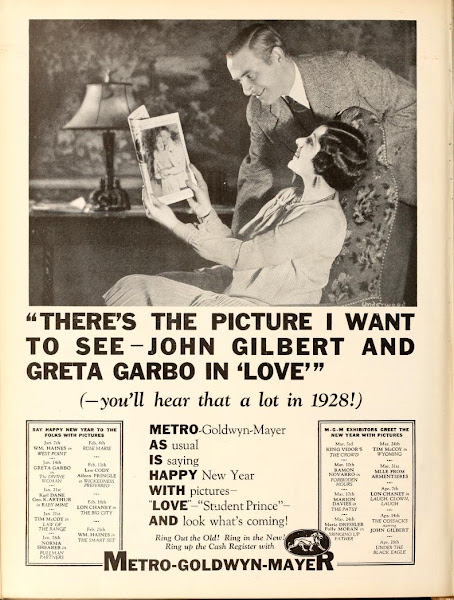

National Board of Review magazine saw "Love" as being an incomplete adaptation of the novel Anna Karenina, that it had abridged the description of Russian society in order to indulge the development of character for a return at the box-office, "The picture deals exclusively with the central love intrigue and resolves itself in aI'm at series of love scenes, scenes and scenes of self sacrifice. It is a fine solo performance for Greta Garbo, seconded by Mr. John Gilbert." American critics had made the same objected that Selma Lagerloff had, that films were not entirely faithful adaptations due to constraints of the art form and demands of the audience.


Motion Picture News Booking Guide during 1929 provided a brief synopsis of the film Love, directed by Edmund Goulding, "Theme: Tragic love drama adapted from Tolstoi's classic novel Anna Karenina. Forfeiting the right to her child, whom she adores, wife of Russian nobleman falls madly in love with a young officer. Finally realizing fate such love brings, girl because of her lover's lost prestige in his regiment and her deprivation from her child, hurls herself beneath the wheels of an oncoming train."
National Board of Review magazine saw "Love" as being an incomplete adaptation of the novel Anna Karenina, that it had abridged the description of Russian society in order to indulge the development of character for a return at the box-office, "The picture deals exclusively with the central love intrigue and resolves itself in aI'm at series of love scenes, scenes and scenes of self sacrifice. It is a fine solo performance for Greta Garbo, seconded by Mr. John Gilbert." American critics had made the same objected that Selma Lagerloff had, that films were not entirely faithful adaptations due to constraints of the art form and demands of the audience.


Scott Lord, Scott Lord and 3 others like this