Volume 58, Issue 5, September-October 2015, pages 767-777
10.1080/10402004.2015.1015758
H. Singh
#TeddersRecommends
Shared posts
13 Jul 12:58
Tribological Performance and Coating Characteristics of Sputter-Deposited Ti-Doped MoS2 in Rolling and Sliding Contact
by H. Singh
13 Jul 12:55


Quality Heterostructures from Two-Dimensional Crystals Unstable in Air by Their Assembly in Inert Atmosphere
by Y. Cao, A. Mishchenko, G. L. Yu, E. Khestanova, A. P. Rooney, E. Prestat, A. V. Kretinin, P. Blake, M. B. Shalom, C. Woods, J. Chapman, G. Balakrishnan, I. V. Grigorieva, K. S. Novoselov, B. A. Piot, M. Potemski, K. Watanabe, T. Taniguchi, S. J. Haigh, A. K. Geim and R. V. Gorbachev

Nano Letters
DOI: 10.1021/acs.nanolett.5b00648
kongkouling, jing516 and one other like this
13 Jul 12:48


Synthesis and Thermal Properties of Solid-State Structural Isomers: Ordered Intergrowths of SnSe and MoSe2
by Noel S. Gunning, Joseph Feser, Matt Beekman, David G. Cahill and David C. Johnson

Journal of the American Chemical Society
DOI: 10.1021/jacs.5b04351
13 Jul 12:41

A Universal Approach to Ultrasmall Magneto-Fluorescent Nanohybrids
by Artur Feld, Jan-Philip Merkl, Hauke Kloust, Sandra Flessau, Christian Schmidtke, Christopher Wolter, Johannes Ostermann, Michael Kampferbeck, Robin Eggers, Alf Mews, Theo Schotten, Horst Weller
Abstract
Seeded emulsion polymerization is a powerful universal method to produce ultrasmall multifunctional magnetic nanohybrids. In a two-step procedure, iron oxide nanocrystals were initially encapsulated in a polystyrene (PS) shell and subsequently used as beads for a controlled assembly of elongated quantum dots/quantum rods (QDQRs). The synthesis of a continuous PS shell allows the whole construct to be fixed and the composition of the nanohybrid to be tuned. The fluorescence of the QDQRs and magnetism of iron oxide were perfectly preserved, as confirmed by single-particle investigation, fluorescence decay measurements, and relaxometry. Bio-functionalization of the hybrids was straightforward, involving copolymerization of appropriate affinity ligands as shown by immunoblot analysis. Additionally, the universality of this method was shown by the embedment of a broad scale of NPs.

Matching unlikely pairs: In a two-step procedure, iron oxide nanocrystals were initially encapsulated in a polystyrene (PS) shell and subsequently used as beads for a controlled assembly of elongated quantum dots/quantum rods (QDQRs) The fluorescence of the QDQRs and magnetism of iron oxide were perfectly preserved in the resulting nanohybrids.
yiyi and -1 others like this
13 Jul 09:37

Rapid and Nondestructive Identification of Polytypism and Stacking Sequences in Few-Layer Molybdenum Diselenide by Raman Spectroscopy
by Xin Lu, M. Iqbal Bakti Utama, Junhao Lin, Xin Luo, Yanyuan Zhao, Jun Zhang, Sokrates T. Pantelides, Wu Zhou, Su Ying Quek, Qihua Xiong

Various combinations of interlayer shear modes emerge in few-layer molybdenum diselenide grown by chemical vapor deposition depending on the stacking configuration of the sample. Raman measurements may also reveal polytypism and stacking faults, as supported by first principles calculations and high-resolution transmission electron microscopy. Thus, Raman spectroscopy is an important tool in probing stacking-dependent properties in few-layer 2D materials.
kongkouling likes this
13 Jul 09:35

Engineering the Magnetic Dipolar Interactions in 3D Binary Supracrystals Via Mesoscale Alloying
by Zhijie Yang, Jingjing Wei, Pierre Bonville, Marie-Paule Pileni
Inspired by metallic alloys in atomic solids, two distinct metallic nanoparticles are used, considered as “artificial metal atoms,” to engineer ordered binary nanoparticle alloys at the mesoscale, called binary supracrystals. Here, ferromagnetic 7.2 nm Co nanoparticles are used as large “A” site particles, while either ferromagnetic 4.6 nm Co or nonmagnetic 4.0 nm Ag nanoparticles are used as small “B” site particles to fabricate long-range ordered binary supracrystals with a stoichiometry of AB2 and AB13. The interparticle distances between 7.2 nm Co nanoparticles within the Co/Ag binary supracrystals can be tuned by a control of crystal structure from AB2 (CoAg2) to AB13 (CoAg13). A decrease of magnetic coupling between Co nanoparticles is observed as the Co–Co interparticle distance increases. Furthermore, by alloying 7.2 and 4.6 nm Co nanoparticles to form AB2 (CoCo2) binary supracrystals, a collective magnetic behavior of these two particle types, due to the dipolar interaction, is evidenced by observing a single peak in the zero-field-cooled magnetization curve. Compared with the CoAg2 binary supracrystals, a spin orientation effect in sublattice that reduces the dipolar interactions in the supracrystals is uncovered in CoCo2 binary supracrystals.

3D magnetic binary supracrystals are fabricated, and the magnetic dipolar interactions are found to be controllable by the binary structure and the type of small nanoparticles. The presence of small ferromagnetic nanoparticles can lead to a weaker dipolar interaction than the insertion of nonmagnetic ones.
13 Jul 09:34

Plasmonic-Induced Photon Recycling in Metal Halide Perovskite Solar Cells
by Michael Saliba, Wei Zhang, Victor M. Burlakov, Samuel D. Stranks, Yao Sun, James M. Ball, Michael B. Johnston, Alain Goriely, Ulrich Wiesner, Henry J. Snaith
Organic–inorganic metal halide perovskite solar cells have emerged in the past few years to promise highly efficient photovoltaic devices at low costs. Here, temperature-sensitive core–shell Ag@TiO2 nanoparticles are successfully incorporated into perovskite solar cells through a low-temperature processing route, boosting the measured device efficiencies up to 16.3%. Experimental evidence is shown and a theoretical model is developed which predicts that the presence of highly polarizable nanoparticles enhances the radiative decay of excitons and increases the reabsorption of emitted radiation, representing a novel photon recycling scheme. The work elucidates the complicated subtle interactions between light and matter in plasmonic photovoltaic composites. Photonic and plasmonic schemes such as this may help to move highly efficient perovskite solar cells closer to the theoretical limiting efficiencies.

Adding plasmonic core–shell nanoparticles (Ag@TiO2) to perovskite solar cells is shown to improve the photocurrent and thus the overall efficiency. A theoretical model, introducing a novel photon recycling scheme, predicts that highly polarizable nanoparticles act as antennas for light re-emitted from radiative recombination. The work elucidates the complicated, subtle interactions between light and matter in plasmonic photovoltaic composites.
riel likes this
13 Jul 09:34


Reversible Semiconducting-to-Metallic Phase Transition in Chemical Vapor Deposition Grown Monolayer WSe2 and Applications for Devices
by Yuqiang Ma, Bilu Liu, Anyi Zhang, Liang Chen, Mohammad Fathi, Chenfei Shen, Ahmad N. Abbas, Mingyuan Ge, Matthew Mecklenburg and Chongwu Zhou

ACS Nano
DOI: 10.1021/acsnano.5b02399
30 Jun 11:02


Colloidal Cu2ZnSn(SSe)4 (CZTSSe) Nanocrystals: Shape and Crystal Phase Control to Form Dots, Arrows, Ellipsoids, and Rods
by Shalini Singh, Pai Liu, Ajay Singh, Claudia Coughlan, Jianjun Wang, Matteo Lusi and Kevin M. Ryan

Chemistry of Materials
DOI: 10.1021/acs.chemmater.5b01399
29 Jun 16:32

Atomic-Layer-Confined Doping for Atomic-Level Insights into Visible-Light Water Splitting
by Fengcai Lei, Lei Zhang, Yongfu Sun, Liang Liang, Katong Liu, Jiaqi Xu, Qun Zhang, Bicai Pan, Yi Luo, Yi Xie
Abstract
A model of doping confined in atomic layers is proposed for atomic-level insights into the effect of doping on photocatalysis. Co doping confined in three atomic layers of In2S3 was implemented with a lamellar hybrid intermediate strategy. Density functional calculations reveal that the introduction of Co ions brings about several new energy levels and increased density of states at the conduction band minimum, leading to sharply increased visible-light absorption and three times higher carrier concentration. Ultrafast transient absorption spectroscopy reveals that the electron transfer time of about 1.6 ps from the valence band to newly formed localized states is due to Co doping. The 25-fold increase in average recovery lifetime is believed to be responsible for the increased of electron–hole separation. The synthesized Co-doped In2S3 (three atomic layers) yield a photocurrent of 1.17 mA cm−2 at 1.5 V vs. RHE, nearly 10 and 17 times higher than that of the perfect In2S3 (three atomic layers) and the bulk counterpart, respectively.

Cobalt doping confined in three atomic layers of In2S3 is implemented by a lamellar hybrid intermediate strategy. Ultrafast transient absorption spectroscopy shows that the ultrashort electron transfer time (ca. 1.6 ps) from the valence band to newly formed localized states is due to Co doping.
riel, lichenliu1991 and one other like this
29 Jun 16:31

Sequential Anion and Cation Exchange Reactions for Complete Material Transformations of Nanoparticles with Morphological Retention
by James M. Hodges, Karel Kletetschka, Julie L. Fenton, Carlos G. Read, Raymond E. Schaak
Abstract
Ion exchange reactions of colloidal nanocrystals provide access to complex products that are synthetically challenging using traditional hot-injection methods. However, such reactions typically achieve only partial material transformations by employing either cation or anion exchange processes. It is now shown that anion and cation exchange reactions can be coupled together and applied sequentially in one integrated pathway that leads to complete material transformations of nanocrystal templates. Although the product nanocrystals do not contain any of the original constituent elements, the original morphology is retained, thereby fully decoupling morphology and composition control. The sequential anion/cation exchange process was applied to pseudo-spherical CdO nanocrystals and ZnO tetrapods, producing fully transformed and shape-controlled nanocrystals of copper and silver sulfides and selenides. Furthermore, hollow core–shell tetrapod ZnS@CdS heterostructures were readily accessible.

Complete transformation: Metal oxide nanocrystals can be transformed into chalcogenides of different metals using sequential anion and cation exchange reactions. The products retain the morphology of the starting material, but contain entirely different elemental components. Morphology and composition control in colloidal nanocrystal synthesis are thus fully decoupled.
xuzhixiao, lichenliu1991 and -1 others like this
29 Jun 16:30

Two-Dimensional Layered Heterostructures Synthesized from Core–Shell Nanowires
by Qi Zhang, Xu Xiao, Ruiqi Zhao, Danhui Lv, Guanchen Xu, Zhixing Lu, Lifei Sun, Shizhe Lin, Xiang Gao, Jun Zhou, Chuanhong Jin, Feng Ding, Liying Jiao
Abstract
Controlled stacking of different two-dimensional (2D) atomic layers will greatly expand the family of 2D materials and broaden their applications. A novel approach for synthesizing MoS2/WS2 heterostructures by chemical vapor deposition has been developed. The successful synthesis of pristine MoS2/WS2 heterostructures is attributed to using core–shell WO3−x/MoO3−x nanowires as a precursor, which naturally ensures the sequential growth of MoS2 and WS2. The obtained heterostructures exhibited high crystallinity, strong interlayer interaction, and high mobility, suggesting their promising applications in nanoelectronics. The stacking orientations of the two layers were also explored from both experimental and theoretical aspects. It is elucidated that the rational design of precursors can accurately control the growth of high-quality 2D heterostructures. Moreover, this simple approach opens up a new way for creating various novel 2D heterostructures by using a large variety of heteronanomaterials as precursors.

2D MoS2/WS2 heterostructures were successfully grown by using core–shell WO3−x/MoO3−x nanowires as a precursor in a CVD process. This method opens up a new way to synthesize various functional 2D heterostructures for novel electronic and optoelectronic devices.
Xuzhen199, lizhanzhao and 3 others like this
29 Jun 16:28

Controlled Anisotropic Growth of Co-Fe-P from Co-Fe-O Nanoparticles
by Adriana Mendoza-Garcia, Huiyuan Zhu, Yongsheng Yu, Qing Li, Lin Zhou, Dong Su, Matthew J. Kramer, Shouheng Sun
Abstract
A facile approach to bimetallic phosphides, Co-Fe-P, by a high-temperature (300 °C) reaction between Co-Fe-O nanoparticles and trioctylphosphine is presented. The growth of Co-Fe-P from the Co-Fe-O is anisotropic. As a result, Co-Fe-P nanorods (from the polyhedral Co-Fe-O nanoparticles) and sea-urchin-like Co-Fe-P (from the cubic Co-Fe-O nanoparticles) are synthesized with both the nanorod and the sea-urchin-arm dimensions controlled by Co/Fe ratios. The Co-Fe-P structure, especially the sea-urchin-like (Co0.54Fe0.46)2P, shows enhanced catalysis for the oxygen evolution reaction in KOH with its catalytic efficiency surpassing the commercial Ir catalyst. Our synthesis is simple and may be readily extended to the preparation of other multimetallic phosphides for important catalysis and energy storage applications.

Anisotropic bimetallic Co-Fe-P: Anisotropic Co-Fe-P nanorods and sea urchins were synthesized by controlled phosphidation of Co-Fe-O nanoparticles of polyhedral and cubic shapes, respectively. The Co-Fe-P showed greatly enhanced catalysis for the oxygen evolution reaction. The synthesis may be generalized to prepare metallic phosphides/phosphates for catalysis and energy storage applications.
25 Jun 09:30
Ageing impact on tribological properties of MoDTC-containing base oil
Publication date: December 2015
Source:Tribology International, Volume 92
Author(s): M. De Feo, C. Minfray, M.I. De Barros Bouchet, B. Thiebaut, Th. Le Mogne, B. Vacher, J.M. Martin
Since last decades, there is an industry-wide need for the comprehension of how degradation affects lubricant tribological performance. The lubricating performances of MoDTC-containing base oil, fresh and aged, have been assessed using reciprocating tribometer, and XPS and TEM have been used to characterize the tribofilm formed. An induction period increasing with the degradation time was evidenced on the friction behavior when Mo-containing base oil was subjected to the degradation process and the formation of a tribofilm rich in molybdenum oxisulphides has been documented. The results found are discussed to clarify the correlation between degradation time, tribological performance and tribofilm characterizations.
Source:Tribology International, Volume 92
Author(s): M. De Feo, C. Minfray, M.I. De Barros Bouchet, B. Thiebaut, Th. Le Mogne, B. Vacher, J.M. Martin
Since last decades, there is an industry-wide need for the comprehension of how degradation affects lubricant tribological performance. The lubricating performances of MoDTC-containing base oil, fresh and aged, have been assessed using reciprocating tribometer, and XPS and TEM have been used to characterize the tribofilm formed. An induction period increasing with the degradation time was evidenced on the friction behavior when Mo-containing base oil was subjected to the degradation process and the formation of a tribofilm rich in molybdenum oxisulphides has been documented. The results found are discussed to clarify the correlation between degradation time, tribological performance and tribofilm characterizations.
25 Jun 09:29


Colloidal Quantum Dot Solar Cells
by Graham H. Carey, Ahmed L. Abdelhady, Zhijun Ning, Susanna M. Thon, Osman M. Bakr and Edward H. Sargent

Chemical Reviews
DOI: 10.1021/acs.chemrev.5b00063
dingyingu, Soumen Ghosh and -1 others like this
25 Jun 09:28

Ultrafast Dynamics of Lasing Semiconductor Nanowires
by Robert Röder, Themistoklis P. H. Sidiropoulos, Christian Tessarek, Silke Christiansen, Rupert F. Oulton and Carsten Ronning

Nano Letters
DOI: 10.1021/acs.nanolett.5b01271
25 Jun 09:27

Facile Synthesis of Nb2O5@Carbon Core–Shell Nanocrystals with Controlled Crystalline Structure for High-Power Anodes in Hybrid Supercapacitors
by Eunho Lim, Changshin Jo, Haegyeom Kim, Mok-Hwa Kim, Yeongdong Mun, Jinyoung Chun, Youngjin Ye, Jongkook Hwang, Kyoung-Su Ha, Kwang Chul Roh, Kisuk Kang, Songhun Yoon and Jinwoo Lee

ACS Nano
DOI: 10.1021/acsnano.5b02601
heyongming11, leehuailong and 3 others like this
23 Jun 13:40

A chromium nitride/carbon nitride containing graphitic carbon nanocapsule hybrid as a Pt-free electrocatalyst for oxygen reduction
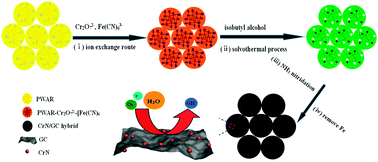
Chem. Commun., 2015, 51,12399-12402
DOI: 10.1039/C5CC04482K, Communication
DOI: 10.1039/C5CC04482K, Communication
Lu Zhao, Lei Wang, Peng Yu, Dongdong Zhao, Chungui Tian, He Feng, Jing Ma, Honggang Fu
A CrN nanoparticle and carbon nitride containing graphitic carbon nanocapsule hybrid has been synthesized, which can be used as a highly-efficient Pt-free electrocatalyst towards oxygen reduction reaction with a dominant 4-electron pathway, superior stability and methanol immunity.
The content of this RSS Feed (c) The Royal Society of Chemistry
A CrN nanoparticle and carbon nitride containing graphitic carbon nanocapsule hybrid has been synthesized, which can be used as a highly-efficient Pt-free electrocatalyst towards oxygen reduction reaction with a dominant 4-electron pathway, superior stability and methanol immunity.
The content of this RSS Feed (c) The Royal Society of Chemistry
xman, rongmingcong and 2 others like this
23 Jun 09:50

Realization of Vertically Aligned, Ultrahigh Aspect Ratio InAsSb Nanowires on Graphite
by E. A. Anyebe, A. M. Sanchez, S. Hindmarsh, X. Chen, J. Shao, M. K. Rajpalke, T. D. Veal, B. J. Robinson, O. Kolosov, F. Anderson, R. Sundaram, Z. M. Wang, V. Falko and Q. Zhuang

Nano Letters
DOI: 10.1021/acs.nanolett.5b00411
23 Jun 09:50

Evidence of Quantum Resonance in Periodically-Ordered Three-Dimensional Superlattice of CdTe Quantum Dots
by DaeGwi Kim, Shougo Tomita, Kazuma Ohshiro, Taichi Watanabe, Takenobu Sakai, I-Ya Chang and Kim Hyeon-Deuk

Nano Letters
DOI: 10.1021/acs.nanolett.5b00335
zhqln likes this
23 Jun 09:49

Advances in Colloidal Assembly: The Design of Structure and Hierarchy in Two and Three Dimensions
by Nicolas Vogel, Markus Retsch, Charles-André Fustin, Aranzazu del Campo and Ulrich Jonas

Chemical Reviews
DOI: 10.1021/cr400081d
23 Jun 09:42

Impurity-Induced First-Order Phase Transitions in Highly Crystalline V2O3 Nanocrystals
by Yoichi Ishiwata, Eiko Takahashi, Kenta Akashi, Masaki Imamura, Junpei Azuma, Kazutoshi Takahashi, Masao Kamada, Hirofumi Ishii, Yen-Fa Liao, Yasuhisa Tezuka, Yuji Inagaki, Tatsuya Kawae, Daisuke Nishio-Hamane, Masashi Nantoh, Koji Ishibashi, Tetsuya Kida
A first-order phase transition in a bulk material is generally considered to arise at extended defects such as grain boundaries or dislocations, where the energetic barrier between the two phases is reduced. Downsizing a crystal to the nanoscale can exclude the number of defects, leading to enhanced kinetic stabilization of the metastable phase. Here, the disappearance of the first-order metal–insulator transition in defect-free V2O3 nanocrystals and the revival of the transition by introducing a certain Cr or Ti impurity content are investigated. The hysteresis width of the transition corresponding to the barrier height decreases with the impurity content. It is proposed that homogeneous impurity doping is a universal method that can control the occurrence of a first-order phase transition in nanoscale materials.

Nanoscale first-order phase transition (metal–insulator transition, antiferromagnetic transition, and structural phase transition) is successfully observed in highly crystalline V2O3 nanocrystals doped with Cr or Ti impurities of more than a certain amount. This observation shows that impurity doping is an efficient method to cause the phase transition that was originally suppressed in high-quality nanoscale materials.
23 Jun 09:41

Enhancing Light Emission of ZnO-Nanofilm/Si-Micropillar Heterostructure Arrays by Piezo-Phototronic Effect
by Xiaoyi Li, Mengxiao Chen, Ruomeng Yu, Taiping Zhang, Dongsheng Song, Renrong Liang, Qinglin Zhang, Shaobo Cheng, Lin Dong, Anlian Pan, Zhong Lin Wang, Jing Zhu, Caofeng Pan

n-ZnO nanofilm/p-Si micropillar heterostructure light-emitting diode (LED) arrays for white light emissions are achieved and the light emission intensity of LED array is enhanced by 120% under −0.05% compressive strains. These results indicate a promising approach to fabricate Si-based light-emitting components with high performances enhanced by the piezo-phototronic effect, with potential applications in touchpad technology, personalized signatures, smart skin, and silicon-based photonic integrated circuits.
Change Yen likes this
23 Jun 09:41

Imaging-Guided Combined Photothermal and Radiotherapy to Treat Subcutaneous and Metastatic Tumors Using Iodine-131-Doped Copper Sulfide Nanoparticles
by Xuan Yi, Kai Yang, Chao Liang, Xiaoyan Zhong, Ping Ning, Guosheng Song, Dongliang Wang, Cuicui Ge, Chunying Chen, Zhifang Chai, Zhuang Liu
Combining different therapeutic strategies to treat cancer by overcoming limitations of conventional cancer therapies has shown great promise in both fundamental and clinical studies. Herein, by adding 131I when making iodine-doped CuS nanoparticles, CuS/[131I]I nanoparticles are obtained, which after functionalization with polyethylene glycol (PEG) are used for radiotherapy (RT) and photothermal therapy (PTT), by utilizing their intrinsic high near-infrared absorbance and the doped 131I-radioactivity, respectively. The combined RT and PTT based on CuS/[131I]I-PEG is then conducted, achieving remarkable synergistic therapeutic effects as demonstrated in the treatment of subcutaneous tumors. In the meanwhile, as revealed by bimodal nuclear imaging and computed tomography (CT) imaging, it is found that CuS/[131I]I-PEG nanoparticles after being injected into primary solid tumors could migrate to and retain in their nearby sentinel lymph nodes. Importantly, the combined RT and PTT applied on those lymph nodes to assist surgical resection of primary tumors results in remarkably inhibited cancer metastasis and greatly prolonged animal survival. In vivo toxicology studies further reveal that our CuS/I-PEG is not obviously toxic to animals at fourfold of the treatment dose. This work thus demonstrates the potential of combining RT and PTT using a single nanoagent for imaging-guided treatment of metastatic tumors.

Radionuclide iodine-131-doped CuS/I nanoparticles are developed for imaging guided combined photothermal and radiotherapy. Such a treatment strategy not only offers synergistic therapeutic effect in the treatment of subcutaneous tumors, but also enables effective treatment of sentinel lymph nodes under the guidance of multimodal gamma and CT imaging to prevent tumor metastasis.
23 Jun 09:40

CuS Nanodots with Ultrahigh Efficient Renal Clearance for Positron Emission Tomography Imaging and Image-Guided Photothermal Therapy
by Min Zhou, Junjie Li, Su Liang, Anil K. Sood, Dong Liang and Chun Li

ACS Nano
DOI: 10.1021/acsnano.5b02635
gao and -1 others like this
23 Jun 09:40

Modulating Electrical Properties of InAs Nanowires via Molecular Monolayers
by Ho-Yuen Cheung, SenPo Yip, Ning Han, Goufa Dong, Ming Fang, Zai-xing Yang, Fengyun Wang, Hao Lin, Chun-Yuen Wong and Johnny C. Ho

ACS Nano
DOI: 10.1021/acsnano.5b02745
23 Jun 09:40

Colloidal Nanoparticles for Intermediate Band Solar Cells
by Márton Vörös, Giulia Galli and Gergely T. Zimanyi

ACS Nano
DOI: 10.1021/acsnano.5b00332
22 Jun 13:43
An Oil-Based Lubrication System Based on Nanoparticular TiO 2 with Superior Friction and Wear Properties
Abstract
We evaluated the performance of five different commercially available nanoparticle classes as additives for an oil-based lubrication system. While the silicon dioxide particles Aerosil® 300, RY300, and R972V tended to increase wear and friction in our 100Cr6 versus cast iron disc–disc contact, Aeroxide® P 25 and especially T 805 TiO2 nanoparticles showed superior anti-wear and anti-friction properties. The underlying tribological mechanism was investigated with optical microscopy, helium ion microscopy, and X-ray photoelectron spectroscopy. Subsequently, we formulated a stable lubrication system based on the best performing T 805 particles. Here, the base oil is a highly purified paraffin oil which was supplemented with 1 wt% T 805 TiO2 particles, 1 wt% Estisol® 242 or 1 wt% oleic acid, 0.15 wt% oleylamine, and 0.15 wt% Pluronic® RPE 2520. Superior lubrication and anti-wear properties of this formulation were demonstrated in 4-h test runs with a normal force of F N = 2.5 kN and a sliding velocity of 0.15 m/s in our disc–disc contact. Wear was significantly reduced along with a nearly 12-fold reduction in the friction coefficient, compared to the base oil \((\mu_{\text{base}}^{\text{fto}} = 0.155\;\;{\text{vs}} .\;\;\mu_{\text{T805}}^{\text{fto}} \approx 0.01)\) . Using 100Cr6 disc–ball contacts, we additionally analyzed the properties of our lubrication system in the border friction regime under higher loads (F N = 0.5 kN) in 2-h runs. In particular, on the discs with lower engagement ratio, chemo-tribological protective layers were built, which protected the parts very well against wear.
22 Jun 13:35

High-Resolution Printing of 3D Structures Using an Electrohydrodynamic Inkjet with Multiple Functional Inks
by Byeong Wan An, Kukjoo Kim, Heejoo Lee, So-Yun Kim, Yulhui Shim, Dae-Young Lee, Jun Yeob Song, Jang-Ung Park

Electrohydrodynamic-inkjet-printed high-resolution complex 3D structures with multiple functional inks are demonstrated. Printed 3D structures can have a variety of fine patterns, such as vertical or helix-shaped pillars and straight or rounded walls, with high aspect ratios (greater than ≈50) and narrow diameters (≈0.7 μm). Furthermore, the formation of freestanding, bridge-like Ag wire structures on plastic substrates suggests substantial potentials as high-precision, flexible 3D interconnects.
gao likes this
22 Jun 13:35

ZnO Nanorod Arrays as Electron Injection Layers for Efficient Organic Light Emitting Diodes
by Jorge C. D. Faria, Alasdair J. Campbell, Martyn A. McLachlan
Nanostructured oxide arrays have received significant attention as charge injection and collection electrodes in numerous optoelectronic devices. Zinc oxide (ZnO) nanorods have received particular interest owing to the ease of fabrication using scalable, solution processes with a high degree of control of rod dimension and density. Here, vertical ZnO nanorods as electron injection layers in organic light emitting diodes are implemented for display and lighting purposes. Implementing nanorods into devices with an emissive polymer, poly(9,9-dioctyluorene-alt-benzothiadiazole) (F8BT) and poly(9,9-di-n-octylfluorene-alt-N-(4-butylphenyl)dipheny-lamine) (TFB) as an electron blocking layer, brightness and efficiencies up to 8602 cd m−2 and 1.66 cd A−1 are achieved. Simple solution processing methodologies combined with postdeposition thermal processing are highlighted to achieve complete wetting of the nanorod arrays with the emissive polymer. The introduction of TFB to minimize charge leakage and nonradiative exciton decay results in dramatic increases to device yields and provides an insight into the operating mechanism of these devices. It is demonstrated that the detected emission originates from within the polymer layers with no evidence of ZnO band edge or defect emission. The work represents a significant development for the ongoing implementation of ZnO nanorod arrays into efficient light emitting devices.

Hybrid LEDs combining vertically aligned ZnO nanorods as electron injection layers and polymeric emitters are demonstrated using a simple solution-processing route. Performance enhancements are achieved by combining a thermal anneal with the inclusion of an electron-blocking polymer. The measured brightness and efficiencies, up to 8600 cd m−2 and 1.66 cd A−1, highlight the applicability of such architectures for general lighting applications.
Change Yen likes this