Shared posts

09 Jan 05:22

Shoot for the Moon Is a Remarkably Poignant Short Film About Space Exploration - Why not try a trampoline, Sal?

by Dan Van Winkle

People get so wrapped up in what’s going on in the world around them that they often forget the rest of the Universe and how important it is for our future that we explore it. That’s what Spaceman Sal faces in Shoot for the Moon, in which he tries to get to the Moon by any means necessary despite a lack of support from those around him.

(via our friend Glen Tickle at Laughing Squid)

Are you following The Mary Sue on Twitter, Facebook, Tumblr, Pinterest, & Google +?

08 Jan 05:55

The Table of Contents Is Better Than the Book

by Dan Savage

tableofcontentsamaze.JPG

I'm thinking we should assign a chapter title from Earth Sex in the 21st Century to 14 different writers (maybe one or two from a THINK TANK), ask each to write whatever their assigned chapter title inspires them to, and see if we can't reverse engineer a better book than the original Earth Sex in the 21st Century. (Cover of the original Earth Sex... after the jump.)

earthsex21stcent.JPG

[ Comment on this story ]

[ Subscribe to the comments on this story ]

07 Jan 05:50

Electronic music explained with 13 pounds of white chocolate

by Omar Kardoudi

Electronic music explained with 13 pounds of white chocolate

Belgium online music platform Hello Play's New Year promo video is a loose guide to the basics of electronic music. All the visual effects are made on camera using stop motion, 3D prints, and six kilograms of white chocolate.

Read more...


07 Jan 05:19

Helpless pig slides across frozen pavement

by Maggie Serota
Helpless pig slides across frozen pavement

Meet Phinny the pig. As you can see, the concept of walking on ice is rather new to the little guy. Fortunately, his owner Ricky Phillip Gindlesberger is there to talk the pig through the experience.

In case anyone was wondering how Phinny fared after The Great Ice Slide of ’15, Gindlesberger posted a photo on his Facebook page of the little guy warming up by the heater in his Pittsburgh,Pennsylvania area home. Go ahead and take a load off, Phinny, you earned it.

10888544 10205912839479540 5076419748523254411 n 1 585x329 Helpless pig slides across frozen pavement

This little sweetie is a great argument for why everyone should have a little pig in their lives, but here are a few others.

Lastly, we’ll go ahead and leave you this GIF of America’s newest sweetheart, courtesy of reddit.

[Facebook| Image: Happy Place]

07 Jan 05:19

Elon Musk’s tip for increasing your learning capacity

by Alex Moore
Elon Musk’s tip for increasing your learning capacity

On Tuesday morning SpaceX postponed the launch of their Falcon 9 rocket to the International Space Station just a minute before blast-off when it received problematic signals from a part of the ship. By way of explanation, Elon Musk tweeted, “Need to investigate the upper stage Z actuator. Was behaving strangely.”

Yes, Musk actually knows what the “stage Z actuator” does. He can hold his own on any technical engineering conversation about space flight, as was evidenced in highly technical nerd-fest that was his Reddit AMA on Monday night. Asked about his plans for a Mars Colonial Transport vessel, he said it “will have meaningfully higher specific impulse engines: 380 vs 345 vac Isp. For those unfamiliar, in the rocket world, that is a super gigantic difference for stages of roughly equivalent mass ratio (mass full to mass empty).”

Right.

And we’re just talking about SpaceX engineering, never mind the other worlds of Tesla‘s electric car engineering or SolarCity’s renewable energy efforts. One Redditor wondered—how the hell did this guy learn so much across so many fields?

“It seems you have an extremely proficient understanding of aerospace engineering, mechanical engineering, electrical engineering, software engineering, all various subdisciplines (avionics, power electronics, structural engineering, propulsion, energy storage, AI),” wrote aerovistae “How do you learn so much so fast?”

“I think most people can learn a lot more than they think they can. They sell themselves short without trying,” he wrote. But he did have one tip:

One bit of advice: it is important to view knowledge as sort of a semantic tree — make sure you understand the fundamental principles, ie the trunk and big branches, before you get into the leaves/details or there is nothing for them to hang on to.

Pretty simple, really: Build a foundation and grow from there. Even still, Musk admits: “I do kinda feel like my head is full! My context switching penalty is high and my process isolation is not what it used to be.”

Took the words right out of my mouth, homeboy.

[Source: Reddit]

06 Jan 20:02

Shel Silverstein on “The Johnny Cash...

by hellabeautiful


Shel Silverstein on “The Johnny Cash Show”

Here’s Shel doing a quick duet with Cash on Silverstein’s composition “Boy Named Sue,” followed by an incredibly touching solo performance of a children’s song he wrote called “Daddy, What If.” From April 1, 1970, in its entirety.

06 Jan 19:59

iwriteaboutfeminism: The NYPD again turn their backs on Mayor...

by hellabeautiful


iwriteaboutfeminism:

The NYPD again turn their backs on Mayor Bill de Blasio during an officer’s funeral in an excellent example of their hypocrisy and disregard for the lives (and deaths) of people of color. 

Sunday, January 4th

06 Jan 19:45

Photo

Bridget

only because she's from my hometown and is an amazing hooper and it's so fucking random for her to show up on my rss feed


06 Jan 19:42

Photo


06 Jan 18:37

thegothfather2: insidetheposter: Nick Cave & Chuck Sperry...


thegothfather2:

insidetheposter:

Nick Cave & Chuck Sperry Skate Decks for Fast Times

On Sale Details HERE

he probably thought that was a tough guy pose but thats like the daddest way to hold a skateboard ever i think

06 Jan 18:33

Everybody’s got a thing

06 Jan 16:52

Low End Theory with Ras G, The Koreatown Oddity

by Chris Ziegler
It’s time for a new year and two new releases from beat visionary Ras G, headlining the first Low End of 2015. His Down to Earth Vol. 2 (Leaving Records) perfectly balances his crushing bass-is-the-place production (as heard on 2011’s Space Base Is the Place) with his innate sense of... by Chris Ziegler It’s time for a new year and two new releases from beat visionary Ras G, headlining the first Low End of 2015. His Down to Earth Vol.…

[ Read more ]

[ Subscribe to the comments on this story ]

06 Jan 16:51

Mommy, why is there a home server in the house?

The most viral images on the internet, curated in real time by a dedicated community through commenting, voting and sharing.

That file type is not supported!

Supported formats: JPEG, GIF, PNG, APNG, TIFF, BMP, PDF, XCF

06 Jan 16:49

I lost weight by eating lots of bacon and cream. Here's a scientific explanation for why.

by Gregory Ferenstein
Bridget

keto keto keto paleo etc

I recently gained 16 pounds of body fat and I felt terribly uncomfortable in my clothes. I wanted to slim down, so I decided to dramatically ramp up the fat in my diet. Every day for about a month, I slammed as much bacon or heavy whipping cream as I could stomach. I lost weight (about seven pounds). My cholesterol dropped 10 points. My afternoon drowsiness faded and, overall, I felt pretty good.

To be sure, there was a purpose to my bacon vacation. I wanted to test the limits of a growing divide between nutritionists on the benefits of fatty foods. Since the 1960s, conventional diet lore has demonized cream and fat as the culprit in America's obesity epidemic. Yet in recent years, a counter-revolution in the top rungs of the medical establishment, including the Harvard School of Public Health, have begged Americans to return to the naturally fatty diets of our ancient ancestors, who did not suffer from modern heart disease.

So, as Vox's eager health guinea pig, I decided to put it to the test in the most extreme way possible and get results just in time for the New Year's diet rush.

Greg, this sounds crazy. Do any doctors actually think this super-fat diet is *not* a terrible idea?

I spoke to a few experts and I got radically different opinions. Some doctors thought I was putting one foot in the grave; others thought I'd be just fine. Specifically, I asked medical experts what they thought would be the outcome of diet of mainly bacon, cream, and vegetables.

"This sounds like a very bad idea," Tufts University's Dariush Mozaffarian wrote to me. Likewise, Suzanne Steinbaum, a spokesperson for the generally anti-fat American Heart Association, told me that my cholesterol would surely increase — a lot. "LDL should go up," she predicted.

On the other side, University of California – San Francisco's Rob Lustig, an anti-sugar crusader, didn't see a problem. "The foods you list are saturated or monounsaturated fats. These are fine," he shrugged. Lustig told me he's only worried about the chemically altered franken-fats, such as trans fat, which have invaded snack and fast foods.

When I posed a question on HealthTap, a large online community of medical doctors, the immediate response from Scott Carollo, a cardiologist, was, "If you maintain this diet and seriously curb carbohydrates, you will likely see a notable weight loss."

The upshot is that gorging on a diet of bacon, cream, and vegetables is not universally condemned.

Ok, so what did you eat?

I tried to eat a diet where more than 70 percent of my calories came from fat. I regularly indulged in a wide variety of pure fats. I spoon-fed coconut oil, diced up fresh avocado, and poured on olive oil.

Even the foods I regularly ate got a fat supercharge: I coated steak in thick coat of grass-fed butter, salads were drowned in olive oil, and my morning green tea got a big dollop of coconut oil.

Yup, that's steak with butter on it. (Gregory Ferenstein)

Because I live in San Francisco, of course there's a startup at arm's length that's trying to solve my particular yuppie problem. A five-minute walk from my apartment in the Mission, I found an engineer, Evan Sims, who had quit his job for a high-fat yogurt startup. (Of course, I met him at a paleo food-themed brunch.) His cream-infused Greek yogurt has more than twice the calories of regular "full fat" yogurt — and I consumed a tub of it weekly.

But the real key to my diet was pork fat. A bespoke charcuterie, Boccalone, in San Francisco's historic Ferry Building imports Italian pigs. Boccalone slices the fattiest cuts of pork I've ever seen. I tried to consume at least a third of a pound of their delicious bacon per week.

I almost completely cut out carbs: very little fruit and no grains.

During the last week of my experiment, I kept losing weight, so I upped my fat count even higher. Every morning, I'd consume a fistful of fatty bacon and wash it down with at least a cup of cream.  My salads got smaller during this period to make room for all the pork goodness.

Where you consuming more calories?

No. Carbs awaken my appetite, and fat beds it back down to rest.

Breakfast ice cream (Gregory Ferenstein)

I purposely allowed myself to eat as much as I wanted two weeks prior and during the super-fat experiment. When I switched to fat, I ended up eating fewer calories. Fat is more satiating, per calorie, than carbs, and it curbed my otherwise ravenous appetite. I didn't even count calories; I just went with my hunger pangs.

I ended up learning a very important lesson: that carbs trick my body into consuming far more food than necessary.

The one time I gained weight over the course of my experiment is when I tested out a breakfast ice cream recipe, made with cream and the naturally no-calorie stevia leaf. My concoction was delicious: just these two ingredients form a kind of tart matcha-flavored ice-cream. However, compared to just drinking it from a carton, I consumed twice as much cream when it was frozen and sweetened with stevia.

This appears to be why diet soda is associated with weight gain. Sweeteners trigger hunger hormones, and all those diet soda fanatics end up consuming more calories.

What were the results?

I dropped about seven pounds and 1 percent of body fat over the month. Prior to the fat diet, I had gained 16 pounds eating whatever I wanted (which included lots of carbs). As soon as I cut carbs and loaded up on fat, the my widening waistline halted.

My cholesterol also dropped 10 points. I actually expected this result. For the last year, fat has always decreased my cholesterol. In a previous experiment, I tested a cult bodybuilding diet that involved several hours of dessert binging every night. The sugar caused a dangerous 31 percent spike in total cholesterol. Immediately afterwards I put myself on a steady diet of no-nitrate bacon  to help repair my arteries. Over the course a few months, thanks to a high-fat, low-carb protocol, my cholesterol returned to safe levels.

My cholesterol on various diets

The same happened on last month's super-fat experiment. As soon as I slammed fat and ditched carbs, my cholesterol went down. It is also notable that my so-called "bad cholesterol," or LDL, maintained low levels. It normally fluctuates between 99 and 85. A sugary diet spiked it to 129.  After the super-fat diet, it was 97.

Wait, so why does everyone think fat is bad for people?

The roller coaster of recommendations started with a 1961 Time magazine cover story about Dr. Ancel Keys. Keys had made a name for himself as a World War II nutritionist and achieved medical superstardom for a study of cardiovascular disease around the world. Keys found an association between low-fat diet cultures and low rates of cardiovascular disease, and he concluded that fat was killing the rest of the population.

"The high frequency of coronary heart disease among American men, especially in middle age, is not found among many other populations, notably among Japanese in Japan and Bantu in South Africa," Keys wrote in a 1953 American Journal of Public Health article that would echo in hospitals around the country a decade later. "Evidence implicates the diet, and especially the fats in the diet, in these differences."

As tends to happen, a few interesting medical findings got overblown by a media frenzy, which eventually led to a mass public over-correction and a stampede away from fat and into straight into carbs.

"It was one big, happy, fat-free feeding frenzy — and a public health disaster," Barbara Moran wrote for the Harvard School of Public Health magazine.

How is this article different from all other articles?

This is part of a Vox series on better living through technology and science. I, your humble guinea pig, will subject myself to all sorts of experiments to discover what practical tips readers can apply to their lives immediately.

What makes this series different from traditional health writing is its emphasis on the techniques of "quantified self": the science of self-improvement. No single study can tell you, exactly, how a diet or exercise regimen will impact your particular body. When it comes to health, we're all individual snowflakes.

The stampede from steak, butter, and cream steered the masses into the hands of Big Carbohydrate, especially bread manufacturers. Instead of decreasing, heart disease and obesity ballooned.

"One problem with a generic lower fat diet is that it prompts most people to stop eating fats that are good for the heart along with those that are bad for it," a Harvard School of Public Health fact sheet on fats and cholesterol said.

After decades of criticism, the medical community settled on a compromise that some fats (monounsaturated), such as olive oil and avocado, do a body good.

The latest debate now focuses on whether any of the natural fats are harmful, as opposed to trans fats which are often chemically altered vegetable oils common in snack foods . A New York Times op-ed called "Butter is back" brought national attention to a new meta-analysis that could not find any credible link between saturated fat consumption and cardiovascular disease.

A 2014 article in the peer-reviewed British Medical Journal went a bit farther, in an article titled "Are some diets 'mass murder," criticizing the anti-fat craze for lack of scientific evidence.

"The successful attempt to reduce fat in the diet of Americans and others around the world has been a global, uncontrolled experiment, which like all experiments may well have led to bad outcomes," author Richard Smith argued. "It's surely time for better science and for humility among experts."

There are just too many factors that go into heart disease on a global scale; pin-pointing a few dietary components is suspect. We don't have good data. And hence we're now in scientific limbo where no one can give us a good idea if you should banish bacon or bathe in it.

What's the scientific explanation for what happened to you?

The traditional explanation for why fat was killing people was that it increased the proteins responsible for arterial plaque buildup, which can eventually weaken the heart. All foods have some fat in them, but for the same reason oil and water don't mix, the body can't readily absorb fat into the bloodstream.

In response to fat, the liver produces various sizes of particles, lipoproteins, to utilize fat's nutrient goodness. Low-density lipoproteins (LDL) are dubbed bad cholesterol because these little critters bind more easily to arterial walls.

Lustig argues that the medical literature misunderstood the link between saturated fat, sugar, and cardiovascular disease. His wonky explanation:

"If you are eating a lot of dietary fat, then the liver will package it as LDL, but the large buoyant (Type A) kind; the kind that does not promote [cardiovascular] disease," he wrote an in email. "But if you're eating a lot of sugar, then your liver is turning that into liver fat, which is packaged as VLDL, which raises your [triglyceride] level. Also, dietary sugar will make your liver insulin-resistant; then your liver makes small dense (Type B) LDL instead, which does promote cardiovascular disease."

This is one explanation for why saturated fat lowered my cholesterol, but sugar increased it.

But why does research show that fat increases heart disease in some populations?

Two reasons:

The original fat studies were observational, not experimental. When looking at a mass of people, its nearly impossible to distinguish all the different types of eating habits. If people who eat fatty foods also eat more transfats and exercise less, we'd see a correlation between high fat and heart disease. This is why more granular follow-up studies failed to find the same association, once researches started looking at the link in greater detail.

Second, genetics. "One of the problems with dietary recommendations is that it does not take into consideration the individual," said the American Heart Association's Suzanne Steinberg. "Everyone metabolizes food differently.  For those people who have a family history of heart disease at a young age, very often they can't metabolize fats."

Steinberg suspected that I didn't have a genetic abnormality that causes people to metabolize fat poorly — the "e3" version of the APOE gene. But I checked my 23andMe and, indeed, I do have the e3 allele. It's still possible that my unique genetic code is a factor in why I can bathe in fat, but, for the moment, I have no clue where to look.

Are there benefits to eating fat?

Fat is an essential ingredient for absorbing nutrients. An experimental study from Iowa State University found that blood samples of students who ate fat-free salads were devoid of many of the healthy vitamins they were consuming.

"A substantially greater absorption of carotenoids was observed when salads were consumed with full-fat than with reduced-fat salad dressing," the study concluded.

And fat just isn't an empty vitamin taxi. Its's often loaded with vitamins E, K2, and D, plus a whole host of other nutrients.

But don't you feel awful eating all that fat?

Actually, I felt great, especially after polishing off a few rows of bacon. Fat is a slow-burning energy source, which I find gets me through the afternoon sleepiness. One military study found that high-fat meals improved pilot simulator performance more than either a high-carb or high-protein meal.

To test the effects of a super high-fat meal, I ate a home brewed zero-sugar ice cream and measured my mental performance on a series of reaction time tests on the cognitive testing websites quantified-mind.com and humanbenchmark.com.

In previous experiments, I found that lunch gives me the yawns and my reaction time drops 13 percent. However, on the super-fat diet, ice cream boosted performance about 28 percent. These tests lend some nice quantitative evidence that eating fat did make me feel a-OK.

So, when you're on a normal diet, how do you incorporate fat?

I add fat to my diet in in two strategic ways

1) If I want to slim down, I enter ketosis, eating fewer than 50 grams of carbohydrates per day. I find that this helps me drop fat for about two weeks. Afterwards, ketosis stops working.

2) On my normal diet, I never avoid fat. I eat marbled slices of steak, pour olive oil on salads, and never eat anything that says "low fat." I try to eat food as close to its natural state as possible, and that often means a lot of delicious, juicy fat.

When I want to lose weight, I pack on the bacon. Even if I just want to remain healthy, I make sure to love me some butter.

06 Jan 16:47

Play Oregon Trail, King's Quest, and other classic MS-DOS games free online

by Matthew Yglesias

Excellent news for anyone "working" from home on today's snow day. The Internet Archive has brought online free, browser-playable versions of classic MS-DOS games.

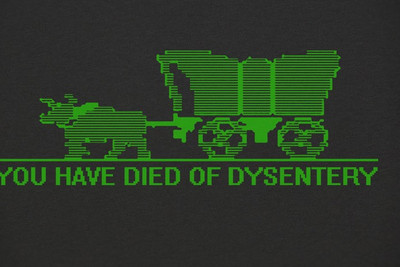
The Oregon Trail is an obvious candidate for whiling your day away.

Definitely not my first time

I'm also a big fan of Koei's war simulation games like L'Empereur and Romance of the Three Kingdoms. And who can forget Kings Quest IV: The Perils of Rosella or the original Sim City?

(via Abby Olheiser)

06 Jan 16:47

Why we treat Kim Jong Un like a clown instead of a brutal dictator

by Alex Abad-Santos

One of the biggest questions facing The Interview was just how offensive its depiction of North Korean leader Kim Jong Un was going to be. The hack of Sony Pictures and ensuing mania surrounding the movie had many convinced that we were going to see something super offensive, that either belittled the plight of the North Korean people or turned geopolitics into an excuse for fart jokes.

I was worried that we were going to be treated to another clownish Asian stereotype.

Hollywood has had a long track record of producing mystifyingly offensive Asian and Asian-American caricatures, enabling these stereotypes to live on and on in society. One pervasive, harmful type that Hollywood has gone to over and over is portraying Asian men as clueless clowns. And it seemed all but certain that Kim, as portrayed by Korean-American actor Randall Park, would fall into the same clownish role we've seen over and over.

Thankfully, that assumption was wrong. But there was good reason to fear it. Here's why — and how The Interview surmounted this stereotype.

The Asian goofball stereotype

Ten years ago, a tiny Berkeley student named William Hung appeared on the third season of American Idol, then the biggest show on television. His English was splintered, his accent snarled the words of Ricky Martin's "She Bangs," and it didn't seem as if he fully understood why the judges were laughing at him.

Hung became a star, outshining many finalists from that year. (Just try naming one that isn't Jennifer Hudson or Fantasia Barrino.) His first of three albums sold 200,000 copies.

The only problem was that Hung was treated as a joke. People laughed at him, at his accent, and at his cluelessness. Hung himself seemed aware of the joke he was perpetuating.

"OK, so I'm not famous for the right reasons," he told Rolling Stone in 2004. "I'm infamous, a joke. It doesn't make me feel good, because I'm a genuine person, but I don't let it get to me, because I am who I am."

Hung unfortunately — and perhaps accidentally — played into a stereotype that's run rampant in American pop culture for decades: a clownish, goofy, harmless, clueless, sexless, unattractive Asian man. You can see this stereotype as far back as Mickey Rooney's Mr. Yunioshi in Breakfast at Tiffany's, or in Long Duk Dong from Sixteen Candles. You can even see it in the way people look at real life Asian men.

For instance, consider Korean pop star Psy. When Psy stormed into public consciousness in 2012 on the back of his hit song "Gangnam Style" and some horse-like dance moves, it was unclear if people actually understood his message of satirizing class and wealth in South Korean society or if people just liked the chubby dancing Asian man.

There are a many talented and ultra-successful K-Pop groups with great hits and massive followings. Any could have hit the American charts. Thus, it's telling that the only K-Pop act to make it in America so far has been Psy.

"Psy doesn't even have to sing in English or be understood because it's not the social critique offered by the lyrics that matters to the audience, but the marriage of the funny music video, goofy dance, and a rather catchy tune, of which two of the elements are comical and, again, non-threatening," the writer Refresh Daemon wrote on Racialicious.

You could also look at the flamboyant, savvy, and wealthy Chinese recycling tycoon Chen Guangbiao, who was, not unlike Psy, in on the joke of his image.

In January of 2014, Chen stated that he wanted to buy The New York Times, then flew to the US to drum up support and attention for this massive and transparent publicity stunt. The tycoon, who has a reported net worth of around $810 million, handed out crazy business cards and took advantage of every sliver of attention the American media wanted to give him:

The incredible business card of the Chinese businessman who wants to buy the New York Times http://t.co/HhFtQLTBDz pic.twitter.com/fTT2Dw6cTF

— Business Insider (@businessinsider) January 9, 2014

Yet, instead of treating this obviously ridiculous business card and Chen like the Borat-esque gag it clearly was, news outlets framed his stunt as serious and clueless.

Like any stereotype, this one marginalizes Asian men. It perpetuates the mentality that they're harmless and clueless. Granted, this stereotype pales in comparison to the same harmful, heartbreaking human toll of the perceptions projected onto black men in this country. But it comes from the same vein of ignorance and assumption.

It shapes the way people think, and paints an inaccurate picture. In Hollywood, the clown is one of the few roles readily available to Asian actors. And in Kim Jong Un's case, the stereotypes makes us see him as someone who's harmless when he's anything but.

How the media's coverage of North Korea deepens the stereotype

With Kim and American coverage of him and his country, there's been a tendency of late to seek out North Korean stories that indulge and deepen this clownish, goofy caricature.

One of the biggest stories about North Korea, and one of the biggest during Kim's tenure as Supreme Leader, was that the country had announced that its archaeologists had found a hidden "unicorn" lair in 2012. A sampling of the reports:

Unicorns' Existence Proven, Says North Korea

Unicorn lair 'discovered' in North Korea

North Korea: We found a unicorn lair

North Korea Says It's Found a 'Unicorn Lair'

The idea of mythical beasts being confirmed by scientists and historians was utterly ridiculous, but it was the perfect example of how laughable North Korean propaganda can be — as well as our tendency to pounce on it.

American media, including myself (the unicorn story was one of the most-clicked on stories I wrote at The Atlantic Wire), puts a premium on these types of ridiculous non-news stories, like magic North Korean sports drinks made from mushrooms, Kim being elected with 100 percent of the vote, or Kim feeding his uncle to 120 dogs. These stories tend to affirm the idea that everyone writing and reading them is smarter than North Korea's ridiculous propaganda machine.

We often view Kim through a lens of cultural superiority. The result of all these odd, weird, attention-grabbing stories, is an image of a silly, harmless ruler backed by an even sillier propaganda machine. And that image too often overshadows the terrifying human rights abuses that go on in his country.

The Interview is a product of this cultural consciousness. It tries hard to convince you it's satirizing the media's odd fascination with North Korea, but it doesn't seem to fully aware of the American self-importance that feeds that beast. The running gag in the movie is that North Koreans are so clueless that they don't believe Kim has an anus, a gag that's given more attention than exploring the idea that perhaps North Koreans and Kim are more than products of their propaganda, but in fact products of a century of brutal and often violent history on the Korean peninsula.

What The Interview and Randall Park did right

The Interview is not a great movie. But one of its few bright spots is that it attempts — albeit in a ham-fisted way — to not go for the cheap clownish stereotype of Kim and actually show a human being with agency. There are clownish aspects to him, like a fascination with Katy Perry, but Park's Kim is depicted as both someone who's very aware of his image and someone who's clearly a monster.

Kim's portrayal is already miles more honest than that of his father in Team America, where the central joke was Kim Jong Il's accent ("ronery"). There are even moments in The Interview when you wish the film realized how sharp it could be and leaned into the idea of a savvy, murdering despot. The film could suggest how Kim plays into these clownish stereotypes to get away with horrible things. That it doesn't is one of its greatest failings.

It says a lot about (the lack of) Asian American representation in pop culture that I'm actually hoping a movie decides to show a more fully realized version of Kim. But when it comes to seeing people who resemble something closer to how I look and act, griping at the offensiveness and lack of awareness in The Interview is part of something bigger.

And Park himself is part of an upcoming opportunity to push back against shopworn stereotypes. In February, ABC's sitcom Fresh Off the Boat — the first Asian-American family sitcom since 1994's All-American Girl — will premiere, starring Park in one of the main roles. This show might be silly, yes, but both it and The Interview represent attempts to push beyond the goofballs we've already seen and capture something closer to life.

06 Jan 14:44

— Thích Nhất Hạnh


— Thích Nhất Hạnh

06 Jan 06:22

A Drone's-Eye View of the Smallest, Saddest Orca Tank in the US

by Ashley Feinberg
Bridget

they are all sad

A Drone's-Eye View of the Smallest, Saddest Orca Tank in the US

You're probably familiar with the many injustices going down at SeaWorld , including the park's (weak) attempts at trying to make them right. But now, new drone footage is here to remind you that there are other parks tormenting orcas in equally horrible–if not even sadder—ways. Say hello to Miami Seaquarium's Lolita, a whale who lives in the smallest, saddest orca tank in the country.

Read more...


06 Jan 06:19

The Streisand Effect: Celebrating 10 Years of Internet Pile-Ons

by Ashley Feinberg
Bridget

i know i am blowing up with the sharing but i am compelled to pare this down after a week of being away

The Streisand Effect: Celebrating 10 Years of Internet Pile-Ons

Exactly ten years ago today, the internet finally gave a name to one of its favorite phenomenons, the Streisand Effect. Or, what happens when you try to censor something and, in response, the internet loses its collective shit and directs even more attention to it. What a glorious decade it's been.

Read more...


06 Jan 06:17

Game of Thrones in IMAX Is Coming

by Brian Barrett

Game of Thrones in IMAX Is Coming

According to reports, both the season five trailer for Game of Thrones and the last two episodes of season four will get a week-long run in IMAX theaters later this month. Yes, that means a jumbo-sized fight for The Wall. No, you shouldn't feel bad about doing an excited little involuntary clap right now.

Read more...


06 Jan 06:05

The Department of Awesome Natural Wonders would like to remind...


The Department of Awesome Natural Wonders would like to remind you that mushrooms are strange, fascinating and sometimes exquisitely beautiful things. Bored Panda assembled a fantastic collection of some of the most stunning fungi photos we’ve ever seen.

These photos were taken by Bernhard Pfister, Patricia Woods, Martin Pfister, Steve Axford (previously featured here), Eric Balcon, Maneesh, Wojciech Grzanka, and H Richard Ellis respectively.

Head over to Bored Panda for even more.

06 Jan 05:29

Could Depression Actually Be Nothing More Than an Allergic Reaction?

by Eleanor Morgan
Bridget

this is really interesting only in that when my mast cells are super reactive i tend to be completely fucking insane, running the gamut from weepy to wall punching, things i never had issues with until i had an excess of mast cells that were constantly dumping histamines into my bloodstream.

[body_image width='696' height='614' path='images/content-images/2015/01/05/' crop='images/content-images-crops/2015/01/05/' filename='is-depression-an-allergic-reaction-039-body-image-1420461742.jpg' id='15417']

An MRI scan of the brain. Image via Helmut Januschka

This story originally appeared on VICE UK.

Our understanding and awareness of depression has, thankfully, evolved some way beyond the old-fashioned "pull-yourself-together" response. Most now know that it's a multifaceted, shape-shifting, and frequently debilitating condition that transcends race, sex, and creed. But we still don't know exactly why some become depressed and some don't.

We know that people may be genetically predisposed to depression and anxiety disorders. We also know that specific life events may trigger depressive episodes in those who have previously been the picture of mental health. But so far we've been unable to identify one single, definitive catalyst. However, new research suggests that, for some people, depression may be caused by something as simple as an allergic reaction. A reaction to inflammation—a product of the body, not the mind.

George Slavich, a clinical psychologist at the University of California, Los Angeles, is one of an increasing number of scientists who believe we need to be looking at our physiology to better understand depression—that, perhaps, it's not all in the head. "I don't even talk about it as a psychiatric condition anymore," he told the Guardian. "It does involve psychology, but it also involves equal parts of biology and physical health."

The thesis is simple: Everyone feels like shit when they're sick. That ennui we feel when we're unwell—listlessness, lack of enthusiasm, troubled sleep, tearfulness, and a general feeling of wading through tar—is apparently known among psychologists as "sickness behavior." Our bodies are pretty intelligent, see—they behave this way so that we stop, lie still, and let our system fight whatever infection of virus has us croaking for Gatorade on the couch.

These kinds of emotional responses are also typical of depression, though. So scientists are asking: If sick people feel and act a lot like depressed people, might there be a link?

Yes, basically. It's all about inflammation—that clever red siren we have in our immune system that lets the body know something is wrong and it needs to be fixed. Proteins called cytokines cause inflammation and flick the brain's "sickness" switch—i.e., make us sad and still. Cytokines skyrocket during depressive episodes and, in those with bipolar disorder, halt in remission. The fact that "normal," healthy people can become temporarily anxious or depressed after receiving an inflammatory vaccine—like typhoid—lends further credence to the theory. There are even those who think we should re-brand depression altogether as an infectious disease.

[youtube src='//www.youtube.com/embed/1dD29XHp6CU' width='560' height='315']

As someone who has experienced two major, debilitating episodes of depression that were both linked to illness, surgery, and painful recovery, it makes sense. When I was recovering from a bowel operation two years ago, my physiological and mental discomfort became one and the same; the pain around my stitches was the same shade as the silent, foggy scream of nothingness and vertigo in my head.

Being physically unable to do much, over time, led to a near-complete inability to function mentally and do anything other than obsessively watch Friends reruns and nibble crackers. My thoughts got stuck in loops of You're never going to come out of this and It's not just your body that's fucked now—it's your head, and it took intensive cognitive behavioral therapy coupled with antidepressants to come out of it both times. When things flare up now, the fear creeps in on a hair trigger, a reminder that, when I am ill, I have a twofold fight on my hands.

On the one hand, the theory linking physical illness and depression is encouraging. Carmine Pariante, a Kings College psychiatrist who is quoted in the Guardian report, says that we're between five and ten years away from a blood test that can measure levels of inflammation in depressed people. If both Pariante's estimate and the inflammation-depression theory are correct, we could potentially be just five years from an adequate "cure" for depression.

But if the theory gains more weight, it's possible that it could have negative consequences. As Nick Haslam, professor of psychology at University of Melbourne points out, it might be wrong to believe that a better understanding of mental illness will automatically lead to "social progress." Believing that a mentally ill person has a deep-rooted, physical defect "may lead us to see them as unpredictable, incurable, and categorically different from the rest of us." So, if we shift the blame from the mind to the body, will the stigma surrounding the mentally ill decrease? Maybe it will. Hopefully it will. But even though there's greater awareness now that depression is a result of a "chemical imbalance" in the brain—i.e., a physical problem—studies have suggested there's been no significant reduction in the stigma that surrounds the mentally ill.

And stigma is important, largely because it has helped create the mental health-care system at work in this country today. With stories like there being more children hospitalized for self-harming than ever, and the knowledge that our doctors still have antiquated "flag" systems for identifying anorexia in boys, it can feel like we remain stuck in the dark ages. Our general language surrounding mental health doesn't ever feel quite right, either—consider the phrase "nervous breakdown," a pair of words that feel both too sensationalist and reductive to describe an evolving disorder whose myriad symptoms can include insomnia, rigid anxiety, panic, intense gut discomfort, weight loss, total lack of libido, and body tremors.

While there are certainly many other physiological causes of inflammation that support the theory—obesity (excess body fat, particularly around the belly, harbors huge amounts of cytokines) being one—it would be naive to suggest that all depression is a side effect of physical illness. For so many of us, day-to-day life is practically booby-trapped with despair; you could argue that we're chronically inflamed all the time. However, at least this new research from people like Slavich is opening up the discussion and revealing the complexities of mental illness. And if the realization that basically anyone can be mentally ill doesn't make people more sympathetic to mental illness, is there anything that will?

Follow Eleanor Morgan on Twitter.

06 Jan 05:25

Over 20 Museums Have Free Admission On January 31

by Jean Trinh
Over 20 Museums Have Free Admission On January 31 It's that special time of year again where we can get our culture on without having to pay a dime. [ more › ]


06 Jan 05:20

Photo


06 Jan 04:31

sixpenceee: A doctor chronicled the progression of Alzheimer’s...

by hellabeautiful
Bridget

i used to think, being at a very high risk for dementia, that it would be a blessing because when i died i wouldn't know about the world i'd be missing out on, it would be impossible to have any regrets or possibly any even coherent thoughts and somehow that seemed comforting. now i think dementia is scarier than pretty much anything


sixpenceee:

A doctor chronicled the progression of Alzheimer’s disease in one of his patients by collecting her signatures from medical forms over several years. 

06 Jan 03:21

This Is the Video CNN Will Play During the Apocalypse

by tom.leo.mckay@gmail.com (Tom McKay)
Bridget

ted turner is a visionary and a genius.


Whether it's a plague, alien enslavement, planet-killing asteroids or the sun finally saying screw it and exploding, CNN has long made clear their intention to broadcast through the apocalypse.

For years, there have been rumors of an alleged tape the network would play during the end of days, but now Jalopnik's Michael Ballaban has turned up proof of CNN's plan to be the last news network standing. Labeled "TURNER DOOMSDAY VIDEO," it has a blunt description reading "HFR [hold for release] till end of the world confirmed":

Source: YouTubeNestled deep in CNN's archive, a low-resolution video of a military band playing "Nearer, My God, to Thee" remains ready for broadcast. Read More
06 Jan 03:13

"If the NYPD can safely cut arrests by two-thirds, why haven’t they done it before? The human..."

“If the NYPD can safely cut arrests by two-thirds, why haven’t they done it before? The human implications of this question are immense. Fewer arrests for minor crimes logically means fewer people behind bars for minor crimes. Poorer would-be defendants benefit the most; three-quarters of those sitting in New York jails are only there because they can’t afford bail.”

-

The Benefits of Fewer NYPD Arrests - The Atlantic (via princehal9000)

I mean, we know why, but it’s heartening to see someone asking these questions anyway.

05 Jan 21:19

Sail for the 4th Annual Supersonic Invitational Group...


Sail for the 4th Annual Supersonic Invitational Group Show.

Seattle artist Sail’s epically dark and beautiful new work for the 4th Annual Supersonic Invitational Group Show which opens Saturday, January 10th at Spoke Art Gallery in San Francisco, California.  Sail will be joining over 60 internationally acclaimed artists from around the world in the group show that seeks to showcase the best and most creative artists from the New Contemporary art movement.

For more information please check out The 4th Annual Supersonic Invitational Website or Spoke Art Gallery’s website.  Everyone is invited to attend, you can even RSVP on Facebook.

05 Jan 18:04

NYPD Officers Turned a Funeral Into a Massive Protest Against Mayor de Blasio

by tom.leo.mckay@gmail.com (Tom McKay)
Bridget

it's fucking shameful the way the nypd is acting. aside from politicizing a funeral they are acting like they're the goddamn army while simultaneously disrespecting and ignoring the chain of command. on the upside, they're also proving they're essentially useless with their stupid strike.


The news: On Sunday, New York City Police Department officers once again turned their backs on New York Mayor Bill de Blasio at a police funeral, with what appeared to be hundreds of police refusing to face him at a ceremony for slain Officer Wenjian Liu.

As de Blasio approached the podium to give his speech, large groups of officers disobeyed direct orders from Commissioner William Bratton not to repeat the identical behavior that occurred during the funeral of Officer Rafael Ramos in December. Read More
05 Jan 17:58

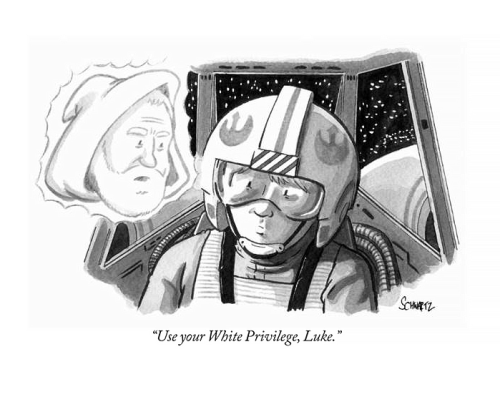
The New Yorker