Shared posts
A Very Serious Review of Rob Gronkowski Erotica
Randy Johnson’s Strange Photography Logo is the Bird He Hit with a Pitch
We recently shared how baseball legend (and hall of famer as of this week) Randy Johnson has been working as a professional photographer, rekindling the passion that he developed while majoring in photojournalism in college. His website contains an impressive collection of travel and concert photographs.
It’s not just his photography that people are talking about, though — his strange logo (shown above) is bringing him quite a bit of attention.
While featuring a dead bird in a business logo probably isn’t the best idea for most photographers, it has been quite successful in marketing Johnson’s photography talents. People are now talking about the logo and Johnson’s photography all over the Internet. Here’s MLB columnist Jeff Passan:
The best thing you'll see today: The logo for Randy Johnson's photography company is of a dead bird. pic.twitter.com/RnEx3E3PWU
— Jeff Passan (@JeffPassan) January 6, 2015
Most baseball fans pick up on the inside joke right away: it pays homage to the bird Johnson whacked with a 99MPH fastball back in 2001:
One Reddit user offers this humorous explanation for the logo choice: It’s “because he only takes those once in a lifetime shots.”
Wu-Tang Clan to auction single-copy album after reportedly turning down $5 million

Wu-Tang Clan released a new album “A Better Tomorrow” in 2014, but they ruled the internet with another full-length that no one has ever heard. The band captured the imaginations of music fans when they announced a new “secret” album called “Once Upon A Time in Shaolin” that they would not produce except for a single copy locked inside of a platinum box.
They entertained various ideas for what to do with the album, from sending it on tour under lock and key to museums and art galleries where listeners would pay an entrance fee to listen to the record one at a time on a pair of headphones to selling the album outright to whoever made the highest offer. They reportedly turned down an offer for $5 million while they were finalizing their plans.
But on Wednesday the band confirmed their plan for “Shaolin”—they’ll auction it through high-end auction house Paddle 8, which Pitchfork notes is known for auctioning the works of contemporary art titans like Damien Hirst and Jeff Koons.
“This is being positioned both by the Wu-Tang Clan and by Paddle8 as a work of art,” said Sarah Goulet, Paddle8′s head of communications. “It’s truly treating this album, which very well may be the last album that the Wu-Tang Clan makes together, as a one-of-a kind, special property that is worth the price.”
The whole project has provided an interesting canvas for reflecting on the financial value of music in a time when it seems to be getting commoditized. While the proliferation of digital streaming services is putting downward pressure music that appears to be approaching zero, the Wu-Tang’s non-digital, fully tangible final release may fetch millions.
But don’t worry—whoever buys it will probably burn it and share it so fast it’ll be on the Pirate Bay before you can blink.

[h/t Pitchfork]


How California upended its war on drugs in 2014

The biggest blow to the US war on drugs in 2014 may have taken place not in the states that legalized marijuana on Election Day, but in California. On November 4, residents in the largest state in the country overwhelmingly voted — by a 19-point margin — to reduce nonviolent and non-serious drug and property crimes from felonies to misdemeanors.
Last year, Colorado and Washington state got a lot of attention when they became the first two states to allow retail sales of marijuana for recreational purposes. And voters in Alaska, Oregon, and Washington, DC, approved ballot initiatives that legalized marijuana to varying degrees.
But California's Proposition 47, which reduces almost all simple drug possession to a non-felony, may be even more important since it was enacted in the nation's most populous state. And it could have major implications for drug policy in the rest of the country, as other states consider trimming down their massive prison systems and see the kind of voter support Proposition 47 obtained.
Here's what Proposition 47 does, and why it's a big deal for criminal justice reform.
Proposition 47 carries out big drug policy reforms in a huge state
A heroin user prepares a needle. (Sutanta Aditya / AFP via Getty Images)
The onset of the modern war on drugs in the 1970s and 1980s bolstered the rapid criminalization of drugs across the US, turning illicit drug possession into a serious crime with mandatory minimum prison sentences.
For decades, California led the charge with its own "tough-on-crime" policies. But Proposition 47 upends many of those laws by reducing nonviolent and non-serious drug and property crimes from felonies to misdemeanors. The measure makes it so cocaine, heroin, meth, and nearly all other forms of drug possession without intent to sell — as well as the theft of up to $950 in property — still carry criminal penalties, but they'll be reduced to lower fines and less incarceration time.
"A misdemeanor conviction is still a significant, detrimental thing for people to have happen in their lives," said Allen Hopper, criminal justice and drug policy director at the ACLU of Northern California. "But a felony conviction has lifelong consequences." Among those consequences, Hopper cited a much harder time getting work.
California's measure works retroactively, allowing people currently in prison for these crimes to apply for resentencing. This should allow up to one in five of California's current prisoners to get out early, according to the Los Angeles Times. As of December 31, the state had released nearly 1,000 prisoners as a result of Proposition 47, the San Diego Union-Tribune reported.
There's one big exception: offenders with a previous conviction for a violent crime, such as murder or rape, could still face felony charges for low-level drug and property offenses, meaning Proposition 47 won't do much for violent criminals.
Mass incarceration is a huge issue in California — and the country
California, like the rest of the US, saw a massive increase in its prison population with the start of the modern war on drugs and the bipartisan "tough-on-crime" policies that followed.
Between 1980 and 2010, California's prison population grew by more than 570 percent, while the state's general population grew by more than 57 percent.
But the state couldn't keep up with this massive increase, leading to a big overcrowding problem in California's prisons. As a result, the US Supreme Court in 2011 ruled that the state must reduce its prison population.
In recent years, California, other states, and the federal government have attempted to address mass incarceration through reforms that shifted incarceration to the local level, reduced sentences on low-level crimes, and allowed low-level offenders to get out of prison earlier under special circumstances.
But Proposition 47 goes even further than many other reforms by downgrading the classification attached to so many non-serious crimes — not just the sentence.
Proposition 47 also tries a softer approach by reallocating the savings
San Quentin State Prison in California. (Justin Sullivan / Getty Images News)
Proposition 47 will save the state an estimated $150 million to $250 million a year, according to the San Francisco Chronicle.
But instead of letting the state pocket these savings, the initiative requires the state government to put the money into a fund that will finance schools, mental health treatment, truancy and dropout prevention, and victim compensation programs.
"We don't stop at trying to reduce the prison population," said Lenore Anderson, chair of the Proposition 47 campaign. "We also capture the money and put the money into what we call smarter justice: prevention and treatment."
The idea, supporters say, is to shift the criminal justice system from being reactive to being more preventive, so it helps stop crimes before they even happen.
"What we really need to get to is a reconceptualization of what the criminal justice system is," Hopper, of the ACLU of Northern California, said. "The goal of the system ought to be figuring out the best way to make it least likely that folks are going to commit new, additional crimes once they're released."
The reforms likely won't reverse mass incarceration
Even advocates characterize Proposition 47 as a start, acknowledging that much bigger reforms will be necessary in the future for California — and the rest of the country — to reduce prison populations to pre-1980s levels.
"I don't want to understate the significance of Proposition 47. It's hugely significant," Hopper said. "But yes, it is also incremental in the sense that we have a long way to go."
One problem is that Proposition 47, like other state and federal reforms, focuses on low-level drug and property offenses, not violent crimes. But most prisoners are violent offenders. Brian Elderbroom and Ryan King of the Urban Institute's Justice Policy Center noted in a blog post that this is increasingly the case in California.
While it's politically trickier to reduce prison sentences for violent criminals, there's evidence that many sentences may be longer than necessary to reduce crime. The research suggests that people age out of crime, so letting them out of prison 10 or 20 years down the line — instead of 30 or 40 years, or never — might not pose a significant threat to public safety.
"Crime is a young man's endeavor," Elderbroom said in an interview. "It's not surprising that someone who commits a crime at a young age would be a completely different person by the time they're in their 30s."
One area of particular interest for reformers is the rapid increase in the use of life sentences since the 1980s, which critics view as excessive and ineffective at reducing crime.
"Not only do we send more people to prison," said Marc Mauer, executive director of the advocacy group Sentencing Project, "but we keep them there longer."
Experts say that reducing these sentences would help bring America's falling incarceration rate more in line with the country's dropping crime rate. Federal statistics show violent crime fell by about 27 percent between 2000 and 2013, but the incarceration rate fell by roughly 1 percent during the same time period.
More prison doesn't always mean less crime
The policies behind mass incarceration were intended to deter new crimes and to literally incapacitate criminals by putting them in cells where they couldn't commit new offenses.
But an April 2014 review of the research by the National Research Council suggested that the effect of incarceration on crime is small and that the benefits decrease as the scale of incarceration increases.
Federal and state data also shows there's no correlation between changes in prison populations and the amount of crime. And an analysis by the Pew Public Safety Performance Project found that the 10 states that shrunk incarceration rates the most over the past five years saw bigger drops in crime than the 10 states where incarceration rates most grew.
"Incarceration did contribute to some of the declines in crime over the past two decades, but it's a marginal effect," Elderbroom, of the Urban Institute, said. "We're long past the point of getting those types of benefits from incarceration with the level of imprisonment we have today."
Charlie Hebdo: its history, humor, and controversies, explained

Stéphane Charbonnier, a lead editor of the French satirical weekly Charlie Hebdo and one of the 12 people murdered in the attack on the magazine's office on Wednesday, gave a quote to Le Monde in 2012 that is rapidly becoming his epitaph. Speaking about threats against the magazine over its cartoons portraying the Prophet Mohammed, he said, "What I'm about to say is maybe a little pompous, but I'd rather die standing up than live on my knees."
In the same interview, Charlie Hebdo's editor in chief Gerard Biard, who survived today's massacre because he was in London, explained of his refusal to back down from the magazine's cartoons, "If we say to religion, 'You are untouchable,' we're fucked."
Together, these two quotes capture the publication's gleeful attitude toward mocking powerful institutions — particularly religion, and particularly Islam — even after its offices were firebombed in 2011. But they also hint at the fact that there is much more going on in Charlie Hebdo's satire than caricaturing religious figures: a particularly French brand of political satire quite different from the American kind, a set of complex identity politics that are unique to France and crucial context, and a satirical message whose nuance might be easy for unfamiliar readers to miss. Here's what you need to know about this magazine, its mission, and the larger context around it.
What is Charlie Hebdo?
Carsten Koall/Getty Images
Charlie Hebdo is a weekly, French satirical newsmagazine published since 1970 (although it had a long hiatus between 1981 to 1992). Known especially for its provocative cartoons and caricatures, Charlie Hebdo is part of a long tradition of political satire in France. Its editor, Stéphane Charbonnier, who was killed by gunmen Wednesday, described the newspaper's positions in 2012 as left-wing, secular, and atheist.
It's best known for publishing cartoons mocking religion and religious extremism, especially though not exclusively Islam, Islamic extremism, and the Prophet Mohammed. The cartoons can be raunchy and are made to provoke. The magazine has been attacked in the past: in 2011, after it published an issue "guest-edited" by the Prophet Mohammed ("100 lashes if you don't die of laughter"), their website was hacked and Paris offices firebombed.
Tignous, a cartoonist killed in Wednesday's massacre, had previously said that the best cartoons not only make the reader laugh and think — they provoke "shame for having been able to laugh at such a serious situation." That was often the sentiment Charlie Hebdo aimed for.
The magazine's name roughly translates to "Charlie weekly." There are two competing stories about how the name came to be. The first is that a predecessor publication was forced out of business for making fun of French President Charles de Gaulle's death and it was a shot at him. The second is that it is a Charlie Brown reference.
Charlie Hebdo is not broadly popular: its weekly circulation was around 50,000 (compared to about 500,000 for Le Canard Enchaîné, its better-known rival in the satirical press), and it often struggled financially. In November, it asked for donations in order to keep its doors open.
What does Charlie Hebdo satirize?
/cdn0.vox-cdn.com/uploads/chorus_asset/file/2914072/461121404.0.jpg)
Charlie Hebdo offices after the attack, featuring one of the magazine's most famous covers. (Aurelien Meunier/Getty Images)
The magazine made fun of prominent politicians, religion, and pop culture, but it lampooned Islam and Islamic extremists with particular zeal.
A 2006 edition of Charlie Hebdo included the infamous Danish cartoons of the Prophet Mohammed — which sparked riots that left more than 250 people dead around the world — and put a crying Mohammed on the cover, with a speech bubble saying "It's hard being loved by assholes." The newspaper also mocked the Pope (showing Pope Benedict XVI holding a condom and declaring "This is my body!" and in a loving embrace with a Vatican guard), the extremist right-wing French political party Front National (showing Marine Le Pen, the party's leader, as a fashion model for John Galliano, who was in the news at the time for an anti-Semitic rant), and, recently, French president François Hollande.
Charlie Hebdo had a well-earned reputation for focusing on Islam, extremist and not. Many Muslims consider portrayals of the Prophet Mohammed to be a serious insult and religious offense, and Charlie Hebdo defied this by caricaturing him frequently, including in at least one instance shown as nude and bent over.
These cartoons and covers have drawn criticism, including at one point by French Foreign Minister Laurent Fabius, who asked of them, "Is it really sensible or intelligent to pour oil on the fire?" But Charlie Hebdo's editors and cartoonists were often careful to articulate their satire as about challenging taboos and their power to cause self-censorship, and to champion freedom of speech, not to offend simply for the sake of offending.
Laurent Léger, a Charlie Hebdo staffer who survived the attack, told CNN in 2012, "The aim is to laugh. ... We want to laugh at the extremists — every extremist. They can be Muslim, Jewish, Catholic. Everyone can be religious, but extremist thoughts and acts we cannot accept."
Charlie Hebdo is part of a tradition of serious satire in France, most of it much less comic or comforting than political satire in the US. Called "gouaille," "it's an anarchic populist form of obscenity that aims to cut down anything that would erect itself as venerable, sacred or powerful," Arthur Goldhammer, a French translator and author, wrote for Al-Jazeera America today.
The power of this political satire is evident in the fact that, for example, Le Canard Enchaîné, another weekly satirical newspaper, doesn't only mock the government; it's revealed scandals that have caused cabinet ministers to step down. Les Guignols d'Info, an eight-minute satirical segment on TV news featuring latex puppets, has had tremendous cultural influence.
Even the closest American analogies — the most biting political segments on Saturday Night Live or the harshest articles in The Onion — don't really capture what French political satire is about.
Why would anybody want to attack Charlie Hebdo?
Police cars lined up at the offices of Charlie Hebdo. (Aurelien Meunier/Getty Images)
We do not yet know who attacked the magazine, but there are a few pieces of context to keep in mind.
Many Muslims — not just extremists — consider it blasphemous to draw the prophet Mohammed at all, let alone in the crude, satirical way of Charlie Hebdo. Charlie Hebdo has been attacked before, and had some serious security precautions for a small-circulation magazine. Its old offices were firebombed in 2011, after the "guest-edited" Prophet Mohammed issue appeared. Since then, it's been under police protection.
Still, while many Muslims may have found Charlie Hebdo offensive, the vast majority of Muslims reject violence, and focusing on the cartoons and the issue of blasphemy is somewhat of a red herring. The real provocation for the attack was not the cartoons or any offense they may have given, but rather the psychopathic minds and ideologies of the killers.
We do not yet know who launched the attack; while some suspect it may have been militant jihadists, those groups are reviled and rejected by the vast majority of Muslims, who are their greatest victims. As Globe and Mail columnist Nahrain al-Mousawi points out, biting satires of Islamist extremists such as ISIS are common in Muslim-majority countries as well.
What makes Charlie Hebdo so controversial?
Protestors demonstrate against France's veiling ban in 2011. (Pascal Le Segretain/Getty Images)
Charlie Hebdo's satire of religion in general, and Islam in particular, plays out in a country where religion officially has no place in the public sphere; secularism is a cherished tradition in France. But it's also taking place amid a conflict about the role of Islam, religion, racism, and cultural identity in French public life.
France has the largest population of Muslims in Europe per capita, around 10 percent of its population. Many are the descendants of immigrants from former French colonies in North Africa. But France has had trouble integrating its Muslim population (or, by some views, has had trouble overcoming non-Muslim opposition to integrating them). Second- and third-generation Muslim immigrants still face discrimination in schooling, housing, and more.
It's considered acceptable on both the French right and the left to question whether French Muslims, even those who have been there for generations, are really French. The notion that you can represent two religious or ethnic identities — common in the US — simply isn't a part of political life. The French census doesn't even record people's ethnic backgrounds, for example.
In 2004, the French government banned head scarves and other prominent symbols of religion in public schools. In 2014, France made it illegal to cover one's face in public, a ban that theoretically applies to everyone but was widely seen as targeting burqas and niqabs, and hence as a way of telling devout Muslims that they are unwelcome.
This is the fraught, complicated, and often tense French national identity crisis that is the context for Charlie Hebdo and its satire. This is important for understanding the culture war in which the magazine's satire is entrenched, and its implications for a sense that France can be unwelcoming or intolerant of Muslims. But it is also important for seeing that the cartoons at the expense of Islam, as pointed as they would be in the American context, still stop well short of the open Islamophobia of France's political far right.
As anti-institutional as Charlie Hebdo's cartoons could be against institutionalized religion, though, they upheld another French institution: laïcité, the absolute separation of church and state.
"We’re a newspaper against religions as soon as they enter into the political and public realm," Biard told The New York Times in 2012. "You’re not meant to identify yourself through a religion, in any case not in a secular state." This was a crucial plank of the magazine's identity.
Tokyo-born, Dusseldorf-based artist Ramon Todo splices stones,...


Tokyo-born, Dusseldorf-based artist Ramon Todo splices stones, volcanic rock, obsidian, fossils, books, and even fragments of the Berlin Wall with clear layers of polished glass, creating surprising works of sculpture that feel like objects you might encounter in a dream.
"The juxtaposition of the sharp hard glass surface wedged in between crumbling porous rock, or forced into obsidian, or slotted into an old frayed book cover is a quiet commentary on the nature of material. By combining these distinctly different materials, Todo is talking about fragility and stability."
Many of the stones and fossils are found by Todo while he’s out taking walks. He closely associates the objects he chooses with their surroundings, both the land on which they were found and the culture of the area. By inserting pieces of glass, Todo transforms them into something new, altered artifacts and geological specimens.
Click here to check out more of Ramon Todo’s fascinating sculptures. There you can zoom in on each piece to get a much closer look. Still more pieces are viewable here and here.
[via Beautiful / Decay and Colossal]
micdotcom: One tweet sums up the big problem with how we talk...

One tweet sums up the big problem with how we talk about terrorism
If a terrorist attack took place right here in the U.S., why isn’t it a national story?
Terrorism may be defined as “the use of violence and threats to intimidate or coerce, especially for political purposes,” but if you asked most people, the term conjures one image: brown people with beards and bombs. Nothing has made that profoundly racist misunderstanding clearer than the news coverage of two violent attacks that happened within roughly 24 hours.
^^^
Watch Astonished Kids Learn Where Babies Come From (Not 'The Butt')
Bridgetthis is really awful, people will do anything to be internet famous for 5 seconds.

Study: Men Who Post Tons of Selfies Have Psychopathic Tendencies
Bridgetjust men?
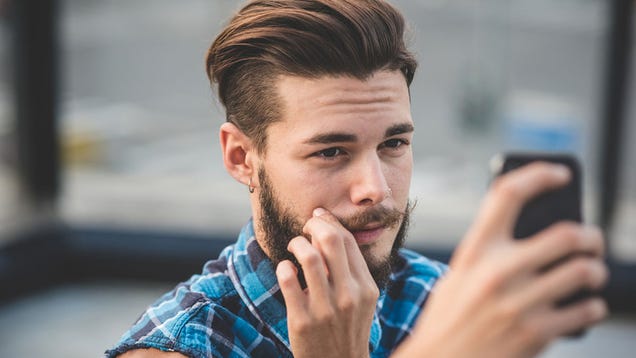
Vindication is yours! If you've been demanding that your friends put down the selfie stick and stop posting every goddamn photo of themselves online because it's probably a sign of severe mental illness, you've finally got some research to back all of that up. It appears that people who post lots of selfies score higher on measures of narcissism (bad) and psychopathy (more bad).

Disney's Gaston Still Not Done; Takes on Little Girl in Arm Wrestling
Bridgetwhile i have little love for disney, this guy has been popping up all over the internet lately and he's a real gem.
Gaston is not done wrecking all your emotions just yet. In the latest installment of "Gaston Behaving Awesomely," the Beauty and the Beast baddie is confronted by an adorable 11-year-old girl who challenges him to an arm wrestling battle.




Glenn Arthur for the 4th Annual Supersonic Invitational Group...


Glenn Arthur for the 4th Annual Supersonic Invitational Group Show.
Glenn Arthur’s “Butterfly Lolita" for the 4th Annual Supersonic Invitational Group Show which opens Saturday, January 10th at Spoke Art Gallery in San Francisco, California. Glenn will be joining over 60 internationally acclaimed artists from around the world in the group show that seeks to showcase the best and most creative artists from the New Contemporary art movement.
For more information please check out The 4th Annual Supersonic Invitational Website or Spoke Art Gallery’s website. Everyone is invited to attend, you can even RSVP on Facebook.
NAACP office in Colorado Springs bombed, FBI calls the attack ‘deliberate’

On Tuesday, an “improvised explosive device” went off against the wall of a building housing the Colorado Springs, Colorado, chapter of the NAACP. Fortunately no one was hurt after the makeshift bomb failed to ignite a gas can strategically placed next to the device.
Agents from the FBI Joint Terrorism Task Force and the Bureau of Alcohol, Tobacco, Firearms and Explosives went to the scene to investigate and have confirmed that the bombing was “deliberate.” According to a statement issued by the FBI, law enforcement already has a “potential person of interest” in mind who is thought to be a balding white man at about 40 years old.
“He may be driving a 2000 or older model dirty, white pick-up truck with paneling, a dark colored bed liner, open tailgate, and a missing or covered license plate,” the FBI said, via Denver Post.
On Tuesday, The NAACP released this official statement:
No injuries were reported in what is believed to be an explosion near the Colorado Springs NAACP Branch located on the 600 block of S. El Paso St. The cause of the explosion is still unknown. The NAACP looks forward to a full and thorough investigation into this matter by federal agents and local law enforcement.
NAACP chapter president Henry Allen Jr. declined to call the bombing a hate crime until further evidence is revealed, but did tell The Gazette that the organization “will not be deterred” amid implied threats and intimidation.
“We believe in civil rights for all, and really we won’t work in fear and we won’t be deterred,” Allen told the local paper. “We’ll move on. This won’t deter us from doing the job we want to do in the community.”
This is, unfortunately, another chapter in a long and ugly history of violence against NAACP branches. The Washington Post reports that in the first half of the 20th century attacks against NAACP branches from the KKK forced many chapters to close in Texas in addition to the murder of the NAACP Florida state conference founder Harry T. Moore and his wife Harriette.
Since the Colorado Springs bombing, many have taken to social media to decry the lack of coverage on major news media and to call out the reluctance of news channels to call this action what it is, an act of terrorism.
CNN finally reports #NAACPBombing & neglects that the only suspect is a white male. Never been an issue in the past: pic.twitter.com/RTJdZnpyKt
— Dell Cameron (@dellcam) January 7, 2015
Why does the media refuse to refer to acts of terror perpetrated by white Americans as “terrorism”? #NAACPBombing
— Broderick Greer (@BroderickGreer) January 7, 2015
As the investigation unfolds, the FBI has asked anyone with information to contact its Denver tip line at (303) 435-7787.
Monster suing Dr. Dre for Beats ‘betrayal’

Since being purchased by Apple last year, neither Beats Music nor the headphone brand seems to be able to catch a break, with everything from professional boycotts to service shut-downs making more headlines than anything else. Adding to that list, founding partner Monster (the overpriced cable making company, not the energy drink maker) has now slapped the company with a new lawsuit, claiming the actions of Dr. Dre and Jimmy Iovine “robbed” Monster CEO Noel Lee of his invention.
For those a bit foggy on their headphone history, back in 2008, Noel’s son Kevin went to Los Angeles to try and find partners for the headphone prototypes Monster had developed. He found willing partners in Iovine and Dre, and for the first few years, Monster provided all of the audio engineering behind the headphones, with their logo appearing on each pair.
However, as the brand exploded across the globe, the Lees found that they had signed a rather lackluster contract, and were left out of the bulk of the financial glory. The critical element was that Dre and Iovine retained complete and permanent ownership of everything Monster developed for the brand. That is to say, every headphone and component therein was owned by Dre and Iovine, and they could basically take the product wherever they wished.
This led to the 2011 HTC purchase of 51% of Beats, which was dissolved in less than two years (clearing the way for Apple’s $3 billion purchase). The lawsuit speaks directly to this as an “orchestrated sham of an acquisition,” which the Lees clearly feel was done for no other reason than to push them out of the Beats brand and process. This is exactly what happened, and Monster has tried since to create a rival product for the massively successful product they now find in the hands of others.
Chances are, the Lees won’t have much success in their lawsuit as even if the deal they signed was a bit shady, and put together by one of the most notoriously sharp-minded men in the business (Iovine). They signed the document and that’s that. However, this does little to help the current Beats image problem in the eyes of many, and if the suit gets some heart-strings exposure, the company may find themselves in a serious public relations nightmare.
Joel Freimark hosts a daily music-related webseries HERE and you can follow his daily music musings and suggestions HERE as well.
Before He Became Part of The Glitch Mob, edIT Released a Solo Masterpiece
 [Editor's note: Weekly scribe Jeff Weiss's column, "Bizarre Ride," appears on West Coast Sound every Wednesday. Follow him on
 One of L.A.'s Most Fascinating and Rebellious Museums Is in ... El Segundo?

"No one would ever admit this," says Bernhard Zunkeler, the Berlin-based curator of the El Segundo Museum of Art's 11th exhibition. "But 95 percent of people, when they buy a piece of art, they want it to match the walls or the couch."…
[ Read more ]




The Daniel Plan In Action
If you’re going to commit to getting a tattoo make it...

If you’re going to commit to getting a tattoo make it awesome! Judging by this chalkboard sign outside their shop, the tattoo artists at Adorned Precision Body Arts in Vancouver, BC clearly have the right idea.
But don’t worry if you aren’t quite ready for a tattoo featuring unicorns with sharks for arms. Allow us to suggest getting a Handicorn instead, the less permanent and completely pain free option of turning your hand into a unicorn.
[via Neatorama]
Water's Hottest New Trend: Maple. (No, For Real.)
Bridgeti still have to try this but i don't believe it will reach watermelon rind levels of awesome
 Since last April, shoppers at L.A.'s Sprouts Farmers Markets may have noticed a bizarre new product moving in next to the coconut water. It's name?…
[ Read more ]
Flu Outbreak Hits Southern California, Could Peak This Month
Bridgetyay i'm going home in time for peak flu, like i was in nola for peak flu. i'm going to have the flu and be stuck in an apartment full of termites and life is gonna be awesome.
 The influenza virus is hitting Southern California hard this new year, and it could hit even harder.
The folks at Sickweather, an app that uses social media to determine when and where illnesses are sweeping America, say the flu outbreak could peak next week. "We're talking about a week or so for it to happen if that's going to happen," said Sickweather CEO Graham Dodge.
The app's latest analysis, sent to us in a statement, says "peak flu activity" is near and that the common cold is going around too.…
[ Read more ]


“La Faune Et La Flore” In Collaboration With French Artist, Moon
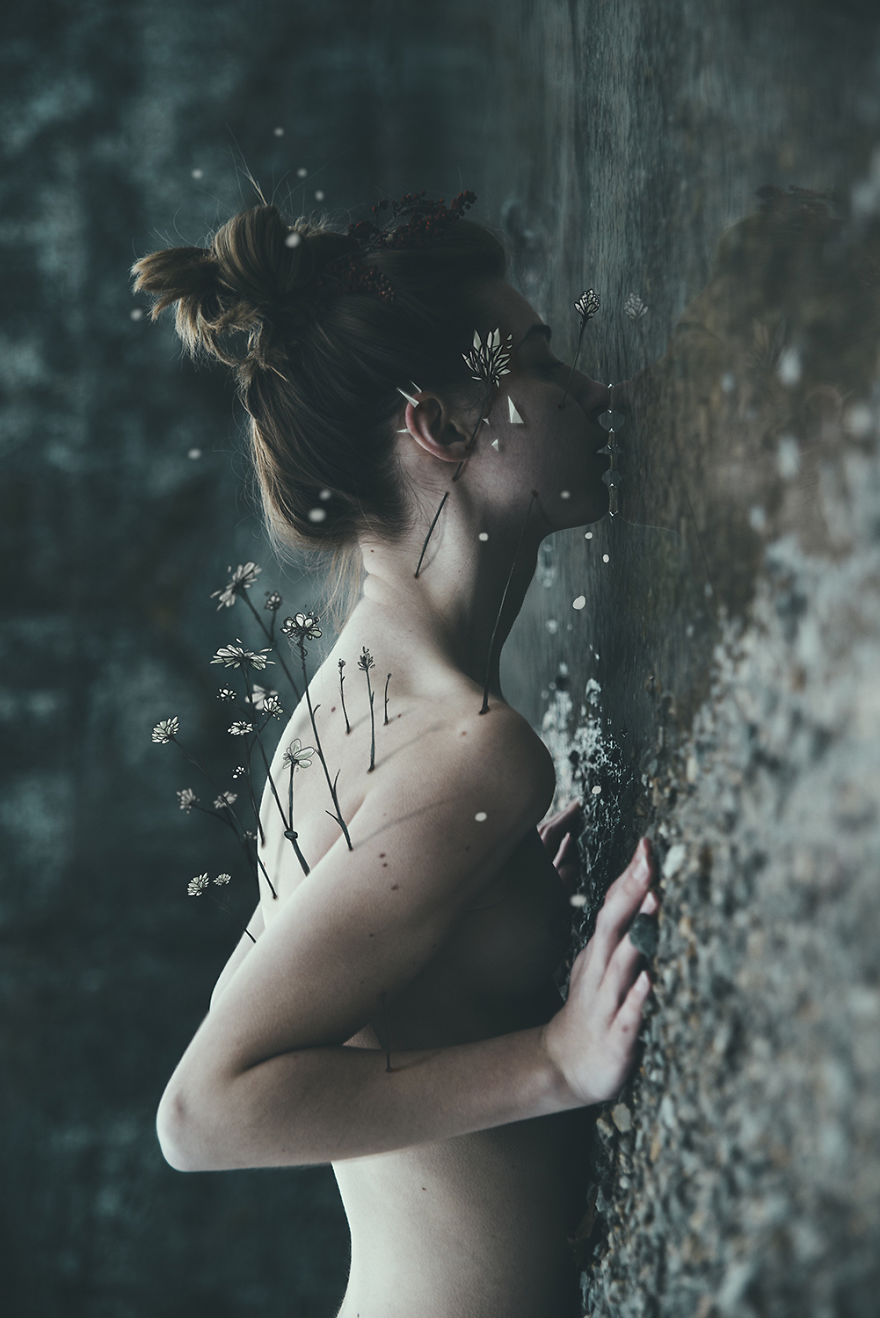
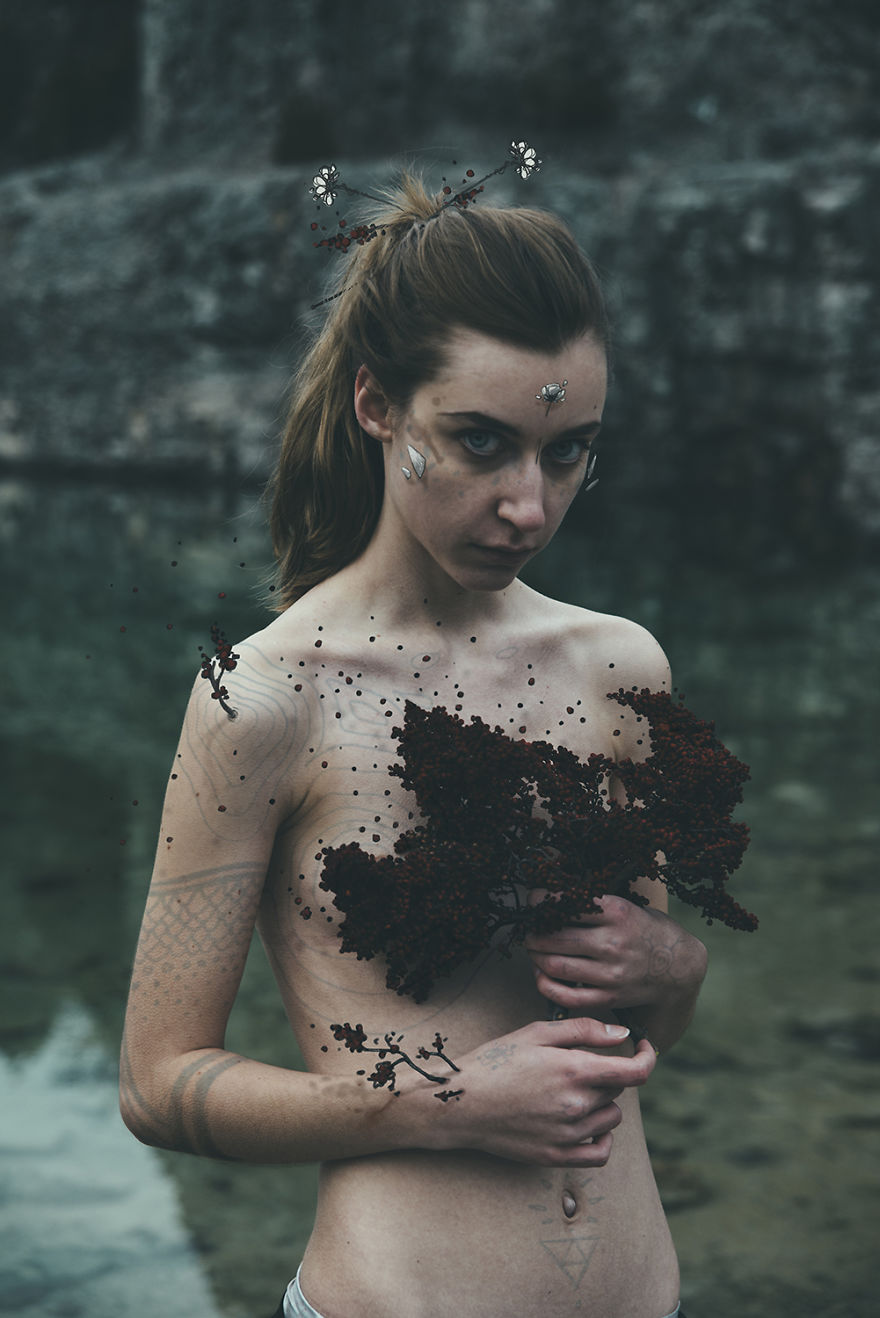
My name is Mark Harless but most people know me as Bleeblu. I’m a photographer, adventurer and daydreamer who enjoys taking surreal pictures. I bought my first camera three years ago in hopes of finding a small hobby to occupy my free time. My small hobby grew to something a bit bigger than I could have expected but it has been quite the journey.
Moon is a French illustrator who started doing graphic works with graffiti 22 years ago. He later attended an art school and immediately started work as an Art Director for eight years after. He now works as a freelance artist and teaches graphic design. Moon loves to draw women and plants more than anything.
After following each other on Instagram, Moon and I decided we had very similar styles. We decided to collaborate but with no solid idea or theme to go off of. I asked my dear friend and fellow photographer, Molly Strohl, to help model for me. I tried to take photos that would probably call for some drawing on the model. I didn’t really know what to expect back from Moon but I was beyond impressed. So here is “La Faune et la Flore.”
More info: bleeblu.com | Instagram/bleeblu | Instagram/moon | Instagram/molly