Shared posts

18 Jun 22:47

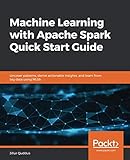
Machine Learning with Apache Spark Quick Start Guide

by foxebook

Editorial Reviews

Combine advanced analytics including Machine Learning, Deep Learning Neural Networks and Natural Language Processing with modern scalable technologies including Apache Spark to derive actionable insights from Big Data in real-time

Key Features

  • Make a hands-on start in the fields of Big Data, Distributed Technologies and Machine Learning
  • Learn how to design, develop and interpret the results of common Machine Learning algorithms
  • Uncover hidden patterns in your data in order to derive real actionable insights and business value

Book Description

Every person and every organization in the world manages data, whether they realize it or not. Data is used to describe the world around us and can be used for almost any purpose, from analyzing consumer habits to fighting disease and serious organized crime. Ultimately, we manage data in order to derive value from it, and many organizations around the world have traditionally invested in technology to help process their data faster and more efficiently.

But we now live in an interconnected world driven by mass data creation and consumption where data is no longer rows and columns restricted to a spreadsheet, but an organic and evolving asset in its own right. With this realization comes major challenges for organizations: how do we manage the sheer size of data being created every second (think not only spreadsheets and databases, but also social media posts, images, videos, music, blogs and so on)? And once we can manage all of this data, how do we derive real value from it?

The focus of Machine Learning with Apache Spark is to help us answer these questions in a hands-on manner. We introduce the latest scalable technologies to help us manage and process big data. We then introduce advanced analytical algorithms applied to real-world use cases in order to uncover patterns, derive actionable insights, and learn from this big data.

What you will learn

  • Understand how Spark fits in the context of the big data ecosystem
  • Understand how to deploy and configure a local development environment using Apache Spark
  • Understand how to design supervised and unsupervised learning models
  • Build models to perform NLP, deep learning, and cognitive services using Spark ML libraries
  • Design real-time machine learning pipelines in Apache Spark
  • Become familiar with advanced techniques for processing a large volume of data by applying machine learning algorithms

Who this book is for

This book is aimed at Business Analysts, Data Analysts and Data Scientists who wish to make a hands-on start in order to take advantage of modern Big Data technologies combined with Advanced Analytics.

Table of Contents

  1. The Big Data Ecosystem
  2. Setting up a Local Development Environment
  3. Artificial Intelligence and Machine Learning
  4. Supervised Learning Using Apache Spark
  5. Unsupervised Learning using Apache Spark
  6. Natural Language Processing using Apache Spark
  7. Deep Learning Using Apache Spark
  8. Real-Time Machine Learning Using Apache Spark

Book Details

  • Author: Jillur Quddus
  • Pages: 240 pages
  • Edition: 1
  • Publication Date: 2018-12-26
  • Publisher: Packt Publishing
  • Language: English
  • ISBN-10: 1789346568
  • ISBN-13: 9781789346565

Book Preview

Click to Look Inside This eBook: Browse Sample Pages

PDF eBook Free Download

Note: There is a file embedded within this post, please visit this post to download the file.

The post Machine Learning with Apache Spark Quick Start Guide appeared first on Fox eBook.
16 Jun 03:10

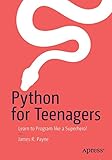
Python for Teenagers: Learn to Program like a Superhero!

by foxebook

Editorial Reviews

Discover everything you need to know about Python to turn your passion of programming into a job you'll love. Fueled by fun and practical examples, this book gives high schoolers who want learn an easy programming language ideas for how to leverage them in the workforce.

Start with the basics and before you know it, you'll be building your own web sites, doing white-hat hacking, finding code bugs and errors, and creating games, including using Python to roll characters for RPGs. Every chapter is relaxed and informal, like learning with a cool teacher all the time.

Computers, phones and the web are your playground, and you'll be ready to join the party with your own content. Going beyond posts and uploads means learning to program, and Python is a great choice to get started. It's quick to learn, it's flexible, and if you want, it may get you a Python job that pays more than minimum wage when you're out of school. Python for Teenagers is the most fun you'll have while learning.

What You'll Learn

  • Review programming basics - you gotta start somewhere
  • Code applications that follow directions and make decisions
  • Understand Classes and objects - when a program is a child
  • Make games with graphics and animation

Who This Book Is For

High schoolers who want learn an easy programming language.

Book Details

  • Author: James R. Payne
  • Pages: 348 pages
  • Edition: 1st ed.
  • Publication Date: 2019-05-08
  • Publisher: Apress
  • Language: English
  • ISBN-10: 1484245490
  • ISBN-13: 9781484245491

Book Preview

Click to Look Inside This eBook: Browse Sample Pages

PDF eBook Free Download

Note: There is a file embedded within this post, please visit this post to download the file.

The post Python for Teenagers: Learn to Program like a Superhero! appeared first on Fox eBook.

14 Jun 23:07

ASP.NET Core 2 and Vue.js

by foxebook

Editorial Reviews

Leverage ASP.NET core 2.0 web API and the power of Vue.js at the client side to create modern applications from scratch

Key Features

  • Create fast, rich and reactive client side applications with Vue.js and ASP.NET Core.
  • Leverage Vue components efficiently to build state of the art user interfaces.
  • Work with Vuex and Nuxt.js to build ASP.NET Core based applications that are powerful, consistent, and maintainable

Book Description

This book will walk you through the process of developing an e-commerce application from start to finish, utilizing an ASP.NET Core web API and Vue.js Single-Page Application (SPA) frontend.

We will build the application using a featureslice approach, whereby in each chapter we will add the required frontend and backend changes to complete an entire feature. In the early chapters, we’ll keep things fairly simple to get you started, but by the end of the book, you’ll be utilizing some advanced concepts, such as server-side rendering and continuous integration and deployment. You will learn how to set up and configure a modern development environment for building ASP.NET Core web APIs and Vue.js SPA frontends.You will also learn about how ASP.NET Core differs from its predecessors, and how we can utilize those changes to our benefit.

Finally, you will learn the fundamentals of building modern frontend applications using Vue.js, as well as some of the more advanced concepts, which can help make you more productive in your own applications in the future.

What you will learn

  • Setup a modern development environment for building both client-side and server-side code
  • Use Vue CLI to scaffold front-end applications
  • Build and compose a set of Vue.js components
  • Setup and configure client-side routing to introduce multiple pages into a SPA
  • Integrate popular CSS frameworks with Vue.js to build a product catalogue
  • Build a functioning shopping cart that persists its contents across browser sessions
  • Build client-side forms with immediate validation feedback using an open-source library dedicated to Vue.js form validation
  • Refactor backend application to use the OpenIddict library

Who this book is for

This book is aimed at ASP.NET developers who are looking for an entry point in learning how to build a modern client-side SPA with Vue.js, or those with a basic understanding of Vue.js who are looking to build on their knowledge and apply it to a real-world application. Knowledge of JavaScript is not necessary, but would be an advantage.

Table of Contents

  1. Understanding the Fundamentals
  2. Setting up the development environment
  3. Getting Started with the Project
  4. Building our first Vue.js components
  5. Building a product catalogue
  6. Building a shopping cart
  7. User registration / authentication
  8. Processing payments
  9. Building an admin panel
  10. Deployment
  11. Authentication - OpenID Connect
  12. Server-side rendering
  13. Continuous integration / deployment

Book Details

  • Author: Stuart Ratcliffe
  • Pages: 556 pages
  • Edition: 1
  • Publication Date: 2018-07-30
  • Publisher: Packt Publishing
  • Language: English
  • ISBN-10: 1788839463
  • ISBN-13: 9781788839464

Book Preview

Click to Look Inside This eBook: Browse Sample Pages

PDF eBook Free Download

Note: There is a file embedded within this post, please visit this post to download the file.

The post ASP.NET Core 2 and Vue.js appeared first on Fox eBook.

14 Jun 22:22

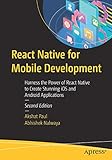
React Native for Mobile Development, 2nd Edition

by foxebook

Editorial Reviews

Develop native iOS and Android apps with ease using React Native. Learn by doing through an example-driven approach, and have a substantial running app at the end of each chapter. This second edition is fully updated to include ES7 (ECMAScript 7), the latest version of React Native (including Redux), and development on Android.

You will start by setting up React Native and exploring the anatomy of React Native apps. You'll then move on to Redux data flow, how it differs from flux, and how you can include it in your React Native project to solve state management differently and efficiently. You will also learn how to boost your development by including popular packages developed by the React Native community that will help you write less; do more. Finally, you'll learn to how write test cases using Jest and submit your application to the App Store.

React Native challenges the status quo of native iOS and Android development with revolutionary components, asynchronous execution, unique methods for touch handling, and much more. This book reveals the the path-breaking concepts of React.js and acquaints you with the React way of thinking so you can learn to create stunning user interfaces.

What You'll Learn

  • Build stunning iOS and Android applications
  • Understand the Redux design pattern and use it in your project
  • Interact with iOS and android device capabilities such as addressbook, camera, GPS and more with your apps
  • Test and launch your application to the App Store

Who This Book Is For

Anyone with JavaScript experience who wants to build native mobile applications but dreads the thought of programming in Objective-C or Java. Developers who have experience with JavaScript but are new or not acquainted to React Native or ReactJS.

Book Details

  • Author: Abhishek Nalwaya, Akshat Paul
  • Pages: 235 pages
  • Edition: 2nd ed.
  • Publication Date: 2019-08-11
  • Publisher: Apress
  • Language: English
  • ISBN-10: 1484244532
  • ISBN-13: 9781484244531

Book Preview

Click to Look Inside This eBook: Browse Sample Pages

PDF eBook Free Download

Note: There is a file embedded within this post, please visit this post to download the file.

The post React Native for Mobile Development, 2nd Edition appeared first on Fox eBook.

14 Jun 22:19

Working with Vue.js

by foxebook

Editorial Reviews

Since its release in 2014, Vue.js has seen a meteoric rise to popularity and is is now considered one of the primary front-end frameworks, and not without good reason. Its component-based architecture was designed to be flexible and easy to adopt, making it just as easy to integrate into projects and use alongside non-Vue code as it is to build complex client-side applications.

If you're an experienced developer looking to make a start with Vue, this book is for you. It provides a rapid introduction to the key topics that you'll need to understand. It contains:

  • Getting up and Running with the Vue.js 2.0 Framework by Jack Franklin
  • Getting Started with Vuex: a Beginner's Guide by Michael Wanyoike
  • A Beginner's Guide to Vue CLI by Ahmed Bouchefra
  • A Beginner's Guide to Working With Components in Vue by Kingsley Silas
  • A Beginner's Guide to Working with Forms in Vue by Kingsley Silas
  • How to Conditionally Apply a CSS Class in Vue.js by Chad Campbell
  • How to Replace jQuery with Vue by Nilson Jacques
  • Nuxt.js: a Minimalist Framework for Creating Universal Vue.js Apps by Olayinka Omole
  • Optimize the Performance of a Vue App with Async Components by Michiel Mulders

Book Details

Book Preview

Click to Look Inside This eBook: Browse Sample Pages

PDF eBook Free Download

Note: There is a file embedded within this post, please visit this post to download the file.

The post Working with Vue.js appeared first on Fox eBook.

12 Jun 21:55

Windows 10 for Enterprise Administrators

by foxebook

Editorial Reviews

Learn the art of configuring, deploying, managing, and securing Windows 10 for your enterprise

Key Features

  • Enhance your enterprise administration skills to manage Windows 10 Redstone 3
  • Get acquainted with configuring Azure Active Directory for enabling cloud-based services and Remote Server Admin Tools for managing Windows Server
  • Provide enterprise-level security with ease using the built-in data loss prevention of Windows 10

Book Description

Microsoft's launch of Windows 10 is a step toward satisfying the enterprise administrator's needs for management and user experience customization. Windows 10 for Enterprise Administrators provides the enterprise administrator with the knowledge needed to fully utilize the advanced feature set of Windows 10 Enterprise.

This practical guide shows Windows 10 from an administrator's point of view. You'll focus on areas such as installation and configuration techniques based on your enterprise requirements, various deployment scenarios and management strategies, and setting up and managing admin and other user accounts. You'll see how to configure Remote Server Administration Tools to remotely manage Windows Server and Azure Active Directory.

Lastly, you will learn modern Mobile Device Management for effective BYOD and how to enable enhanced data protection, system hardening, and enterprise-level security with the new Windows 10 in order to prevent data breaches and impede attacks.

By the end of this book, you will know the key technologies and capabilities in Windows 10 and will confidently be able to manage and deploy these features in your organization.

What you will learn

  • Understand remote access capabilities
  • Use third-party tools to deploy Windows 10
  • Customize image and user Interface experience
  • Implement assigned access rights
  • Configure remote administration
  • Manage Windows 10 security
  • Work with Azure AD and Intune management

Table of Contents

  1. Installation and Upgrading
  2. Configuration and Customization
  3. User Account Administration
  4. Remote Administration Tools
  5. Device management
  6. Protecting enterprise data in BYOD scenarios
  7. Windows 10 Security
  8. Advanced Threat Protection
  9. Advanced Configurations
  10. RedStone 3 Changes

Book Details

Book Preview

Click to Look Inside This eBook: Browse Sample Pages

PDF eBook Free Download

Note: There is a file embedded within this post, please visit this post to download the file.

The post Windows 10 for Enterprise Administrators appeared first on Fox eBook.

12 Jun 21:54

Statistics, 13th Edition

by foxebook

Editorial Reviews

For courses in introductory statistics.

A Contemporary Classic

Classic, yet contemporary; theoretical, yet applied–McClave & Sincich’s Statistics gives you the best of both worlds. This text offers a trusted, comprehensive introduction to statistics that emphasizes inference and integrates real data throughout. The authors stress the development of statistical thinking, the assessment of credibility, and value of the inferences made from data. This new edition is extensively revised with an eye on clearer, more concise language throughout the text and in the exercises.

Ideal for one- or two-semester courses in introductory statistics, this text assumes a mathematical background of basic algebra. Flexibility is built in for instructors who teach a more advanced course, with optional footnotes about calculus and the underlying theory.

Also available with MyStatLab

MyStatLab is an online homework, tutorial, and assessment program designed to work with this text to engage students and improve results. Within its structured environment, students practice what they learn, test their understanding, and pursue a personalized study plan that helps them absorb course material and understand difficult concepts. For this edition, MyStatLab offers 25% new and updated exercises.

Note: You are purchasing a standalone product; MyLab & Mastering does not come packaged with this content. Students, if interested in purchasing this title with MyLab & Mastering, ask your instructor for the correct package ISBN and Course ID. Instructors, contact your Pearson representative for more information.

If you would like to purchase both the physical text and MyLab & Mastering, search for:

0134090438 / 9780134090436 * Statistics Plus New MyStatLab with Pearson eText -- Access Card Package
Package consists of:

0134080211 / 9780134080215 * Statistics

0321847997 / 9780321847997 * My StatLab Glue-in Access Card

032184839X / 9780321848390 * MyStatLab Inside Sticker for Glue-In Packages

Book Details

Book Preview

Click to Look Inside This eBook: Browse Sample Pages

PDF eBook Free Download

Note: There is a file embedded within this post, please visit this post to download the file.

The post Statistics, 13th Edition appeared first on Fox eBook.

12 Jun 21:50

Vue.js: Tools & Skills

by foxebook

Editorial Reviews

Since its release in 2014, Vue.js has seen a meteoric rise to popularity and is is now considered one of the primary front-end frameworks, and not without good reason. Its component-based architecture was designed to be flexible and easy to adopt, making it just as easy to integrate into projects and use alongside non-Vue code as it is to build complex client-side applications.

This book covers a selection of essential tools and skills you'll need while working with Vue. It contains:

  • Setting Up a Vue Development Environment by James Hibbard
  • Five Top Vue Animation Libraries by Maria Antonietta Perna
  • Build Your First Static Site with VuePress by Ivaylo Gerchev
  • Five Vue UI Libraries for Your Next Project by Michiel Mulders
  • Five Handy Tips when Starting Out with Vue by David Bush

Book Details

Book Preview

Click to Look Inside This eBook: Browse Sample Pages

PDF eBook Free Download

Note: There is a file embedded within this post, please visit this post to download the file.

The post Vue.js: Tools & Skills appeared first on Fox eBook.

11 Jun 21:39

Deep Learning for NLP and Speech Recognition

by foxebook

Editorial Reviews

This textbook explains Deep Learning Architecture, with applications to various NLP Tasks, including Document Classification, Machine Translation, Language Modeling, and Speech Recognition. With the widespread adoption of deep learning, natural language processing (NLP),and speech applications in many areas (including Finance, Healthcare, and Government) there is a growing need for one comprehensive resource that maps deep learning techniques to NLP and speech and provides insights  into  using  the  tools  and  libraries  for  real-world  applications. Deep Learning for NLP and Speech Recognition explains recent deep learning methods applicable to NLP and speech, provides state-of-the-art approaches, and offers real-world case studies with code to provide hands-on experience.

Many books focus on deep learning theory or deep learning for NLP-specific tasks while others are cookbooks for tools and libraries, but the constant flux of new algorithms, tools, frameworks, and libraries in a rapidly evolving landscape means that there are few available texts that offer the material in this book.

The book is organized into three parts, aligning to different groups of readers and their expertise. The three parts are:

Machine Learning, NLP, and Speech Introduction

The first part has three chapters that introduce readers to the fields of  NLP, speech recognition,  deep learning and machine learning with basic theory and hands-on case studies using Python-based tools and libraries.

Deep Learning Basics

The five chapters in the second part introduce deep learning and various topics that are crucial for speech and text processing, including word embeddings, convolutional neural networks, recurrent neural networks and speech recognition basics. Theory, practical tips, state-of-the-art methods, experimentations and analysis in using the methods discussed in theory on real-world tasks.

Advanced Deep Learning Techniques for Text and Speech

The third part has five chapters that discuss the latest and cutting-edge research in the areas of deep learning that intersect with NLP and speech. Topics including attention mechanisms, memory augmented networks, transfer learning, multi-task learning, domain adaptation, reinforcement learning, and end-to-end deep learning for speech recognition are covered using case studies.

Book Details

Book Preview

Click to Look Inside This eBook: Browse Sample Pages

PDF eBook Free Download

Note: There is a file embedded within this post, please visit this post to download the file.

The post Deep Learning for NLP and Speech Recognition appeared first on Fox eBook.

11 Jun 21:36

Vue.js: 11 Practical Projects

by foxebook

Editorial Reviews

Since its release in 2014, Vue.js has seen a meteoric rise to popularity and is is now considered one of the primary front-end frameworks, and not without good reason. Its component-based architecture was designed to be flexible and easy to adopt, making it just as easy to integrate into projects and use alongside non-Vue code as it is to build complex client-side applications.

This book contains a selection of 11 practical projects covering different aspects of working with Vue. It contains:

  • Build a Basic CRUD App with Vue.js, Node and MongoDB by James Hibbard
  • Creating Beautiful Charts Using Vue.js Wrappers for Chart.js by Yomi Eluwande
  • Build a Real-time Chat App with Pusher and Vue.js by Michael Wanyoike
  • Building a Vue Front End for a Headless CMS by Michael Wanyoike
  • How to Build a Chrome Extension with Vue by James Hibbard
  • Build Your Own Link-sharing Site with Nuxt.js and vue-kindergarten by Nilson Jacques
  • An Introduction to Data Visualization with Vue and D3.js by Christopher Vundi
  • How to Build a Reusable Component with Vue by Deji Atoyebi
  • How to Build a Game with Vue.js by Ivaylo Gerchev
  • Build a Shopping List App with Vue, Vuex and Bootstrap Vue by Michael Wanyoike
  • How to Develop and Test Vue Components with Storybook by Ivaylo Gerchev

Book Details

Book Preview

Click to Look Inside This eBook: Browse Sample Pages

PDF eBook Free Download

Note: There is a file embedded within this post, please visit this post to download the file.

The post Vue.js: 11 Practical Projects appeared first on Fox eBook.

11 Jun 21:33

Computer Vision Projects with OpenCV and Python 3

by foxebook

Editorial Reviews

Gain a working knowledge of advanced machine learning and explore Python's powerful tools for extracting data from images and videos

Key Features

  • Implement image classification and object detection using machine learning and deep learning
  • Perform image classification, object detection, image segmentation, and other Computer Vision tasks
  • Crisp content with a practical approach to solving real-world problems in Computer Vision

Book Description

Python is the ideal programming language for rapidly prototyping and developing production-grade codes for image processing and Computer Vision with its robust syntax and wealth of powerful libraries. This book will help you design and develop production-grade Computer Vision projects tackling real-world problems.

With the help of this book, you will learn how to set up Anaconda and Python for the major OSes with cutting-edge third-party libraries for Computer Vision. You'll learn state-of-the-art techniques for classifying images, finding and identifying human postures, and detecting faces within videos. You will use powerful machine learning tools such as OpenCV, Dlib, and TensorFlow to build exciting projects such as classifying handwritten digits, detecting facial features,and much more. The book also covers some advanced projects, such as reading text from license plates from real-world images using Google's Tesseract software, and tracking human body poses using DeeperCut within TensorFlow.

By the end of this book, you will have the expertise required to build your own Computer Vision projects using Python and its associated libraries.

What you will learn

  • Install and run major Computer Vision packages within Python
  • Apply powerful support vector machines for simple digit classification
  • Understand deep learning with TensorFlow
  • Build a deep learning classifier for general images
  • Use LSTMs for automated image captioning
  • Read text from real-world images
  • Extract human pose data from images

Who this book is for

Python programmers and machine learning developers who wish to build exciting Computer Vision projects using the power of machine learning and OpenCV will find this book useful. The only prerequisite for this book is that you should have a sound knowledge of Python programming.

Table of Contents

  1. Download & install Anaconda for your platform and Introduction to Tool Setup
  2. Image Captioning with TensorFlow
  3. Reading license plates with Tesseract & OpenCV
  4. Human pose estimation with TensorFlow
  5. Handwritten digit recognition with scikit-learn & TensorFlow
  6. Facial feature tracking and classification with dlib
  7. Deep learning image classification with TensorFlow

Book Details

  • Author: Matthew Rever
  • Pages: 182 pages
  • Edition: 1
  • Publication Date: 2018-12-28
  • Publisher: Packt Publishing
  • Language: English
  • ISBN-10: 178995455X
  • ISBN-13: 9781789954555

Book Preview

Click to Look Inside This eBook: Browse Sample Pages

PDF eBook Free Download

Note: There is a file embedded within this post, please visit this post to download the file.

The post Computer Vision Projects with OpenCV and Python 3 appeared first on Fox eBook.

10 Jun 22:08

Mastering Identity and Access Management with Microsoft Azure, 2nd Edition

by foxebook

Editorial Reviews

Start empowering users and protecting corporate data, while managing identities and access with Microsoft Azure in different environments

Key Features

  • Understand how to identify and manage business drivers during transitions
  • Explore Microsoft Identity and Access Management as a Service (IDaaS) solution
  • Over 40 playbooks to support your learning process with practical guidelines

Book Description

Microsoft Azure and its Identity and access management are at the heart of Microsoft's software as service products, including Office 365, Dynamics CRM, and Enterprise Mobility Management. It is crucial to master Microsoft Azure in order to be able to work with the Microsoft Cloud effectively.

You'll begin by identifying the benefits of Microsoft Azure in the field of identity and access management. Working through the functionality of identity and access management as a service, you will get a full overview of the Microsoft strategy. Understanding identity synchronization will help you to provide a well-managed identity. Project scenarios and examples will enable you to understand, troubleshoot, and develop on essential authentication protocols and publishing scenarios. Finally, you will acquire a thorough understanding of Microsoft Information protection technologies.

What you will learn

  • Apply technical descriptions to your business needs and deployments
  • Manage cloud-only, simple, and complex hybrid environments
  • Apply correct and efficient monitoring and identity protection strategies
  • Design and deploy custom Identity and access management solutions
  • Build a complete identity and access management life cycle
  • Understand authentication and application publishing mechanisms
  • Use and understand the most crucial identity synchronization scenarios
  • Implement a suitable information protection strategy

Who this book is for

This book is a perfect companion for developers, cyber security specialists, system and security engineers, IT consultants/architects, and system administrators who are looking for perfectly up–to-date hybrid and cloud-only scenarios. You should have some understanding of security solutions, Active Directory, access privileges/rights, and authentication methods. Programming knowledge is not required but can be helpful for using PowerShell or working with APIs to customize your solutions.

Table of Contents

  1. Building and Managing Azure Active Directory
  2. Understanding Identity Synchronization
  3. Exploring Advanced Synchronization Concepts
  4. Monitoring Your Identity Bridge
  5. Configuring and Managing Identity Protection
  6. Managing Authentication Protocols
  7. Deploying Solutions on Azure AD and ADFS
  8. Using the Azure AD App Proxy and the Web Application Proxy
  9. Deploying Additional Applications on Azure AD
  10. Exploring Azure AD Identity Services
  11. Creating Identity Life Cycle Management on Azure
  12. Creating a New Security Culture
  13. Identifying and Detecting Sensitive Data
  14. Understanding Encryption Key Management Strategies
  15. Configuring Azure Information Protection Solutions
  16. Azure Information Protection Development Overview

Book Details

  • Author: Jochen Nickel
  • Pages: 698 pages
  • Edition: 1
  • Publication Date: 2019-02-26
  • Publisher: Packt Publishing
  • Language: English
  • ISBN-10: 1789132304
  • ISBN-13: 9781789132304

Book Preview

Click to Look Inside This eBook: Browse Sample Pages

PDF eBook Free Download

Note: There is a file embedded within this post, please visit this post to download the file.

The post Mastering Identity and Access Management with Microsoft Azure, 2nd Edition appeared first on Fox eBook.

10 Jun 22:05

Beginning Azure Functions: Building Scalable and Serverless Apps

by foxebook

Editorial Reviews

Create highly scalable apps and monitor Azure functions in production using Azure Functions 2.0. This book takes you through durable functions for statefulness and covers not only the basics, but also how to create bindings in durable functions. It is a deep dive into the Azure Functions serverless API and will guide you through the process of converting monolithic applications to use Azure functions.

The author starts by giving an overview of serverless architecture and Azure functions along with Azure App Services. You will then learn to create basic Azure functions using the Azure portal and Visual Studio. Next, you will create a serverless API using Azure Functions and migrate an existing application to Azure Functions. Finally, you will deploy an Azure function and monitor it in production. Here you will deploy the Azure function using ARM templates and secure and configure CORS for Azure functions.

After reading this book, you will be able to understand Azure functions and create them using the Azure portal and Visual Studio. 

What You Will Learn

  • Understand and use triggers and bindings in an Azure function
  • Create a serverless API using Azure Functions and OpenAPI
  • Deploy an Azure function and monitor it in production
  • Understand durable Azure functions, including scalability, disaster recovery, and geo-distribution 

Who This Book Is For

Developers who want to get started with Azure Functions. DevOps will also find value in the guidance for deploying and monitoring functions.

Book Details

  • Author: Rahul Sawhney
  • Pages: 177 pages
  • Edition: 1st ed.
  • Publication Date: 2019-08-17
  • Publisher: Apress
  • Language: English
  • ISBN-10: 1484244435
  • ISBN-13: 9781484244432

Book Preview

Click to Look Inside This eBook: Browse Sample Pages

PDF eBook Free Download

Note: There is a file embedded within this post, please visit this post to download the file.

The post Beginning Azure Functions: Building Scalable and Serverless Apps appeared first on Fox eBook.

10 Jun 21:53

Essential Statistics for the Behavioral Sciences, 2nd Edition

by foxebook

Editorial Reviews

Essentials of Statistics for the Behavioral Sciences is a concise version of Statistics for the Behavioral Sciences by award-winning teacher, author, and advisor Gregory J. Privitera. The Second Edition provides balanced coverage for today’s students, connecting the relevance of core concepts to daily life with new introductory vignettes for every chapter, while speaking to the reader as a researcher when covering statistical theory, computation, and application. Robust pedagogy allows students to continually check their comprehension and hone their skills while working through carefully developed problems and exercises that include current research and seamless integration of IBM® SPSS® Statistics. Readers will welcome Privitera’s thoughtful instruction, conversational voice, and application of statistics to real-world problems.

Book Details

Book Preview

Click to Look Inside This eBook: Browse Sample Pages

PDF eBook Free Download

Note: There is a file embedded within this post, please visit this post to download the file.

The post Essential Statistics for the Behavioral Sciences, 2nd Edition appeared first on Fox eBook.

10 Jun 06:37

Learn Scala Programming

by foxebook

Editorial Reviews

A step-by-step guide in building high-performance scalable applications with the latest features of Scala.

Key Features

  • Develop a strong foundation in functional programming and Scala's Standard Library (STL)
  • Get a detailed coverage of Lightbend Lagom―the latest microservices framework from Lightbend
  • Understand the Akka framework and learn event-based Programming with Scala

Book Description

The second version of Scala has undergone multiple changes to support features and library implementations. Scala 2.13, with its main focus on modularizing the standard library and simplifying collections, brings with it a host of updates.

Learn Scala Programming addresses both technical and architectural changes to the redesigned standard library and collections, along with covering in-depth type systems and first-level support for functions. You will discover how to leverage implicits as a primary mechanism for building type classes and look at different ways to test Scala code. You will also learn about abstract building blocks used in functional programming, giving you sufficient understanding to pick and use any existing functional programming library out there. In the concluding chapters, you will explore reactive programming by covering the Akka framework and reactive streams.

By the end of this book, you will have built microservices and learned to implement them with the Scala and Lagom framework.

What you will learn

  • Acquaint yourself with the new standard library of Scala 2.13
  • Get to grips with the Grok functional paradigms
  • Get familiar with type system to express domain constraints
  • Understand the actor model and different Akka libraries
  • Grasp the concept of building microservices using Lagom framework
  • Deep dive into property-based testing and its practical applications

Who this book is for

This book is for beginner to intermediate level Scala developers who would like to advance and gain knowledge of the intricacies of the Scala language, expand their functional programming tools, and explore actor-based concurrency models.

Table of Contents

  1. An Introduction to the Scala 2.13 standard library
  2. Understanding Types in Scala
  3. Deep Dive into Functions
  4. Getting to know Implicits and Type Classes
  5. Property based testing in Scala
  6. Exploring Build-in Effects
  7. Understanding Algebraic Structures
  8. Dealing with Effects
  9. Familiarizing Yourself with Basic Monads
  10. A Look at Monad Transformers and Free Monad
  11. An Introduction to Akka and Actor Models
  12. Building Reactive Applications with Akka Typed
  13. Basics of Akka Streams
  14. Building Microservices with Scala
  15. Building Microservices with Lagom
  16. Preparing the environment and running code samples

Book Details

  • Author: Slava Schmidt
  • Pages: 498 pages
  • Edition: 1
  • Publication Date: 2018-10-31
  • Publisher: Packt Publishing
  • Language: English
  • ISBN-10: 1788836308
  • ISBN-13: 9781788836302

Book Preview

Click to Look Inside This eBook: Browse Sample Pages

PDF eBook Free Download

Note: There is a file embedded within this post, please visit this post to download the file.

The post Learn Scala Programming appeared first on Fox eBook.

10 Jun 06:37

Natural Language Processing with Python Quick Start Guide

by foxebook

Editorial Reviews

Build and deploy intelligent applications for natural language processing with Python by using industry standard tools and recently popular methods in deep learning

Key Features

  • A no-math, code-driven programmer's guide to text processing and NLP
  • Get state of the art results with modern tooling across linguistics, text vectors and machine learning
  • Fundamentals of NLP methods from spaCy, gensim, scikit-learn and PyTorch

Book Description

NLP in Python is among the most sought after skills among data scientists. With code and relevant case studies, this book will show how you can use industry-grade tools to implement NLP programs capable of learning from relevant data. We will explore many modern methods ranging from spaCy to word vectors that have reinvented NLP.

The book takes you from the basics of NLP to building text processing applications. We start with an introduction to the basic vocabulary along with a work?ow for building NLP applications.

We use industry-grade NLP tools for cleaning and pre-processing text, automatic question and answer generation using linguistics, text embedding, text classifier, and building a chatbot. With each project, you will learn a new concept of NLP. You will learn about entity recognition, part of speech tagging and dependency parsing for Q and A. We use text embedding for both clustering documents and making chatbots, and then build classifiers using scikit-learn.

We conclude by deploying these models as REST APIs with Flask.

By the end, you will be confident building NLP applications, and know exactly what to look for when approaching new challenges.

What you will learn

  • Understand classical linguistics in using English grammar for automatically generating questions and answers from a free text corpus
  • Work with text embedding models for dense number representations of words, subwords and characters in the English language for exploring document clustering
  • Deep Learning in NLP using PyTorch with a code-driven introduction to PyTorch
  • Using an NLP project management Framework for estimating timelines and organizing your project into stages
  • Hack and build a simple chatbot application in 30 minutes
  • Deploy an NLP or machine learning application using Flask as RESTFUL APIs

Who this book is for

Programmers who wish to build systems that can interpret language. Exposure to Python programming is required. Familiarity with NLP or machine learning vocabulary will be helpful, but not mandatory.

Table of Contents

  1. Getting Started with Text Classification
  2. Tidying your Text
  3. Leveraging Linguistics
  4. Text Representations - Words to Numbers
  5. Modern Methods for Classification
  6. Deep Learning for NLP
  7. Building your own Chatbot
  8. Web Deployments

Book Details

  • Author: Nirant Kasliwal
  • Pages: 182 pages
  • Edition: 1
  • Publication Date: 2018-11-30
  • Publisher: Packt Publishing
  • Language: English
  • ISBN-10: 1789130387
  • ISBN-13: 9781789130386

Book Preview

Click to Look Inside This eBook: Browse Sample Pages

PDF eBook Free Download

Note: There is a file embedded within this post, please visit this post to download the file.

The post Natural Language Processing with Python Quick Start Guide appeared first on Fox eBook.

09 Jun 22:22

Mastering Apache Cassandra 3.x, 3rd Edition

by foxebook

Editorial Reviews

Build, manage, and configure high-performing, reliable NoSQL database for your applications with Cassandra

Key Features

  • Write programs more efficiently using Cassandra's features with the help of examples
  • Configure Cassandra and fine-tune its parameters depending on your needs
  • Integrate Cassandra database with Apache Spark and build strong data analytics pipeline

Book Description

With ever-increasing rates of data creation, the demand for storing data fast and reliably becomes a need. Apache Cassandra is the perfect choice for building fault-tolerant and scalable databases. Mastering Apache Cassandra 3.x teaches you how to build and architect your clusters, configure and work with your nodes, and program in a high-throughput environment, helping you understand the power of Cassandra as per the new features.

Once you've covered a brief recap of the basics, you'll move on to deploying and monitoring a production setup and optimizing and integrating it with other software. You'll work with the advanced features of CQL and the new storage engine in order to understand how they function on the server-side. You'll explore the integration and interaction of Cassandra components, followed by discovering features such as token allocation algorithm, CQL3, vnodes, lightweight transactions, and data modelling in detail. Last but not least you will get to grips with Apache Spark.

By the end of this book, you'll be able to analyse big data, and build and manage high-performance databases for your application.

What you will learn

  • Write programs more efficiently using Cassandra's features more efficiently
  • Exploit the given infrastructure, improve performance, and tweak the Java Virtual Machine (JVM)
  • Use CQL3 in your application in order to simplify working with Cassandra
  • Configure Cassandra and fine-tune its parameters depending on your needs
  • Set up a cluster and learn how to scale it
  • Monitor a Cassandra cluster in different ways
  • Use Apache Spark and other big data processing tools

Who this book is for

Mastering Apache Cassandra 3.x is for you if you are a big data administrator, database administrator, architect, or developer who wants to build a high-performing, scalable, and fault-tolerant database. Prior knowledge of core concepts of databases is required.

Table of Contents

  1. Quick Start
  2. Cassandra Architecture
  3. Effective CQL
  4. Configuring a Cluster
  5. Performance Tuning
  6. Managing a Cluster
  7. Monitoring
  8. Application Development
  9. Integration with Apache Spark
  10. Appendix - References

Book Details

Book Preview

Click to Look Inside This eBook: Browse Sample Pages

PDF eBook Free Download

Note: There is a file embedded within this post, please visit this post to download the file.

The post Mastering Apache Cassandra 3.x, 3rd Edition appeared first on Fox eBook.

07 Jun 22:44

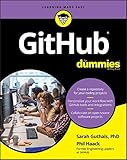
GitHub For Dummies

by foxebook

Editorial Reviews

Code collaboratively with GitHub

Once you’ve learned the basics of coding the next step is to start sharing your expertise, learning from other coding pros, or working as a collaborative member of development teams. GitHub is the go-to community for facilitating coding collaboration, and GitHub For Dummies is the next step on your journey as a developer.

Written by a GitHub engineer, this book is packed with insight on how GitHub works and how you can use it to become a more effective, efficient, and valuable member of any collaborative programming team.

  • Store and share your work online with GitHub
  • Collaborate with others on your team or across the international coding community
  • Embrace open-source values and processes
  • Establish yourself as a valuable member of the GitHub community

From setting up GitHub on your desktop and launching your first project to cloning repositories, finding useful apps on the marketplace, and improving workflow, GitHub For Dummies covers the essentials the novice programmer needs to enhance collaboration and teamwork with this industry-standard tool.

Book Details

  • Author: Guthals, Phil Haack
  • Pages: 384 pages
  • Edition: 1
  • Publication Date: 2019-05-29
  • Publisher: For Dummies
  • Language: English
  • ISBN-10: 1119572673
  • ISBN-13: 9781119572671

Book Preview

Click to Look Inside This eBook: Browse Sample Pages

PDF eBook Free Download

Note: There is a file embedded within this post, please visit this post to download the file.

The post GitHub For Dummies appeared first on Fox eBook.

05 Jun 22:19

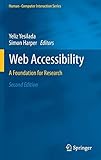
Web Accessibility: A Foundation for Research, 2nd Edition

by foxebook

Editorial Reviews

Covering key areas of evaluation and methodology, client-side applications, specialist and novel technologies, along with initial appraisals of disabilities, this important book provides comprehensive coverage of web accessibility. Written by leading experts in the field, it provides an overview of existing research and also looks at future developments, providing a much deeper insight than can be obtained through existing research libraries, aggregations, or search engines.

Book Details

  • Pages: 807 pages
  • Edition: 2nd ed. 2019
  • Publication Date: 2019-08-07
  • Publisher: Springer
  • Language: English
  • ISBN-10: 1447174399
  • ISBN-13: 9781447174394

Book Preview

Click to Look Inside This eBook: Browse Sample Pages

PDF eBook Free Download

Note: There is a file embedded within this post, please visit this post to download the file.

The post Web Accessibility: A Foundation for Research, 2nd Edition appeared first on Fox eBook.

05 Jun 22:15

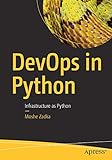
DevOps in Python: Infrastructure as Python

by foxebook

Editorial Reviews

Explore and apply best practices for efficient application deployment. This book draws upon author Moshe Zadka's years of Dev Ops experience and focuses on the parts of Python, and the Python ecosystem, that are relevant for DevOps engineers.

You'll start by writing command-line scripts and automating simple DevOps-style tasks. You'll then move on to more advanced cases, like using Jupyter as an auditable remote-control panel, and writing Ansible and Salt extensions. This work also covers how to use the AWS API to manage cloud infrastructure, and how to manage Python programs and environments on remote machines.

Python was invented as a systems management language for distributed operating systems, which makes it an ideal tool for DevOps. ​Assuming a basic understanding of Python concepts, this book is perfect for engineers who want to move from operations/system administration into coding.

What You'll Learn

  • Use third party packages and create new packages
  • Create operating system management and automation code in Python
  • Write testable code, and testing best practices
  • Work with REST APIs for web clients 

Who This Book Is For

Junior or intermediate sysadmin who has picked up some bash and Python basics.

Book Details

  • Author: Moshe Zadka
  • Pages: 169 pages
  • Edition: 1st ed.
  • Publication Date: 2019-07-29
  • Publisher: Apress
  • Language: English
  • ISBN-10: 148424432X
  • ISBN-13: 9781484244326

Book Preview

Click to Look Inside This eBook: Browse Sample Pages

PDF eBook Free Download

Note: There is a file embedded within this post, please visit this post to download the file.

The post DevOps in Python: Infrastructure as Python appeared first on Fox eBook.

04 Jun 21:37

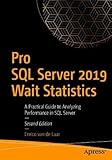
Pro SQL Server 2019 Wait Statistics, 2nd Edition

by foxebook

Editorial Reviews

Here is a practical guide for analyzing and troubleshooting SQL Server performance using wait statistics. Learn to identify precisely why your queries are running slowly. Measure the amount of time consumed by each bottleneck so that you can focus attention on making the largest improvements first. This edition is updated to cover analysis of wait statistics inside Query Store, the CXCONSUMER wait event, and to be current with SQL Server 2019. Whether you are new to wait statistics, or already familiar with them, this book provides a deeper understanding on how wait statistics are generated and what they can mean for your SQL Server instance’s performance.

Pro SQL Server 2019 Wait Statistics goes beyond the most common wait types into the more complex and performance-threatening wait types. You’ll learn about per-query wait statistics and session-based wait statistics, and the types of problems they each can help you solve. The different wait types are categorized by their area of impact, including CPU, IO, Lock, and many more.

The book presents clear examples to help you gain practical knowledge of why and how specific wait times increase or decrease, and how they impact your SQL Server’s performance. After reading this book you won’t want to be without the valuable information that wait statistics provide regarding where you should be spending your limited tuning time to maximize performance and value to your business.

What You'll Learn

  • Identify resource bottlenecks in a running SQL Server instance
  • Locate wait statistics information inside DMVs and Query Store
  • Analyze the root cause of sub-optimal performance
  • Diagnose I/O contention and locking contention
  • Benchmark SQL Server performance
  • Lower the wait time of the most popular wait types

Who This Book Is For

Database administrators who want to identify and resolve performance bottlenecks, those who want to learn more about how the SQL Server engine accesses and uses resources inside SQL Server, and administrators concerned with achieving―and knowing they have achieved―optimal performance

Book Details

  • Author: Enrico van de Laar
  • Pages: 399 pages
  • Edition: 2nd ed.
  • Publication Date: 2019-07-19
  • Publisher: Apress
  • Language: English
  • ISBN-10: 1484249151
  • ISBN-13: 9781484249154

Book Preview

Click to Look Inside This eBook: Browse Sample Pages

PDF eBook Free Download

Note: There is a file embedded within this post, please visit this post to download the file.

The post Pro SQL Server 2019 Wait Statistics, 2nd Edition appeared first on Fox eBook.

03 Jun 21:47

Improving your C# Skills

by foxebook

Editorial Reviews

Conquer complex and interesting programming challenges by building robust and concurrent applications with caches, cryptography, and parallel programming.

Key Features

  • Understand how to use .NET frameworks like the Task Parallel Library (TPL)and CryptoAPI
  • Develop a containerized application based on microservices architecture
  • Gain insights into memory management techniques in .NET Core

Book Description

This Learning Path shows you how to create high performing applications and solve programming challenges using a wide range of C# features. You'll begin by learning how to identify the bottlenecks in writing programs, highlight common performance pitfalls, and apply strategies to detect and resolve these issues early. You'll also study the importance of micro-services architecture for building fast applications and implementing resiliency and security in .NET Core. Then, you'll study the importance of defining and testing boundaries, abstracting away third-party code, and working with different types of test double, such as spies, mocks, and fakes. In addition to describing programming trade-offs, this Learning Path will also help you build a useful toolkit of techniques, including value caching, statistical analysis, and geometric algorithms. This Learning Path includes content from the following Packt products:

  • C# 7 and .NET Core 2.0 High Performance by Ovais Mehboob Ahmed Khan
  • Practical Test-Driven Development using C# 7 by John Callaway, Clayton Hunt
  • The Modern C# Challenge by Rod Stephens

What you will learn

  • Measure application performance using BenchmarkDotNet
  • Leverage the Task Parallel Library (TPL) and Parallel Language Integrated Query (PLINQ)library to perform asynchronous operations
  • Modify a legacy application to make it testable
  • Use LINQ and PLINQ to search directories for files matching patterns
  • Find areas of polygons using geometric operations
  • Randomize arrays and lists with extension methods
  • Use cryptographic techniques to encrypt and decrypt strings and files

Who this book is for

If you want to improve the speed of your code and optimize the performance of your applications, or are simply looking for a practical resource on test driven development, this is the ideal Learning Path for you. Some familiarity with C# and .NET will be beneficial.

Table of Contents

  1. What's New in .NET Core 2 and C# 7?
  2. Understanding .NET Core Internals and Measuring Performance
  3. Multithreading and Asynchronous Programming in .NET Core
  4. Securing and Implementing Resilience in .NET Core Applications
  5. Why TDD is Important
  6. Setting Up the .NET Test Environment
  7. Setting Up a JavaScript Environment
  8. What to Know Before Getting Started
  9. Tabula Rasa
  10. Testing JavaScript Applications
  11. Exploring Integrations
  12. Changes in Requirements
  13. The Legacy Problem
  14. Unraveling a Mess
  15. Geometry
  16. Randomization
  17. Files and Directories
  18. Advanced C# and .NET Features
  19. Cryptography

Book Details

Book Preview

Click to Look Inside This eBook: Browse Sample Pages

PDF eBook Free Download

Note: There is a file embedded within this post, please visit this post to download the file.

The post Improving your C# Skills appeared first on Fox eBook.

03 Jun 21:34

Learn Chart.js

by foxebook

Editorial Reviews

Design interactive graphics and visuals for your data-driven applications using the popular open-source Chart.js data visualization library.

Key Features

  • Harness the power of JavaScript, HTML, and CSS to create interactive visualizations
  • Display quantitative information efficiently in the form of attractive charts by using Chart.js
  • A practical guide for creating data-driven applications using open-source JavaScript library

Book Description

Chart.js is a free, open-source data visualization library, maintained by an active community of developers in GitHub, where it rates as the second most popular data visualization library. If you want to quickly create responsive Web-based data visualizations for the Web, Chart.js is a great choice.

This book guides the reader through dozens of practical examples, complete with code you can run and modify as you wish. It is a practical hands-on introduction to Chart.js. If you have basic knowledge of HTML, CSS and JavaScript you can learn to create beautiful interactive Web Canvas-based visualizations for your data using Chart.js. This book will help you set up Chart.js in a Web page and show how to create each one of the eight Chart.js chart types. You will also learn how to configure most properties that override Chart's default styles and behaviors. Practical applications of Chart.js are exemplified using real data files obtained from public data portals. You will learn how to load, parse, filter and select the data you wish to display from those files. You will also learn how to create visualizations that reveal patterns in the data. This book is based on Chart.js version 2.7.3 and ES2015 JavaScript.

By the end of the book, you will be able to create beautiful, efficient and interactive data visualizations for the Web using Chart.js.

What you will learn

  • Learn how to create interactive and responsive data visualizations using Chart.js
  • Learn how to create Canvas-based graphics without Canvas programming
  • Create composite charts and configure animated data updates and transitions
  • Efficiently display quantitative information using bar and line charts, scatterplots, and pie charts
  • Learn how to load, parse, and filter external files in JSON and CSV formats
  • Understand the benefits of using a data visualization framework

Who this book is for

The ideal target audience of this book includes web developers and designers, data journalists, data scientists and artists who wish to create interactive data visualizations for the Web. Basic knowledge of HTML, CSS, and JavaScript is required. No Canvas knowledge is necessary.

Table of Contents

  1. Introduction
  2. Technology Fundamentals
  3. Chart.js - Quick start
  4. Creating Charts
  5. Scales and Grid Configuration
  6. Configuring Styles and Interactivity
  7. Advanced Chart.js

Book Details

  • Author: Helder da Rocha
  • Pages: 284 pages
  • Edition: 1
  • Publication Date: 2019-02-28
  • Publisher: Packt Publishing
  • Language: English
  • ISBN-10: 1789342481
  • ISBN-13: 9781789342482

Book Preview

Click to Look Inside This eBook: Browse Sample Pages

PDF eBook Free Download

Note: There is a file embedded within this post, please visit this post to download the file.

The post Learn Chart.js appeared first on Fox eBook.

03 Jun 07:39

Python: Advanced Guide to Artificial Intelligence

by foxebook

Editorial Reviews

Demystify the complexity of machine learning techniques and create evolving, clever solutions to solve your problems

Key Features

  • Master supervised, unsupervised, and semi-supervised ML algorithms and their implementation
  • Build deep learning models for object detection, image classification, similarity learning, and more
  • Build, deploy, and scale end-to-end deep neural network models in a production environment

Book Description

This Learning Path is your complete guide to quickly getting to grips with popular machine learning algorithms. You'll be introduced to the most widely used algorithms in supervised, unsupervised, and semi-supervised machine learning, and learn how to use them in the best possible manner. Ranging from Bayesian models to the MCMC algorithm to Hidden Markov models, this Learning Path will teach you how to extract features from your dataset and perform dimensionality reduction by making use of Python-based libraries.

You'll bring the use of TensorFlow and Keras to build deep learning models, using concepts such as transfer learning, generative adversarial networks, and deep reinforcement learning. Next, you'll learn the advanced features of TensorFlow1.x, such as distributed TensorFlow with TF clusters, deploy production models with TensorFlow Serving. You'll implement different techniques related to object classification, object detection, image segmentation, and more.

By the end of this Learning Path, you'll have obtained in-depth knowledge of TensorFlow, making you the go-to person for solving artificial intelligence problems

This Learning Path includes content from the following Packt products:

  • Mastering Machine Learning Algorithms by Giuseppe Bonaccorso
  • Mastering TensorFlow 1.x by Armando Fandango
  • Deep Learning for Computer Vision by Rajalingappaa Shanmugamani

What you will learn

  • Explore how an ML model can be trained, optimized, and evaluated
  • Work with Autoencoders and Generative Adversarial Networks
  • Explore the most important Reinforcement Learning techniques
  • Build end-to-end deep learning (CNN, RNN, and Autoencoders) models

Who this book is for

This Learning Path is for data scientists, machine learning engineers, artificial intelligence engineers who want to delve into complex machine learning algorithms, calibrate models, and improve the predictions of the trained model.

You will encounter the advanced intricacies and complex use cases of deep learning and AI. A basic knowledge of programming in Python and some understanding of machine learning concepts are required to get the best out of this Learning Path.

Table of Contents

  1. Machine Learning Model Fundamentals
  2. Introduction to Semi-Supervised Learning
  3. Graph-Based Semi-Supervised Learning
  4. Bayesian Networks and Hidden Markov Models
  5. EM Algorithm and Applications
  6. Hebbian Learning and Self-Organizing Maps
  7. Clustering Algorithms
  8. Advanced Neural Models
  9. Classical Machine Learning with TensorFlow
  10. Neural Networks and MLP with TensorFlow and Keras
  11. RNN with TensorFlow and Keras
  12. CNN with TensorFlow and Keras
  13. Autoencoder with TensorFlow and Keras
  14. TensorFlow Models in Production with TF Serving
  15. Deep Reinforcement Learning
  16. Generative Adversarial Networks
  17. Distributed Models with TensorFlow Clusters
  18. Debugging TensorFlow Models
  19. Tensor Processing Units
  20. Getting Started
  21. Image Classification
  22. Image Retrieval
  23. Object Detection
  24. Semantic Segmentation
  25. Similarity Learning

Book Details

Book Preview

Click to Look Inside This eBook: Browse Sample Pages

PDF eBook Free Download

Note: There is a file embedded within this post, please visit this post to download the file.

The post Python: Advanced Guide to Artificial Intelligence appeared first on Fox eBook.

02 Jun 04:41

Practical Internet of Things Security, 2nd Edition

by foxebook

Editorial Reviews

A practical, indispensable security guide that will navigate you through the complex realm of securely building and deploying systems in our IoT-connected world

Key Features

  • Learn best practices to secure your data from the device to the cloud
  • Use systems security engineering and privacy-by-design principles to design a secure IoT ecosystem
  • A practical guide that will help you design and implement cyber security strategies for your organization

Book Description

With the advent of the Internet of Things (IoT), businesses have to defend against new types of threat. The business ecosystem now includes the cloud computing infrastructure, mobile and fixed endpoints that open up new attack surfaces. It therefore becomes critical to ensure that cybersecurity threats are contained to a minimum when implementing new IoT services and solutions.

This book shows you how to implement cybersecurity solutions, IoT design best practices, and risk mitigation methodologies to address device and infrastructure threats to IoT solutions.

In this second edition, you will go through some typical and unique vulnerabilities seen within various layers of the IoT technology stack and also learn new ways in which IT and physical threats interact. You will then explore the different engineering approaches a developer/manufacturer might take to securely design and deploy IoT devices. Furthermore, you will securely develop your own custom additions for an enterprise IoT implementation. You will also be provided with actionable guidance through setting up a cryptographic infrastructure for your IoT implementations. You will then be guided on the selection and configuration of Identity and Access Management solutions for an IoT implementation. In conclusion, you will explore cloud security architectures and security best practices for operating and managing cross-organizational, multi-domain IoT deployments.

What you will learn

  • Discuss the need for separate security requirements and apply security engineering principles on IoT devices
  • Master the operational aspects of planning, deploying, managing, monitoring, and detecting the remediation and disposal of IoT systems
  • Use Blockchain solutions for IoT authenticity and integrity
  • Explore additional privacy features emerging in the IoT industry, such as anonymity, tracking issues, and countermeasures
  • Design a fog computing architecture to support IoT edge analytics
  • Detect and respond to IoT security incidents and compromises

Who this book is for

This book targets IT Security Professionals and Security Engineers (including pentesters, security architects and ethical hackers) who would like to ensure the security of their organization's data when connected through the IoT. Business analysts and managers will also find this book useful.

Table of Contents

  1. A Brave New World
  2. Vulnerabilities, Attacks and Countermeasures
  3. Approaches to Secure Development
  4. Secure Design of IoT Devices
  5. Operational Security Life Cycle
  6. Cryptographic Fundamentals for IoT Security Engineering
  7. Identity and Access Management Solutions for the IoT
  8. Mitigating IoT Privacy Concerns
  9. Setting Up an IoT Compliance Monitoring Program
  10. Cloud Security for the IoT
  11. IoT Incident Response and Forensic Analysis

Book Details

Book Preview

Click to Look Inside This eBook: Browse Sample Pages

PDF eBook Free Download

Note: There is a file embedded within this post, please visit this post to download the file.

The post Practical Internet of Things Security, 2nd Edition appeared first on Fox eBook.

02 Jun 00:37

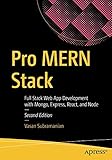
Pro MERN Stack, 2nd Edition

by foxebook

Editorial Reviews

Assemble the complete stack required to build a modern web app using MongoDB, Express, React, and Node. This book also covers many other complementary tools: React Router, GraphQL, React-Bootstrap, Babel, and Webpack. This new edition will use the latest version of React (React 16) and the latest React Router (React Router 4), which has a significantly different approach to routing compared to React Router 2 which was used in the first edition of the book.

Though the primary focus of Pro MERN Stack is to equip you with all that is required to build a full-fledged web application, a large portion of the book will be devoted to React 16. The popular MEAN (MongoDB, Express, AngularJS, Node) stack introduced Single Page Apps (SPAs) and front-end Model-View-Controller (MVC) as new and efficient paradigms.

Facebook's React is a technology that competes indirectly with AngularJS. It is not a full-fledged MVC framework. It is a JavaScript library for building user interfaces (in some sense the View part). Yet, it is possible to build a web app by replacing AngularJS with React – hence the term MERN stack

What You Will Learn

  • Discover the features of React 16 to get the maximum out of this library
  • Gain the basics of MongoDB, Express, and Node to build a web app
  • Work with other libraries complementary to React, including React-Bootstrap, React Router, and GraphQL
  • Use tools such as Babel and Webpack required to build JavaScript-based SPAs
  • Tie all the components together to build a complete web app.

Who This Book Is For

Developers and architects who have prior experience in any web app stack other than the MERN stack will find the book useful to learn about this modern stack. Prior knowledge of JavaScript, HTML, and CSS is required.

Book Details

  • Author: Vasan Subramanian
  • Pages: 568 pages
  • Edition: 2nd ed.
  • Publication Date: 2019-05-13
  • Publisher: Apress
  • Language: English
  • ISBN-10: 1484243900
  • ISBN-13: 9781484243909

Book Preview

Click to Look Inside This eBook: Browse Sample Pages

PDF eBook Free Download

Note: There is a file embedded within this post, please visit this post to download the file.

The post Pro MERN Stack, 2nd Edition appeared first on Fox eBook.

01 Jun 23:41

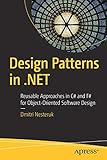
Design Patterns in .NET

by foxebook

Editorial Reviews

Implement design patterns in .NET using the latest versions of the C# and F# languages. This book provides a comprehensive overview of the field of design patterns as they are used in today’s developer toolbox.

Using the C# programming language, Design Patterns in .NET explores the classic design pattern implementation and discusses the applicability and relevance of specific language features for the purpose of implementing patterns. You will learn by example, reviewing scenarios where patterns are applicable. MVP and patterns expert Dmitri Nesteruk demonstrates possible implementations of patterns, discusses alternatives and pattern inter-relationships, and illustrates the way that a dedicated refactoring tool (ReSharper) can be used to implement design patterns with ease.

What You'll Learn

  • Know the latest pattern implementations available in C# and F#
  • Refer to researched and proven variations of patterns
  • Study complete, self-contained examples including many that cover advanced scenarios
  • Use the latest implementations of C# and Visual Studio/ReSharper

Who This Book Is For

Developers who have some experience in the C# language and want to expand their comprehension of the art of programming by leveraging design approaches to solving modern problems

Book Details

  • Author: Dmitri Nesteruk
  • Pages: 376 pages
  • Edition: 1st ed.
  • Publication Date: 2019-05-13
  • Publisher: Apress
  • Language: English
  • ISBN-10: 148424365X
  • ISBN-13: 9781484243657

Book Preview

Click to Look Inside This eBook: Browse Sample Pages

PDF eBook Free Download

Note: There is a file embedded within this post, please visit this post to download the file.

The post Design Patterns in .NET appeared first on Fox eBook.

01 Jun 23:24

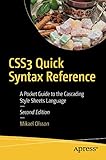
CSS3 Quick Syntax Reference, 2nd Edition

by foxebook

Editorial Reviews

The CSS3 Quick Syntax Reference is a 150-page syntax reference to the Cascading Style Sheets language. It presents the essentials of CSS3 in a well-organized format that can be used as a handy reference. You won’t find any technical jargon, bloated samples, drawn-out history lessons or witty stories in this book. What you will find is a CSS reference that is concise, to the point, and highly accessible. The book is packed with useful information and is a must-have for any CSS programmer or web developer.

What You Will Learn

  • Use the various selectors available in CSS3
  • Leverage various other CSS properties
  • Design and build web UIs using color, text, spacing, fonts, background, and more
  • Work with lists, tables, and media in CSS3
  • Employ CSS3 best practices

Who This Book Is For

Experienced programmers and web developers new to CSS3 or even new to CSS in general.

Book Details

  • Author: Mikael Olsson
  • Pages: 200 pages
  • Edition: 2nd ed.
  • Publication Date: 2019-05-13
  • Publisher: Apress
  • Language: English
  • ISBN-10: 148424902X
  • ISBN-13: 9781484249024

Book Preview

Click to Look Inside This eBook: Browse Sample Pages

PDF eBook Free Download

Note: There is a file embedded within this post, please visit this post to download the file.

The post CSS3 Quick Syntax Reference, 2nd Edition appeared first on Fox eBook.

01 Jun 23:22

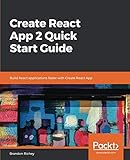
Create React App 2 Quick Start Guide

by foxebook

Editorial Reviews

Integrate your React applications with React to build efficient web services.

Key Features

  • Learn React by building applications with Create React App
  • Create interactive UIs exploring the latest feature of CRA 2.0
  • Build Progressive Web Applications for a more seamless web

Book Description

If you're a power user and you aren't happy always reusing default configurations, from previous applications with each new application, then all you need is Create React App (CRA), a tool in the React ecosystem designed to help you create boilerplate code for building a web frontend.

This book will help you use CRA to write React programs without significant configuration-related difficulties. With this quick start guide, you will integrate your applications with React to build efficient professional web services.You will learn to design UIs with the features of CRA and template your React applications.

By the end of the book, you will be sufficiently skilled to be able to build faster and effective React apps using CRA.

What you will learn

  • Become familiar with React by building applications with Create React App
  • Make your frontend development hassle free
  • Create interactive UIs exploring the latest features of CRA 2
  • Build modern, React projects with, SASS,and progressive web applications
  • Develop proxy backend servers and simulate interaction with a full backend
  • Keep your application fully tested and maintain confidence in your project

Who this book is for

The book is intended for the web developers who want to jump into building great frontend with React using easy templating solutions.

Table of Contents

  1. Introducing Create React App 2
  2. Creating our first Create React App Application
  3. Create React App and Babel
  4. Keep Your App Healthy with Tests and Jest
  5. Applying Modern CSS to Create React App Projects
  6. Simulate Your Backend with a Proxy API
  7. Building Progressive Web Applications
  8. Getting Your App Ready for Production

Book Details

  • Author: Brandon Richey
  • Pages: 188 pages
  • Edition: 1
  • Publication Date: 2019-02-27
  • Publisher: Packt Publishing
  • Language: English
  • ISBN-10: 178995276X
  • ISBN-13: 9781789952766

Book Preview

Click to Look Inside This eBook: Browse Sample Pages

PDF eBook Free Download

Note: There is a file embedded within this post, please visit this post to download the file.

The post Create React App 2 Quick Start Guide appeared first on Fox eBook.
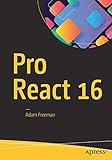
01 Jun 21:55

Pro React 16

by foxebook

Editorial Reviews

Use the enormously popular React framework to build dynamic JavaScript applications that take advantage of the capabilities of modern browsers and devices. You will learn how React brings the power of strong architecture and responsive data to the client, providing the foundation for complex and rich user interfaces.

Best-selling author Adam Freeman explains how to get the most from React. He begins by describing the React architecture and the benefits it offers and then shows you how to use React and its associated tools and libraries in your projects, starting from the nuts and bolts and building up to the most advanced and sophisticated features, going in-depth to give you the knowledge you need.

Each topic is presented clearly and concisely. Chapters include common problems and how to avoid them.

What You’ll Learn

  • Gain a solid understanding of the React design
  • Create rich and dynamic web app clients using React
  • Create data stores using Redux
  • Consume data using REST and GraphQL
  • Test your React projects

Who This Book Is For

JavaScript developers who want to use React to create dynamic client-side applications

Book Details

  • Author: Adam Freeman
  • Pages: 745 pages
  • Edition: 1st ed.
  • Publication Date: 2019-03-20
  • Publisher: Apress
  • Language: English
  • ISBN-10: 1484244508
  • ISBN-13: 9781484244500

Book Preview

Click to Look Inside This eBook: Browse Sample Pages

PDF eBook Free Download

Note: There is a file embedded within this post, please visit this post to download the file.

The post Pro React 16 appeared first on Fox eBook.