Shared posts

16 Aug 21:42

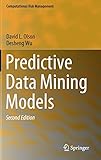
Predictive Data Mining Models, 2nd Edition

by foxebook

Editorial Reviews

This book provides an overview of predictive methods demonstrated by open source software modeling with Rattle (R’) and WEKA. Knowledge management involves application of human knowledge (epistemology) with the technological advances of our current society (computer systems) and big data, both in terms of collecting data and in analyzing it. We see three types of analytic tools. Descriptive analytics focus on reports of what has happened. Predictive analytics extend statistical and/or artificial intelligence to provide forecasting capability. It also includes classification modeling. Prescriptive analytics applies quantitative models to optimize systems, or at least to identify improved systems.  Data mining includes descriptive and predictive modeling.  Operations research includes all three. This book focuses on prescriptive analytics.

The book seeks to provide simple explanations and demonstration of some descriptive tools. This second edition provides more examples of big data impact, updates the content on visualization, clarifies some points, and expands coverage of association rules and cluster analysis. Chapter 1 gives an overview in the context of knowledge management. Chapter 2 discusses some basic data types. Chapter 3 covers fundamentals time series modeling tools, and Chapter 4 provides demonstration of multiple regression modeling. Chapter 5 demonstrates regression tree modeling.  Chapter 6 presents autoregressive/integrated/moving average models, as well as GARCH models. Chapter 7 covers the set of data mining tools used in classification, to include special variants support vector machines, random forests, and boosting.

Models are demonstrated using business related data. The style of the book is intended to be descriptive, seeking to explain how methods work, with some citations, but without deep scholarly reference. The data sets and software are all selected for widespread availability and access by any reader with computer links.

Book Details

  • Author: David L. Olson, Desheng Wu
  • Pages: 125 pages
  • Edition: 2nd ed. 2020
  • Publication Date: 2019-10-03
  • Publisher: Springer
  • Language: English
  • ISBN-10: 9811396639
  • ISBN-13: 9789811396632

Book Preview

Click to Look Inside This eBook: Browse Sample Pages

PDF eBook Free Download

Note: There is a file embedded within this post, please visit this post to download the file.

The post Predictive Data Mining Models, 2nd Edition appeared first on Fox eBook.

15 Aug 22:04

Embedded Systems: A Contemporary Design Tool, 2nd Edition

by foxebook

Editorial Reviews

Embedded Systems: A Contemporary Design Tool, Second Edition

Embedded systems are one of the foundational elements of today’s evolving and growing computer technology. From operating our cars, managing our smart phones, cleaning our homes, or cooking our meals, the special computers we call embedded systems are quietly and unobtrusively making our lives easier, safer, and more connected. While working in increasingly challenging environments, embedded systems give us the ability to put increasing amounts of capability into ever-smaller and more powerful devices.

Embedded Systems: A Contemporary Design Tool, Second Edition introduces you to the theoretical hardware and software foundations of these systems and expands into the areas of signal integrity, system security, low power, and hardware-software co-design. The text builds upon earlier material to show you how to apply reliable, robust solutions to a wide range of applications operating in today’s often challenging environments.

Taking the user’s problem and needs as your starting point, you will explore each of the key theoretical and practical issues to consider when designing an application in today’s world. Author James Peckol walks you through the formal hardware and software development process covering:

  • Breaking the problem down into major functional blocks;
  • Planning the digital and software architecture of the system;
  • Utilizing the hardware and software co-design process;
  • Designing the physical world interface to external analog and digital signals;
  • Addressing security issues as an integral part of the design process;
  • Managing signal integrity problems and reducing power demands in contemporary systems;
  • Debugging and testing throughout the design and development cycle;
  • Improving performance.

Stressing the importance of security, safety, and reliability in the design and development of embedded systems and providing a balanced treatment of both the hardware and the software aspects, Embedded Systems: A Contemporary Design Tool, Second Edition gives you the tools for creating embedded designs that solve contemporary real-world challenges.

Book Details

  • Author: James K. Peckol
  • Pages: 1080 pages
  • Edition: 2
  • Publication Date: 2019-06-10
  • Publisher: Wiley
  • Language: English
  • ISBN-10: 1119457505
  • ISBN-13: 9781119457503

Book Preview

Click to Look Inside This eBook: Browse Sample Pages

PDF eBook Free Download

Note: There is a file embedded within this post, please visit this post to download the file.

The post Embedded Systems: A Contemporary Design Tool, 2nd Edition appeared first on Fox eBook.

15 Aug 21:39

Programming Elm: Build Safe, Sane, and Maintainable Front-End Applications

by foxebook

Editorial Reviews

Elm brings the safety and stability of functional programing to front-end development, making it one of the most popular new languages. Elm's functional nature and static typing means that run-time errors are nearly impossible, and it compiles to JavaScript for easy web deployment. This book helps you take advantage of this new language in your web site development. Learn how the Elm Architecture will help you create fast applications. Discover how to integrate Elm with JavaScript so you can update legacy applications. See how Elm tooling makes deployment quicker and easier.

Functional programming offers safer applications with decreased runtime errors, but functional solutions that are type safe and easy to use have been hard to find, until the Elm language. Elm has the benefits of functional languages while compiling to JavaScript. This book provides a complete tutorial for the Elm language, starting with a simple static application that introduces Elm syntax, modules, and the virtual DOM, to exploring how to create a UI using functions. See how Elm handles the issues of state in functional languages. You'll continue to build up larger applications involving HTTP requests for communication. Integrate your Elm applications with JavaScript so you can update legacy applications or take advantage of JavaScript resources.

Elm also provides built-in tooling to alleviate the tooling creep that's so common in JavaScript. This book covers Elm's deployment and testing tools that ease development confusion. Dive into advanced concepts including creating single-page applications, and creating performance improvements. Elm expert Jeremy Fairbank brings his years of web development experience to teaching how to use Elm for front-end development.

Your web UIs will be faster, safer, and easier to develop with Elm and this tutorial.

What You Need:

You will need the latest version of Elm, 0.19, along with a browser to run the examples in this book.

Book Details

  • Author: Jeremy Fairbank
  • Pages: 308 pages
  • Edition: 1
  • Publication Date: 2019-07-16
  • Publisher: Pragmatic Bookshelf
  • Language: English
  • ISBN-10: 1680502859
  • ISBN-13: 9781680502855

Book Preview

Click to Look Inside This eBook: Browse Sample Pages

PDF eBook Free Download

Note: There is a file embedded within this post, please visit this post to download the file.

The post Programming Elm: Build Safe, Sane, and Maintainable Front-End Applications appeared first on Fox eBook.

15 Aug 21:37

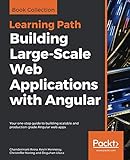
Building Large-Scale Web Applications with Angular

by foxebook

Editorial Reviews

A definitive guide on frontend development with Angular from design to deployment

Key Features

  • Develop web applications from scratch using Angular and TypeScript
  • Explore reactive programming principles and RxJS to develop and test apps easily
  • Study continuous integration and deployment on the AWS cloud

Book Description

If you have been burnt by unreliable JavaScript frameworks before, you will be amazed by the maturity of the Angular platform. Angular enables you to build fast, efficient, and real-world web apps. In this Learning Path, you'll learn Angular and to deliver high-quality and production-grade Angular apps from design to deployment.

You will begin by creating a simple fitness app, using the building blocks of Angular, and make your final app, Personal Trainer, by morphing the workout app into a full-fledged personal workout builder and runner with an advanced directive building - the most fundamental and powerful feature of Angular.

You will learn the different ways of architecting Angular applications using RxJS, and some of the patterns that are involved in it. Later you'll be introduced to the router-first architecture, a seven-step approach to designing and developing mid-to-large line-of-business apps, along with popular recipes. By the end of this book, you will be familiar with the scope of web development using Angular, Swagger, and Docker, learning patterns and practices to be successful as an individual developer on the web or as a team in the Enterprise.

This Learning Path includes content from the following Packt products:

  • Angular 6 by Example by Chandermani Arora, Kevin Hennessy
  • Architecting Angular Applications with Redux, RxJS, and NgRx by Christoffer Noring
  • Angular 6 for Enterprise-Ready Web Applications by Doguhan Uluca

What you will learn

  • Develop web applications from scratch using Angular and TypeScript
  • Explore reactive programming principles, RxJS to develop and test apps efficiently
  • Study continuous integration and deployment your Angular app on the AWS cloud

Who this book is for

If you're a JavaScript or frontend developer looking to gain comprehensive experience of using Angular for end-to-end enterprise-ready applications, this Learning Path is for you.

Table of Contents

  1. Building Our First App - 7 Minute Workout
  2. Personal Trainer
  3. Supporting Server Data Persistence
  4. Angular Directives in Depth
  5. 1.21 Gigawatt - Flux Pattern Explained
  6. Functional Reactive Programming
  7. Manipulating Streams and Their Values
  8. RxJS Advanced
  9. Create a Local Weather Web Application
  10. Prepare Angular App for Production Release
  11. Enhance Angular App with Angular Material
  12. Create a Router-First Line-of-Business App
  13. Continuous Integration and API Design
  14. Design Authentication and Authorization
  15. Angular App Design and Recipes
  16. Highly-Available Cloud Infrastructure on AWS

Book Details

Book Preview

Click to Look Inside This eBook: Browse Sample Pages

PDF eBook Free Download

Note: There is a file embedded within this post, please visit this post to download the file.

The post Building Large-Scale Web Applications with Angular appeared first on Fox eBook.

15 Aug 21:33

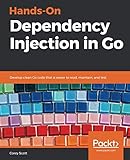
Hands-On Dependency Injection in Go

by foxebook

Editorial Reviews

Explore various dependency injection methods in Go such as monkey patching, constructor injection, and method injection

Key Features

  • Learn to evaluate Code UX and make it better
  • Explore SOLID principles and understand how they relate to dependency injection
  • Use Google's wire framework to simplify dependence management

Book Description

Hands-On Dependency Injection in Go takes you on a journey, teaching you about refactoring existing code to adopt dependency injection (DI) using various methods available in Go.

Of the six methods introduced in this book, some are conventional, such as constructor or method injection, and some unconventional, such as just-in-time or config injection. Each method is explained in detail, focusing on their strengths and weaknesses, and is followed with a step-by-step example of how to apply it. With plenty of examples, you will learn how to leverage DI to transform code into something simple and flexible. You will also discover how to generate and leverage the dependency graph to spot and eliminate issues. Throughout the book, you will learn to leverage DI in combination with test stubs and mocks to test otherwise tricky or impossible scenarios.

Hands-On Dependency Injection in Go takes a pragmatic approach and focuses heavily on the code, user experience, and how to achieve long-term benefits through incremental changes.

By the end of this book, you will have produced clean code that's easy to test.

What you will learn

  • Understand the benefits of DI
  • Explore SOLID design principles and how they relate to Go
  • Analyze various dependency injection patterns available in Go
  • Leverage DI to produce high-quality, loosely coupled Go code
  • Refactor existing Go code to adopt DI
  • Discover tools to improve your code's testability and test coverage
  • Generate and interpret Go dependency graphs

Who this book is for

Hands-On Dependency Injection in Go is for programmers with a few year s experience in any language and a basic understanding of Go. If you wish to produce clean, loosely coupled code that is inherently easier to test, this book is for you.

Table of Contents

  1. Never Stop Aiming for Better
  2. SOLID Design Principles for Go
  3. Coding for User Experience
  4. Introduction to the ACME Registration Service
  5. Dependency Injection with Monkey Patching
  6. Dependency Injection with Constructor Injection
  7. Dependency Injection with Method Injection
  8. Dependency Injection by Config
  9. Just-in-Time Dependency Injection
  10. Off-the-Shelf Injection
  11. Curb your enthusiasm
  12. Reviewing Our Progress

Book Details

  • Author: Corey Scott
  • Pages: 346 pages
  • Edition: 1
  • Publication Date: 2018-11-27
  • Publisher: Packt Publishing
  • Language: English
  • ISBN-10: 1789132762
  • ISBN-13: 9781789132762

Book Preview

Click to Look Inside This eBook: Browse Sample Pages

PDF eBook Free Download

Note: There is a file embedded within this post, please visit this post to download the file.

The post Hands-On Dependency Injection in Go appeared first on Fox eBook.

15 Aug 21:31

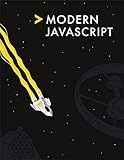
Modern JavaScript

by foxebook

Editorial Reviews

It's not uncommon these days to see people complaining about just how complex JavaScript development seems to have become. We can have some sympathy with that view when it's coming from someone new to the language. If you're learning JS, it won't take long for you to be exposed to the enormity of the ecosystem and the sheer number of moving pieces you need to understand (at least conceptually) to build a modern web application. Package management, linting, transpilation, module bundling, minification, source maps, frameworks, unit testing, hot reloading... it can't be denied that this is a lot more complex that just including a couple of script tags in your page and FTPing it up to the server.

Included topics:

  • The Anatomy of a Modern JavaScript Application by James Kolce
  • An Introduction to Gulp.js by Craig Buckler
  • The Basics of DOM Manipulation in Vanilla JavaScript (No jQuery) by Sebastian Seitz
  • A Beginner's Guide to Webpack 2 and Module Bundling by Mark Brown
  • React vs Angular: An In-depth Comparison by Pavels Jelisejevs
  • Retrofit Your Website as a Progressive Web App by Craig Buckler
  • 10 Tips to Become a Better Node Developer by Azat Mardan
  • An Introduction to Functional JavaScript by M. David Green
  • An Introduction to Chart.js 2.0 : Six Simple Examples by Jack Rometty
  • Learning JavaScript Test-Driven Development by Example by James Wright

This book is for intermediate level JavaScript developers. Some experience of JavaScript development is assumed.

Book Details

Book Preview

Click to Look Inside This eBook: Browse Sample Pages

PDF eBook Free Download

Note: There is a file embedded within this post, please visit this post to download the file.

The post Modern JavaScript appeared first on Fox eBook.

15 Aug 21:23

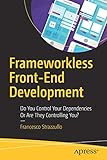
Frameworkless Front-End Development

by foxebook

Editorial Reviews

Explore an alternative method of front-end application development without using frameworks or third-party libraries. This book provides you with the required skills and freedom to consider a “no framework” approach when choosing a technology for creating a new project.

You’ll work through the most important issues in a clear and sensible way, using practical methods and tools to gain an understanding of non-functional requirements. This book answers questions on important topics such as state management, making a routing system, creating a REST client using fetch, and reveals the trade-offs and risks associated with choosing the wrong framework or tool for your project, as well as providing sustainable, functional alternatives.

Frameworkless Front-End Development breaks down the concept of technical debt and the ways in which a framework can impact the lifespan of a project. Along with gaining a comprehensive and clear guide on coding effectively from scratch without frameworks, you will also learn some principles of technical decision-making.

What You'll Learn

  • Review how DOM manipulation works
  • Manage the state of a front-end application with different patterns
  • Safely migrate existing applications to a new framework or to frameworkless code
  • Use decision-making tools such as a Framework Compass Chart and an Architectural Clash
  • See how the choice of frameworks can affect the ‘health’ and lifespan of a codebase

Who This Book Is For

JavaScript developers; technical managers responsible for helping teams choose technology stacks for new projects; consultants intending to refactor existing JavaScript front-end codebases

Book Details

  • Author: Francesco Strazzullo
  • Pages: 248 pages
  • Edition: 1st ed.
  • Publication Date: 2019-10-11
  • Publisher: Apress
  • Language: English
  • ISBN-10: 1484249666
  • ISBN-13: 9781484249666

Book Preview

Click to Look Inside This eBook: Browse Sample Pages

PDF eBook Free Download

Note: There is a file embedded within this post, please visit this post to download the file.

The post Frameworkless Front-End Development appeared first on Fox eBook.

08 Aug 22:34

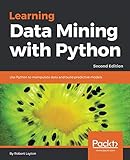
Learning Data Mining with Python, 2nd Edition

by foxebook

Editorial Reviews

Harness the power of Python to develop data mining applications, analyze data, delve into machine learning, explore object detection using Deep Neural Networks, and create insightful predictive models.

Key Features

  • Use a wide variety of Python libraries for practical data mining purposes.
  • Learn how to find, manipulate, analyze, and visualize data using Python.
  • Step-by-step instructions on data mining techniques with Python that have real-world applications.

Book Description

This book teaches you to design and develop data mining applications using a variety of datasets, starting with basic classification and affinity analysis. This book covers a large number of libraries available in Python, including the Jupyter Notebook, pandas, scikit-learn, and NLTK.

You will gain hands on experience with complex data types including text, images, and graphs. You will also discover object detection using Deep Neural Networks, which is one of the big, difficult areas of machine learning right now.

With restructured examples and code samples updated for the latest edition of Python, each chapter of this book introduces you to new algorithms and techniques. By the end of the book, you will have great insights into using Python for data mining and understanding of the algorithms as well as implementations.

What you will learn

  • Apply data mining concepts to real-world problems
  • Predict the outcome of sports matches based on past results
  • Determine the author of a document based on their writing style
  • Use APIs to download datasets from social media and other online services
  • Find and extract good features from difficult datasets
  • Create models that solve real-world problems
  • Design and develop data mining applications using a variety of datasets
  • Perform object detection in images using Deep Neural Networks
  • Find meaningful insights from your data through intuitive visualizations
  • Compute on big data, including real-time data from the internet

Table of Contents

  1. Getting Started with Data Mining
  2. Classifying with scikit-learn Estimators
  3. Predicting Sports Winners with Decision Trees
  4. Recommending Movies Using Affinity Analysis
  5. Features and scikit-learn Transformers
  6. Social Media Insight using Naive Bayes
  7. Follow Recommendations Using Graph Mining
  8. Beating CAPTCHAs with Neural Networks
  9. Authorship Attribution
  10. Clustering News Articles
  11. Object Detection in Images using Deep Neural Networks
  12. Working with Big Data
  13. Next Steps...

Book Details

  • Author: Robert Layton
  • Pages: 358 pages
  • Edition: 2nd Revised edition
  • Publication Date: 2017-04-27
  • Publisher: Packt Publishing
  • Language: English
  • ISBN-10: 1787126781
  • ISBN-13: 9781787126787

Book Preview

Click to Look Inside This eBook: Browse Sample Pages

PDF eBook Free Download

Note: There is a file embedded within this post, please visit this post to download the file.

The post Learning Data Mining with Python, 2nd Edition appeared first on Fox eBook.
08 Aug 21:30

Mastering Object-Oriented Python, 2nd Edition

by foxebook

Editorial Reviews

Gain comprehensive insights into programming practices, and code portability and reuse to build flexible and maintainable apps using object-oriented principles

Key Features

  • Extend core OOP techniques to increase integration of classes created with Python
  • Explore various Python libraries for handling persistence and object serialization
  • Learn alternative approaches for solving programming problems, with different attributes to address your problem domain

Book Description

Object-oriented programming (OOP) is a relatively complex discipline to master, and it can be difficult to see how general principles apply to each language's unique features. With the help of the latest edition of Mastering Objected-Oriented Python, you'll be shown how to effectively implement OOP in Python, and even explore Python 3.x.

Complete with practical examples, the book guides you through the advanced concepts of OOP in Python, and demonstrates how you can apply them to solve complex problems in OOP. You will learn how to create high-quality Python programs by exploring design alternatives and determining which design offers the best performance. Next, you'll work through special methods for handling simple object conversions and also learn about hashing and comparison of objects. As you cover later chapters, you'll discover how essential it is to locate the best algorithms and optimal data structures for developing robust solutions to programming problems with minimal computer processing. Finally, the book will assist you in leveraging various Python features by implementing object-oriented designs in your programs.

By the end of this book, you will have learned a number of alternate approaches with different attributes to confidently solve programming problems in Python.

What you will learn

  • Explore a variety of different design patterns for the __init__() method
  • Learn to use Flask to build a RESTful web service
  • Discover SOLID design patterns and principles
  • Use the features of Python 3's abstract base
  • Create classes for your own applications
  • Design testable code using pytest and fixtures
  • Understand how to design context managers that leverage the 'with' statement
  • Create a new type of collection using standard library and design techniques
  • Develop new number types above and beyond the built-in classes of numbers

Who this book is for

This book is for developers who want to use Python to create efficient programs. A good understanding of Python programming is required to make the most out of this book. Knowledge of concepts related to object-oriented design patterns will also be useful.

Table of Contents

  1. Preliminaries, Tools, and Techniques
  2. The __init__() Method
  3. Integrating Seamlessly - Basic Special Methods
  4. Attribute Access, Properties, and Descriptors
  5. The ABCs of Consistent Design
  6. Using Callables and Contexts
  7. Creating Containers and Collections
  8. Creating Numbers
  9. Decorators and Mixins - Cross-cutting Aspects
  10. Serializing and Saving - JSON, YAML, Pickle, CSV, and XML
  11. Storing and Retrieving Objects via Shelve
  12. Storing and Retrieving Objects via SQLite
  13. Transmitting and Sharing Objects
  14. Configuration Files and Persistence
  15. Design Principles and Patterns
  16. The Logging and Warning Modules
  17. Designing for Testability
  18. Coping With the Command Line
  19. Module and Package Design
  20. Quality and Documentation

Book Details

  • Author: Steven F. Lott
  • Pages: 770 pages
  • Edition: 1
  • Publication Date: 2019-06-14
  • Publisher: Packt Publishing
  • Language: English
  • ISBN-10: 1789531365
  • ISBN-13: 9781789531367

Book Preview

Click to Look Inside This eBook: Browse Sample Pages

PDF eBook Free Download

Note: There is a file embedded within this post, please visit this post to download the file.

The post Mastering Object-Oriented Python, 2nd Edition appeared first on Fox eBook.
08 Aug 21:27

Hands-On Industrial Internet of Things

by foxebook

Editorial Reviews

Build a strong and efficient IoT infrastructure at industrial and enterprise level by mastering Industrial IoT network

Key Features

  • Gain hands-on experience working with industrial architecture
  • Explore the potential of cloud-based Industrial IoT platforms, analytics, and protocols
  • Improve business models and transform your workforce with Industry 4.0

Book Description

We live in an era where advanced automation is used to achieve accurate results. To set up an automation environment, you need to first configure a network that can be accessed anywhere and by any device. This book is a practical guide that helps you discover the technologies and use cases for Industrial Internet of Things (IIOT).

Hands-On Industrial Internet of Things takes you through the implementation of industrial processes and specialized control devices and protocols. You'll study the process of identifying and connecting to different industrial data sources gathered from different sensors. Furthermore, you'll be able to connect these sensors to cloud network, such as AWS IoT, Azure IoT, Google IoT, and OEM IoT platforms, and extract data from the cloud to your devices.

As you progress through the chapters, you'll gain hands-on experience in using open source Node-Red, Kafka, Cassandra, and Python. You will also learn how to develop streaming and batch-based Machine Learning algorithms.

By the end of this book, you will have mastered the features of Industry 4.0 and be able to build stronger, faster, and more reliable IoT infrastructure in your Industry.

What you will learn

  • Explore industrial processes, devices, and protocols
  • Design and implement the I-IoT network flow
  • Gather and transfer industrial data in a secure way
  • Get to grips with popular cloud-based platforms
  • Understand diagnostic analytics to answer critical workforce questions
  • Discover the Edge device and understand Edge and Fog computing
  • Implement equipment and process management to achieve business-specific goals

Who this book is for

If you're an IoT architect, developer, or stakeholder working with architectural aspects of Industrial Internet of Things, this book is for you.

Table of Contents

  1. Introduction to Industrial IOT
  2. Understanding the Industrial IOT Process
  3. Industrial Data Flow and Devices
  4. Implementing Data Collection & Industrial IOT Gateway
  5. Applying Cyber Security
  6. Performing Industrial Protocols & Standards' exercise
  7. Developing Industrial IOT and Cloud Architecture
  8. Understanding Industrial OEM Cloud
  9. Implementing a Legacy Industrial IOT platform
  10. Implementing a Cloud I-IoT Solution with AWS IoT
  11. Implementing a Cloud I-IoT Solution with Google Cloud IoT
  12. Implementing a Practical I-IoT Solution with Azure IoT
  13. Performing Diagnostic, Maintenance and Predictive Analytics
  14. Implementing a Digital Twin: Advanced Analytics
  15. Performing an Analytics' Exercise

Book Details

Book Preview

Click to Look Inside This eBook: Browse Sample Pages

PDF eBook Free Download

Note: There is a file embedded within this post, please visit this post to download the file.

The post Hands-On Industrial Internet of Things appeared first on Fox eBook.

08 Aug 21:24

Jira 8 Administration Cookbook, 3rd Edition

by foxebook

Editorial Reviews

Build customized solutions that fulfil your business requirements using the latest features of Jira 8

Key Features

  • Learn how to customize Jira applications to suit your organizational requirements
  • Extend Jira's capabilities for custom integrations with other products and services such as Slack and GitHub
  • Explore practical recipes for troubleshooting and securing your Jira instances with best practices

Book Description

Jira is a project management tool used widely by organizations to plan, track, and release software. Jira administrators are at the heart of these processes and need to know how to successfully administer and customize Jira offerings. This updated Jira 8 Administration Cookbook demonstrates how to efficiently work with Jira Core and Jira Service Desk.

The book starts with a variety of recipes to help you manage users and workflows. You'll learn how to set up custom forms and capture important data with custom fields and screens. Next, you'll gain insights into the latest email capabilities, which assist you with everything from managing outgoing email rules to processing incoming emails for automated issue creation. Later, you'll be guided through running scripts to automate tasks, getting easy access to logs, and even working with tools to troubleshoot problems. The book will also ensure you understand how to integrate Jira with Slack, set up SSO with Google, and delegate administrator permissions. Finally, the chapter on Jira Service Desk will enable you to set up and customize your own support portal, work with internal teams to solve problems, and achieve optimized services with Service Level Agreement (SLA).

By the end of this book, you'll have the skills to extend and customize your Jira implementation effectively.

What you will learn

  • Learn how to delegate administrator permissions effectively
  • Gain insights into integrating Jira with Bitbucket Cloud and GitHub
  • Explore ways to collaborate with your internal teams on service requests
  • Understand how to add permissions to fields
  • Learn how to set up SSO with Google
  • Discover how to copy over configuration settings between Jira instances

Who this book is for

This book is for administrators who are looking to customize, support, and maintain Jira for their organizations. A good understanding of Jira's core concepts is a must to make the most out of this book. For certain recipes, some knowledge of HTML, CSS, JavaScript, and basic programming will also be helpful.

Table of Contents

  1. Jira Server Administration
  2. Customizing Jira for Your Projects
  3. Jira Workflows
  4. User Management
  5. Jira Security
  6. Emails and Notifications
  7. Integrations with Jira
  8. Jira Troubleshooting and Administration
  9. Jira Service Desk

Book Details

  • Author: Patrick Li
  • Pages: 280 pages
  • Edition: 1
  • Publication Date: 2019-06-27
  • Publisher: Packt Publishing
  • Language: English
  • ISBN-10: 1838558128
  • ISBN-13: 9781838558123

Book Preview

Click to Look Inside This eBook: Browse Sample Pages

PDF eBook Free Download

Note: There is a file embedded within this post, please visit this post to download the file.

The post Jira 8 Administration Cookbook, 3rd Edition appeared first on Fox eBook.
08 Aug 09:52

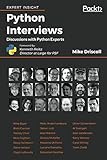
Python Interviews: Discussions with Python Experts

by foxebook

Editorial Reviews

Mike Driscoll takes you on a journey talking to a hall-of-fame list of truly remarkable Python experts. You'll be inspired every time by their passion for the Python language, as they share with you their experiences, contributions, and careers in Python.

Key Features

  • Hear from these key Python thinkers about the current status of Python, and where it's heading in the future
  • Listen to their close thoughts on significant Python topics, such as Python's role in scientific computing, and machine learning
  • Understand the direction of Python, and what needs to change for Python 4

Book Description

Each of these twenty Python Interviews can inspire and refresh your relationship with Python and the people who make Python what it is today. Let these interviews spark your own creativity, and discover how you also have the ability to make your mark on a thriving tech community. This book invites you to immerse in the Python landscape, and let these remarkable programmers show you how you too can connect and share with Python programmers around the world. Learn from their opinions, enjoy their stories, and use their tech tips.

  • Brett Cannon - former director of the PSF, Python core developer, led the migration to Python 3.
  • Steve Holden - tireless Python promoter and former chairman and director of the PSF.
  • Carol Willing - former director of the PSF and Python core developer, Project
  • Jupyter Steering Council member.
  • Nick Coghlan - founding member of the PSF and Python core developer.
  • Jessica McKellar - former director of the PSF and Python activist.
  • Marc-André Lemburg - Python core developer and founding member of the PSF.
  • Glyph Lefkowitz - founder of Twisted and fellow of the PSF
  • Doug Hellmann - fellow of the PSF, creator of the Python Module of the Week blog, Python community member since 1998.
  • Massimo Di Pierro - fellow of the PSF, data scientist and the inventor of web2py.
  • Alex Martelli - fellow of the PSF and co-author of Python in a Nutshell.
  • Barry Warsaw - fellow of the PSF, Python core developer since 1995, and original member of PythonLabs.
  • Tarek Ziadé - founder of Afpy and author of Expert Python Programming.
  • Sebastian Raschka - data scientist and author of Python Machine Learning.
  • Wesley Chun - fellow of the PSF and author of the Core Python Programming books.
  • Steven Lott - Python blogger and author of Python for Secret Agents.
  • Oliver Schoenborn - author of Pypubsub and wxPython mailing list contributor.
  • Al Sweigart - bestselling author and creator of the Python modules Pyperclip and PyAutoGUI.
  • Luciano Ramalho - fellow of the PSF and the author of Fluent Python.
  • Mike Bayer - fellow of the PSF, creator of open source libraries including SQLAlchemy.
  • Jake Vanderplas - data scientist and author of Python Data Science Handbook.

What you will learn

  • How successful programmers think
  • The history of Python
  • Insights into the minds of the Python core team
  • Trends in Python programming

Table of Contents

  1. Brett Cannon
  2. Steve Holden
  3. Carol Willing
  4. Glyph Lefkowitz
  5. Doug Hellmann
  6. Massimo Di Pierro
  7. Alex Martelli
  8. Marc-André Lemburg
  9. Barry Warsaw
  10. Jessica McKellar
  11. Tarek Ziadé
  12. Sebastian Raschka
  13. Wesley Chun
  14. Steven Lott
  15. Oliver Schoenborn
  16. Al Sweigart
  17. Luciano Ramalho
  18. Nick Coghlan
  19. Mike Bayer
  20. Jake Vanderplas

Book Details

  • Author: Mike Driscoll
  • Pages: 366 pages
  • Edition: 1
  • Publication Date: 2018-02-28
  • Publisher: Packt Publishing
  • Language: English
  • ISBN-10: 1788399080
  • ISBN-13: 9781788399081

Book Preview

Click to Look Inside This eBook: Browse Sample Pages

PDF eBook Free Download

Note: There is a file embedded within this post, please visit this post to download the file.

The post Python Interviews: Discussions with Python Experts appeared first on Fox eBook.

07 Aug 21:49

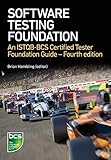
Software Testing, 4th edition

by foxebook

Editorial Reviews

This best-selling software testing title explains the basic steps of software testing and how to perform effective tests. It provides an overview of different techniques, both dynamic and static. It is the only official textbook of the ISTQB-BCS Certified Tester Foundation Level, with self-assessment exercises, guidance notes on the syllabus topics and sample examination questions. This fourth edition includes examples and exercises reflecting current technology and applications. It is ideal for those with a little experience of software testing who wish to cement their knowledge with industry-recognised techniques and theory.

Book Details

  • Author: Geoff Thompson, Peter Morgan
  • Pages: 296 pages
  • Edition: 4th Update ed.
  • Publication Date: 2019-07-26
  • Publisher: BCS
  • Language: English
  • ISBN-10: 1780174926
  • ISBN-13: 9781780174921

Book Preview

Click to Look Inside This eBook: Browse Sample Pages

PDF eBook Free Download

Note: There is a file embedded within this post, please visit this post to download the file.

The post Software Testing, 4th edition appeared first on Fox eBook.
05 Aug 21:44

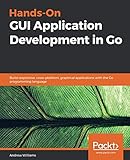
Hands-On GUI Application Development in Go

by foxebook

Editorial Reviews

Discover Golang's GUI libraries such as Go-GTK (GIMP Toolkit) and Go-Qt and build beautiful, performant, and responsive graphical applications

Key Features

  • Conceptualize and build state-of-art GUI applications with Golang (Go)
  • Tackle the complexity of varying GUI application sizes with a structured and scalable approach
  • Get hands-on experience of GUI development with Shiny, and labs/ui, Fyne, and Walk

Book Description

Go is often compared to C++ when it comes to low-level programming and implementations that require faster processing, such as Graphical User Interfaces (GUIs). In fact, many claim that Go is superior to C++ in terms of its concurrency and ease of use. Most graphical application toolkits, though, are still written using C or C++, and so they don't enjoy the benefits of using a modern programming language such as Go.

This guide to programming GUIs with Go 1.11 explores the various toolkits available, including UI, Walk, Shiny, and Fyne. The book compares the vision behind each project to help you pick the right approach for your project. Each framework is described in detail, outlining how you can build performant applications that users will love. To aid you further in creating applications using these emerging technologies, you'll be able to easily refer to code samples and screenshots featured in the book. In addition to toolkit-specific discussions, you'll cover more complex topics, such as how to structure growing graphical applications, and how cross-platform applications can integrate with each desktop operating system to create a seamless user experience. By delving into techniques and best practices for organizing and scaling Go-based graphical applications, you'll also glimpse Go's impressive concurrency system. In the concluding chapters, you'll discover how to distribute to the main desktop marketplaces and distribution channels.

By the end of this book, you'll be a confident GUI developer who can use the Go language to boost the performance of your applications.

What you will learn

  • Understand the benefits and complexities of building native graphical applications
  • Gain insights into how Go makes cross-platform graphical application development simple
  • Build platform-native GUI applications using andlabs/ui
  • Develop graphical Windows applications using Walk
  • Create multiplatform GUI applications using Shiny, Nuklear, and Fyne
  • Use Go wrappers for GTK and Qt for GUI application development
  • Streamline your requirements to pick the correct toolkit strategy

Who this book is for

This book is designed for Go developers who are interested in building native graphical applications for desktop computers and beyond. Some knowledge of building applications using Go is useful, but not essential. Experience in developing GUIs is not required as the book explores the benefits and challenges they pose. This book will also be beneficial for GUI application developers who are interested in trying Go.

Table of Contents

  1. The Benefits of Native Graphical Applications
  2. Graphical User Interface Challenges
  3. Go to the Rescue!
  4. Walk - Building Windows Applications
  5. andlabs UI - Cross Platform Native Uis
  6. Go-GTK - Multiple Platforms with GTK
  7. Go-Qt - Multiple Platforms with QT
  8. Shiny - Go's Experimental API
  9. nk - Nuklear for Go
  10. Fyne - Material Design based GUI
  11. Navigation and Multiple Windows
  12. Concurrency, Networking and Cloud Services
  13. Best practices in Go GUI development
  14. Distributing your Application
  15. Appendix

Book Details

  • Author: Andrew Williams
  • Pages: 450 pages
  • Edition: 1
  • Publication Date: 2019-02-25
  • Publisher: Packt Publishing
  • Language: English
  • ISBN-10: 1789138418
  • ISBN-13: 9781789138412

Book Preview

Click to Look Inside This eBook: Browse Sample Pages

PDF eBook Free Download

Note: There is a file embedded within this post, please visit this post to download the file.

The post Hands-On GUI Application Development in Go appeared first on Fox eBook.

05 Aug 21:41

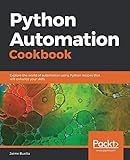
Python Automation Cookbook

by foxebook

Editorial Reviews

Step-by-step instructions which take you through each program to automate monotonous tasks with Python 3.7

Key Features

  • Automate integral business processes such as report generation, email marketing, and lead generation
  • Build your first web application that scrapes data and accesses websites' APIs
  • Create graphic-rich charts, graphs, and maps using Matplotlib

Book Description

Have you been doing the same old monotonous office work over and over again? Or have you been trying to find an easy way to make your life better by automating some of your repetitive tasks? Through a tried and tested approach, understand how to automate all the boring stuff using Python.

The Python Automation Cookbook helps you develop a clear understanding of how to automate your business processes using Python, including detecting opportunities by scraping the web, analyzing information to generate automatic spreadsheets reports with graphs, and communicating with automatically generated emails.

You'll learn how to get notifications via text messages and run tasks while your mind is focused on other important activities, followed by understanding how to scan documents such as resumes. Once you've gotten familiar with the fundamentals, you'll be introduced to the world of graphs, along with studying how to produce organized charts using Matplotlib. In addition to this, you'll gain in-depth knowledge of how to generate rich graphics showing relevant information.

By the end of this book, you'll have refined your skills by attaining a sound understanding of how to identify and correct problems to produce superior and reliable systems.

What you will learn

  • Get to grips with scraping a website to detect changes
  • Search and process raw sales files to aggregate information in spreadsheets
  • Explore techniques to extract information from an Excel spreadsheet and generate exciting reports with graphs
  • Discover the techniques required to generate random, print-friendly codes to be used as single-use coupons
  • Automatically generate a marketing campaign, contacting the recipients over different channels
  • Identify and implement precise solutions

Who this book is for

The Python Automation Cookbook is for you if you are a developer or anyone who wants to automate monotonous manual tasks related to fields such as finance, sales, and HR, among others.

Table of Contents

  1. Let Us Begin Our Automation Journey
  2. Automating Tasks Made Easy
  3. Building Your First Web Scraping Application
  4. Searching and Reading Local Files
  5. Generating Fantastic Reports
  6. Fun with Spreadsheets
  7. Developing Stunning Graphs
  8. Dealing with Communication Channels
  9. Why Not Automate Your Marketing Campaign?
  10. Debugging Techniques

Book Details

  • Author: Jaime Buelta
  • Pages: 398 pages
  • Edition: 1
  • Publication Date: 2018-09-27
  • Publisher: Packt Publishing
  • Language: English
  • ISBN-10: 1789133807
  • ISBN-13: 9781789133806

Book Preview

Click to Look Inside This eBook: Browse Sample Pages

PDF eBook Free Download

Note: There is a file embedded within this post, please visit this post to download the file.

The post Python Automation Cookbook appeared first on Fox eBook.

04 Aug 22:22

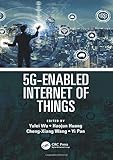
5G-Enabled Internet of Things

by foxebook

Editorial Reviews

How the enabling technologies in 5G as an integral or as a part can seamlessly fuel the IoT revolution is still very challenging. This book presents the state-of-the-art solutions to the theoretical and practical challenges stemming from the integration of 5G enabling technologies into IoTs in support of a smart 5G-enabled IoT paradigm, in terms of network design, operation, management, optimization, and applications. In particular, the technical focus covers a comprehensive understanding of 5G-enabled IoT architectures, converged access networks, smart network management, and emerging applications of 5G-eabled IoT.

Book Details

  • Pages: 418 pages
  • Edition: 1
  • Publication Date: 2019-06-13
  • Publisher: CRC Press
  • Language: English
  • ISBN-10: 0367190109
  • ISBN-13: 9780367190101

Book Preview

Click to Look Inside This eBook: Browse Sample Pages

PDF eBook Free Download

Note: There is a file embedded within this post, please visit this post to download the file.

The post 5G-Enabled Internet of Things appeared first on Fox eBook.

03 Aug 22:02

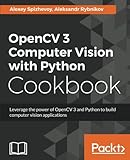
OpenCV 3 Computer Vision with Python Cookbook

by foxebook

Editorial Reviews

Recipe-based approach to tackle the most common problems in Computer Vision by leveraging the functionality of OpenCV using Python APIs

Key Features

  • Build computer vision applications with OpenCV functionality via Python API
  • Get to grips with image processing, multiple view geometry, and machine learning
  • Learn to use deep learning models for image classification, object detection, and face recognition

Book Description

OpenCV 3 is a native cross-platform library for computer vision, machine learning, and image processing. OpenCV's convenient high-level APIs hide very powerful internals designed for computational efficiency that can take advantage of multicore and GPU processing. This book will help you tackle increasingly challenging computer vision problems by providing a number of recipes that you can use to improve your applications.

In this book, you will learn how to process an image by manipulating pixels and analyze an image using histograms. Then, we'll show you how to apply image filters to enhance image content and exploit the image geometry in order to relay different views of a pictured scene. We’ll explore techniques to achieve camera calibration and perform a multiple-view analysis.

Later, you’ll work on reconstructing a 3D scene from images, converting low-level pixel information to high-level concepts for applications such as object detection and recognition. You’ll also discover how to process video from files or cameras and how to detect and track moving objects. Finally, you'll get acquainted with recent approaches in deep learning and neural networks.

By the end of the book, you’ll be able to apply your skills in OpenCV to create computer vision applications in various domains.

What you will learn

  • Get familiar with low-level image processing methods
  • See the common linear algebra tools needed in computer vision
  • Work with different camera models and epipolar geometry
  • Find out how to detect interesting points in images and compare them
  • Binarize images and mask out regions of interest
  • Detect objects and track them in videos

Who This Book Is For

This book is for developers who have a basic knowledge of Python. If you are aware of the basics of OpenCV and are ready to build computer vision systems that are smarter, faster, more complex, and more practical than the competition, then this book is for you.

Table of Contents

  1. IO and GUI
  2. Matrices colors and filters
  3. Contours and segmentation
  4. Object detection and machine learning
  5. Deep learning
  6. Linear algebra
  7. Detectors and descriptors
  8. Image and video processing
  9. Multiple view geometry

Book Details

Book Preview

Click to Look Inside This eBook: Browse Sample Pages

PDF eBook Free Download

Note: There is a file embedded within this post, please visit this post to download the file.

The post OpenCV 3 Computer Vision with Python Cookbook appeared first on Fox eBook.

03 Aug 21:59

Practical Java Programming for IoT, AI, and Blockchain

by foxebook

Editorial Reviews

Learn practical uses for some of the hottest tech applications trending among technology professionals 

We are living in an era of digital revolution. On the horizon, many emerging digital technologies are being developed at a breathtaking speed. Whether we like it or not, whether we are ready or not, digital technologies are going to penetrate more and more, deeper and deeper, into every aspect of our lives. This is going to fundamentally change how we live, how we work, and how we socialize.

Java, as a modern high-level programming language, is an excellent tool for helping us to learn these digital technologies, as well as to develop digital applications, such as IoT, AI, Cybersecurity, Blockchain and more. Practical Java Programming uses Java as a tool to help you learn these new digital technologies and to be better prepared for the future changes.

  • Gives you a brief overview for getting started with Java Programming
  • Dives into how you can apply your new knowledge to some of the biggest trending applications today
  • Helps you understand how to program Java to interact with operating systems, networking, and mobile applications
  • Shows you how Java can be used in trending tech applications such as IoT (Internet of Things), AI (Artificial Intelligence), Cybersecurity, and Blockchain

Get ready to find out firsthand how Java can be used for connected home devices, healthcare, the cloud, and all the hottest tech applications.

Book Details

  • Author: Perry Xiao
  • Pages: 400 pages
  • Edition: 1
  • Publication Date: 2019-07-23
  • Publisher: Wiley
  • Language: English
  • ISBN-10: 1119560012
  • ISBN-13: 9781119560012

Book Preview

Click to Look Inside This eBook: Browse Sample Pages

PDF eBook Free Download

Note: There is a file embedded within this post, please visit this post to download the file.

The post Practical Java Programming for IoT, AI, and Blockchain appeared first on Fox eBook.

02 Aug 23:06

Django 2 Web Development Cookbook, 3rd Edition

by foxebook

Editorial Reviews

Create unbelievably fast, robust and secure web apps with Django web framework and Python 3.6

Key Features

  • Discover solutions to a variety of web application scenarios by leveraging the power of the Django framework
  • Understand URL routing, models, forms, templates, and RESTful services with Django 2.14
  • Test, deploy, and scale your web applications efficiently with Amazon Web Services (AWS)

Book Description

Django is a framework designed to balance rapid web development with high performance. It handles high levels of user traffic and interaction, integrates with a variety of databases, and collects and processes data in real time. This book follows a task-based approach to guide you through developing using the Django 2.1 framework.

You'll get started by setting up and configuring Docker containers and a virtual environment for your project. Next, you'll learn how to write reusable pieces of code for your models and manage database changes. You'll then work with forms and views to enter and list data, and even apply practical examples using both templates and JavaScript for the optimum user experience. This Django cookbook will also help you adjust the built-in Django administration to fit your needs and boost security and performance to make your web applications as robust, scalable, and dependable as possible. A dedicated section will later guide you on how to use Django CMS, the popular content management suite. Finally, you'll get up to speed with programming and debugging tricks. The book's systematic approach will also help you easily collect data from different sources and provide it to others in various formats.

By the end of this book, you'll have the skills you need to test and deploy projects to a remote dedicated server and scale your application to meet user demand.

What you will learn

  • Learn how to set up the basic configuration necessary to start any Django project
  • Build a database structure out of reusable model mixins
  • Secure web applications against malicious usage and address common performance bottlenecks
  • Integrate and extend the Django CMS
  • Construct and manage complex and deep hierarchies
  • Import data from local sources and external web services and export it to third parties

Who this book is for

This book is for Python developers working on fast and secure web apps that can scale over time. You'll also find this book useful if you want to upgrade to the latest Django framework. Knowledge of Python 3 along with a basic understanding of the Django framework will be beneficial.

Table of Contents

  1. Getting Started with Django 2.1
  2. Database Structure and Modeling
  3. Forms and Views
  4. Templates and JavaScript
  5. Custom Template Filters and Tags
  6. Model Administration
  7. Security and Performance
  8. Django CMS
  9. Hierarchical Structures
  10. Importing and Exporting Data
  11. Bells and Whistles
  12. Testing and Deployment

Book Details

Book Preview

Click to Look Inside This eBook: Browse Sample Pages

PDF eBook Free Download

Note: There is a file embedded within this post, please visit this post to download the file.

The post Django 2 Web Development Cookbook, 3rd Edition appeared first on Fox eBook.
02 Aug 22:20

Eloquent JavaScript, 3rd Edition: A Modern Introduction to Programming

by foxebook

Editorial Reviews

Completely revised and updated, this best-selling introduction to programming in JavaScript focuses on writing real applications.

JavaScript lies at the heart of almost every modern web application, from social apps like Twitter to browser-based game frameworks like Phaser and Babylon. Though simple for beginners to pick up and play with, JavaScript is a flexible, complex language that you can use to build full-scale applications.

This much anticipated and thoroughly revised third edition of Eloquent JavaScript dives deep into the JavaScript language to show you how to write beautiful, effective code. It has been updated to reflect the current state of Java¬Script and web browsers and includes brand-new material on features like class notation, arrow functions, iterators, async functions, template strings, and block scope. A host of new exercises have also been added to test your skills and keep you on track.

As with previous editions, Haverbeke continues to teach through extensive examples and immerses you in code from the start, while exercises and full-chapter projects give you hands-on experience with writing your own programs. You start by learning the basic structure of the JavaScript language as well as control structures, functions, and data structures to help you write basic programs. Then you'll learn about error handling and bug fixing, modularity, and asynchronous programming before moving on to web browsers and how JavaScript is used to program them. As you build projects such as an artificial life simulation, a simple programming language, and a paint program, you'll learn how to:

  • Understand the essential elements of programming, including syntax, control, and data
  • Organize and clarify your code with object-oriented and functional programming techniques
  • Script the browser and make basic web applications
  • Use the DOM effectively to interact with browsers
  • Harness Node.js to build servers and utilities

Isn't it time you became fluent in the language of the Web?

* All source code is available online in an inter¬active sandbox, where you can edit the code, run it, and see its output instantly.

Book Details

  • Author: Marijn Haverbeke
  • Pages: 472 pages
  • Edition: 3
  • Publication Date: 2018-12-04
  • Publisher: No Starch Press
  • Language: English
  • ISBN-10: 1593279507
  • ISBN-13: 9781593279509

Book Preview

Click to Look Inside This eBook: Browse Sample Pages

PDF eBook Free Download

Note: There is a file embedded within this post, please visit this post to download the file.

The post Eloquent JavaScript, 3rd Edition: A Modern Introduction to Programming appeared first on Fox eBook.
02 Aug 22:18

Hands-On Dark Web Analysis

by foxebook

Editorial Reviews

Understanding the concept Dark Web and Dark Net to utilize it for effective cybersecurity

Key Features

  • Understand the concept of Dark Net and Deep Web
  • Use Tor to extract data and maintain anonymity
  • Develop a security framework using Deep web evidences

Book Description

The overall world wide web is divided into three main areas - the Surface Web, the Deep Web, and the Dark Web. The Deep Web and Dark Web are the two areas which are not accessible through standard search engines or browsers. It becomes extremely important for security professionals to have control over these areas to analyze the security of your organization.

This book will initially introduce you to the concept of the Deep Web and the Dark Web and their significance in the security sector. Then we will deep dive into installing operating systems and Tor Browser for privacy, security and anonymity while accessing them. During the course of the book, we will also share some best practices which will be useful in using the tools for best effect.

By the end of this book, you will have hands-on experience working with the Deep Web and the Dark Web for security analysis

What you will learn

  • Access the Deep Web and the Dark Web
  • Learn to search and find information in the Dark Web
  • Protect yourself while browsing the Dark Web
  • Understand what the Deep Web and Dark Web are
  • Learn what information you can gather, and how

Who this book is for

This book is targeted towards security professionals, security analyst, or any stakeholder interested in learning the concept of deep web and dark net. No prior knowledge on Deep Web and Dark Net is required

Table of Contents

  1. Understanding the Deep Web
  2. Working with the Deep Web
  3. The future of the Deep Web
  4. Installing a Linux Virtual Machine
  5. Accessing the Deep Web with ToR browser
  6. Installing TailsOS
  7. Installing Whonix
  8. Installing Qubes OS
  9. What goes on in the Dark Net – Case Studies
  10. The dangers of the Dark Net
  11. Using the Dark Net for your business

Book Details

  • Author: Sion Retzkin
  • Pages: 210 pages
  • Edition: 1
  • Publication Date: 2018-12-26
  • Publisher: Packt Publishing
  • Language: English
  • ISBN-10: 178913336X
  • ISBN-13: 9781789133363

Book Preview

Click to Look Inside This eBook: Browse Sample Pages

PDF eBook Free Download

Note: There is a file embedded within this post, please visit this post to download the file.

The post Hands-On Dark Web Analysis appeared first on Fox eBook.
25 Jul 23:01

Distributed Real-Time Systems: Theory and Practice

by foxebook

Editorial Reviews

This classroom-tested textbook describes the design and implementation of software for distributed real-time systems, using a bottom-up approach. The text addresses common challenges faced in software projects involving real-time systems, and presents a novel method for simply and effectively performing all of the software engineering steps. Each chapter opens with a discussion of the core concepts, together with a review of the relevant methods and available software. This is then followed with a description of the implementation of the concepts in a sample kernel, complete with executable code.

Topics and features: introduces the fundamentals of real-time systems, including real-time architecture and distributed real-time systems; presents a focus on the real-time operating system, covering the concepts of task, memory, and input/output management; provides a detailed step-by-step construction of a real-time operating system kernel, which is then used to test various higher level implementations; describes periodic and aperiodic scheduling, resource management, and distributed scheduling; reviews the process of application design from high-level design methods to low-level details of design and implementation; surveys real-time programming languages and fault tolerance techniques; includes end-of-chapter review questions, extensive C code, numerous examples, and a case study implementing the methods in real-world applications; supplies additional material at an associated website.

Requiring only a basic background in computer architecture and operating systems, this practically-oriented work is an invaluable study aid for senior undergraduate and graduate-level students of electrical and computer engineering, and computer science. The text will also serve as a useful general reference for researchers interested in real-time systems.

Book Details

  • Author: K. Erciyes
  • Pages: 341 pages
  • Edition: 1st ed. 2019
  • Publication Date: 2019-09-16
  • Publisher: Springer
  • Language: English
  • ISBN-10: 3030225690
  • ISBN-13: 9783030225698

Book Preview

Click to Look Inside This eBook: Browse Sample Pages

PDF eBook Free Download

Note: There is a file embedded within this post, please visit this post to download the file.

The post Distributed Real-Time Systems: Theory and Practice appeared first on Fox eBook.
25 Jul 22:23

The Java Module System

by foxebook

Editorial Reviews

Summary

Java's much-awaited "Project Jigsaw" is finally here! Java 11 includes a built-in modularity framework, and The Java Module System is your guide to discovering it. In this new book, you'll learn how the module system improves reliability and maintainability, and how it can be used to reduce tight coupling of system components.

Foreword by Kevlin Henney.

Purchase of the print book includes a free eBook in PDF, Kindle, and ePub formats from Manning Publications. You'll find registration instructions inside the print book.

About the Technology

Packaging code into neat, well-defined units makes it easier to deliver safe and reliable applications. The Java Platform Module System is a language standard for creating these units. With modules, you can closely control how JARs interact and easily identify any missing dependencies at startup. This shift in design is so fundamental that starting with Java 9, all core Java APIs are distributed as modules, and libraries, frameworks, and applications will benefit from doing the same.

About the Book

The Java Module System is your in-depth guide to creating and using Java modules. With detailed examples and easy-to-understand diagrams, you'll learn the anatomy of a modular Java application. Along the way, you'll master best practices for designing with modules, debugging your modular app, and deploying to production.

What's inside

  • The anatomy of a modular Java app
  • Building modules from source to JAR
  • Migrating to modular Java
  • Decoupling dependencies and refining APIs
  • Handling reflection and versioning
  • Customizing runtime images
  • Updated for Java 11

About the Reader

Perfect for developers with some Java experience.

About the Author

Nicolai Parlog is a developer, author, speaker, and trainer. His home is codefx.org.

Table of Contents

PART 1 - Hello, modules

  1. First piece of the puzzle
  2. Anatomy of a modular application
  3. Defining modules and their properties
  4. Building modules from source to JAR
  5. Running and debugging modular applications

PART 2 - Adapting real-world projects

  1. Compatibility challenges when moving to Java 9 or later
  2. Recurring challenges when running on Java 9 or later
  3. Incremental modularization of existing projects
  4. Migration and modularization strategies

PART 3 - Advanced module system features

  1. Using services to decouple modules
  2. Refining dependencies and APIs
  3. Reflection in a modular world
  4. Module versions: What's possible and what's not
  5. Customizing runtime images with jlink
  6. Putting the pieces together

Book Details

  • Author: Nicolai Parlog
  • Pages: 440 pages
  • Edition: 1
  • Publication Date: 2019-07-18
  • Publisher: Manning Publications
  • Language: English
  • ISBN-10: 1617294284
  • ISBN-13: 9781617294280

Book Preview

Click to Look Inside This eBook: Browse Sample Pages

PDF eBook Free Download

Note: There is a file embedded within this post, please visit this post to download the file.

The post The Java Module System appeared first on Fox eBook.
25 Jul 22:08

Multimedia Big Data Computing for IoT Applications

by foxebook

Editorial Reviews

This book considers all aspects of managing the complexity of Multimedia Big Data Computing (MMBD) for IoT applications and develops a comprehensive taxonomy. It also discusses a process model that addresses a number of research challenges associated with MMBD, such as scalability, accessibility, reliability, heterogeneity, and Quality of Service (QoS) requirements, presenting case studies to demonstrate its application. Further, the book examines the layered architecture of MMBD computing and compares the life cycle of both big data and MMBD. Written by leading experts, it also includes numerous solved examples, technical descriptions, scenarios, procedures, and algorithms.

Book Details

  • Pages: 477 pages
  • Edition: 1st ed. 2020
  • Publication Date: 2019-09-10
  • Publisher: Springer
  • Language: English
  • ISBN-10: 9811387583
  • ISBN-13: 9789811387586

Book Preview

Click to Look Inside This eBook: Browse Sample Pages

PDF eBook Free Download

Note: There is a file embedded within this post, please visit this post to download the file.

The post Multimedia Big Data Computing for IoT Applications appeared first on Fox eBook.
25 Jul 22:01

Programming Kubernetes: Developing Cloud-Native Applications

by foxebook

Editorial Reviews

If you’re looking to develop native applications in Kubernetes, this is your guide. Developers and AppOps administrators will learn how to build Kubernetes-native applications that interact directly with the API server to query or update the state of resources. AWS developer advocate Michael Hausenblas and Red Hat principal software engineer Stefan Schimanski explain the characteristics of these apps and show you how to program Kubernetes to build them.

You’ll explore the basic building blocks of Kubernetes, including the client-go API library and custom resources. All you need to get started is a rudimentary understanding of development and system administration tools and practices, such as package management, the Go programming language, and Git.

  • Walk through Kubernetes API basics and dive into the server’s inner structure
  • Explore Kubernetes’s programming interface in Go, including Kubernetes API objects
  • Learn about custom resources—the central extension tools used in the Kubernetes ecosystem
  • Use tags to control Kubernetes code generators for custom resources
  • Write custom controllers and operators and make them production ready
  • Extend the Kubernetes API surface by implementing a custom API server

Book Details

Book Preview

Click to Look Inside This eBook: Browse Sample Pages

PDF eBook Free Download

Note: There is a file embedded within this post, please visit this post to download the file.

The post Programming Kubernetes: Developing Cloud-Native Applications appeared first on Fox eBook.
23 Jul 22:41

Practical Industrial Internet of Things Security

by foxebook

Editorial Reviews

Skillfully navigate through the complex realm of implementing scalable, trustworthy industrial systems and architectures in a hyper-connected business world.

Key Features

  • Gain practical insight into security concepts in the Industrial Internet of Things (IIoT) architecture
  • Demystify complex topics such as cryptography and blockchain
  • Comprehensive references to industry standards and security frameworks when developing IIoT blueprints

Book Description

Securing connected industries and autonomous systems is a top concern for the Industrial Internet of Things (IIoT) community. Unlike cybersecurity, cyber-physical security is an intricate discipline that directly ties to system reliability as well as human and environmental safety. Practical Industrial Internet of Things Security enables you to develop a comprehensive understanding of the entire spectrum of securing connected industries, from the edge to the cloud.

This book establishes the foundational concepts and tenets of IIoT security by presenting real-world case studies, threat models, and reference architectures. You'll work with practical tools to design risk-based security controls for industrial use cases and gain practical know-how on the multi-layered defense techniques including Identity and Access Management (IAM), endpoint security, and communication infrastructure. Stakeholders, including developers, architects, and business leaders, can gain practical insights in securing IIoT lifecycle processes, standardization, governance and assess the applicability of emerging technologies, such as blockchain, Artificial Intelligence, and Machine Learning, to design and implement resilient connected systems and harness significant industrial opportunities.

What you will learn

  • Understand the crucial concepts of a multi-layered IIoT security framework
  • Gain insight on securing identity, access, and configuration management for large-scale IIoT deployments
  • Secure your machine-to-machine (M2M) and machine-to-cloud (M2C) connectivity
  • Build a concrete security program for your IIoT deployment
  • Explore techniques from case studies on industrial IoT threat modeling and mitigation approaches
  • Learn risk management and mitigation planning

Who this book is for

Practical Industrial Internet of Things Security is for the IIoT community, which includes IIoT researchers, security professionals, architects, developers, and business stakeholders. Anyone who needs to have a comprehensive understanding of the unique safety and security challenges of connected industries and practical methodologies to secure industrial assets will find this book immensely helpful. This book is uniquely designed to benefit professionals from both IT and industrial operations backgrounds.

Table of Contents

  1. An Unprecedented Opportunity at Stake
  2. Industrial Data Pipeline and Security Architecture
  3. IIoT Identity and Access Management
  4. Endpoint Security and Trustworthiness
  5. Securing Connectivity and Communications
  6. Securing IIoT Edge, Cloud and Apps
  7. Secure Processes and Governance
  8. IIoT Security using Emerging Technologies
  9. IIoT Security: Real World Case Studies
  10. The Road Ahead
  11. Appendix I
  12. Appendix II

Book Details

Book Preview

Click to Look Inside This eBook: Browse Sample Pages

PDF eBook Free Download

Note: There is a file embedded within this post, please visit this post to download the file.

The post Practical Industrial Internet of Things Security appeared first on Fox eBook.
23 Jul 21:51

Hands-On Serverless Computing

by foxebook

Editorial Reviews

Deploy functions efficiently using different cloud-based serverless offerings

Key Features

  • Understand the concept of Function-as-a-Service
  • Implement Serverless solutions using AWS Lambda, Azure Functions and Google Cloud Functions
  • Practical approach towards choosing the best tool for your serverless environment

Book Description

Serverless applications and architectures are gaining momentum and are increasingly being used by companies of all sizes. Serverless software takes care of many problems that developers face when running systems and servers, such as fault tolerance, centralized logging, horizontal scalability, and deployments.

You will learn how to harness serverless technology to rapidly reduce production time and minimize your costs, while still having the freedom to customize your code, without hindering functionality. Upon finishing the book, you will have the knowledge and resources to build your own serverless application hosted in AWS, Microsoft Azure, or Google Cloud Platform, and will have experienced the benefits of event-driven technology for yourself.

This hands-on guide dives into the basis of serverless architectures and how to build them using Node.js as a programming language, Visual Studio Code for code editing, and Postman for quickly and securely developing applications without the hassle of configuring and maintaining infrastructure on three public cloud platforms.

What you will learn

  • Understand the benefts of serverless computing and know when to use it
  • Develop serverless applications on AWS, Azure, and Google Cloud
  • Get to grips with Function as a Service (FaaS)
  • Apply triggers to serverless functions
  • Build event-driven apps using serverless frameworks
  • Use the Node.js programming language to build serverless apps
  • Use code editors, such as Visual Studio Code, as development environments
  • Master the best development practices for creating scalable and practical solutions

Who this book is for

This book is targeted towards developers, system administrators or any stakeholder working in the Serverless environment and want to understand how functions work.

Basic idea of serverless architecture can be an added advantage

Table of Contents

  1. What is Serverless Computing?
  2. Development environment, Tools, and SDKs
  3. Getting started with AWS Lambda
  4. Triggers and events for AWS Lambda
  5. Your first Serverless application on AWS
  6. Serverless Orchestration on AWS
  7. Getting started with Azure Functions
  8. Triggers and Bindings for Azure Functions
  9. Your first Serverless application on Azure
  10. Getting started with Google Cloud Functions
  11. Triggers and events for Google Cloud Functions
  12. Your first Serverless application on Google Cloud
  13. Reference Architecture for a Web App
  14. Reference Architecture for a Real-time File Processing

Book Details

  • Author: Kuldeep Chowhan
  • Pages: 350 pages
  • Edition: 1
  • Publication Date: 2018-07-23
  • Publisher: Packt Publishing
  • Language: English
  • ISBN-10: 1788836650
  • ISBN-13: 9781788836654

Book Preview

Click to Look Inside This eBook: Browse Sample Pages

PDF eBook Free Download

Note: There is a file embedded within this post, please visit this post to download the file.

The post Hands-On Serverless Computing appeared first on Fox eBook.
23 Jul 21:27

Practical Flutter

by foxebook

Editorial Reviews

Explore what Flutter has to offer, where it came from, and where it’s going. Mobile development is progressing at a fast rate and with Flutter – an open-source mobile application development SDK created by Google – you can develop applications for Android and iOS, as well as Google Fuchsia.Learn to create three apps (a personal information manager, a chat system, and a game project) that you can install on your mobile devices and use for real. You will begin by getting a solid foundation of Flutter knowledge, and building on it immediately by constructing two more traditional productivity apps.. You will also learn to create a game, enabling you to see a whole other perspective on what Flutter can do. In addition to building these apps, you'll have the benefit of reviewing real-world issues you might encounter, along with ways to deal with them through tips and tricks, all designed to make your Flutter experience that much more productive and, frankly, fun!

Practical Flutter will leave you with a solid grasp of how to build apps with Flutter, and springboard into creating more advanced apps on your own. By the time your journey through this material concludes, another larger one will begin as you springboard, well-prepared, into the larger world of Flutter development, tackling any project that comes your way with aplomb. Practical Flutter is a learning adventure you won't want to miss.

What You'll Learn

  • Get a Flutter project started and logically structure it
  • Use the interface elements Flutter provides, such as widgets, controls, and extensions
  • Build layouts using interface elements
  • Use available tooling, specifically Android Studio
  • Leverage server-side development and connect a Flutter app to a server back-end.

Who This Book Is For

Mobile developers who are looking to build for multiple mobile platforms and trying to do so with a codebase that is largely the same across all. Basic knowledge of iOS and Android generally, and some general programming experience is expected.

Book Details

  • Author: Frank Zammetti
  • Pages: 396 pages
  • Edition: 1st ed.
  • Publication Date: 2019-08-16
  • Publisher: Apress
  • Language: English
  • ISBN-10: 1484249712
  • ISBN-13: 9781484249710

Book Preview

Click to Look Inside This eBook: Browse Sample Pages

PDF eBook Free Download

Note: There is a file embedded within this post, please visit this post to download the file.

The post Practical Flutter appeared first on Fox eBook.
23 Jul 21:24

Hands-On Deep Learning for IoT

by foxebook

Editorial Reviews

Implement popular deep learning techniques to make your IoT applications smarter

Key Features

  • Understand how deep learning facilitates fast and accurate analytics in IoT
  • Build intelligent voice and speech recognition apps in TensorFlow and Chainer
  • Analyze IoT data for making automated decisions and efficient predictions

Book Description

Artificial Intelligence is growing quickly, which is driven by advancements in neural networks(NN) and deep learning (DL). With an increase in investments in smart cities, smart healthcare, and industrial Internet of Things (IoT), commercialization of IoT will soon be at peak in which massive amounts of data generated by IoT devices need to be processed at scale.

Hands-On Deep Learning for IoT will provide deeper insights into IoT data, which will start by introducing how DL fits into the context of making IoT applications smarter. It then covers how to build deep architectures using TensorFlow, Keras, and Chainer for IoT.

You'll learn how to train convolutional neural networks(CNN) to develop applications for image-based road faults detection and smart garbage separation, followed by implementing voice-initiated smart light control and home access mechanisms powered by recurrent neural networks(RNN).

You'll master IoT applications for indoor localization, predictive maintenance, and locating equipment in a large hospital using autoencoders, DeepFi, and LSTM networks. Furthermore, you'll learn IoT application development for healthcare with IoT security enhanced.

By the end of this book, you will have sufficient knowledge need to use deep learning efficiently to power your IoT-based applications for smarter decision making.

What you will learn

  • Get acquainted with different neural network architectures and their suitability in IoT
  • Understand how deep learning can improve the predictive power in your IoT solutions
  • Capture and process streaming data for predictive maintenance
  • Select optimal frameworks for image recognition and indoor localization
  • Analyze voice data for speech recognition in IoT applications
  • Develop deep learning-based IoT solutions for healthcare
  • Enhance security in your IoT solutions
  • Visualize analyzed data to uncover insights and perform accurate predictions

Who this book is for

If you're an IoT developer, data scientist, or deep learning enthusiast who wants to apply deep learning techniques to build smart IoT applications, this book is for you. Familiarity with machine learning, a basic understanding of the IoT concepts, and some experience in Python programming will help you get the most out of this book.

Table of Contents

  1. End-to-End Life Cycle of IoT
  2. Deep Learning Architectures for IoT
  3. Image Recognition in IoT
  4. Audio/Speech/Voice Recognition in IoT
  5. Indoor localization in IoT
  6. Physiological and Psychological State Detection in IoT
  7. Security and privacy for IoT
  8. Predictive Maintenance for IoT
  9. Deep learning in Healthcare IoT
  10. What's next: Wrapping Up and Future Directions

Book Details

Book Preview

Click to Look Inside This eBook: Browse Sample Pages

PDF eBook Free Download

Note: There is a file embedded within this post, please visit this post to download the file.

The post Hands-On Deep Learning for IoT appeared first on Fox eBook.
22 Jul 21:26

Learning Apache OpenWhisk: Developing Open Serverless Solutions

by foxebook

Editorial Reviews

Serverless computing greatly simplifies software development. Your team can focus solely on your application while the cloud provider manages the servers you need. This practical guide shows you step-by-step how to build and deploy complex applications in a flexible multicloud, multilanguage environment using Apache OpenWhisk. You’ll learn how this platform enables you to pursue a vendor-independent approach using preconfigured containers, microservices, and Kubernetes as your cloud operating system.

Michele Sciabarrà demonstrates how to build a serverless application using classical design patterns and the programming language or languages that best fit your task. You’ll start by building a simple serverless application hands-on before diving into the more complex aspects of the OpenWhisk platform.

  • Examine how OpenWhisk’s serverless architecture works, including the use of packages, actions, sequences, triggers, rules, and feeds
  • Learn how OpenWhisk compares to existing architectures, such as Java Enterprise Edition
  • Manipulate OpenWhisk features using the command-line interface or a JavaScript API
  • Design applications using common Gang of Four design patterns
  • Use architectural design patterns such as model-view-controller to combine several OpenWhisk actions
  • Learn how to test and debug your code in a serverless environment

Book Details

  • Author: Michele Sciabarrà
  • Pages: 394 pages
  • Edition: 1
  • Publication Date: 2019-07-13
  • Publisher: O'Reilly Media
  • Language: English
  • ISBN-10: 1492046167
  • ISBN-13: 9781492046165

Book Preview

Click to Look Inside This eBook: Browse Sample Pages

PDF eBook Free Download

Note: There is a file embedded within this post, please visit this post to download the file.

The post Learning Apache OpenWhisk: Developing Open Serverless Solutions appeared first on Fox eBook.