Shared posts

03 Jun 12:01

40 Maps That Explain The Internet

How the world gets online: mobile broadband penetration in 2012

This map shows the percentage of consumers around the world who have mobile internet access (note that the colors on this map are not directly comparable to the previous map). In the developed world, people usually got fixed internet access first and obtained mobile internet devices later. But some developing countries are skipping the construction of fixed broadband networks altogether. This is cost-effective because a single cell phone tower can provide service to hundreds of customers. For examle, 2.7 percent of Egyptians have fixed broadband service at home, but 10 times as many Egyptians have internet access using a cell phone. The story is similar in Ghana, Uzbekistan, Indonesia, South Africa, and Nigeria. Mobile internet access can have profound implications for people in isolated areas. Farmers can use mobile phones to learn about recent market developments, increasing the amount they can get for their crops. Some mobile phone operators also offer sophisticated payment capabilities, allowing people who don't have access to the conventional banking system to make electronic payments. A few wealthy countries, including Japan, South Korea, and Sweden, that have more mobile internet subscriptions than people. Some customers have two more or smartphones, tablets, or other connected mobile devices.

03 Jun 10:50

The Anti Hashtag-Activist Activist

by DOGHOUSE DIARIES

The Anti Hashtag-Activist Activist

How dare you feel moved to participate in the human condition by echoing something you hold to be true in the hope that it will raise awareness on issues of social justice!

02 Jun 21:00

This Femme Darkwing Duck Cosplay Is The Terror That Flaps In The Night

by Geek Girl Diva

darkwing duck

Send your cosplay tips to tips@fashionablygeek.com.

(via Reddit)

02 Jun 20:53

Using Encapsulation for Semantic Markup

by Chris Coyier
Dan Jones

This is some cool stuff. Why do I always feel like I'm constantly behind in my field?

The following is a guest article by Chris Scott. Chris takes us through a great use case for the Shadow DOM. As designers, we may want to style something in a certain way, but sometimes end up having to go to war with HTML, CSS, and JS to get it done. And even then, the results can be weighty, hacky, and unsemantic. Shadow DOM might be able to save us from that, giving us a fresh place to use whatever HTML we need (need 20 empty elements? No problem!) without exposing that mess to the actual DOM (which would suck for accessibility, semantics, etc.)

File inputs are notoriously hard to style. Let's say you want to use an SVG icon instead of the default button-and-filename styling.

onjective

That is not a trivial styling change. Input elements are "no content" elements, i.e. an element that doesn't have a closing tag. Thus, there is nowhere to put an SVG element "inside" of it. So how might you go about this?

Well, let's take a progressive enhancement approach and start with the basic functionality:

<form>
  <input type="file"></input>
</form>

What do we get out of the box? Semantically, it's very descriptive: there's an element that allows the user to input a file. It's also functional: if you click on it a file system dialogue opens.

Now let's think about adding the icon. You could put the image near the input, perhaps using z-indexes and transparent inputs to retain the functionality of the input (like this). This approach is okay semantically (you have an input and an image) but it definitely feels hacky and is more difficult to test. Alternatively, you could use an <img> tag and drop the <input> altogether, but then you have all the issues of replicating the file input's functionality and you have lost a bunch of meaning from the markup.

(There are other ways you could go about this as well. For instance a label-with-hidden-input, but for the sake of getting to the point here, let's move on.)

Shadow DOM

A better approach, in my opinion, is using Shadow DOM. Shadow DOM is one of the ingredients to Web Components, and you can read up on all that here. I just want to talk about its semantic benefits, for now.

Shadow DOM is described in the W3C draft spec as functional encapsulation or functional boundaries. That means we can encapsulate some design and pin it to an existing node on the DOM tree (called the Shadow Root). Returning to our example:

var button = document.querySelector(&#x27;input[type=&quot;file&quot;]&#x27;);
var shadowDom = button.webkitCreateShadowRoot();
shadowDom.innerHTML = &quot;&lt;div&gt;Hello from the other side&lt;/div&gt;&quot;;

See the Pen gHEei by chrismichaelscott (@chrismichaelscott) on CodePen.

Take a look at the result in the Pen above. This may look like a long-winded way of changing some HTML but that's not actually what happened. If you were to "inspect element" in your browser you would still see the original file input - no sign of a div at all. More to the point, if you click on the string the browser will pop up a file system dialogue. This is the crux of encapsulation: from the outside the input is still an input but if you traverse the functional boundary then it's not an input at all, it's a string. That means that we can make an input (or any other tag, for that matter) render in any way want. We can set the inner HTML of the Shadow Root to be any valid HTML and it will render as such. Including, of course, adding SVG.

var button = document.querySelector(&#x27;input[type=&quot;file&quot;]&#x27;);
var shadowDom = button.webkitCreateShadowRoot();
shadowDom.innerHTML = &quot;&lt;img src=\&quot;https://s3-eu-west-1.amazonaws.com/chrisscott/codepen/iconmonstr-archive-7-icon.svg\&quot; alt=\&quot;Select file\&quot;&gt;&lt;/img&gt;&quot;;

See the Pen jiqoh by chrismichaelscott (@chrismichaelscott) on CodePen.

Clearly that isn't a particularly good looking alternative, but it's a start. And the HTML is simple and semantically correct. To take this further let's look at another tool in the HTML5 Web Components toolbox that's useful for this kind of thing: template tags.

Templates

Template tags are basically a way of building HTML that is not rendered. The cool thing about templates is that you can use JavaScript to inject the DOM from a template into an element elsewhere in the document. In this case, we can define a template for our fancy vector image file input and use that to define the Shadow DOM for actual input tags. Here's a suitable template:

<template id="file-button-template">
  <style>
    img {
      padding: 6px;
      border: 1px solid grey;
      border-radius: 4px;
      box-shadow: 1px 1px 4px grey;
      background-color: lightgrey;
      width: 30px;
      cursor: pointer;
    }
    img:hover {
      background-color: whitesmoke;
    }
  </style>
  <img src="https://s3-eu-west-1.amazonaws.com/chrisscott/codepen/iconmonstr-archive-7-icon.svg" alt="Select file"></img>
</template>

Bringing it all together

The template element can be placed into the head of a document, and I think that's a nice place for it. The following Pen has the template we just defined in the head. If you open it on CodePen.io you can see the template by clicking the cog in the top left of the HTML panel.

See the Pen jghes by chrismichaelscott (@chrismichaelscott) on CodePen.

Pretty good, I reckon. Semantically, it's exactly the same as the vanilla HTML but it is visually completely bespoke.

Browser support, polyfills and graceful degradation

There's some bad news (then more bad news and then a little, tiny glimmer of good news) in terms of support for Shadow DOM in browsers.

The first piece of bad news is that editing Shadow DOM is, currently, only supported in WebKit/Blink browsers, using the prefixed element.webkitCreateShadowRoot() method. Firefox 30 should support Shadow DOM as well, though.

Bad news number two: Polyfils may not support this use case - certainly Polymer doesn't. In the case of the Polymer platform, to understand why the polyfill doesn't behave as the native implementation does one needs to understand the mechanics of the polyfill. Essentially, the Polymer platform performs it's encapsulation by replacing native DOM nodes with wrappers. These wrappers emulate the behaviour of actual DOM nodes; for example, you can set the innerHTML of the wrapper as you would a native node. The wrappers maintain the so-called light DOM and shadow DOM. In terms of encapsulation, this works fairly well as the wrapper can intercept calls on the light side (such as the children getter) and hide the shadow DOM.

var light = document.querySelector(&quot;div&quot;);
var template = document.querySelector(&quot;template&quot;);

light.createShadowRoot().innerHTML = template.innerHTML;

document.querySelector(&quot;code&quot;).innerHTML = 
  light.innerHTML

See the Pen FCknf by chrismichaelscott (@chrismichaelscott) on CodePen.

In this example, the retieved inner HTML of the "light" DOM show the encapsulation working (there is no h1 tag). However, the polyfill has not used actual Shadow DOM (otherwise it wouldn't be a polyfill!) and you can verify that if you inspect the first div from the results. In the DOM, you will see, there is an h1 tag - not hidden in the Shadow DOM, just there. That's because, underneath the wrapper, the Polymer platform is just manipulating the regular DOM tree as there is no shadow root.

In terms of the file input SVG icon that is not good. If one were to run the demo of the file input with the Polymer polyfill, as with the previous example, it would merely insert the img tag as a child of the input. If you recall, that is not allowed. An input is a void element and has no permitted child elements, so the browser will just ignore the img and style elements as invalid children. Here is a fork of the 'pen illustrating the issue; again, inspect the element and you can verify that the polyfill has added the template as children of the input.

And so, to the promised "tiny glimmer of good news"... Even though support is limited at the moment, I still think that it is justifiable to start using Shadow DOM to do things like this, now. Why? If your user's browser doesn't support Shadow DOM it will just render a normal file input. That's not a bad thing and considering the complex (read: hacky) alternatives I think Shadow DOM should be considered a plausible choice.

Notes on Shadow DOM, Web Components, etc

There are a huge number of use-cases for Shadow DOM and the related Web Components. This article has completely overlooked the advantages of encapsulation in terms of developing frameworks and widgets. For those interested it's worth reading the specs and getting to grips with Polymer.

Using Encapsulation for Semantic Markup is a post from CSS-Tricks

02 Jun 16:32

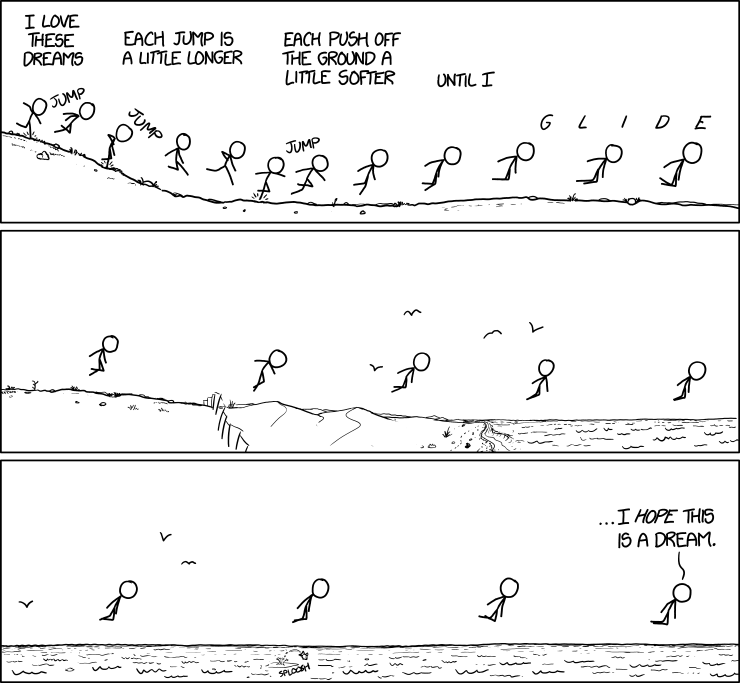
Jump

Dan Jones

I love those kinds of dreams.

Or that I'm at least following the curve of the Earth around to land ...
02 Jun 16:32

June 02, 2014


02 Jun 16:31

Leonardo da Vinci's resume

by Jason Kottke

When he was around 32 years old, Leonardo da Vinci applied to the Duke of Milan, Ludovico Sforza, for a job. The duke was in need of military expertise and Leonardo's 10-point CV emphasized his military engineering skills:

3. Also, if one cannot, when besieging a terrain, proceed by bombardment either because of the height of the glacis or the strength of its situation and location, I have methods for destroying every fortress or other stranglehold unless it has been founded upon a rock or so forth.

4. I have also types of cannon, most convenient and easily portable, with which to hurl small stones almost like a hail-storm; and the smoke from the cannon will instil a great fear in the enemy on account of the grave damage and confusion.

And I love what is almost an aside at the end of the list:

Also I can execute sculpture in marble, bronze and clay. Likewise in painting, I can do everything possible as well as any other, whosoever he may be.

Oh yeah, P.S., by the way, not that it matters, I am also the greatest living artist in the world, no big deal. Yr pal, Leo. (via farnam street and the letters of note book)

Tags: art   Leonardo da Vinci   Ludovico Sforza   working
02 Jun 16:30

75th Anniversary Batman Shirt Has All The Logos [T-Shirt]

by Nicole Wakelin

bat

The Caped Crusader is 75 years old and this shirt celebrates the many iterations of his logo over the years. This officially licensed Batman product has an allover sublimated design in a distressed print. The very center logo is the 75th anniversary version with the words “75 Years of Batman” printed underneath.

Product Page ($29.88)

02 Jun 14:26

Pixar's Renderman Software Is Now Free. Go Make Your Own 'Toy Story'

News By Lee Mathews May. 31, 2014 12:01 pm
Pixar Renderman

Aspiring animators, listen up! Pixar’s working on a brand new version of Renderman, the in-house software they use to render (duh) all their awesome digital creations. There are a slew of improvements coming, but the big news is that there’s a version you can download for free.

That’s a pretty amazing giveaway — Renderman is a $500 piece of software. Between Autodesk offering students a free download of Maya and the new Renderman v19 being completely free, young amateur animation enthusiasts have access to two of the tools that power some of the highest-grossing animated features in the history of cinema.

In 2001, three members of the Renderman team received an Academy Award of Merit “for significant advancements to the field of motion picture rendering.” It was the first time that software developers were awarded an Oscar. Since then, Pixar has added two more Scientific and Engineering Awards for Renderman advances.

The new version boasts a laundry list of improvements, which you can read about on the Pixar site. The important thing to note is that this is an industrial-grade app capable of rendering an entire movie like Toy Story, Wall-E, or Up and you can have it for free. You may, or course, need to upgrade your computer a bit if you want to be able to process your creations quickly. Rendering a lengthy, detailed animation isn’t the kind of task you’d want to leave in the hands of a Core i3 laptop. You could, however, and if you’re not paying for the software and just want to fool around, it would probably work just fine. Slow, but fine.

If you’d like to get your hands on Renderman without shelling out a single cent, all you have to do is fill out a short registration form and download the bits. You’ll be churning out beautifully-rendered animated featurettes in no time.

Gallery images courtesy Pixar / ILM

02 Jun 14:24

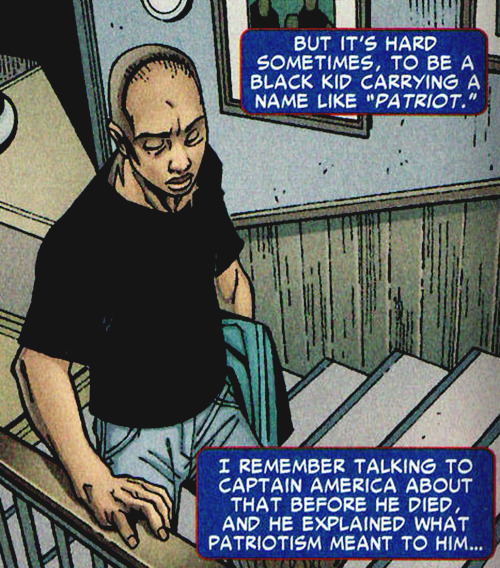
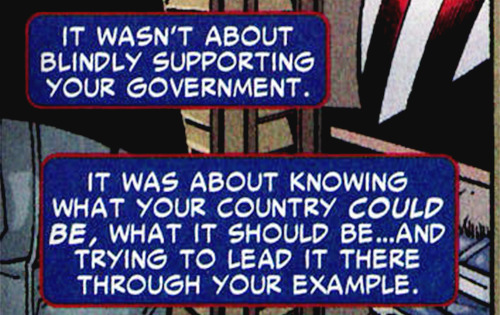
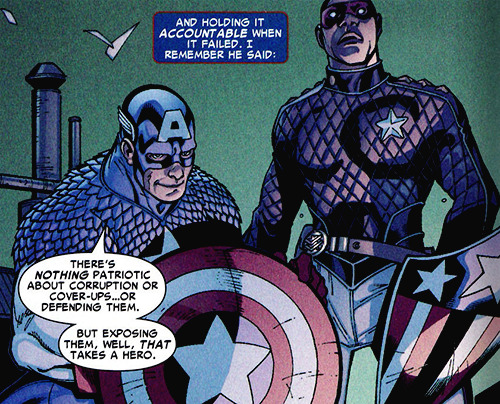
sometimes it’s really hard not to hate this country.


sometimes it’s really hard not to hate this country.

31 May 23:03

ISEE-3

by xkcd

Back in early March, I posted comic #1337, Hack, about a wayward spacecraft. ISEE-3/ICE was returning to fly past Earth after many decades of wandering through space. It was still operational, and could potentially be sent on a new mission, but NASA no longer had the equipment to talk to it—and announced that reconstructing the equipment would be too difficult and expensive.

ISEE-3 is just a machine, but it’s a machine we sent on an incredible journey; to have it return home to find our door closed seemed sad to me. In my comic, I imagined a group of internet space enthusiasts banding together to find a way to take control of the probe—although I figured this was just a hopeful fantasy.

I wasn’t the only one who liked the idea of “rescuing” ISEE-3. In April, Dennis Wingo and Keith Cowing put up a crowdfunding project on RocketHub to try to learn how the lost communications systems worked, reconstruct working versions of them, obtain use of a powerful enough antenna, and commandeer the spacecraft. It seemed like an awfully long shot, but I contributed anyway.

Well, yesterday, Cowing and his team announced, from the Arecibo radio telescope in Puerto Rico, that they are now in command of the ISEE-3 spacecraft.

Congratulations to the team, and good luck with your new spaceship! Watch out for hackers.

31 May 23:02

Anti-vaxx? How about pro-disease?

by Jason Kottke

2014 measles rise

Measles cases in the U.S. just hit a two-decade high. In case you can't already guess why, assistant surgeon general Dr. Anne Schuchat explains:

The current increase in measles cases is being driven by unvaccinated people.

From Aeon, Polio whack-a-mole:

The great allies of infectious diseases are no longer poverty, nor dirt, but the global anti-vaccination movement.

Tags: medicine   polio   vaccines
31 May 21:51

Gotham Disney Princesses

Gotham Disney Princesses


So, we know, we know, Disney Princesses have been transformed into everything lately, but this is the first time we've seen the Gotham girls turned into princesses! BrowncoatFiction illustrated these lovely princess ballgown versions of Harley Quinn, Poison Ivy & Catwoman. ♥ I sense cosplays in the future!

Gotham Disney Princesses

Gotham Disney Princesses

Gotham Disney Princesses

Gotham Disney Princesses

Artist: BrowncoatFiction

(via: io9)

Follow us on:
 

May 31 2014
31 May 17:08

The ghost in the machine

by Jason Kottke

In racing video games, a ghost is a car representing your best score that races with you around the track. This story of a son discovering and racing against his deceased father's ghost car in an Xbox racing game will hit you right in the feels.

Ghost dad

Update: This story was originally shared in the comments of a YouTube video about gaming as a spiritual experience. (via dpstyles & @ryankjohnson)

Update: See also this story about rediscovering a loved one's presence (and presents) in Animal Crossing. (via @shauninman)

Tags: crying at work   parenting   video games   Xbox
31 May 17:08

Revision and cigarettes by randyotter

31 May 17:08

Can You Imagine Star Trek’s Holographic Doctor In Doctor Who?

by Geek Girl Diva

doctor who picardo

Sitting around and thinking of people who can play The Doctor is just one of those things we geeks like to do. Speculation and suggestions are fun and, considering The Doctor does regenerate, we know he (or she) can end up being played by anyone.

Here’s a suggestion we came across. As John at Neatorama said, “Robert Picardo, who played the Doctor on Star Trek: Voyager, would do an excellent job of playing the Doctor on Doctor Who. He has no name and already has the job title!”

He also has the t-shirt apparently.

Check out the original tweet after the break…

I have always loved @RobertPicardo but OH MY GOD this picture makes me giddy pic.twitter.com/SZnEQ7xN2V

— Daniel Feit (@feitclub) May 29, 2014

31 May 05:26

"is it free"

“is it free”

- every student ever when offered something (via timeturner)

31 May 05:26

The First Modern School Shooter Feels Responsible For The Rest

Michael Daly

U.S. News

05.30.14

She uttered the infamous ‘I don’t like Mondays.’ Some 35 years after she killed two and wounded eight in a California schoolyard, Brenda Ann Spencer faced her victims in a parole hearing.

In a prison two-and-a-half hours from the scene of the UCSB murders sits the killer who started it all, with the first high-profile school shooting more than three decades ago.

“With every school shooting, I feel I’m partially responsible,” Brenda Ann Spencer told the parole board back in 2001. “What if they got the idea from what I did?”

Spencer was 16 on Jan. 29, 1979, when she opened fire with a .22 rifle on Grover Cleveland Elementary School across from her home in San Diego, killing the principal and the custodian while wounding eight youngsters and a police officer.

“I don’t like Mondays,” she famously replied when asked her motive.

Spencer has since said she does not remember making the remark that inspired a song by the Boomtown Rats and became a kind of anthem for many of the school shooters who followed. She has said she also does not recall telling a cop, “It was a lot of fun seeing children shot.”

During a 2009 parole hearing, her most recent, she insisted that she had not intended to shoot anybody.

 “So, why did you commit this crime?” the head parole commissioner asked.

“Because I wanted to die,” she said. “I was trying to commit suicide.”

“Why pick the school across the street?” the commissioner asked.

“Because I knew that if I fired on the school the police would show up, and they would shoot me and kill me,” she said. “And every time I had tried suicide in the previous year I had screwed it up.”

“Why did you have to shoot the people at the school?” the commissioner asked.

“I wasn’t specifically aiming at people,” she said. “I was shooting into the parking lot.”

The commissioner inquired how many rounds she had fired, and she said she did not recall.

“Well, that’s pretty good shooting to hit as many folks as you did if you’re not trying to hit anybody from across the street,” the commissioner noted.

“I don’t remember aiming at anybody,” Spencer insisted.

“Do you remember them taking cover?” the commissioner asked.

“Vaguely,” she said.  

The commissioner asked if she remembered the police coming, and she said she did.

 “You hit one of those fellows, too,” the commissioner noted.

“Uh-hmm,” Spencer said.

The commissioner reminded her that she had eventually surrendered.

“[You] put your gun down,” the commissioner observed. “You didn’t follow through with your plan.”

“No, I had gotten scared,” she said.

“This gun was a gift?”

“Yes,” she responded.

“From whom?”

“My father.”

The commissioner observed that Spencer had described a dark side to her father, while others described him as a decent man.

“He liked to keep appearances up, that everything was fine in the house,” Spencer now said.

“What about your mother?” the commissioner asked.

“She just wasn’t there,” Spencer said.

“But your father was always there.”

“Yeah.”

“And apparently you two slept in the same bed?”

“Yes.”

She had submitted a written statement in which she alleged that her father had begun fondling her when she was 9 and had sexually assaulted her virtually every night.

The commissioner said they would get back to all that. He returned to the shooting.

“You didn’t go to school that day?” the commissioner asked.

“No, I wasn’t feeling good,” she replied.

She said she had been under the influence of alcohol, pot, and downers.

“They made me numb so I didn’t feel anything,” she said.

She confirmed that she had heard the kids in the school across the street.

“A lot of kids laughing and doing their thing?” the commissioner asked.

“Yes,” she said.

“Did that upset you?”

“No.”

“It didn’t upset you that they seemed to have happier lives?”

“No,” she said. “I was just set on committing suicide.”

“I am sorry you had to go through everything you went through, but what I’m trying to do is find out why you would open fire and kill two people and hurt so many others,” the commissioner said. “You indicate you weren’t really trying to hit anybody—but you did a heck of a job of hitting a lot of people.”

“The only thing I was concentrating on was getting the police there so that they could shoot me,” she said.

“Well, you could have shot out one window of the school and the police would have come.”

“I didn’t think that.”

“You didn’t have any anger at the children?”

“No.”

“You weren’t trying to hit anybody?”

“Not that I remember.”

The commissioner asked if she recalled saying she had fired on the schoolyard because “I don’t like Mondays.”

“I might have said that,” she replied. “It would have been the drugs and the alcohol talking.”

“You indicate you weren’t really trying to hit anybody – but you did a heck of a job of hitting a lot of people.”

The commissioner quoted the police negotiator’s report, which said she had told him, ”It was fun to watch the children that had red and blue ski jackets on, as they made perfect targets.” The negotiator added that she told him she “liked to watch them squirm around after they had been shot.”

“It’s entirely possible I said that,” Spencer told the parole board.

“Do you have any idea why you’d go out of your way to harm so many innocent people?” the commissioner asked

“I didn’t consider that other people would get hurt,” she said. “I didn’t think it all the way through”

“Several children were injured by gunshot wounds. The principal of the elementary school, Burton Wragg, age 53, had gone to the aid of the students and was subsequently shot himself,” the commissioner said. “Michael Suchar, age 56, school custodian, went to the aid of Mr. Wragg and was also shot.”

“Uh-hmm,” Spencer said.

“You’re shooting people as they come to the aid of others,” he said. “You’re shooting these people as they become targets, and yet you told me that you didn’t intend to hit anyone.”

“No,” she said.

“Are you pretty good with a rifle?” he asked.

“I don’t know,” she said, “I guess.”

She was asked if any adults had seen danger signs before the shooting.

“A month before I was arrested, my [high school] counselor took me to see a psychiatrist,” she reported.

She said the psychiatrist had recommended she be hospitalized as a danger to herself and to others.

“My dad told them that nothing was wrong with me and everything was fine, and leave us alone,” she recalled.

That had been just before Christmas. She had asked her father for a radio.

“I don’t know why he bought me a gun,” she said.

The San Diego District Attorney’s Office sent a representative to the hearing. He informed the board that on the Saturday before the shooting Spencer had told another teen that something big was going to happen on Monday that would be on TV and radio.

“On Monday morning, January 29th, she asked her father if she could stay home from school because she didn’t feel well,” the deputy district attorney reported. “Her father left home for work around 7 o’clock in the morning. Then the inmate proceeded to commit one of the most notorious crimes in the history of this nation.”

He went on: “At 8:30 a.m., the children were lining up to enter Cleveland Elementary School… She picked up her .22 caliber, semiautomatic scoped rifle and began shooting children. Principal Burton Wragg heard the shooting and ran out to get the children out of harm’s way, and the inmate shot him in the chest and killed him. The head custodian, Michael Suchar, known as ‘Mr. Mike’ to the children, ran to Mr. Wragg’s aid, and the inmate shot him in the chest and killed him. She shot eight children, and she shot a responding police officer, Robert Robb, in the neck. But for the heroic efforts of a police officer who risked his life to drive a trash truck in front of her residence to block her field of fire, no doubt further children would have been shot.”

The D.A. representative added that Spencer had complained to the police negotiator that the custodian had tried to get everybody off the school grounds.

“She shot him because, by her own words, he was making it more difficult for her to shoot the kids,” the representative said. “The number of shots fired and the number of vital hits speaks of incredibly accurate, directed shooting, and these were moving targets.”

The representative further reported that blood and urine samples taken after Spencer’s arrest tested clean. He concluded that no drugs or alcohol had been talking when she said she just didn’t like Mondays.

“Basically, what she’s telling this board are a series of untruths,” the representative concluded.

A lawyer representing Spencer spoke next. He suggested that the testing of the time may have simply failed to detect the intoxicants. He allowed that Spencer’s father had never “owned up” to sexually abusing her. But the lawyer also noted that while visiting Spencer at a juvenile-detention facility after her arrest, the father had met a girl who resembled his daughter, but was younger.

“[The father] then went on and had a sexual relationship with her and married her,” the lawyer alleged.

The commissioner read into the record several victim-impact statements. One was from Wilfred Suchar, son of the murdered custodian, Michael Suchar. He said his wife had heard on the radio of a shooting at the school and called him at work. He had gone to his parent’s home to tell his mother, Valentina.

“We found her singing as she gardened in the backyard,” the son recalled. “We were all very upset and shocked on the way to the hospital, because no one would tell us Michael’s condition. When we arrived, we found him not in the hospital room, but down in the basement, dead. He had died trying to help the children and Principal Wragg, killed by Ms. Spencer trying to liven up her Monday.”

He said that his mother never recovered.

“She was lonely and scared, and became more and more depressed,” he said. “There didn’t seem much I or the rest of the family could do to help her.”

He went on to say that his father “had gotten out alive from some rough times in the Pacific during World War II. He was then a part of the Allied occupying forces in northern Germany. Here he met his wife-to-be, Valentina. She, because of the language and cultural differences in the United States, always counted on him to manage their affairs. Suddenly, he was gone. I think her premature death in 1991 was at least partly the result of this traumatic experience.”

He ended by saying on behalf of his deceased parents and the surviving members of the family that they opposed parole for Spencer.

“My question is, will there be another boring Monday for her?” he asked.

The custodian’s brother, Andrew Suchar also submitted a statement, noting that Michael had survived two ship sinkings during the war only to be killed by a 16-year-old in a schoolyard. The brother said that although his widowed sister-in-law lived until 1991, “her life actually ended in January 1979. The victims are not only those killed, but the survivors who live the tragedy for the rest of their lives.”

And then there was a statement by Steve Wragg, son of Principal Burton Wragg.

“My dad and Mike were the only two to die that day,” he said, “The kids that they were trying to save all lived. Some of them were seriously injured, but all survived. I hope that somehow my dad and Mike know this.”

There was also a statement from the principal’s daughter.

“People have told me that I look like him, act like him, that my kids are the spitting image of him,” she said. “When the kids hear this, they can’t possibly relate to such statements, because they have never met their grandfather, and they know they never will, because I’ve told them over and over again that he is dead, that he was murdered by Brenda Spencer.”

The daughter spoke of scattering her father’s ashes in the desert.

“The place he loved the most. The small ceremony solidified my understanding of love and eternity, and of our ties to one another as human beings. Yet, while it was all happening, so beautiful, so serene, I couldn’t get over the perverse violence associated with my dad’s passing. I still can’t.”

She described going to the school to collect her father’s personal effects.

“The blood hadn’t been scrubbed from where he had fallen on the concrete. I walked around this place, not stepping on the splotches and the puddles, and didn’t want to be hugged by anyone. Nothing can console me ever.”

She then spoke words that have gained ever more truth after ever more mass shootings.

“A person can be attending school and be gunned down.”

She added, “It happened here first.”

Other statements came from children now grown.

“My name is Crystal Hardy,” one began. “I was 10 years old when I was shot by Brenda Spencer.”

She described arriving at school and hearing shots and seeing the principal and the custodian lying dead. A teacher had called for her to duck.

“But I wasn’t able to run from the bullet Brenda had for me,” Hardy said.

She recalled lying in the nurse’s office, bleeding as bullets crashed through the window.

“I was greatly comforted when the policemen arrived to carry me away. I can still remember the pool of blood on the nurse’s bed, and the terror didn’t end there. Later, of course, I had nightmares, and to this day I fear that someone is pointing a gun at me when I’m walking in open places.”

“And recently, my boyfriend wanted me to go to a shooting range with him because it’s a sport he enjoys, and although I was hesitant, I thought, ‘Well, it’s been a long time, I’ll probably be OK.’ And I sat there as he shot the silhouette, but he had to stop because I started frantically crying. It was completely uncontrollable.”

There was also a statement by a parent, Francis Stile, whose two daughters attended the school. He recalled “the phone call from the neighbor who said there had been a shooting at Cleveland, the frustration of not being able to get near the school because the incident was still going on, the terror in my wife’s eyes, her screams of anguish at not knowing whether our girls were involved, the phone call from the hospital telling us that one of them had been wounded, looking at the bullet hole in her right elbow and the bullet burns on the inside if each thigh where a bullet had passed between her legs.”

The other daughter had been saved from harm when a notebook with a pouch of pens stopped a bullet. Both girls had witnessed the death of the principal and the custodian.


“They still speak of hearing the gurgle in Mr. Wragg as he lay there dying… If such evil can occur in such a benign and tranquil setting, then it can happen anywhere and probably will.”

A former student named Cam Miller attended the hearing in person and offered the last statement.

“I was 9 years old when I was shot,” he began.

He recalled that his mother had just dropped him at school directly opposite Spencer’s home and he had been starting up the sidewalk when he saw the bodies of the principal and the custodian. He had then blacked out as a bullet passed within an inch of his heart, exiting his chest.  He survived but remained terrorized.

“I would have to call to my mother two or three times each night to walk me around the inside of my house, just so I knew that Brenda Spencer was not inside my house,” he recalled.

He had been called to testify against her.

“I walked into court and saw this monster glaring at me,” he remembered. “The look at Brenda Foster gave me was enough to scare any young child to death.”

Thirty years later, Miller beheld her in another proceeding and asked the board not to parole her. The board denied her and she will not be eligible for another hearing until 2019.

In the meantime, she will sit as inmate W14944 in the California Women’s Institution, seeming to see no irony in having used heated metal to brand the words “Courage” and “Pride” across her chest. She is now 51 and will no doubt hear of more school shootings and ask herself if they got the idea from what she did on that long ago Monday.

31 May 05:25

Nintendo's History, Compiled Into A Single Flow Chart

As one of the oldest and most prolific developing and publishing companies in the industry, it’s a daunting task trying to catalog the density of Nintendo’s history. Graphic artist Vin Lauria took it upon himself to capture the extensive history that Nintendo is famous for in this detailed, intuitive, and aesthetically pleasing infograph.

The flowchart below depicts every console and first and second-party game produced by Nintendo across the many generations of gaming. It’s difficult to grasp the breadth and influence that this company has had on gaming, but this excellent timeline manages to put it into perspective.

For another cool look at Nintendo’s history, check out this video about the Game Boy’s life.

Click the image to expand.

31 May 05:25

Turn to Ashes.

You think I would have seen this coming with the torch and gasoline and all.
30 May 11:33

Trolling Joan of Arc Comic

Trolling Joan of Arc Comic


I am in love with ElectricBunnyComics' work! We also posted her Boobs in Combat comic a while back. She makes comics that are both clever and amusing. Anyway... here's Joan of Arc getting trolled... more heads will roll... literally...

Trolling Joan of Arc Comic

Artist: ElectricBunnyComics

Follow us on:
 

May 29 2014
30 May 11:33

How to Name Animals in German.

by languagehat

This is a funny flowchart.

30 May 11:33

The Hottest Cosplays Ever

by Amy Ratcliffe

hot cosplay

Not quite what you were expecting? Don’t worry, this is hilarious.

When you’re constructing a costume, you should really keep in mind how comfortable it will be. Can you go to the bathroom? Can you drink and eat? How hot is it? It’s not always possible to make an elaborate costume – like a Transformer – breathable, and some cosplayers endure crazy temperatures. This gallery rounds up seven of the “hottest” cosplays out there.

Update: See the rest of the sweltering cosplays at Dorkly!

30 May 04:41

Cliq smartphone case adds customizable buttons to the back of your device

by Dustin Earley
Dan Jones

Very cool.

One of the absolute coolest things about Android is what third-party accessory manufacturers can do with the platform. There may not be 10 million different cases for every Android handset on the market, but the ones that do exist can sometimes do some pretty awesome things. Take Cliq for example, a case currently on Kickstarter looking to turn the back of your phone into a customizable quick-access station.

We don’t usually talk about Kickstarter projects much, but Cliq has us curious. Built into a case that looks about as thin as an Elago Slim or Case-Mate Feather, Cliq adds three flush, slick buttons to the back of your phone that are totally customizable and open to other third-party apps. So not only will you able to set the buttons to do things like turn on your flashlight, call a certain contact or take a picture, you’ll be able to program the buttons to work with apps like Tasker for making complicated recipes for complex tasks, all executable with the press of a single button. Cases that are currently in development include the Galaxy S4, S5, Note 3, Moto X, Nexus 5 and LG G2. There’s also a slim skin that sticks to the back of your phone, if cases aren’t your thing.

Cliq isn’t funded yet, but the team is at almost half of their goal with 22 days left. If you’ve got one of the phones listed above and $30 burning a hole in your pocket, Cliq might be worth checking out.

29 May 18:20

Wizard of Id: Thursday, May 29, 2014

Wizard of Id
29 May 18:20

Give Me Something Better Than The Mormon Church

After talking to all of these wonderful people, and witnessing all of the prayers on my behalf, I was left with one outstanding and prominent question in my mind; Can anyone give me something better than the Mormon church?

29 May 18:20

The Real 10 Algorithms That Dominate Our World

The other day, while I was navigating Reddit I found an interesting post that was called The 10 Algorithms That Dominate Our World by the author George Dvorsky which was trying to explain the importance that algorithms have in our world today and which ones are the most important for our civilization.

Now if you have studied algorithms the first thing that could come to your mind while reading the article is “Does the author knows what an algorithm is?” or maybe “Facebook news feed is an algorithm?” because if Facebook news feed is an algorithm then you could eventually classify almost everything as an algorithm. So I’m going to try to explain in this post what an algorithm is and which are the real 10 (or maybe more ) algorithms that rule our world.

What is an algorithm?

Informally, an algorithm is any well-defined computational procedure that takes
some value, or set of values, as input and produces some value, or set of values, as
output. An algorithm is thus a sequence of computational steps that transform the
input into the output. Source: Thomas H. Cormen, Chales E. Leiserson (2009), Introduction to Algorithms 3rd edition.

In simple words is possible to say that an algorithm is a sequence of steps which allow to solve a certain task ( Yes, no just computers use algorithms also humans use them). Now, an algorithm should have three important characteristics to be considered valid:

  1. It should be finite: If your algorithm never ends trying to solve the problem it was designed to solve then it is useless
  2. It should have well defined instructions: It has to be precisely defined each step of the algorithm; the instructions should be unambiguously specified for each case.
  3. It should be effective: The algorithm should solve the problem it was designed to solve. And it should be possible to demonstrate that the algorithm converges with just a paper and pencil.

Also is important to say that algorithms are used in Computing Sciences but they are a mathematical entity, in fact the first mathematical algorithms that we have registry are from 1600 BC — Babylonians develop earliest known algorithms for factorization and finding square roots. So here we have the first problem with the post mentioned before, it treats algorithms as computing entities, but if you take the formal meaning of the word the real top 10 algorithms that rule the world can be found in a book of arithmetic (addition, subtraction, product, etc).

But lets take computing algorithms as our definition of algorithm in this post, so the question remains: Which are the 10 algorithms that rule the world?. Here a put a little list of which are this algorithms in no particular order.

1. Merge Sort, Quick Sort and Heap Sort

What is the best algorithm to sort elements? It depends in what you need and that’s why I put the three more used sort algorithms in the same place, maybe you have a preference in one of them but all of them are equal important.

The Merge Sort algorithm is by far one of the most important algorithms that we have today. It is a comparison-base sorting algorithm that uses the approach divide and conquer to solve a problem that once was a O(n^2). It was invented by the mathematician Jhon von Neumann in 1945.

Quick Sort is a different approach to the sorting problem, it can use in-place partition algorithms and is a divide and conquer algorithm too. The problem with this algorithm is that is not a stable sort but is really efficient for sorting RAM-based arrays.

Finally, Heap Sort algorithm uses a priority queue that reduces the search time in the data. This algorithm is also an in-place algorithm and is not stable sort.

These algorithms are a big improvement over other approaches used like bubble sort, in fact is thanks to them that today we have Data mining, artificial intelligence, link analysis and most of the computing tools in the world including the web.

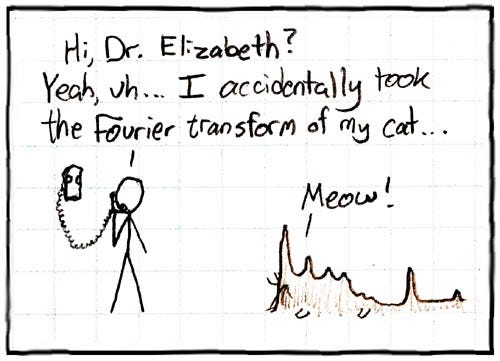
2. Fourier Transform and Fast Fourier Transform

Our entire digital world uses these simple but really powerful algorithms that transform signals from their time domain into their frequency domain and viceversa. In fact, you are seen this post thanks to these algorithms.

The internet, your WiFi, smartphone, phone, computer, router, satellites, almost everything that has a computer inside use this algorithm to work, in one way or another. You can’t study a degree in electronics, computing or telecommunications without studying these important algorithms.

3. Dijkstra’s algorithm

Is not crazy to say that the internet wouldn't work as efficient as it does if it wasn't because of this algorithm. This graph search algorithm is used in different applications where the problem can be modeled as a graph and you have to find the shortest path between two nodes.

Even when today we have better solutions for the problem of finding the shortest path, Dijkstra’s algorithm is still used in systems that require stability.

4. RSA algorithm

The internet wouldn't be as important as it is today if it wasn't thanks to cryptography and cyber security. And even when you can think “Sure, security in the era of NSA and other intelligence agencies” or “You have to be really naive to think you are safe in the Internet”, people need to feel that they are secure in order to expend money in some place. After all, you wouldn't put your credit card in a web service if you know is not safe.

And from the field of cryptography there is an algorithm that remains as one of the most important in the world: RSA algorithm. Developed by the founders of the company RSA, this algorithm opened cryptography to everybody in the world and helped to shape how cryptography works today. The RSA algorithm is a solution to a simple but complex problem: share of public keys to allow cryptography (I would argue that it has been completely solved, I think we need more work in this direction) be independent of the platform and final user.

5. Secure Hash Algorithm

This isn't exactly an algorithm but a family of cryptographic hash functions developed by the NIST in the USA. But this family of algorithms is fundamental for the functioning of the World. From your app store, your email, your antivirus, your browser, etc , all of them use this algorithms (in reality the hash that results from them) to find if you have downloaded what you wanted or if you have been in a middle man attack or maybe a phishing attack.

6. Integer factorization

This is a mathematical algorithm that is heavily used in computing field. Without this algorithm the cryptography would be much more unsafe. The algorithm is a series of steps used to take the prime factorization of a composite number into smaller non-trivial divisors. This is considered an FNP problem which is an extension of the class NP making the problem really hard to solve.

Many cryptographic protocols are based on the difficulty of factoring large composite integers or a related problem—for example, the RSA problem. An algorithm that efficiently factors an arbitrary integer would render RSA-based public-key cryptography insecure.

The born of quantum computing is making easier to solve this problem, opening a completely new field that uses properties of the quantum world to make the systems safe.

7. Link Analysis

In the era of internet the analysis of relationships between different entities is crucial. From search engines, social networks to marketing analysis tools everybody is trying to find the real structure of the Internet through time.

The link analysis is arguably one of the algorithms with more myths and confusion in the general public. The problem is that there are different ways to make link analysis and also there are different characteristics that make each algorithm a little different (which allows to patent the algorithms) but in their bases they are similar.

The idea behind link analysis is simple, you can represent a graph in a Matrix form making it a eigenvalue problem. This eigenvalues can give you a really good approach of the structure of the graph and the relative importance of each node. The algorithm was developed in 1976 by Gabriel Pinski and Francis Narin.

Who uses this algorithm? Google in its Page Rank, Facebook when it shows you your news feed (and this is the reason why Facebook news feed is not an algorithm but the result of one), Google+ and Facebook friend suggestion, LinkedIn suggestions for jobs and contacts, Netflix and Hulu for movies, YouTube for videos, etc. Each one with a different objective and different parameters but the math behind remains the same.

Finally, I’d like to say that even when it looks like Google was the first company working with this type of algorithms, in 1996 (two years before Google) a little search engine called “RankDex” , founded by Robin Li, was already using this ideas for page ranking. Finally Massimo Marchiori, the founder of “HyperSearch”, used an algorithm of page rank based on the relations between single pages. (The two founders are mentioned in the patents of Google).

8. Proportional Integral Derivative Algorithm

Have you ever used an airplane, an automobile, a satellite service, a cellphone network? or Have you ever been in a factory or seen a robot? If you've answered yes to at least one of them then you have seen this algorithm in action.

Basically this algorithm allows a control loop feedback mechanism to minimize the error between the desired output signal and the real output signal. Is used everywhere where you need signal processing or you need an electronic system controlling a mechanical, hydraulic or thermal system using automation.

You can say that without this algorithm our modern civilization wouldn't exists.

9. Data compression algorithms

Is difficult to choose which is the most important compression algorithm because, depending what is the application, the algorithm used can vary from zip to mp3 and from JPEG to MPEG-2. But there is something that everybody knows and is that this algorithms are really important in almost all the structures.

Where you could find them besides the obvious zipped document? This web page used data compression to be downloaded into your computer, in video games, videos, music, data storage, cloud computing, databases, etc. Is possible to say that everything uses data compression algorithms, they help to make the systems cheaper and more efficient.

10. Random Number Generation

Today we don’t have a “true” random number generator, but we have some pseudo random number generators that are good enough. These are used in a big number of applications from interlink connection, cryptography, secure hash algorithm, video games, artificial intelligence, optimization, initial conditions for problems, finances, etc.

29 May 16:53

Humble eBook Bundle 4, now with graphic novels!


More literary works and now graphic novels are here in the Humble eBook Bundle 4. We are glad to have our reading friends back, we missed you so much.

Pay what you want for The Sword & Sorcery Anthology with contributions by Charles R. Saunders, Glen Cook and George R. R. Martin, March: Book One by Congressman John Lewis, Andrew Aydin and Nate Powell, and Wizzywig: Portrait of a Serial Hacker by Ed Piskor.

Those who beat the average price will also receive From Hell by Alan Moore and Eddie Campbell, The Alchemist by Paolo Bacigalupi, The Executioness by Tobias Buckell and Wizard’s First Rule by Terry Goodkind.

Pay $10 or more and get everything plus Jam by Yahtzee Croshaw and Lovecraft’s Monsters with contributions by Neil Gaiman, Caitlin R. Kiernan, Joe R. Lansdale and edited by Ellen Datlow.

Did you notice we have a new tab just for books on the site? Pretty neat huh? Take a look at everything featured on this bundle.

The Sword & Sorcery Anthology


Blood will flow, heads will roll, dragons will soar, and the dead shall rise. Journey to ancient cities ruled by sinister mages, storm-tossed seas where monsters dwell, mysterious towers full of ancient secrets and dark dungeons with untold treasures. From Robert E. Howard’s Conan the Barbarian to George R. R. Martin’s Song of Ice and Fire, join the legendary heroes—and villains—of sword and sorcery in nineteen epic adventures that are sure to bring out the barbarian in you: Anti-hero Elric infiltrates a band of mercenaries to match wits with a powerful sorcerer; With her trio of dragons, Daenerys Stormbringer makes a fool’s bargain with slave traders; A mage’s apprentice, the young Grey Mouser uses newfound power to battle an evil Duke; Conan breaks into the Tower of the Elephant to steal a spectacular jewel with a dark secret; Despite her drunkard’s ways, Malmury slays an old sea troll, before facing his powerful daughter. This essential, fast-paced anthology is a chronological gathering of influential, inventive, and entertaining fantasy—sure to appeal to all action-oriented fans.

March: Book One


March is a vivid first-hand account of John Lewis’ lifelong struggle for civil and human rights, meditating in the modern age on the distance traveled since the days of Jim Crow and segregation. Rooted in Lewis’ personal story, it also reflects on the highs and lows of the broader civil rights movement.

Book One spans John Lewis’ youth in rural Alabama, his life-changing meeting with Martin Luther King, Jr., the birth of the Nashville Student Movement, and their battle to tear down segregation through nonviolent lunch counter sit-ins, building to a stunning climax on the steps of City Hall. Many years ago, John Lewis and other student activists drew inspiration from the 1958 comic book “Martin Luther King and the Montgomery Story.” Now, his own comics bring those days to life for a new audience, testifying to a movement whose echoes will be heard for generations.

Wizzywig: Portrait of a Serial Hacker


They say “What You See Is What You Get”… but Kevin “Boingthump” Phenicle could always see more than most people. In the world of phone phreaks, hackers, and scammers, he’s a legend. His exploits are hotly debated: could he really get free long-distance calls by whistling into a pay phone? Did his video-game piracy scheme accidentally trigger the first computer virus? And did he really dodge the FBI by using their own wiretapping software against them? Is he even a real person? And if he’s ever caught, what would happen to a geek like him in federal prison? Inspired by the incredible stories of real-life hackers, Wizzywig is the thrilling tale of a master manipulator - his journey from precocious child scammer to federally-wanted fugitive, and beyond. In a world transformed by social networks and data leaks, Ed Piskor’s debut graphic novel reminds us how much power can rest in the hands of an audacious kid with a keyboard.

From Hell


From Hell is the story of Jack the Ripper, perhaps the most infamous man in the annals of murder. Detailing the events leading up to the Whitechapel killings and the cover-up that followed, From Hell is a meditation on the mind of a madman whose savagery and violence gave birth to the 20th century. The serialized story, presented in its entirety in this volume, has garnered widespread attention from critics and scholars. Often regarded as one of the most significant graphic novels ever published, From Hell combines meticulous research with educated speculation, resulting in a masterpiece of historical fiction both compelling and terrifying. This new edition, which has been completely re-mastered, is certainly the finest edition of the book produced to date.

The Alchemist/The Executioness


In the paired novellas, The Alchemist & The Executioness, award-winning authors Tobias Buckell and Paolo Bacigalupi explore a shared world where magic is forbidden and its use is rewarded with the axe. A world of glittering memories and a desperate present, where everyone uses a little magic, and someone else always pays the price.

In the beleaguered city of Khaim, a lone alchemist seeks a solution to a deadly threat. The bramble, a plant that feeds upon magic, now presses upon Khaim, nourished by the furtive spellcasting of its inhabitants and threatening to strangle the city under poisonous vines. Driven by desperation and genius, the alchemist constructs a device that transcends magic, unlocking the mysteries of bramble’s essential nature. But the power of his newly-built balanthast is even greater than he dreamed. Where he sought to save a city and its people, the balanthast has the potential to save the world entire—if it doesn’t destroy him and his family first.

Wizard’s First Rule


In Wizard’s First Rule, Goodkind introduced the world to an ordinary forest guide, Richard Cypher, and the mysterious, powerful woman he comes to love, Kahlan Amnell. Learning his true identity, Richard accepts his destiny as the one man who can stop the bloodthirsty tyrant Darken Rahl. Hunted relentlessly, betrayed and alone, Kahlan calls upon Richard to reach beyond his sword and invoke something more noble within himself as the final confrontation with Darken Rahl looms.


Jam


The hilarious sequel to Mogworld! We were prepared for an earthquake. We had a flood plan in place. We could even have dealt with zombies. Probably. But no one expected the end to be quite so … sticky … or strawberry scented.

Yahtzee Croshaw (Mogworld, Zero Punctuation Reviews) returns to print with a follow- up to his smash-hit debut: Jam, a dark comedy about the one apocalypse no one predicted.


Lovecraft’s Monsters


Prepare to meet the wicked progeny of the master of modern horror. Each story is a gripping new take on a classic Lovecraftian creature, and each is accompanied by a spectacular original illustration that captures the monsters’ unique visage.

Contributors include such literary luminaries as Neil Gaiman, Joe R. Lansdale, Caitlín R. Kiernan, Karl Edward Wagner, Elizabeth Bear, and Nick Mamatas. The monsters are lovingly rendered in spectacular original art by World Fantasy Award–winning artist John Coulthart (The Steampunk Bible).

Legions of Lovecraft fans continue to visit his bizarre landscapes and encounter his unrelenting monsters. Now join them in their journey…if you dare.

As always you get to choose where your money goes, split the funds between the developers and contributions to charity. Featured charities for this bundle are Doctors Without Borders and the Comic Book Legal Defense Fund. If you like what we do feel free to leave us a tip too.

The Humble eBook Bundle 4 will be placed back on the shelf on Wednesday June 11, 2014 at 11:00 a.m. Pacific Time.

28 May 16:29

Maya Angelou dies at 86

WASHINGTON -- Maya Angelou, a world-renowned author, poet and civil rights activist, has died, CBS reports. She was 86.

The Recipient of the National Medal of Arts, the Presidential Medal of Freedom died in Winston-Salem, North Carolina.

Winston-Salem Mayor Allen Joines says Angelou was found dead at her home by her caretaker Wednesday, NBC reports.

Angelou gained acclaim for her first book, her autobiography "I Know Why the Caged Bird Sings," making her one of the first African-American women to write a best-seller.

In 1998, she directed the film "Down in the Delta" about a drug-wrecked woman who returns to the home of her ancestors in the Mississippi Delta.

Angelou was to attend the 2014 MLB Beacon Awards Luncheon on May 30, where she was to be honored.

But Major League Baseball cited "health reasons" last Friday in saying the she would not make it to the event in Houston, Texas, before the annual Civil Rights Game.

Angelou spoke at former President Bill Clinton's 1993 inauguration, reciting her poem, "On the Pulse of the Morning."

Angelou has received more than 50 honorary degrees and had been a Reynolds Professor of American Studies at Wake Forest University.

Wake Forest released the following statement:

"Today members of the Wake Forest University community mourn the loss of beloved poet, author, actress, civil rights activist and professor Dr. Maya Angelou

Dr. Angelou was a national treasure whose life and teachings inspired millions around the world, including countless students, faculty, and staff at Wake Forest, where she served as Reynolds Professor of American Studies since 1982.

Our thoughts and prayers are with Dr. Angelou's family and friends during this difficult time."

The university said it would hold a campus memorial service.

Here is Angelou's last tweet:

Listen to yourself and in that quietude you might hear the voice of God.

— Maya Angelou (@DrMayaAngelou) May 23, 2014

The Associated Press contributed to this report. Follow @WTOP on Twitter and on WTOP Facebook page.

28 May 16:29

Tiny Dark Tower [T-Shirt]

by Amy Ratcliffe

Tiny Dark Tower

What if Lord of the Rings was turned into a Tiny Tower game? I, for one, would probably become addicted to it and turn into a Gollum-like creature who needed to play it all the time. Artist spiritgreen & oakenspirit came up with this pixelated take on Barad-dûr that imagines it as a game, and it’s so cute that I want it to be real. I’d visit Helm’s Deep Dish pizza every day for lunch.

Product Page ($15 via Shirtoid)